White Space

Therefore do not worry about tomorrow, for tomorrow will worry about itself. Each day has enough trouble of its own. (Matt. 6: 34 NIV)

Where do I begin? Do I work on one of these book proposals? Do I need to write another blog post? Do I have a speaking event scheduled this month? Do I need to work on my website?

I didn’t know where to start! And I thought, Enough!

At first, I thought my confusion might be a response to the stress. Soon, I realized that I needed God’s help. I needed some white space!

As a writer, I know the importance of white space—the empty space in every document, in the margins and between the words, graphs, and pictures.

The wise use of this white space can vastly improve communicating the writer’s message. And a lack of white space makes the page seem too busy, cluttered, and difficult to read. Yet too much white space produces an incomplete appearance.

White Space of Life

As I planned my use of time and resources, I concluded that the same important rules apply to the white space in all areas of my life.

If I fill every minute of the day with activities, work, and conversation, I become too preoccupied with unproductive distractions. But too much inactivity can rob me of my self-worth and credibility.

How do we determine the amount of white space in our lives? Never underestimate the power of organization, calendars, and spring-cleaning!

Can we discern how much white space to build into our lives? Those who know us best and love us unconditionally can offer healthy opinions. But seek an advisor with extreme caution— you may need to endure unsolicited criticism.

White Space of Grace

Never underestimate the power of God’s Word as you manage the white space in your schedule and decisions.

Jesus promised, “I have much more to say to you, more than you can now bear. But when he, the Spirit of truth, comes, he will guide you into all the truth. He will not speak on his own; he will speak only what he hears, and he will tell you what is yet to come” (John 16: 12– 13 NIV).

As I prayed for direction, I remembered other encouraging words: “Whatever you have learned or received or heard from me, or seen in me— put it into practice. And the God of peace will be with you” (Phil. 4: 9 NIV).

I also recalled the story in the Bible of another weak, tormented soul who discovered the sufficiency of God’s grace. Like me, the apostle Paul begged God to take away his problems. But God responded with surprising direction: “My grace is enough; it’s all you need. My strength comes into its own in your weakness” (2 Cor. 12: 9 The Message).

The Bible offers important advice about letting go and moving forward:

Not that I have already obtained all this, or have already arrived at my goal, but I press on to take hold of that for which Christ Jesus took hold of me. Brothers and sisters, I do not consider myself yet to have taken hold of it. But one thing I do: Forgetting what is behind and straining toward what is ahead, I press on toward the goal to win the prize for which God has called me heavenward in Christ Jesus. (Phil. 3: 12– 14 NIV)
Where do you need some white space in your life? I hope this excerpt from my book, Words That Change Everything, speaks to your need for some white space.

Karen Jordan. Words that Change Everything. Copyright © 2016 by Karen Jordan. Used by permission of Leafwood Publishers, an imprint of Abilene Christian University Press.

So You Want to Be on Television

So you want to be on television? What outfit should you select? What should you avoid wearing?

Dangling earrings or studs? And how about that red lipstick?

Recently, I was interviewed on our city’s cable station for an upcoming event that involved a non profit where I volunteer. Before the show was taped, I received some helpful hints from the production staff.

1.  Know Your Material.  Interviewers dislike blank air space. If you struggle with speaking extemporaneously, ask if you can have a list of questions ahead of time. If necessary, offer a list of questions of your own.  Practice your answers. If you are talking about your book, look again at your media kit, because interviewers might not read your book, but probably will glance at your press materials.

2. No Plaids and Stripes. Avoid busy patterns or anything that can detract from the message of what you are saying. Are you considering that botanical print covered in roses, chrysanthemums, and daisies? Save that for your next garden party and choose something else from your closet.

3. No to Pastels. White, ivory and pastel fabrics will wash the color right out of you and reflect too much light. Our city’s production staff did not want me to wear black and white together, either, as it presented a contrast problem for the camera. Best colors: medium to bright solids in blue, brown or green.

4. How about footwear? I have filmed at this location several times. At the first filming, my feet were not visible, so at my next filming, I came in flip flops, unaware that the set had been remodeled. I was glad I hadn’t come in pajama bottoms, thinking only my top half would be visible! I have learned my lesson and  I now come prepared from top to bottom!

5. Professional attire? As the saying goes, dress for success. Simple classic styles are best and a jacket or collared shirt helps hide the microphone. For my recent taping, they requested I wear a shirt from the organization I represented. Thankfully, I had one with a collar.

6. How about those dangling earrings? If the necklace, bracelet or earrings are too noisy or too sparkly, leave them at home. Anything that might reflect the lights should not be worn.

7. That favorite red lipstick? Again, no. Red tends to look like it is bleeding on camera (not the look you are going for). Natural makeup is best, but remember that the lights will wash out complexions, so you can wear more makeup than normal. (Just be cautious. Bozo the clown is not the look you are going for either.) The staff will apply powder, if necessary, to reduce shine for men and for women.

8. Cell phone? Ask if someone can take a photo of you on the set and then turn the phone off until after the filming.

9. Body Posture. When the production staff sent me a recording of a recent taping, I noticed that I had sat too comfortably back in my seat. I was also seated between the interviewer and another guest and had turned my head to the left and right, rather than my entire body. Both of these mannerisms added weight to my face and to my middle. For a slenderizing look, it is best to lean forward slightly and, if possible, to turn your upper body (and not just your head) during the interview.

10. Enjoy yourself. You’ve got this! For authors who are more comfortable with the written word, it can be a bit daunting to speak without notes. Remind yourself that you have a message you want heard and be thankful for an open door to a wider audience.

Lynne Hartke’s first book, Under a Desert Sky, releases on May 2 with Revell/Baker Pub.

How to kick the insanity habit

insanityOne of my favorite definitions is the one for insanity that goes “doing the same thing over and over and expecting different results.” I’ve felt that was an accurate description of many of my book marketing efforts in the past twelve years; sending off press releases to local newspapers and rarely getting even a little paragraph tucked somewhere in the back pages comes to mind. I’m sure every author can add to that list of marketing insanity.
Out of frustration and (I’d like to think) the wisdom that comes from experience and age, I decided at the beginning of this new year that I was going to stop the insanity. In particular, I decided I was going to radically rethink my social media strategy and try something new.

My new idea?

Stop trying to sell books by posting about them, and instead, just have fun interacting with others in the online universe.

“WHAT??” you may say. (I expect that may be exactly what my agent is thinking this moment if he’s reading this post. Bear with me, Greg, while I explain. Either that, or dose yourself with good chocolate.)

You see, I’ve concluded that online selling doesn’t happen on social networks. I’ve accepted that the social media gurus who insist that social media is SOCIAL, not sales, actually know what they’re talking about. I know I don’t go book shopping when I’m chatting online with others. Honestly, do you? I’m online to be entertained, to be inspired, to share fun or sweet posts with my friends. And so that’s become my goal: I aim to have fun online.

And the weirdest thing has begun to happen: my followers are growing on all my networks. Granted, it just may be the cumulative effect of years of posting, but I have a gut feeling that it’s because I’m having fun. And people need fun these days. So instead of promoting my books, I post beautiful photos of my husband’s orchids, I share inspirational quotes/photos that move me, I craft witty replies designed to make people laugh, I repost/retweet links to articles I found really cool or helpful. For the first time in my social media marketing strategy, I’m just being me, Jan, not The Author Jan. And I’m really enjoying it.

So this is what I’ve learned from my switch in strategy: I can stop the marketing insanity because the most important thing I can share isn’t my books. It’s myself. And that’s ultimately what God calls me to do: share myself with others.

Of course, if my new followers’ curiosity gets piqued, and they check out my profile (which seems to happen a lot more often now), they’ll see I’m an author, and maybe they’ll end up on Amazon or my website to learn more, or even buy a book or two. I won’t complain.

Goodbye insanity. Hello friends. Let’s have fun!

7 Reasons To Consider a Study Group for Your Next Book Project

Image/karen jordan.net

In writing, your audience is one single reader. I have found that sometimes it helps to pick out one person—a real person you know, or an imagined person and write to that one. (John Steinbeck)


Need help writing your next book proposal? Try this.

To help me with the research of my most recent nonfiction book proposal, I recruited a group of ladies at my church to walk through each chapter as I developed it. Since it’s been surprisingly helpful, I thought I’d share a few reasons to consider it.

  1. Helps with book launch. This group started meeting during my first book launch. I had just taken them through a study of my book, Words That Change Everything, this past fall. Each week they read a chapter of the book, downloading a copy of my RESTNotes as a guide for our weekly discussions. This meant I added every member to my mailing list, an important step in the platform-building process.
  2. Offers encouragement for book projects. After we finished the book study, the ladies asked me to lead them in another. I told them that I wanted to use material for a book that I’m currently working on. They happily agreed. In fact, they were excited to be part of the writing process with me.
  3. Produces insights from primary audience. Want to understand how to meet the needs of your audience? What better way to do this than to invite them into your writing process? I’ve learned invaluable insights from these wonderful ladies as we brainstormed questions and issues pertinent to my project.
  4. Keeps you on task and organized. Not only has the weekly agenda kept me on task with my book project, this study has been one of the most productive ideas I’ve ever employed as a writer. Each week, I prepared our session using a template that I developed for each chapter. And I did my outside research for each chapter with this class in mind.
  5. Supplies ongoing research in your absence. During the weeks I’ve been out of town for a speaking event or to help my grandkids, I recruited one of the class members to facilitate a discussion of some of the questions that we may have skipped in an earlier class.
  6. Meets fellowship needs of the group. When I returned from a recent speaking event, the group shared what an engaging experience they had getting to know each other even better, as they focused specifically on the questions I had prepared for them. I’ve also created a private Facebook group for our class to help us stay in touch and share insights on our topic with each other between meetings.
  7. Provides potential help with future projects. We still have a few weeks before we complete our current study. But several of the ladies have already asked me which book project we will use next. And I have several to choose from, since I’m working on a few personal and collaborative projects.

In his book On Writing Well, William Zinsser observed, “Ultimately every writer must follow the path that feels most comfortable.”

Right now, while I’m researching my next book proposal, using the help of a study group works for me. So, I want to offer this idea to you, because I love to share lessons I’ve learned and the stories that matter most to me.

Have you ever recruited a study group for one of your works in progress? If so, what did you glean from that experience? Any tips?


Should Christians Read Romance?

After my first novel released in 2010, an employee at a Christian bookstore told me, “Christians shouldn’t read romance.” I actually quit writing romance for a while. But then love changed my life, and now there’s nothing else I’d rather write about. So when the subject came up again on facebook, I thought I’d explore the topic more.

Should Christians read/write romance? And why?

My debut novel has been rereleased as the first in the Resort to Love series.

First of all, I can’t answer this for everyone. All things are permissible to us, but not all things are beneficial. That means our relationship with God isn’t about a formula. It’s about what God lays on our hearts and what He knows is best for us. For example, author Deeanne Gist admits that at one point in her life, God asked her to stop reading romance. I would suggest that as a result of her obedience, God has been able to work through her to touch many lives with her award-winning historical romances.

Second, God is love. When the above question was posed to various social media groups, many respond with Biblical examples of romance: Song of Solomon, Ruth, Jacob and Rebecca. Jesus’s first miracle was performed at a wedding. God describes the church as the bride of Christ. Marriage is a Biblical institution. This is important stuff.

Third, in a world where Fifty Shades of Grey has replaced The Bible in at least one hotel chain, it is our moral responsibility to give a healthy example of real love. In the documentary Love Between the Covers, an author is quoted as saying that if a romance novel isn’t inspirational, it has to have sex in it. Love is being confused for lust, codependency, and even abuse. Real love lasts forever, and books about it are going to be a light in the dark. I know at least one woman found the courage to end a dead-end dating relationship after reading the Ashley Stockingdale series by Kristin Billerbeck.

As for my choice to read romance, there have been books that have both empowered me or broken me down in a way that I knew God was using them in my life. I’ve also had fun listening to romance audiobooks with my husband. It’s not something he would normally read, so I get a kick out of his perspective on the story line. Once he was even inspired to take me on a date after listening to a Becky Wade novel. “Let’s go ride the Harley to a pastry shop the way Ty does.” Okay. ❤

We are the rider and the writer. “He rides a Harley, she writes for Harlequin.” I really think we need our own reality show.

If you want another man’s perspective, listen to what literary agent Donald Maass says about the importance of adding a thread of romance to various genres. Love stories create “a heart delight that can warm any story.” He adds, “They cause us to hope. There is a future beyond the final page.”

Personally, I believe hope is what sets apart Christian fiction from secular literature. I even named our local writer’s group IDAhope Writers. This fits nicely with my mission statement for life: To inspire, create, and encourage hope in myself and others.

Part of my writing group.

Of course I’m going to write romance. I’m going to write it because I love it, but even more, I’m going to write it because I love the people reading it.

I incorporated some things I’ve learned (the hard way) about love into my latest suspense novel.

So should Christians read Christian romance? I’d love to say YES and give you a link for my website, but only you can answer that for yourself. Is reading Christian romance beneficial to your life? Does it draw you closer to God? Does it improve your relationships? And does it offer hope? If not, find something else that does.

Has a romance novel ever touched your life?

7 Great Inspirational Quotes for Writers

Never write at allMaybe you can relate to days like I’ve had. Where you need a dose of inspiration to get you moving — or a swift kick in the fingers. When this happens, I’m grateful for quick, motivational, and uplifting thoughts from other experienced writers.
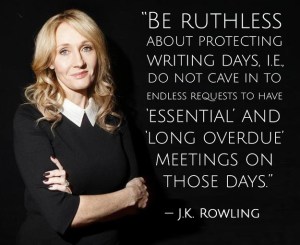
Maybe the following inspirational quotes will propel you to action, when you feel like shutting down.

  1. “As Kandinsky says, “Everything starts with a dot.” Sometimes the hardest thing in writing a story is where to start. You don’t need to have a great idea, you just have to put pen to paper. Start with a bad idea, start with the wrong direction, start with a character you don’t like, something positive will come out of it.” – Marion Deuchars, illustrator and author of Let’s Make Some Great Art
  2. “Remember that writing things down makes them real; that it is nearly impossible to hate anyone whose story you know; and, most of all, that even in our post-postmodern era, writing has a moral purpose. With 26 shapes arranged in varying patterns, we can tell every story known to mankind, and make up all the new ones – indeed, we can do so in most of the world’s known tongues. If you can give language to experiences previously starved for it, you can make the world a better place.” – Andrew Solomon, acclaimed psychologist and author of Far & Away
  3. writing-quote-j-k-rowling“First drafts are always horrible and ugly. Don’t worry about that – it’s the same for everyone. Just remember that the first draft is as bad as the book is ever going to be, and if you keep redrafting, one day you will look at your horrible book and realise that you’ve turned it into something actually quite beautiful.” – Robin Stevens, author of the Murder Most Unladylike series
  4. “Growing up I believed only certain people were allowed to write books – namely, fancy literary heirs who had gone to the right school and university. Not people like me. But of course, anyone can write a book. And anyone should, so that we have more diversity of voices in publishing.” – Julie Mayhew, author of Mother Tongue and others
  5. “Always keep a notebook and pen by your bedside. No matter how much you convince yourself you’ll remember that brilliant idea in the morning, you really won’t. Write it down because sleep has a way of giving you ideas and then stealing them right back.” – Swapna Haddow, author of the Dave Pigeon series
  6. Write what others can't say“Write what you want to know more about — the teacher always learns more than the student. Become passionate about the stories you tell and the people you are writing about. Finish your writing day with something that makes you want to know what happens next. Give yourself periods of rest — mental breaks sharpen the mind. And keep writing, especially when you don’t feel like it.” — Anita Agers Brooks, author of Getting Through What You Can’t Get Over and other titles
  7. “You might not write well every day, but you can always edit a bad page. You can’t edit a blank page.” — Jodi Picoult author of My Sister’s Keeper

What are some of your favorite writing quotes? What motivates you as a writer?

“I Want to Write a Book…”

pexels-photo-267586

Occasionally I’ll connect with someone who’s itchy to write. Maybe he wants to start a blog. Maybe she wants to write a book. And this potential writer is itchy to take the right next-steps to do this.

Maybe you’re that potential writer.

Without yet knowing you or your story, here’s what’s in my heart for you and other eager potential writers…

Write

Start. Begin. String words together. Gather your sentences into a meaningful whole.

It’s estimated that 81% of Americans feel they have a book in them and should write it. I don’t know the stat for people who go on to actually write them. I feel fairly confident guessing it’s not 81%.

So by sitting down at your laptop and writing, you’re well on your way.

The thing that makes any legit is…writing.

Work at Your Craft

The best writers work at their craft. There are a number of good ways to do that:

  • Attend a writer’s conference.Writer’s conferences offer great workshops to help you improve your writing. And they often offer opps to network with writers, editors, publishers, and agents. (Here’s a good listing of Christian writer’s conferences, if that’s your bag.) I’m not a conference junkie, but I do believe that there are a host of rich resources available at most writers’ conferences.
  • Join a writer’s group. Gather with writers in your area. Meet face to face to share and critique one another’s work. Or, find an online critique group. Others’ feedback—noticing strengths and offering areas for improvement—is extremely valuable in growing as a writer.

 Before You Publish…Publish

If you’re anything like me, you may secretly hope and believe that the first draft of the book that’s in your heart will become a New York Times bestseller.

Psychological professionals call this “magical thinking.”

If you’re serious about writing, begin to develop an audience.

  • Guest post on a friend’s blog.
  • Start your own blog.
  • Pitch articles to online magazines.
  • Enter a contest.

Though it can be tempting to want to dazzle audiences with that first book, either traditionally published or self-published, there’s a lot to be learned on the journey. Good writing is worth the wait.

Don’t rush.

But do start.

Write Your Heart Out


write-your-heart-outOutside my window a bird is singing. So long and loud for a tiny bit of feathers. The song is varied and the notes rise and fall, fluid and melodic. Truly he is singing his heart out. Simple and beautiful. The night is gone and the sun is rising. As he sings, I type.

How naturally the notes come to him. Can I claim that innocent posture? Can I let my words fly out, wild and reckless, like he releases his song? Can I claim the natural beauty of his rhythm and cadence in my flow of words and phrases? Can I write as he sings – exuberant, thankful, not concerned with the cares of the fate of the song? Of who will hear it? Of where it will go? Or even of its value?

Now he is silent. The song is finished and he has moved on from the tree outside my window. Perhaps the song is forgotten, released into the world and abandoned. He has moved on to live his life, gathering berries and seeds, feeding his young, feathering his nest. Soon I’ll do the same with my day. Many tasks are waiting.

Tomorrow there will be another morning and another song, and I must trust that there will be more words to type, to release and surrender. The songs must be sung. Words must be written. Simple and beautiful.

Write your heart out.

Betsy Duffey and Laurie Myers WritingSisters.com

In the morning, Lord, you hear my voice. . . Psalm 5:3

the-songs-must-be-sung

5 Things Aspiring Writers Might Be Surprised to Know

Your DreamsI remember when my pulse quickened and my heart thumped at the thought of “making it” as a writer. The first time I gingerly brushed the soft cover of my first book, flicked through its pristine pages, I felt awed. The young girl inside of me, who’d always dreamed of seeing her name on a book, shed a happy tear.

Now that I’ve succeeded in publishing multiple books, with more on the way, I’ve found myself in a reflective mood. Recently, I pondered some of the more surprising things publishing success has taught me — boiling them down to my top five.

***

5. Your need to learn will never diminish. Culture shifts, technology advances, headline focuses, and global changes necessitate a writer’s dedication to ongoing education. Solid research and investigation are bedrock pieces in the foundation of any great written work. New information equals fresh content. 

4. Fear will not subside — although fear can change as your writing career progresses. Early on, many aspiring writers fall prey to the paralysis of fear, while professionals know that fear can prove a driving motivator. When you consider the greater loss of missing potential success, the emotion of fear propels you to action. If you fail to try, your failure is guaranteed. 

best thing you don't write3. The writing life is not a solitary endeavor. It takes a team to successfully publish. Critique groups, writing peers, or advance readers help us delve deeper into our subject matter, and pick up on flaws we often miss. Agents, publishers, and editors polish our projects and help promote them to reach a bigger audience. Readers become fans who sometimes become friends — if we are so blessed.

A wise writer intentionally and consistently builds their audience. When much in the world changes, one thing does not: word of mouth is still the most powerful marketing machine.

2. Story, whether written in the entirety of a book, or a short paragraph to example a point, draws readers deeper into your world. Few people appreciate being talked at, while most love being drawn into a good story. Whether they author novels or non-fiction, the skillful writer paints pictures with their words.

1. Human curiosity is king. Write cliff-hangers, page-turners, and chapter-leads to keep your reader wanting more. As you resolve or answer each inquisitive sentence you craft, replace it with another, until ultimately, you tie it all together at the end. A satisfying conclusion after creating ongoing curiosity makes a reader say, “I wish this book hadn’t ended.”

Motivational MantraI’m still working on all of these areas in my own writing, and anticipate the need to keep them in mind until the day I type my very last word. I don’t simply want to write, I want to use my words well.

Most writers I know would agree — we start out writing for ourselves — until we discover the real gift is in writing for others. The dream we live is the dream we share.

Watching and Waiting

Photo/KarenJordanI’ve learned a lot about waiting and watching as a writer. So, I wanted to share this excerpt from my book, Words That Change Everything, with you.

Waiting rooms can bring out the worst in me. Long periods of waiting produce all kinds of emotional red flags—from impatience and worry to full-blown panic attacks.

Reminders of past pain, traumas, and personal losses make our current trouble seem intolerable. The dark clouds roll in, and we ignore the light of spiritual truth.

I’ve been assigned to many waiting rooms, especially this past decade. And I don’t really like to wait; I’m very impatient for good news to arrive. But waiting does not have to be hopeless. We can find hope and resist worry when we know that God is listening to our cries for help.

The psalmist speaks of “waiting” in Psalm 40, and I particularly resonate with this line from The Message Bible.

I waited and waited and waited for God. At last he looked; finally he listened. He lifted me out of the ditch, pulled me from deep mud. He stood me up on a solid rock to make sure I wouldn’t slip. (Ps. 40:1–2 The Message)

Jumping from one waiting room to the next—crisis after crisis—and trying to help others in their time of need, well-meaning supporters encouraged me to find relief from my stress, anxiety, and exhaustion.

When I asked for advice how to obtain their suggested rest, some offered me quick fixes and temporary solutions. But nothing provided the peace that I desperately needed until I leaned on God’s Word for help.

What are you waiting for today?

jordanKaren Jordan. Words that Change Everything. Copyright © 2016 by Karen Jordan. Used by permission of Leafwood Publishers, an imprint of Abilene Christian University Press.