Sergio: A Memoir from My Writing Life

My writing life continues to take me to places that I never dreamed possible. A few years ago, I decided to go back to college to pursue a degree in writing. And my academic journey gave me the opportunity to study a second language in another country.

In Spain, I learned more than just the language—I learned about their culture, their history, and the every day life of the people there. I also learned things about myself and human nature. Plus, this experience provided numerous stories to share, like this one about my young friend, Sergio.

One of my best language teachers proved to be a five-year-old boy named Sergio, the grandson of my hostess, Beni.

Sergio would sit with me every day at the kitchen table, after the others had finished their meals and retreated to watch television. He enjoyed pretending to be my teacher.

Child Teacher. As Sergio picked up each piece of fruit, one-by-one, from the ceramic bowl on the kitchen table, he would hold it up and wait for me to say the name of the fruit in Spanish. If I didn’t respond fast enough, he would look at me with his big brown eyes and teach me the appropriate word.

“Me-lo-co-tón,” Sergio said slowly, as he held up a peach and waited for me to repeat after him. And after I responded, he would flash his bright smile, clap his hands, and applaud, “¡Qué bien!” [Great!]

Then, Sergio would grab another piece of fruit and continue to quiz me, until he thought I had mastered each Spanish word. When he grabbed a banana, I would always laugh as I responded, “Ba-na-na.” [Sergio didn’t know we used some of the same words in English.]

I bought Sergio candy and toys to express my gratitude to him. One day, I gave him the mini-flashlight that I carried in my purse from home. As he ran to show his mother, he danced around the apartment snapping the light off and on.

Sergio reminded me of my own grandson, Miles, who was just a few years older. And Sergio helped me fend off being homesick, as I interacted with him.

Adult Student. In studying Spanish as an adult, I experienced both humiliation and judgment. My host family often seemed very impatient that I had not mastered their language. And since I was somewhat shy, the looks they exchanged when I tried to speak in their tongue embarrassed me. They would sigh heavily and roll their eyes. Then they would speak slowly with raised voices as they repeated phrases toward me.

I felt ignorant when I couldn’t find the words to express what I wanted to say. But Sergio always responded to me with patience and kindness. He helped me because he wanted to be with me, and we both enjoyed our time together.

Life-long Learner. I suppose I was too stubborn to give up on my goal of becoming bilingual during my studies in Spain, even with the difficulties I faced. I now appreciate the Hispanic population in my own community and the struggles they encounter in a country where most people do not understand their native language.

I discovered some surprises about myself in my efforts to learn another language. My husband, Dan, became more aware of my weaknesses than anyone. I’m sure he’ll never forget the night he walked into our family room at midnight and found me on our carpeted floor in a fetal position—crying because I had received a “B” in a conversational Spanish class.

I laugh when I think of that moment now. But at the time, I didn’t see the humor in the situation. Learning a new language proved to be one of the most humbling and difficult experiences of my life. But it gave me insight into teaching others to write, and I later became a writing instructor. In fact, I discovered that learning to write is much like learning a second language–but that’s another subject for a future post.

And in spite of the hardships and disappointments I encountered during my language school experience in Spain, my most memorable and effective teachable moments came with my young friend, Sergio.

Where has your writing journey taken you?

In the Wrong Place at the Right Time

This may not be the place to admit it, but I’m having an affair. We go on dates, doing things together that we love. Other times we pull down the shades, dim the lights, and cuddle up close. And–dare I admit–sometimes we whisper in agreement about our future.

Yes, I confess, I am having a torrid love affair with books. We were meant to be together. I believe in them; they believe in me. We’re inseparable.

The intimacy of this relationship explains the uncontrollable urge that surfaces each time I finish reading a great book, this impulse to write my own hope-filled book that leads women right to Jesus.

As a new writer, I used to scour the bookshelves coveting the author names on the spines. I traced my fingers across compelling covers and inhaled the new-book freshness as I dreamed of my very own name gracing the art. I envisioned countless days spent whittling my words and learning to be a master craftsman.

Later, as a career writer, I fell into a whole new world. Today’s publishing culture demanded I become an expert not only at writing, but marketing and social media as well. A bit disconcerting to a shy writer who simply wanted to write well.

How could I improve my craft if I had to concentrate on building my platform before I was ever published? How would I offer both a high-concept idea and a stop-you-in-your-tracks platform that agents and publishers couldn’t refuse?

It was time to reconsider. Instead of my name on a book spine, maybe, for now, my place was a magazine byline? While focused on writing books, I couldn’t discount that writing for magazines might help me reach my goal. I couldn’t ignore the platform-building opportunity that freelance writing offered.

While an average book may sell 5,000 copies, the readership of some magazines hits millions. Last month, I wrote a feature for Guideposts that offered me an audience of five million readers. My audience expanded as I cast my writing net a little deeper, a little wider. That article led to about 10,000 hits to my website within a very short period of time and connected me to some amazing new readers and relationships. Oh, and I sold books like crazy.

I didn’t start out with Guideposts, I started regionally. My first published print article was for a women’s magazine in my hometown—monthly circulation about 50,000. But from that article came a couple of joint ventures and writing assignments that led to later features in national and international magazines. Today, I have a healthy following of women with whom I am honored to share hope and inspiration on a regular basis.

Without taking time to go to where my readers were (to build my platform), I imagine my first royalty check would have come from a small base of hardcore fans (all relatives). Not only did writing for magazines allow me the chance to make new connections, but I also honed my craft while cushioning my bank account—not a bad deal overall.

Ready to get started? Here’s a helpful article I found online on how to break into the national magazines.

By the way, feed my curiosity. What book can you not live without?

Honoring the Writer’s Call

Remember the Call

As ambassadors of the written word, we’re called to awaken people to truth. Rubbing words together, we set the world on fire!

Above publishers and agents, God’s our number one boss. With pure, submitted hearts, we make it our mission to please him first.

Am I on the right track, Father? What do you want me to share today? These are the questions we ask.

We try not to judge and compare ourselves with other writers because we know God equips each of his instruments for different specific tasks.

When fearful, overwhelmed, and wondering why we chose this career/ministry path in the first place, we remember… God never calls us where his grace won’t sustain us.

So let’s not get tired of doing what is good. At just the right time we will reap a harvest of blessing if we don’t give up. Gal. 6:9

Persevere in the Call

When tempted to distraction by potentially good things like social media, movies, and chats, we’re privileged to consult our boss: “Please show me what to do and give me the strength to carry it through.”

When tempted to discouragement by trials, we understand they’re God’s method of making us stronger, more Christ-like, and more effective in our writing.

And we know that God causes everything to work together for the good of those who love God and are called according to his purpose for them. Rom. 8:28

Because we clearly know we have been called to write, we persevere when people judge us, and we remind ourselves it only matters what God thinks, and the Lord sees every heart. 1 Chron. 28:9

We persevere when our paychecks are sparse because we know God will supply all our needs from his glorious riches, which have been given to us in Christ Jesus. Phil. 4:19

We persevere when the road is rough and slow and we can’t see ahead because we know who leads us each step of the way. (Ps. 37:23)

Balance the Call

Balance starts with rest, and rest starts with prayer. Jesus walked a tight deadline, but rose before dawn to commune with his Father. He snuck away from the crowds to reconnect. Do we sneak away from our characters to bless the Word of words?

Jesus waited on His Father for wisdom and wants us to do the same; but it takes trust.  (James 1:5-6)  When it comes to trusting in the Lord with all our hearts, we often get it backwards, and lean on our own understanding first. Then, when things go awry, we cry “Help me!” and ask him to direct our path. He will, but we must first acknowledge him.  Prov. 3:5-7

Jesus only spent three years in ministry; however, his thirty preparation years were just as important because they defined and nurtured the Father/Son relationship, enabling him, in the right time, to turn the world upside down by submitting to His Father’s peculiar but brilliant plan of reaching the Jews first, then the Gentiles.

God writes a different plan for each one of us. He calls some of us to blog first, others to write books first, and still others to do both at the same time – in balance.

Whether we’re writing, speaking, networking or spending time with the family, God isn’t just interested in what he’s doing through us; He’s interested in what he’s doing in us.  He wants us to joyfully trust him so we can honor him with our calling.

“For I know the plans I have for you,” says the LORD. “They are plans for good and not for disaster, to give you a future and a hope.”  Jer. 29:11

Please talk to us about remembering, persevering, and balancing God’s call to write. We’d love to hear your stories, lessons, insights, and experiences.

And what is God reminding you about today?

The 15-Minute Writer: Help for Harried Aspiring Authors

I’ve never had the luxury of uninterrupted time to write. In fact, while finishing my first book, I had a five year-old, a busy hubby–and morning sickness (which lasted all day, throughout the whole time I was pregnant with my second son). Since then, I’ve worked a variety of part- and even full-time jobs while continuing to build my platform and hone my craft. And out of sheer necessity, I’ve become a master at using hidden pockets of time to further my career.

If you’ve got all the time in the world to research, read, and write, then skip this post. If you’re like me, however, I hope you’ll find encouragement for reaching your writing goals–fifteen minutes at a time:

—Write whenever, and wherever, you have a few spare minutes (during lunch hours, while your kids are at soccer practice, in waiting rooms). During these “cram sessions,” don’t edit; just write as fast as you can.

–Or just edit. Read a draft of a poem, filler, or blog post (preferably out loud) and make a few quick changes.

–Browse the writing section of your local bookstore or library and pick out a few gems to read in fifteen-minute spurts. I can highly recommend Writer with a Day Job.

—Hire a teenager to watch your kids, clean house, or do your errands. And later, use the time you just saved to write!

–Create a spreadsheet. Like this.

—-Look for an online writing support group. The members can provide support, tips, and tricks. (If they instead give you spam, aggravation, and passive-aggressive “critiques,” you can always un-join. That would only take five minutes.)

–Save a few templates of frequently-used pitch letters and customize a query to a specific magazine or agent.

–Create a rough draft of a new writing resume.

–Update your LinkedIn account with recent writing jobs.

–Flip through the newest issue of your favorite magazine, and list a few ideas for features you could pitch to the editor.

–Think about the unique ways you organize your kitchen, kids’ rooms, or office. Draft a filler to send to an appropriate magazine.

–Have a great idea for a greeting card? Check out Hallmark‘s website to see what contests they’re currently running.

—“Backwards plan.” Take a deadline, or set one for yourself, and mark it on your calendar. Then write down all the tasks you’ll need to complete in order to meet the deadline—interviews, outlining, writing a rough draft, revising—and decide how much time you’ll likely need to complete each one. Finally, plan backwards, setting yourself mini-deadlines. (This tip has saved my sanity—and my family life—on several occasions!)

From my busy-but-very productive writer friend, Glynn Young, here are a few final suggestions: “Find and follow three writing blogs, like noveldoctor or Jeff Goins. Read one chapter of a book about writing. Read three poems. Read one author’s entry on Wikipedia. Read the current post on The High Calling.” [where Glynn and I both serve as editors]

See how much you can accomplish in short spurts? Who knows–your mini writing sessions might just lead to your fifteen minutes of fame. Either way, you’ll never regret the time you spent pursuing a passion. I promise!

Now it’s your turn. What ideas do you have for using small amounts of time wisely?

Finding a Publisher – 10 Steps to Success – Part 2

I’m returning to discuss those ever important steps in finding a publisher. You can find Part I that covered steps one through five here.

Step 6 – You may have ten or maybe even twenty publishing companies still on your list. Now take a look at their websites to see for yourself what kind of books they publish. Pick out one or two books similar to your own story and discover where the publisher actually sells them. For instance are they available in book stores or only on internet sites like Amazon. Browsing the books for sale can also tell you if the books are best-sellers. Read the readers’ reviews etc. Spending time in this area can help build up a picture of the publisher, and this kind of research is always fruitful for new writers. Are the publishers small or big, successful or not, new or well established, respected or not? On this last point the internet often has blogs and comments about bad publishers. Read them but be discerning because sometimes the comments may come from an embittered author whose books were repeatedly turned down.

Step 7 – So you have now made a shortlist and want to decide where to send your precious MS. Remember you can send copies of the MS to several publishers at the same time. Better to fire off several barrels rather than just one bullet, scattered guns normally hit something; whereas, the single shot usually misses the target.

Make sure you really read the details of their submission guidelines. Each company will have a different slant as to how you contact them. Some want the whole MS; others don’t. Some want the first three chapters only; whereas, some publishers just want to see a synopsis of the book. Remember to keep strictly to the guidelines, or your MS may end up in the waste paper basket. And always send a stamped addressed envelope so that the copy can be mailed back to you. That way you are more likely to get a reply even if it’s not the one you wanted.

Step 8 – A warning! The ‘sharks’ out there often disguise themselves as bona fide publishers. They might look safe, but all they want is to chew on your money. This is not saying that ‘self-publishing’ companies are predatory. Most often they’re not because in the case of self-publishers you get what you pay for.

I am sorry to say that there are Christian companies out there in the big ocean that act like sharks. One such company contacted me and said they wanted to publish my book, but it wasn’t until the third or fourth email that they told me it would cost $18,000 up front. The contract also tied me into buying a hundred books at $10 a book. If however, you are serious about your writing, find a reputable publisher and use your best judgement to pick the right one. If it doesn’t feel right, then it probably isn’t!

Step 9 – So you’ve sent your MS off; do not despair if after a short while you don’t hear back. Just be patient, and resist contacting the publisher to find out what’s the score. Most often it takes at least three months to get even an acknowledgement or even longer. I know that you are on tenterhooks, but the best way to stay sane is to ‘forget’ about the submission and get on with the next project. If you get rejections, don’t lose heart. Some of the most famous authors had hundreds of rejections before someone smart bought the book. Remember a lot of publishers make errors in their choices. The Harry Potter series was turned down by loads of agents and publishers. Have faith and keep knocking on doors; you’ll win in the end. The writers who found success are those who never gave up believing.

Step 10 – If you are a Christian writer, here’s a Ready auto transport service you can use. In short, what it does is post three chapters of your book and a brief author bio with your contact details on their website. The website is known to many Christian publishers who take a peek on a regular basis to see if there’s anything worthwhile posted there. It’s inexpensive, and your submission stays on the website for six months. One last piece of invaluable advice for Christian writers is this: remember the Lord is keenly interested in you and your work. Pray every day for success. I found success with an agent and a publisher who were five thousand miles away from where I live.

Care to share some of your publishing experiences?

Beyond Instinct: (Not) Writing Like Weasels

In her much-anthologized essay “Living Like Weasels” Annie Dillard locks eyes and brains with a weasel, launching an essay on calling. Weasels teach us how to live, Dillard writes, embodying an instinctive mindlessness, all energies pointed toward their “one necessity.” One weasel latched onto the throat of an eagle and never let go, even in death, its skeleton attached to the eagle’s chest. The essay ends here:

“I think it would be well, and proper, and obedient, and pure, to grasp your one necessity and not let it go, to dangle from it limp wherever it takes you. Then even death, where you’re going no matter how you live, cannot tear you part. Seize it and let it seize you up aloft even, till your eyes burn out and drop; let your musky flesh fall off in shreds, and let your very bones unhinge and scatter, loosened over fields, over fields and woods, lightly, thoughtless, from any height at all, from as high as eagles.”  

It’s a stunning close to an inspiring essay. But the beauty of the language disguises the horror of the scene. The weasel latched onto the wrong bird. His actual death was not likely very poetic. As writers and as people of faith, we’re not as horrified as we might be: death is not our final fear, and we understand the larger metaphor of death. But we needn’t seek it out. There are so many ways to die as a writer already; I’d like to save us from an unnecessary demise or two with a few simple words:

Choose the right bird. When you discover you’ve chosen wrongly, let go.

This is a simple way of saying that as writers we labor under more than one calling, more than “one necessity.”  There is the calling to write, the sense of being appointed a wrestler with words, a storyteller, even a prophet at times. But there are callings as well to particular projects and subjects. When we don’t distinguish between the two, we’ll find trouble, maybe even death.

In the last twenty years I have let go of a number of essays-in-progress, articles, even book manuscripts. Despite seeking God’s direction—and feeling that I had found it, two book projects I felt very “called” to pursue, ended up withering. As each  atrophied, I latched on yet harder, spending costly attention and effort trying to revive them—to no avail.

I did not expect success to meet every writing endeavor, but some losses hit hard. We question our worth as writers; we question our very calling. But we often ask the wrong question. Rather than asking, “Am I really called to write this novel (this essay, this book) right now?” we often ask, “Am I really called to be a writer?”  In these moments, we’re not so much rising on the wings of eagles as we are devoured by our own insecurities and disappointments. We may even stop writing altogether. This is the second death—and the least necessary.

The weasel operates by instinct alone. We can do better. We can’t see into the future to know whether a project will ultimately succeed, but we can follow our given passions, testing them thoroughly with research, prayer, and rough drafts. If a project falters, as all seem to do at some point, we persevere until—-we cannot. Then, we pry ourselves loose and let it go.  Not easily, and never prematurely, but our bones will stay hinged, and our musky flesh will live to choose another subject, another day, one that may indeed send us soaring.

The Awesome Power of Humor in Writing

“Lord, please don’t let me die in a CVS bathroom,” a young friend of mine, Kelli, posted on her Facebook status during the Texas Tornadoes of Tuesday, the day when semi-trucks flew like box kites.

I thought, What a great way to handle a crisis: with a prayer on your lips, your sense of humor intact.  Not only that, but I knew that keeping a sense of humor in spite of the stress and danger, would be calming both to Kelli and the frightened folks with her — because it is hard to think of something funny and be terrified at the same time.

Just moments before Kelly’s post, I had been talking to my daughter Rachel, who lives in small town Forney, Texas, and with whom I’m writing a humor food blog and book by the same name (We Laugh, We Cry, We Cook). Tornadoes are so commonplace in Texas that when Rachel answered the phone with, “Hi, Mom. I’m in the bathtub with the baby and a mattress pulled over our heads,”   I almost asked, “Again?”

This would be our third cell phone conversation this year with my daughter scrunched in the tub with her baby, her phone, her lap top, a mattress overhead. This is simply “Life in Texas” during tornado season; but  in my fifty-three years of doing the Bathtub Tornado Preparedness routine, I’ve never seen one funnel cloud.  Hard to take those TV tornado warnings seriously when they seem to happen every little whip-stitch in the Springtime.

But then Rach said, “Mom, the weatherman just shouted that a tornado has hit a Forney school.” Rachel lives only a half-mile from a Forney high school and elementary school.

All the blood drained from my face.

“Honey, stay on the phone with me…” I said, and then heard nothing from her end of the cell phone but snap, crackle, pop, followed by  … silence.  I called back, but cell phone service had ceased in her area.

I grabbed the remote, flipped on the TV only to see the words “Forney,Texas” flashing, with scenes of the menacing tornado playing across the screen.

Sick with fear, it was ten, long, excruciating minutes before Rachel called back to report she was fine, not even a drop of rain. She sounded calm, but then she’d not yet seen what had just miraculously missed her home.

I cried, my husband Greg (who is not only CEO of WordServe, but a stellar comforter) hugged me. My legs now Jell-o, I sat down, glanced at my computer and my eyes landed on Kelly’s brave/funny status post (from somewhere near Greenville, Texas) and somehow… I managed a laugh.  And with that first laugh, calm began to flow through my veins, and my traumatized brain began the process of soothing itself.

I fell in love with President Reagan the day he calmed an entire country with the words, “Who’s minding the store?” soon after he and several others had been shot.  If Reagan could still joke, and we could still laugh, everything would be okay. America breathed a collective sigh of relief, thanks to the President’s cool head and sharp wit.

I’ve written three books with brain specialists, and I’m proud that I could gather enough middle-aged brain cells to write something serious and science-based.   But what flows from my soul and my pen most naturally is humor.  I used to feel that writing humor was somehow less important, not terribly “literary.”  I know many serious writers who still believe that writing humor takes less intelligence, less skill, and not much depth of thought.  To those writers, I say, “Try it. Then, let’s talk.”  I once heard an interview in which Barbara Mandrell’s little sister (“the blond ditzy one”) said, with a wise wink, “It takes a lot of smarts to play dumb.”  It also takes a tremendous amount of skill to be self-deprecatingly funny on paper, without being corny, or forced, or silly.

Over my writing career, I’ve received hundreds of letters or emails that read something like,  “Someone gave me a copy of your book while I sat with my dying mother in the hospital, and we both laughed until we cried. Thank you for giving us that happy memory together.”  Or, “I lost my husband last year and could not read anything serious or heavy.  But your stories, and the laughter… oh, how healing it was to laugh again!”  And on and on.

My time with the brain doctors taught me that laughter is a gift to every cell in our body. If you can write stories that bring a grin or a chuckle, you share a priceless gift with your readers. You give them a short mental vacation from their worries and those common looping, overly-serious thoughts.  Laughter helps re-set the brain from negativity to lightheartedness in a short amount of time.

Whether you write books of humor, or just sprinkle some well-placed wit into your prose, there is no genre that cannot be improved, or heart that cannot be lifted, or worried brow that cannot be soothed by a touch of the clown, now and then, from your pen.

“Laughter through tears is my favorite emotion.”  Steel Magnolias

Question:  As a reader or a writer, can you recall a time when humor helped you through a dark time, a frightening experience or even a season of grief?  What authors do you admire who consistently help you laugh and perhaps gain some fresh perspective?

Success and Spiritual Warfare

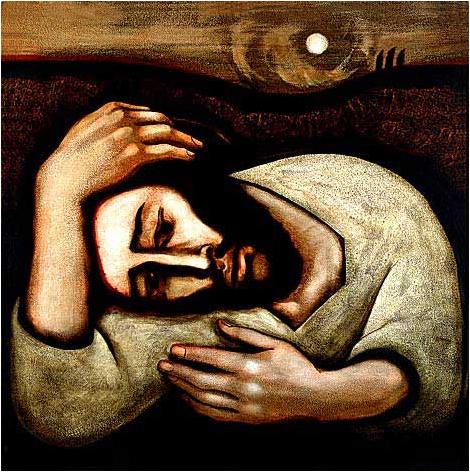
"Christ in Gethsemane" by Michael O'Brien

Today, Good Friday, we remember the great cost paid for our lives.

And [Jesus] said, “Abba, Father, all things are possible for You. Take this cup away from Me; nevertheless, not what I will, but what You will.”
~ Mark 14:36 (NKJV)

When our Savior pleads with His Father in Gethsemane, exactly what does “the cup” contain? Jesus has already given His word that He will accept the contempt and degradation, scourging and crucifixion, and the death required by bearing sin, horrific as these all are. The cup evidently contains something far worse, so terrible that Jesus Himself wishes to avoid it.

I believe “the cup” contains sin’s monstrous, consummate penalty—isolation from God as He turns away from the one bearing sin (Matthew 27:46).

We who are Christ’s will never taste of that cup. The veil is torn asunder, and we have sweet fellowship with God, to our everlasting gratitude and praise.

I shall not die, but live,
And declare the works of the LORD.
~ Psalms 118:17 (NKJV)

Christian authors declare faith in penning everything from theological resources to respectable entertainment, inspirational devotion to suspenseful adventure, history to romance. Our works usually combine such elements, for we use all possible means to connect with readers and build up their faith.

Would we expect success to go unnoticed by our enemy?

Whatever else is shared and learned about writing, publishing, marketing, etc., the substantial spiritual warfare that many authors experience should also be noted. The wider our sphere of influence becomes, the more important it is to prepare ourselves for spiritual attack.

The devil will use anything he can to diminish our spiritual vitality and fruit. Among his weapons are:
• deceit or distortion of truth
• distractions
• conflicts or division / separation among believers
• strong temptation to fall into immorality
• inflated feelings of success and pride
• discouragement or overwhelming feeling of failure
• depression, confusion, or other mental impairment
• contempt from impersonal critics
• betrayal by personal friends
• attacks on reputation or unfounded accusations
• unusual stress in health, finances, and relationships
• terrifying demonic presence, perhaps via nightmares

I unhappily confess that although I’d waged and won smaller spiritual battles, my strength faltered when the fight became fierce. I had lost top fitness, gradually spending more time serving the Lord and less time in simple fellowship with Him. I was then blind sided by the intensity of an all out spiritual attack, which occurred on the heels of publishing successes.

Just as we acquaint and train ourselves with the publishing resources made available to us in order to succeed, we do well to acquaint and train ourselves with the spiritual armor made available to us through the price paid at Calvary.

I write to you, young people, because you are strong, and the word of God abides in you, and you have victory over the evil one.
~ 1 John 2:14

Today we remember the great cost paid for our lives—and we may think of our lives as the goal for which Christ died.

Our lives, rather, are the means for a greater end—fellowship with God. And fellowship with God is what drives our spiritual fervor, empowers our spiritual gifts, and wins our spiritual battles.

Q4U: Have you experienced spiritual attack, concurrent to your successes? How have you overcome?

© 2012, Anne Lang Bundy

My Top Five Writing Retreats

Cedar Key, Florida
A Breath of Fresh Inspiration

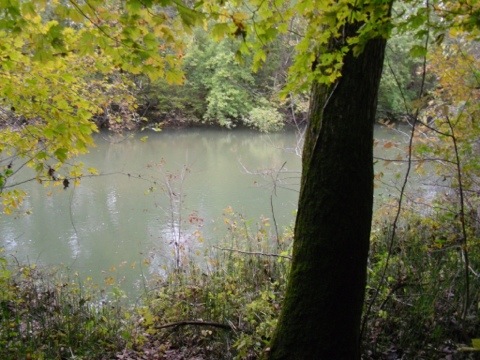
The great outdoors inspires me as a writer, especially in a setting by a river or lake. Water trickling over rocks, breeze-swayed evergreens, birds serenading from treetops, and rainbow-hued flowers. The scent of earth perfuming the air.

My muse comes alive in God’s created paradise. Especially for a cave-dweller like me.

Coming from a resort management background, I’m blessed with insider information about great getaways. There are affordable places around the country, to fuel a writer’s creative juices. Where magical meets practical.

So lean in close, and I’ll whisper a few secrets about my top five writing retreats.

5) Mohican Adventures — Loudonville, Ohio
Amenities & Attractions: Cabins, RV campsites, small lake, Miniature Golf, Go-Karts, Canoe Trips, Horseback riding, wooded area and hiking trails, Wi-Fi (extra fees)
Special Notes: The rolling hills around Loudonville bear the mark of Amish influence. I feel like I’m in a by-gone era when I drive through centuries-old quaint towns. And yet, the resort offers modern convenience.

4) Ozark Outdoors Riverfront Resort — Leasburg, Missouri
Amenities & Attractions: Cabins, motels, condos, RV sites, wooded hiking trails, canoe, raft, kayak, and tube trips, Wi-Fi in designated areas.
Selling Points: I love the choice of three different rivers to roam. This immaculate resort is tucked into lush Ozark hills, twenty minutes from the closest town. Bald eagles often fly overhead, nesting atop trees and massive bluffs in the area.

3) Adventures Unlimited — Milton, Florida
Amenities & Attractions: Historic rental homes, riverside cabins, zip-line, canoe, kayak, and tube trips. Wi-Fi in designated areas.
Writer’s Attraction: How can I resist rooms with names like The American Poet’s, John James Audubon, William Faulkner, Dr. Seuss. Ernest Hemingway, Margaret Mitchell, and Mark Twain? Each unit in the Schoolhouse Inn boasts books and memorabilia for the author it represents. The rocking chairs and swing, on the southern wrap-around porch, allow me to write in a setting fit for the masters.

2) River & Trail Outfitters — Knoxville, Maryland
Amenities & Attractions: White-water rafting, kayaks, tubes, near the landmark village of Harper’s Ferry, WV and the C&O Canal trail, perfect for bikes or an energizing walk.
Creative Triggers: This place feeds my hunger for history and love for America. Located near the confluence of Maryland, Virginia, and West Virginia, rich stories of our nation’s heritage wait around every corner. Access to the Potomac and Shenandoah Rivers, puts me on the same hallowed waterways our forefathers traveled.

1) Voyageur Canoe Outfitters — Boundary Waters Canoe Wilderness Area, Minnesota
Amenities & Attractions: Rustic cabins, tent camping, outfitted lake trips by canoe or kayak. Secluded areas to make you feel like you have the whole territory to yourself. A distant moose or bear sighting thickens your plots.
Magnetic Draw: Leave no trace — more than a tag-line, here it’s a way of life. I feel like Lewis or Clark, pioneering new frontiers, while watching water trickle off my paddle. Challenging portages cause blood and oxygen to pump to my brain, spurring new imaginations. I call this place Boundary Energy.

Quieter Times & Lower Prices for all resorts: April, Early May, Late September, October, Tuesday through Thursday in summer.

Writers often need quiet space, and outdoor writing retreats offer a breath of fresh inspiration. No matter where you live, there’s probably an economical resort close by. Take advantage of off-peak periods to sweeten the price. But then again, you could pitch a tent in your own backyard.

Where do you retreat to sharpen your focus? How do you concentrate on projects?

Leasburg, Missouri
Meeting the Muse in God's Creation

Memoir Makes It Better

5 ways practicing memoir will improve both writer and writing.

There is fiction, and there is nonfiction; then somewhere in between lies memoir, their mutant spawn.

The last decade or so has been a heyday of sorts for memoir. Much of what makes the genre appealing to readers is that it combines the artfulness of fiction with the real-life validity of non-fiction. It’s the refined, literary version of reality TV.

But what appeals to memoir readers is often the same thing that confounds memoir writers. To piece together a good memoir, the tenets of fiction must be employed within the constraints of non-fiction. Likewise, the aims of non-fiction must be achieved through elements of fiction.

Still, this blurring of lines is precisely what makes memoir a worthy and worthwhile effort for any writer. Here are a few of the lessons you might find yourself picking up in the practice:

1. You Aren’t So Wonderful

In a world of bad characters and good ones, most of us would seat ourselves in the “good” group. But memoir might suggest we are being too generous in this. Try turning yourself into a protagonist: take a recent conflict in your life and record what your thoughts, actions, and interactions were in it. Leave out your motives and intentions, and instead write what actually happened. How did you respond when given a backhanded compliment, when annoyed in the check-out lane, when cut off in traffic, when insulted or demoted or hurt? Write it honestly.

I thought of myself as a capable and accomplished person, more or less—a kind one too, until I had to become a character in my memoir. The character-me was not nearly so magnanimous as the “me” that I had perceived myself to be. Seeing my unedited self on paper was startling. There was far more sin and selfishness than I would’ve been willing to admit. But that awareness made me better: more repentant, less proud, more forgiving, less afraid of making mistakes. I became newly grateful for what I have been given because I could see like never before that I don’t deserve it. And grateful is a great place from which any writer can start.

2. Characters are Complicated

Walk a mile in somebody’s shoes, as the saying goes. Real people have real complexities; this is impossible to ignore when writing memoir because the subjects you’re writing about are displaying their complexities all the time, from head to toe. Let this be a lesson. The people in your stories will be stronger subjects if you’re willing to appreciate nuance and even paradox in them. That means creating/presenting subjects who have dimension: likeable and unlikeable qualities, consistencies and inconsistencies, weaknesses and strengths alike.

3. Story Is Good

Setting, plot, characters, conflict, rising action, falling action, dialogue. Fiction writers tend to be experienced in weaving together these elements in their writing, while many non-fiction writers spend little time developing their story muscle. The result is often a non-fiction writer with a profound writing weakness: four parts tell for every one part show. Take a crack at memoir, and you’ll see that story can make a point on its own. Events and truths don’t necessarily require further explanation from an omniscient author voice. When the story you’re telling is complete, resolution is already there.

4. Reality is Simple

To keep things fair, here’s one for the fiction folks. You have zero limitations on the creativity you can bring to your story lines, which is likely why the rest of us so thoroughly enjoy your work. But memoir can remind you that most happenings in life are not extraordinary, at least not at first glance. While it can be tempting to rely on spectacular details to move your story along, often that’s an easy way out. It might take more effort and more practice in writing to instead craft a more plausible storyline that has every bit as much resonance.

5. “Interesting” is Necessary

But it should also be said that spectacular things resonate spectacularly. Few people will want to read your work if nothing in it drums up any interest. Far too often we let ourselves settle for an existence that is boring and wimpy. Ask yourself: In the last year, have I changed? Have I pursued something? Have I discovered something? Have I been part of something that matters?

We are creatures made in the image of a bold, reckless, zealous God, the One whose story grips people and sets their lives on an entirely new course. If there is nothing in your life that seems worth writing about, let memoir be an alarm that wakes you up to live bravely. Chase after something. Commit to something. Let go of something. Be moved to action. Give generously. Receive graciously. Love with tenacity. Or write some memoir, if you dare.