The Blessing in a NO

Ever feel like you just can’t catch a break? Nothing seems to be going your way? Have you ever heard no so many times it starts to lose its meaning? Welcome to the world of writing.

In the last three years, I have heard no so many times that I have learned to laugh and look for the next open door. When I first started hearing no it was a foreign concept to me. All my life I worked hard for what I had – job, grades, academic standing – and then I put one foot into the real world, and for some reason none of my achievements carried much weight. Crazy how that works, isn’t it? But it took a series of closed doors to teach me the blessing in no.

  • Applied to grad school at Texas Tech – No
  • Applied to 11 other grad schools (About the eighth letter, I started laughing instead of crying.) – 11 No’s
  • Moved back home and applied for A LOT of jobs – A LOT of No’s
  • Wanted to move out of state – No
  • Applied for more jobs and internships – More No’s
  • Submitted my book for publication – A lot of silence (which equals a “no” in the publishing world)

Starting to get the picture? No started to lose its meaning. But the more I heard that dreaded word, the more I began to find my way. Know what happened when I stopped trying to make things happen and allowed the Lord to direct my steps? A lot of those no’s became yesses in directions I never would have explored.

  • Got an acceptance letter to Focus on the Family Institute in the same month I was rejected from Tech. The Lord changed my life. – Yes
  • Found a freelance writing position two days after my most recent job rejection. – Yes
  • Attended a writers conference and was accepted into a writing course with a mentor doing the exact same thing a graduate degree in writing would have given me for an eighth of the cost. Found Christian authors to encourage me. – Yes
  • Attended another conference and found agents and editors who are interested in my book. At least I’m on the right track. – Yes

The Lord began to open doors to all the things I had been pursuing, except He determined the direction and the timing! It turns out that I’m in pretty good company. In the Bible:

The Lord told Abraham to leave everything He knew and travel to a land He would show him.

Abraham prayed for a child, and the Lord said no until Abraham was so old it seemed impossible, and then the Lord blessed Abraham with Isaac, the promised child.

Jonah didn’t want to go to Nineveh to preach. He ran away but the Lord said no to Jonah’s direction. He sent a whale to swallow him and then spit him up on the beach near Nineveh. It changed that city.

Mary probably expected to go into her marriage a pristine virgin. The Lord said no to that plan. She was still a virgin, but she was shamed by her people with a child, who turned out to be the Christ child – the One who changed the world.

My no’s seem pretty insignificant in the grand scheme of things. The Lord used redirection in the Bible for His glory and the good of His people. There is blessing in this dreaded word.

In his heart a man plans his course, but the LORD determines his steps. (Proverbs 16:9).

I follow my own way so much. But the Lord wants to tell me YES. He just wants to do it in His own time and in His own way. Just as He has been faithful in all His covenants and promises in the Bible until now, I know that He will be faithful to answer my no’s with yesses in far better ways than I could. They never look like what I thought or planned. They are always, always better.

Trust Him with your no’s. Embrace closed doors. They are blessings in disguise! He is so FAITHFUL!

Deep into NaNoWriMo

Every author knows that it’s National Novel Writing Month – thirty days dedicated to flexing our writing muscles and whipping out 50,000 words of an original manuscript. The idea is to give ourselves permission to pursue our writing passion with all our hearts, minds, and laptops in a frenzy of creative expression and production.

What a great idea!

What unfettered freedom to write!

What joy!

What planet are these people from?

Like most authors I know, writing a novel gets sandwiched in between a part or full-time job, parenting, spousing, volunteering obligations, pet maintenance, cooking and cleaning, and – oh yes! – occasional opportunities to sleep. So, at least for me, while NaNoWriMo sounds like a fabulous idea, that is, unfortunately, all it will ever be for me – an idea, not a reality. During the month of November, while other lucky authors suspend every claim on their time and energy to immerse themselves in writing bliss, I’m still teaching college sophomores how to construct a grammatically correct sentence, walking the dog at least twice a day, cooking dinner for my husband and me, doing laundry, answering emails, and maintaining personal hygiene. Until I can figure out how to do all that AND write at the same time, NaNoWriMo will continue to be an elusive dream, and I will go on wondering what it would be like to write a novel in thirty consecutive days.

Note that I wrote ‘consecutive’ days.

That’s because I do write a novel every year in thirty days. The days are just not back-to-back, or consistently eight hours of effort, but all in all, it ends up being around the same amount of ‘work.’ In other words, I write when I can. Some days, that ‘writing’ may actually be hours of mental plotting while I’m otherwise physically engaged (can you spell ‘spring cleanup’?) or it could be an uninterrupted ten-hour words-pouring-out-of-me marathon when I forget to eat (easiest to do when hubby and kids are out of town). I have, at least twice, written the first chapter in a methodical manner, sitting down to my laptop for four hours a day. But then it’s been weeks, or even months, before I get back for Chapter Two. As I often excuse myself to those who ask, I was trained as a journalist, and I work best under pressure, but as an example of writerly discipline, I stink.

It works for me, though. I find that downtime between chapters, or even mid-chapter, gives me time to play with my story, working out different arcs or conflicts. My writing breaks allow my characters to form more completely in my mind, often without my interference. And sometimes, my story takes turns I never would have predicted, thanks to the people or events I encounter while I’m in the middle of slowly, erratically, crafting a story.

Write a novel in a month?

If you can do it, go for it.

Me? I’m simmering stew, along with story plots. The really good stuff takes time, you know.

How’s your NaNoWriMo going?

Building the Perfect Brand

I recently attended a branding seminar for authors and wanted to share best practices with the WordServe Community. Here are 4 Sizzling Secrets to Branding You and Your Book from speaker Liz Goodgold, Branding Expert for www.RedFireBranding.com:

1. WIIFM: What’s in if for me?

Your audience wants to know what they are going to get out of buying and reading your book. Sell a benefit or a result – think in terms of a call to action. Will your reader learn a skill, come away with increased knowledge, or be entertained? Knowing your endgame is a huge part of selling the benefits and the results.

2. Consistency is Key

Brands have to be consistent. In-N-Out Burgers always taste the same, and they have since the forties. That is consistency at its finest.  Your audience is looking for that kind of consistency. Once you have established your brand it’s important to stay with it. Think in terms of household names like Chicken Soup for the Soul, or the ‘Dummies’ do-it-yourself guides or perhaps the Mars and Venus books. For writers who tackle random subjects without a real sense of continuum, Liz recommended that the books should still appear consistent with regards to style, size, type, and font. Branding by color is a popular way to go.

3. Book Title – Easy Recall

A well-branded book title is catchy and simple to recall; it also carries over easily from one book to the next. In hindsight, my book, Gumbeaux, was probably not the perfect title as it can be considered difficult to pronounce. However, I have the opportunity, based upon Liz’s learnings, to title my next book: “Rancheaux” or something with a similar suffix. The suffix could work as well for me as “itos” does for Doritos, Cheetos, Tostitos, etc.

4.You Are the Brand

You are not building a book, but an empire. Don’t create a website that is only useful to promote a single book unless you are positive you’ll never write another one. It should be fluid enough to support your blog, sales channels, books to come, a potential series, etc. Check out the websites of your favorite authors and notice how they position themselves not just as writers, but as brands. Use jargon that resonates with your writing platform. You are the brand – not your book – so think big.

How are you building your brand?

The Holy Work of Writing

Every year I host a faculty essay reading at my university for our collective entertainment. At the beginning of the semester, I choose and cajole a dozen colleagues from across the curriculum to write personal essays on a shared subject. Then, sometime around Thanksgiving, I invite the rest of the campus to come hear them read the resulting essays aloud. It’s always a fun evening, everyone feeling proud afterward of what they accomplished.

Though the selected essayists have composed entire dissertations of scholarly writing, most have never set out to write for entertainment alone, so getting them to do it necessitates pep talks from me along the way as well as a fair amount of collaborative back-and-forthing between them and the trusted readers I encourage them to seek out. When they report to me on how it’s going and, afterward, on how it went, my colleagues are bashful and sincere and loveably modest as at no other time in my interaction with them.

“I got my daughter—she’s in high school—to read through it and make sure it made sense,” a grizzled professor of engineering tells me.

Another tells me how, in the course of writing about a Picasso painting her autistic son loved but she didn’t, she kept asking him questions and managed, through these exchanges, to get a rare glimpse of the world from his perspective.

Yet another colleague makes an appointment with me after the reading to work on improving his essay even more. He takes away from our discussion an argumentation skill that he is still bringing up in meetings years later: that you can’t convince someone of a truth unless you show it.

That’s the part of the event I like the most—my colleagues’ accounts of the process of composition. It’s so thrilling to watch seasoned writers grow into better writers through the humbling practice of sharpening iron on iron. Hearing the essays read aloud—every one of them so good!—and then witnessing the enthusiasm with which their audience applauds their achievement—yes, very good!—confirms what I am always telling my students: that, we humans having been made in the image of our creative God, our practice of creativity is as holy as the exercise of any of God’s other traits. And as pleasurable.

It often makes me feel a little guilty that my work, both as a teacher of writing and as a writer myself, is so enjoyable. It hardly seems like work at all, much less holy work, as I have come to think of it. But when we write well—when, through our words on a page, we interest and engage an audience in what is true and lovely and admirable and excellent—we are performing the work of God.

When asked what God’s work is, Jesus says, “to believe in the one he sent” (John 6:29). Writing, and teaching others to write, helps me to believe ever more confidently in the One God Sent—through whom, says John, “all things were made; without him nothing was made that has been made” (John 1:3 NIV). Good writing recreates, in words, what has been made through the Word and offers it up to others for their contemplation and enjoyment. What work could be more sacred?

The Book Review Conundrum

As a newly published author, I’ve found the review game an interesting one. Are all reviews good (1 star to 5 star)? What about paid-for reviews or even fake ones? What does this mean for an author?

I’m hosting book marketing consultant Rachel Simeone, with ZetaBlue Marketing, as she tackles the whole review question. I have not worked with Rachel personally but found her information valuable and am happy to have her guest blogging today.

Welcome, Rachel!

*****************************************

With all the recent news about fake reviews on Amazon, a number of my clients have asked me if it is still useful to worry about getting reviews of their books. It is for several reasons.

First, even though readers are going to look at reviews with a more skeptical eye, they still offer the best “inside information” about your book. Readers who doubt the veracity of the five star reviews will simply begin to look at reviews differently. They will spend more time looking at three and four star reviews, pay closer attention to longer, more detailed reviews, and be more likely to trust reviews by top Amazon reviewers. But these differences will not change the simple fact that they are still reading reviews.

Second, there are a number of book sites out there that will list self-published books for free, provided that they have 10+ reviews with a review average of 4 or higher. Since today’s authors need all the free publicity they can get, these sites are an important source of potential readers, provided that you can get the reviews.

Third, new, positive reviews are newsworthy events that you can share on your blog, Facebook, Goodreads, and Twitter. With each positive review, you are building in the mind of your prospective reader the perception that your book is a quality read.

Finally, good reviews create momentum. The more reviews you get, the more people notice, take a chance, and buy your book. The more sales you have, the better rank you get. The better your rank, the more potential readers see your book. And once those potential readers peruse the reviews, the more likely they are to buy your book, thus continuing the cycle.

So, given that getting authentic reviews is more challenging than ever, what is a poor author to do?

Friends and family
All writers hope that close friends and family will help them out by reading their book and reviewing it. I suggest that you formalize this process. Send out an email to your friends and family offering them a copy of your book in exchange for writing a review by a specific date. Send follow-up emails to those who request a copy reminding them of their commitment and the upcoming date.

Goodreads Goodreads is an important site for a number of reasons, not the least of which is as a source of reviews. Each time you run a Goodreads giveaway, you end up with a list of people who want to read your book. Contact some of them and ask them if they would be willing to write an honest review of your book in exchange for a free copy.

Other authors There are a lot of other authors out there who also need reviews. Find some authors who write in your genre and offer to do an honest review exchange. This approach can be a bit trickier, because you never want to write a completely negative review of a fellow author’s work. To avoid this problem, be sure to read an excerpt of the book before you agree to write a review of a book. If you see poor spelling, bad grammar, or sentence fragments and fear that you won’t be able to leave a semi- positive review, don’t agree to write one.

Don’t leave getting reviews to chance. With new clients, I generally spend the first two months actively pursuing 10 – 15 reviews for each of their books before the real marketing starts. Don’t skip this important step. Start actively pursuing reviews today.

What are your thoughts? What do you think the value is in getting reviews? Do you think an author should pursue paid reviews?

*****************************************************************************************************

Rachel Simeone is a book marketing expert with over 20+years of experience in Internet and consumer marketing. Implementing proven marketing strategies, Rachel develops customized marketing programs that attract readers and deliver sales. She is known for her innovative ideas that exploit hidden opportunities to give authors a marketing advantage. Previously, Rachel held strategic marketing positions at Time, Inc., Williams-Sonoma, and Gump’s, where she developed marketing programs and implemented best practices for America’s leading brands. If you are interested in maximizing your book sales and taking your marketing to the next level, contact Rachel today.

Stranglers or Wranglers? The Super Power of Encouragement

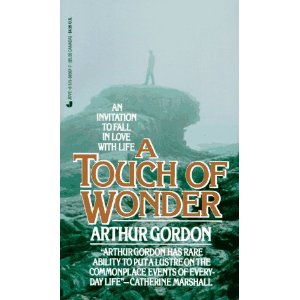
One of my all time favorite books, one that influenced both my writing style and my outlook on life, is A Touch of Wonder by Arthur Gordon. Gordon’s stellar writing peppered “Guidepost Magazine” with inspiration for decades. I remember happening upon the book in a seaside store, then finding a perfect spot on the beach to relax where, over the next two days, I read it from cover to cover. As the ocean waves rolled in the distance, I felt uplifted by true story after story filled with humor, struggle, love, and courage.

In one memorable chapter, Mr. Gordon told a story that created such an “Ah-ha of the Heart” for me that it helped form my basic writing philosophy. He wrote of a friend who belonged to a club at the University of Wisconsin many years ago. It was composed of several talented writers, all brilliant young men. They would each read their prose aloud, then take turns dissecting and criticizing each others’ writing so fiercely, they dubbed their writing group “The Stranglers.”

On the same campus, a group of women formed a writing group, calling themselves “The Wranglers.” But instead of dousing one another with criticism, they spent most of their time encouraging one another. They all left the meetings feeling inspired in their writing journey.

Twenty years after these two groups met, some interesting results were found. For all the brilliance of the writers who made up “The Stranglers,” not one member achieved any kind of literary reputation. “The Wranglers,” on the other hand, produced a half-dozen successful writers, including the Pulitzer Prize winning author of The Yearling, Marjorie K. Rawlings.

From this story I drew two convictions:

1. When choosing a writers’ group (or any support group for that matter), make sure that they lead with a positive spirit. Sure, you want honest feedback, but this can be done with grace in an atmosphere of encouragement. If the group has spiraled into nit-picking negativity, get thee to another group. That is, if you value your future as a writer.

2. Secondly, when you edit someone else’s writing, it is often automatic to skip the good writing and correct what is wrong, like the proverbial teacher with a red pen.  Because I accept this is how my editing brain works, I usually go through a writer’s chapter or manuscript or a proposal twice. The first time I highlight what needs to be changed to make it better. And then, I go back through and put smiley faces on the parts I like the best. You would not believe how writers love those smiley faces and how they make any critique go down easier.

In a little post-script to this story, I searched and found an address for Arthur Gordon, who was at the time quite up in years (he died in 2002 at 89), then wrote him a fan letter. He wrote me back on an old manual typewriter, saying how much he appreciated the bucket of encouragement, that this sort of reader feedback was fuel for his writing soul. I realized in that moment that no matter how old or accomplished a writer is, inside we’re all a little insecure and in need of positive feedback. A part of us is forever the child, giddy over a star or a sticker from the teacher.

So it behooves us to be positive and kind to each other in our critique. Not only does it make the writing life more fun, but in the long run, it also makes it more prolific and profitable.

What sorts of critique groups have you experienced? How did they make you feel? What kind of critique encourages you to excellence without throwing you into a depressing writer’s block?

The Best Advice I (finally!) ‘Got’

I always hated it when writing instructors told me to 1) write what you know, and 2) follow a formula.  How, I wondered, could I write what I knew when I didn’t know anything interesting, and when the only formulas I remembered were from high school math class? I was pretty sure that wasn’t going to be much help in writing anything other than a final math exam.

Now, having finally decoded those two pieces of cryptic advice in the course of my own writing career development, I have only two words to share with would-be novelists: read and outline.

Read books (all kinds!), but also read everything you can get your hands on: newspapers, magazines, the backs of cereal boxes, newsletters, church bulletins. I even read vanity license plates, which inspired me to give one of my series characters distinctive car plates that have played into more than one mystery plot!

The purpose of all that reading is twofold: 1) you accumulate a storehouse of information about the world; and 2) you never know what word, image, or idea will catch fire in your writing process.  Reading feeds you with new material – like ongoing brainstorming.

As for reading books in all genres, I find it’s a great way to broaden my experience. I may not be an expert on scuba-diving or anti-matter research, or know one end of a knitting needle from the other, but if I’ve read about it, I at least have some familiarity with it. And if it might fit into something I’m writing, I can go back for more reading or research.

It wasn’t until I figured this out – that I didn’t have to be an expert about something to write it into a story – that I finally really understood why my teachers insisted you had to ‘write what you know.’ Write what you know – not necessarily what you yourself have experienced. What a relief to know I didn’t have to commit a murder to write about one!

The most important thing I ever did when I was writing my first novel, however, was to outline. And I’m not referring to the outline of my book, either (though I do work from a rough outline when I write). The outline that I found most helpful was the outline I made of my favorite author’s best-seller.

Yes, you read that right – I outlined a book by my favorite author.

It was a tedious task, to be sure, but by the time I finished that chapter-by-chapter outline, I knew more about pacing and plot development than I had ever learned from any teacher or class. My secret was to use a different color marker for each subplot, so that by the end, I had a notebook in which I could visually trace how story threads flowed together and how the notorious ‘red herrings’ of successful plots operated. Deconstructing a best-selling novel taught me how to write my own ‘formula.’

What are you reading/outlining today?

Finding Rest in a Storm

For you are my hiding place; you protect me from trouble. You surround me with songs of victory. (Psalm 32:7 NLT)

As the autumn winds whispered through our oak trees, dropping the leaves across our yard, my husband Dan mentioned that we probably wouldn’t see any squirrels playing in the trees that day. “In fact, if the wind is blowing when you want to go squirrel hunting in our area, you might as well stay home,” he said. “A squirrel will not move far from his nest on windy days, so you’ll have a hard time bagging any.”

Squirrels. A squirrel knows when he needs to be still and rest—not because he’s tired, but because that is when he is most vulnerable to predators. When the wind is blowing, a squirrel can’t hear the other sounds around him—his instincts are blurred by the wind-tossed branches and leaves rustling.

Dan said the same rule applies to deer hunting in our part of the state. Deer tend to not move around much when they cannot use their God-given senses to protect them from predators.

Storms. I continue to learn spiritual lessons like this one from nature. When a storm is blowing all around me, I need to be still and wait. It can be dangerous to sail into a storm.

I’ve lived in Texas and Arkansas all my life, and we’ve survived many storms—tornados and hurricanes. It’s difficult to prepare for any kind of storm. I’ve run away from hurricanes, and I’ve hidden in our “safe place” during a tornado. But I’ve learned that I can’t stop storms from coming my way.

Shelter. How can I apply this truth to my writing life? I hope to remember this truth the next time that I face serious setbacksparalyzing problemschaotic confusion, or even aggravating attitudes. I can’t stop them. But I can choose to find a safe hiding place.

Learning to find a place of rest in the storms of life isn’t always easy. I’m tempted to keep trying to protect myself. But once again, God reminds me that He is my true refuge during the storms of life. And I’ve found His Shelter to be a great place to rest.

Where do you find shelter on a stormy day?

10 Kooky Tips On How To Write A Book

My writing nook at home. Don’t be fooled, it looks Pier One, but really, it’s a hodgepodge of thrift store and Craigslist.

I receive emails from people asking how to write a book.

I have written a book but I haven’t actually published it (yet, God give me patience and faith).

So when I am asked, it feels a bit like someone asking a person coloring a picture in a Strawberry Shortcake coloring book how to paint a still life.

Here are 10 kooky tips that popped into my head about writing a book if you absolutely don’t know how to start:

1) Start with a dangerously low self-esteem

This is vital. If you don’t, you may not be able to handle getting knocked off the height of your perch daily from rejection. It’s much easier to begin writing from the depths of despair.

2) If you have kids, get a lock for your bedroom door

My reasoning is two-fold: 1) my bedroom is where I write, and 2) my bedroom is where I cry when I am convinced that I cannot write, and it seems to upset the children when I cry uncontrollably.

3) YOU PROBABLY NEED TO ACTUALLY ENJOY WRITING

Or at least be able to stomach it, if you want to embark on a long project. Seriously, in order to write a book, you have to spend countless hours writing, which may stop you right there. Luckily for me, I love to write and see where it takes me. I also love to sit!

4) Make sure your writing desk has an economy size box of Kleenex.

I cry when I write. I cry over a beautiful sentence (both other people’s and my own). I cry over the fact that I can’t spell. I cry about God’s work in my life rendered on the page.

5) Listen to Papa Hemingway

I talk about Hemingway often, but I believe the goal is one true sentence.

Sometimes sentences string together perfectly and send shivers up my spine. One true sentence is the payback for locking yourself in your room to write.

6) Read books

Readers usually make good writers. Some of my favorite books include “To Kill a Mockingbird” by Harper Lee, “Les Misérables” by Victor Hugo, “Traveling Mercies” by Anne Lamott, and “Twilight” by Stephanie Meyer. (I’m just kidding about Twilight. Sorry, not a teen vampire fan.)

Read books on craft. For memoir, I love Vivian Gornick’s “The Situation and the Story” and Anne Lamott’s “Bird by Bird.”

7) Join a writing class

Most writing classes will require submissions and offer critique. This forces you to write. For years, I attended a memoir workshop in Chicago.

8) Buy business cards on-line and slap “writer” under your name

Call yourself a writer.

Even if you don’t have anything published, if you write, you are a writer. You may not be an author until you are published, but by golly, you are a writer. Put it out there! (And if you buy 250 business cards and have no one to give them to, the kids love to make up card games with them.)

9) Call or text or email people who love you, often

Writing is solitary. You show up and put words on paper and wonder if you actually have anything of value to offer the world. Call your mom, or your best friend, or Joe, the creepy guy at Starbucks who saw you writing one day and gave you his business card. Call anyone who loves you (OK, maybe not Joe) and ask for encouragement. You need cheerleaders. Buy pompoms and pass them out to friends.

10) Don’t write for attention

Believe me, an easier route for attention would be to hold up a Seven Eleven.

What’s your advice about writing a book?


How To Prevent Carpal Tunnel Syndrome in Writers

As a board-certified musculoskeletal specialist physician, one of the more common conditions that I diagnose in keyboarders is called carpal tunnel syndrome (CTS). It’s a painful hand condition that is caused by pinching of a nerve (the median nerve) as it courses through a bony tunnel in the wrist. Since “carpus” is Latin for “wrist,” you can understand why the condition is called carpal tunnel syndrome. (I threw that FASCINATING bit of etymological trivia in there because this is a writer’s blog, and, well…..I was just trying lighten up the medical jargon and appeal to your fascination with words. Did it work?)

The symptoms of CTS include numbness, tingling, pain, and swelling, usually in the index, long, or ring fingers, but sometimes the symptoms extend into the thumb and up into the forearms and even the shoulder. Patients tend to say their hands go numb while fixing their hair, putting on make-up, or driving. They also say that the symptoms wake them from sleep at night and cause them to shake out their hands, and that the associated numbness causes them to drop small objects, like pens, spoons, and coffee cups.

Though these symptoms may be intermittent at first, eventually, if the condition is left untreated, the symptoms may become constant and/or severe.

Though CTS can occur in healthy individuals, it is even more likely to occur in those who are diabetic, hypothyroid, or heavy consumers of alcohol–especially if they keyboard excessively.

The main diagnostic test for CTS is called an electrodiagnostic study and is sometimes abbreviated as an “EMG.” I’ve personally performed many thousands of these tests and I can assure you it isn’t a fun test. In the first part of the EMG, I have to zap your nerves with electricity to see how well they conduct, and in the second part, I have to insert a fine wire through your skin and into your muscles to determine if the muscles are electrically unstable due to an underlying nerve problem.

Early treatment for CTS generally consists of wrist splinting at night along with non-steroidal anti-inflammatory medicines. Carpal tunnel steroid injections may be utilized for diagnostic purposes in some cases (like if the EMG is equivocal) but those injections don’t seem to fix things for long. In most cases, surgery is an excellent alternative–especially if it’s done by an experienced orthopedic sub-specialist hand surgeon or neurosurgeon.

Like with many other conditions, an ounce of prevention is worth a pound of cure. Optimize your chair and desk height so that your wrists remain in “neutral” position (i.e. straight) as you keyboard, maintain tight control of your blood sugar if you’re diabetic, minimize alcohol consumption, work with your physician to optimize your thyroid hormone levels, avoid bending your wrists at night by wearing wrist splints, and take frequent rest breaks from keyboarding—like I’m going to do right now!