Shameless: How to Fail a Book Signing (but Not the Writing Life)

“Art is born out of humiliation.”  W.H. Auden

I had a fantastically unsuccessful book signing in a big box store not long ago. (Yes, signings still occur, despite the takeover of social media.) Afterwards, licking my wounds, I turned to a book on my own shelves, Mortification: Writers’ Stories of Their Public Shame. In it, Margaret Atwood, Rick Moody, Billy Collins and a constellation of such literary brights offer up the most companionable ignominies and embarrassments. (Fittingly, I bought the book used, online, for a penny.) My own parade of humiliations that night were paltry next to theirs. Still, couldn’t I do better?

Two weeks later, an Internet search on “book signings” confirmed my suspicions. According to several book signing experts, I did indeed do everything wrong. First, I missed the Webinar on “The Seven Steps to Turn Yourself into a Celebrity.” In another  article, I violated nearly every one of thirteen steps, beginning with, “Decide, in advance, what sort of clothing you want to be seen wearing by your reading public.”  (Did I do this? No.) Step #6 advised bringing along a printout of your manuscript for fascinated readers. (Really?)  My most egregious error was the last step: my failure to inform the store managers that I would be the bookstore’s official greeter while I was there. Nor did I walk around with several copies of my book introducing myself to everyone in the store, as he advised, pressing my own books and bookmarks into their astonished hands.

I would rather demonstrate the wonders of Balinese kitchen knives through the Christmas season at Walmart than resort to such tactics.

We all know we need to successfully promote our own work. But when we sacrifice leisure, sleep, money, and most costly of all, time with our families so that we can write, none of us makes these difficult choices to be stalkers or hawkers with a leer and a bookmark. We write because we believe in our deepest-down spirit that God has called us to keep naming the world. We write to serve a meal to the famished, to dress the wounds of the betrayed and lonely. We write to offer hope and a story to the depressed. We write to offer clear thinking in a muddled marketplace. We write in humility, in insecurity, in desperate prayer.

And when our book releases, shall we then don our best barracuda suit, polish our teeth, slick back our hair and begin the hard, shiny sell, suctioning ourselves to every unfortunate person who innocently wanders into a bookstore? Did any of us sign up for this?

Let’s take a breath. We don’t need to sell. We don’t have to sell out or sell ourselves short, or sell our own snake oil. We need to offer. We’ve just spent two to three years composing, listening for God; we do indeed have something to offer. We offer our work, and, more importantly, we offer ourselves. In all of our promotion, we need to think, how may I serve others? How may I serve my readers? We might end up giving books away—a lot of books. We might do some speaking gratis. We might end up on the short end of the accounting sheet. We might end up praying with a stranger. But at the end of the day, the year, the decade, we’ll count it differently:

We got to give. We got to give more than we knew we possessed. We got to be part of a global conversation. We got to know new readers, who taught us more than we knew. We got to pray for strangers who became friends.

Don’t listen to “sell-a-ton-of-books” schemes when they violate who you are and what you’re to be doing in this world. Go ahead and “fail” a book signing if you must. Be a real writer, without shame.

Showing Vs. Telling

Let me first say I am hardly an expert on show versus tell—every writing teacher’s admonition for every storyteller out there. In fact, I was quite shocked when another author said she was taking notes on some passages in Poison because she thought they were good examples of showing. I am still hoping she will tell me exactly which ones they were so I can admire my own amazing work because I was that surprised.

ActorShowing versus telling can definitely be learned (after all, I did it and was never an English major) so don’t go over the writer’s cliff Thelma and Louise style if some of these points don’t hit home. I am still learning the more advanced points myself and that’s a mark of a true writer—always desiring to learn more.

The concept of showing could also be described as Deep POV. I think these concepts are honestly interchangeable. So if you hear one—think of the other.

The first (and really good) piece of advice I got on showing was to write my scenes as if I was filming a movie. How would I describe what was on the screen to a reader without stating the obvious?

For instance: He was angry. This is telling. It doesn’t leave any room for the reader to use their imagination. Now, more showing. Her husband swore at her and spittle hit her face seemingly to mark a target for his fist to punch her in the jaw. See the difference? I haven’t said the word “angry” at all, but does this man seem fired up?

While editing, you’re likely telling if you name the feeling. He was mad, sad, fearful…etc.

A great tool I’ve used to help me show more visceral reactions is The Emotion Thesaurus. There is also a website by the same author called The Bookshelf Muse. It gives specific bodily actions for tons of different emotions. Use this as a starting point to generate ideas and then improve them for your own manuscript.

Another tip to help show instead of tell is to phrase things as questions. Telling: She wondered if her attacker was walking behind her. Showing: The echo of footsteps matched her high heels as they clipped down the pavement of the dark alley. Was it him? Was it the man who nearly killed her with a quick slash of a knife across her throat two years ago? The one she presumed was now sending her all those threatening letters—just like before. Now he was free.

To show more, add a visceral reaction from the woman from the emotion she is likely feeling which in this instance would be fear.

The echo of footsteps matched the quickened pace of her heart as she broke out into a run down the dark alley. Instinctively, her hand covered the thick scar as a shield from both the memory and the act. Was it him? Was it the man who nearly killed her with a quick slash of a knife across her throat two years ago? The one she presumed was now sending her all those threatening letters—just like before. Now he was free.

I know—future editor. How can she run with her hand set on her throat? Just to illustrate a point. Edit at will.

Also, don’t feel like you have to do this in the first draft. The first draft is all about getting the words on the page. Showing can be added in subsequent editing phases that you do before the manuscript goes to an agent or publisher, but don’t get too hung up on trying to do a lot in the first draft until it becomes more natural for you.

This is just the beginning. There are many more techniques that can be used so keep working at it and you’ll have the reader sitting inside your character in no time.

What are some techniques that have helped you show vs. tell?

Praying Psalm 23 for Writers

Sheep
Sheep (Photo credit: Wikipedia)

The Lord is my Shepherd:  Sheep are stubborn, fearful, and crowd followers, like people. We need a shepherd to lead us. We must surrender our life and work to God.

Lord, you are my Shepherd. I place myself and my words under your authority.

I shall not want: God is all sufficient. When we trust God to provide for us, we can let go of the wants of ego. He redefines success.

Lord help me to want what you want for me and for my work.

He makes me lie down in green pastures: Writing is endless and the refreshment of rest and renewal is essential.

Help me find the balance of work and rest.

He leads me beside still waters: We know the difference between our own exertion and divine filling when the words flow like gentle waters.

Lead me to inspiration and fill me to overflowing with your words.

He restores my soul: We are strongest in the areas where we have been healed.

Restore my spirit, Lord. Heal me that I may heal others.

He leads me in paths of righteousness for his name’s sake: He provides that daily connection that guides us in the truth, as we write–for His glory, not ours.

Help me always to know the truth and to remember that I do my work for your glory, not mine.

Even though I walk through the valley of the shadow of death, I will fear no evil, for you are with me. Your rod and your staff, they comfort me: We give deeply of ourselves and our experiences, making us vulnerable and easily hurt. We fear exposure and criticism and we receive it, but we don’t need to fear it.

Protect my heart, Lord.  Help me to be bold in my work and not to fear criticism.

You prepare a table before me in the presence of my enemies; you anoint my head with oil: God gives us provision in the midst of our problems and he continues to protect us.

Thank you for your provision. Anoint my head to protect me from the small things – the annoyances and thoughts that distract me.

My cup overflows: Every good gift comes from God–the good days, the letters and notes of encouragement from readers, the joy of seeing a life change because of the words He has provided.

Thank you, Lord, for this work and the abundance in life with you.

Surely goodness and mercy shall follow me all the days of my life. And I shall dwell in the house of the Lord forever: It is not for this world that we write. It is for eternity.

Lord, accept the offering of my words. Use them as you will.  Lead me, provide for me, protect me. I will follow.   

Amen

Betsy Duffey and Laurie Myers: The Writing Sisters

http://www.WritingSisters.com

Risking Rejection

Why are we afraid to fail? Often because we believe rejection exposes a gap in us. It points to something we don’t want others to see. It confirms what our suspicions tell us.

We aren’t acceptable.

As writers, we risk rejection from many different sources. Projects and people alike can make us feel unacceptable, and throw us into a pit of paralyzing despair. Any one of a myriad of things have the power to make us give up on our writing dreams. If we let it.Definition of Rejection

  • Literary agents can reject us.
  • Booking agents can reject us.
  • Publishers can reject us.
  • Editors can reject us.
  • Endorsers can reject us.
  • Influencers can reject us.
  • Reviewers can reject us.
  • Media can reject us.
  • Readers can reject us.
  • And through Self-deprecation, we can reject ourselves.

So how can you empower yourself to feel acceptable when rejection says you’re not?

Author Jim Stovall
Jim Stovall’s Blindness Didn’t Hold Him Back

Challenge your own viewpoint. Take a 180 approach and look at this specific moment as your personal catalyst for change, improvement, and a call to do better work. Jim Stovall, a blind author and movie maker, knows rejection well.

You’ve GOT to watch the video on his link to see what he says about giving up. Here’s a quote to give you a hint of the amazing story you’ll want to hear. “That big dream would not have been put inside of you if you didn’t have the capacity to achieve it.”

Author John Grisham
John Grisham’s Tenacity Made the Difference

Another powerful example of tenacity in the face of rejection comes from an author most of us recognize. Internationally acclaimed novelist John Grisham. He understands what it feels like to fail in front of professionals, but he chose to learn from his mistakes, and keep on keeping on.

Finally, I would be remiss if I didn’t remind you of the greatest victory that came from the greatest rejection of all. A book that was denounced, fought against, and even after publication, faced efforts to utterly destroy it. But yet, the words inscribed inside changed the world, and made it a better place. The book I refer to is The Bible. Aren’t you glad God didn’t give up.

So the next time you get a rejection letter, phone call, email, or text, remember these three things.

Anita Brooks Walking Bridge Photo
Is Success Waiting Around Your Corner?

1. The capacity to make your big dream reality is already inside of you.

2. Rejection prepares us for great things in the future, and reminds us to stay humble when we arrive there.

3.  Just because a few people fight against your efforts doesn’t mean you won’t come out victorious.

Maintain a teachable attitude, then act with integrity, humility, and tenacity. This is your big dream. Take courage, and don’t let anyone convince you it’s unacceptable. Risking rejection can turn that big dream of yours into something real. But only if you don’t give up too soon.

Writing Life Lessons

photoNo matter what stage I’m at in the writing journey, whether it’s researching, plotting, writing, or editing, I continue to learn. Currently, I’m in my last round of edits for my debut novel, Shaken. Man, has it been humbling. I don’t claim to have all the answers to this writing journey, but here are a few tips I’ve learned from trial and error. Like my novels, I’m always a work in progress.
Paint a scene

This seems like a no-brainer, right? I thought it was, too. Except sometimes I don’t write all that is in my head. Thank goodness for an editor who reads the story and asks me to fill in the holes. Use the senses. Again, you would think this is obvious, but too often we forget. In my second book, I open with a beach scene. Can my reader smell the smoke from the bonfire, taste the salt in the air, feel the whip of the sea breeze, hear the lap of the waves, see the fireworks exploding? If not, I need to keep crafting.

Make connections

Link scenes, events, and characters. As my granddad told my brother when he came home from college late one night, “Account for yourself!” Make sure all your elements are accounted for, and again, not just in your head. If a character just spoke yet the scene ends and they are nowhere to be found, make sure there is a clue to the reader of where they went and when they exited the conversation. Again, these should be obvious, but sometimes when I focus on the story line at large, I forget these important little details that further immerse the reader in the story.

Books are not movies

I tend to see my book playing out like one of Nicholas Spark’s movies – sweeping, southern, and characters that tug at your heart. Except, books are not movies. What a viewer can take in in a few seconds of a new scene takes a lot longer to paint in a book. The best movies come from books that paint vivid scenes. Think the party scenes in Gatsby where Fitzgerald describes the house and guests in great detail. If you don’t know what I’m talking about, stop reading this right now and at least read those scenes.

Kill your “darlings”

This is a lesson one my college professors shared with me, and regardless of the time passage, it doesn’t get easier. First, let’s define “darlings.” It is any piece of your story that you are attached to that does not ultimately propel the story forward. You may think a scene is epic, but will your readers care? Does it demonstrate an irreplaceable character quality or scene that is essential to your reader’s knowledge of the story line? Is your attachment greater than the reader’s? If yes, then don’t be afraid to kill that “darling.” Your story will be better for it. Trust me, I know it’s painful, but strike with your red pen and make the page bleed.

You’ll never be completely satisfied

photo copyStop looking at the blinking cursor. Save and send. Your story will never be perfect. If you are waiting for that, choose a different career. I emailed my mentor a couple months ago and told her I thought my story sucked and I wanted to start from scratch. She laughed (I could sense it over email), and told me that it was great for where I’m at now. The next novel will be better than the first, and the third better than the second. If you know you have done all you can do right now, then allow yourself to be satisfied with the results and send that sucker. I still find mistakes in my short stories from college, and I couldn’t count how many times I have edited those pages. But I’ve also increased in my ability and my knowledge since college. I’ll focus on doing my best now and realize that I’m always growing.

What writing tips have you picked up along the way?

Five Things I Learned About Writing/Marketing from Dr. James Dobson

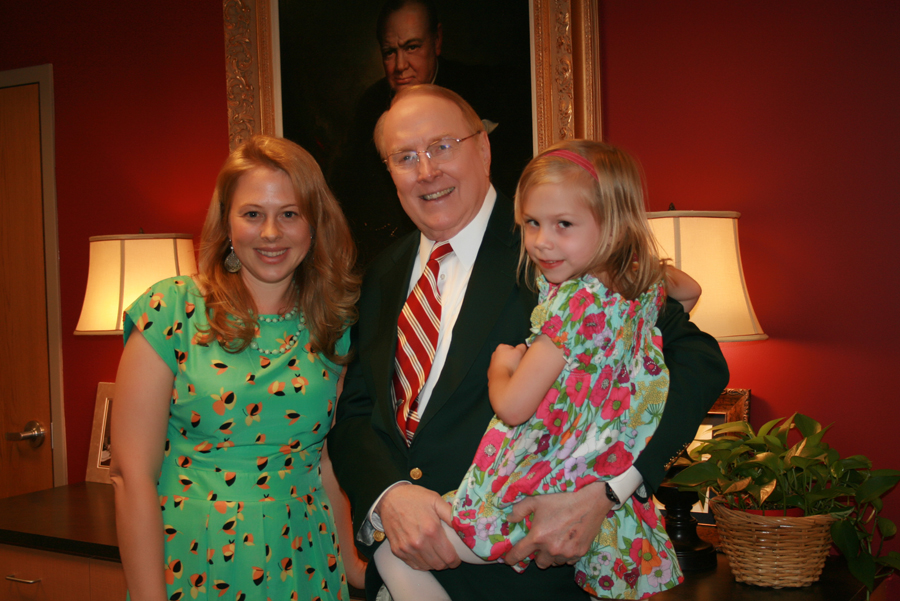
First things first:  Yes, I met Dr. Dobson.In real life. And, yes, he was kind and wise and funny and smart and everything I expected him to be and more. I flew up to Colorado Springs in April, 2013 to be a guest on Dr. Dobson’s Family Talk radio show. In the studio, we chatted about families, about writing, about my books, and then recorded 3 1-hour segments to air on June 5-7, 2013. (Click here to see where you can listen in.) And, in the process, I not only gained invaluable insight on motherhood, marriage, and family from one of the most amazing theological minds of our generation, but I also learned about writing as well. Here’s what I took away from this meeting.

Dobson1. Actions Speak Louder Than Words.  Dr. Dobson’s life’s work and focus has always been on helping Christ-centered families. And I don’t think anyone in the world would argue with me if I said that he has passionately and wholeheartedly given his career to this goal. This is a great thing. I have to admit that part of me expected our visit to be something like a college-course lecture. Instead, he pulled my five-year-old daughter onto his lap and talked to her. And he showed me without saying a word that he values children and family and motherhood in a way that goes beyond words. I learned that if I want to talk the talk in my writing and on my blog, I had better be willing to walk the walk.

2. Listen With Open Ears.  Dr. Dobson knows his stuff. The guy is legendary—well-read, well-educated, well-just-about-everything. And the truth is that I knew there was nothing I could’ve said to him about parenting or motherhood that he a) didn’t already know and b) hadn’t already covered in his own writings. But Dr. Dobson listened to my words wholeheartedly and willingly—even on topics that we didn’t necessarily see eye-to-eye on. He showed me respect by looking me in the eye and allowing me to voice my opinion. And I left in awe of his incredible wisdom and kindness. No wonder he has made such an impact on our world! He is willing to listen with open ears and to show respect with a gentle kindness—even to those who are “below” him in status or who have different opinions than he does.

3. Don’t Be Afraid to Put Yourself Out There.  I wish I could tell you that I did something to earn myself a spot on Dr. Dobson’s radio show. I wish I could tell you it was on my merit, that I did something extraordinary, that I am an amazing radio speaker, that my writing is just that inspiring…but I can’t. Because the truth is that I did nothing. I threw myself out there by having my publicist send my book to Family Talk’s studio…in 2011. From there, God worked behind the scenes to inspire the right producer at the right time to pick up the book. As authors, we have to do everything we can to get our books “out there,” but after writing and marketing five books, I’ve learned that God is the one who opens those doors. We just have to be willing to walk through them.

4.  Don’t Be Afraid to Ask.  I was thrilled the day I got the call from Dr. Dobson’s producer that I was going to be on his show. And I knew it was an important break in the marketing campaign for my new books. But I had also made myself a promise way back when my oldest was born: I was never going to let my career take me away from my kids for an extended amount of time. And while I desperately wanted to go on the show, I also struggled to decide if was a good idea to leave home for three days at the end of the school year. I prayed and picked up the phone and asked the producer if I could bring my daughter along. And she bent over backwards to make it happen. They reserved a room for me with two beds. They helped me book airline tickets. They found me a big-enough rental car. And the entire staff at Family Talk showed my daughter incredible kindness and love while we were there. My point? Don’t be afraid to ask. I know it wasn’t easy for them to have a five-year-old in the studio, but it was important to me. Dr. Dobson’s organization lived up to their reputation of being advocates for family by helping me make it happen.

5.  Be Willing To Be Flexible.  I went into Dr. Dobson’s studio with the expectation that we were going to record one hour-long segment. I walked out having recorded three. We had a flow going and had so much to talk about that we just kept recording. The studio session took much longer than expected and…shockingly…we got stuck in a snowstorm afterwards (a snowstorm in April? Apparently this is normal only in Colorado). Anyway, writing and marketing is an inherently liquid task—and only by being flexible to roll with the changes—ups, downs, twists, and turns—will we be able to see and succeed in the long-haul.

What have you learned about writing from other (famous) authors or radio personalities?

**************************************************************************************************

Erin MacPherson is the author of The Christian Mama’s Guide series.  She’s also a mommy blogger, amateur chef, and (very) amateur runner.  She blogs at www.christianmamasguide.com.

Memoir Writing: Scene, Summary, and Musing

Photo/KarenJordanWhat is a memoir? “I had to look up the definition of a memoir before I wrote my entry for this contest,” one writer confessed to me.

“Congratulations!” I responded, acknowledging her award.

This writer’s research paid off. Plus, she chose an inspiring, true story from her life, and she engaged her readers with a meaningful message using creative nonfiction techniques.

Being a judge of the contest entries, I also noticed that some of the other aspiring and experienced writers needed to do a little research before they wrote a memoir. So, I’m sharing here some of what I’ve learned as a memoirist.

My road to memoir writing started with enrolling in a class on writing for publication while in college. But I really didn’t hear the term “memoir” much until I took nonfiction writing classes a decade later.

One of my favorite professors at the University of Arkansas at Little Rock, Dr. Sally Crisp, recommended a very helpful book on that subject by another writing teacher, Judith Barrington. Barrington describes her book, Memoir Writing, as a “practical guide to the craft, the personal challenges, and ethical dilemmas of writing your true stories.”

Defining memoir. Since I’m knee-deep in writing a memoir with my daughter Tara, I needed a refresher course. Here’s my own memoir checklist.

  • Focused theme or topic. William Zinsser discusses the memoir in his book On Writing Well. “Memoir isn’t the summary of a life (like autobiography); it’s a window into a life, very much like a photograph in its selective composition” (136).
  • Narrative. Memoir tells a story about certain people, places, or events from the writer’s personal life.
  • Reflection. The writer’s thoughts and beliefs about the events are a vital part of  the memoir.
  • Conversation. The narrative voice reflects on her thoughts and feelings in an intimate, conversational, and honest manner.

Creative NonfictionThe memoir tells true stories using creative nonfiction techniques.

  • Contains all the elements of fiction.
  • Moves back and forth in time.
  • Requires believable dialogue, based on truth.
  • Switches from scene to summary to musing.

Photo/KarenJordanScene, Summary, and Musing. Musing takes a vital role in the memoir. But scene and summary provide two useful ways to move through the narrative.

Judith Barrington describes the memoir’s characteristics of scene and summary in cinematic terms. I’ve often used photographic terms to describe the editing process.

  • Summary. Here the writer focuses on the panoramic view. This may include numerous details, but examines the person, place, or event from a distance. For this viewpoint, I imagine myself taking a photo of a sunset or sunrise over a lake with my long-distance camera lens.
  • Photo/KarenJordanScene. For this macroscopic view, you zoom in for a closer look at your story and focus on a particular point of view or incident. Consider using some dialogue to illustrate your scene or another descriptive device to describe an intimate detail of that moment. In photography, I change my lens and focus for a closer view of a child or the reflection over the lake.
  • Musing. I visualize this characteristic of a memoir as the microscopic view, zooming in on the writer’s intimate feelings and thoughts. The reflective voice of the writer expresses her feelings and thoughts at the time of the event. She might choose to express her current understanding or the wisdom that she gleaned from her personal experience. For instance, I love to capture the memories by the lake close to my home–the awesome sunrises and the poignant moments with my grandkids. It reminds me to record the stories that matter most to me as a gift for the next generation.

Storytelling. In memoir, the writer tells a true story from her life, using her best creative nonfiction skills. As you examine your memoir for revisions, focus on your areas of strength and weakness. Do you tend to focus on summarizing your story rather than zooming in on some important scenes? Have you reflected on what a certain person or event means to you or what you’ve learned from this experience?

I challenge you to work on the weaker elements of your memoir. Your story will become stronger and even more meaningful, as you examine your scene, summary, and musing.

Photos/KarenJordan

What helpful insights could you offer about memoir writing?


Some Thoughts on the Fabrication of Stories

Last week my Bible study class was reading in 2 Peter about false prophets, of whom, as Peter warns his listeners, “In their greed these teachers will exploit you with fabricated stories. Their condemnation has long been hanging over them, and their destruction has not been sleeping” (2 Peter 2:3 NIV).

Of course, as a creative writing professor currently leading a novel workshop—that is, teaching eager students how to fabricate stories—and as a writer currently engaged in writing a novel of her own, I shivered a bit.

He means a different kind of story, I consoled myself, as the class question-answered through the passage. He’s not talking about fiction writing, the passage makes clear, but about preaching, about spreading “destructive heresies, even denying the sovereign Lord(2 Peter 2:1 NIV).

Still, I couldn’t stop thinking aboutVan Reymerswaele--The Moneychanger and His Wife the uncomfortably commercial side of the writing world in which I am involved. How the buying and selling of books necessarily engages our—i.e., writers’, agents’, publishers’, marketers’, publicists’—greediness: to get more media exposure, to sell more books, to make more money. And, we Christian writers are, in effect, preaching, aren’t we? I worried. The Holy Spirit was at work, I feared, forcing me, as always, to look again, think again, before proceeding.

Just then, one of my classmates confirmed my fears by reading from his version of scripture the same passage about greedy story-fabricators: “And through covetousness shall they with feigned words make merchandise of you” (2 Peter 2:3 KJV). Isn’t that what we seek to do in our blogging and signing, platform-developing and tribe-building? I confronted myself. Turn our readers into merchandise sold?

The self-promotion demanded of us writers has always disturbed and embarrassed me. Deep down, I genuinely believe that, if a book is good, it will sell itself. But, the publishing world sages are quick to remind me, if a book’s not out there for people to see and read, no one will know it’s good. My efforts as an author stretch thin between these two pillars of writerly wisdom.

No answers here. Just puzzles, some worries, and a bit of scripture—fodder for reflection, I imagine, among fellow writers bent on being transformed into the image of the One God Sent.

Would You Write A Book Without an Outline?

You probably wouldn’t drive across the country without a map.

You probably wouldn’t cook Thanksgiving dinner without recipes.

Would you write a book without an outline?

The practice of outlining a book in detail takes an enormous amount of discipline. Focusing on the infrastructure of the story is a whole different ball game than writing in free form and letting things evolve as they may. My first book was a result of rambling writing sessions, often resulting in superfluous content which ended up being taken out of the story. Although it was fun to just write and see what happened, it seemed there had to be a more effective method out there, one that would result in a greater yield with less exertion. Most writers have other jobs, and when it comes to writing time, every moment is precious.

Some writing coaches suggest that creating a detailed outline is the most important part of book writing, and the part where most authors struggle. Writers may spend weeks or even months on the outline alone, to provide some frame of reference for how detailed the outline can be. Writing a book is a project, not unlike building a house. There is the foundation, there are the walls, the flooring, the roof, etc. Only when the skeleton of the house is in place can homeowners enjoy working on some of the more aesthetic features of the home – picking out colors, the yard, creating curb appeal, you name it.

A project manager friend who has been intrigued by the writing process asked how my latest book was coming along. Our casual conversation at a wedding evolved into something else when I mentioned being stuck halfway through the book. The project manager asked if she could help me in going back to the drawing board and getting serious about planning it all the way to the end. I started sending her samples of my content and images of people that remind me of my characters. She would go through what I had written so far against our burgeoning outline and provide feedback: “I don’t think the character would say that on page 73,” or “When are the characters ever going to make it to Barcelona? You said that they have been saving up their mileage points for the trip,” etc.

At first I wondered if it had been a little premature to share my work with someone else. She had questions that were not always easy to answer, such as why I chose one title over another. Each time I had to explain an aspect of the story, it helped me figure out how to convey metaphors and messages with much greater clarity. After a few short weeks of this exchange, we finalized the outline. It’s all been downhill from there. Writing to an outline hasn’t seemed restrictive at all. It’s been like driving with a navigational system in the car, so you can better focus on the traffic, the scenery and the passengers.

Compass and Bible
Writing can be a very solitary profession, but creating an outline is a great opportunity to collaborate with others, should you desire to do so. It’s a lot easier to get someone to read an outline than to read a manuscript of 120,000 words or so. If you can have the feedback given to you in a postive way by someone who can deliver it in a manner that makes you comfortable, then your writing will become that much better for having another pair of eyes review it. Having to discuss and explain your work, your ideas, and your story line can be pretty awkward in the beginning. However, writers have to do it eventually anyway, so why not start from the get go?

Writers, do you sit down and just write, or do you use a more formal approach?

Writing In Every Season

485045_10101344113008718_1557147312_n

I don’t know about you, but as a writer, I struggle with managing my time.

I work full time. Serve in my young adults ministry. Belong to a community group. Spend time with my family. Juggle a writing contract. Spend free time with friends. Find time to work out. Sleep somewhere in there.

For those of you who have children, I’m sure this list is much longer. Somewhere in the middle of juggling that mess, I hit seasons of extreme burn out and discouragement. Everything seems to pile on at once, and ultimately my writing suffers.

I once heard that it is vital for a writer to be mentally, spiritually, physically, and emotionally healthy. To be honest, I don’t know how that is humanly possible. I am rarely completely healthy in a couple of these areas at a time, and healthy definitely hasn’t described me the past few months.

In January, I received a three-book contract. I couldn’t express my excitement! But, it went down hill from there. Work demanded all my time, I wrecked my car, edits came in right as I hit the most demanding couple of weeks on the job, and conflict rose in several friendships. With all the stress, I lost my appetite and my ability to sleep. Talk about unhealthy in every area.

I wondered how I could possibly finish the edits. I couldn’t concentrate. Creativity escaped me. But I stubbornly kept plugging away. Signature

Then something clicked. My broken emotions began to pour into my character’s painful moments to a greater degree than they ever had before. Not only did I understand what the editor was requesting, but I finally felt like I could pull it off and be proud of the result!

The Lord used my weak moments to breed creativity. 2 Corinthians 12 says, “But he said to me, ‘My grace is sufficient for you, for my power is made perfect in weakness.’ Therefore I will boast all the more gladly about my weaknesses, so that Christ’s power may rest on me.”

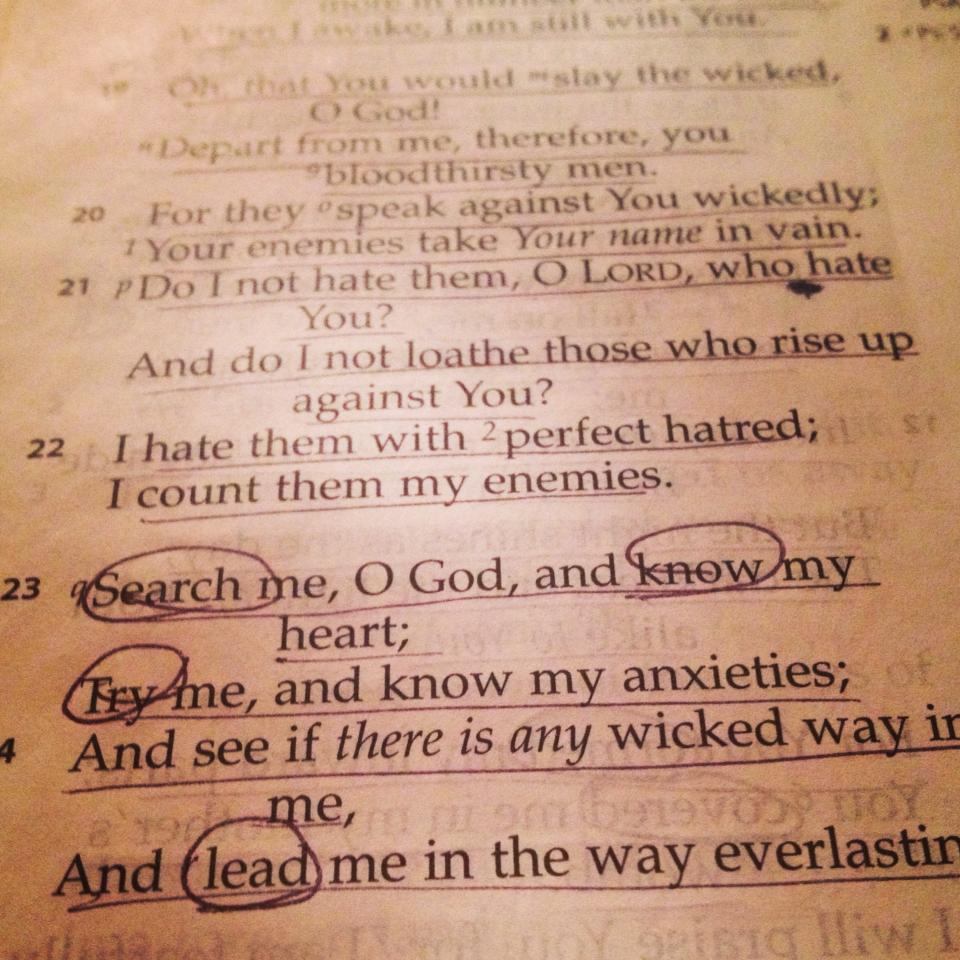
Thankfully, the call and standard of a writer is not to be healthy but faithful. In times of emotional struggle, the Lord uses that brokenness to translate a truth someone can relate to in my writing. I love what the psalmist said in Psalm 139, “Search me, God, and know my heart; test me and know my anxious thoughts. See if there is any offensive way in me, and lead me in the way everlasting.” If God knows our hearts inside and out, surely He can make beautiful writing flow from the inward parts of who we are, for His glory and the good of others.

Just as we labor to create a masterpiece, Jesus is in the process of molding us into His image. Sometimes He uses desert seasons to chip away excess. Sometimes He uses the mountain tops to create epic scenes. But He uses every piece of our story for His glory. We are never disqualified as writers when we can’t get it all together. Trust, obey, and write. Those messy seasons may just be used to encourage a reader, creating a mountain top moment in their life.

The one who calls you is faithful, and He will do it.” 1 Thessalonians 5:24

What areas do you need to focus on in your own life to be healthy? How has the Lord used rough seasons in your writing?