Leadership Insights for Writers

When you think of a leader, you may envision the executive of a large corporation swiveling in a luxurious leather chair behind a large mahogany desk, or a speaker delivering a keynote address behind a podium. Perhaps you think of a coach motivating a football team to persevere after a tough first half of the game or an inventor changing lives through technology. You probably won’t think of the writer quietly typing words in an unseen office early in the morning or late at night. But maybe you need to think again.

Creating art wallpaper

Writers can lead with ideas, and history provides examples. Science fiction writers have shown us the future long before engineers drew the designs and filed the patents. Nonfiction writers have changed how we do business, emphasizing the importance of trust and emotional intelligence. As a writer, even if you do not see yourself as a leader, you can benefit from applying leadership insights to your work. Consider using the following three concepts to improve your writing:

Know Your Mission

Successful leaders know why they are doing the job they do. They know their mission and communicate it effectively to their followers.

In the writing world, every book carries a theme. Whether you are writing a guide to preparing salads from locally-sourced ingredients or a historical novel describing life in rural America in the mid-nineteenth century, your book has the opportunity to fulfill a mission based on its theme. Even books written primarily to entertain teach life lessons through the way the plot unfolds.

As you work your way through the chapters of the book you are writing, keep the mission of your book foremost in mind. Ask yourself how the passage you are writing today furthers that mission. Arm yourself with a red pen so you can edit out material that detracts from the central theme of your book.

Create the Necessary Structures

Leaders who build companies from small start-ups to large, stable corporations understand the value of creating structures. They find the best ways to do something and embed those methods into the company culture. Perhaps they teach employees specific phrases to use when interacting with customers. Maybe they develop a certain philosophy that guides corporate policies, such as the importance of giving back to the local community. Without the necessary structures, the leader’s ideas will become diluted and diffuse as a company grows, with employees far from the leader on the organizational chart losing sight of the vision.

Writers who hope to influence others through their writing need certain structures as well. One way to maintain a consistent message throughout a book is to break the book into parts, with each part developing the theme in a certain way. Fiction writers might want to consider how plot development furthers or detracts from the main theme.

Writers need structures in place for marketing once the writing phase is finished. By strengthening relationships with key people who will understand and promote the message in your book, you are creating structures that will expand your influence as a writer. A column in a magazine related to your book, a web presence through a blog or social media, interactions with local bookstores, and a network of places to speak all serve as necessary structures for the writer who wants to make a difference by leading with ideas.

Paint an Image of the Future

One of the key tasks on the to-do list of all leaders is sharing their vision. People like to follow individuals who can paint an attractive image of the future. We buy products that we feel will improve our lives and make tomorrow a little easier than today. Even if you are writing a book set in the past, provide your readers with life lessons that will move them forward into a better future. Help them imagine how the world will be better if more people invested in the theme expounded in your book. Throughout my book, Questioning Your Doubts: A Harvard PhD Explores Challenges to Faith, I invite people to imagine a world where individuals take the time to build bridges to one another instead of dismissing the insights of those unlike themselves. I apply the theme to faith and reason, feeling and thinking, and theology and science. However, the overall theme works beyond the scope of the book. My hope is to persuade people to improve the way they relate to others, leading them to live more fulfilling lives. I want my words to make a practical difference for my readers, bettering their everyday lives.

In what ways do you hope to influence people through your writing?

Honing Our Lives

knife sharpeningAs iron sharpens iron, so one person sharpens another. Proverbs 27:17 (NIV)

While every writer knows that in today’s marketplace, interacting with others on a regular basis is a necessity for selling books, the real heart of writing – sitting down and putting words on a paper or screen – is a lonely job.

For me, however, “lonely” is not the word I would choose to describe my experience of writing. “Lonely” carries a negative connotation, the idea of being “cut off” from others, or “without” the company of others. In contrast, when I write, I feel a freedom to explore my own ideas and the joy-filled opportunity to connect with the Spirit within me. Writing is my “alone” time, not my “lonely” time. It is a personal retreat that renews me because I get to luxuriate in the word-smithing gifts that God has given me.

And yet I can’t deny the truth of Proverbs 27:17; without the other writers, marketing experts, and loving friends in my life, I wouldn’t be able to make the most of those same God-given word-smithing gifts. That’s not to say I’ve always felt this way – when I was new to my craft, praised by my writing teachers in high school and college, I had no use for the comments or criticisms of my peers. If my teachers liked my work, why should I listen to other students who struggled to compose even simple essays? It took me decades to understand the importance of my readers as opposed to the praises of my teachers. Here’s the difference:

The praise of others encourages you (and that’s a great thing!), but it’s honest criticism that will help you improve your craft.

It wasn’t until I began writing as a freelance magazine contributor that I first received truly effective editorial direction. Editors know their audience and work to appeal to them, so they have to play to the crowd. Teachers, on the other hand (I can say this because I’ve been a writing teacher myself), are the final audience of one person, and once a student has mastered what that teacher wants, there is no room to grow. And since all of us like to be praised, it’s tough to walk away from all that positive reinforcement to seek criticism!

As with so many endeavors in life, though, we have to push the boundaries to become the best God intends us to be. In the writing life, that means giving up the comfort of praise in order to find the challenge of improvement: we have to ask many people how we can do better, listen carefully to their comments, and use them to grow our craft.

One of my favorite sayings about Christianity is that “no one is a Christian alone.” Jesus Christ came to shape us into a community of believers, so we might draw on each other’s faith and gifts to grow His kingdom. That applies to our writing careers as well.

We need to be iron for each other.

To whom do you turn to be iron for you? For whom are you iron?

Conferences and Friends


writingWith the beginning of the ACFW conference barely a week away, you’ll see many posts outlining the reasons you should attend a writers conference, what to expect, how to approach editors and agents, and basic conference survival guides.

I’d like to tell you about my first conference (albeit not ACFW, but RWA) in San Francisco. The day prior to the start of the conference was the Faith, Hope, and Love chapter meeting, which was RWA’s chapter for inspirational writers. There I met three special, very gifted writers, Debra Clopton, Linda Goodnight, and Janet Tronstad.

We had hooked up briefly in a pre-conference chat room and decided to take in a few of the San Francisco sights together. It was an afternoon of laughter and fun, especially when we ended up on the wrong street car and found ourselves in the Painted Ladies section of town rather than at Fisherman’s Wharf. Long story short, we finally made it to our destination, but what impressed me most was not the sights of the beautiful Oceanside city, but how these women took me in. Me–a green newbie writer. The encouragement I received from them that day has fueled my writing efforts for years.

I have since met other wonderful woman, such as the dozen who formed the group called the My Book Therapy Ponderers. A God-ordained story that I’ll save for another post, but just as impactful in my writing career.

The key to a successful conference is making connections. Surround yourself with as many writer friends as you can to encourage you, pray you through the journey, and help you along the way. I cannot emphasize enough the importance of this. Get their business cards or write their names and emails down on a piece of paper. Then afterwards send them an email, or perhaps invite them to do a guest post on your blog. The key is to make new friends. It will be one of your best takeaways from a conference and an invaluable resource to the future of your writing career.

Your turn: What have you found to be the most valuable takeaway from a conference?

A New Resource for Your Platform

My right pointer finger was getting sore. Why? I had smashed the delete button on my computer to that “not for us” email from another editor on a book proposal they said they wanted, and one I really believed in.

And my thumb had a bruise. I had pressed “end call” on another kind phone rejection for a project everyone had said they were really excited about.

Yelling from my office to my at-the-time assistant Jason, “If I hear, ‘the author doesn’t have enough Facebook friends’ again I’m going to scream. Really?! Mark Zuckerburg is determining what Christian publishers publish now? Is that what this industry has come to?”

It’s not that I didn’t know social networking results weren’t the first questions out of editor’s mouths (yes, before passion, craft and story). I’d been hearing it for a few years. And my authors were working it! Dozens of authors trying to build their platform with Fan pages, Twitter, blogs, guest blogging, guest Tweeting, personal messages, Pinterest posting.

Noise, noise and more noise.

Yes, it was working for a few superstars who hit the blogging thing at the right moment with the right content. But now there was just the tsunami of words in everyone’s inbox. I kept thinking, Certainly we’re getting close to a tipping point where most people are just going to delete everything that comes in.

I felt bad for my authors; felt bad for the editors and marketing directors who couldn’t buy a book anymore just because they loved it. And I felt like something had to be done to help my authors out with their platforms. Perhaps there is something I could do…


Be Careful What You Wish For

FH Logo - approved 0714That was about 18 months ago. And my life has totally changed.

What once was a staid but exciting “work from home” literary agency has turned into a literary agency AND this huge potential of a marketing vehicle called www.faithhappenings.com. I now have 454 local websites with national content populated everywhere and local content being slowly added week-by week.

What I hoped would help my authors get the word out on their great books to people who aren’t walking into Christian bookstores anymore, has turned into something a bit larger.

YOUR COMPLETE, TAILORED, FAITH RESOURCE.

I felt a broadly-based Christian website that served people locally would not only help readers bump into books, bloggers, and speakers quite a bit more, but might also make a dent for the Kingdom in ways no website has before. I wanted the site to be able to hold anything and everything—locally and nationally–that was “soul-enriching,” “marriage-enriching,” “family-enriching,” and “church-enriching.”

So we launched June 6th, and now have this membership-free-to-everyone national website that has completely automated your ability to find out about:

  • Events in your area (concerts, speakers, conferences, fundraisers, author events)
  • Products that release from publishers, self-published authors, music, indie music, audiobooks, videos—in 80 different categories. Simply check a box on what you want to hear about when it releases, and you get an email once a week. Never miss a new release in your favorite genre again!
  • Daily Scripture, devotional content (including video), blogs, personality profiles, “resource specials of the day” and much, much more.

If you’re an author, speaker or blogger, the site is made for you. If you’re doing an author event for free, my space is free. You just fill out this quick-and-easy template.

If you want to get the word out on your blog, we can do that.

If you want to speak more in your local area and the areas surrounding you, our site can advertise you as a speaker, but also any and all local speaking events open to the public.

If you have a self-published book and wonder how people will find out about it beyond your social media universe, we can help.

And if you want to offer your product as a special of the day to create awareness about it, we have a daily “Resources of the Day” (25/day max) to help get the word out.

Throw in about two dozen other local and national features and you have a site with the potential to make it so you never have to Google anything local and faith-based again. It will all be there in one website. Your Complete, Tailored, Faith Resource.

So I invite you to go to www.faithhappenings.com, sign up in your local area, and then look around.

And if you like the site and feel like you could perhaps help us out, we’re looking for a few thousand people for paid and commission-based sales positions:

  1. Affiliate Partners: Are you an author/blogger/speaker who has worked hard at building a platform? Then instead of just asking you to do us a favor by spreading the word, we’ve created a way for you to make money by helping us find members and vendors.
  2. Lead Community Associates: We need about 400 people to take the lead in populating their local site with local content.
  3. Community Associate: Someone who has between 5-15 hours/week to spread the word about FaithHappenings to their networks (and who wants to make between $200 and $1000/month), and then also to meet in their neighborhoods with churches and potential vendors about being a free or paid lister on the site. A CA works independently, but also as a team member with a Lead CA or other CA’s to canvass a community with the benefits of this one-stop resource.
  4. Area Coordinators: This person has between 25-35 hours a week to recruit, train and supervise other CA’s within a larger area. Generously commissioned-based, but a huge income potential for those who can wait to build a strong local foundation.

To learn more about any of these jobs/needs, please email us at workforus@faithhappenings.com. Let us know which job description you’d like to see and which area you are interested in serving.

Inspiring After-Effects

“[Moses] persevered because he saw Him who is invisible.”
Hebrews 11:27 (NIV)

Have you ever been exasperated and felt ready to quit? That’s how Moses felt when he found out the Israelites had been worshiping a golden calf while he was on a mountain, talking with God. The legendary leader was so angry, he threw the stone tablets upon which were written the Ten Commandments, smashing them to pieces at the base of Mount Sinai.

Moses was exhausted and frustrated by the burden of leading God’s people and he was hungry for a deeper understanding of God’s power and goodness. In Exodus 33:18, Moses boldly asked the Lord, “Now show me your glory.” In other words, Moses desired to know God more fully. He wanted to experience more of God’s presence than he had ever encountered before. God graciously granted His passionate servant’s request. He said,

”There is a place near me where you may stand on a rock. When my glory passes by, I will put you in a cleft in the rock and cover you with my hand until I have passed by. Then I will remove my hand and you will see my back, but my face must not been seen” (Exodus 33:21-23).

Yucca Life

I’d like to suggest that God’s phrasing actually illustrates the way we see His active presence manifested today. We don’t see God’s glorious presence revealed before He acts. Just as Moses only was allowed to see God’s back, we only see the after-effects of His glory.

You don’t see Him thundering down from heaven before you get the cancer diagnosis. You see the after-effects of His glory when you come through the treatments and hear the words “cancer free.” You don’t see the light of His presence shining in your daughter’s dorm room as you fearfully pray for God to somehow supply the funds for her college education. You see the after-effects of His glory as she walks across a stage sporting her cap and gown and receives her diploma.

God’s involvement in your writing journey may not be evident to you for years. There may be times your efforts seem fruitless. But you recognize the after-effects of God’s active presence, guiding you and stretching you and providing for you, as you open a box filled with the author copies of your first published book. You don’t see God’s active presence heading in your direction; you see “His back,” the after-effects of our Lord’s extraordinary glory.

When you feel frustrated and want to quit, ask God to show you His glory, as Moses did. Ask Him to make His active presence more real to you. Then be sure to share the after-effects of His glory with fellow followers of Christ. It is glimpses of His awe-inspiring glory that enable us to persevere as Moses did and fulfill our God-given purposes during our time on this earth.

Let’s encourage one another to persevere through whatever struggles we are facing today. What after-effects of our Lord’s active presence are evident in your life?

Adapted from Mindy Ferguson’s new study: Eyewitness to Glory: Moses, Discerning God’s Active Presence (Chattanooga, TN; AMG Publishers, 2014),129.

The Truth About Being An Author

cookies-28423_640I know I took the secret oath to never reveal the truth about what it’s really like to be a published author, but I’ve decided I can’t, in good conscience, keep quiet any longer. If you’d rather keep your dreams of authordom intact and unsullied, stop reading NOW.

If you can handle the truth, though, here it is:

  1. You are going to eat a lot of cookies. There is a cosmic law that requires bookstores and libraries to offer this sustenance to authors and their readers. The more people who attend these events, the less you (the author) will have to consume, so be sure to invite every cookie eater you know to your book events. Otherwise, you will have to eat all the cookies yourself so your host won’t feel bad, and then your clothes won’t fit, and you’ll have to buy a new wardrobe (see #6 below). If you want to buy a new wardrobe anyway, go ahead and eat all the cookies. It will make your book hosts happy because they don’t want to eat the leftovers.
  2. Everyone on the planet will tell you about the book they want to write, and then they will ask you how to get it published. Unless you are prepared to give on-the-spot hours of instruction and editorial advice, the best answer is: “I have no idea. Have you tried the cookies?”
  3. You are going to bond with your car since you’re going to be putting on the miles as you drive from one book event to another. Tell your friends and family to give you pre-paid gas cards for birthdays and holidays. Keep books in your trunk. Tape pictures of your loved ones onto the dash so you can remember what they look like. Do NOT eat cookies in the car, even if you are starving between book events, because it’s virtually impossible to get all the crumbs out of your car.
  4. You will somehow, miraculously, find time to work everything in to promote your published book. You will not, however, find time to write your next book. You have to do that instead of sleeping at night. The good news is that the cookies you eat all day promoting your book have enough sugar in them to keep you awake while you write.
  5. You will land a short interview on the local TV station – congratulations! You will walk into the green room to wait for your turn and share a couch with a Chihuahua dressed as Marilyn Monroe (complete with blonde wig and iconic white dress) and a pug masquerading as Snow White. You will be humbled to realize that book publication rates right up there with the best Halloween costumes for small dogs. And you will learn that dog biscuits can look a lot like cookies.
  6. Your writing income will probably not pay the bills, or at least, not all of your bills. But you’ll eat all the cookies you’ve ever wanted.

Now, who wants a cookie?


Encouraging Aspiring Writers

Photo/CCWCAs a freelance writer and writing instructor, I’m often asked to edit the work of my peers and of aspiring writers. And I love to encourage others to tell the stories that matter most.

Grammar cops. I also appreciate the editing skills of my writing peers, as they wield their red pens and hack on my “shoddy” first drafts. But at times, I observe grammar cops attack insecure, fragile writers, who approach them for encouragement as they tiptoe into the waters of writing for publication.

Now, I’ve been known to whip out my red pen from time to time, when someone asks me to do that kind of editing. But I try to use a little discernment and discretion when a novice writer approaches me with their work.

Aspiring writers. Sensitive, aspiring writers need our empathy, since they trust us with some of their most intimate tales. These newer writers pour out their hearts and souls into their first pieces; we need to handle them with care.

I’ve seen writers spanning from late teens to senior citizens. And I’ve noticed many of them choose topics dealing with difficult life struggles—the death of loved ones, flashbacks of war experiences, or simply leaving home and beginning their own journey as adults. I’m able to empathize with their pain, confusion, doubts, and fears. I recognize their need to tell their stories, trying to make sense out of the rumblings of their minds and troubled hearts.

Levels of edit. I believe it’s vital to discern the needs of a writer, not always assuming they need a grammar cop to attack their work with a red pen. My unsolicited grammar cop comments tend to cause more harm than good. I find it helpful to ask writers to clarify their needs and their expectations of me as an editor. What level of editing do they want?

I also think it’s important to examine one aspect of editing at a time, since I don’t do well at multi-tasking. And although many professional editors may have different terms to describe their levels of editing, my editing checklist for my own work includes three—the panoramic, macroscopic, and microscopic viewpoints. But sometimes, I consider one more level editing, especially with writers who need encouragement—like students, wannabe writers, or hobby writers (i.e. not professional writers).

Peer responses. Some professional writers may not even consider the peer response a valid level of editing, but it can serve as an important phase of the writing process. For instance, this approach might be helpful for some critique groups.

In the classroom, I required my students to participate in peer groups where they would listen and respond to each other’s work. I preferred small groups, where students seemed to be a little less intimidated. I wanted to encourage their writing, not scare them off.

I provided every student several copies of a peer response form. Then, as each writer read their essay out loud, their peers would listen, read along, and record their responses. After each reading, the group would discuss the responses.

One of my favorite writing professors, Dr. Sally Crisp, encouraged me as she taught aspiring writing teachers the value of emphasizing meaning.

I believe that we write to communicate and connect with others, often others we don’t know and may never know. In responding to writers, I like to let them know how their message got through to me. In other words, whether I ‘got it’ or I didn’t. I teach the same principle when I teach collaboration. The right kind of collaboration can be an excellent means of fostering in writers a keen sense of audience.

Dr. Crisp also composed a list of peer response questions and comments that you might find helpful, too.

Peer Responses

  1. How has the writer introduced the essay?
  2. What is the main theme of the essay?
  3. Is there any information that you are wondering about? What might be added to develop the main point more fully?
  4. How did the author conclude the essay?
  5. What part of the essay do you find the most effective? Why?
  6. Suggest two or three things that would make the paper even better.

Who has encouraged you as a writer? 

When the Bad Reviews Come {And They Will}


bad book reviews

“She needs to have more respect for the process . . . trying to claim that everyone should heal like her.”

The words pierced my heart.

Until then, I had enjoyed a couple good months of positive feedback, those heartwarming days after the release of my debut nonfiction book, When A Woman Finds Her Voice. The book hit #1 on Amazon’s Hot New Releases charts and then walked the Amazon {paid} bestseller list {in its genre} for a couple weeks in the top five. It also won some literary awards. But more importantly, my words were reaching the hearts of readers as comments like “inspiring,” “introspective,” “encouraging,” and even “life-changing” peppered online reviews.

That sort of feedback overwhelms a girl with God’s goodness, giving value to this shy writer’s words. To think He had somehow exchanged these primitive ramblings of one who simply longed to spread hope and had used them as encouragement for others, that’s humbling.

I’d finally felt the freedom to say it above a whisper: I am an author.

But then that two-star review hit my screen, attacking my sense of worth. It shouldn’t have, I know. Mentors warned me it was coming; they’d suggested I not even read it.

I didn’t listen.

I determined to mentally counter the negativity and then quickly return to my illusory sense of fulfillment. After all, I welcomed reviews—good or bad. Perpetual student that I am, I’m known to {relentlessly} solicit constructive criticism as an opportunity to learn. And here it sat, this chance for free education, this two-star review therapy.

But in a review-driven culture where we allow others to determine what we read, watch, eat, and even where we spend the night, how can we not be impacted when someone misunderstands our heart?

The judgement sliced soul deep, challenging insecurities I’d long ago buried.

This is the sort of vulnerability we open ourselves up to when we cast our words, our heart, into a public arena that holds potential for not just admiration and esteem but also misunderstanding.

You see, there’s nothing I’m more compassionate about than reaching the heart of a wounded woman and leading her to the restoring, redemptive feet of Jesus. But this particular reader didn’t know that, didn’t know me.

So how do we filter through these words when they come?

  1. We anchor. It’s crucial to anchor any negativity with perspective. We can’t allow disapproval to overtake our thoughts. For the one poor criticism, I had 49 positive reviews from folks who had been uplifted by my words. I worked hard to focus on those. {Very hard.}
  2. Bounce back. To feel defensive at first is natural, but if you find yourself wanting to respond negatively {as in hunt the person down on social media to blast them back}, walk away from the screen and refocus. Immediately.
  3. Consider truth. Ask yourself, “Is this true? Is the criticism valid? Did I somehow fall short?” If so, use this information in a positive manner and seek to write with excellence. However, if the negatives aren’t well-rounded and constructive, the point baseless, you simply have to let it go.

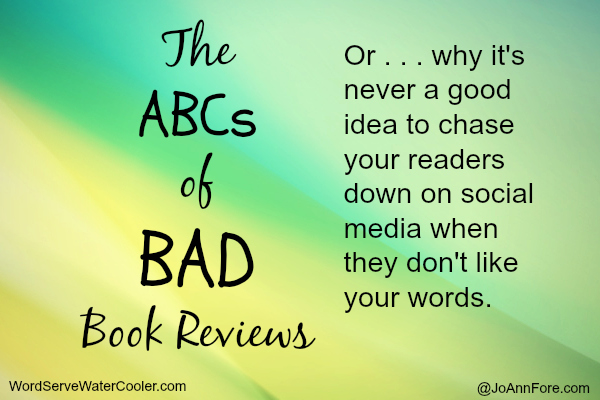
As word-weavers, this should become our default: in the face of bad reviews, let’s practice our ABCs to rebuild our confidence. Anchor. Bounce. Consider.

Okay, I’m curious now: How do you handle criticism?

7 Writing Tips We Learned From Our Dogs

samson-at-computer

We have always loved dogs. Over the course of our lives together we have owned over 27 dogs. It is not surprising that some were our best teachers. Here’s what our four-legged friends have taught us about writing:

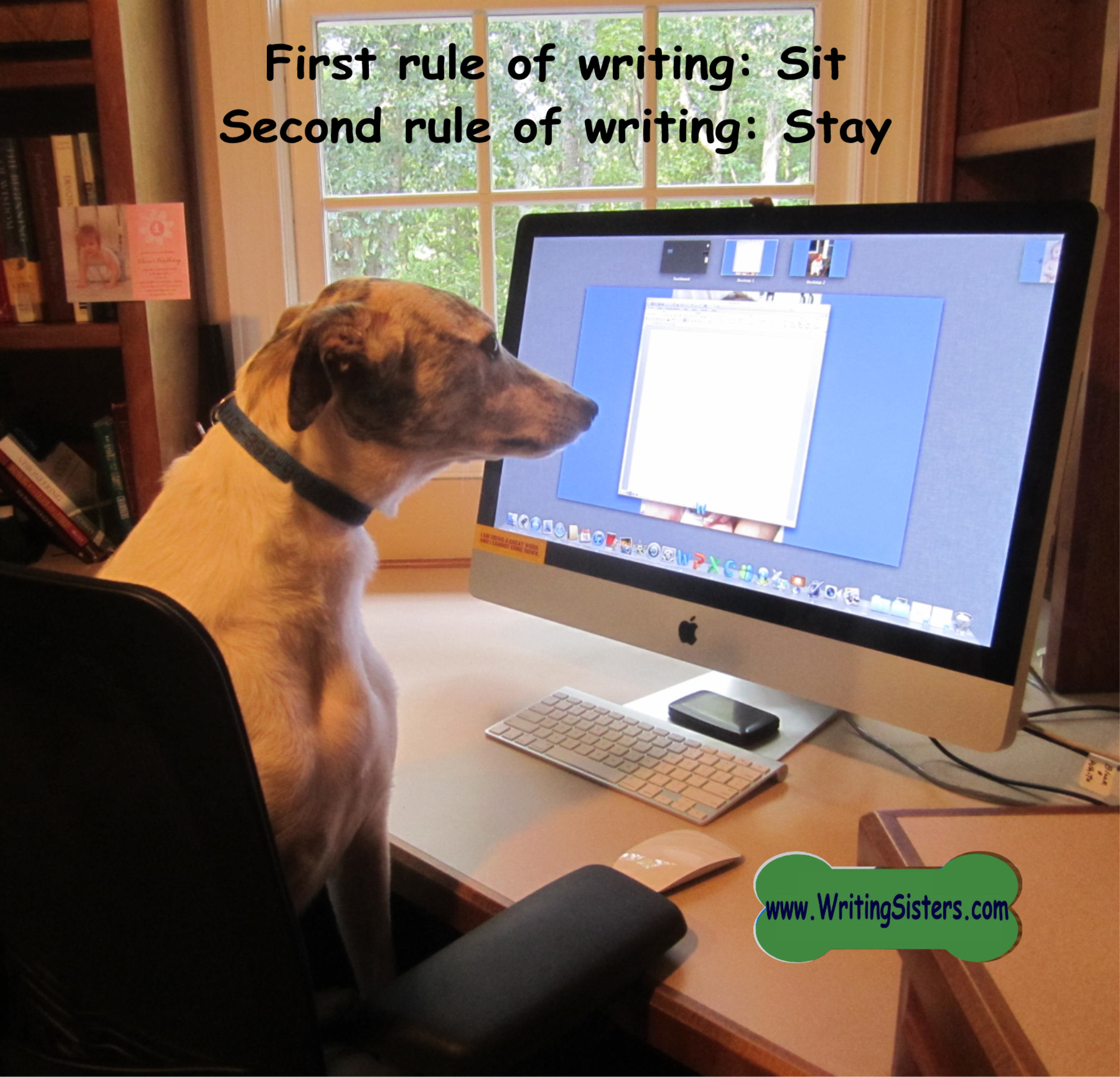
1. Sit and Stay. These are the two most important commands for writers! If you don’t sit down and begin, you will never get started. Staying is important, too. No, you don’t need another snack.

2. Dig!  Sometimes the facts that we need are buried deep, like a good old bone. The best writing requires some digging–in the library, on the internet, in your heart. Sniff it out. Then dig. If you don’t find it, dig another hole.

3. Know your territory. Writing takes good boundaries and good boundaries mean saying no. One important lesson for both of us was to protect and guard our writing time. We put the time on our schedule and then we protect it. Remember: Growl, don’t bite!

4. Expect treats. It is hope that keeps us going. Hope of touching a reader. Hope of one day holding your book in your hands. Excitement and anticipation is an important part of writing. Sit down to write expecting something good to happen.

5. Be kind to the postman. It’s not his fault. Rejection is an important part of the writing process. Keep it in perspective. Shake it off and start again.

6. Stay in the moment. Don’t get ahead of yourself and start worrying about the future.  Don’t stay stuck in the past. Worry is not your friend.

7. Play! Some of the best ideas come to us away from the desk. Stop work to chase a few ideas. Dogs love any distraction from a tennis ball to a squirrel. The work will still be waiting when you come back.

Has your pet taught you anything about writing?

Betsy Duffey and Laurie Myers  www.WritingSisters.com


Bio: The Writing Sisters, Betsy Duffey and Laurie Myers were born into a writing family, and began critiquing manuscripts at an early age for their mother, Newbery winner Betsy Byars.  They went on to become authors of more than thirty-five children’s novels. Their first book for adults is  The Shepherd’s Song,  Howard Books, March 2014.

Your First Writers Conference? Things to Know Before You Go!

This is conference season for writers! Not just the national conferences like RWA and ACFW, but smaller, regional conferences. There’s probably a writing conference or retreat somewhere in your area this summer or fall.

Speaker at Business Conference and Presentation.I’m planning to attend the ACFW conference in St. Louis in September, and it will be my second. As I’ve been signing up for classes and preparing my wardrobe (comfortable shoes are a must!), I’ve been thinking back to my first ACFW conference two years ago. I hope what I learned will benefit you.

  • Don’t be afraid to go. You won’t be the only newbie. Not only will you find other first-timers (at ACFW you learn to look for the tell-tale ribbon on other attendees’ name badges), but the veterans will welcome you as a new member of the family.
  • Don’t retreat to your room. Writers are prone to enjoy our solitary existence. We like to be alone. But conference isn’t the place for it. You paid a lot of money to meet other people who speak your language, so make sure you meet them. Introduce yourself. Sit next to strangers. Join someone who is standing alone. Strike up a conversation. You never know who you might meet. Two years ago, I ended up eating lunch with the most charming veteran author who writes in the same genre I do. What a treat to talk with her in that non-threatening environment!
  • Don’t sweat it if you can’t attend all of the classes and workshops you signed up for. Buy the sessions on the MP3 download or CDs and listen to them when your mind isn’t filled with the busyness of conference.
  • On the other hand, try not to skip the sessions you signed up for. There’s nothing like the immediate, in-person teaching by an industry professional to spark your enthusiasm.
  • Enjoy your appointments with editors and agents. Be confident, relaxed, and friendly. And if they ask you to submit something, do it. Since they really want to see it, email it to them as soon after conference as possible.
  • Exchange business cards with the new friends you meet. It’s helpful to have your picture on your card, if at all possible. You’ll be meeting so many people, it will be hard to connect names with faces a week later.
  • Most of all, have fun! Enjoy the meetings, the down times, the after-hours sessions with your new friends. Meet new people, become inspired, and get fired up!

Are you planning to attend a conference soon? Will you be in St. Louis in September for ACFW? If so, be sure to look me up!