I Didn’t Sign Up For This!!!

Babies CryingSometimes I wonder if I’m a masochist, because a writing career is a mixed bag of blessings and curses.

The blessings are many. You finally get to hold in your hands your words published in a book (yes, electronic versions count!). You have the satisfaction of knowing others are reading your work. You get your name in the local paper for doing a booksigning, or you’re a guest author at a local book club. You might even get paid to speak to an audience!

And then there are the curses. A reviewer hates your book. You knock on the doors of the local media till your knuckles are sore, but no one answers. Your great idea for marketing falls flat. You check your Amazon.com sales numbers on your author central page, and it’s like getting slapped in the face with the wet towel of reality. (“What? I’ve only sold 17 copies of my book in the last six months? That CAN’T be right!”)

The fact is that for us writers, who pour our heart and soul into our writing, all those negative responses drip, drip, drip onto the rock of our confidence, until the sharp edges of our desire and motivations (those things that enabled us to set out on the road of writing in the first place) become worn down, replaced by recesses of self-doubt and exhaustion. It takes a lot more energy and perseverance to repair that accumulating damage than it does to bask in the sunshine of the blessings we experience.

This, then, is why a writer needs a talent to forget.

As Philippians 3:13-14 instructs us, “Brothers and sisters, I do not consider myself yet to have taken hold of it. But one thing I do: Forgetting what is behind and straining toward what is ahead, I press on toward the goal to win the prize for which God has called me heavenward in Christ Jesus.”

Every writer I know acknowledges that they have been called to write. The thing we don’t like to acknowledge is how hard it can be at times to do that very thing. None of us embraced our call to write with a joyful shout of “I can’t wait to experience frustration, misunderstanding, isolation, and a hundred painful book signings in almost deserted bookstores!”

At least, I know I didn’t.

And yet the promise remains for us as powerful as it did for St. Paul. We might not have to endure blindness, or imprisonment, or persecution like that famous evangelist, but we can still ‘strain toward what is ahead’ when we fix our eyes on the prize that is Christ Jesus, and not on the obstacles we have to surmount to get there. Like St. Paul, we need to consider ourselves ‘as yet to take hold of our goal,’ no matter how accomplished we might feel when our names are in the local events calendar, or someone contacts us to speak at a program.

Forget what is behind, then, and press on, because that mixed bag you’re holding is well worth the prize.

What is your favorite way to forget and then press on?

Is Writer’s Block Real?

OLYMPUS DIGITAL CAMERA

Ernest Hemingway fought bulls in Spain, dodged bullets as a war correspondent, and hunted big game in Africa . . . but when he was asked to name his scariest experience, he said, “A blank sheet of paper.”

Recently I received an email from a buddy of mine who’s convinced she’s got writer’s block. Convincing me, though, is a tough sell. You can quote Hemingway all you like, but I think writer’s block is a scam.

Hold on. Before you sharpen your pitchforks and/or chastise me for being a heartless friend, allow me to explain.

Just because you can’t pump out fifty words to save your life doesn’t mean you’ve contracted the dreaded Writer’s Block Virus. It simply means you’re going to have to work. Yes, indeedy, welcome to Realsville. More often than not, writing is work. Grunt work. The kind that makes you sweat.

Oftentimes when one thinks they might have writer’s block, it’s simply a case of having to search deep inside to come up with a sentence or two. Sometimes that’s super hard, but it’s never impossible . . . unless of course you’re in a coma and/or your fingers are broken.

Granted, you might not have a clue what to write on your current work in progress (WIP), but writing isn’t just about a WIP. You could write a letter to a friend, an encouraging note to your pastor, a measly shopping list for crying out loud. Writing is writing. It all counts.

I hear you, though. You want to make progress on your Great American Novel, yet you’ve all of a sudden skidded to a stop. Instead of throwing your hands in the air and crying, “I’ve got writer’s block!” give one of these ideas a whirl:

• Write something completely different. A sonnet. A piece of flash fiction. A rebuttal to a letter to the editor.
• Walk away and refuse to think about your story for a day, a week, or two even.
• Kill off a character (one of my personal favorites).
• Add in a new character.
• Do something creative with your hands. Paint a poster. Bake bread. Color with your kids.
• Begin work on another scene.
• Go to a mall and eavesdrop on conversations.
• Write the last scene.
• Think of an event that would make your protagonist weep. Write it.

What do all of these ideas have in common? They put your mind on something other than the spot you were stuck in so that hopefully when you do eventually come back to it, you’ll have a new perspective.

But what if you’re still stuck?

That’s when you need to pull out the big guns. Call a trusted writer buddy and cry on their shoulder, then brainstorm like nobody’s business.

I refuse to believe that writer’s block is real. Is that naive? Cold-hearted? Ignorant? Perhaps, but those are the least of my sins. I serve a pretty big God. If He wants me to write, I will, block or no block. Therein lies my confidence.

Screenwriting for Fun and Energy

As this posts, I’m stretching my writing muscles. Doing something I’ve never attempted before. Writing a screenplay for a contest.

It’s not something I’d ever put thought into. After all, I’m a non-fiction author, although my work is story-rich. But I do have these fascinating plot thoughts that simply won’t go away. So what’s a writer to do with them?

According to a Hollywood screenwriter I met at a recent conference, “Enter a contest and have fun.”

Getting Through
Releasing, April, 2015 through Barbour Publishing

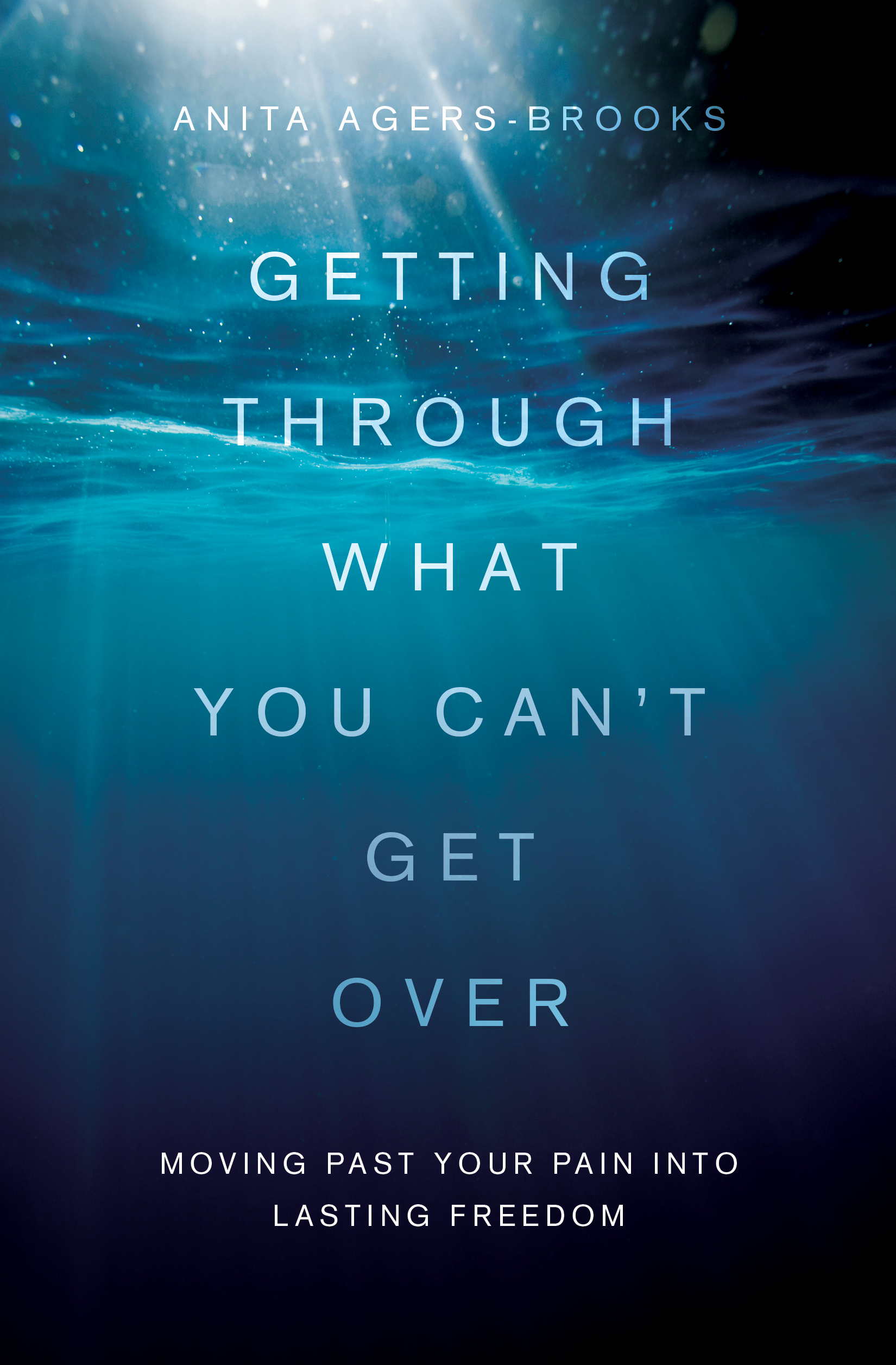
And the timing is right. I just finished writing a book I’m very passionate about called Getting Through What You Can’t Get Over, releasing through Barbour Publishing in April, 2015. I’m totally jazzed about Getting Through, but I’m also drained. It takes a lot to wade into soul-deep true stories of people who’ve experienced unwanted tragedy — many of them my own.

And as I prepare to work on my next non-fiction project, another soul-wrenching work speaking life into hurting people, I need a mental boost. So I’m challenging myself in an out-of-the-box way. I’m screenwriting for seven days in the 168 Film Project, Write of Passage contest.

But right before I started, something very interesting happened. And I wondered if God had hinted at all of this in the past, although I’d forgotten.

It was October, 2010, and I was in South Carolina on the cusp of discovering a life-changing secret about my identity. Though DNA tests wouldn’t confirm it for several days, I would soon learn my dad isn’t my biological father. At forty-six, the news blindsided me from left field.

On this particular day, I was getting ready to visit my dad (the only father I’d ever known), and as I neared his house, I thought my heart might explode from its pounding. I needed to catch my breath before I faced my fears.

It was Sunday evening, and I pulled into a plaza parking lot only two blocks from my dad’s house. The place was deserted, except for one vehicle.

Writing Screenplays
Stretching a Different Set of Muscles Can Energize

I glanced up and the license plate immediately caught my eye. I have no good explanation as to why, but I took a picture. I thought the personalized plate was curious, and remember wondering if God was telling me something. But at the time, I hadn’t even signed with my literary agent, much less sold a book.

Besides, I had bigger things on my mind, so I saved the digital photo in a file, and promptly forgot about it. Until recently.

A few weeks ago, I ran across the picture while looking for something else. Then I realized I was getting ready to enter my first screenwriting contest. And I wondered….

Does it mean anything? Probably not. Could God have hinted to me all those years ago? Possibly so. Is it fun to consider? Absolutely yes.

Whether anything comes from screenwriting or not, this is what I’ve realized. In order to infuse your writing with fresh wind, sometimes you need to do something totally off the wall, very different from what you’ve gotten used to. For a short time.

So I’m not working on a screenplay because I hope to invent the next Hollywood blockbuster, I’m screenwriting for fun and energy. That way, when this contest is over, I’ll have new fodder to make my next book even better than the ones before. And maybe that’s what God had in mind all along.

How do you stimulate your writing in creative new ways?

Anita Fresh Faith

12 Reasons for Writers to Love Facebook

facebook

True Confession: For me, Facebook was love at first post.

Apparently I am not alone. Facebook reigns as Social Media King, with 750 million active users. Here are a dozen reasons why Facebook is this writer’s Social Networking BFF.

1. Cure for Isolation: I am a relational gal and it is no secret that writing can be an isolating business. Facebook is a 24 Hour Kitchen Table “Come and Go” Conversation that never ends. I can connect to other writers who are also trapped at home on a deadline. In fact, Facebook is a virtual water cooler for thousands who work at home in their PJs but enjoy a little human connection with their coffee break.

2. Primes My Writing Pump: I read Facebook the way some read the morning paper (before newspapers all but disappeared). I like to peruse my friends’ thoughts while I sip my coffee. Writing a comment here, a question there, gets my writer’s juices flowing. Before long I fill in my status, which is much less daunting than writing a first sentence on an empty page. Interacting on Facebook eases me into a writing frame of mind.

3. Testing Material: Since I write humor, Facebook is a great place to test comedic material. If I get lots of good comments, I cut and past the post into a “Humor File” to use later in a blog or book.

4. Finding Topics that Hit a Nerve: Recently my daughter wrote a FB status about the pros and cons of when to share news of a pregnancy. More than 300 passionate responses from readers later, Rachel knew she’d stumbled upon a hot topic for her blog (www.thenourishedmama.com).

5. Easy Daily Journal: Everyone knows writers should journal daily. But what with all the social media we are now required to do to build our platform, who has time to journal, too? It’s a comfort to me that I have recorded the highlights of my experiences in a brief (publicly read) journal over the last 5 years… on Facebook. Romance novelist Eloisa James wrote an entire memoir (Paris in Love) based on a year of Facebook posts! Because the posts were so well-written, to my surprise, the book was hard to put down.

6. Gathering Ideas from Readers: In her bestselling book The Happiness Project, Gretchen Rubin sprinkles short tips and thoughts from her blog readers’ comments throughout the book. This added interest and variety to her book, especially when presented in bullet-point format.

7. Finding Original Quotes, Quips, and Anecdotes From Others: I wrote a couple of Facebook posts during a vacation when my husband and I both caught the flu. An author friend, writing a book on marriage, asked if she could use my posts as anecdotal material. I was happy to share; and she was gracious to attribute the quotes to me and mention my latest books as a reference in her book. A win-win!

8. Practicing “Writing Tight”: Today’s internet-skimming readers don’t have patience for long, meandering prose. Writing short FB posts is terrific practice in the art of writing tight. Today’s writers must know how to nutshell and extract worthwhile thoughts with as few words as possible. This past week I experienced two incredibly fun hours at a birthday party with four of my grandsons. Rather than bore my friends with a blow-by-blow account of my adorable grandchildren, I posted: “I went to a birthday party at a skating rink today and did the hokey pokey with four of my grandsons. And that’s what it’s all about.”

9. Facebook Friends are Faithful Fans: I’ve discovered Facebook friends to be faithful supporters of my blogs and books, generous in helping get the word out by re-posting press releases, book sales, and good reviews.

10. Networking: You never know how a Facebook relationship can lead to opportunities for writing or marketing your book. My daughter struck up a friendship with another prolific blogger who asked Rachel to guest post for a popular teacher’s blog. Rachel did so well that she was offered a paying gig to write regularly for http://www.weareteachers.com. We’ve also landed radio, podcast, and other web interviews because someone in media saw and liked our posts, blogs, or book topic on Facebook.

11. Random Polls: In our upcoming book Nourished: A Search for Health, Happiness and a Full Night’s Sleep (Zondervan, January 2015), my daughter (and co-author) wanted to address the Top 10 Everyday Stressors Women Face. So I posted the question, “What are the daily things that slow you down, trip you up, and steal your peace?” We gathered dozens of replies and categorized them into 10 areas that formed the basis for an entire book.

12. A Word for the Weary: How often have I received the perfect word of encouragement, comfort, or advice from someone on Facebook, exactly when I needed it? I’ve also had the privilege of regularly encouraging others via Facebook. For those who welcome it, Facebook connections can be a true ministry of words, whether or not you are professionally published.

How have you used Facebook to reach your readers?

Top 10 Ways to Finish a Book

Kariss editingAs I write this, I have just finished up a few days in St. Louis at the ACFW conference. Any other attendees feel like they drank from a fire hose? I’m still digesting all I learned. Still thanking God for orchestrating the meetings He did. As I talked to published and pre-published authors alike, a trend began to emerge.


Those who want it bad enough have the discipline to finish.

Unfortunately finishing doesn’t immediately equal a contract. Some pre-published authors have multiple completed manuscripts stuffed in drawers still waiting to be read. To you, I say, “Keep writing and keep pursuing publication!”

To those working on the first book and struggling to finish, life happens. It happens to those with deadlines. It happens to those with contracts.

It happens.

In the publishing world, life revolves around deadlines, and somehow you have to find the will and way to “let your yes be yes” and fulfill your commitment. Editors want to know you can finish and finish well before they invest in you. Before you comment with the specific circumstance that hinders you from finishing that manuscript, let me just say that I get it! And I want to help.

My creativity is officially angled towards my third book now, and as I work to finish that one in the next ten weeks, I can confidently share with you what it took to finish Shaken and Shadowed and what it will take to finish Surrendered.

  • Turn off your inner editor and write. I’m not a scientist, but I feel the tug of war in my brain when I try to think technically while thinking creatively. Write. Be creative. Edit later.
  • Pick your favorite caffeinated beverage and keep it handy. I became a coffee drinker about a month after I signed my first contract.
  • Select a time of day, place, and schedule that works for you! I’ve tried to become a morning person, but my best writing happens at night. Why fight my body clock? I love to sit in my room or on my patio in the quiet of the night with a candle burning and my creativity racing full speed ahead.
  • Alert your cheerleading squad. I have a group of about 20 ladies who consistently ask me about my writing schedule. They know when I have a deadline. They help me process. They are my test subjects when I need a reader’s perspective. They see the tears, laughter, creative passion, and the frustration. They know and they encourage me. Find your team.
  • Set healthy boundaries. I work full time, write on the side, volunteer in a young adults ministry, have Bible study, and time with friends and family. BALANCE is key.
  • Know that life will happen and work around it. This year, I’ve experienced family emergencies, my brother’s wedding, ministry situations, work crises, and somehow the writing gets done. I set my schedule and adjust when necessary. If I miss my word count because of something I can’t help, I make it up.
  • Cook ahead of time. Don’t forget to work out. Take care of yourself! Eating correctly and working out gives you energy to juggle everything.
  • Prioritize what’s important. For me, it is making sure to focus on the relationships I currently have. The Lord has sovereignly placed me in my city, my family, and my job right now. I need to be present where I am while saying no when necessary to hibernate and write.
  • Trust the Lord. He knows your journey. When you feel like nothing is happening, trust that He is working behind the scenes.
  • Just do it! Finish strong! You will go from pre-published to publication. But it takes discipline. And chocolate and caffeine. But mostly discipline. And prayer. Tons of that.

What else would you add to this list?

Telling the Nasty Stuff

Browning 9mm PistolA friend who has been serving as a reviewer of new books for a major Christian magazine recently told me that she was thinking of giving up reviewing because the books get worse every year: sappier and less realistic and just plain boring. Her comment got me thinking about my Christian students’ struggles as writers and what struggling alongside them has taught me.

The stuff of most creative writing is story—the account of something that happened. That’s because, without something happening, there’s little to tell. Nonfiction works of all sorts and even the most lyrical of poems proceed via story, if only implied. Fiction, of course, is all about story.

Even the simplest of sentences tells a story: the subject has to do something. Often a lot of somethings, as there’s rarely only one verb—one instance of something happening, that is—in a given sentence. And in the more interesting sentences, subjects don’t just do something but interact with others—direct and indirect objects, subjects of dependent clauses and infinitive phrases—doing their own things.

The most successful stories, by their nature, involve rich, round characters. To create such characters, I tell my students, they must “tell the good about the bad and the bad about the good.” In novel workshop, though, my students invariably start out with flat characters whose believability is further hampered by their being in some way outside of society: outcasts incapable of interacting.

“No,” I tell them. “You have to make your characters interact, talk to one another, be in conflict. If you don’t, then nothing’ll happen. And if nothing happens, you won’t have a story.”

Still they resist, hold back, thinking that by leaving out crucial details—characters’ names or some conversation in which a key event occurs—they’re creating suspense that will make their readers want to read on and find out.

“But we won’t want to read on,” I tell them. “Suspense is created through building, not omitting. Yes, there are things you should omit. Chekhov said leave out anything that doesn’t drive story, that if there’s a gun on the mantelpiece at the beginning of your story, it has to be fired. But that’s just it. In the story of that gun being fired, the gun needs to have been on the mantelpiece—or under the sofa, loaded, where the toddlers are playing—in the first place.” All the stuff of the drama needs to be there, on the page, for the story to succeed.

With these tenets of storytelling in mind, I would like to consider the central story of much contemporary writing about faith: I once was lost, but now I’m found. It’s a story believers feel called to tell and need to tell—the very stuff of evangelism—but they often want to leave the first part out.

The story of the lostness, the sin-life that necessitated the salvation, is Every-Believer’s gun on the mantelpiece, but it poses some problems for the teller. Stories of sin often take us to material that might offend our believing audience, for one. Worse, to tell one’s sin-story convincingly—that is, concretely—is to become the sinner to one’s audience, particularly if the sin-story one tells is of sin engaged in after one became a Christian. Of course, none of us stops being a sinner after being saved, but we don’t want anyone to know about that.

This is perhaps why, though I’ve attended all sorts of churches in which the prayers of the faithful are publically identified and offered up, I have never once encountered among the litany of prayers for the sick and grieving, for job losses, for the birth of a child or the selling of a house any of the prayers I typically find myself praying. Prayers about my failures as a wife and a mother and as a friend and a colleague and a neighbor. Prayers of a desire to be led out of some specific temptation. Prayers expressing an explicit resistance to letting God’s will be done.

There are practical reasons for keeping one’s present and past sins secret, but there’s more to it than that, I think. As believers, we want to pretend that sin stops, that there’s a “before” to our Christian story that’s understood and doesn’t need to be explained—and shouldn’t be, if it involves any unsavory details or questionable language or doubt-riddled claims—and an “after” that is dazzlingly sin-free, more pure and clean than any on earth could bleach it.

The problem is, without telling the before—well and concretely—we can’t really convince anyone of the after. Or interest them in it.

Which leaves me with some questions for my fellow Christian writers out there to consider. What can and should Christian creative writers do about the nasty aspects of their faith stories? Avoid them? Tell them? Tell them vaguely? And what are the repercussions of each choice?

Renewed Faith

full-moon-in-night-sky-over-waterI have a beautiful picture on my bedroom wall of a full moon rising over a clump of trees. The caption on it reads: “Love is like the moon, beautiful and ever new.” I’ve been married for going on forty years and one thing I’ve learned is the truth of that statement. One day I feel like I’m still on my honeymoon, and the next? Yeah, well, we won’t go there.

I believe the same is true of our faith. Some days we feel like we are standing on the mountain top, drinking in God’s blessings, our faith so strong we can conquer the impossible. Other days we find ourselves so wrapped up in life, in the demands of our daily routines, that it drains us of our strength and spiritual stamina.

Then the road of life turns rough, filled with potholes—our kids are sick, the Sunday school teacher calls at the last minute and asks us to bake an extra dozen cupcakes for class, or we have an argument with our spouse. Soon we find our faith careening off the edge of a cliff or at least being stuck in a rut.

It’s not to say we’ve lost all faith in God. It’s because we’re so overwhelmed, our faith feels as far away as the stars.

Deuteronomy 7:9 says: “Know therefore that the Lord your God is God; he is the faithful God, keeping his covenant of love to a thousand generations of those who love him and keep his commands.”

God has promised us that we are His, the sheep of His pasture, and that He is faithful. We can bask in His promises knowing His love is patient and kind. That He will never let us down. That is when we step into His grace and find ourselves back on the mountain again.

We may struggle from day to day, but He knows the child that loves Him. And He is faithful to keep us and provide for us renewed faith in Him. It is a gift, freely given as stated in Galatians.

Faith is not hoping God can—it is knowing He will.

40-Day Challenge: Telling the Stories That Matter Most

Photo/KarenJordanIn your busy life, how do you determine which things matter most?

A close examination of our priorities helps a lot. But often in the process of prioritizing, we realize that we’ve neglected some of our greatest concerns—like our health, marriage, children, or faith.

Priorities. As a writer, I have dropped the ball on some of my most important projects. I rationalize my failure to follow through with lame excuses. But I sometimes struggle staying focused on my main objective—telling the stories that matter most.

My daughter Tara phoned me with a similar complaint about her home life. “I can’t seem to get to the things that matter most to me.”

As Tara voiced her frustration, I understood her dilemma. Day after day, she faces the impossible task of meeting her family’s needs, having four small children in her home.

Prayer. The same issues haunt me, even though we have an empty nest. And I know that I must choose prayer as my first step to address any problem or decision.

James 1:5-6 promises, “If you don’t know what you’re doing, pray to the Father. He loves to help … Ask boldly, believingly, without a second thought” (MSG).

Like Tara, I frequently ask advice from someone who will give me honest input. My husband Dan offers ideas about my organizational problems. But I also consult other reputable resources, like online links, book, or professionals.

40-Day Challenge. Do you need to reboot your writing life, too? I challenge you to accept this 40-day challenge to tell the stories that matter most to you. I’m working through this process myself.

  • Identify the “real meaning” of your work—your purpose, your audience, and the context for your stories. This evaluation process includes answering several vital questions. Why do I do what I do? Who will be reading or hearing my stories? What do I plan to do with my stories? Will I submit them for publication? If so, where?
  • Define some SMART goals and write them down. Goals help guide our decision-making. Without goals, we often neglect to do the things that matter most.

    • S – Specific (or Significant)
    • M – Measurable (or Meaningful)
    • A – Attainable (or Action-Oriented)
    • R – Relevant (or Rewarding)
    • T – Time-bound (or Trackable)
  • Set up tasks for attaining your goals. Write down several reasonable and do-able steps for achieving your goals to help you plan and focus on the right things.
  • Compose a “to do” list, prioritizing all of your tasks. Schedule time on your calendar to work on your goals. This will help you stay on track with your deadlines and defend your time boundaries. It also helps communicate your goals to the people who matter most to you.

I hope that you will join me on this 40-day challenge because when we begin to tell the stories that matter most, lives change and hearts heal.

What goal-setting techniques help you tell the stories that matter most to you?

What’s YOUR Holiday Plan?

balloons-25737_150Do you know what today is?

It’s National Black Dog Day! Roll out the carpet, crank up the tunes, and open the bags of doggy treats!

In celebration, I’m doing a radio interview, guest posting on several blogs, making a couple of store appearances, and managing a schedule of entertaining tweets, updates, and posts on my own social networks. It’s not only a nationally-named observance, but it’s the perfect opportunity for promoting my very own black dog who stars in my humorous girl-meets-dog memoir, Saved by Gracie. Never mind that the book was released last April – today is the day to hit the spotlight again.cropped Jan and Gracie

In other words, I found a holiday tailor-made for my book, but without all the noise other holidays involve. I don’t have to compete with Halloween costumes or décor, Black Friday shopping madness, Santa, New Year’s Eve bashes, romantic getaways, or fireworks displays. As a black dog owner, I have the stage all to myself!

How about you? Have you found your tailor-made holiday for book promotion yet?

As every author knows, timing is one of the best assets you can find in publicity. Sure, we all wish for something of national importance or interest to pique everyone’s interest in our books when they launch, but few of us have any control over those larger scenarios. The key to keeping your book release momentum, then, is to continue to find reasons that your book is timely. Here are a few suggestions for doing just that:

  1. Re-examine your book content for additional audience appeal you may have missed during the initial book launch. For instance, when my memoir came out, my publisher focused on Christian readers, since it’s a tail (I mean tale) of spiritual healing. After that first wave of publicity, I began to expand my reach into dog-lover territory by hooking up with animal rescue groups, veterinarians, and dog boutiques. I’m now moving into a third wave of audience strategy by networking with health and wellness groups. Handling all three markets would have been too overwhelming for me to manage at first, but by adding audiences incrementally, I’m better able to market and direct what I need to do next to continue sales.
  2. Pay attention to national news and trends, and see if you can’t jump on those trains. Whenever environmental topics (like wind power vrs. natural habitat) are hot, I try to build on those conversations with my own links and commenting, because my Birder Murder Mystery series deals with the same topics. The more I engage in the conversations, the better my visibility to my readers, which translates into continued sales, even for older books in my series.
  3. seafood fettuciniFind your perfect holiday. Does your hero cook Italian food? National Fettucini Alfredo Day is Feb. 7. Does your book discuss holding onto memories? National Scrapbooking Day is the first Saturday in May. If you write about it, I bet you can find a ‘holiday’ to connect with it.

What ‘holiday’ is in your future promotional plan?


To Write a Book Someday, Share Your Writing Now

8139708904_9a1d1783d4_bSome people will tell you the defining characteristic of a writer is that he or she is someone who writes. There is truth to that perspective, but it fails to offer a complete picture. It also gives many “aspiring writers” an excuse to be nothing more than journal keepers: diligently plucking away at Moleskine memoirs or first-novel manuscripts that have zero chance of getting published, ever.

The point here is not a matter of quality. It’s about privacy.

The reason why many written works-in-progress will never see the light of publishing day is that they are stowed, always and forever, in a drawer or on a hard drive where they have no risk of being evaluated by a second person. The writers of these works will never be writers because they will never have readers. They exist completely outside the writing market, and the only critical eye they allow to view their work is their own.

If you think that one day you’d like for people to read your writing, then you should begin by inviting people to read your writing now. Here are five ways readers can strengthen your writing and make it even more worth reading:

Readers help you get over yourself. It’s not uncommon for writers to feel uncertain or insecure about what they’ve written. Will this technique work here? Am I being clear? Am I using a marketable concept? Does anybody else care about the subject? Without readers to help confirm where and how a piece of writing is hitting its target (and where and how it’s missing its mark), these uncertainties and insecurities often grow and fester. But when you prioritize feedback, typically you get it. As a result you might find that your sinking suspicions will be confirmed. Some of your assumptions might be challenged. Maybe you’ll be pleasantly surprised by rave reviews. Whatever the case, you won’t be stuck wondering anymore, and that will help light a clear way forward.

Readers identify strengths in your work. Encouragement and affirmation give extra fuel when you’re trying to produce a manuscript. So ask your readers to note the places where they laugh out loud, hold their breath with anticipation, get caught by surprise, can’t stop turning pages, or are struck speechless. That paragraph you’re thinking about deleting? It might be your readers’ favorite part. Give them a chance to tell you so.

Readers identify weaknesses in your work. That poetic metaphor you’ve taken days and months to craft? It might be so complex that it’s confusing your readers. The story you’ve built a whole chapter around? Your readers might be bored out of their minds.

As the writer of a work, you will undoubtedly feel more attached to it than your readers will. Because of your heightened emotional attachment, you’ll probably miss seeing some of your writing’s flaws. You might even be blind to enormous holes in the work. Let your readers open your eyes to the problems you don’t see, so you can take the opportunity to fix them.

Readers expand your perspective. You are only one person, so your outlook on the world is limited and skewed. You have strange views about certain things, and some of your views simply haven’t been challenged in a way that forces you to clarify them well or charitably. Readers can help you identify the odd little points in a draft, the ones that either are or seem arrogant, stingy, dismissive, hyper-emotional, you name it. Points like these will jut out in unseemly ways, always subtracting and distracting from good work, unless someone will be so kind as to call your attention to them, so you can know to improve them.

Readers make the process realistic. If your writing aspirations are real, then you’re going to have to accept the reality of readers at some point. Get used to feedback now, and critiques won’t make you crazy later. Write with readers in mind now, and it won’t feel strange when they’re a part of the process later. Start learning what readers are interested in now, and then when your defining moments as a writer come, you’ll be prepared to deliver for your readers.


YOUR TURN: Respond in the comments: How have readers helped your writing? What kind of readers give the best feedback? What keeps you from pursuing readers?


Photo credit: cogdogblog cc