The Beauty of Lying Fallow

harvested fieldLying fallow isn’t just for fields. If you want to find kernels of ideas to jumpstart your next writing project, you might be surprised to see how much you can glean from the already harvested fields of your finished projects.

Just as farmers routinely allow sections of their fields to remain unplanted for a season in order to replenish the land’s fertility, writers need to leave past projects alone for a time in order to get a fresh perspective on their work – a perspective that often reveals the kernels of ideas that somehow got hidden beneath the framework of that finished work. Every writer knows many ideas that pop into the head during the research and composing process end up getting tossed out in the pursuit of a tightly woven story or narrative. That’s part of the discipline of self-editing: you mercilessly cut out your own words that you might have lovingly slaved over because you realize that, in the end, they don’t make your work stronger.

Ouch. The truth hurts.

The good news, though, is that those same words, those kernels of ideas, might be able to take on their own life in another season of your career–as long as you can find them again. That’s why it’s a good idea to keep your notes from a writing project after its completion. Yes, it means you’ve got bulky files sitting unused on a shelf, or on your computer, but it doesn’t mean you’re a hoarder who just can’t let go.

sproutIt means you know that as soon as you get rid of those notes, you’ll find yourself looking for that funky little idea that didn’t quite fit the last manuscript, but would be an amazing starting place for a new project…now that you’ve had some fallow time to let that kernel of an idea begin to sprout all on its own in your subconscious.

I used to think that if I wasn’t working on a new project, I was losing time. Now I realize that my imagination needs as much of a rest as any physical landscape that is cultivated for production. What’s even more delightful is to browse through my bulky files of old projects and find new inspiration just waiting to be gleaned from the rubble of a field I thought I had fully harvested. I shouldn’t be surprised – the Biblical injunction to leave the field fallow in the seventh year was not only to improve its productivity for later, but to provide sustenance for the poor who were free to eat of what was left. In other words, the field might have been harvested, but even in its fallow season, it could give nourishment.

For writers who feel depleted after the long haul to publication and market, it’s reassuring to know that imagination is already replenishing itself.

What kernels have you gleaned from harvested fields?

Marketing With A New Mindset


If you’re like me, sometimes the best thing in life is a little change of perspective.

perspective

Last July I got my first taste of publication. After months of hard work, I held the finished product in my hand. Countless drafts had transformed into orderly pages and endless edits changed into final words. It was beautiful. And then came the real work—marketing.

For many of us, the idea of marketing our books makes us a little queasy. Peddling wares and pushing books is not an exciting notion. After all, we are writers. Our gift is with words not a megaphone. In fact, most writers fear the aspect of marketing their own book. Yet, in today’s publishing world self-promotion and book marketing are a must.

If you have written a book, part of your purpose is to bring something meaningful to the reader. How can that reader be reached if there is no one to share it?

Think of the passage in Matthew 25:14-30

In this parable, a rich man who was going on a journey called his three servants together. He told them to take care of his property while he was gone. The master gave five talents to one servant, two to another, and one to the third. Then the master left.

The servant who had received five talents made five more. The servant who received two made two more. But the servant who received one buried his talent in the ground. Later, the master returned to settle his accounts. The master praised the first and second servant. But the master’s response to the third was harsh. He stripped the talent from the lazy servant and gave it to the first servant.

In the parable, the master expected his servants to invest and be proactive, to use and expand their talent instead of passively preserving it. With the first servant, courage to face the unknown was rewarded, and we can see God expects us to use our talents toward productive ends, not only was the first servant allowed to keep what he earned, he was invited to rejoice with his master.

This is such a beautiful illustration of what we should do with our God given gifts.

So, is there a cure for marketing anxiety? Maybe. Maybe it’s time to take a step back and gain a new perspective. Maybe it’s time to stop looking at it as MARKETING and instead, look at it as ADVOCATING Your God Given Gifts.

gifts

You are your work’s greatest advocate. So who better to promote it than you? It’s up to you to reach your audience. Invest yourself. When we share our talents lives are changed!

With the same passion that drove you to write your project in the first place, look at your book marketing plan in a new sense. Instead of marketing, advocate. Use whatever is available to you and proudly declare yourself, your message, and your book. Move forward with certainty that you have something important to share and what you share has the power to change the world.

Writing a Book When Life Gets in the Way

Getting Through What You Can't Get Over Book CoverI should have known when I chose the title, Getting Through What You Can’t Get OverLife threw me plenty of fresh material, as one tough thing piled on top of many little distractions. Anyone relate?

With the greatest of intentions, you plan your life around that contract, basking in the after-glow of signing your name. You cut back, say no, and schedule in ways conducive to writing the next great masterpiece. But then…life.

For me, it started right after I signed the contract in April, with the loss of a dear friend to cancer, and my father-in-law’s diagnosis of a new brain tumor. This aggressive grower would require a second surgery, less than a year after he’d been through the same procedure. Only this time, he would undergo radiation five days every week, for a period of two months. Add other appointments, follow-up visits, side-effects requiring care, and my mother-in-law’s freshly broken ribs. Let’s just say as their main care-giver, it was one rough summer. And all the while, hovering over my shoulders, the contract deadline. September 1st.

So what’s a writer to do when life wants to get in the way of the writing? You take the problems and solutions, questions and lessons, the painful and the purposeful, and you write from the heart of your struggles. But there were a few practical/spiritual tidbits I acquired as I walked that long valley. I pray someone finds a nugget of help here today.

  • Don’t discount the value of brief moments. One of the most inspiring things I’ve ever read was the story of a man who wrote an entire novel two minutes at a time, because that’s all he could muster everyday due to his job/financial responsibilities.
  • This truly is a no-brainer, but bears saying anyway–turn off the social media for a while.
  • No matter how frazzled, far behind, or feverish you feel about the work you need to do, take a Sabbath rest. I can’t tell you how many times I was tempted to pick up my computer and write on Sundays, but I stuck to my commitment to honor God with that day set aside each week. I firmly believe He honored my obedience with supernatural strength and inspiration.
  • Look at your commitments through a microscope. Are there areas you can delegate? Can you humble yourself and ask for help–then accept it? Will you stop people-pleasing and say, “No,” when appropriate? Is there something you can neglect temporarily? Are there troops you can rally to teamwork? In my case, I was able to strategize with family members. We came up with a plan and took turns driving my father and mother-in-law to medical appointments. Not everyone helped, but instead of letting bitterness add to my emotional weights, I expressed gratitude for those who were willing and able.What Satan Means for Evil God Means for Good
  • Remember, what Satan means for evil, God means for good.
  • Crawl in your Writer’s Cave. I explain the process in the post link. But to date, I’ve found no better way to gain the solitude I need when those precious writing moments arrive.

It isn’t easy to pen a book, especially when life conspires to hamper your productivity. But I must say, life holds no power over the One who created it. When I asked God for help, praising Him in advance, He gave the assist. He never let me down.

I slid across the deadline exactly on September 1st. Are there parts of the book I wish I’d written better? Of course. Writing a book isn’t easy when life gets in the way, but if it was, then everyone would do it. When you finish yours, celebrate. For getting through something many never will.

What tips can you offer to those who are struggling to meet their writing commitments?

You’re In My Heart, You’re In My Soul

water droplet pixabayAs the hart (deer) pants and longs for the water brooks, so I pant and long for You, O God.

Psalm 42:1 AMP

When deadlines loom, relationships are challenged, and we get weary in the work to which we are called to perform, our souls can feel like dry, brittle sponges in desperate need of the touch of clear, cold water for refreshment.

Most of us reading this give more than we take or receive. For many of us, our Christian beliefs compel us to give, give, give and then give some more without taking the necessary breaks from performing in order to be nourished and replenished ourselves. Because of this, far too many believers in Jesus are operating out of our fumes, running on an empty tank, rather than out of the overflow of what Christ has for us in His fullness.

When we read the above passage of Scripture, we can easily imagine a deer panting for a drink of water. It isn’t hard to visualize and empathize with a deer who has been chased by dogs in the heat of summer, striving for survival – longing, even crying out, for just a drop of water. While the majority of folks reading this haven’t been in those exact circumstances, it doesn’t take much imagination to know what it feels like to be chased down by the ugly experiences in life like unpleasant financial woes, devastating diagnoses, irritating interruptions, hurtful behaviors by loved ones, and even our own struggles with sin and temptation…just to name a few!

Undealt with Weariness Leads to Unhealed Woundedness

What a refreshing drink of cool water it is to remember that we are no longer like David. We are no longer in need of searching for a place to get a drink of cool water when our throats are parched. While we may need to find a place for our minds and bodies to get necessary rest, our souls are no longer separated from the place of our greatest refreshment!

Here is how I know this: when Jesus came onto the scene and into our humanity, He offered a new way of living, a new way of relating to God and others, and a new way to experience God!

He explained this when he met the Samaritan woman at the well. Take a peek with me into their conversation,

“Jesus answered her, ‘All who drink of this water will be thirsty again. But whoever takes a drink of the water that I will give him shall never, no never, be thirsty any more. But the water that I will give him shall become a spring of water welling up (flowing, bubbling) [continually] within him unto (into, for) eternal life.’” John 4:13-14 AMP

Do you see the difference between David’s experience when he couldn’t get to the temple to worship and what Jesus said He alone could provide to the thirsty woman who had been searching everywhere for love, acceptance, validation, and relationship and never ever experience satisfaction, much less a “continually flowing, bubbling up” source of life?

Read the rest of John 4 and I Corinthians 6:19 (as well as so much of the New Testament) and be reminded that we can now experience God’s refreshment and renewal anytime, anywhere because His very Spirit now resides within us and He has made us one with Him!

niagara-218591_640 pixabay
Our place of quiet refreshment now resides within us!

While I am grateful beyond expression for places like the beach, the mountains, a city park or even a library or local spa to enjoy body/mind refreshment, I am in awe of the reality that those places and those experiences cannot come close to providing my soul what it really needs: a holy moment with the One who created my soul for Himself and is always, always, always available to me in full measure.
(This might be a good time for a “Selah” – i.e. a pause-and-think-about-that moment.)

Dearest Lord Jesus, my friend and Savior, thank you for this new way of relating to you, in the Spirit; this new way that allows me to be with you always; to know I’m never alone, I’m never depleted, I’m never lacking what I truly need and desire. Show me in clearer ways how to tap into this truth for my own life so that I grow and mature in this area of soul refreshment, drinking from the Living Water you’ve placed within me in abundance – and may my life reflect this beautiful reality to others out of the overflow of this ever-fresh spring that is operating in my life.

3 Ways to Build Your Writing Career

IMG_5665

As a pre-teen with literary dreams, I was blessed to have a newspaper editor for an uncle. During a visit to his house, he introduced me to a Writer’s Market and demonstrated how to submit poems and short stories to magazines. That nudge helped me sail my ship. After a few dozen submissions, I received my first byline. I still have the $8 check. 🙂

I’m thankful for my uncle’s mentoring, and I try to help other writers get started and stay motivated. As a result, I’m often asked by excited beginners, “how do I get published?” That’s a good question. But it may be the wrong question. I believe a person who’s serious about writing should instead ask, “How do I build a career?”

As I’ve pondered what that process entails, I’ve uncovered three important steps to building a career as a professional writer. They comprise the chart for navigating the murky waters of publishing.

First–Build Confidence

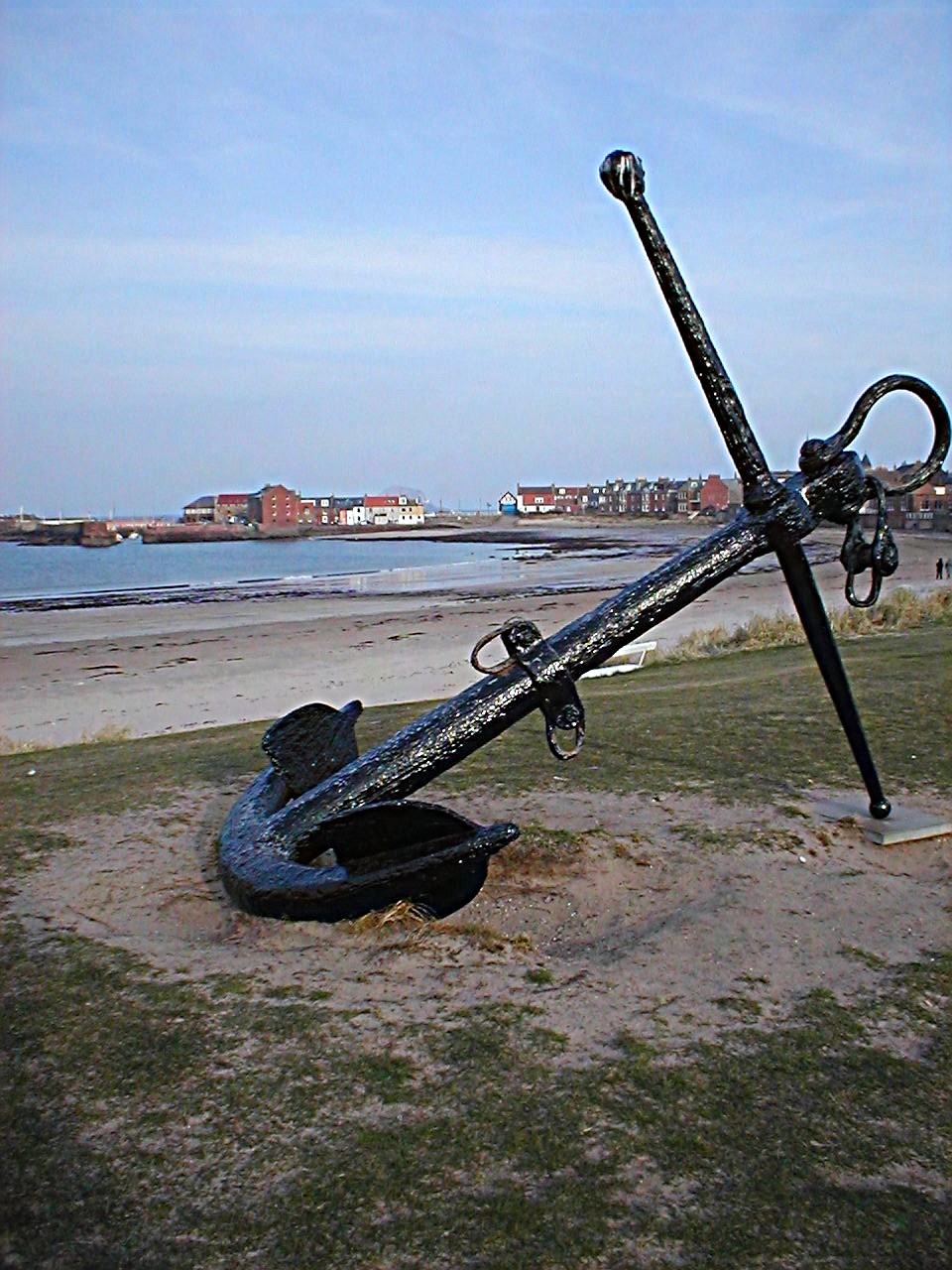
Confidence is the anchor of a writer’s craft. Repeat after me: “I am a writer.” Now say it again. Then repeat this exercise until you believe what you’re saying.

Another way to build confidence is to join a writer’s group, either locally or online.file0001814083365

Your belief in yourself will also improve as you learn about the ocean that is publishing. Like a fisherman trolling unchartered waters, be adventurous—by attending conferences and by subscribing to unfamiliar online and print newsletters and magazines.

There are two reasons to navigate new territory often: first, markets rapidly change, and second, editors and agents repeatedly change positions. The writer with the advantage is the one who stays abreast of people, publications, and trends.

Case in point: recently, a magazine accepted an article of mine (which they had previously rejected) because I re-submitted it when a new editor came on board. I found out about the opportunity through the “market news” section of a writer’s newsletter.

Second–Build Credits

How do you get those all-important first credits? Author Sarah Stockton, says she took two approaches to building her clip file: “First, I targeted online publications that didn’t pay. These are often easier to break into. Secondly, I queried places where I felt I had something to contribute that I felt passionate about, with an idea directly related to their content and an angle that I hadn’t seen from them before.”

Sand your boat often, by reworking old material. Also, don’t forget to revise your new bread several times before casting it on the waters.

Reprints are another way to beef up your resume. After you have a few excellent articles, try selling them over and over again. Each time, you’ll receive a new credit, as well as payment (whether it be in money or in publicity) for old work.

Third—Build Your Craft

Developing your craft takes perseverance, patience and prayer. Picture Noah, slowly putting the ark together under blue skies.Then feel God smiling on you as you obey Him, even when the rest of the world points and laughs.

Other ways to build your craft: attending a writer’s conference every year, entering contests, listening/reading books on areas in which you’re weak, and completing writing courses, whether in person or online.

Now grab that hammer and a few nails and start building your craft. I’ll see you in the water!

Winning Writing Contests

I’ve both entered and judged several writing contests over the last four years. Not only that, but have been asked to review a myriad of early manuscripts for newer writers.

award-152042_1280Most recently, I entered the Blurb to Book contest sponsored by Love Inspired. I’m happy to report that I made it to Round Two (Go Team LIS!) What I thought was interesting about this particular contest is that the sponsoring editors sent out an e-mail to all the participants before they released the round two results that outlined several reasons why you may not have progressed in the contest.

I found this information highly valuable and also found it to be consistent with entries and early manuscripts I’ve judged/read that didn’t fair too well. So, I thought this list would be interesting to you because it speaks to universal problems among writers. The LI editors should receive credit for these items and I’ll be expanding on their list with thoughts of my own.

1. No strong hook. For this contest, we had to write a blurb (something akin to back cover copy) and were limited to only one hundred words. You realize very quickly how few words that really is. But this comment of the blurb or hook not being strong enough can be carried over into other things. Your cover letter didn’t have enough punch. Each word has to be powerful. A short blurb like this is easy enough for other people to read and critique.

2. Too much back story in the first page. This is so common I almost gave the editors a standing ovation when I read it. This is a very common mishap in writing. In round one of this contest, we submitted the blurb as noted above and just the first page of a first chapter. That’s it. Imagine how strikingly engaging this first page must be! My professional writing opinion is that it takes authors time to “warm up” to their stories and this is a lot of what’s happening in those first pages. It’s really character profiling. My suggestion is to look at page five of your first chapter. The first event that happens is really the start of your story. Back story can be dropped in as the story progresses.

3. Not following the guidelines. Every time you submit something as a writer, there’s likely a document that covers the submission process–whether it be for an agent, an editor or a contest. Read them. Double check them. Even if your writing is fabulous, if you haven’t “followed the rules” you can be kicked out of the contest just for formatting issues. Seriously, don’t let the wrong font drop you from a contest. You also cannot “break the rules” in the sense that if a publisher says a character cannot do such and such–they really mean it. If you don’t like the guidelines of that particular publisher–don’t write for them.

4. No conflict. Every story, regardless of genre, must have tension/conflict. It’s why we read story. Readers don’t want to read about happy people in happy places where nothing ever happens. Even the sweetest romance story has conflict. James Scott Bell has a whole book about it called Conflict and Suspense. Check it out.

5. Telling rather than showing. A common issue for writers. I’ve written a blog post on showing versus telling here that will better illustrate this point.

6. Confusing. Have another writer read your entry. If it’s not clear to a reader, clean it up regardless of how you feel about the passage.

7. Writing . . . not quite there. As the editors said in their e-mail– everyone has to start somewhere. Writing is a craft that must be learned and honed. Did you know just learning a craft takes 6-10 years? Think about musicians, dancers, or painters. Did they succeed at their first attempt? I think people don’t give learning the craft of writing enough credit in the sense that because we know English and can craft a sentence since grade school– we should be able to write a great novel the first time out of the gate.

Have you ever watched The Voice? We can all sing, right? Of course, some better than others. But if you listen to the mentors work with these young singers, you’ll hear them talk a lot about practice, about craft, about emotion in singing. “Come back next year when you practice these things.” You know what? The singers that take this to heart do practice, they do come back, and often times they do better the next time around.

So… keep writing! Keep entering those contests regardless of the result. Take the information from the judges as a learning opportunity to grow.

Have you ever entered a writing contest?

Cutting Out the Frivolous Stuff

song sparrow singingLast week, during a series of presentations on writing-related discoveries, which I always make first-year composition students do at the end of the year, one student said, “I learned that writing shorter is harder than writing longer.”

“Why’s that, do you think?” I asked.

He thought before answering.White-crowned-Sparrow

“Because to make something shorter, you have to make all these decisions. Like, what’s important and what to get rid of. And then, after you take stuff out, you have to change other stuff to make it sound right.”

“You mean, you have to revise—like, you know, re-see it,” another student chimed in.

“Yeah. It is like that,” he said. “Like seeing that it could be a different way and still be what I wanted to say. Maybe even better. I never thought of that. I always used to think revision was just fixing stuff.” The two students grinned with that mixture of embarrassment and pride students always have when using the language of the course.White-Throated_Sparrow

That night I led a professional development session for graduate faculty on the subject of assessing final projects.

“Everything students hand in is a draft,” I remarked in passing, “and drafts are hard to grade. If you want your students to revise, you have to trick them into it.”

Field_Sparrow“How?” one professor asked.

“Lots of ways,” I said, “but the most successful way for me is to give maximum word limits on assignments rather than minimum word limits.”

“How does that make them revise?” she persisted.

I knew that being made to write short did force students to revise, but it took me a second to come up with a reason why on the spot. “I guess it’s like when you fill out an online application and have to answer a question in a little box that limits you to only so many characters, including spaces,” I told them. “What you write is always way too long. So you have to keep paring it down, getting rid of unnecessary stuff, often the parts you’re Harris's Sparrowproudest of, so you can get down to what’s essential. And, in the end, it’s not only shorter but better. Or, anyway, I always think it is. In my experience, the same thing happens with students when I give them word limits. I get all these emails, begging me to let them go longer. But I never do. Not one word. So they have to revise. And what they turn in is lots better than what they turn in when they’re just trying to fill pages.”

Everyone wrote that down—the most useful grading takeaway, even though it wouldn’t be relevant until they started building assignments the next semester.

The next day, at an end-of-year luncheon of honors English students, my department chair asked those about to graduate to share the moment they realized they wanted to study English, and two women talked about learning to write short.

lark sparrow“Being forced to cut made my writing so much better,” one said. “I knew how to improve my writing after learning that.”

“I had this revelation that every sentence matters,” said another. “That was the moment for me.”

Finally, yesterday, my novel workshop students were talking about their revision strategies for the three chapters I’d be grading at the end of the semester.

“I’m cutting out a lot of frivolous stuff,” one said. “That’s the main thing I learned in this class: You don’t need half the stuff you write.”Chipping_Sparrow

As always, whenever I have one of these clumps of similar messages, I figured it wasn’t just coincidence—or the more obvious reality that people were saying back to me what I’d been preaching all semester—but the Holy Spirit weighing in on the ssavannah sparrowubject. It seemed strange, though, that the Holy Spirit was interested in revision.

Then it occurred to me that I’m the one who needed the cutting message I’d been preaching. My own novel is a frivolous (and practically unpublishable for a first novel) 130,000 words.

There’s no getting around it, I told myself. You need to cut another 30,000 words.

That doesn’t begin to answer the question—if you’re still wondering—of why cutting words from my pages might interest the Holy Spirit. Perhaps it’s that, as I like to tell my students, revision is a key part of the creative process, and God has always been into that. Separating light from dark, water from land. Fiddling with it, examining it, considering, until it’s good, or very good.

Or maybe God’s interested in revision for the same reason he pays attention to sparrows: namely, all of his creation—birds, us, our minds, words, our little improvement plans—fascinates and delights him.

(PS: To whatever fellow birdlovers are out there, I saw all the sparrows pictured this morning: song, white-crowned, white-throated, field, Harris’s, lark, chipping, and savannah. I feel so blessed!)

Facing a Change?

Photo/KarenJordan“Listen, I tell you a mystery: We will not all sleep, but we will all be changed … ” (1 Corinthians 15:51 TNIV).

I first noticed this scripture many years ago displayed on a wall mural in our church nursery. I laughed at the clever inference to the care of the babies. But the verse prompted me to research its biblical context.

I discovered differing opinions about the end times. But I also found Someone who never changes: “Jesus Christ is the same yesterday, today, and forever” (Heb. 13:8 NIV).

Possibilities. Change is inevitable. And many times it arrives when least expected—like an illness, untimely death, or even an opportunity you never dreamed possible.

“Change is the law of life. And those who look only to the past or present are certain to miss the future” (John F. Kennedy).

Politics. Politicians also promise us change. But their promises often prove to be just as empty and meaningless as their rhetoric no matter how well intended.

Such shallow commitments remind us of what the Bible says about keeping our word:

And since you know that (God) cares, let your language show it. Don’t add words like “I swear to God” to your own words. Don’t show your impatience by concocting oaths to hurry up God. Just say yes or no. Just say what is true. That way, your language can’t be used against you. (James 5:12 MSG)

Projects. I embrace change at times, especially with my writing projects. The writing process requires many revisions. Some people believe writing is just a three-step process—pre-writing, writing, and re-writing. But most writers agree that each of these steps involves much more.

For instance, the beginning of the composing process includes things like brainstorming, asking questions, researching, outlining, and other pre-writing strategies. Even the simplest blog post requires multiple revisions. The first draft of this post needed a lot of editing and changes.

Promises. The Bible also reminds us, “… in a flash, in the twinkling of an eye … we will be changed” (15:52).

But even though God’s Word promises change, it also encourages us to “… stand firm. Let nothing move you … ” in our faith (15:58).

So when you face change or resist it, remember, “Always give yourselves fully to the work of the Lord, because you know that your labor in the Lord is not in vain” (15:58b).

What changes are you facing right now?

Facing Our Fears as Writers

Photo/TaraRoss

We’re going to have to let truth scream louder to our souls than the lies that have infected us. (Beth Moore)

I’m forced to face my fears and weaknesses in many areas of my life, particularly my writing life.

Resistance. What fears haunt you as a writer? I have a long list of my own. Writing for publication demands strength and stamina! We should expect to face resistance, right? Each new project, goal, or idea, may trigger memories of intimidation, shame, rejection, failure, regret, or setback. Or we may even fear the price of our success.

Intimidation. Fearful to let anyone see your first (second or third) drafts? Even the best writers produce shoddy first drafts. Anne Lamott offers an entire chapter on this topic in her outstanding instructional book on writing and life, Bird by Bird.

That’s why we RE-write. And that’s why I recommend finding a critique group or someone who can (and will) edit your work. I’m grateful for my writing friends who are honest enough to wield their red pens and hack on my stuff.

My husband Dan serves as my Editor-in-chief, although most of writers do not advise asking a spouse to edit. But I’ll reserve that debate for another post. Although, I welcome your opinion on that subject in the comments space below.

Shame? Perfectionism and the fear of judgment and criticism can stifle our writing life. Our inner critic may be harder on our work than any reader or editor. “Shame is the most powerful, master emotion. It’s the fear that we’re not good enough” (Dr. Brené Brown).

Rejection? Wow! This can be a monumental hurdle for writers! But many famous authors were rejected before succeeding, like C.S. Lewis and F. Scott Fitzgerald.

If you’re a Christian writer, here are a few encouraging words from Beth Moore, “The next time you feel rejection’s sting, remember God’s words to Samuel: ‘It is not you they have rejected, but they have rejected me’” (1 Sam. 8:7).

Failure? Many writers never pursue writing for publication for fear of failure. But I agree successful author and blogger Jeff Goins: “The cost of not pursuing a dream is greater than the cost of failure.”

Regret? Our mistakes can yield valuable lessons. But we don’t want to focus so much on our missed opportunities or disappointments that we lose sight of hope and dreams for our future.

… I do not consider myself yet to have taken hold of it. But one thing I do: Forgetting what is behind and straining toward what is ahead …  (Phil. 3:13 NIV).

Success? Do you fear having high hopes? Afraid of taking risks? Or maybe you’re counting the cost of success, and you don’t think you have what it takes. Could your fear be the stumbling block that’s keeping your from moving forward?

Setbacks? How do you endure setbacks in your writing life? I’ve learned a few survival tips on the walking trail and on my writing journey. But as I face my fears and take one step at a time by faith, I’m able to go the distance.

And now, … one final thing. Fix your thoughts on what is true, and honorable, and right, and pure, and lovely, and admirable. Think about things that are excellent and worthy of praise. Keep putting into practice all you learned and received … Then the God of peace will be with you. (Phil. 4:8-9 NLT)

What challenges have you faced and what fears have you overcome as a writer?

Crafting a Business Plan

Only a couple weeks ago, I closed the chapter on a significant season in my life – the completion of my first three-book series. I feel as if the last three years of my life have passed in a blur of deadlines, beautiful character adventures, and growing pains. As I celebrate the ending of this season and the potential of the next, I also need to reevaluate what I want this writing gig to look like going forward.

But that’s the thing. It’s more than a writing gig. It’s a business, a ministry. As with all businesses, it requires strategy, planning, and much prayer. When I first began this adventure, I wish someone had told me to look ahead, to dream but to do so in detail. As I reflect on all God has done, I am hitting “pause”–as I pray about contracts and direction and stories–to craft a business plan, one that gives me direction for the years (I hope) that loom with possibility before me.

Kariss Lynch Shakespeare quote

Creating Your Own Business Plan:

1) Craft a mission statement.

What is the purpose of your writing ministry? We all want to reach and impact readers. Be more specific. What unique calling/gifting/direction do you bring to the table?

2) Identify your audience.

If you have worked with publishers or are working to break into the field, you are aware that you must define your audience for your proposals. Be more specific than the age range. Do you write for those who have lost hope? Are your stories for the courageous at heart who want to change the world?

3) Set long-term and short-term goals.

This is where I am crafting financial, spiritual, physical, intellectual, family, social, and career goals. If every area of my life feeds my writing, and I believe it does, then it is important I take all of this into account. I’ve noticed I write better in deadline season when I am taking time to eat healthy and exercise. On the nights I don’t sleep much in favor of finishing a project, my health routine gives me energy to keep pushing. When I don’t set time aside to invest in family and friends or have fun, I write from a drained tank. If I don’t attend at least one conference a year, I miss out on building relationships and gaining valuable training. Goals help me account for these moments, and tackle them with more gusto.

4) Formulate a guideline for the unknown.

I have lingering questions that I want to answer that will help me as this career hopefully grows. Do I want to limit myself to my current genre or do I have other story styles burning on my heart? If so, what do I need to do to incorporate those stories? How do I respond to speaking opportunities? How am I going to interact with readers? How do I answer those who ask my advice on writing? How will I handle endorsements and judging writing competitions? I am working on answers to all these questions. I believe having an idea in place will help me to respond well when these situations arise.

5) Share your vision.

I have a small group of people in my life who will gather to give me feedback on my business plan. They will respond as readers, but they will also respond from a place of knowing my heart. They will be my encouragers in the months and years ahead, my accountability if I get off track, and the ones with wisdom to help me reevaluate this business plan when the need arises. They are the ones who challenged me to identify my direction in the first place.

I am still working to finalize this business plan and would love to hear from you! What goals have you set for your writing career? Do you have a business plan that helps keep you on track, or do you use another method?