10 Tips For Writing an Effective Query Letter…

10 query tips again

Whether you’re pitching an article or submitting a book proposal, your query letter—or your cover letter—needs to convince a publisher to keep reading. As you’re writing, remember that the reader will be tempted to check out and check Facebook. It’s your job to grab and keep a reader’s attention!

1. An effective query letter is concise.

Demonstrate you’re an effective communicator with the efficient use of words. (1 page!)

2. An effective query letter states your intention.

Be clear, up front, whether you’re pitching an article or looking for a publisher.

3. An effective query letter is personal.

Address your letter to a particular person. Has he or she represented or published something similar to your project? Make a meaningful connection with the recipient.

4. An effective query letter clearly identifies your premise.

What is the one thing this book or article aims to do? Clearly identify the singular unifying thesis.

5. An effective query letter identifies a reader’s felt need.

Why should this be published? What need does it meet? Who has this need? How will reader be helped?

6. An effective query letter captures and holds a reader’s attention.

Hook reader’s attention with colorful anecdote. Then, work to keep it.

7. An effective query letter communicates your competence.

Highlight the elements of your bio or resume most relevant to this project.

8. An effective query letter pulses with your passion.

Demonstrate your enthusiasm for this project.

9. An effective query letter balances confidence with humility.

Thank the reader for her/his time and offer your availability to discuss project further. Demonstrate humility and teachability.

10. An effective query letter is error-free.

It’s one page. Be fastidious.

Cheering you on,
Margot

Surviving the Valley

You hear a lot on the writing journey that it’s filled with highs and lows—probably more so in publishing because it’s rapidly changing and I personally wouldn’t consider any part of the industry stable or predictable.

valley-of-fire-1390258_1920The problem is the valley is hard. What exactly do you do? Do you give up writing? How do you readjust to keep your writing career moving forward when seemingly no one wants the words you’re putting on the page?
My writing valley (really—the deep dark hole of despair) started after my first trilogy was published. I worked really hard marketing those books, had great reviews, and two out of three of the books were each nominated for multiple awards. I was even told by my publisher that I was (at one point) their second-bestselling fiction author.

I thought there was no way my next proposal wouldn’t be picked up—by somebody. Well, it wasn’t and to be honest it put me in a psychological funk. I was pretty convinced that my envisioned bestselling author status dreams were rapidly crumbling in front of my eyes.

I’ve come through my first major valley (I’m sure one of many to come) and I thought I’d share what I did to survive it without throwing my writing career in the trash and lighting it on fire.

  1. Grieve. It’s okay to be sad about it. The writing life is unpredictable—even that’s a pretty generous understatement. Your writing life didn’t go as planned and it’s hard to readjust dreams sometime—but do readjust.
  2. Help other authors. Help them promote their books. Read books for endorsement. Review novels. Keep your name in the reader’s mind by having your name on their books.
  3. Stay active on social media. Even if you’re not publishing, keep engaging with your readers and other authors.
  4. Keep writing and learning the writing craft. Above all else—don’t stop writing. Journal. Blog. Write a new book proposal. Use this time to brush up on the areas of your writing that aren’t strong. Read those numerous writing craft books that have been piling up beside your bed (come on, I know you have them!) Learn those pesky computer things you’ve been putting off. Scrivner. Newsletter distribution sites. Take an on-line writing course. Even James Patterson has one now that’s very reasonably priced.
  5. Write outside your genre. During my valley, an editor from Guideposts reached out to me and asked me to audition for a cozy mystery series they were putting together. Hmm. Cozy mystery? I write thrillers. Straight up thrillers. I honestly didn’t think I could write gentle enough for a cozy mystery, but what else was I really doing? So I tried it. My first submission, well, you could probably predict the feedback I received. Too dark. The heroine’s not cheery enough. By the way, this surprised no one that knew me. But I resubmitted—and they loved it! And then the series didn’t move forward. I auditioned for a different Guideposts series and washed out again. Maybe cozy mystery wasn’t for me, but it did prove I could write something other than thrillers and I built bridges to editors at Guideposts even if they didn’t take me on for those projects.
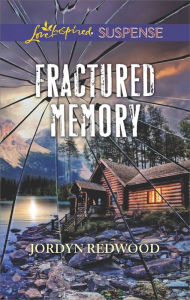
  6. Fractured MemoryListen to God’s nudgings. Looking back with perfect vision, I felt that God used the Guideposts experience to get me to write outside my comfort zone. During this process, I started thinking about a contest called Blurb to Book that Love Inspired was hosting. Never did I imagine I would write for them. I didn’t think I was a good fit, but I found myself obsessing about this contest to the point where I couldn’t sleep. So I entered, and I ended up winning a contract for Fractured Memory, my novel releasing this month from Love Inspired Suspense. Suddenly, I was clawing my way out of that dark writing well.
  7. Go indie. In this writing age, there is literally no reason to not have content out for readers. Don’t quit your day job and scrap and save every penny you can to hire a good editor, proofreader, and book cover designer. I do say this with some caution—be sure you put out a good book! Don’t sabotage yourself into another pit.

Overall, take the valley as a place that can provide rest, rejuvenation, and growth. Perhaps you will need to go back to a paying job or postpone the plans that you had of quitting or reducing your hours. Just know that the valley is survivable and it doesn’t have to mean the demise of your writing career.

Tell me, how have you survived low points in your writing career?


Don’t ride . . . DRIVE the train!

trainAbout fifteen years ago, while taking a graduate course in Spirituality and Leadership, I had a professor who presented me with one of the most motivational sayings I’ve ever encountered: “Don’t just ride the train, be the engineer!”

Okay, maybe not the most theological statement I heard in the course of my graduate program, but it lit up my brain in ways I’d rarely experienced since finishing my undergrad degree decades earlier. Knowing myself to be an introvert and nonconfrontational, I’d always preferred to have someone else take the lead in projects at work; the only role in which I felt confident enough to be in charge was as a mother to my children. (Looking back, I can only say that ignorance was truly bliss, but that’s another post or two or a thousand.)

But the moment my professor uttered that directive, I had an epiphany that any writing career I wanted to pursue was going to demand that I drive the train, and not just ride along on whatever might come my way. As a result, I began to view writing as a vehicle I would steer, and, when necessary, refuel with energy and hard work. I also accepted that no one else cared as much as I did whether that train finally arrived; not even the support of spouse, family and friends (as important as that is!) would bring that train into the station if I didn’t commit myself to being the engineer.

I share this story with you because every writer needs to know that writing requires you to make that train your own: if you want to be successfully published, you have to learn the business, and these days, that means EVERY aspect of the business: writing craft, understanding your audience, marketing, platform building, travel requirements, publishing trends. Gone are the days when your publisher says, “Thanks for writing this swell book. We’ll take it from here.” Even your agent – if you’re fortunate enough to land an agent – can’t hold your hand through every stage of book development, because she or he is swamped just trying to navigate a path to publishers through all the layers of the industry – layers which can shoot down a book proposal for reasons of marketing or audience or numbers of your social followers, which may have nothing to do with the actual value of the book you’re creating.

You have to take ownership of your career. You have to drive the train to where you want it to go.

And that may be the biggest plus of being the engineer – you can CHOOSE where you want your career to go. It will take hard work and learning from the experience itself, but if you find you’re being called to write romance instead of devotionals, or humor instead of profiles, or politics instead of fiction, you can steer that train of your writing career onto different tracks, and see where it takes you. Maybe it will only be a short detour and you’ll end up at your original destination. That’s great! Then again, it may be a whole new journey on the writing rails.

Are you ready to drive the train?

What Actors and Authors Have in Common

Writing is a Personal JourneyI was watching Jimmy Fallon’s Tonight Show when it struck me. Jimmy greeted the actor with a cheek-to-cheek kiss, before ushering her to the comfy studio couch so they could share a cup and a chat.

After some banter about a recent encounter they’d had at the party of a mutual friend, they discussed some morsels about their personal lives, focusing on commonalities they shared. Then they got to the real reason for the staged visit.

Fallon gushed, as he introduced the new movie title. “Gosh, it’s so, so good. I just love it. I mean when you… Oops. I almost spoiled it, but it’s just that good.”

Listen So Others SpeakThe actor giggled. “Thanks, Jimmy. I was honored to play this role, I know I’m supposed to say I love it too, but I really mean it. This is probably my favorite project so far. I only hope the people who watch it are touched as much as I was making the film.” She raised her hands in the global prayer pose symbolizing humility.

As I watched their interchange, I reflected on other shows I’d seen her on, and her other movies. It seemed every year she was cast in a new release, some blockbusters, some with a cooler audience embrace. That’s when it hit me — how similar a successful author’s experience is to that of an actor.

My third published book just released, and as I promote it, pursue the next big project, while juggling my personal life in the process, I realize the importance of strategic planning. I wish I had the resources, connections, and energy of a Hollywood public relations machine behind me, but even without, I can learn from their methods.

7 Common Factors Between Actors and Authors:

  • Getting Through What You Can't Get OverThe actors are the face of the movie, so no matter what anyone else does behind the scenes, it is the actor who must make public appearances and visit shows on the interview circuit. An actor’s passionate voice, joined with an intriguing movie trailer, is what drives audiences to theaters and streaming sites. For authors, it’s no different. We are the face of our books. Our passionate voice about our message, mingled with intrigue about our book’s content, is what drives readers to want to know more.
  • Each actor brings their own distinct personality to promotion. Some outgoing and bubbly, some serious and reflective. Both work, they will simply attract those of similar taste. Be who you are as an author, and allow natural attraction to draw people.
  • A fresh movie release shifts the actor’s focus to a new message. As authors, I think hearing the branding mantra sometimes makes us sound stale and boring — think broken record. Personally, I believe it’s not only acceptable, but interesting, if we moderately mix up our messages, while staying true to who we are.
  • Getting Through What You Can't Get Over EndorsementA good actor hunts for new scripts and contracts — sometimes preparing for years before they can make a movie they are excited about. Successful authors should do no less. Keep your ears open for hot topics, and drop ideas, research information, quotes, and more for future books into a program like Scrivener — Getting Through What You Can’t Get Over started this way.
  • Most actors would prefer to spend more time on their craft than on marketing, and many authors feel the same. However, actors and authors both know that without solid marketing, we won’t get the opportunity to do another new project.
  • No matter how many shows an actor guests on, if the movie is lousy, sales will spiral. The same is true of our books. We can’t get around it. Good content is, and always will be, the marketing king.
  • Actors cannot produce inspiring art alone. They require support people like agents, fellow actors, experts in PR, producers, directors, etc. Authors also need a group like this to expand their message reach.

The more I reflect on what it takes to release a successful movie, the more I see the connection to releasing successful books. The Hollywood model has worked for decades, which tells me that as much as things are changing, some things stay the same.

What commonalities between actors and authors do you see that I failed to mention?


Another Sacred Moment: Launching My First Book

Photo/KarenJordanIn my first post on the WordServe Water Cooler blog few years ago, I wrote about “Embracing Sacred Moments” in our lives. In that short piece, I mentioned a couple of writing firsts for me—my first contract to write an article for a well-respected publication and my first call from a WordServe agent, signing me as a client.

This month, I’m experiencing another first—the launch of my first book.

But as I prepared to write this book, a sudden and disturbing vivid memory emerged from a time when I stepped out of my comfort zone to serve. I still feel the embarrassment of that day when I helped prepare the noon meal after a revival service in my hometown church.

A million doubts and fears raced through my mind that morning. Was my skirt too short? Were my heels too high? Were my clothes too tight? Would someone ask me too much about my personal life? Why did I even come here in the first place?

Since I was the youngest and newest member of the ladies’ group helping that day, someone nominated me to pass out rolls to everyone.

I stacked the rolls high on a large platter, hoping to avoid a second trip to the kitchen. But as I pushed the swinging door open with my back, I tripped and fell to the floor, propelling everything across the room.

I can still recall everyone in the room gasping at the spectacle I had made of myself.

BookCover/WordsThatChangeEverythingAs I wrote my first book, Words That Change Everything, my old fears and worries resurfaced, reminding me of that humiliating experience. Do I dare expose more of my failures, worries, and vulnerabilities with an even larger audience? What if I make a total fool of myself again in front of my friends, family, and total strangers as they read some of my life stories?

Then, I remembered what I learned from my earlier failed attempt in serving others. Forty years after I humiliated myself in my home church, the pastor’s wife invited me to speak in that same fellowship hall at a women’s ministry event. And I shared my humiliating “tossed roll” story, revealing some of my own worries and vulnerability.

God gave me an opportunity to revisit and overcome a moment of failure in the same context and venue, four decades later, as I stood on this promise from God’s Word: “My grace is all you need. My power works best in weakness” (2 Cor. 12:9 NLT).

So, even though I’m a little apprehensive about revealing some of my most intimate stories in my first book, I’m excited to share my story with the world—Words That Change Everything: Speaking Truth to Your Soul.

Why? Because I also believe in the power of story—as we share the stories that matter most, lives change and hearts heal.

Did my story remind you of a story in your own life?

10 Tips For Crafting Your Book Proposal

10 proposal tips

Every sentence of your book proposal should have one person in mind: the reader. Whether you’re submitting it to an agent or an editor, that “first reader” will be holding the “ultimate reader” in her heart and mind as she reads. Your job is to meet the reader’s needs—both that first reader and the eventual one—by communicating efficiently and effectively.

1. Don’t get visually fancy.

Elaborate fonts, colors and graphics distract. Use Times New Roman 12 pt font in a Microsoft Word doc or PDF. Rule of thumb? Keep it simple.

2. Employ plain language.

High-fallutin’ intellectual language is only appropriate for academic books. More often, communicate using a conversational voice.

3. Write in the third person.

Compose your proposal in the third person, as if your agent or a professional collaborator has prepared it—allowing you to brag a bit.

4. Be clear and concise.

When a reader sets down your proposal, he or she can easily identify the premise of your book. Make the reader’s job easy; don’t use more words than are necessary to communicate effectively.

5. Avoid extremes.

Claiming every person always feels a certain way distracts reader by challenging her to search for an exception. “Most” and “often” are more effective.

6. Communicate value for the reader.

Throughout your proposal, make explicit the takeaway value for the reader who purchases and reads your book.

7. Title effectively.

Your working title suggests the book’s premise and the subtitle its promise. Avoid titles that are either too generic or too clever—both making the premise difficult to identify.

8. Prove you will market your book.

Don’t just say you’ll help with promotion. Offer concrete plans you will put into effect.

9. Practice Humility

Don’t oversell, insisting Oprah will return to daytime TV just to promote this book. And be cautious, even with faith-based publishers, about claiming that God told you to write it. #redflag

10. Offer an error-free proposal.

If you’re not paying for a professional critique, have a word-loving friend scour your final draft for grammatical or typographical errors.

Cheering you on,
Margot

Want to Get Published? A Publisher Needs to See an Author Who Can Write and Promote

Note: This is the last post in a series of four posts: 3 Things a Publisher Must See.

3 things

Let’s say your proposal has convinced an editor that your project has a wildly unique premise. You’ve even demonstrated a viable audience with a felt need.

There’s just one more thing…

You.

The questions a publisher is asking about you, very possibly in this order:

  • Does she have a platform?
  • Can she write?

A publisher needs both.

And this is the difficult bind of many editors—who love great writing, and want to publish great writing—today. It’s not to say that editors don’t ever stick out their necks for someone nobody’s ever heard of who can write really well. They do sometimes.

I’m saying that a publisher’s decision is always a complex one, and the more you can convince them that you have a platform to influence others, the more consideration your proposal will receive.

If you can write compelling sentences that make people laugh and cry, and string those together into a fabulous manuscript, and if your platform is so big that Oprah, Donald Trump and Diane Sawyer want to be your bestie, congratulations.

If one or both of these is not the case, then…

  1. Improve Your Writing
  • Read great books
  • Write every single day, and then write some more
  • Join a manuscript critique group, locally or online
  • Attend a writer’s conference (See one you like from 2015? Google it!)
  1. Build Your Platform
  • Pitch articles to the publications your target reader is reading
  • Develop an audience for your blog by writing consistently and meeting readers’ needs
  • Pursue speaking opportunities—at church, MOPs groups, etc.—in the community
  • Be a great friend on social media by celebrating others’ work

And…be patient.

Very few writers have fairytale stories of wild success with little effort. (Honestly, that was my plan when I started writing. It didn’t work out that way.) Most writers invest time and energy to improve their writing and build an audience.

Cheering you on,

Margot


How to Know ForSureForSureForSure You’re Ready for an Agent

coffee-1128140_960_720

Do you have that first novel completed? Have you been staying up late and getting up early to study and write about a topic you’re passionate about telling the world?

Then it might be time to query a few agents to see if you have what it takes to get their attention. But keep your expectations realistic. New authors are harder to break out than they’ve ever been. And please, don’t blame the agent. We’re just the messenger of what publishers keep telling us.

You’ll need some criteria to go by to determine if you’re ready. Here are a few dozen hints.

First: Know who you truly are…

  1. Someone who has always wanted to write
  2. Someone with a message you feel God is asking you to put to paper
  3. Someone with a message that others have said needs to be put to paper
  4. Someone who can’t wait to get to your computer to create the stories in your head
  5. Someone who reads a lot, both within the genre they write as well as others.

Second: Understand what the book publishing industry is looking for…

  1. The 80/20 principle is alive and well in publishing. Publishers must have the big sellers to stay in business. So 80% of their advance and marketing money will always go to 20% of the authors and books. And if you’re a new author, unless you’re a pastor of a mega-church or you can write like Hemmingway (or better), you’re likely not going to be amongst the 20%.
  2. Because of the loss of browsing retail, publishers can’t find readers, so they expect authors to find them. They want authors with built-in audiences ready to buy. That’s why they are less willing to take risks on unknown/debut authors, preferring known quantities instead of new voices. If I had 200 new authors to speak to, there would be perhaps 5% who will ever get published traditionally. Not because they can’t write. Not because they don’t have a compelling message. It’s because they still have an information gap about what it takes to get published and be successful at it.
  3. Great writing. They want authors who are sold out to getting honest critique. They want a book with a clear vision/message, and an obvious audience (felt need). They hope authors are willing to study the craft of writing, attend conferences, willing to join and participate in critique groups or have a critique partner. Most of all, they want authors who have “come to play.” They’re working on building audiences; they’re invested in their own marketing and they have a plan to grow. Publishers and agents want more than one book. They want to grow with you and your career.

Third, what motivates you…

  1. Money. Okay, that’s not terrible. Would C.S. Lewis have written The Chronicles of Narnia for free? Provision—whether it’s today’s manna or retirement’s manna–motivates us, and it’s not evil. However, if this is your ONLY motivation, you have to ponder whether God will bless it. You also have to recognize that it’s harder than ever to make a living as a writer today, and that the days of six and seven-figure advances (with a few exceptions) are largely gone.
  2. Legacy. Publishers don’t care about this unless you’re already famous. Legacy projects get self-published, and that is perfectly fine.
  3. This does not include “ax to grind” books. Please, self-publish those. We can’t sell them.
  4. “I can’t help myself.” Obsession is a good place to be, but not if you’re sacrificing your health, family, bank account and soul to do it. Your obsession should pass the “sniff test” by those who know you best. Just because you feel “God has told me” to do this, doesn’t make that statement true. Obsessions MUST be confirmed by several people in your life before you give them wings in a big way.

So, with all of this in mind, here’s how to know “forsure-forsure-forsure” you’re ready for an agent.

For sure…

  • You have something inside of you that must get out. A novel, a message, a memoir, a brand. When I started FaithHappenings.com two years ago, I was like a dog with a bone. My excitement did border on obsession.
  • You’ve put at least half of the book on paper–the whole book if you’re a novelist. (With novels, it’s not how you start, it’s how you finish.)
  • You understand that traditional publishing is a business and you won’t question their motives if they reject your work. People DO know more than you.
  • You feel God’s pleasure in your efforts to communicate what you want to share.
  • You can’t wait to get to your computer.

For sure, for sure…

  • You know your motivation. It doesn’t have to be pristine, you just have to know what it is.
  • You know your book will get published no matter what. You are going to do this! Start traditionally if that is a goal, but not let that stop you from doing what’s needed to publish independently, if you have to.
  • Someone has said that your message, life story or writing is above the curve. But even so, remember this: Perhaps one person per state ever makes it to the major leagues in each year. The pyramid is very small at the top in any professional endeavor.
  • You are patient with the process and want to trust an industry professional to help guide your book/career. Once you think you know more than they do, turn off the tap on traditional publishing. And this is fine. Some are wired to be control freaks. Go with it. Don’t drive yourself and an agent/publisher crazy if you want to control every step in the process.

For sure, for sure, for sure…

  • You have 5,000 to 10,000 “followers” (blog, Facebook, Twitter, Instagram, Pinterest, etc.) Further, you are convinced—and you hereby solemnly swear to not complain—that you must help any publisher you go with—traditional or your own efforts—FIND READERS.
  • Twenty people who don’t know you well have seen your book/writing and they’re not adding much more to it. You hear the term “great writer” from several different people.
  • You know your genre, your audience, your message—you have FOCUS!!!
  • You have a great proposal that answers the publisher/agent questions. If you don’t, get the agent’s proposal template. We all have one. Work hard on it. Don’t have typos, and follow directions! There are too many other people vying for an agent or editor’s attention for them to waste time on a proposal that doesn’t meet the basic requirements listed.
  • Read three book marketing books. And then in your proposal, give the agent five pages of marketing ideas you KNOW you can do.
  • You have counted the cost:
    • Family/Time
    • Money
    • Inevitable rejection and bad reviews, perhaps even the “ten mean church ladies” who write scathing letters and reviews on nearly every book they see.
  • You know you have “come to play.”
  • You know what five agents/agencies you want to be with. Get to know what they have represented. (You aren’t sending your proposal out en masse to every agent whose email address you can find.) Of these five, take the first one who says yes. Realize that you may not get the top guy, but the reputation of the agency is what you’re after.

If you can check off nearly all of these criteria, you’re forsure, forsure, forsure ready.

12 Do’s and Don’ts for a Successful Long-Term Writing Career

1. Do have something in the hopper to pitch at all times. While you’re querying your next book or series, keep your creative mind active by brainstorming, jotting down notes, and organizing research.

Share Your Gifts2. Don’t try to write like someone else. No one else thinks like you, has your life experiences, your collective information, your communication style, or your voice. Copying someone else’s approach means your unique offering is lost—and the world misses out.

3. Do share yourself authentically with the public. Masks don’t work. Allow the truth of who you are to resonate with readers and listeners as you speak from the page and the stage.

4. Don’t let someone else’s negative opinion of your writing stop you. No published piece is loved by everyone. Editors, agents, and readers will often view your work differently. Accept positive encouragement when it’s helpful and honest, but don’t disregard unbiased criticism—it will make you a better writer.

5. Do get out and live life on a regular basis—otherwise you’ll have nothing fresh to write about.

6. Don’t let resentment over another writer’s success distract you from your own work. Instead, celebrate their achievements with them. Not only will you feel better, but human beings are drawn to help positive people, not those who are jealous, jaded, or jerks.

7. Do focus on improving your writing—constantly. Read and re-read books on honing your craft until you develop a master’s degree worth of knowledge on writing well.

Round Hole Square Peg8. Don’t be afraid to let a word, sentence, paragraph, chapter, or even an entire project go. Sometimes, a piece doesn’t work, and you shouldn’t waste time and energy trying to force a square concept into a round career. Allow yourself to move on if you feel like you’re pulling splinters to make things fit.

9. Do take care of the people who support, encourage, and follow you. We are all in this world together, and readers are more than people we get something from, (sales), they are people who need the same things from us that they give—support, encouragement, and attention.

10. Don’t expect publication to heal all your hurts and provide lasting happiness. The real you will always hide behind the public persona. Learn to like him/her, then no matter what happens with your writing, you will be okay.

Getting Through What You Can't Get Over Endorsement11. Do understand the power of influence. The greater the number of people who like your book(s) and are willing to say so publicly, the more other people will like what you write.

12. Don’t nit-pick, condescend, attack, grumble, or fight with others on social media forums. Followers don’t forget, and often their memory shapes future decisions to support you or not. Breaking the Golden Rule can become a deal-breaker for some of our readers.

Which of these twelve points are the most difficult for you? The easiest? 


Want to Get Published? A Publisher Needs to See a Viable Audience

Note: This is the third post in a series of four posts: 3 Things a Publisher Must See.

3 things

Let’s say you do find yourself on an elevator face to face with an acquisitions editor from your dream publisher. She’s heard your pitch, is interested and asks you who will buy your book.

Do you know the very worst answer you can give her?

“Everyone.”

While you think it might be what she wants to hear, it isn’t. It really isn’t.

Jonathan Merritt, a savvy friend of Margot’s, explains, “If you aim to write a book for everyone, you’ll write a book for no one. But if you write a book for someone, then you’ve written a book for everyone.” Your book will be most effective if, as you write, you are imagining one person—Reading Rita or Literary Lou—and write to the heart and mind, questions and concerns, of that one person.

Know your audience. Editors want to see that you know who is reading your book and are writing to them. So you need to be able to describe your audience demographic: How old are they? Male or female? Education? Married Parents? Church attenders? Listen to Christian Radio? Etc.

Most often, people don’t buy books they think they should read. ($16 to learn that the best way to lose weight is exercising more and eating less? No thanks.) Books that sell are ones that meet a reader’s felt need. ($16 to learn that the best way to lose weight is by eating pizza every hour on the hour. LOL. Just kidding. But not really. #bestseller.)

In your proposal, you demonstrate that there is an audience for your book by letting a publisher know that it is meeting a real need for readers.

There are all kinds of creative ways to communicate readers’ felt needs to a publisher:

  • Description, “In the last month, five of my friends have had this problem…”
  • Statistics show that….
  • The top-selling books of 2015 were…
  • Etc.

In the writing, of course, your book must actually meet the readers’ felt needs. There needs to be a benefit to the reader who reads your book. (This is what makes readers rave to their friends about your book over coffee and on GoodReads!)

Here’s how: On every page, be asking, “What is the reader feeling? What is the reader thinking? How can I serve the reader with this story, page, chapter?”

To convince a publisher that there’s an audience for your book, you must communicate clearly that it offers value by meeting a need readers really have.

Exercise: Draft a character sketch of your book’s target reader, Reading Rita or Literary Lou. What keeps this reader up at night? What does this reader care about? What concerns does this reader have? Tape this list to your computer screen so that you remember to write every page with Rita or Lou in mind.

Cheering you on,

Margot