How EBooks Can Complement Your Traditional Writing

Most authors (or soon-to-be authors) think of themselves purely as creators of old-school books. But as the publishing landscape changes, we have an increasing number of opportunities to use our story-telling skills – including via ebooks.

When I say “ebook,” I don’t mean a digital version of your traditionally published book, nor a digital version of your self-published book. I’m talking about the kind of informational ebooks that live only online.

These ebooks are typically shorter than traditional books, and they’re often nonfiction, the self-help variety. You can sell them through Amazon, but many creators (like me) choose to sell them through their own website instead.

Before you pooh-pooh this avenue for your writing, recognize that creating ebooks can boost your writing career in ways traditional books can’t. That means if you delve into ebooks at the same time as traditional publishing, the two pursuits can play off each other.

Here are three ways creating ebooks can boost your traditional writing career:

1. Make money to support your writing habit

We all know publishers aren’t handing out huge advances lately. Creating digital products can help you bridge the financial gap between books. Here’s why: When you self-publish digitally, you keep all the profits. And overhead is low because there’s no physical product. Here’s what I paid to create my newest digital guide:

  • $450 for edits
  • $100 for postcards to bring to speaking gigs (optional)
  • $5/month for ejunkie, the e-commerce system I use to sell the guide
  • PayPal fees (because buyers pay me through PayPal)
Not so shabby, huh? And perhaps the best part is that every time you want to offer your digital product to a blog for review, it costs you nothing. Rather than eating the cost of a physical book, you simply email them the digital file.

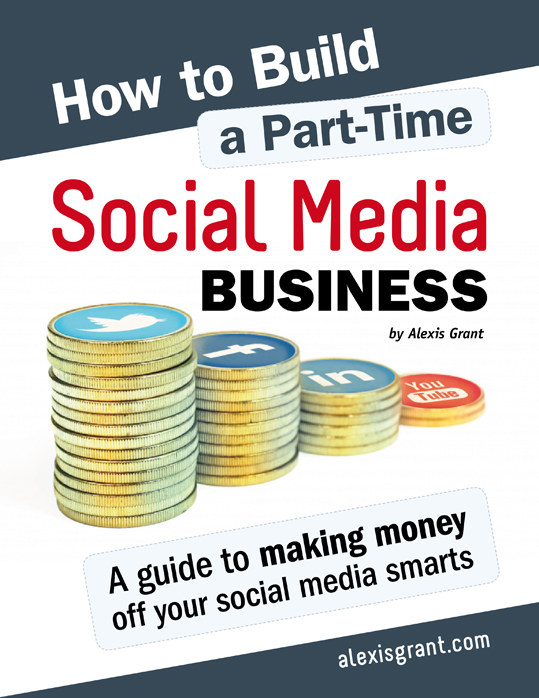
EBooks also have a higher price point than traditional books. For example, my guide How to Build a Part-Time Social Media Business sells for $24. Since neither a publisher nor a distributor (I’m my own distributor) take a cut, that means $24 in my pocket every time I sell a guide. I’ve sold more than 125 since launching the guide two months ago.

2. Attract people who might want to read your traditionally published book

If your digital products are related to your overall writing pursuits, they can help you build an audience for your traditional books.
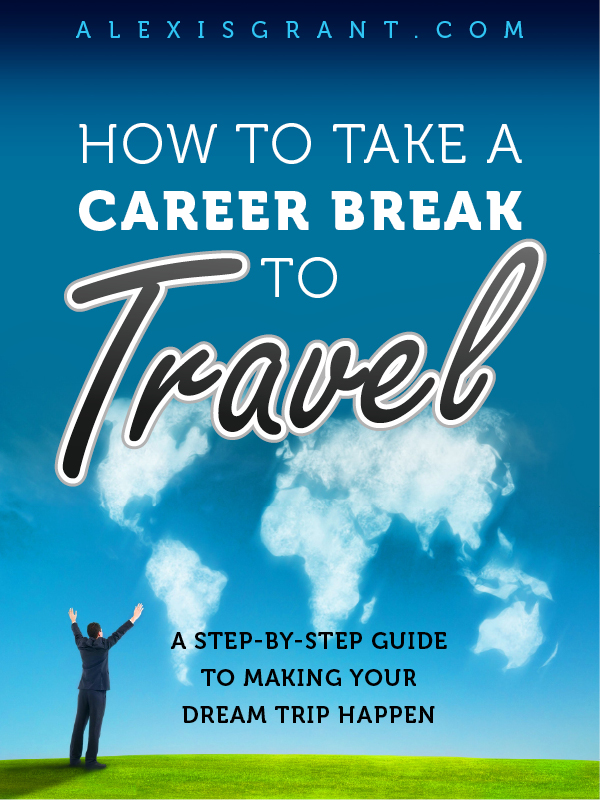
Here’s what I mean: My newest guide, How to Take a Career Break to Travel, is directly related to my travel memoir about backpacking solo through Africa (which Rachelle is preparing to pitch to publishers). Essentially, my guide is a complement to my memoir.

Yet because I’m publishing the guide myself, I’m able to get it out there before my (hopefully) traditional book. And guess what? The people who read my guide will likely be the same target market for my book. Not only will this help people find out about me (and hopefully subscribe to my newsletter or blog) before my book comes out, I’ve gone so far as to include a note about my upcoming travel memoir inside the guide.

In other words, this guide is oh-so-subtle marketing for my memoir.

3. Drive more traffic to your blog

Since I launched my first eguide, traffic to my site has increased dramatically. I’m now at 15,000+ hits/month mark Rachelle mentioned in her recent post about building platform.

Selling an eguide boosts traffic for several reasons:

  • People are visiting my blog to check out my guide (and maybe buy it!)
  • Some of those new visitors realized they like my blog, so they bookmarked it or subscribed and visited again later, maybe even daily
  • Guest posts I’ve written for sites with big audiences (like Mashable) with the goal of promoting my guide have brought lots of new visitors my way

All of those eyes on my website will help me sell my book to a publisher and sell my traditionally published book to readers.

Have you considered wading into ebook territory? If you have questions, I’m happy to answer based on my experience.

servicios de satelite

The Long View of Getting Published

Photo by Michael Hirst

There are two distinct parts to my career as an author. Part one, when I saw myself as more of a lone wolf and part two, when I finally started admitting I don’t know everything.

The second half where humility has played a lot bigger part has been more rewarding in every way, particularly financially and spiritually.

Funny little thing I’m learning about life is that when I stop trying to force my will and realize I may not get what I want but I can still be of service, more of what I wanted all along shows up. However, to head down that path the first few times took a lot of courage and hope because I didn’t have any personal proof. Fortunately, I had worn myself out trying things my way. I became willing.

To be an author, whether it’s as an independent or through the traditional venues takes more people and therefore a lot more willingness. The independent route sounds like it would be easier to stick to your own common sense and that would be more than enough, except for the occasional question. But publishing a book is a process that requires a lot of hands.

Besides, I was more arrogant than that anyway, running down the traditional path and still telling everyone how I saw things.

However, when I stopped listening for just the small kernel I wanted and expected to hear, dropped any agenda and not only took in the information but gave it time to sink in, things really began to move in a better direction. That opened things up even more.

What if I even followed through on some of the suggestions to see if other people who are actually the professionals in their slice of the publishing game were right? Perhaps my part in the entire process is to be a team player, be open to all of the information that’s coming in and just do what’s been suggested.

Some wrong turns are to be expected and even that’s okay because  the last tool I keep close by is the one that makes all of it okay.

I am powerless over the outcome but there is One who has His hand on everything, loves all of us beyond our ability to understand and has a plan that includes everyone. This is the most important part to me and makes it possible to relax and go back to the day I’m in when I’m worried about how book sales will go or if a book will get published at all.

The answer is, maybe it will, maybe it won’t.

In the past I couldn’t live with that answer so I tried harder to fix things. That just didn’t work and I wore out others as well as myself. Doors closed.

Now, I ask myself if I’ve done my part? Do I trust the professionals I’m working with on this book? What’s in front of me to do? How can I go be of service?

I know, all of that sounded really contrary to becoming published to me too, at first. But I had tried the lone wolf gig and only gotten mediocre results, at best.

I became willing to try a new tack. God is everything or God is nothing and I wanted, maybe even needed God to be everything so I started listening with a new ear. I asked for help and admitted when I didn’t know something. I grew more patient and less ‘helpful’ with suggestions. I did what was asked of me, on time and nothing more, allowing others to do their job without my interference. I became willing to change structure or style and see what happened.

And on the days when my anxiety still sits on my chest like an angry gorilla, I go pray, turn it all over to God and ask for peace of mind and heart. Then I get back to my day, do what’s right in front of me and keep going. As a result, more of my publishing life has fallen into place and my relationships in that area are a lot stronger.

When is Compromise “Selling Out”?

Publishing — like music, film, business, or sports — is not a solo act. Therefore, climbing the ladder of success always involves some sort of compromise, some sort of give and take. Of course, WHAT one is willing to give and take along the way is the cause of much heartbreak.

Writers typically frame their dilemma this way:

“Do I compromise what I really want to write in order to make a living or get my foot in the door?” or “Do I write the story of my heart and let the chips fall where they may?”

There is a certain nobility (sometimes feigned) by artists who rage against the machine. You know some of these people, right? They refuse to adapt their style to the market. They rail against the money-grubbing gatekeepers. They scoff at “the rules.” They chafe against industry decorum. They denounce the status quo. They disparage what is commonly accepted as popular art. They would rather die anonymous than be a patented sellout.

They are [insert angelic choirs] principled.

Sometimes being “principled” is a cop-out. No, I’m not suggesting being a sell-out isn’t. I’m suggesting that we sometimes use the term “principled” as a smokescreen.

Sometimes being “principled” is really just

  • Pigheadedness
  • Inflexibility
  • Disdain
  • Institutional prejudice
  • Lack of professional savvy

Of course, there’s many artists who have resisted conformity and we are better off for it. But is “resisting conformity” the golden rule? Truth is, the “starving artist” is often one who holds the ticket to her next meal. Your “hunger strike” could be avoided by simply seeing your talent as a tool rather than the Holy Grail.

Nevertheless, knowing when to compromise and when to hold your ground is the gist of creative enterprise. Just don’t be fooled into thinking that all compromise is selling out.

  • Compromise is “selling out” when you become a puppet of the institution; your talents exist only to oil the machine, your originality and vision is replaced by groupthink, the ties that bind are actually nooses, you are an organizational prop.
  • Compromise is “selling out” when your integrity, morality, and highest principles are sacrificed in the process; you lose yourself for the sake of success / power / fame / advancement / personal gain, “high ground” is vacated for “safe ground,” your birthright is squandered for three square meals a day.
  • Compromise is “selling out” when your unique voice and vision is squelched; you no longer have any real creative freedom or input, you are coerced into complicity, you cannot air opinions lest you bite the hand that feeds you, someone else holds the deed to your creative license.

No matter how unique your vision, you probably can’t go it alone. You will need to compromise, involve others, solicit others, confide in others, team up, and make concessions along the way. This is definitely true in publishing. I know, I know — the publishing world is changing, you say. The self-published author can do it “their way” (which is code for remaining [cue angelic choirs] principled).

But while the solo artist might maintain creative freedom, they often lose something in the process, namely collaboration. It is precisely the thing that they most fear (other eyes), that they can most benefit from.The self-published author may not have sold their soul to the devil, but the chances of them selling their book is equally remote.

Compromise can be painful. But if it makes my product better and gives me the opportunity to make more of it, then it’s the smart thing to do. Or as Benny G said, “You’ve got to give a little, take a little, let your poor heart break a little.”

* * *

Question: Do you agree that being “principled” can sometimes be a cop-out?  Do you think it’s better to compromise what you really want to write in order to make a living or get your foot in the door? Or is it better to write the story of your heart and let the chips fall where they may?

Strip down and never lose sight

Crisscrossed with knee-high boundaries of grass, the field stretched far below the hilltop. To the distant right, the sound of a fast-moving four-wheeler buzzed louder until I saw it speed toward the horizon, followed seconds later by a skinny-ing mass of runners.

Along with all the other camera-laden parents, I  darted across the fields, staking strategic positions to capture my son rounding a corner or blazing down a hillside. I hurdled boulders, pushed through sluggish throngs, and catapulted my rattling, aging body from one carrefour of the course to another.

When my runner passed by, I whooped.

I hollered.

I scurried across the field to the next junction to cheer him on some more.

Hundreds of spectators gathered to watch the state middle school cross-country championship. Hundreds of kids flashed by. Yet within that undulating motley horde, I found and locked eyes with my son. 

The corner of his mouth turned up when he saw me.

He gulped more air.

He lengthened his stride. 

He disappeared.

And I scurried to the next junction to cheer him on again . . . until I met him at the finish line, red-faced, breathless, and satisfied.

We’re not unlike these cross-country runners, you and I, especially if we feel called to write for the Christian market. After returning from the 2011 ACFW conference, I spent days processing not only that event, but also my writing journey as a whole. I argued with my muse, re-evaluated my purpose, and gasped for clarity amidst the torrid winds of the publishing industry.

Until I watched my sons race last weekend.

And I remembered.

I remembered running up the hill of uncertainty after taking years off writing to focus on parenting.

Around the corner was an industry professional who said no to a query, but invited me to Mount Hermon, where my heart for Him and writing collided like a flare on a pitch black highway.

I rounded the craggy corner of tens of rejections.

Then I “happened upon” a newspaper editor who just “happened to need” a new weekly columnist.

I fell behind, distanced from hope by whispers that no one needs or wants to hear my pathetic story or craftless words.

On the back stretch I caught sight of the waving arms of a friend who led me to my agent.

I lost sight of other runners sprinting ahead of me, pouring out multiple books a year, and I wanted to give up my goal to publish even one.

Around the next bend, a blog reader commented that the words on my website changed her life.

I coveted the bold, new uniforms of other runners and wondered if I should water down or change my message.

A fan on the sideline told me how a Christian book by a Christian writer saved her husband’s soul.

We are in a race, we faith-focused writers . . . a race to make Him known . . . a race to further the inbreaking of His Kingdom . . . a race beckoning us to finish hard, finish well, and finish strong . . . no matter where we fall in the pack.

And around every corner . . . along the loneliest stretches . . . down the effortless hills and up the steepest inclines, He runs to meet us . . . to cheer us on . . . to lock our wandering eyes upon His countenance above all others along the swarming sidelines.

“Do you see what this means—all these pioneers who blazed the way, all these veterans cheering us on? It means we’d better get on with it. Strip down, start running—and never quit! . . . Keep your eyes on Jesus, who both began and finished this race we’re in. Study how he did it. Because he never lost sight of where he was headed—that exhilarating finish in and with God—he could put up with anything along the way . . . ” (Hebrews 12:1-3, TMV)

What about you?

Where have you felt God’s presence along your race course? How have veteran Christian writers inspired you? When have you heard Him whooping and hollering, redirecting your steps and restoring your focus on Him?

Love the Reader

The publishing business can be an overwhelming one. We hear so much advice from so many different sources. And to make things even more overwhelming, that advice often conflicts.

So what’s an author to do?

When we have a million voices shouting at us from a million different directions, who do we listen to? What do we listen to?

I won’t pretend to have it figured out. But this past weekend, I attended a workshop at the ACFW conference that helped quiet the noise and simplify the chaos. Ami McConnell, an editor for Thomas Nelson, shared a piece of advice that left me feeling lighter.

The piece of advice was this:

Love your reader.

So very simple. Yet so very profound.

In an industry where the could-do’s on an author’s list multiplies with ridiculous speed, this is the one thing I think we can all agree upon. The one thing that would benefit us all. Developing a genuine love for our readers and letting that love be the foundation upon which we build our careers.

So the question is this: How do we love our readers? There are all kinds of ways, but for today’s post, I just want to share three.

We love our readers when we take the time to know them.

You can’t love who you don’t know. As writers, it’s important to figure out who our readers are or will be. It’s important to be available to them. To listen to them. To respond to them. And when we take the time to know them, to see them as real people with real problems, hopes, and fears, something about the way we write and the way we interact on social media shifts. This journey and our stories become less about us and more about them.

We love our readers when we respect them.

This includes respecting their time. And reading a book takes time. We want to craft stories that make the time our readers spend on our words worthwhile. So are we constantly learning and improving and striving to create stories that will leave our readers entertained? Changed? Edified?

We love our readers when we share a piece of ourselves.

The best writing comes from a place of vulnerability. And being vulnerable means exploring and revealing parts of ourselves that aren’t pretty, parts of ourselves that might be painful. But when we do that, when we risk vulnerability, we’re reaching for a greater purpose. Our words are no longer about book sales and the market, they’re about touching something deep inside our readers. They’re about speaking truth, offering hope, and leaving people inspired.

Do you feel overwhelmed as you travel this journey? What overwhelms you the most? What are other ways we can love our reader?

Flubs are not Fatal

Approximately 650 Christian writers have just returned from the ACFW conference in St. Louis. Some are celebrating agent/editor requests for manuscripts and are on an emotional high at the apex of the roller coaster we call the writing life.

Others may be feeling like they just slid over the edge and are plummeting down the steep hill into an abysmal, dark cavern. This feeling may be perpetuated by some flub on your part and you’re wondering if you and your career will recover.

Whatever fatal flaw you may be experiencing emotional distress over; it will likely not end your writing career. Unless you actually murdered someone… well, that might cause the ultimate demise of your writing dream through traditional publishing at least.

I’m here to share two “golden lessons”. Flubs are not fatal and the world of publishing is comprised of a small group of editors and agents.

My goal at one of my first writer’s conferences was to do several paid critiques. This was at a smaller, local gathering and I was just dipping my toes into the pool like a first time swimmer. I asked the conference director what I should submit. I still think he said “your best three chapters.”

I should have submitted my first three chapters.

Now, by the time I met with this particular agent over that critique, I had realized my mistake and apologized profusely. Surely, there was no saving my reputation.

It gets better.

Three years later I had an appointment with that same editor. I had polished the manuscript in those many months and felt confident that I had something worthy for her to consider. Just before our appointment, I attended her talk on writing edgy fiction and she made a point to say, “I really dislike when writers use rape as a plot device. Can’t you come up with something better?” My stomach twisted into a glorious mariner’s knot.

That’s right, my manuscript was about a serial rapist and our appointment was minutes after that talk.

I still went.

How do you handle these situations? Here are some of my suggestions.

  • Confess your mistake. Editors and agents are human just as we are and have probably made a few flubs themselves. Be open and honest about the mistake and move on.
  • Learn from your mistake. Don’t do the same thing twice. It’s not the fact that you made a mistake but your ability to fix and learn from it that is the mark of a professional.
  • Stay positive. If you think the agent/editor flubbed and it affected you negatively, don’t disparage them on social media. That same editor I met with twice is still working as an editor and was at the conference sitting one table away from me at the banquet. That would likely be a career ender.
  • Laugh about it. The writing life is hard enough. Self deprecating humor goes a long way in helping keep you sane.

Despite these gross errors in my writing journey, I still managed to acquire an agent and a publishing contract. And yes, it was that same novel.

What “fatal” flub have you had and how did you handle it?

.

Free Books and Bad Halloween Candy

In today’s free and easy e-book climate, e-texts of traditionally-published books are passed around like wax-paper toffee on Halloween night–you want some of this? Have four! Have six! No one likes ’em anyway. And that’s not even counting the scads of self-published e-books that are either free or 3 cents each. Most of those are the strawberry candies in the red plastic– no one wanted them either.

OK, I’m exaggerating. It’s not that free books are actually bad. Few books are as awfully nasty as wax-paper toffee, and many free books are very good–it’s just that their plentiful availability threatens to devalue them, like so many strawberry candies dumped straight in the trash can.

Seth Godin, prophet of social media and cultural change, thinks free books can be a good promotional tool. In fact, he thinks the way for debut authors to make it in this day and age is to give away their first books for free.

He said so, in this interview with Michael Hyatt of July 6, 2011. It’s well worth watching simply for all the debatable points he raises about where our book culture is headed and how we should handle that change. Seth Godin is an excellent persuasive speaker–but that doesn’t mean he is always right.

Free books have a very serious downside, and the best article I’ve read on that downside is by Janet Kobobel Grant of Books and Such Literary Agency. Here’s one of her main points, paraphrased:

Will free books flood the market to the extent that readers realize they no longer have to pay for their reading material?

Will readers think: “Why should I buy Ms. Ninja-Writer’s book now, when I can wait 9 months and get that same book for free as a marketing ploy for her next book?” In a tight economy, readers may resolve: “I am going to save money by never paying for a book again.”

My husband works in sales, and he is very good at it. He understands you can sometimes give away free stuff, but giving away too much or giving away the wrong products destroys your own customer base. He thinks this free e-book and 99 cent e-book stuff in the publishing industry is going to smash the market to tiny little pieces.

How many corporations can resist the lure of the quick buck?

Here’s the problem: corporations have always been very bad at resisting the lure of short-term gratification (such as temporary increased sales for a certain author) in favor of a wise long-term strategy (such as limiting or refusing the issue of free books). They have to compete, they want to make money in the ways they see others making money, whether it’s going to work in the long-term or not. For many executives, it’s easier to believe those who tell them that the short-term strategy is awesome and won’t cause any problems. Fewer executives want to hear the voice of caution and contrarianism–it’s too inconvenient.

My  question for you: Will the changes caused by free e-books permanently affect the ability of authors and publishers to make a living at their work? Will the major publishers collapse and only the best entrepreneurs rise out of the internet heap… entrepreneurs who may not be the best writers? Or do you agree with Seth Godin that free books are a fabulous strategy and the wave of the future for marketing?

A Word Miser’s Experience with Line Edits

I have two confessions.

I hold tightly to my words.

And of all the things that lay ahead as a contracted author, line-edits made me the most nervous.

Here’s my truth. I’m in love with words. I love stringing them together in creative and clever ways to paint pictures for the reader. I don’t like deleting them. And I’m super protective of my voice.

So the idea of line-editing scared me.

I admitted all this to my incredibly talented line-editor, Lissa Johnson, and she said it’s a common malady for writers, especially beginners. Which makes sense if you think about parenting. We tend to be much more uptight with our first born, don’t we?

So how did line-edits go? Did I have to get rid of words I wanted to keep? Does the writing still sound like me? Was it as painful as I feared? Is the story better?

Good. Yes. Yes. Yes (but not in the way I expected). Very much.

Allow me to elaborate….

I deleted words I wanted to keep.
This is a reality for line-editing. I had to delete some of my more creative descriptions. One of the things I loved about Lissa was that she didn’t just tell me to delete them. She explained why they weren’t working.

Descriptions shouldn’t pull the reader from the story. Not even for the sake of admiring the prose. We can get away with it on occasion, but the more often we do it, the more we risk creating a choppy read for our audience. And choppy’s never good.

I’m learning that subtle and simple is usually best. A hard lesson for a writer who tends to go purple.

My voice is still my voice.
Lissa suggested changes, and even made changes, but she did so in my voice. She stayed true to who I am on the page and put to rest my biggest fear: That by the time this story makes it to the shelf, it will no longer sound like me.

Line-editing is painful.
Yes, it is. But not for the reasons I expected.

Deleting a beloved description wasn’t the painful part.

Having to scrutinize a novel I didn’t want to scrutinize was.

I had to look at so many of my words and make sure they meant what I wanted them to say. I had to look at so many of my details and make sure they were accurate and well-researched.

And I had to do it all while wanting to chuck the story out the window. At this point, I’ve edited this thing more times than I can count.

Combing through it so meticulously yet again made me cross-eyed. My lovely editor, Shannon Marchese, assured me that my strong feelings of dislike toward my story were very normal.

The pain is worth it.
Saying goodbye to some of my words was hard. But after stepping back, I discovered that Lissa was usually right. The changes improved the story. And although I might be permanently cross-eyed, it’s now much cleaner. Much smoother. Much better.

I’m learning something I always suspected. Editors are amazing. At least the good ones are.

And when it comes to editing, we’re wise to ignore those feelings of defensiveness, embrace some humility, and trust that they know what they’re doing.

Chances are, they’ve been doing it a lot longer than we have.

***

What scares you most about getting a book ready for publication? What excites you the most?

A Writer’s Life: Surviving the Fire Swamp

Rodents of Unusual Size? I don't believe they exist...

After hanging out at the Cliffs of Insanity, I’m doing a bit of rumor control today before negativity infiltrates the Water Cooler crowd. The report is this: “We’ll never survive.”

Survive what, you ask? The journey–wherever it takes us–along the writing road.

Never survive? To quote Westley, our hero from The Princess Bride, when he faced the Fire Swamp: “Nonsense.”

Many writers survive–even thrive. Sure, at times the Brute Squad hammers our egos, but consider a pounding an occupational hazard. Westley and Buttercup conquered the flame spurt, the lightning sand and Rodents of Unusual Size (R.O.U.S.’s). Like our hero and heroine, writers must overcome terrors specific to the writing world.

  • Expect the expected. Flame spurts were predictable. Listen for the popping noise, move, and you won’t get burned. Hang around the writing world long enough and you’ll recognize probable pitfalls. Listen for oft-repeated refrains like:
  1. Show don’t tell. (Unless you’re Erin Healy, who’s teaching a class at ACFW titled “Sometimes It’s Better to Tell than Show.” I don’t know about you, but I’m intrigued.)
  2. Know the rules before breaking the rules. (See bullet #1.)
  3. Writers need a platform. (Or a brand. Or, at the very least, an engaging plot.)
  • Don’t travel alone. You don’t survive a solo encounter with lightning sand. Buttercup would have suffered a tragic death but for Westley’s daring dive into the sand to rescue her. And despite writer Jessamyn West’s oft-quoted assertion that “Writing is a solitary occupation,” I’m thankful for my writing comrades. They’ve saved me from death by over-writing. Death by over-editing. Death by over-thinking why I decided ever to set foot on the writing road to begin with.
  • Realize the reports may be true. I’ll disappoint some of you by not drawing an anology between R.O.U.S.’s and editors. Or agents. Sorry, not going there. (I’m an editor too, after all.) Remember Westley’s response when Buttercup asked about R.O.U.S.’s? He said: “I don’t think they exist.” And right after that–OOOF! An R.O.U.S. took him down. We’d like to think we’re exempt from the tough times writers face: Bad reviews. Low sales. Dissatisfaction with critique groups. Let me be frank: Ignorance isn’t bliss when it comes to R.O.U.S.’s in the Fire Swamp or very real problems along the writing road. Saying “It ain’t going to happen to me” only accomplishes one thing: You’re unprepared when low sales take you out at the knees.Or when your crit group pummels your work-in-progress (WIP). Or when your elevator pitch plummets to the basement.

What about you? Any survival techniques you’d care to share with the rest of the group gathered ’round the Water Cooler today?

Post Author: Beth K. Vogt

Beth K. Vogt is a non-fiction author and editor who said she’d never write fiction. She’s the wife of an air force physician (now in solo practice) who said she’d never marry a doctor—or anyone in the military. She’s a mom of four who said she’d never have kids. She’s discovered that God’s best often waits behind the doors marked “Never.” She writes contemporary romance because she believes there’s more to happily ever after than the fairy tales tell us.

Brand Basics

If you’re interested in delving into this business of publishing, then you’ve likely heard a lot of talk about branding. Simply put, branding clearly identifies you with a product. For the author, it might be their brand of fiction or their platform. Your brand is strong if someone hears either your book or your name and can identify the other. For instance, if I said “Stephen King”, certain things would pop into your mind even if you’ve never picked up one of his novels. If I said, “The Shining”, you could likely name the author. Stephen King has a strong brand.

Your brand needs to be supported by your internet presence such as your blog or web site. Think about the images you want to portray. Are you a contemporary women’s author? Then, your site should have a different “feel” compared to someone who writes suspense.

I worked with Tekeme Studios for my blog design. First hurdle to overcome was the content of the blog. How can I be different from the other thousands of blogs that are out there? What I noticed myself doing was answering a lot of medical questions for fellow writers. I couldn’t find anyone else with this type of blog. That was good because perhaps I could provide a service for other authors that was thus far unfulfilled.

Second was to think of the feelings I wanted to invoke when people first visited my site. For me, these were intrigue, medical, with a slight suspense feel.

Here was the first design:

Here comes the third part. You have to be willing to speak up if you don’t like the design. After all, this is your brand and your investment. You should have strong feelings about it. For me, the design read historical. The man was dressed in period garb and the cabin looked like one you’d find on the frontier. This image didn’t support my brand as a suspense novelist. Plus, I‘m a woman and why did it need to be a man answering those calls for help? Also, too bright and orange (not a huge fan of that color). Not an ominous feel at all.

You’ll know you’re with the right design team when they understand your concerns about the design and are not offended about making changes. After discussing my concerns, it became as follows. You can check out the full implemented design at http://jordynredwood.blogspot.com/.

My challenge to you:  Are you thinking about what your brand is? How are you evoking that brand image with your internet presence? Ask people to visit your site and give you thoughts about what they feel. If you’re a suspense writer, people should feel ominous… maybe a little worried, like they will when they read your novels.

These are some examples of authors who I think have portrayed this well. Visit their sites for a little homework. Do they have a strong brand? Do they evoke certain feelings when you see their imagery? I think what they’re doing supports their brand of novels.

  1. Brandilyn Collins
  2. Tosca Lee
  3. Robert Liparulo

What are some things you’re doing to support your brand?