A Writer’s Flash-Point

Life is packed with flash-points, moments of ignition, moments when something contagious is sparked.

A few years back as a freelance writer for national and international magazines, I nurtured an until-then-dormant desire in the recesses of my heart: I wanted to write a book. I had no idea what book, but it sure sounded glamorous. Jo Ann Fore – Author.

I envisioned days penning words in a secluded cabin surrounded by soaring mountains and pristine lake waters—which would lead to countless fans, best-seller lists, and media engagements, of course.

My fantasy lived a number of quiet years before I joined the ranks of thousands of others who had made writing a book an official goal. I was proud of my fearless move. I did it. I set the goal! That much closer to authorhood.

Funny thing though, verbalizing that goal always led to the inevitable question: What are you writing?

What am I writing? (Flashpoint One.)

I really didn’t know.  All I knew was someday I was going to write a book. I had dreamed of writing a book probably since I held my first crayon.  But, someday.  Someday when I had more time, when my daughter was grown, when life wasn’t so hectic.

My husband, Matt, taught me a valuable lesson about the word “someday.” When he and I dated, I was extremely commitment-shy after having escaped a not-so-great (okay, horrific) marriage. Today Matt and I joke about the countless pre-proposals he tossed out before he got to the real one. Consistently he asked, “Will you marry me?” This both warmed my heart and petrified me. Feeling a bit bi-polar each time he asked, I simply smiled and said, “Someday.”

Until the day Matt called me out. “Maybe you dangle it just far enough out of reach to avoid the reality. There’s really nothing intentional about the word someday.”

Once he was serious about his proposal, he let me know that “someday” was going to have to move to a set date. We just celebrated our seventh anniversary. If I kept saying “someday” I may have lost this amazing husband.

I was unknowingly sabotaging one of my greatest desires. (Flashpoint Two.) And now, I was doing the same thing with my aspirations to write a book.

It was time to drill this thing down. What am I writing? I want to help hurting women. I want to offer lasting hope and practical application. So, what is my message?

Once I articulated that, I could move forward. After I settled the premise of my work I was ready to write. (Flashpoint Three.) That was the day the book became more than a dream, more than a goal. It became an intentional laser-focused choice.

Along these lines, Huffington Post’s Complete Guide to Blogging offers a great exercise we can use to nail down the focus of our book: “What is your point? How would you explain your point to a batty, slightly deaf relative in one sentence? Write that sentence down. This is the gist of your piece.”

I would love to see your answers in the comments section below.

Top 5 Self-Editing Tips: Structure

Writing is rewriting, and rewriting is self-editing. “But isn’t that the job of the editor after I’ve made the sale?” No. Some writers think running spell-checker is self-editing. Not so much.

“But won’t rewriting my work edit the life out of it?” No, but it will catch the eye of an agent or editor as a well-written manuscript and may lead to a sale.

Obsessive editing during the writing process will destroy your work. However, after you’ve written the first draft, gain some distance and perspective on your manuscript by setting it aside for a few weeks or a couple of months. Now it’s time to rewrite.

Here are my top 5 self-editing tips in their order of importance for polishing your work to a high sheen.

  1. Structure: Think of the structure of your work as an arched bridge spanning a great river. If the contractor takes short cuts (such as using less cement, steel, or fewer bolts) because she’s bored with the process and rushes to the end, the bridge is weakened and will collapse.  The same holds true for both ends of the bridge. If too much cement is used at either end of the bridge, it will collapse from the added weight.

For the purposes of this post, I’ll concentrate on the structure of novels. If the structure of your story is solid, the reader will continue to turn the pages until the ending scene.

The material of the structure is comprised of the elements of the story arc (the basic story thread) held in place by a beginning, middle, and end. Pretty simplistic, huh? Yet the three-act structure has worked since Aristotle’s days whether you write plays, scripts, short stories, or novels.

Sydney Harbor Bridge

Some authors maintain they have a four-, five-, six-, or even eight-act structure. I maintain if you break down the parts of their story arcs, you will discover classic Aristotelian structure.

Using the bridge analogy, a car drives onto the bridge. This is the point in the novel when you can lose a reader in the first page or two. I’ve thrown many a book (or manuscript) on the pile beside my bed if nothing happens right away. The author might as well have written “blah, blah, blah-blah, blah.”

A novel that piques the reader’s interest starts as far into the story as possible. I don’t want to know that the protagonist’s parents left him stranded in a snowstorm when he was a toddler and that’s why he’s terrified of snow (or abandonment). That’s back story. The story should begin with stasis (a state of equilibrium) and then the main character, pressed with conflict, reveals her goal.

One of my favorite movies is Indiana Jones and The Raiders of the Lost Ark. The story throws you into the action, and the back story―Indy’s character, profession, the setting, and the antagonist―are revealed as Act 1 plays out.

As the story progresses into the middle (Act 2) and the bulk of the novel, you should have rising and falling tension as your protagonist encounters numerous obstacles or crises.

The main turning point, or big surprise, comes in the middle of the novel. By this time the reader believes he has the story figured out. You need to turn his assumptions on their head. The major turning point should be such a shock that no one sees it coming. It should keep your reader up at night turning pages.

The crises continue. Will he? Won’t she? Oh, no! What will happen to this character your reader has invested her time in? Will everything turn out all right? How will the story ever end on a happy, satisfying note now?

Tension mounts and we reach another major turning point before we head into the final third act. Every turning point should be a surprise to the reader.

The crises are unrelenting until we reach the climax halfway through the third act. The protagonist faces off against the antagonist. The clash of the titans ensues. A woman faces her attacker or her paralyzing fear. The antagonist is not always a person. A man pushes his wife out of the path of a stampeding herd of cattle. Will he live? You get the picture.

Tie up all the loose ends of your storyline in the denouement―the final resolution of the plot or story arc. Is your ending satisfying? Does the main character live happily ever after? If you live and write in America, trust me, she better if you want to succeed as a professional author. Americans are eternal optimists.

To be continued…

How will you self-edit your novel to make sure your structure is strong enough to carry your storyline through to the end?

Photo credit: Sydney Harbour Bridge with the Opera House in the background by Ian.

WordServe News: May 2012

Exciting things have been happening at WordServe Literary!

On the final post of each month you’ll find a list of Water Cooler contributors’ books releasing in the upcoming month along with a recap of WordServe client news from the current month.

New Releases

Proof by Jordyn Redwood (Kregel)

Dr. Lilly Reeves is a young, accomplished ER physician with her whole life ahead of her. But that life instantly changes when she becomes the fifth victim of a serial rapist. Believing it’s the only way to recover her reputation and secure peace for herself, Lilly sets out to find–and punish–her assailant. Sporting a mysterious tattoo and unusually colored eyes, the rapist should be easy to identify. He even leaves what police would consider solid evidence. But when Lilly believes she has found him, DNA testing clears him as a suspect. How can she prove he is guilty, if science says he is not?

****************************************************************************************************

New WordServe Clients

Judy Gordon Morrow is a lifelong lover of words and has published poetry, articles, song lyrics, and devotionals. Her first book dealt with pregnancy loss, followed by nine gift books. In her prior “word-lover jobs,” she served as a school librarian, newspaper copyeditor, and nonfiction editor at Multnomah Publishers. She speaks at events for women and writers, sharing her passion for the Word and words. Judy is called Mom by three sons and two daughters-in-love and Grandma by one (soon to be three). Judy lives in a charming mountain community in northeastern California, where she savors small-town living. (Agent: Barbara Scott)

New Contracts

Anita Agers-Brooks, a debut author, signed a contract with Leafwood Publishers for her non-fiction book titled First Hired, Last Fired: How to Become Irreplaceable in Any Job Market. Anita manages approximately seventy employees at one of the largest river resorts in the country. She speaks annually at the National Professional Paddlesports Conference and also teaches at their national business school. She is a speaker for the National RV and Campground Association and the Missouri RV and Campground Association. Anita is a speaker on circuit with Stonecroft Ministries, an international speaking ministry for women, and a member of the National Association of Christian Women in Business, Women in Business, National Association of Women Business Owners, and the Christian Writers Guild. She is a graduate of Christian Leaders Authors and Speakers Seminar and is a certified Training Facilitator, Communications Specialist, and Personality Trainer. Check out her blog at www.freshstartfreshfaith.wordpress.com.  (Agent: Barbara Scott)

What We’re Celebrating!!

Pamela Binnings Ewen’s book The Moon in the Mango Tree published by B&H has won the Eudora Welty Memorial Award given by the prestigious American League of Pen Women in their 2012 Biennial Letters Competition. (Agent: Barbara Scott)

Barbara Scott and Sarah Joy Freese attended the Colorado Christian Writers Conference this month. Both Barbara and Sarah met with some aspiring writers, several editors, and current WordServe authors. Barbara presented two workshops at the conference including How to Impress an Agent and Branding. Marlene Bagnull, the conference director, is such a blessing to authors, editors, and agents. Although the days were long, the experience really served as a ministry to all who attended.

What can we help you celebrate this month?

The Best Resource to Build Your Author Platform

Are you so sick of the word platform you want to throw all wooden boxes into a huge bonfire?

Everywhere authors turn we hear about the importance of author platform. Many pre-published authors have no idea how to go about building a successful author platform. You just know that you need one.

Even seasoned authors know we need to keep adding planks to our platform, making it larger every day.

I was one of 100 people recently chosen to participate in the launch of Michael Hyatt’s new book, Platform: Get Noticed in A Noisy World.

This in itself was pure genius. Every one wants the invitation to the private party, we want the behind the scenes all access pass. To read the call out, here’s the link to Michael’s invite. Did you notice it’s not just about what you can do for him, but what it will do for you?

That is the number one lesson from this book. Everything you put in front of your readers, from blog posts to social media updates, must provide value to them!

Michael really knows how to take this to the next level. Here’s the link to his Platform book page. He breaks down the benefits his book provides to the reader. Many books, or book pages, fail to spell out what the purchaser will get from reading them.

This book doesn’t just tell you a few key points or things to do, it teaches you. Michael provides numerous links to extra info and also gives tons of examples. I’m a visual learner, so this is key for me.

God has been reminding me that it’s not about me. And the same is true in all aspects of our lives, as both authors and human beings. I ultimately write for God’s glory, and adding glory for Him is what’s all about. Remember to always add value, in everything we do.

What are ways you can add value to your book? How can you add value to the readers of your blog? How has an author added extra value for you?

Here’s an added value if you haven’t already read 7 Tips for Self-Editing Your Novel with Promotional USB Drives Before we can create a platform, our content must be amazing.

Goodreads

Here is some Social Media just for authors and just for readers. You are probably thinking, “Am I dreaming?”

No! It does exist, and it is an amazing place to devote time and energy. This little heaven for authors is called Goodreads. Goodreads has approximately 4.6 million users. While it may not seem to be as grand as Facebook’s 800 million users, these 4.6 million users are just on Goodreads as readers!

Goodreads is a place people go to only to think about reading. What an awesome concept. There are no random pictures of kids, like on Facebook, pictures of things you can’t afford like on Pinterest. Instead, there are readers, some virtual books shelves, and people talking about BOOKS!  Think about this as Facebook just for authors and their audience.

What are some of the things that you can do on Goodreads?  You can create an author page that “fans” can share with others.  Within Goodreads, you can also start pages specifically for your book. ( I do not encourage people to start book pages on Facebook, just fan pages.  But on Goodreads, you can have both, and they link back to your author page.)  It’s designed just for you, the author. You can easily chat with your readers, add video clips, and link it to your Facebook and/or Twitter pages.

I recommend to authors that they spend money on Facebook, programming a page with their books, so it directs them to buy the author’s books. If you are an author with many books, start a store on your fan page. Goodreads does this for you! (Score!) If your book is on Amazon or Barnes and Noble, it is automatically connected to Goodreads.

Goodreads is super user friendly and very intuitive.  When you sign in, there are tips and tricks that are posted on their pages everyday.  It will give you more ideas and walk you through the site.  This makes it very easy to learn and be more adept in controlling the site. Have fun with this site, and don’t just put your books on it, but really get involved. Dialogue with friends, readers, and other authors.

These were my three tips from Goodreads when I signed in today.

My personal favorite thing on Goodreads is their quote section.  You can add quotes from your book or quotes from your favorite author. I love to search the quotes by words and topics. There are no ads with these quotes, and it is such a great resource for writing. Quotes are also a good way to promote yourself!

Goodreads is definitely a top social networking site for authors.

Go here to start your adventure as a Goodreads author. Also, here is some great information about how to effectively utilize all that Goodreads has to offer: Using Goodreads to Promote Your Books

Have you been using Goodreads to promote your writing? How so?

From Self-Published to Contracted Author (In Ten Thousand Easy Steps)

Five years ago, when I attended a Harvard University writers’ workshop for medical doctors, I was one of the few in attendance who actually had an edited, polished, pitch-ready manuscript in hand. But, still, I left that meeting with no agent and no publishing contract. The reason is I didn’t have a media platform.

Right or wrong, after that meeting, I decided to self-publish. I figured it would be easier to build my platform once I had a tangible book in-hand, and the fastest way to turn my manuscript into a tangible book would be via self-publishing. I thought, “I can always sell my book to the publisher later, if it succeeds,” and “How hard could it be to self-publish and succeed?” Little did I know how much work the whole venture would entail.

Over the following year, I hired freelance editors and artists to tweak my book into publishing house quality. I even started my own publishing LLC, so I could print my books via Lightning Source, Inc. and get them into the warehouses of the major distributors like Ingram and Baker&Taylor.

Next, came the marketing. Ugh! Being that I had no contacts in the media, I still don’t understand how I landed those first few radio and TV interviews. Okay…I confess. Maybe it had to do with me calling the stations and saying, “Hello. This is Dr. Rita Hancock. I need to leave a message for [the producer’s name], so please connect me to her voice mail.” It’s not my fault if the receptionist put me through because she thought I was calling to leave pregnancy test results. It’s not like I implied that exactly.

During this platform-building year, I also built my book’s website and online interactive support forum and began sending out monthly newsletters, answering questions on “Ask the Expert” websites, and utilizing pay per click advertising to drive traffic to my website.

Eventually, thanks to the platform-building, I landed both an excellent agent and a contract with a bona fide publisher. However, what came next utterly shocked and disappointed me. I didn’t yet know the adage “The top 20% of the authors get 80% of the marketing dollars.” Being a newbie author, I was left almost completely on my own to market. In a sense, it was “do or die” for my writing career. So, over the subsequent few years, refusing to “die,” I redoubled my efforts and took media training classes, learned how to write press releases, secured book endorsements, cross-promoted with other Christian authors, and built up my presence in social media like Facebook and Twitter.

I hoped that through these continued efforts, I would eventually be in the top 20% on some publisher’s author list—if not on my first book, maybe on my second, and, if not with my first publisher, maybe with a different publisher. And that’s exactly what happened. One day, during a conference call over my second book, I heard the publisher say what sounded like music to my ears. “Dr. Hancock, we’re prepared to put a lot of money and a lot of energy into promoting your next book.” Amazing! All that hard work finally paid off, and it took only ten thousand easy steps to get there.

What steps are you willing to take to promote your book?

Print on Demand: Edison Style

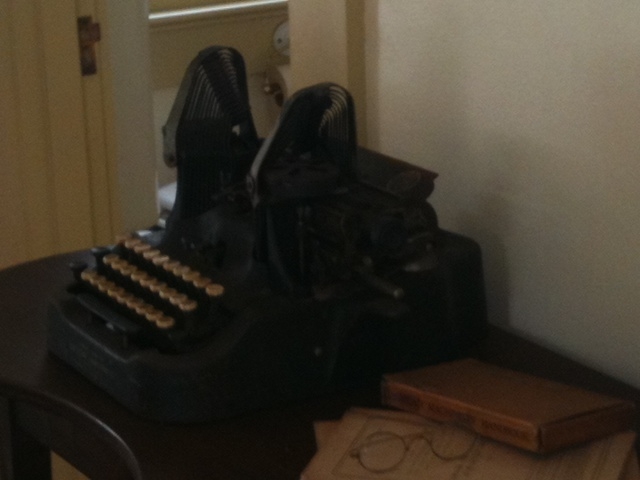
Thomas Edison Typewriter
Edison’s Keyboard

Steam swooshed onto the platform as the metallic black-horse eased to a stop in Detroit. 

The clunky train rocked The Grand Trunk Western Railway passengers in their seats. Cargo slid in the holding bays.

A twelve year old boy steadied himself against precious equipment, secured in the baggage department. Coins jingled in his near-full pockets. The odor of hot ink and ironed paper mixed with burnt coal.

And the train wasn’t the only thing rocking. The innovative boy smiled while he tallied sales of The Grand Trunk Herald. Demand for his real-time newspaper was on the rise.

Thomas Edison birthed a fresh era of news publishing in 1862. He sold the voice of his original publication by the copy, or for a mere eight cents per month, by subscription.

In the volcanic and news-hungry climate of Civil War America, Edison hit on a popular niche. For the first time ever, passengers could devour the contents of a paper written on a moving train. A pre-pubescent Thomas couldn’t know he would soon change the culture of a publishing world.

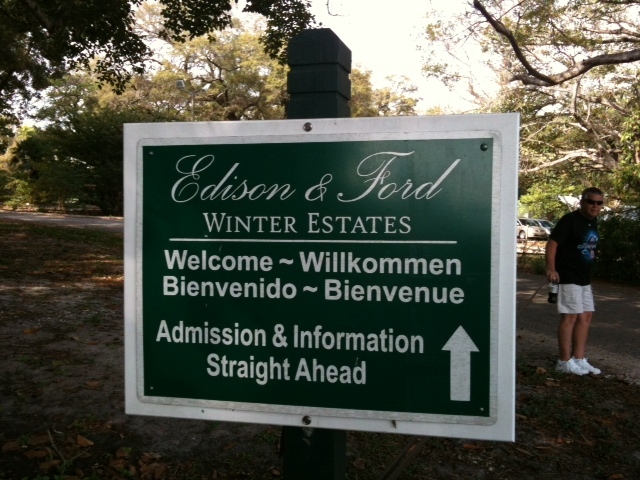
Recently, I visited Thomas Edison’s Winter Home in Fort Myers, Florida. It was there I learned the factual details of my embellished account above. But it made me think about the culture of American publishing during that time of war, financial upheaval, and emotional decision-making. Not so different from today.

Edison & Ford Winter Estates
Edison Winter Estates Entrance Sign

So it makes me wonder, if we were to rewind time, how would people in Edison’s time react to things we take for granted today? Could the folks living in that era have imagined CNN, the Internet, texting, social media, online videos, and other forms of immediacy news?

But I also reflect on those businesses who felt threatened by the young, creative upstart. They probably didn’t appreciate what they viewed as infringement on their market. Did they make changes in their own processes, as a result of the Edison transformation?

And how does all of this affect us as professionals, and the aspiring, in a writing world today?

What does the future hold for those of us impassioned to share a message through words? I believe young Edison provides a stellar example of how to face adversity. Thomas didn’t bemoan the times.

He exemplified a brilliant mind who took action where others surely complained. He paid attention when people expressed frustration. He heard those who wished to know what was going on in the war and in other parts of the country.

He turned ordinary news into newsprint customers couldn’t wait to buy.

Thomas Edison refused to let a depressive environment get him down. In today’s volatile publishing market, it’s a lesson we can learn.

No one knows exactly what tomorrow’s finished books will look like. Print on demand is making waves. But Edison’s style reminds us to keep our ears, minds, and eyes open. After all, what we do today may impact people one hundred years in the future.

Like passengers in Edison’s era, we may be readers, writers, editors, or publishers. But we all ride toward the same end. The enjoyment of great books. We can bemoan rocking motions, temporary stops, and a change in the news, but we can’t prevent innovation.

We have a single choice if our destination is writing for publication–climb on, and try to enjoy the ride.

Can you hear the whistle? The train is preparing to leave the station. All aboard!

What innovative ways might our books reach readers’ hands in the future? Those of us who author, how can we help publishers invent new ways to sell our books?

WordServe News

Exciting things have been happening at WordServe Literary!

On the final post of each month you’ll find a list of Water Cooler contributors’ books releasing in the upcoming month along with a recap of WordServe client news from the current month.

New Releases

Sifted by Wayne Cordeiro (Zondervan). This was the lead book at the Exponential (church planting) conference in Orlando.

**********************************************************************************************************************************

You’ll be Sor-ree by Sid Phillips (Berkley Caliber). Sid was one of the men portrayed in the HBO series “The Pacific.”  He’s still alive and well and living near Mobile, AL. A very fine Southern Christian gentleman.

*******************************************************************************************************************************

Red Blood, Black Sand by Chuck Tatum (Berkley Caliber).  Chuck was another one of the Marines portrayed in “The Pacific”. He’s also still alive and living in Stockton, CA. Stephen Ambrose called this book (originally self-published in 1995) “Probably the best WWII memoir ever written.”  Chuck’s book served as part of the basis for the 10-Part HBO series.

**********************************************************************************************************************************

The Pursuit of Lucy Banning by Olivia Newport (Revell).

*******************************************************************************************************************************


Playing with Purpose: Baseball by Mike Yorkey (Barbour).

**********************************************************************************************************************************

Always the Designer, Never the Bride by Sandie Bricker (Abingdon).

*********************************************************************************************************************************

Toward the Sun Rising by Lynn Morris (Hendrickson) book #4 in the republished Cheney Duvall series.

**********************************************************************************************************************************

New WordServe Clients

James A. Hall was a successful businessman for many years before working as a vice president with Walk Thru the Bible Ministry. For 15 years, he led their Seminar Division and currently is the Executive Director of a 25-year-old national ministry, Saints Prison Ministry. Some Jungles Have No Giraffes is his exciting memoir that details his amazing and compelling life. From a childhood tarnished because his father was on the run from the law, through his boarding school experiences at a Catholic seminary, to his days as a wealthy businessman involved with the Mafia, and his time spent in prison, the author’s life story reads like fiction, but is true. The miraculous conclusion of this tale again proves that without God life is indeed a jungle. (Agent: Barbara Scott)

Kariss Lynch began her writing career in third grade when she created a story about a magical world for a class assignment. Since then, she has received a Bachelor of Arts in English with a specialization in creative writing from Texas Tech University. Kariss believes her readers should expect a journey. Readers can expect to see the beauty that God creates through broken lives and the adventure that comes when we follow the Lord. We serve a God of big dreams, daily adventure, and lasting hope. Making her home in Dallas, Texas, Kariss recently finished the Craftsman course through the Christian Writer’s Guild. She became a freelance writer and blogger for Demand Media Studios in January 2011. In March 2012, Kariss accepted the writer position in the Communications Ministry at First Baptist Dallas. She is very active with her church and family, is an avid Texas Tech fan, and enjoys photography and swimming in her spare time. (Agent: Sarah Freese)

New Contracts

Terry Brennan signed another contract with Kregel Publications for his next book The Brotherhood Conspiracy, a sequel to Sacred Cipher. Terry is in his 14th year of senior management for New York City nonprofits dealing with homelessness. Prior to his present focus with nonprofits, he had a 22-year career in journalism with the Pottstown (PA) Mercury, winning the Pulitzer Prize for editorial writing while he was editor. His first novel, The Sacred Cipher, was published in 2009. (Agent: Barbara Scott)

Rebecca DeMarino signed a three-book contract with Revell Books for her debut Blue Slate series. The first novel, A Love of Her Own, will be released in 2014, followed by Heather Flower and Pure Patience. A 2011 ACFW Genesis semi-finalist, Rebecca and her husband Tom live in the Pacific Northwest. When not writing, Rebecca enjoys reading, running, gardening, and trying to keep up with her eleven grandchildren. (Agent: Barbara Scott)

Steve Addison signed with IVP for What Jesus Started, a follow up book to his first release onMovements. Steve works with Church Resource Ministries in Austraila.(Agent: Greg Johnson)

Calvin Miller signed with Baker Books for The Vanishing Evangelical, a penetrating look back and forward on what has happened to the Church in the last 30 years, where it’s going, what good and what harm has been done, and what we can learn from it all.  This is the 61st book Greg has represented for Calvin in the last 18 years.  (Agent: Greg Johnson)

Joe Wheeler signed with Howard Books for The Civil War Stories of Abraham Lincoln, a follow up to his book: Abraham Lincoln: Man of Faith and Courage (also with Howard). One of America’s top-three story anthologizers, this is the 74th book Greg has represented for Joe, as well as his 64th short story collection. (Agent: Greg Johnson)

Lauren Scruggs signed with Tyndale Houe Publishers for Still Solo: A Plane Ride, a Horrific Accident and a Family’s Journey of Hope. The book tells the story of losing Lauren losing her hand, her left eye, and becoming scarred for life after a tragic airplane propeller accident in December 2011. It is written with collaborator Marcus Brotherton, and it will be published this November. Also signed was a second book to young girls on body image. (Agent: Greg Johnson)

Jonathan McKee signed with Youth Specialties/Zondervan for More 10-minute Youth Talks, a follow up to his previous book for youth pastors. (Agent: Greg Johnson)

Ken Gire signed with eChristian/Mission Books for Finding God in the Hunger Games, an insta-ebook and follow up trade book on the spiritual themes in the book series and the new movie. The ebook will come out in June!  (Agent: Greg Johnson)

What We’re Celebrating

The Christy Awards committee has announced that Dancing on Glass (B&H Publishing Group) written by WordServe Literary author Pamela Binnings Ewen is one of three finalists in the Contemporary Series, Sequels, and Novellas category. The winner will be announced at a dinner to be held at 7p.m. Monday, July 16, at the Rosen Centre Hotel in Orlando.

Amy Sorrells is the grand prize winner of the 2011 Women of Faith Writing Contest for Comfort and Salvation (now titled Canary Song). Amy is a wife, mother, registered nurse, and blogger, but most importantly, she is a woman of faith and a WordServe client. Recently, Amy received an offer for the manuscript from a well-known publisher. More to come later. (Agent: Barbara Scott)

Sarah Freese attended the Festival of Faith and Writing in Grand Rapids, Michigan, April 19-21. She met with several editors and potential future WordServe authors. Various current WordServe authors, including Patty Kirk, Anne Lang Bundy, Leslie Leyland Fields, and Margot Starbuck, were in attendance, and a few of them presented on panels and led forums. Leslie and Patty’s forum was so full that people sitting in desks and on the floor had to make more room for people to stand around the perimeter of the room! The picture below doesn’t even show the room at its fullest.

What can we help you celebrate?


Spring Fever and Social Media

It’s almost summer time, and focusing on social media is becoming especially difficult. I think it is Spring Fever. I have a little fever; actually, I am burning up, and it’s hard to focus on anything right now. So I admire you writers who are actually sitting down and getting ‘er done! In lieu of my spring-induced ADD, I want to talk about three elements that I am loving about the world of social media.

1. I recently had a Word Serve author ask me about Good Reads. Yes, another platform for you to market, represent yourself, and interact with people socially. ANOTHER SOCIAL NETWORKING SITE, REALLY? Yes. And I get it. As overwhelmed as you can be, it is more work and another learning curve, but I actually like Good Reads for those of us who are really “reading.” I find it to be an authentic community of readers.

Here are a few of my favorite things about Good Reads:

First, I love the quote system. I search quotes here ALL the time and add my favorites. It’s extensive, thematic, and easy to navigate.

Second, Good Reads gives authors a chance to be very interactive with their readers. Groups, book clubs, discussions, and great author profiles are available where authors can integrate their blogs, twitter, videos, and advertise upcoming events for free.

2. I am in love with the Facebook extension. (It’s a little geeky, but true.)  Socialbell is a browser add on for Facebook. Socialbell makes browsing the internet from Facebook so much easier. You can only use it if you have the following browsers: Chrome, Firefox, and Internet Explorer. I hear that Safari is coming soon.

Here is a picture of what it looks like on my computer screen. I am really enjoying this little plug in seeing that I spend a lot of my time on Facebook, and it enables me to post straight from the plug in to my Facebook pages as well. Go to their website and check out the video.

3. Facebook bought Instagram this past week, and they bought it for a cool billion dollars. Instagram is a very fun photo-sharing platform. People do use it to post their pictures. You can’t share anyone else’s photo’s like Pintrest yet, but you can have a ton of fun on it. You can share your Instagram photos on Twitter, Facebook, Foursquare, and Tumblr. Iphone users have had it for years, and this month they have opened it up for Android users to join in the fun. I am constantly looking for creative ways for people to promote their books.  Instagram offers filters to make your pictures look professional, retro, and just over all fun. If you haven’t started using it, this springtime is perfect to start and have fun sharing photos with your friends.

What are some creative ways that you have used new social media for marketing your book?

Your Rights

Publishers are in the rights business, pure and simple. They are printers, sometimes marketers, hopefully good editors, but their business is charged with making money over the long haul. That means they want to control any and all rights to your book to license, sell, adapt, modify, translate…you get the picture. So what should an author know?

Every publishing house is different; that’s why an experienced agent is so essential. Some houses grasp onto a right like it’s their only child (bigger publishers, especially). They’re stubborn and unreasonable and hold all of the cards. Why? Money. They write the checks. If it’s a big check, that entitles the publisher to try to keep whatever they can. Unless an author is willing to walk away from that check, they have little leverage but to play the publisher’s game. Having said that, publishers also have a good amount of experience in selling these rights, and a big machinery to manage the process.

Primary rights that are typically non-negotiable include (and this includes the right to sell anything we grant them to anyone, anywhere, almost at any time):

  • North American (and sometimes World) English language print rights;
    • Any format, style, derivation
    • Book club
  • E-book rights (and enhanced ebook rights);
  • Large print and braille;

These primary rights are often granted because the publisher can ultimately make more money than an agent:

  • In the Christian market, foreign rights. In the general market, if the agent has good contacts overseas or good co-agents in bigger parts of the world (Europe, the Pacific Rim, etc.), there is more money to be made by the author in keeping these rights.
    • Unless the agent can negotiate a larger percentage for his author (60% to 75%). Publishers often have deeper means to keep squirrely foreign publishers accountable (due to doing lots of deals with one house).
    • Like most experienced agencies, our agency has some contacts with foreign editors, but not as many as we’d like.
    • Audio rights are sometimes non-negotiable, as publishers want to control what may compete with them out in the marketplace. But I’ve withheld audio in a few instances and sold these rights myself.
  • For Christian non-fiction especially, curriculum rights are sometimes granted to a publisher, sometimes not. Publishers are rarely putting curriculum packages together for churches, but if it’s a big book (read: big author), or has potential over the long haul to make a mark in retail, they’ll typically want to keep these rights for two or three years just in case it hits.
    • Sometimes reversion can happen after the first year if the author simply wants to produce and fund the creation of some sort of curriculum piece for his/her own sales.
    • Curriculum can also include non-dramatic video. This is even rarer, as it’s insanely expensive to produce.

Other rights:

  • Dramatic and film rights. Oddly, some Christian publishers want to hold onto 20% to 50% of these rights. What used to be automatically retained by the author is now being held onto by the publisher for up to two years, stubbornly by some houses. In New York, there is no question that dramatic rights are retained by the author, but some portions of CBA want a piece of the action. A few publishers, of course, have had some success getting producers to notice bestselling books and then getting them made into film. It’s rare, but it happens. And the money isn’t insignificant if something gets made (overall, anywhere from $50,000 to $250,000, if a book gets made into film).
    • Option Money:  Signing an option agreement to take a book to film (especially for Christian books), is common (5% to 10% of all novels published), but not lucrative. Anywhere from $500 for a one-year option (renewable at $1,000 or $2,000) to perhaps a high-end of $25,000. There are exceptions and lots of variety, depending on the entity optioning the rights. The “option” allows them to start raising money, hiring a script writer, getting a director, and attaching other talent, all with the hopes of presenting it to a studio for the green light of turning on the cameras. In 18 years as an agent, I’ve done a dozen options or so, with one finally being put into film. It’s not our core business, and the money is not large on 98% of the properties. WordServe works with an experienced Hollywood co-agent when a property is close to being optioned.
  • Calendars, magazines (1st and 2ndSerial rights), gift books, anthologies, quotations
    • Small money; typically publishers want to keep these rights.

Do you have any other questions about rights issues you’ve been wondering about?