Entertaining Angels

My illustrator, Tom, with one of 48 hot dogs we grilled at a book event.

I’ve been  marketing books of mine now for more than 20 years but only recently realized a big mistake I was making:

Thinking it was only about books and sales. 

Instead of, say, salt and light. Or experiences. Or giving instead of getting. 

Example: I used to fret when I’d show up for an event and only a handful of people would be there. It made me feel like a failure. Like I was wasting my time and, given my poor-me attitude, the time of those who showed up.

Then it dawned on me: God must have some purpose for me to be wherever I was. And if people are important to God then they should be important to me, whether three or three hundred show up.

“I don’t worry about the folks who didn’t show up,” I now tell people if there’s a sea of empty chairs. “I’m just thrilled to be with those of you who did. Thanks for coming.”

Changing my attitude changed everything. Realizing my worth is defined by God’s love for me and not by any popularity I might get from people, I loosened up and had more fun.

Sure, I’ve had my moments, but, more often than not, I started laughing at situations that otherwise might have angered me. “OK, OK,” I might say to a group of eight people amid 25 chairs, “let’s all scoot to the center to make room for others.” (Proverbs 18:12: Humility comes before honor.)

I became less concerned about selling books than about making sure people were having a good experience.

I became more attuned to others, reminding myself that perhaps there was just one person in the audience who needed some inspiration or a good laugh from me that day.

Recently, one event hammered home this lesson. In the spring I had set up an event at a small-town library regarding a new children’s book I’d written and my friend Tom had illustrated. At the time, I had casually joked with the librarian that maybe we’d make it a barbecue.

Six months later — and three days before an event that I’d all but forgotten about — I got an e-mail from the librarian. “Can we help you at all with the barbecue Wednesday night?”

I called Tom. “I guess I sort of promised we’d do a barbecue for their town,” I said.

He didn’t say, “You WHAT?” He’s way more grounded than I am. Instead, he said, “Let’s do it, baby!” and organized who would bring what. 

As I rolled down a freeway with a grill in the back of my ’95 pickup, I said to myself: Are we really putting on a barbecue in a town of 600 people?

That’s when I heard a thud. Despite my tie-down job, the grill had flipped over, its guts strewn around the pickup bed. It was 95 degrees. I was on the side of a freeway trying to re-secure a grill. And I was not happy. Does John Grisham have to do stuff like this to sell a few books? 

Once Tom and I reached the town, 30 minutes away, nobody showed up. At first.

Then, slowly, people trickled in. Five. A dozen. More. Tom started grilling dogs. A group broke out in “Happy Birthday” to a friend of theirs. I realized people were having a blast. 

A woman took me by the arm. “I brought my neighbor,” she said. “She’s dying of cancer and said she would love to meet you. She loves your writing.”

Two hours later, in the pink light of an Oregon sunset, Tom and I were heading home when he said something I’ve never forgotten: “This was one of the coolest nights of my life.”

Same here. We’d grilled and given away 48 hot dogs, sold two dozen books and brought together people in a small town for an evening of fun. 

What’s more, I’d had the privilege of spending time with a woman who would, three months later, be dead, but who somehow thought seeing me was important.

Now, I don’t even like to call it “marketing.” I call it a privilege to spend time with people — sometimes many, sometimes just a few — who think I’m important enough to give up a few hours of their time to see.

And I remember Hebrews 13:2: “Do not forget to show hospitality to strangers, for by so doing some people have shown hospitality to angels without knowing it.”
WordServe News: February 2014

Exciting things have been happening at WordServe Literary!

On the final post of each month you’ll find a list of Water Cooler contributors’ books releasing in the upcoming month along with a recap of WordServe client news from the current month.

New Releases

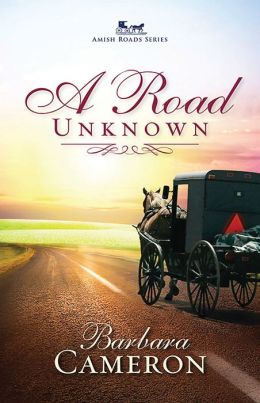
RoadUnknownBarbara Cameron released A Road Unknown (part of the Amish Road Series) with Abingdon.

***************************************************************************************

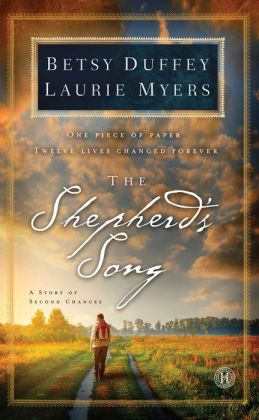
Shepherd SongBetsy Duffey and Laurie Myers release The Shepherd’s Song, their debut novel with Howard Publishers.

***************************************************************************************

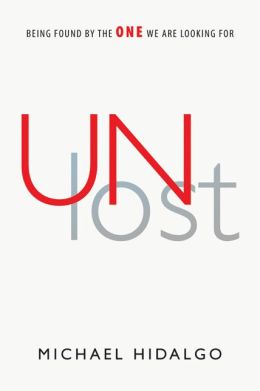
UnlostMichael Hidalgo released Unlost: Being Found by the ONE We Are Looking For, with IVP.

***************************************************************************************

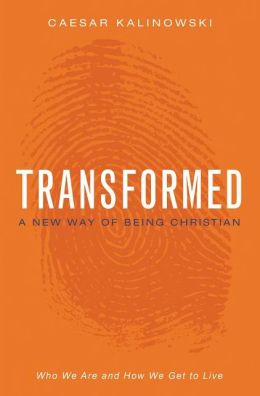
TransformedCaesar Kalinowski released Transformed: A New Way of Being a Christian with Zondervan Publishing House.

***************************************************************************************

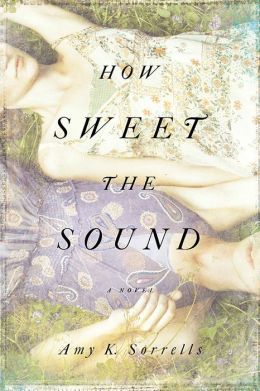
How SweetAmy Sorrells released How Sweet the Sound, her debut novel, with David C. Cook.

***************************************************************************************

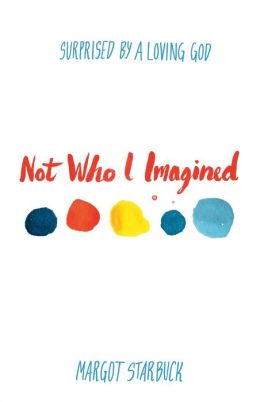
NotWhoIImaginedMargot Starbuck released Not Who I Imagined: Surprised by a Loving God with Baker Books.

***************************************************************************************

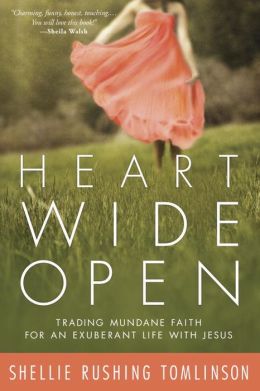
HeartWideOpenShellie Tomlinson released Heart Wide Open: Trading Mundane Faith for an Exuberant Life with Jesus, with WaterBrook Press.

***************************************************************************************

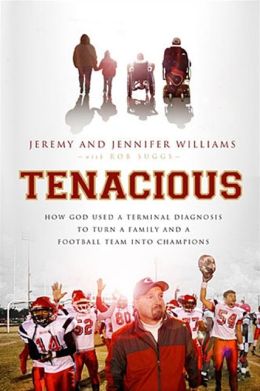
TenaciousJeremy and Jennifer Williams released the DVD and audio of their book Tenacious through Brilliance Audio.

***************************************************************************************

New WordServe Clients

Bill Myers, longtime CBA novelist and filmmaker.

Kathy Carlton Willis, platform coach, editor, and member/trainer with Advanced Writers and Speakers Association and CLASSeminars, signed with Alice Crider.

Cassandra Soars, narrative non-fiction writer and cofounder of iheartus, a new social media website for couples, signed with Alice Crider.

New Contracts

Robert Wise signed with Barbour to write Bible Lands: An Illustrated Guide to Scriptural Places.

Back to the Bible signed a 13 book agreement with Barbour Publishers to write short, felt-need books that will be distributed directly to churches through a back of the church spinner rack (as well as in all other outlets).

Sarah Varland signed with Love Inspired to write Tundra Threat, a romantic suspense novel.

Bryan Bishop signed with Baker Books to publish Boundless Jesus: Radical Faith from a Hidden Global Trend.

Kelli Gotthardt signed with Kregel to write her memoir, Unlikely Rebel.

Kate Hurley signed with Harvest House to publish a memoir about making sense of the unexpected single life.

Sarah Parshall Perry signed a two-book contract with Revell for her projects tentatively titled Sand in My Sandwich and Mommy Wants a Raise.

What We’re Celebrating!!

YouFoundMeKeith Robinson’s book, You Found Me, landed on three bestseller lists this month!

The Slow-Writing Revolt

exhausted-woman-Writetodone.com“Nice piece on that Huge Famous Blog, Allie,” you say to your friend, sincerely.

“Oh yeah, that thing. I just dashed that off, after two other pieces I wrote that day.” She tosses her perfect hair and regards her French nails.

“Really? How long did that piece take you?” you say, curious, but knowing you’re about to feel sick.

“Oh, about 37 minutes. Of course posting it all around the world took a bit longer. And then answering all the fan mail. That took about 3 days.”

“Yeah, I hate it when that happens.“ Weak smile trying to hide your nausea and the fact that it took you all day to write one short piece. You leave smiling, stomach roiling.

I confess: I have been Allie a time or three, but I’m mostly the other. Which is a problem. This week, for instance, I have four articles due in the next two days (Yes, this is one of them.) Not to mention a sermon to write, and three other presentations. It was the same last week. I’m not alone in this kettle of fish. A Facebook friend messaged me saying she couldn’t talk—she had three articles due that day. Others tell me the same.

So here we all are hunched over in emergency mode every day, madly chopping and grinding, tossing posts and articles and reviews out into the void. We’re generating twice as much content as we used to, in half the time.

What’s happening? We all have Facebook pages we’re trying to fill. Many have daily blogs they’re trying to fill. Surrendering that impossible task, now they’re filling them with other writers’ work. So now we’re all writing for our own blogs, plus our friends’ blogs, plus all those other publications we want to be in. And the book we’re writing? Oh yes, we’ll get to that, as soon as we finish this last little post. Behind all this is fear . . . a lot of fear. That we’ll disappear if we’re not on stage all the time. That we’ll be forgotten. That we’ll be invisible. That our platform won’t be big enough. That we won’t land another book contract.

Enough. I’m about to revolt.

Here’s what I’m preaching to you and me today. And I’m sorry I’m not saying it beautifully or lyrically with a grand metaphor that lights it all on fire. That’s what happens when you write too fast. Here’s the message: Slow down.  M a r i n a t e.    Wait.     Sometimes even—-stop. Sometimes even—-say No.

We’re losing our way when nothing matters but the deadline. We’re losing our way when nothing matters but the byline. We’re wasting words. Sometimes we’re writing junk we don’t mean. Sometimes we’re just writing junk. We need to quit saying yes to people just because we want to fling a new piece out into the world for its five minutes of fame, if we’re even that lucky. Write to raze hearts and inflame lives. Mean every word you say. Stake your life upon it. Make your words worth every minute of your reader’s time. Anything less is ashes you have no time for and the world has no need of.

Take this, for example. I needed to write this in an hour, with a dash and a pinch of salt over my shoulder. Instead, against all intentions, I have taken three times longer. Not for the craft of it (apologies), but for the heart of it, which did not find me until the second hour. When we don’t give ourselves time to wander and to wonder, we’ll lose the truer words that want to be found and must be said.

Someday soon I hope the conversation will go like this:

“That was an amazing piece you wrote, Allie. You really nailed that review. I’m going to buy the book.”

“Really? That’s great! Yeah, it took me a week to write that. I just had to marinate in it for awhile.” She pulls at her frizzy hair and nibbles on her nails.

“Wow, a whole week! Good for you!”

“Oh, I don’t mean to brag or anything.”

‘No, that’s okay. That’s really inspiring,” you say. You think a moment, then blurt out, “You know, I’m going to ask for an extension on my essay. I think I need a little more time on it.”

“Of course! They’ll give it to you. You’re one of the best writers I know. They don’t expect you to be fast!”

Will you join me in this revolt?

Being a Yahtzee Writer

They say if you want to make money in the writing business you find a niche and go to that place again and again.

In other words, if the crowd loved your trumpet solo don’t come back on stage with a guitar or xylophone.

It wasn't Oprah! but I got to shoot hoops in the Indiana gym used for Hickory High in "Hoosiers."
It wasn’t Oprah! but I got to shoot hoops in the Indiana gym used for Hickory High in “Hoosiers.”

Play that trumpet, baby!

I get that. And I don’t begrudge any writer who subscribes to that theory. To each his or her own.

But here’s to those who’ve gone the other way, who’ve followed their muses, wherever those muses have taken them, even if it’s seldom meant to the bank to deposit another hefty royalty check.

Here’s to those who’ve led with their hearts and not some can’t-lose formula.

Here’s to those who’ve written as if life were a Yahtzee game and part of the fun was seeing if you could score a few points in all 12 categories: perhaps writing a three-of-a kind spiritual trilogy, a full-house family memoir, and a small straight of mysteries.

Here’s to dabblers and chance-takers and you-never-know-unless-you-try writers whose platforms aren’t chiseled precisely in granite but whose success is built of great memories.

I can relate. I am a Yahtzee writer.

World War II biographies? Three. Sports and life books? Two. Children’s? On my second.

Nuggets of wisdom from my favorite movies? Check. Collections of newspaper columns? Check. Hiking the Oregon portion of the Pacific Crest Trail? Check.

The price I’ve paid? I’ve never gotten deep traction as an expert in any particular genre. The dividends I’ve received? Being true to who I am as a person.

I’m not touting the likes of Yahtzee writers for any sense of self-grandiosity; follow-their-muse types often find themselves being regularly humbled, my most recent example being a book event at a fire station to which three people showed up — one by accident — and firetruck sirens kept going off while I spoke.

No, this isn’t about chest-beating success. This is about the significance of the writing journey itself.

Too many writers drink the formulaic Kool-Aid suggesting you must trust a system and not your heart. And, turning 60 this week, I’ve been more contemplative than usual about how I’ve spent my life as a writer and whether going my own way has left me a failure.

My conclusion? I wouldn’t have missed the ride for the world.

By following my muse, I’ve gotten to write about the stuff that I’m passionate about — and best-suited to write about. To know an array of fascinating — and generally obscure — people. And to experience a bunch of stuff I never would have otherwise.

Because of my book research and promotion, I’ve put on a barbecue for a town of 600 people, shot hoops in the Indiana gym depicting Hickory High in the movie “Hoosiers,” spent a weekend at the Wonderful Life Festival in Seneca Falls, N.Y. and found myself in Normandy, France, on 9-11.

Along the way, I’ve met a few famous people but, ironically, the two most well known “stars” I’ve spent time with were also the only two books subjects I’ve parted ways with — because they were so unwilling to help.

Finding success in book writing is about perspective and appreciating the small victories you experience by being yourself.

About the grist of the journey, not the fruits of whatever material success you experience.

And about being true to your bent as a God-created human being. I think of a line from an old Amy Grant song: “All I ever have to be is what You’ve made me.”

So, sure, if you’re made that way, play another trumpet solo. But if you’re not, don’t be afraid to play Yahtzee.

What Olympians Can Teach Us about Getting Published

Recently I read an article about the cost of becoming an Olympic athlete. It mentioned that former U.S. speed skater Eric Flaim, a two-time Olympic silver medalist, estimated that his decade-long training amounted to at least $250,000.

“. . . Like many Olympians, Flaim describes plenty of tough times, when he and his parents faced having to pay for big-ticket items (say, a pair of custom-molded boots for $1,500) or ongoing expenses (private coaching could run up to five grand annually.) To make ends meet, Flaim often worked in gyms, cleaning lockers after patrons departed. Even with a medal around his neck – he won his first at the 1988 winter games in Calgary — life didn’t become particularly easy. Flaim says in his best years as an athlete, he might have earned $75,000 from prizes, honorarium, and sponsorships. ‘It was not million-dollar money,’ he adds.

But at least he made money. Athletes who aren’t seen as strong medal contenders are less likely to receive significant support from their sponsors, let alone their sport’s governing board. And if they’re competing in a less-heralded sport, the problems are compounded . . .

. . . for another Olympian, Rick Hawn, a U.S. judo competitor at the 2004 Olympics in Athens who also tried out for the 2008 games, it all added up to a significant tab during his Olympic career. ‘My parents nearly went bankrupt. They put whatever they could into me and I’m the oldest of six kids.’”

iStock_000001330542XSmallIt takes a very special blend of character traits to become an Olympian. The cost in time, energy, and money rarely makes a return on the investment, so Olympians must have skill, drive, persistence, and a belief that getting to the Olympics is its own reward.

Becoming a published author is a lot like that. Many people have the desire to be published. But it takes more than desire. Over dinner the other night my husband and I talked about the people we know who want to publish a book, but probably never will, because they don’t have the special blend of character traits.

  • The first person we thought of has written many books but has failed to get published. That’s because she doesn’t want to learn the rules. She doesn’t want to attend writers groups or conferences to understand how the industry works so she sits at home writing, hoping someone will come along to publish her work. In order to get a book published you have to know the basics: how to query an agent and how to create a proposal. I spent six months working on the proposal for my book, and it was about 80 pages in length. In your proposal, you have to be able to show editors and agents that you know the competition. You have to describe your platform, and you have to lay out your marketing strategy. Your learn how to do this by investing in conferences, writers groups, and reading books. 
  • The second person we thought about is brilliant. He has wisdom that could really help people. But he doesn’t discipline himself to write. He spends all week at a job and relaxes on the weekend. I don’t blame him. But to get published, you have to discipline yourself to write when you’d rather be relaxing.
  • The third person wants to be published but he doesn’t have the persistence. He has a great idea, writes about it for a few weeks, and then gives up. And since most authors don’t make money at this gig, there has to be a reason bigger than money that would make you spend years trying to get published. Can you envision devoting five to ten years researching and writing about a particular topic?

All writers must have skill, and they must have an important message told in a fresh way.  They must learn and follow the rules of publishing, and they will probably have to persist for years. Lastly, they must believe that getting published—not getting rich—is its own reward.

What other traits do you think are necessary for becoming published? 

WordServe News: January 2014

Exciting things have been happening at WordServe Literary!

On the final post of each month you’ll find a list of Water Cooler contributors’ books releasing in the upcoming month along with a recap of WordServe client news from the current month.

New Releases

ScrapsBarbara Cameron released Scraps of Evidence (Abingdon Fiction).

*********************************************************************************

ForgivingLeslie Leyland Fields released Forgiving Our Fathers and Mothers (Thomas Nelson).

*********************************************************************************

WintersPromiseKen Gire released Winter’s Promise (Harvest House Publishers).

*********************************************************************************

FleshHugh Halter released Flesh (David C. Cook).

*********************************************************************************

HandsofDarknessHeather James’s Hands of Darkness (Kregel). This is book #2 in the Lure of the Serpent series.

*********************************************************************************

ShakenKariss Lynch’s debut novel, Shaken, releases February 4th (Charisma Media).

*********************************************************************************

The KnightTara McLary Reeves and Amanda Jenkins released The Knight and the Firefly (B&H Kids).

*********************************************************************************

YouFoundKeith Robinson released You Found Me (Regal Books). His first book!

*********************************************************************************

RethinkDave Stoop released Rethink How You Think (Revell).

*********************************************************************************

WayfarerJanalyn Voigt released WayFarer (Harbourlight Books). This is book #2 of the Tales of Faeraven series.

*********************************************************************************

LifeComesBackTricia Williford released And Life Comes Back with (WaterBrook Press). Her debut book!

*********************************************************************************

New WordServe Clients

Linda Kuhar, miraculous cancer survivor, Certified Christian Life Coach, and teacher on Proverbs 31 Ministries Online Bible Studies’ Executive Leadership Team signed with Alice Crider.

New Contracts

Arnie Cole and Michael Ross, in combination with Back to the Bible Ministries, have signed a 13 book contract with Barbour Publishers to launch a series of books in the “goTandem” line, primarily direct-to-church, in support of the goTandem Bible engagement app being launched May 1st of this year.

Tami Weissert signed with Authentic Publishers for a book with a working title of Off the Page (and into your heart), 12 stories of how women in different stages of life engage with God’s Word.

What We’re Celebrating!!

FlightCongratulations to Capt. Dale Black and Ken Gire. Their non-fiction book, Flight to Heaven, made the New York Times Best Seller List!

Wounded Women of the Bible co-author Dena Dyer was recently honored with two “Best Of” awards for her articles on The High Calling, an online magazine sponsored by The Foundations for Laity Renewal. The two articles, chosen out of hundreds which ran on the site in 2013, were Resting my Mind in the faith category and Confessions of a Homeschooling Mom in the family category.

Amy K. Sorrels, author of soon-to-be-released How Sweet the Sound, received a wonderful review in Publishers Weekly: “Debut inspirational novelist Sorrells opens her story powerfully, with a rape and double murder within the Harlan family, who grow pecans in Bay Spring, Ala. This strong stuff is Southern gothic, but it’s also biblical, a retelling of the story of Tamar, who is raped by her brother, a son of King David. The story of this event and its tangled consequences is narrated alternately by Anniston, who is 13 and has seen her father murdered, and her aunt Comfort, the rape victim. The family’s secrets emerge, even as healing, propelled by faith, begins. Sorrells’s ambitious work has beautiful elements, chief among them the strong voice of Anniston. Others need work: Princella, the Harlans’ matriarch, could use more development and subtlety, and so could the prose (“The haze of quiet sunlight floated into the room like a slow dance between dreaming and waking up”). Sorrells will likely move many readers of faith, and she’s worth watching. Agent: Sarah Freese, WordServe Literary Agency. (Mar.)”

Lucille Zimmerman got a guest post gig on Michael Hyatt’s blog. Here is the link to her thoughts on “The Placebo Effect.” How’d she get it? She asked. Great lesson, Lucille. Remember, the worst anyone can say is “no.”

Are Your Margins Too Thin?

sad businesswomanA curious thing happened as I was trolling Facebook one day–a fellow author had posted about what she wasn’t doing for Christmas. “I’m not baking the seven different types of cookies that I normally do and I’m giving you permission to do the same. What is it you would like to give up this Christmas so you can spend more time with family?”

Whenever the first of the year rolls around it’s always time for the dreaded excitement of planning your (cue the music) New Year’s Resolutions. Often, these resolutions and goal setting add more to our plate rather than simplify our lives.

We should absolutely make goals–I’m a big believer in them. But how can we make them reasonable, doable, and achievable?

You might have heard about margins. Leave one inch margins around your written page. This used to be so there would be room for others to make comments. It’s morphed into leaving room in your life for the important things. You might have also heard people call this work/life balance.

But how do you know if your margins are too thin? What might some of the symptoms be?

1. You can’t say no. This means you don’t have boundaries. It’s really not healthy to be the go-to person for everything. You can’t always be at another person’s beck and call. I think volunteer work is important but pick ONE thing you’re passionate about and make sure the hours are reasonable.

2. You’re always running late. This can be symptomatic of two conditions. One, it’s just the kind of person you are. You’ve always been late and continue to be late. But if you used to be on time for everything and now you’re always just a few minutes (or more) late, then you’re probably over-scheduled. Why is it you can’t make it on time? Too many appointments or it’s something you don’t want to do? You’ve lost passion for your job, perhaps? Maybe never had any? Can you change that?

3. Your children/family/significant other don’t recognize you anymore. I remember when my girls were infants that I’d bring them into the bathroom while I was taking a bath and set them on the floor with some toys so I could keep an eye on them. The first time their eyes witnessed me dunk my head and come up with my hair slicked back, their quivering lips indicated that they thought I was not their mom anymore. I spoke to them and reassured them it was okay. If your family is coming in dead last then definitely some re-prioritizing needs to happen. What can you change about your current schedule that would make more room?

NewYearDaySince it is the first of the year, I do still think that it’s a good time to analyze and focus, but maybe with these tenets in mind. The goal has to be reasonable to make it fun and achievable; otherwise it’s doomed to fail from the start.

So, instead of the goal being I’m going to write THREE great American novels when you’ve never attempted one, attend a local writers conference to see if writing is suited for you.

Instead of losing ALL the weight you need to lose in the first three weeks of the year, shoot for a small piece of the whole. I want to lose 2 pounds in January. Once you’ve done that, set the next goal.

Goals are about focus, but they need to be achievable. You’ll still need to live your life. Keep those personal relationships strong. That’s what ultimately sustains you.

What are your reasonable and achievable goals for 2014? Will they maintain your life/work balance?

Cry. Another Bookstore Bites the Dust.

bookshop closedThe last local bookstore in my town is closing. This will only leave us with a Barnes & Noble, but what you should know is that more people shopped at the other store, the local store that’s closing. That’s the scary (or scarier) part.

To put it into perspective, I had a book signing last winter at both places. The smaller, family-owned bookstore had about triple the amount of traffic and I sold and signed almost a hundred books. At Barnes & Noble, someone walked into the joint maybe every ten to fifteen minutes, sometimes for a coffee, and I only signed and sold four books.

I’ve heard all the sobbing and woe over the book industry for years now, but I didn’t ever think it’d make my hometown bookstore close up for good. I suppose the Barnes & Noble will be next, too. And then, in a county that’s home to over 850,000 people, we’ll have no bookstores for new material.

Yet, I’m an offender.

I read almost all my books on my Kindle. Or, the Kindle app on my phone.

Did I contribute to the closing down of my town’s last family-owned bookstore? Yes.

Am I sorry? As an author, absolutely. I lost a sure-fire spot to conduct future book signings. It was an easy in, my hometown advantage.

Am I sorry as a consumer? Tougher question. Like I’ve said, I’m an offender when it comes to the death of print because I adore my e-reader.

I hate to see the world in which I operate and play in get messy . . .  a world where an author who prefers e-books strongly laments the perpetual closing of bookstores.

I’ve also yet to witness how this transition away from honest-to-goodness bookstores to the world of e-readers and internet sales affects my bottom line. As far as I know, most of my sales are coming from Amazon anyway, so I won’t begin to poo-poo them for taking over the book-selling world.

If what’s happening in my county is happening all over, does that mean the death of book signings all together? Maybe it does. But it is certainly not the death of interacting with your favorite author.

With the advent of Facebook fan pages, Skype for book clubs, Twitter, and YouTube, there are more ways than one to “meet” an author. Besides, if fans are e-book readers like me, they probably don’t want you to sign their device. (In fact, they might punch you for that.)

So, is it all for the better, the worse, or is it a different kind of the same? I’ve heard mixed reactions. Some authors admit that if not for the reach of Amazon, they wouldn’t have sold any books. Other authors feel they get lost in all the zeros and ones of Amazon digital code, as well as the influx of self-published books, side-by-side their own in the search query. Whereas, in a store, they’d be easier to spot in their niche.

In the end, it’s hard to say that consumers are upset with these changes. They direct the market after all, and the direction they’ve chosen is that bookstores aren’t a necessity for their literary enjoyment.

But as an author who’s feeling the death of bookstore marketing events. . . we’ll see.

What about you? What would your world be like if your town lost all its bookstores?

Your Friends in the Book Marketing Business

Book marketing can be rather overwhelming, especially here in the middle of the publishing revolution. The good news is that there are more and more emerging companies out there who bring a lot of light to this dark arena. Whether you are an author looking for assistance or a reader trying to find the best deals available, this post is to create a compilation of resources you may find helpful.

Pubslush: A global, crowd funding and analytics platform for books only. This platform allows authors to raise money and gauge the initial audience for new book ideas, and for readers to pledge their financial support to bring books to life. Pubslush is entirely about giving: giving an opportunity to authors, giving a voice to readers, and giving books to children without access to literature. http://www.pubslush.com 

Businessman Midair in a Business Meeting

Author Marketing ClubAn author member can submit books for promotional opportunities, as well as access free online training and resources related to book marketing. A reader member will get notified about new and discounted books, and can discover new authors. This service is free for both authors and readers. You can upgrade to the Premium program if you wish for additional benefits, but it is not required for you to do so. Some of the options offered under a Premium membership include an Amazon book reviewer tool that can help you find reviewers who focus on your literary genre.  http://authormarketingclub.com/

BookBub: The best marketing dollars I have ever spent have been with BookBub. BookBub is a free daily email that notifies you about deep discounts on acclaimed ebooks. You choose the types you’d like to get notified about — with categories ranging from mysteries to cookbooks — and they email you great deals in those genres. BookBub features ebooks ranging from top-tier publishers to critically acclaimed independent authors. During my last campaign with BookBub, I spent about $260.00 and yielded thousands of downloads as a result. If you are looking for new readers, do yourself a favor and check out BookBub: http://www.bookbub.com/home/

Other great resources for readers:

Pixel of Ink: A website which features daily publishing of Free Kindle Books and Hot Deals. On any given day, there are thousands of Free Kindle Books available.  http://www.pixelofink.com/

Inspired Reads: The best Christian Kindle books on a budget. http://www.inspiredreads.com/

Kindle Daily Deal: The best deals available for Kindle. http://amzn.to/KindleDailyDeal

What are your favorite book marketing resources, websites, and venues?

Publishing Day

The day my book releases is an odd day for me. Inside, I am screaming, “My book is out! Everybody, my book is out! Are you going to untitledread it, or what?!” I walk into the bookstore and pretend to only casually check that it’s on the front table. If it’s not, I pretend not to be bothered. I decrease my expectations. I walk towards the women’s section and just hope to see it on the shelf. If it’s not, I pretend to understand, but inside, I don’t understand at all.

Because it’s my heart on the page.

I went through this with my first book, Girl Perfect, and I just went through it again with Beautiful Lies. In the days of the release, something in me wants people to stop and take notice, and that part of me wrestles with the part that knows the act of creating is worth it, whether anyone notices or not.

I hope the late nights, the honest tears, and the sweet victories of finding just the right words to speak my soul’s hunger will result in profundity for the reader. I want my efforts to matter. In fact, I’m tempted to tell you how I crawled through the thickest mud of my adult life to bear this book. But Annie Dillard, in The Writing Life, scolded me about this, warning me never to tell anyone how much a book cost me personally – for it is impolite to do so.

So with the release of a book, three tragic flaws in the self must die. First, the part of us that hungers for recognition has to die to the Spirit in us that is compelled to speak honestly and truthfully into a world that needs our voices.  Second, the humanity in us that wants millions to hear the book’s message must die to the Spirit in us that rejoices if one life is purely changed by our words.

Finally, we have to let go of “perfect” and embrace gratitude instead. The perfectionistic questions that circle on publishing day – “Is it enough?” “Did I say everything I wanted to?” “Will the reader understand my heart’s lineage?”  and “Is this as beautiful an offering as I dreamed?” – all of these questions must yield to gratitude.

untitledSo here is mine: Thank you, God, that I had the opportunity to bleed truth on these pages. Thank you for the healing it brought to me. Thank you that you love me so much as to give my heart’s desire wings, and I commit these books to you, trusting your winds will carry their words wherever they need to flutter. Beautiful Lies is my offering. My alabaster jar. And when I poured its oil, it was all for you.

What about you? What do you have to embrace and let go of on publishing day? What are the needs for recognition or perfection that you battle? What does your gratitude sound like?