How to Edit a Manuscript

You’ve edited a paragraph, a chapter, maybe a few chapters, but now your manuscript is Kariss editingready to go and your editor sent you back the first round of edits full of major content changes. Where do you begin?

Editing the manuscript as a whole can seem like a daunting task. Editing is a necessary evil to me. I prefer writing any day. But I’m always pleased with the end result after time spent editing.

The truth is that editing needs to be a matter of prayer before you feel tempted to knock your computer off the desk. (Kidding. Kind of.) It can feel frustrating and detailed and confining after a fluid writing process to finish your book.

Here’s the good news: If you crafted your story correctly, it should be frustrating. Just look at it as a challenge to overcome. Content edits often include tweaking details used in major story lines. You have to track each story line down and make sure your changes are consistent. If you tweak one detail, it may cause you to slightly amend a detail in another story line. I was thankful to see that my story lines were so interwoven that one change affected another but was terrified I would miss something. But don’t worry, that’s where your editor comes in to catch anything you missed. Just try to do your due diligence on the front end.

I just finished a round of edits for my second book, Shadowed. Here are some of my takeaways for a major content edit:

1) Start small.

Read through ALL of the suggestions from your editor. Weigh what she is asking. Then set the manuscript aside for a couple of days. Process the best way you can tackle the job. Pray that you will know the parts to keep and parts to cut, when to kill your darlings and when to fight.

2) Make a plan.

I found it difficult to keep scrolling through the manuscript to find all the places I needed to fix, especially when it came to juggling scenes and chapters for better time placement. Write down a knock list and cross out each item as your finish it. You will feel accomplished and know you are moving in the right direction. Even if the list is extensive, take it one step at a time. If something else comes to mind, write it down and come back to it. You can do this!

3) Take your first pass.

Start at the top and work through until THE END. Write down any questions you may have about research or editor comments. Make all the smaller changes you can make right away. For instance, I noticed I referred to an organization two different ways in my manuscript. For consistency’s sake, I used the “Find and Replace” feature in Word for an easy fix to ensure accuracy. Easy check mark on my list!

4) Attack the major problems with gusto.

It helped me to print my manuscript, make notes, and then get to work. My editor Kariss manuscriptssuggested some things that I struggled to pull off. However, when I looked at a clean, printed manuscript, I was able to take her suggestions with my preferences and style and make the changes something that fit the story better. I love to work with my hands, so it helped to have something to hold and mark up with a pen. It also got me time away from my computer screen, which gave me a great brain break.

5) Finish strong and pray.

Time for that final look. I try to make it my goal to tackle as many issues as possible so the next edit is easier. Send the editor any notes she may need to do her job well and help you. I learned on my last edit that sending an accompanying timeline saves LOADS of time for both you and the editor.

Finish by praying that God will use this for the process ahead and that the finished product will bring God glory. Take a deep breath, type that email, and click send. Your manuscript is changing, but so are you!

What lessons have you learned during editing? What process helps you?

The Shocking Marketing Surprises I Learned After My Book’s Release

A little more than a year ago my first book was published.

In the years before it was released, I made a persistent effort to build my platform.

For instance, nine or ten years ago, I started building a social media platform, first on Facebook, and then on Twitter, LinkedIn, Pinterest, Goodreads, and Instagram.

For about six or seven years, I have been consistently blogging. I have been grateful to be featured as a guest blogger on many sites. Still, I did not fully understand the extent of marketing I would be doing once my book released.

The not knowing was painful at times.

Hopefully this post will give you some of the information I wish I had known ahead of time.

Here are the five biggest marketing surprises, good and bad, I learned after my book released.

wow big sale1. You won’t just market for a month or two, or three, or six.

I didn’t realize I would be expected to market for years. In fact, I think as long as you have a book being sold, you don’t ever get to stop.

2. Most of the time you won’t have any idea how well your book is selling.

I assumed publishers would send reports every month or every six months. That didn’t happen. At least not for me. I guess it’s difficult to determine the exact number of sales, partly because bookstores may order a few dozen copies but then send them back at a later date. I did receive a statement 12 or 13 months after my book released but it’s still not an accurate representation. By the time a statement is compiled and mailed out, more books likely sold. Without knowing how book sales are going, you have to market anyway.

3. You will market 101 ways and you won’t have any idea which marketing ideas will be most beneficial.

You’ll do contests, hold signings, and have book launch parties. You’ll do giveaways and attend conferences. You’ll have write-ups in college alumni newsletters, you’ll give hundreds of books away to potential endorsers and media types. You’ll speak to groups, and give radio and TV interviews, all the while hoping for sales.

amaz1

Here are two of my biggest marketing surprises:

*My pastor gave a sermon on Mother’s Day and mentioned my book. I sold about a 100 books. People rushed into the foyer after church to buy multiple copies for aunts, grandmas, sisters, girlfriends, and moms.

*Ann Voskamp mentioned my book on her list of links one Saturday morning. My book sky-rocketed on Amazon. It was fun to watch the numbers for a day.

Amaz

4. Your publisher is likely to give you books in order to help you market.

When I signed my contract, my agent negotiated a certain number of free books I would receive in addition to my advance. However, I have been surprised with the generosity of my publisher. Several times I’ve headed to conferences and my publisher has given me books to give to the attendees. Also, Goodreads has a program where authors can participate in giveaways within the first six months of a book’s release. My publisher alloted quite a few books for these giveaways.

5. The things that make you the most happy won’t be the sales but the people you touch.

It sounds cliche, but it’s true. I am humbled each time someone sends a thankful email or posts a review on sites like Amazon, Goodreads, or Barnes and Noble. This week I received a letter from someone who said my book encouraged her to go back to school to earn a graduate degree in Christian counseling.

If you’ve marketed a book, what surprised you the most after it released?

Two Writers Walk Into This Bar . . .

Celebratory drinkWhat happens when two writers unexpectedly find themselves with a free evening together?

A nice dinner and a glass of wine? Laughter and bonding? Sharing experiences from both on and off the author trail?

Yes. All that, and new marketing ideas, too.

At least that was my experience two weeks ago when my agency colleague Anita Agers-Brooks made a short-notice trip my way and we were able to spend a few hours together – hours that had no agenda other than getting to know each other. And even though we write in different genres (Anita is a leadership guru, while I write humorous mysteries and memoir), we had much to offer each other in the way of marketing and business ideas. Here are a few nuggets from our impromptu party to spark your own ideas:

  1. Writing is a business. Do you treat it that way? Anita reminded me that I needed to file paperwork to become an LLC (limited liability company) as legal protection of my assets. We live in a litigious world, and a writer must be a good steward of her assets both spiritually and financially. As Anita pointed out, if you wait to protect your business till someone sues you (yes, it can happen!), you’re already too late. (And be sure to include Errors & Omissions insurance while you’re at it.)
  2. Goodreads.com is a publicity goldmine. Are you on it? For my new book release, 658 people entered my giveaway drawing for 3 free copies. That’s a lot of eyes on my book the day it released. And giveaways are just the tip of what you can accomplish on Goodreads. (Read this marketing tutorial on using Goodreads.)
  3. Pay attention to casual comments. After a pastor told Anita her book would be a good topic for a sermon, she found a template online for sermons. She plans to fill it out using her book and then share the template with pastors. She’ll get her message presented by pastors, and she won’t even have to be present! (Does that qualify as bilocation – being in two places at the same time?) I’m going to take her idea and see if I can make it work for me.
  4. Take ownership for your promotional campaign, because ultimately, the book is your baby. Both Anita and I have been surprised by the limitations even large publishers can have when it comes to marketing; our publishers can pull some big coups for us (Anita spoke to a filled college auditorium thanks to her publisher, and I’m getting phone-in radio interviews thanks to mine), but the local press and on-going events calendar that make up the bulk of your PR efforts remain in your own lap, not to mention getting your launch team recruited and equipped to spread the word.
  5. Learn from each other’s experiences. After spending an evening with a writer in the same phase of our careers, I feel like I may still be in the same boat. But now I know there are other boats traveling along beside me, happy to share their own tips and advice. In fact, maybe a small-group marketing retreat would be a good idea. Hmmm….

(FYI – I was kidding about the walking into a bar. Anita and I did walk around a golf course, however. The air was much fresher.)

When to Consult a Medical Expert

female doctor in ICUAlthough I’ve always helped authors along the way with medical questions, it’s been one of my primary focuses for the last three years since the invention of Redwood’s Medical Edge—my medical blog for authors.

The reason for creating my blog was the multitude of published works I read that were loaded with medical inaccuracies. Not just a few here and there. Time after time, errors caught my eye.

In a pod-cast interview, the interviewer asked if these medical mistakes would be enough for the average reader to pick up. To be honest, I’m probably more sensitive to these errors after spending 20 years in nursing but some are mind-numbingly obvious. Such as saying the spleen is on the right side. Such as calling a collar bone a shoulder blade. You don’t have to have a medical degree in anything to pick up on these missed anatomy issues.

Writers, I think, are confused as to when it’s beneficial to consider consulting a medical expert. And I actually mean more than asking Uncle Joe who has worked as a dentist when you need information about delivering an infant.

Not the best option.

An author who is also a medical expert is your best bet. They know what will overload the reader, they know what is too medically complex for a non-medical author to pull off, and can help you with the nuances (the language and the interactions) since they’ve worked in the field.

But when is it best to consider plucking down a few hard earned dollars to work with a medical consultant?

Here are my thoughts.

  1. You need a medical condition that fits a certain set of symptoms. I often get queries from authors along these lines and perhaps they’ve tried to find something on their own but just cannot decipher the medical language to know, for certain, if it fits: “I need a fatal condition for a child that won’t be immediately obvious but could put the child in peril around three months of age.” Believe it or not, a metabolic disorder fits this criteria.
  2. You have a medical scenario in mind but aren’t sure if it’s reasonable. This happens frequently and is probably the most dangerous position to work from. Let’s take a look at the following example: “My character has been in a car accident. The car has rolled three times. The injured character was not wearing a seat belt and was thrown 100 yards into a swift moving river, where he almost drowned. He was rescued and required only a minute of CPR to revive him. I need him home from the hospital that night.” Or the opposite is true. “I have a character that fell down the stairs and I need him to be in the ICU for three days.”

Both of these situations set up implausible medical scenarios. The car accident victim is going to be too injured to go home that day. Someone who requires CPR after nearly drowning is going to be watched, at a minimum, overnight. In order to get admitted into the ICU a patient has to be pretty sick so the simple fall down the stairs is likely not going to injure the character sufficiently.

  1. Come with an open mind but with a needed result for your character. What I prefer to know is your end game with an open mind to the medical scenario. “I need a character to suffer an injury from a fall that would land them in the hospital for a few days in the ICU and I’m fine with a few extra days in the hospital but I don’t want them to have any residual injuries.” For you, I would pick an epidural hematoma.
  2. You have a pivotal medical scene. I consulted once for an author who had a child in the Pediatric ICU, dying from leukemia. This is something you want to flow nicely for the reader. If at any moment they pause, look away from the page, and think about the accuracy of what you’ve written, you’ve taken them out of the story bubble and perhaps their trust in you has fallen. Perhaps you’ve even lost a reader.

I once read a review from a fan of historical fiction that skewered an author for writing a completely inaccurate historical scenario in the third book of the series. This reader then doubted the previous two books and swore off reading anything else from the author.

Don’t let this happen to you. Consult a medical expert if you find yourself writing these scenarios. It’s likely not as expensive as you think.

What about you? Any medical inaccuracies you’ve found in a novel?

Hearing What You Can’t Read

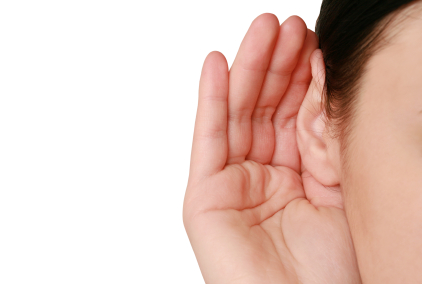
woman listeningI am always fascinated by our five senses—touch, smell, sight, taste, and hearing. I love the warmth of my husband’s hand when he clasps mine, the fragrant scent of a rose caught up on the morning breeze, or the tart pucker of a Granny Smith apple.

As writers, we know that adding the senses into our books makes the world our characters live in more real to the reader. But that’s not where I’m going with this post. My question to you is, when was the last time you listened to a book? I don’t mean just for pleasure, but to get into the depth of the story by using more than your eyes.

I have a Kindle that offers a “text to speech” option, which I’ve found to be available on many books. (I believe this is up to the author and/or publisher if they offer this choice and I’m sure it’s available on other readers as well.) It has a computer generated voice, which for me is fine, but you can go through this exercise with an audio book as well.

The trick is to listen to the words, but not become caught up in the story. It’s amazing what you can hear.

Rhythm: Did you know words and sentences have rhythm? When you listen to a story you can hear it. A good writer will create a steady beat with their words to slow the pace of the story. Or, speed it up to raise the tension as needed.

Choice of words: I’m a big proponent of not using the same word over and over again. I’m not advocating pulling out a thesaurus and running the gamut of possible choices, but just having an acute awareness of word choices. It makes the work more appealing. Fresh. You can “hear” the repeated words more than “read” them.

Story world: Has the author “painted” the world the character is in vividly enough that when you close your eyes while listening to a scene you can almost imagine yourself right in the middle? This aspect is hard to do when you need your eyes to read!

Emotions: Much like the story world, can you picture the characters’ actions? Feel their pain? Or laugh with them? This follows the line of showing instead of telling. When you listen to a book, you can “see” their reaction, like a movie screen playing on the backside of your eyelids.

I go through this exercise with many of my favorite authors. I take the time to learn from their writing style by listening to it. Then try to apply the concepts to my own writing.

So what do I do then? I always listen to what I’ve written. I email the Word doc to Amazon and it goes right to my Kindle. Then I go through the same exercise. Have I set the proper rhythm for the scene? Do I have words repeating that should be changed? Have I created a memorable scene mixed with real-life emotions?

Try it some time. You might be surprised what you hear that your eyes would have never seen.

Give ‘Em What They Want, Not What You THINK They Want

shop-vac-10-gallon-industrial-wet-dry-vacuum-925-40-100After fumbling around with social networking and reading every marketing article about it that I could get my hands on for the last year or so, I’ve distilled my promotional strategy down to a simple directive: give readers what they want.

I know that sounds obvious, but the tricky part is understanding the ‘what,’ especially once you realize that ‘what’ your readers want may not be the same ‘what’ that you THINK they want.  The key is taking ‘you’ out of the picture, so you can clearly see your reader without your own perspective distorting your vision.

It’s like reflective listening – you want to reflect back what the other person is saying without putting your own spin on his words, so you hear clearly what he said, and not what you think he said. Quick example of doing it wrong: my husband said he wished he’d taken music lessons when he was a kid, so I got him music lessons for Christmas. Two weeks into the lessons, he told me he didn’t want to continue.

“But you said you wished you’d taken lessons as a kid,” I reminded him.

“As a kid, yes,” he said. “But now I have other interests that I’d rather spend my time on. You interpreted my comment as a current wish, which it isn’t.”

Ouch. I should have gotten him the shop-vac he said he needed, which I thought was boring.

Same idea applies to your readers.

Pay careful attention to what they say, or in the case of social media, what they really like to see and with what they engage.

For instance, I thought that as an author, I should be posting on Facebook about my WIP or upcoming events. Those posts, I’ve found, get little notice.

But if I post a photo of me getting kissed by a French bulldog, or a goofy homemade video of me singing (badly) about the cold weather, I get comments galore. Clearly, on Facebook, at least, my writing news is not very interesting to my readers.

Writing news is appreciated very much, however, by my newsletter subscribers, so that’s where it now goes, along with on my website. As for LinkedIn, I post both events and business-related material, such as when my books get a rave review or included in an industry-recognized blogger’s post.

For Twitter, I post quick links to interesting material in my subject areas (birds, nature, dogs, humor) or retweet entertaining posts, because I’ve found that those kinds of communications are most appreciated by my followers. Because it’s a fast and short exposure, I tend to use Twitter more than any other social media platform as more of a shotgun approach – post and hope it spreads wide and far to get my name in front of a greater number of people, because that’s the first step to finding new readers.

My experience has convinced me that connecting with readers, followers, and networks is a necessary piece of expanding my readership, but once I’ve reached new folks, it’s time to shift gears and use social media to build relationships, not solicit sales.

That’s why it’s called social media, and not the shopping channel. Remembering to give the reader what they want is easy when it’s the same thing you want to give your friends.

How do you use the various social network platforms?

Working with an Editor

Kariss manuscriptsThey say that all good things must come to an end. Sadly, the same holds true in writing. As you turn your manuscript in to the publisher, you abdicate your position as ruler of your own fictional kingdom in favor of an advisor who tells you all the wonderful things you did wrong and how you can fix them. (For example, my editor would have asked me who “they” is in that opening line.)

But this “bad” thing doesn’t actually have to be bad. In fact, think of it as iron sharpening iron. Who knows your story and characters better than you? And who better to help you improve than an unbiased person who likes to read and knows a whole lot about writing and how to craft a story?

I am by no means an expert, but as I edit my second book, I realize how much I learned while editing Shaken. As you prepare your book for the editing process, here are some ways to prepare yourself, as well.

1. Check your pride at the door.

First of all, realize your editor is there to HELP you, not hurt you. Don’t take it personally. I thought I understood that, but I didn’t really grasp it until I received my first round of notes. Then my pride took a nose dive and shattered in a very ugly pile around my feet. This process is meant to refine both you and your story. I tend to write in a steady stream of consciousness, wrapped up in my story world. It takes someone looking at it from the outside to show me where the issues are and help me to change them.

2. Kill your darlings.

In Texas, we call this “killin’ your darlin’.” Your editor believes in your story, too, or they wouldn’t spend countless hours helping you. They want to make it better, but sometimes that means cutting important characters or scenes you love. This is the part I hated in the editing process.

It is challenging to dig into your story, delete scenes, and create new ones where you originally imagined something different. There were times my editor suggested a line of copy or dialogue that made me cringe, not because she wasn’t right, but because it wasn’t in the exact voice my character would have said it. Here’s where camaraderie came into effect. She could see the holes. I could keep the story true. We made a great team. Killing my darlings made my story stronger.

3. Fight for your story.

This may seem to contradict the previous point, but trust me, it doesn’t. Like I’ve said before, NO ONE knows your story or characters better than you. Here’s where discernment comes into play. At the beginning of the editing process, my editor asked me to cut several characters. No matter how much I played with this request, something didn’t sit right. So I fought for these characters, explained the role they would play in future books, and stood my ground. I knew keeping them would benefit the story. Once I explained their importance (and not just my emotional attachment), my editor listened and immediately replied with ways I could make these characters even stronger than what I had in mind.

It turns out that the characters I fought to keep have been some of the favorites for readers. If you know in your gut something needs to stay, fight for it. Just make sure to check your emotional attachment at the door and identify exactly why this piece adds to the story.

So, take what I’ve learned. Add your own insight. And I’ll add to the list after I finish this round of edits. I never want to be a bratty author who says I know best. I do want to collaborate. Yes, I know my story, but I need people who will help me make it better. I’m pretty excited about the possibilities. Bring on the next challenge.

What lessons have you learned while working with your editor?

How to Maximize Your Social Media Time

Early in my wanting-to-pursue-publication journey, I heard a woman give a talk about maximizing your time. She said, “Nothing you do should go to waste. If I see a movie, I’ll figure out a way to use it in my writing. I’ll write something about it.”

Social media conceptHonestly, at first, I did kind of give a big eye roll. Really? Nothing could be sacred, private, and free? Couldn’t my mind ever just have a void where I didn’t have to think about marketing?

Now, I might have changed my opinion on that somewhat.

Marketing is hard work. Author Richard Mabry once said to me, “It’s a marathon, not a sprint.” And this is the truth. When your book releases, there is usually a flurry of activity to launch your baby. But, there comes a time when you need to begin to focus on the next book while still keeping your other marketing activities going. This may be less about your book and more about growing your platform and social media presence.

Consider all your activities: can they aid in growing your social media? Can they give you a blog topic? Can something you do for fun give you a possible return on your time investment?

I recently read the book Fear Nothing, by Lisa Gardner. I wanted to read this book. Lisa is a favorite author of mine so I put most other books aside to enjoy her new releases.

On the marketing side, this is how I used my leisure time to help my social media.

1. I wrote a Goodreads review on the novel. This is good for authors. It gives people an example of your writing style and can help readers find you. After all, you likely write what you like to read.

2. I pinned it to Pinterest. Some readers/followers are more visual and I do find people repinning books from my boards.

3. I blogged about it– in two different places. My main blog is Redwood’s Medical Edge and it deals with medical accuracy in fiction. Fear Nothing had a character with congenital insensitivity to pain so not only did I blog about this particular medical disorder but I also did a post that was a review of the novel and some of its medical aspects. And now, I’m here blogging about how to use one activity to foster multiple marketing efforts. So, I guess that’s three blog posts.

Your activities should become the ultimate wardrobe, where all pieces can be mixed with one another. Ultimately, a book I read for fun ended up being used to build my platform (a medical nerd who writes suspense novels) and, hopefully, keep up interest in my social media.

What about you? In what ways have you used fun activities to maximize marketing efforts?

WordServe News: March 2014

Exciting things have been happening at WordServe Literary!

On the final post of each month you’ll find a list of Water Cooler contributors’ books releasing in the upcoming month along with a recap of WordServe client news from the current month.

New Releases

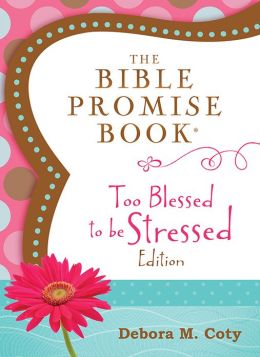
Debora M. Coty released The Bible Promise Book: Too Blessed to be Stressed Edition 9781624169885_p0_v2_s260x420with Barbour, a collection of selections from the original Too Blessed to be Stressed book.

*********************************************************************************

9780802409577_p0_v1_s260x420Roberta Kells Dorr released Abraham and Sarah with River North.

*********************************************************************************

SavedbyGracieJan Dunlap released Saved by Gracie with Authentic.

*********************************************************************************
Ken Gire released At Peace in the Storm with Bethany House Publishers.9780764208843_p0_v2_s260x420

*********************************************************************************

9781624168581_p0_v2_s260x420Paul Kent released Playing with Purpose: Baseball Devotions with Barbour.

*********************************************************************************

Tim LaHaye and Craig Parshall released Mark of Evil with Zondervan.

9780310334545_p0_v3_s260x420

*********************************************************************************

9781433683312_p0_v3_s260x420

Ben & Julianna Zobrist with Mike Yorkey released Double Play with B&H Publishers.

*********************************************************************************

9781624166181_p0_v2_s260x420Mike Yorkey released Playing with Purpose: Racing with Barbour.

*********************************************************************************

New WordServe Clients

Shelley Hendricks signed with Alice Crider.

Leticia Yuzefpolsky signed with Greg Johnson.

Linda Znachko signed with Alice Crider.

New Contracts

Anita Agers-Brooks signed a contract with Barbour for her non-fiction project titled, Getting Through What You Can’t Get Over. Alice Crider, agent of record.

What We’re Celebrating!!

The Brotherhood Conspiracy by Terry Brennan is a finalist for Foreword Review’s 2013 Book of the Year Award, in the category of Action & Adventure (Adult Fiction). Foreword Reviews, the only review magazine solely dedicated to discovering new indie books, announced the finalists for its 16th Annual Book of the Year Awards. The winners will be determined within the next two months. The final announcement will be made Friday, June 27, in Las Vegas, during the American Library Association Annual Conference. There are awards in over 60 categories and cash prizes for the best in fiction and nonfiction. Here is the complete list of finalists and the listing for The Brotherhood Conspiracy can be found here.

Amy Sorrells’ debut novel How Sweet the Sound received a fantastic review from USA Today!

Set in the late 1970s and early 1980s, a time when the topic of sexual abuse was not a thing “talked about” in the media and for which victims were still too often treated as “deserving” of the crimes committed against them, this novel refuses to nicey-nice over tough and ugly realities. This story is, throughout, raw — but yet penned with a sweetness of prose that makes you want to keep reading, even when you know it would be easier to curl into a ball and weep for the brokenness of the characters therein.

Poignant switches of point-of-view between Anniston and her aunt, Comfort, show the reach of abuse within generations of the same family and stretch a reader’s heart to its limits. Simply put, it hurts to read this novel. It hurts to watch the characters go through what they do. It hurts to see family secrets exposed, revealing pain upon pain. It hurts to see them abandon true love and it hurts when they are seemingly abandoned by it — but how beautiful the pain when an ending so lovely and right redefines and redeems several futures at once.

This book will turn your emotions inside out and grip your heart with a clawed fist before pouring acid — and then balm — over the wounds. You have been warned. Now, by all means, go buy this unusually edgy and entirely moving inspirational novel and read it for yourself.

What are you celebrating on this writing journey?

5 Ways to Drive an Editor Crazy

13761150586648bAs an aspiring writer, I thought editors had horns on their head and pitchforks perched beside their desks. After all, they sent me form “no thanks” letters after I’d slaved over an obviously brilliant manuscript. They ignored my letters and phone calls, and seemed to take joy in waiting months before replying to my oh-so-urgent emails.

Now, as both a seasoned writer and an editor for a large faith-based website, I’ve learned that editors are people, too. We love finding new voices to publish, and we try to be gentle when doling out rejections. Sure, we have our quirks, and we make mistakes. But mostly, we’re word-loving, gentle souls who find joy in a well-placed modifier.

When provoked, however, we can lose our literary minds. Several habits don’t just rub us the wrong way—they make us want to run down the street while still in our bathrobes, shouting Weird Al’s “White and Nerdy” until we puke.

Here’s how you can speed that process along:

1) Treat Guidelines as Optional.

      Don’t bother reading writing guidelines; don’t even visit websites or read back issues of magazines. Send a totally inappropriate submission. In your cover letter, tell the editor that while you’ve never taken the time to familiarize yourself with their publication, you’re sure that your work is perfect for them. file3781288474089

       2) Respond viciously to rejection letters.

      When you receive a letter stating that “your submission doesn’t meet our current needs,” fire off a hateful email, chastising the editor for his lack of taste. Even better: use bad language and post your vitriolic thoughts all over social media. (This habit works well if you never want to see your work in print. Those bridges are so pretty when they burn!)

      3) Never turn in an assignment by the deadline.

Deadlines aren’t set in stone; therefore, ask for repeated extensions, paying no attention to the panicked tone of your editor’s responses. Don’t worry that you are one of several dozen moving parts in the publishing of a website, magazine or compilation book. Take all the time you want—the world does, in fact, revolve around you.

       4) Take up all your editor’s time.

Ask repeated questions about the contract or terms of your publishing agreement. Don’t get an agent or other professionals to weigh in on your questions. Don’t network with other writers so that you can learn from their experiences. Pester the editor with texts (preferably to her personal cell phone, if you can dig up the number) about when your piece will be printed, how many readers you’ll get, etc.

And finally:

5) Refuse to accept changes in your manuscript.

Since you have received your talent from God, treat every word as His direct quote. Don’t let an editor make changes to your beautiful masterpiece. Fight over each letter and punctuation mark. Don’t choose your battles. Take offense at questions. Die on every single hill.

Now, if you’ll excuse me, I have a nasty email to delete…and I need to look up the lyrics to a certain parody song.