Good Writing Comes From a Healthy Soul

Maybe God wants to use my story to help someone else? Perhaps that’s the purpose for the painful life experiences I’ve walked through.

We women feel the need to share story, don’t we? To offer insight and hope, to let others know they are not alone, to debate God’s redeeming hand with Oprah (okay, maybe that’s just me on the last one).

It’s true, though. The sound of story resonates from the caves of ancient culture into the modern storytelling centers of today. Since we could speak, we’ve used our personal experiences to influence, educate, and encourage.

The need for story is primal. It’s part of a selfishly Divine design. God created us for community; we are designed to serve vulnerable slices of our lives, heartrending wedges of emotional pain garnished with sweet slabs of healing. As we do, we nurture the raw places nestled inside of every woman. As others witness God’s transformation in our lives, they want to know more about the Transformer.

Early on I uncovered the need to weave my tale, tragic as it was. Like countless others my back-story is steeped in dysfunction, but it’s also a hope-filled story where God’s grace and mercy run deep. I felt compelled to share that hope and encouragement on a wide scale.

Problem was, as a soul-wounded woman I didn’t have a voice. My own language. I simply regurgitated the style of others, imitating what I imagined my voice should sound like on the other side of emotional wholeness.  Marry that writing style with a need to purge bubbling anger and my early readers cleaned a lot of (emotional) vomit from their computer screens.

Sometimes God calls us to write for publication; other times He simply calls us to write. I had confused the two—telling my story, and selling my story hailed from two different worlds.

I sought the validation of publication while what I desperately needed instead was voice lessons. As a novice writer, I heard much about the importance of voice. My. Own. Unique. Voice. Yet my voice was shadowed by the influence of others; my perspective skewed, buried in pain and not mature enough to be out on its own yet.

But God, in His grace, led me to write through that pain. Sort through the fallout of hurtful life experiences. Cut through the hard stuff. As I wrote I discovered His truth and redeeming principles, while uncovering my voice—my authentic personality. The raw journaling from that journey may never meet publication, but the voice that emerged has since been published nationally and internationally.

Our stories need to be dialogued, written out. An emotionally-expensive tutor, their words often light the path to a whole new perspective of Jesus. One wall of my office holds a well-worn sign to daily remind me, “Good writing comes from a healthy soul.”

What do you want to write about? What story is so important that you must share it?


Jo Ann Fore is an author, speaker, book-freak, and fun friend. She is passionate about making a difference in the lives of women. Most noted for her authentic vulnerability, Jo Ann captivates her audience with faith-filled messages caramelized with a powerful promise of hope. Visit Jo Ann at Write Where It Hurtsa virtual community where women gather for support, encouragement, and practical tools to live a joyful, purpose-filled life. 
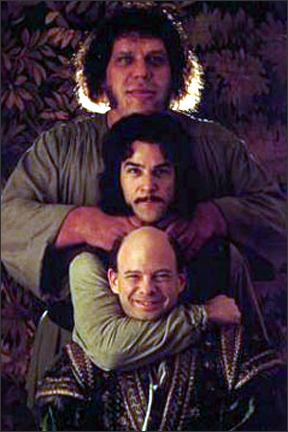
A Writer’s Life: Waiting for Vizzini

When things go wrong along the writing road, what do you do?

  • When you face writer’s block as formidable as Fezzik (and please, no debate on whether writer’s block exists) …
  • When rejections attack you like a pack of shrieking eels
  • When your plot collapses like Vizzini’s battle of wits with the Dread Pirate Roberts

What’s your go-to plan for getting back on course?

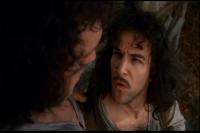
In the much-beloved movie The Princess Bride, Vizzini was the brains, Fezzik the brawn, and Inigo was, well, the swordsman. (Sorry, I couldn’t come up with a “b” word for the guy wielding the sword.) Despite the fact that Plato, Aristotle and Socrates were all morons compared to Vizzini — or so he said — his plan to kidnap and murder Buttercup imploded.

Inigo: bested.

Fezzik: beaten.

Vizzini: plain ol’ dead.

Remember what Inigo did when the plan went south — well, besides drinking himself into a stupor?

He went back to the beginning … and waited for Vizzini.

Smart man, Inigo.

What do you find when you go back to the beginning?

“This is where we got the job, so this is the beginning.”

Inigo may not have been able to see clearly — heck, he couldn’t even stand up straight — but he remembered a fundamental truth: When a plan fails, go back to the beginning.

Are you discouraged? Did that long-anticipated yes turn into an unexpected no? Walk away from it — but don’t abandon who you are. Go back to the beginning and remember your purpose: You are a writer. You have a job to do. Sometimes things don’t go according to plan. You get bested. Beaten. A dream dies.

Catch your breath, renew your heart … and then dream a new dream.

Who do you find when you go back to the beginning?

“I … am … waiting … for … Vizzini.”

Inigo was waiting for someone. For better, for worse, Vizzini was Inigo’s leader — the one he followed.

Going back to the beginning, waiting, doesn’t mean wasting time. Did you round the bend in the writing road and hit a dead end? Don’t be too proud to back up, turn around. Go back to the beginning and remember who you are as a writer. Answer this question: What makes your fingers fly across the keyboard? What keeps you up late and drags you out of bed early because you can’t not write this story?

Can’t remember?

Who is your Vizzini? Who first mentored you (maybe mentors you still)?Who helps nurture your dream? Who believes in you when you don’t? Go back to the beginning and ask them to help you remember.

It’s been fun talking about a writer’s life and the Cliffs of Insanity, the Fire Swamp, the Pit of Despair — and now Waiting for Vizzini. Everyone’s comments have made this more than a blog post — it’s become a conversation. So tell me, what lessons have you learned by going back to the beginning? 

*Just for fun, here’s a YouTube clip of Inigo waiting for Vizzini.

Post Author: Beth K. Vogt

Beth K. Vogt is a non-fiction author and editor who said she’d never write fiction. She’s the wife of an air force physician (now in solo practice) who said she’d never marry a doctor—or anyone in the military. She’s a mom of four who said she’d never have kids. She’s discovered that God’s best often waits behind the doors marked “Never.” She writes contemporary romance because she believes there’s more to happily ever after than the fairy tales tell us.

The One Essential “Ingredient” to Successful Marketing

The closer I come to the release of my first fiction (The Soul Saver, Barbour Books) in May, the more I find myself fascinated with marketing. Specifically, what it all means and how does it all work. Not to mention the endless and overwhelming choices. Where do we start?

I will confess, I’m thankful to have had a nonfiction book (Winning Him Without Words, Regal Books) to market first. Through that journey, I learned that even the most well planned and thought-out marketing plan won’t succeed without one essential ingredient.

God.

Speaking for myself, self-promotion doesn’t come easy and I’m actually glad about that. I have to examine my motivations on a regular basis to make sure prickly pride hasn’t wormed its nefarious self into the scenario. I could easily make it all about me.

However, our marketing is vital to the spread of our message, be it fiction or nonfiction. The thing is, we tend to put it into this category that doesn’t include God because we somehow think it might repulse Him in some way.

I’ve noticed I’ve done this and have recently found Paul to be a great example of an effective marketer. His letters are in the Bible! That’s pretty successful marketing in my book (and God’s obviously).

Paul wrote letters and traveled, “promoting” the message of Christ’s salvation every chance he got. He put himself out there as a teacher, a speaker, a writer and a mentor. He’s a great example for us because even in the midst of his promotion efforts, Paul’s focus remained steadfast on his message.

On Jesus.

Are we any different really? Yes, we want to sell books. Yes, we want our work to reach the minds and hearts of those who need encouragement, strengthening, or just a glimpse of what God’s grace looks like. Doesn’t matter if it’s fiction or nonfiction. God uses whatever He wants to get His Truth out. To share His Son.

So, marketing doesn’t have to be the “necessary evil” of publishing. If we believe in our work and feel God has placed us in such a time as this to share subtly or overtly, through fiction or nonfiction, through articles or Bible studies, then why not start our marketing endeavors with God, seeking His design and will for our efforts? If I’m to believe and trust in His hand, which has brought me to where I am now, what makes me think He won’t be in the marketing mix as well?

How about you? What has your marketing journey taught you about faith? Or vice versa?

Your Name is Your Brand

I’ve been delving a lot into marketing books and I’ve garnered a few nuggets that I thought would be helpful to those who are beginning to develop their on-line presence—and maybe change the minds of a few who are already there.

Your name is your brand.

In writing, there’s a lot of talk about what your brand is. Put simply, your brand is a promise to your readers. If you write historical novels then write an edgy supernatural thriller—your historical followers are busy scratching their heads and your new readers are doing the same when they look at your previously published books. Writers who have deviated a lot from their promise usually suffer in sales.

But more important than that is how will your readers find you. When they search Twitter and Facebook for your profile, how easy are you making it for them? If your author name is Joe Smith but your Twitter handle is @hottexasdude3000—how simple are you making it for your potential buyers to discover you and your product. And yes, I did search for that moniker and it seems to be wide open for those who would like to claim it.

Let’s focus on Twitter. Your handle should not be:

1. Something funny and quirky. Though this may garner a lot of followers, it’s probably doing little to build your brand. Especially if you don’t write quirky or funny—not that you can’t be that way personally. Name first. Image second. Your presence should have a consistent feel among your blog, web site, etc…

2. A character in your novel or book title. What happens when your publishing house hates that name? They require you to change it. Now, it’s time spent explaining to all your happy followers that Derek Storm (just love Castle!) is dead. Oh, that’s another reason. You as the author decide to kill the main character. Unless you are in a position to have complete control over your books, this is risky.

3. Your blog. Again, your blog should support your brand. Not be the brand. When people Google search, they’re going to look for your name first. They may discover your fine blog through your name search but the opposite may not be true. My name gets far more Google hits than my blog name. This is what you want to shoot for.

What if you’ve done one of these fatal errors? Relax. It can be changed. Why postpone the inevitable? Work to make these changes now. Make your name your brand. Work to have a consistent feel among your social media sites. There’s always room for improvement. Even though my Twitter and Facebook profiles are my name, I need to improve the feel so it speaks suspense.

How about you? Is your name your brand? If not, why not? Do you think you should change it?

Resolved to Clarify

Over the past week, we’ve been inundated with articles, blog posts, tweets, and Facebook updates about New Year’s resolutions. To make or not to make them – that seems to be the question.

Just what is it about a brand new year and vowing resolutions?

Many writers tend to possess the maddening, albeit necessary, drive to be word smiths. To grasp precise definitions that give life to our stories. Sound familiar? Welcome to the club.

After reading and hearing people opine about resolutions and maintaining resolve, I headed straight to the bookshelf. I found my old dog-eared, yellowed copy of The American Heritage Dictionary, Third Edition, and flipped back to the Rs. Not able to recall the last time I looked up the word resolution, I was completely unprepared to find this definition:

Resolution: the fineness of detail that can be distinguished in an image.

I re-read that definition several times before the full meaning sunk in: A resolution needs to contain such precise detail that it evokes a vivid mental picture.

In our techno-age, we relate resolution to pixels in an image. High-definition on a movie screen. Something so clear that details pop. Brilliant color that ignites our senses.

So why do we craft our New Year’s resolutions with vague language and colorless imagination?

Resolving to “get published” isn’t really a resolution – it’s a dream (and a pretty good one, I might add). But those two words lack fineness of detail and contain faceless people and blurred images. But resolving to attend the next local writer’s conference in order to network, learn the craft of writing, and pitch an agent or publisher stirs a focused mental picture. You can see the steps to take.

I’ve resolved to read through the Bible in 2012. I’ve already got my Bible reading checklist tucked in my Bible ready to go and an alarm set on my cell phone to alert me when it’s time to wrap up and get ready for work. I can clearly picture my quiet time each still morning as God whispers life into my soul. Just writing that brought to mind the comfy, overstuffed chair in my study where that wondrous, transforming time will unfold.

The bottom line? If you’re going to make New Year’s resolutions, add as much detail as you can. The more vivid the picture, the more focused your striving becomes. 

If you’re having difficulty seeing it, you’ll have difficulty attaining it.

Blessings to you and yours in 2012.

Let’s chat: If you’ve made resolutions, do you see fineness of detail that can be distinguished in an image? 

Rejection!

Rejection is an ugly word, especially to a writer. But we need to keep it in perspective.

To help you put rejection into perspective, I’d like to discuss my shoes.

I have a pair of lovely leather shoes. I really like my shoes. They are stylish, look good with many types of clothing, and are comfortable to wear for many hours. I love, love, love my shoes.

A few months ago, I noticed my shoes were beginning to look worn out and were no longer attractive to wear with dress pants. I thought about purchasing another pair of shoes, and then I had the bright idea to bring them to a shoe repairman. The repairman put new heels on my shoes, polished the leather, and blackened the soles. After some effort and work, my leather shoes are spiffed up and look as good as new.

Now, if I offered my shoes to someone and they don’t love them like I do, should I be heartbroken? Does their rejection of my shoes make me less of a person? Does it make my shoes less attractive? Does it make me less worthy?

Think about it, I bet my shoes wouldn’t fit just anyone. They wouldn’t be right for a number of people with different tastes and different needs. But that doesn’t make my shoes less valuable or less worthy.

That’s the way I look at rejection. My manuscript (shoes) is polished and ready to go out into the world. But perhaps the agent/editor (consumer) needs a different size or is looking for a different style. It’s easy to look at the situation from this perspective and see that it’s not always personal when your manuscript (shoes) is rejected! Sometimes the rejection is not about the story or craft but for other reasons, some of them simply being reasons of timing.

Rejection is an ugly word, especially to a writer. But we need to keep it in perspective. If we’ve been gifted/called to write, then we should keep writing and polishing our manuscripts. After all, many successful writers have suffered rejection.

Now that you’ve gotten the fear of rejection out of your mind, put your new confidence to the test by planning to attend a writer’s conference this year. Many writers will testify that their career got on the fast track after they attended their first conference. You meet other writers, editors, agents, and learn about the craft and the industry at conferences. Your competence and enthusiasm for your writing gets a great boost by attending conferences.

Don’t stress about rejection, keep moving forward in your career.

How do you shrug off rejection? How do you keep it in perspective?

7 Ways to Do Book Dedications

Ever since I imagined writing a book I imagined my dedication page. I’m not talking about the acknowledgements page where you thank everyone who ever helped you; I’m talking about that mostly blank page tucked in the beginning of a book, after the title page and publishing credits.

Many people give a clear dedication to a spouse for all his or her longsuffering, but some book dedications are cryptic — they proclaim a public thanks while alluding to stories more interesting than the book itself.

I am fascinated with the topic of book dedications because there is always a story behind the story. There’s a reason the author wrote the book in the first place, and there is often intrigue behind the dedication — a story or relationship we may never know. Here are seven examples of book dedictations:

Loving

A.A. Milne’s dedication to his wife in Winnie the Pooh:

To her – Hand in hand we come Christopher Robin and I, To lay this book in your lap. Say you’re surprised? Say you like it? Say it’s just what you wanted? Because it’s yours — because we love you.

Curious

Betty MacDonald to her sister in The Egg and I

To my sister, who always believed that I can do anything she puts her mind to.

Striving

John Steinbeck to his friend Pascal “Pat” Covici. As Steinbeck wrote Journal of a Novel: The East of Eden Letters, he often mentioned the things he was tinkering with or building around the house. At one point, Pat asked Steinbeck to make him a box; Steinbeck joked that the only specification was that Pat shouldn’t be able to fit inside it. When Steinbeck finished East of Eden, he placed his 250,000 word manuscript into a mahogany box he had carved and sent it to Pat. The note he placed on top became the dedication page of the novel.

Dear Pat,
 You came upon me carving some kind of little figure out of wood and you said, ‘Why don’t you make something for me?’ 
I asked you what you wanted, and you said, ‘A box.’ ‘What for?’ ‘To put things in.’ ‘What kind of things?’ ‘Whatever you have,’ you said.
 Well, here’s your box. Nearly everything I have is in it, and it is not full. Pain and excitement are in it, and feeling good or bad and evil thoughts and good thoughts – the pleasure of design and some despair and the indescribable joy of creation.
 And on top of these are all the gratitude and love I have for you.
 And still the box is not full.

Funny

Random blogger to actor Colin Firth in her future, hoped for book

Thanks for playing Mr. Darcy, and for wearing that white shirt in the lake scene.

Touching

J.K. Rowling to Sean PF Harris (the first of her friends to learn to drive and the first with whom she discussed her ambition to be a writer) in Harry Potter and the Chamber of Secrets

For Sean PF Harris, getaway driver and foul weather friend

Sentimental 

C. S. Lewis to his God-daughter Lucy Barfield (age 12 when he began the writing the book and age 15 when it was finally released) in The Lion the Witch and the Wardrobe

My dear Lucy, I wrote this story for you, but when I began it I had not realized that girls grow quicker than books. As a result you are already too old for fairy tales, and by the time it is printed and bound you will be older still. But some day you will be old enough to start reading fairy tales again. You can then take it down from some upper shelf, dust it, and tell me what you think of it. I shall probably be too deaf to hear, and too old to understand a word you say, but I shall still be your affectionate Godfather

Predictable

Dave Cullen to those injured and killed in Columbine

For Rachel, Danny, Dave, Cassie, Steven, Corey, Kelly, Matthew, Daniel, Isaiah, John, Lauren, and Kyle. And for Patrick, for giving me hope.

What are some of your favorite book dedications? To whom will/did you dedicate your book? What will you say? How will you say it? 

When Do I Give Up?

It was my very first writers conference. I waited impatiently for my critiqued manuscript from a well-known and well-respected literary agent. Sitting on a bench under a tree, I opened the large manila envelope and pulled out my crisp, white pages that now ran red with scarlet ink – each red slash a tiny cut to my heart.

It was the moment I gave up.

Deflated and discouraged, I forced myself to stuff my dead work into its paper coffin, and attend the “Turning Your Chapters into Articles” class. I decided I would dismantle my much-loved dream and try to use it still. Being overly dramatic is a literary trait, and I wondered if this was a tiny taste of how the loved one of an organ donor feels. My manuscript that I loved would be used for good, but not in the way I’d hoped.

After the class, I met with the editor who led it. She asked how I was doing. (Apparently, that afternoon, Alice Cooper and I shared the same makeup artist.) She went on to encourage me not to give up on my dream. “This is one agent’s opinion, Joanne,” she gently reminded me. Her words gave me a microscopic ray of hope. (Purchasing an article for her magazine helped my mood, too.)

The agent who sliced my work like Dexter did me a great favor. He showed me how to shape my work in a way that would be acceptable the next time. Months later, I received my first book contract.

Since becoming an official “writer,” I have quit at least six hundred times. As a matter of fact, I even titled one of my emails to my agent, Rachelle, with these very words this summer: “When do you give up?” She immediately called and talked me down from the ledge, and recently addressed this timeless writer-question very eloquently in her blog.

I thought I’d share a few ways to encourage the quitter in you:

Take a laptop sabbatical. My computer recently died, and I thought I would too. Once my laptop was up and running again, so was I! Three weeks was just the break I needed. Giving my right-brain some creative rest helped me look forward to working on my next project.

Shake a leg. Exercise and I are not the best of friends. But whenever I get outside and get my blood pumping, it seems to clear the cobwebs in my middle-aged head. I take my recorder along, just in case I get an idea I can’t ignore.

Make time for someone. Get out of your self-centered word-filled world. Go out and see a movie. Call a writer-friend and vent a bit. Have a quiet night at home with your spouse. Cuddle up on the couch and read a book to your child/grandchild.

Fake your own death. Just wanted to see if you were still reading. Please don’t do this. Definitely not a good career move.

New York Times Bestselling Author, Susy Flory, recently shared a blog post that encouraged her. Agent Steve Laube reminded his many readers and wannabe-clients to never give up.

“John Creasy the English novelist kept at it. He kept getting rejected so decided to use pen names to create a new identity. Fourteen of them! Collectively he received 753 rejection letters. But he didn’t give up. His 754th became the first of his 564 published books. What if he had quit at the 700th rejection?”

This Christmas season, take a winter break and enjoy real life moments. Try to live this life you write about. Love the ones you are blessed to have alongside you, and pray God holds these tender moments close to your heart. A true writer must experience what they wish to convey. Gather up some word-filled ammunition for the coming year.

Regardless of what you do or don’t decide to do, giving up is not an option. It’s never an option. Never.

When was the last time you quit? What encouraged you to write again?

Stuck in a Corner

Photo by Keith Lyndaker Schlabach

There’s a kind of fear most writers have that can inspire a clammy feeling even faster than waiting to hear if a book’s been accepted by an agent or a publisher. It’s the blank mind, particularly when there’s a deadline looming just ahead. Some people call it writer’s block, as if there’s something sitting in our heads that stands between our keyboard and creative brilliance.

It happens to all of us, no matter how long we’ve been writing or how successful we’ve become in our writing careers. However, I have learned a few tricks to remove the blocks and get going so that I don’t go sliding past a deadline and just make myself, and everyone else, feel worse. Even better, occasionally a reader will point out that very spot in a book as their favorite, and I marvel, once again, at how important it is to just keep going without expectations or attachments.

First Tip: Be gentle with yourself. Berating, digging around in your past for reasons, imagining a bleak future, or even waiting for the muse are not helpful. A walk might be, though. Also follow the HALT rule. Are you hungry, angry, lonely or tired? Take care of those first and then get back to work.

Second Tip: Pull out your character descriptions you hopefully wrote out before you started the book, whether it’s fiction, nonfiction or a memoir. Reintroduce yourself to all the idiosyncrasies, some of which you’re not even using on paper, and even add a few if you feel so moved. If you haven’t done this, do it now. We’re the driver on this literary trip, and we need to know all of the passengers in order to see where it’s going.

Third Tip: This one has gotten me out of more than one corner. Write the words, “Once upon a time,” and then let your imagination go. Write whatever comes up and follow the trail. You can delete those four little words later along with anything else you needed in order to get the left side of your brain going again. Most of us were read a fairy tale or two as a child, and those words can often create a sense of wonderful anticipation of what might be coming next. Our brain recognizes that too.

Fourth Tip: Pull out the description you have, however brief, for the arc in the story. That’s the place that’s most climatic, where everything changes. Is the arc still satisfying? Does it need beefing up, more research, more details? Is everything still pointing to that arc? That may be why you’re stuck. You’ve gone a little off course and need to delete some, add some more, so that you’re once again heading toward a big moment. Stories usually have several smaller arcs on both sides that can be used as places to aim toward as well till you’re driving for the ending.

Fifth Tip: Read the last portion you got down on paper to a trusted friend, preferably another writer that you respect. Hearing it out loud may help you hear what comes next. A brief conversation about what you’re writing and where it’s headed next may do the same. If you have to call more than one or two friends, though, you’re serial dialing as a distraction and not to help the writing. That usually leaves me overwhelmed.

Keep in mind that every job has its down days, and even though we love being writers, some days we’re bored or anxious or frustrated. That’s okay, but we have to also keep going because this is a business as well as an art form and someone’s made plans with that deadline in mind. So do your best, hammer out what you can and come back tomorrow. This too shall pass.

Q: What do you do to get out of a literary corner?

Publishing the Pain

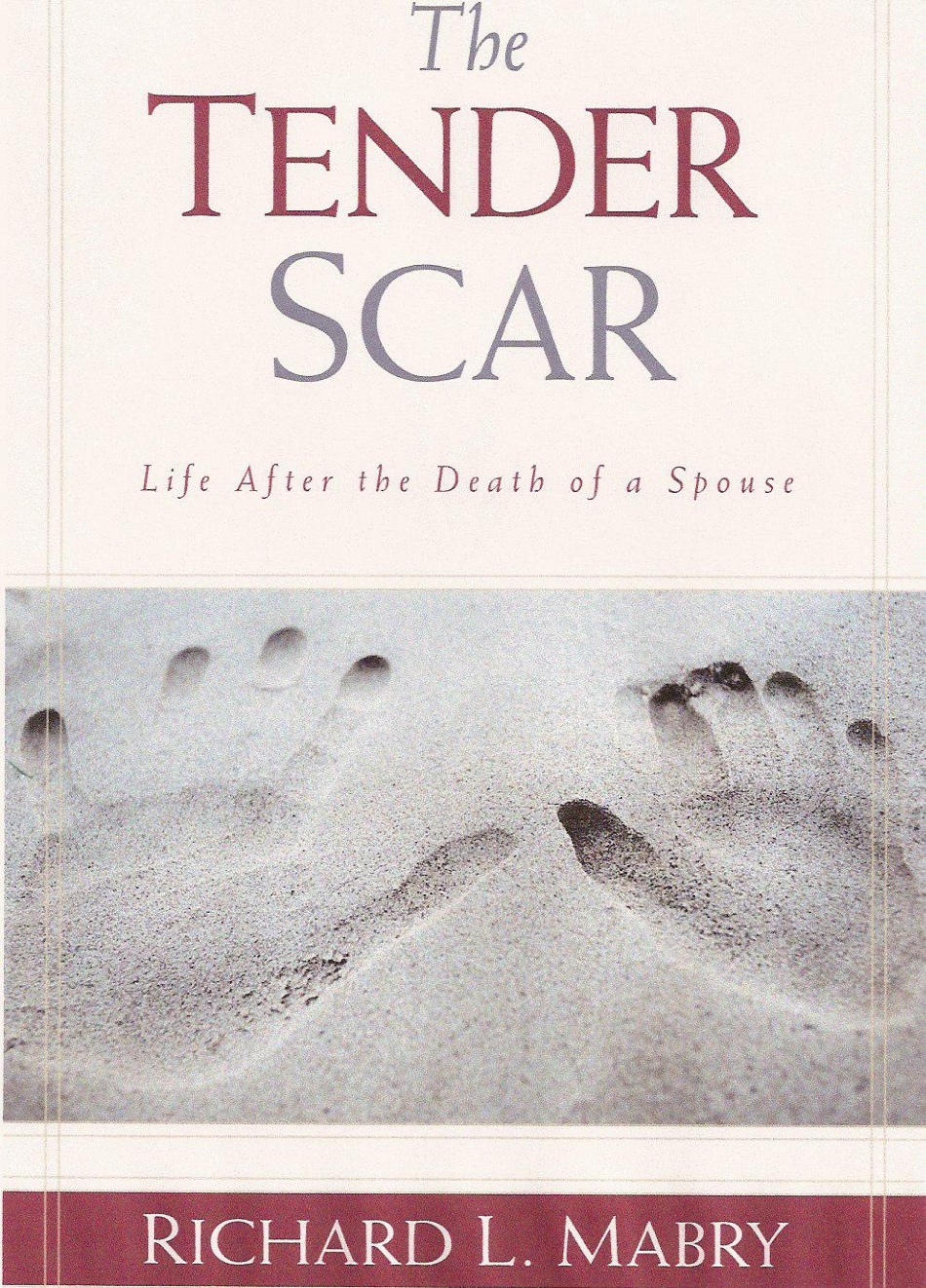
“I want to publish my story. How do I go about it?” Since the publication of my non-fiction book, The Tender Scar: Life After The Death Of A Spouse, I’m asked that a lot. I can’t say how any one person should go about it, but here’s what I did.

The book stemmed from the journaling I did in the months and years after the death of my wife of forty years. It started out as a mechanism to help me through my grief, but when a trusted friend read the material he urged me to share it with others who were suffering the same loss. I had no idea how to do this, but eventually I stumbled into the process this way.

1) Learn how to write. Now that sounds silly. We all speak and write English. But that’s no guarantee we can organize our thoughts so a reader will understand and appreciate them. There are a number of books available, but I started by attending a writer’s conference. The first one’s tough, sort of like the first time you’re introduced to algebra, but eventually it begins to make sense.

2) Learn how to organize your thoughts. I had to take the two inch-thick pile of raw journaling and decide to which aspect of my grieving process it applied. Using this, I put together a table of contents. Then I worried over it a few times until it seemed to flow correctly.

3) Edit, write, edit, write some more. I gleaned nuggets from the piles of material I’d written and used them as starting points for each chapter. I committed my thoughts to paper, giving equal weight to the good and bad decisions I’d made and offering hard-won advice. I had knowledgeable people read the raw material and make suggestions. Then I edited, rewrote, and repeated the process until I was satisfied.

4) Add the finishing touches. In my case, it was adding an appropriate Scripture passage and brief prayer at the end of a chapter. In your case, it might be doing something else. The important thing is to make the work worthwhile and different than anything currently available.

5) Somewhere along the line, you’ll try to sell the work. I was fortunate enough to be able to interest a publisher in The Tender Scar before I had representation by an agent. That’s a rarity now. Also, I’d written the whole book before I shopped it, which made it easier to sell than if I were working from an annotated table of contents and three sample chapters, which is now common in non-fiction work. In any case, this is the next step, and when you take it, you should be prepared for a lot of rejections and a great deal of waiting.

Remember, in all this, the timing is God’s. And even if your book never sells, the writing of it has affected one person: you. You’ll never be the same after organizing your thoughts and committing them to paper. And that’s a good thing.