Powerful Non-Fiction Writing

Keeping in mind that non-fiction readers invest their time and money in books that meet a felt need, a great philosophy is, “Offer them what they want, then give them what they need.” Here are 14 questions to consider as you write your life-changing message:

QuestionsXSmallWhat problem is your reader experiencing?

How has the problem been overlooked?

What are they missing out on due to this problem?

What impact has this problem had on their life?

What misconceptions has the reader bought into that might keep him/her from experiencing the benefit you’re about to offer?

What underlying beliefs do they have that keep them from seeing a new solution or alternate view?

What solution or benefit will you show the reader?

What truths will help the reader see the benefit?

What will give them an “aha” moment?

What might influence the reader to avoid possible change?

How are others enjoying the benefit you’re teaching?

What will the reader let go of in order to adapt a new view of their life?

What choice(s) will they make?

What action(s) might they take?

Always keep your reader in mind. Offer them what they want, then give them what they need. As author Dean Merrill says, “Never stop asking ‘what’s in this manuscript for the reader?'”

WordServe News: January 2013

Exciting things have been happening at WordServe Literary!

On the final post of each month you’ll find a list of WordServe Literary clients’ books releasing in the upcoming month along with a recap of WordServe client news from the current month.

New Releases

FaithFearDeb Coty released Fear, Faith and a Fistful of Chocolate (Barbour)

***************************************************************************************

MysteriesJillian Kent released Mysteries of the Heart (Charisma)

***************************************************************************************

RosasLandGilbert Morris released Rosa’s Land (Western Justice #1) (Barbour)

***************************************************************************************

crescentPaul Williams released Crescent Moon Rising (Prometheus)

***************************************************************************************

New WordServe Clients

Ema McKinley signed with WordServe to write her story with Cheryl Ricker on her miraculous healing after more than 15 years in a wheel chair. http://www.cbn.com/700club/features/amazing/RH66_Ema_McKinley.aspx

Dr. Kara Powell, Executive Director of the Fuller Seminary Youth Institute and the author of the Sticky Faith books (www.stickyfaith.org) (Zondervan)

Nationally syndicated cartoonist John McPherson (http://www.gocomics.com/closetohome/), author of Close to Home, the cartoon strip that appears in more than 800 newspapers.

New Contracts

KarissSigning
WordServe Author Kariss Lynch and her BIG moment.

Kariss Lynch signed a 3-book contract with Charisma Publishers…her first contract! Way to go, Kariss!

Jonathan McKee signed with Bethany House Publsihers for a book titled Get Your Teenagers Talking.

Lynn Morris signed a 3-book contract with Hachette’s Faithwords imprint for a Regency novel series.

Betsy Duffey and her sister Laurie Myers signed with Howard Publishing for a novel called A Shepherd’s Song, a contemporary story on the impact of Psalm 23 as it travels around the world from person to person.

James Pence will be writing the story of Herb and Roberta Samme, the story of Herb going to Iraq to fulfill the mission of his son, a soldier who was killed while driving supplies to the troops. He walked in his son’s footsteps on the same roads. He and his wife Roberta then started a mission to supply soldiers with clothing for the winter. To be published by Guideposts Books.

What We’re Celebrating!!

WordServe authors had a good month on the general market lists:

AHigherCallA Higher Call  by Adam Makos had a very big month. This WWII story made lists in The New York Times, USA Today, and Publisher’s Weekly.
Just to name a few:

#11 Print Hardcover (Jan 27) NY Times
#23 HC nonfiction (Dec 30) Publishers Weekly
#105 (Jan 24) USA Today

whiletheworldCarolyn McKinstry’s book (written with Denise George) While the World Watched was Amazon’s featured ebook on Monday, January 19th, and rocketed to #1 on the free ebook list. But the next day, it was #1 on the paid ebook list. It also hit #1 on several other lists on Amazon:

o #1 in Books > Biographies & Memoirs > Leaders & Notable People > Religious
o #1 in Books > Biographies & Memoirs > Ethnic & National > African-American & Black
o #1 in Books > Christian Books & Bibles > Christian Living

A YearRachel Held Evans’s book A Year of Biblical Womanhood (Thomas Nelson) hit the New York Times list January 13th at #19 on the nonfiction ebook list and #32 on the combined print and ebook list.

What can we help you celebrate?

Why I Don’t Believe in Writer’s Block

It’s one of the most oft-asked questions I get as a writer and teacher: “What can I do about writer’s block?”

“Write,” I say. (I was going say, “Simple. Write.” Alas, I realize it isn’t simple. It isn’t easy.)

I tell people I don’t believe in writer’s block.

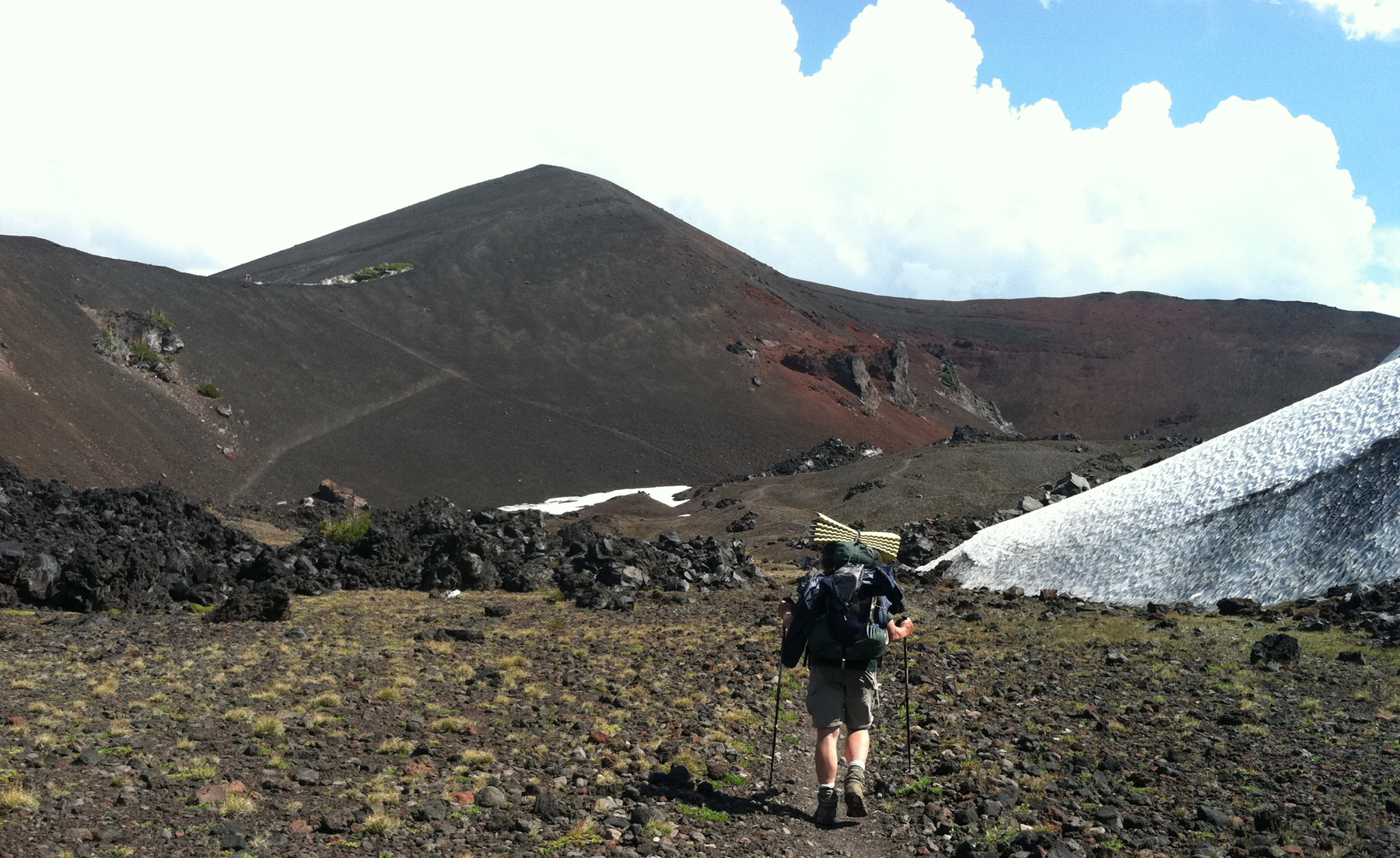
The PCT heading toward Oregon's Collier Cone.
The PCT heading toward Oregon’s Collier Cone.

Do the words sometimes come harder than at other times — or hardly at all? Sure.

Do you sometimes need to change things up to feel the mojo again? Sure.

Do you sometimes crave the idea of skipping that 5 a.m. appointment with your keyboard? Sure.

But this idea that we can’t move forward until the muse returns with open arms — no, that’s a crock. Basing your writing on feelings is no better than basing your life on feelings.

Sometimes you just have to power your way through.

It’s that way with anything we do. But writers seem to have created something of a self-fulfilling failure prophecy, a challenge apparently so insurmountable that we’ve given it an official name. And once something is named, it becomes an official malady.

Read: An excuse.

I don’t believe in writer’s block anymore than I believe in “plumber’s block” should the guy fixing my pipes suddenly find the going difficult. “Sorry, pal,” he might say as he gathers up his tools — and, of course, hitches up his, ahem, jeans. “Just not feeling it today.”

I don’t believe in writer’s block anymore than I believe in “surgeon’s block” should the doctor doing my knee operation find herself stymied. “Hey, Bob, hang in there. I’m going to flex out the rest of the day. Maybe catch a matinee to see if I can get back in the groove, you know?”

That’s not to say there aren’t things you can do to get yourself “unstuck.” Sometimes I’ll go back and read my piece from the beginning. Explain my plight to someone who knows my story with hopes they can jar something lose. Maybe even take a walk.

But this idea that you somehow need to wait until the “feeling” returns is bunk.

Ernest Hemingway said it well: “Easy writing makes hard reading. Hard writing makes easy reading.” Jack London claimed to have written 20 hours a day.

Part of writing is discipline. Is doggedly moving on. Is writing on even if the results aren’t perfect. Even when it hurts. Even when you’d rather be doing something else.

So, today’s efforts might not have rung your literary chimes. But they count for something. You persevered. To quit whenever it hurts it to make it that much easier to quit the next time. A lesson I learned while hiking the 452-mile Oregon portion of the Pacific Crest Trail: “You must go when your body says no.” With writing, you must go when your mind says no.

Just last week, after a speech, someone in the audience asked me which of my books I’d written was my favorite. “They’re like children,” I said. “Each one is my favorite for a different reason. But the one I’m proudest of is American Nightingale because nothing in my nearly four decades of journalism has come with more difficulty. Nearly four years from idea on a Wendy’s napkin to seeing it on a Barnes & Noble shelf.” (I captured that research, writing, and promotional experience in a subsequent book, Pebble in the Water.)

Sometimes I draw inspiration from fellow writers. I do a lot of 5-a.m.-to-9 a.m. book writing before I go off to be a newspaper columnist. If my alarm goes off and I don’t want to get up I remember my novelist friend Jane Kirkpatrick and think this: Jane has already been on her keyboard for an hour.

Or because I write a lot about inspirational people, I’ll think about something they soldiered through — war, disease, the death of a loved one — and think to myself: Buck up, pal. This is just stringing together words. You’ve got it easy. 

All the World’s A Page: The 9 Woes of the Writing Life

At work in the world, on the world of the page.
At work  on the world of the page.

Recently at the end of a creative nonfiction class I taught, a student came to me with a helpless shrug of her shoulders. “I want to write. I want to be a writer. That’s what I want to do with my life.” I felt a gush of pride that I had managed a convert, but pity came next, then fear:  What had I done? I immediately knew I needed to fill in what I left out from the class script, the off-stage notes that turn out to be the most important. To her and to any other aspiring writers, I offer the cheerful remainder here (to be read in a sonorous voice, because the warnings are real):

 Woe #1: You will see too much.

You will no longer be able to ignore the woman in El Salvador sitting among the garbage, the man carrying a sink onto a bus, the arguing couple behind you in the restaurant. A writer is charged with keeping attention, with bringing words to the invisible, the unspoken, the troubling, the ridiculous. But even as you take note, do take note: the best words you find will not be enough.

Woe #2: You’ll lose a lot of sleep.

You will welcome nightly visitations of the muse, inviting her with an open notebook beside your bed. You will be so hungry for words you will gladly trade your necessary rest for a single cutting sentence, a vivid metaphor, a line of pretty poetry. You will be tired often because of it and you won’t always be happy.

Woe #3:  You will gradually be divested of your most cherished stereotypes and grudges.

Your entrance into others’ lives and stories whether actual or fictional will bring a disconcerting complexity and humanness to the unlikeliest and unloveliest people. If you’re not careful, you may even be tempted to forgive.

 Woe #4:  You’ll give away your privacy.

All the world’s a page. To keep both of yours turning (world and page) you’ll need to appear on every platform you can beg, borrow and thieve, telling and giving all at any hour of night or day, without modesty or reserve. You will give most of yourself away. A special woe to those tempted to write memoir.

 Woe #5: You will read for pleasure less and you will like fewer books.

Once you take language and books seriously you will be unable to turn off your writer and editor’s eye. Writing that once offered distraction and escape will seldom survive the mental red pen, shrinking your list of favorites. You will give up on bestsellers. You will feel culturally stranded.

 Woe #6: You will spend far more money than you make.

For every writing project you undertake, you will buy a shelf or two of books and you’ll subscribe to literary journals and magazines as if they kept you warm and fed. Which they will, but the metaphor breaks down when the temperature drops below freezing and you’re eating oatmeal for dinner and the bills are past due.

 Woe #7: You will not be content to live in the present only.

In your pursuit of what is real and true, you will excavate the past as eagerly as the present, breaking down closet doors, piecing skeletons together, retrieving abandoned diaries. You will find nuance and revolution that disturbs the status quo. Others will be annoyed and will try to keep you quiet. You may not be invited for Christmas dinner.

Woe #8: You will no longer be satisfied in writing for yourself.

Once you find an audience, however small, you’ll write by an open window instead of a mirror. You’ll carry your readers with you. You’ll care too much about the truth for their sake. You’ll want to heal and help. You’ll see how small you are. You’ll keep writing anyway.

When I began a tentative writing life thirty years ago, I was never formally wooed nor “woe-d.”  If I had, would I have continued? I know the answer. It comes as the final “woe” and I write it now to my student, who is still watching me with undimmed eyes:

Woe#9: Woe to those who hear, who touch and who see, yet who drop the pen and turn away from the open half-written pages of a world still waiting to be finished. Many stories will be lost. Yours will not end as it should. This woe is far worse than the others.  

WordServe News: December 2012

Exciting things have been happening at WordServe Literary!

As the year comes to a close, we’re so very grateful that WordServe Authors released 83 books in 2012, and signed 80 book contracts for nearly 119 books to release off in the future.
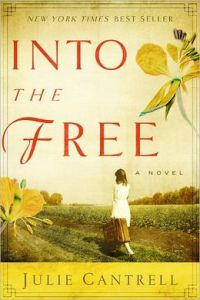
IntotheFreeJulie Cantrell had the agency’s first New York Times Bestseller in many years with her book Into the Free. It also garnered a starred review in Publisher’s Weekly. A rarity.

We had several books climb over the 100,000 copy mark:

* The Secret Holocaust Diaries of Nonna Bannister, written by Denise George and Carolyn Tomlin (Tyndale)

* The Devil in Pew Seven by Rebecca Alonzo, with James Pence (Tyndale)

* My Flight to Heaven by Dale Black (Bethany)

* Edge of Apocalypse by Tim LaHaye and Craig Parshall (Zondervan)

* Linspired (adult and YA book together) by Mike Yorkey (Zondervan)

And we’ve had several authors show up on national shows:

* Rebecca Alonzo on Dr. Phil (twice)

* Lauren Scruggs appeared on several shows in November at the launch of her book, Still Lolo.

These WordServe authors signed their FIRST BOOK CONTRACT in 2012:

* Anita Agers-Brooks (Leafwood)
* Leigh Ann Bryant (Authentic)
* Deb DeArmond (Leafwood)
* Rebecca DiMarino (Revell)
* Jan Drexler (Love Inspired)
* Michael Hidalgo (IVP)
* Heather James (Kregel)
* Amanda Jenkins (Tyndale)
* Caesar Kalinowski (Zondervan)
* Heather Larson, with David and Claudia Arp (Bethany)
* Tracie Miles (Leafwood)
* Jerry and Caroly Parr (Tyndale)
* Christina Powell (IVP)
* Rachel Randolph, with Becky Johnson (Zondervan)
* Tina Samples (Kregel)
* Lauren Scruggs (Tyndale)
* Amy Sorrels (David C. Cook)
* Mandy Stewarad (David C. Cook)
* Janalyn Voigt (Harbourlight)
* Jeremy & Jennifer Williams (Thomas Nelson)
* Tricia Williford (WaterBrook)

These WordServe authors had their FIRST BOOKS published through a traditional publishing house:

* Julie Cantrell, Into the Free (David C. Cook)
* Arnie Cole, Unstuck (Bethany)
* Katie Ganshert, Wildflowers from Winter (WaterBrook)
* Adam Makos, A Higher Call (Berkley Caliber)
* Jay Pathak/Dave Runyon, The Art of Neighboring (Baker)
* Zeke Pipher, Man on the Run (Howard)
* Lauren Scrubbs, Still Lolo (Tyndale)
* Helen Shores and Barbara Shores Lee, The Gentle Giant of Dynamite Hill (Zondervan)
* Jordyn Redwood, Proof (Kregel)

So all in all, we had lots to celebrate!

New January Releases

WhatJesusSteve Addison, What Jesus Started.

******************************************************************************************
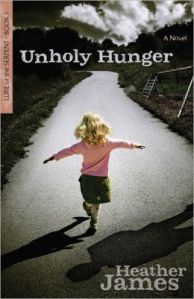
UnholyHungerHeather James, Unholy Hunger, her debut novel!

******************************************************************************************
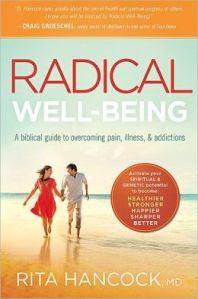
RadicalDr. Rita Hancock, Radical Well Being

******************************************************************************************
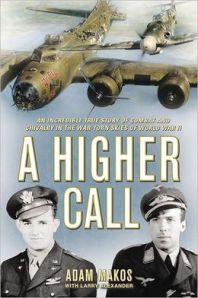
AHigherCallAdam Makos, A Higher Call

******************************************************************************************
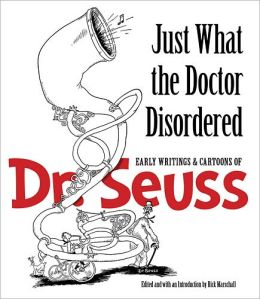
JustWhatDoctorRick Marschall, Just What the Doctor Disordered

******************************************************************************************
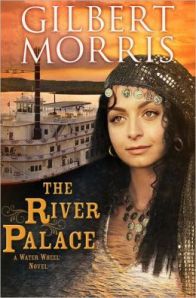
TheRiverGilbert Morris, The River Palace

******************************************************************************************
DilemmaOlivia Newport, The Dilemma of Charlotte Farrow

******************************************************************************************
GreatStoriesJoe Wheeler, Great Stories Remembered #1, audio (eChristian)

******************************************************************************************

StinkyJoe Wheeler, Stinky: The Skunk Who Wouldn’t Leave (Pacific Press)

******************************************************************************************

New WordServe Clients

Several new clients have joined the WordServe stable with Alice Crider as their point person, but we’ll report more on that next month.

New Contracts

Christina Powell signed with Intervarsity Press (IVP) for her first book. The book is tentatively titled Question your Doubts. It explores the many roots of doubt experienced by both believers and nonbelievers, providing a corresponding response of faith from the rare perspective of a Harvard-trained research scientist who is also an ordained minister. (SF)

What can we help you celebrate?

The Results Are In-Did Free Help Sales?

Most of you have heard the arguments for and against offering your book for free to increase sales. I did something a little different by offering a free bonus gift for people who purchased my book, Pioneering Todayfor a limited time.

I ran the promotion for two weeks. Because I started the promotion on the launch day of my book, it’s hard to know what my sales would have been without it. I did have several people take me up on the offer. I also had sales where people didn’t request the bonus material.

It made me wonder if they didn’t want the material or they purchased without seeing the offer. (Amazon allows you to see the sales of both Kindle and Paperback to help track.)

I did have the most amount of requests for bonus material on the last day of the promotion. This confirms my belief that you need a time limit on any promotion and shorter may be better. In fact, I had two readers send me the proof of purchase an hour before midnight on the last day.

I’ll definitely offer bonus materials again. I do think for ease of delivery and time-saving, that I’ll make sure all materials are electronic only. Trips to the post office, cost of delivery, cost of the cards, and mainly the time to address material helped me make this decision.

By far the single most driving force of sales has been not the bonus material or free things offered, but the readers. After reading the book, I’ve had numerous people purchase copies (some up to ten) as gifts.

The take away from all this: the best promotional tool you have is your book. Make sure it’s the best it can be. It will speak for itself.

What promotion has prompted you to buy a book? Authors, what marketing or bonus gifts have worked the best for you?

It’s A Christmas Parade!

As our treat to our wonderful WaterCooler Readers, we thought we’d do another blog parade. Each of our authors below is blogging about their Writer’s Wish List. Hmm . . . I know I’m intrigued to see what’s on these lists. Funny? Quirky? Serious?

I don’t know . . . you’ll have to click on the links to find out!

1. Lucille Zimmerman
Blog Link: http://www.lucillezimmerman.com/2012/12/10/ape-author-publisher-entrepreneur-how-to-publish-a-book-by-guy-kawasaki-shawn-welch-a-book-review/

2. Janalyn Voigt
Blog Link: http://janalynvoigt.com/one-authors-christmas-wish

3. Kimberly Vargas
Blog Link: http://www.kimberlyvargasauthor.com/?p=241

4. Cheryl Ricker
Blog Link: http://www.cherylricker.com/2012/12/smells-and-whistles/

5. Jordyn Redwood
Blog Link: http://jordynredwood.blogspot.com/2012/12/wishing.html

6. Melissa K. Norris
Blog Link: http://melissaknorris.com/?p=1351

7. Gillian Marchenko
Blog Link: http://wp.me/p2Ds6m-zA

8. Dr. Rita Hancock
Blog Link: http://edensfreedomsisters.ning.com/profiles/blogs/the-eden-diet-joins-a-blog-parade-find-out-how-to-win-dr-rita-s-b

9. Karen Jordan
Blog Link: http://karenbarnesjordan.com/a-writers-wish-list-grace-gifts

10. Kelli Gotthardt
log Link: http://www.kelligotthardt.com/1/post/2012/12/writers-wish-list.html

11: Jan Dunlap
Blog Link: http://jandunlap.com/2012/12/the-wishlist-of-a-writer/

12: Cindy Dagnan
Blog Link: http://cindydagnan.com/cindy-sigler-dagnan/2012/12/14/one-writer%E2%80%99s-wish-list/

13: Anita Brooks
Blog Link: http://brooksanita.com/a-writers-fantasy-wish-list

Merry Christmas!!

5 Starter Tips On Writing A Memoir

Two weeks ago I was invited to speak to my daughter Zoya’s fifth grade class about writing memoir.

http://www.stockfreeimages.com/

Tip #1: Don’t do it!

If you want to write a memoir, be forewarned: readers love them but publishing houses are hard pressed to sign them. Of course, that doesn’t mean that memoirs don’t sell, but it does mean that memoir writers must work on platform building, and strengthening tribe readership, as they write. It can be daunting but it is essential. When you get to the book proposal part of your journey, you need to prove to publishers that your story will sell.

Tip #2: Don’t lie!

Possibly one of the reasons why publishers don’t want to buy and publish more memoirs is because several books deemed “memoir” in the past few years have been found out to be more fictional. Lying to create a good memoir taints the whole industry. You may not be able to remember your life’s story verbatim. That’s OK. Feel free to take some creative allowance building scenes and retelling conversations at pivotal points in the book. Just make sure everything you write about actually happened.

Tip # 3: Don’t rush!

Memoir books and teachers concur that in order to write a good memoir one must have perspective. In order to gain perspective, especially when writing about our lives, we need time and distance from the events which we hope to convey in a way that resonates with the reader. If a person hasn’t allotted enough time in her life to reach some sort of understanding or conclusion regarding the events of the memoir, she will be hard pressed to point and prod readers to universal truths that will apply to their lives.

Tip #4: Don’t assume!

Don’t assume your story will carry the writing. As was mentioned in Tip #3, a memoir, although about your life, is really about/for the reader. C.S. Lewis said that we read to know we are not alone. The memoir must connect with the reader. There needs to be a mingling of worlds, where a person reading your words stops and wonders how you knew so much about him.

Tip #5: Don’t wait!

If you want to write a memoir, don’t wait to learn all you can about memoir writing. My two best pieces of advice to the young memoirists in the fifth grade were: 1) write, even a little bit, every day, and 2) if you want to write and be good at it, be a voracious reader.

What are your thoughts about memoir writing? What’s been a favorite memoir that you’ve read?

A Lesson from Nature: First, Do No Harm

Just ask the animals, and they will teach you.
Ask the birds of the sky, and they will tell you.
Speak to the earth, and it will instruct you.
Let the fish in the sea speak to you.
(Job 12:7-8 NLT)

Observing the wild animals near my home in central Arkansas this past summer reminded me how powerful maternal instincts can be in animals and in humans. And as I watched a doe with her fawn in my backyard, I shot  several awesome pictures.

I also spent several days with my daughter when she faced emergency surgery. As she recovered, I helped her care for her four small children.

First, do no harm. As a writing instructor, I’m often reminded of the Latin phrase Primum non nocere, which means “First, do no harm.” I’m well aware of the risk that my intervention might do more harm than good to the writer and to her work, as I wield my red pen. I also see the value of this truth in other areas of life.

… Have you watched as deer are born in the wild? Do you know how many months they carry their young? Are you aware of the time of their delivery? They crouch down to give birth to their young and deliver their offspring. Their young grow up in the open fields, then leave home and never return. (Job 39:1-4)

I captured a video of a doe hovering over her fawn in my backyard. But I watched from a distance to avoid disturbing their peace. During the hottest part of a summer day, the doe nudged her fawn along the property boundary of my backyard.

I peeked out the window several times that day, and I noticed the ears of the fawn twitching under the brush. I didn’t realize until later that evening that the doe was just a few feet away out of my view behind a tree, watching over her spotted little one.

What did I do to help this doe protect her fawn? Nothing. Any movement toward her would have been perceived as a threat by the fawn and her mother.

As I tiptoed out on my deck later that day to capture this scene on my camera again, the doe did not run away. She turned her head toward me with her ears perked up and tail twitching. She stomped one hoof and snorted to see if I would move. But while she was watching me, she kept a watchful eye on her fawn. And the fawn stayed close to her mother, watching her body language for direction.


Watch my words.
 I understand that my presence disturbs the peace of a doe with her fawn. But often, I’m not aware of my unwelcome intervention, even with my own family. I may believe my helpful advice is needed and even expected. But sometimes my unsolicited verbal support may do more harm than good.

As I related my observations of nature to my own life experiences, I recalled the many times that my own mother gave me unsolicited help or advice. Most of our conflicts came as we faced our unreasonable expectations of each other, our undefined boundaries, or our personal limitations.

Will I ever learn this lesson and stop reacting with my emotions when I see a need with my own adult children? I hope so. But often it takes a crisis to get my attention.

How many of us does it take to put together a toy basketball goal?

Reap a harvest of blessing. As I celebrate this season, I’m grateful for the beautiful examples of God’s creation all around me—the landscape, sunrises and sunsets, and even the wild animals. But I’m most thankful that God continues to reveal the truths I need, so my words and actions can be a blessing, instead of a curse, to my family.

Observing my children and the lessons in nature around me, I’m reminded once again that sometimes it may be best to choose not to do something, or do nothing at all, than to risk causing more harm with my actions or words.

“So let’s not get tired of doing what is good. At just the right time we will reap a harvest of blessing if we don’t give up” (Gal. 6:9).

Have you ever chosen to do (or say) nothing at all, rather than cause harm by doing (or saying) something?


Overcoming Your Speaking Fears to Market Your Books

Overcoming Speaking Fears
Writers as Speakers — Welcome Your Audience

Does terror of speaking in front of crowds threaten to paralyze your writing career?

Imagine a large stadium filled to capacity. The announcer introduces the main speaker. The audience claps and cheers. Adrenaline pulses in a flood through your veins. You approach the podium in slow-motion, while your legs beg to run away as fast as they can.

You arrive at the center of the stage, open the presentation slides on your electronic tablet, even as you pray you don’t make a fool of yourself. Your mouth opens, at the same time the heel of your hand brushes the edge of the tablet, knocking it on the ground. The clatter echoes across the hushed platform. Your fingers tremble as you lift the darkened screen. You scan the crowd in front of you; noticeable fidgeting causes a contagious rustle. You clear your throat, offer a half-smile, and scramble to remember what your notes said.

Once again, your lips part, but instead of a greeting, a guttural growl boomerangs through the microphone. 

Is this a nightmare for anyone but me?

These days, whether writing non-fiction or novels, authors need to work twice as hard as public speakers to market their books. 

But why do our minds threaten to sabotage us when we stand in front of smiling faces, in a sea of expectant people clamoring to hear the messages we’ve waited to share? Are we doomed to fail when panic replaces our passion? What goes on inside our brains?

Though I agree with most people who rank public speaking in their top five worst fears, there are tips I’ve learned to help reduce my anxiety.

1Study your material intently.

2Practice in front of a mirror.

3Read the Bible. This simple answer saved me in the past, when anxiety medication, panic inhibiting techniques, and other methods failed to help me move past fear. I discovered that immersing myself in God’s Word calmed my frazzled nerves.

4Follow sound advice. The Anxiety Coach offers practical instructions to settle emotions that threaten to keep you from spreading your message.

5Wear comfortable clothing. Function along with your fashion.

Water -- How Input Affects Output

6Get serious about laughter. Humor relaxes emotions, body, mind, and spirit. Watch a funny program immediately before leaving to speak. Read a riotous book or article. Listen to a comedic CD or download on your way to the presentation.

7. Thirty minutes before speaking, drink water to hydrate your vocal chords, brain cells, and emotional sensors. Water is a miracle drug. (Thirty minutes should allow your body time to shed waste, so you can visit a restroom before taking the stage.)

8. Prior to walking onto your platform, breathe in slowly through your nose, count to ten, and release slowly through your mouth. Repeat twice, so you follow the process a minimum of three times.

9. Prayer walk to the front of your audience.

10. Don’t make a big deal out of flubs. Remember, most audiences won’t recognize mistakes, so carry on, or make light of it. Besides, mess-ups make us more human to observers.

Speaking is part of the modern writing model, but no need to worry. You can overcome and share with confidence.

How do you take courage in the face of public speaking fears in order to promote your books?

Overcoming Fear to Market Your Book
Promote Through Speaking