Perseverance: Keep Moving and Writing!

Photo/KarenJordan

He gives strength to the weary and increases the power of the weak … those who hope in the LORD will renew their strength … they will run and not grow weary, they will walk and not be faint” (Is. 40:29-31 NIV)

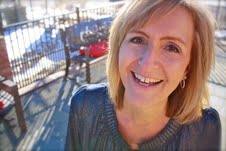
My legs quiver as I step onto the sidewalk in front of my home. How can I launch out for a walk feeling so weak? I take a second step, determined to go forward with my plan to regain my health by exercising.

Obstacles. My motivation to exercise overpowers my temptation to stop. I gain strength in each additional step, as I begin my lesson in perseverance. But it will not be an easy journey. There are obstacles to overcome and goals to reach. Can I make it? 

Resistance. Exercise, like other worthwhile endeavors, demands strength and stamina. The first morning I attempt my new exercise program, everything within me resists it, like opposite poles of two magnets. I would rather do just about anything other than exercise. So, on my first day out, I let temptation win. I stay home, and I feel guilty the rest of the day.

Failures. By the next morning, my previous day’s failure serves as my primary motivating force. So, I lace up my walking shoes, purchased just for this occasion, and jog slowly out of my garage. My first goal has been accomplished. And the next thing I know, I’m crossing the street facing the next block.

Intimidation. Okay, this is going to be a breeze, I think. But by the time I turn the corner, another fear presents itself, as if to try to stop me in my tracks. An all-male construction crew building a house nearby alarms me because of the recent crimes in my neighborhood. I’m fearful of walking in front of them. But I hold my breath and walk on. I move this obstacle out of the way, as I change my route and proceed in another direction.

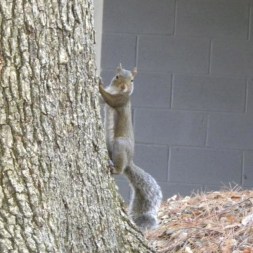
Distractions. As I walk uphill, I become short of breath. When I slow down to breathe, a gray squirrel catches my attention. He’s busy burying an acorn in my neighbor’s yard. I watch him as I walk by. When I look up, I’m already at the end of the street, about to turn the corner to complete another block.

Goals. I continue to accomplish small goals as I walk. In a short while, I’ve gone far enough, and I decide to return to my home. My mind is cleared by the fresh air, but my body is affected by the exercise.

When I arrive home, I’m exhausted, but surprisingly refreshed. As I sit down for a cool glass of water before I shower, I recall the distance I’ve covered. I feel good about myself, and I’m grateful that I resisted the temptation to quit.

Strength. I find strength as I face my weaknesses each day. In 2 Corinthians 12:8, Paul tells us that the Lord’s “power is made perfect in weakness.”

Writing. I’m forced to face my fears and weaknesses in many other areas of my life, especially my writing life. Writing for publication also demands strength and stamina. So, we can expect to face resistance, right? With each new project, goal, or idea, we’re reminded of some past failure, rejection, intimidation, or distraction.

Survival Tips. How do you endure setbacks in your writing life? I’ve learned a few survival tips on the walking trail and on my writing journey  And as I face my fears and take one step at a time by faith, I’m able to go the distance

And now, … one final thing. Fix your thoughts on what is true, and honorable, and right, and pure, and lovely, and admirable. Think about things that are excellent and worthy of praise.  Keep putting into practice all you learned and received … Then the God of peace will be with you. (Phil. 4:8-9 NLT)

Where have your faced resistance in your life? How did you overcome it?


Photo/KarenJordan
YouTube/mrnmrsyounger (MercyMe – “Move”)
My Friend Jane Kirkpatrick and Feeding the Lake

Jane-1-EE (3)One of my most meaningful evenings as a writer had nothing to do with me and everything to with my friend, workshop partner and fellow writer Jane Kirkpatick.

It was 2005 and Willamette Writers, our state’s largest literary organization, presented Kirkpatrick with its Distinguished Northwest Writer Award. Among recipients of the past: Ken Kesey and Ursula Le Guin.

In accepting the award, Kirkpatrick, then 59, quoted author Jean Rhys to 400 people: “All of life is like a lake made up of many stories, fed by many streams. Some of the streams are long and mighty, like Tolstoy and Dostoevsky, and some are small, like me. The size of the stream doesn’t matter. All that matters is the lake. Feed the lake.”

Kirkpatrick, who then lived on the John Day River in north-central Oregon, told how, at age 36, she first tested the literary waters. Head of a social service agency, she took a writing class through a community college adult education program. “I was terrified,” she told me. “I thought: I don’t belong here.”

The teacher, she later learned, felt the same way about himself. But, neophyte that he was, he still recognized good writing, once choosing a piece by Kirkpatrick to read aloud.

“My heart was pounding so hard I could hardly hear the reading,” she said. When he handed back her paper, it said at the bottom: “You have a gift.”

At the time, she and husband Jerry were still reeling from the loss of Jerry’s son, murdered at 21. She was suffering from a serious gluten intolerance. They needed a change.

The two decided to sell everything, leave secure jobs and homestead on the John Day River, where Jane would write.

At a place called Starvation Point, the home would be known as their “Rural 7-Eleven” — seven miles from their mailbox, eleven miles from pavement. They built it. Dug a well. Battled rattlesnakes. And ran seven miles of underground phone wire.

Once semi-settled, Jane began writing and sending stories to magazines. Rejection. Rejection. Rejection. Then it happened: One sold. Sports Afield, for $75, bought a piece she wrote on repairing fishing poles with pine tar. Then Northwest magazine bought the story her teacher had read aloud in the class.

She began wondering: Could I?

Jane began working as a mental health counselor at Warm Springs Indian Reservation. On Tuesdays, she would make the nearly three-hour drive — longer during snow and ice — and on Thursdays, return.

Then she would start writing, disciplining herself to get up at 4 a.m. Her first book, Homestead (1991), was about her experience on the John Day. More than two dozen have followed — fictional stories of the human heart, based on real events, and often involving women, pioneers, and Native Americans.

At least some of her empathy for those overcoming odds comes from her own experiences. She and Jerry were badly hurt when their small airplane crashed. They took in a granddaughter whose drug-hampered parents weren’t able to raise her. She lost a sister to disease in 1997. In the last year Jerry, 82, has battled numerous physical challenges.

“It’s the obstacles in life that carve out our character,” says Kirkpatrick. “Character comes from the Greek word `to chisel.’ It’s what’s left after you’ve been `gouged out.’ ”

What some of her colleagues were applauding on the night she won the award — none perhaps more enthusiastically than I — was the never-quit spirit that she writes of. And lives.

While working on a book of my own, for instance, I will often hear the “get-up-and-write” alarm at 5 a.m. and think: no, no, no. But then I rise, remembering that my ex-student Jane has already been up for an hour, feeding the lake.

WordServe News: March 2013

Exciting things have been happening at WordServe Literary!

On the final post of each month you’ll find a list of Water Cooler contributors’ books releasing in the upcoming month along with a recap of WordServe client news from the current month.

New Releases

FinallytheBrideSandra Bricker, Always the Baker, Finally the Bride
(Abingdon Press)

**********************************************************************************************
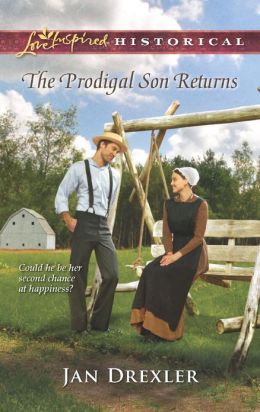
TheProdigalJan Drexler, The Prodigal Son Returns
(Love Inspired)

**********************************************************************************************
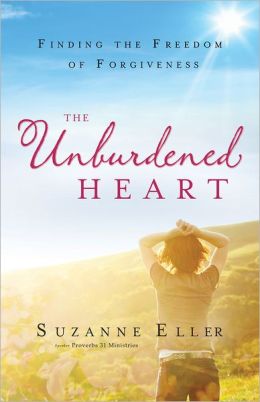
UnburdenedSuzanne Eller, The Unburdened Heart (Regal)

**********************************************************************************************
RealValorSteve Farrar, Real Valor (David C. Cook)

**********************************************************************************************
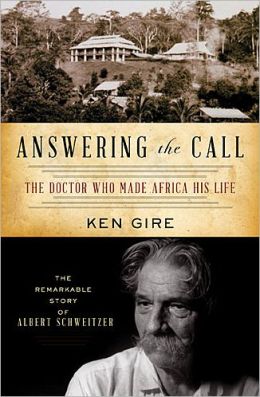
AnsweringtheCallKen Gire, Answering the Call: The Story of Albert Schweitzer (Thomas Nelson)

**********************************************************************************************
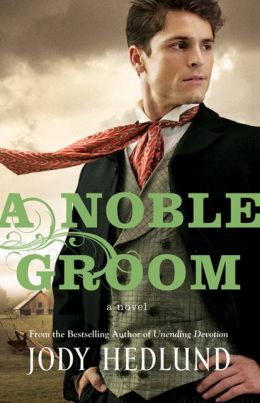
ANobleGroomJody Hedlund, A Noble Groom (Bethany House)

**********************************************************************************************
TheEasyBurdenPatty Kirk, The Easy Burden of Pleasing God (IVP Books)

**********************************************************************************************
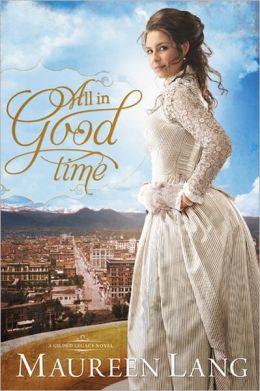
AllinGoodTimeMaureen Lang, All in Good Time (Tyndale House)

**********************************************************************************************
VoicesofthePacificAdam Makos, with Marcus Brotherton, Voices of the Pacific (Berkley Hardcover)

**********************************************************************************************
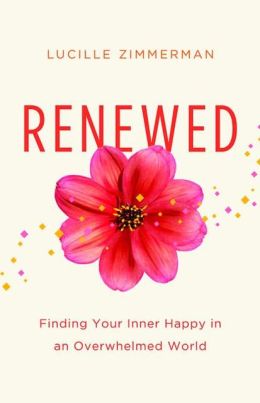
RenewedLucille Zimmerman, Renewed
(Abingdon Press)

**********************************************************************************************

New WordServe Clients

None…we’re standing pat with our great group of authors for now!

New Contracts

Tracie Miles signed with Bethany House Publishers for a book titled Your Life Still Counts: How Your Past Has Equipped You for Your Purpose.

Susie Shellenberger and Kristen Weber signed with Barbour Publishers for A Girl’s Guide: Guys, God and the Galaxy.

Gillian Marchenko signed a contract with T.S. Poetry Press for her memoir. Yay, Gillian!

What We’re Celebrating!!

A Higher Call by Adam Makos continues to hit the New York Times list. On March 31, it will be #6 (again) on the Hard Cover nonfiction list. It’s been in the top-15 for 9 weeks!

Bees in the Butterfly Garden by Maureen Lang, hit the March CBA list at #5 on the fiction list and the #40 on the top-50 in sales list.

What thing on your writing journey are you celebrating today?

A New Year’s Revelation

Photo/KarenJordan

“If you don’t know what you’re doing, pray to the Father. He loves to help … Ask boldly, believingly, without a second thought” (James 1:5-6 MSG).

“You know what killed that squirrel?” my husband Dan mused as we drove through our Arkansas neighborhood.

Duh, I thought, a car ran over him.

“Indecision,” he explained.

Dan always seems to think in black or white terms, no grey areas. “If you don’t like carrots, don’t eat them. If you hate working as a secretary, find another job.”

“Indecision?” I exclaimed. “Wait a minute! Are you comparing me to that squirrel?”

Dan and I are living proof that opposites attract in relationships, especially marriage. But after 41 years of marriage, I think I’m finally learning a few decisive tricks from my husband—like how to organize my office and how to follow through on my dreams.

Confusion. For example, every year I make several New Year’s resolutions. But I’m usually like my friend, the squirrel—before he became road kill. My mind darts around as doubts and fears plague me. Is this plan even possible? What about my failure to follow through on all those other resolutions? Will this just be another waste of my time and resources?

Matthew 6:27 asks, “Who of you by worrying can add a single hour to his life?”

Could my worry and indecision close the doors to many of my dreams and my plans?

Revelation. Jeremiah 29:11 promises, “For I know the plans I have for you…plans to prosper you and not to harm you, plans to give you hope and a future…call upon me and come and pray to me, and I will listen to you” (NIV).

Can I discover God’s plans for my life as I seek Him in prayer? Could it be that simple?

God’s Word says, “You will seek me and find me when you seek me with all your heart. I will be found by you…” (Jeremiah 29:13-14).

Resolution. What have I resolved for 2013? Well, I’ve decided to not worry about making another New Year’s resolution. In fact, I’m still not sure about some of those projects that I’ve been dodging. And I know that I can’t do anything about my failures in the past.

But I am certain of one thing–if I seek God’s Kingdom above all else, He promises to give me everything I need (Matt. 6:33).

Have you made a firm decision to do or not to do something this year? 

Powerful Non-Fiction Writing

Keeping in mind that non-fiction readers invest their time and money in books that meet a felt need, a great philosophy is, “Offer them what they want, then give them what they need.” Here are 14 questions to consider as you write your life-changing message:

QuestionsXSmallWhat problem is your reader experiencing?

How has the problem been overlooked?

What are they missing out on due to this problem?

What impact has this problem had on their life?

What misconceptions has the reader bought into that might keep him/her from experiencing the benefit you’re about to offer?

What underlying beliefs do they have that keep them from seeing a new solution or alternate view?

What solution or benefit will you show the reader?

What truths will help the reader see the benefit?

What will give them an “aha” moment?

What might influence the reader to avoid possible change?

How are others enjoying the benefit you’re teaching?

What will the reader let go of in order to adapt a new view of their life?

What choice(s) will they make?

What action(s) might they take?

Always keep your reader in mind. Offer them what they want, then give them what they need. As author Dean Merrill says, “Never stop asking ‘what’s in this manuscript for the reader?'”

WordServe News: January 2013

Exciting things have been happening at WordServe Literary!

On the final post of each month you’ll find a list of WordServe Literary clients’ books releasing in the upcoming month along with a recap of WordServe client news from the current month.

New Releases

FaithFearDeb Coty released Fear, Faith and a Fistful of Chocolate (Barbour)

***************************************************************************************

MysteriesJillian Kent released Mysteries of the Heart (Charisma)

***************************************************************************************

RosasLandGilbert Morris released Rosa’s Land (Western Justice #1) (Barbour)

***************************************************************************************

crescentPaul Williams released Crescent Moon Rising (Prometheus)

***************************************************************************************

New WordServe Clients

Ema McKinley signed with WordServe to write her story with Cheryl Ricker on her miraculous healing after more than 15 years in a wheel chair. http://www.cbn.com/700club/features/amazing/RH66_Ema_McKinley.aspx

Dr. Kara Powell, Executive Director of the Fuller Seminary Youth Institute and the author of the Sticky Faith books (www.stickyfaith.org) (Zondervan)

Nationally syndicated cartoonist John McPherson (http://www.gocomics.com/closetohome/), author of Close to Home, the cartoon strip that appears in more than 800 newspapers.

New Contracts

KarissSigning
WordServe Author Kariss Lynch and her BIG moment.

Kariss Lynch signed a 3-book contract with Charisma Publishers…her first contract! Way to go, Kariss!

Jonathan McKee signed with Bethany House Publsihers for a book titled Get Your Teenagers Talking.

Lynn Morris signed a 3-book contract with Hachette’s Faithwords imprint for a Regency novel series.

Betsy Duffey and her sister Laurie Myers signed with Howard Publishing for a novel called A Shepherd’s Song, a contemporary story on the impact of Psalm 23 as it travels around the world from person to person.

James Pence will be writing the story of Herb and Roberta Samme, the story of Herb going to Iraq to fulfill the mission of his son, a soldier who was killed while driving supplies to the troops. He walked in his son’s footsteps on the same roads. He and his wife Roberta then started a mission to supply soldiers with clothing for the winter. To be published by Guideposts Books.

What We’re Celebrating!!

WordServe authors had a good month on the general market lists:

AHigherCallA Higher Call  by Adam Makos had a very big month. This WWII story made lists in The New York Times, USA Today, and Publisher’s Weekly.
Just to name a few:

#11 Print Hardcover (Jan 27) NY Times
#23 HC nonfiction (Dec 30) Publishers Weekly
#105 (Jan 24) USA Today

whiletheworldCarolyn McKinstry’s book (written with Denise George) While the World Watched was Amazon’s featured ebook on Monday, January 19th, and rocketed to #1 on the free ebook list. But the next day, it was #1 on the paid ebook list. It also hit #1 on several other lists on Amazon:

o #1 in Books > Biographies & Memoirs > Leaders & Notable People > Religious
o #1 in Books > Biographies & Memoirs > Ethnic & National > African-American & Black
o #1 in Books > Christian Books & Bibles > Christian Living

A YearRachel Held Evans’s book A Year of Biblical Womanhood (Thomas Nelson) hit the New York Times list January 13th at #19 on the nonfiction ebook list and #32 on the combined print and ebook list.

What can we help you celebrate?

All the World’s A Page: The 9 Woes of the Writing Life

At work in the world, on the world of the page.
At work  on the world of the page.

Recently at the end of a creative nonfiction class I taught, a student came to me with a helpless shrug of her shoulders. “I want to write. I want to be a writer. That’s what I want to do with my life.” I felt a gush of pride that I had managed a convert, but pity came next, then fear:  What had I done? I immediately knew I needed to fill in what I left out from the class script, the off-stage notes that turn out to be the most important. To her and to any other aspiring writers, I offer the cheerful remainder here (to be read in a sonorous voice, because the warnings are real):

 Woe #1: You will see too much.

You will no longer be able to ignore the woman in El Salvador sitting among the garbage, the man carrying a sink onto a bus, the arguing couple behind you in the restaurant. A writer is charged with keeping attention, with bringing words to the invisible, the unspoken, the troubling, the ridiculous. But even as you take note, do take note: the best words you find will not be enough.

Woe #2: You’ll lose a lot of sleep.

You will welcome nightly visitations of the muse, inviting her with an open notebook beside your bed. You will be so hungry for words you will gladly trade your necessary rest for a single cutting sentence, a vivid metaphor, a line of pretty poetry. You will be tired often because of it and you won’t always be happy.

Woe #3:  You will gradually be divested of your most cherished stereotypes and grudges.

Your entrance into others’ lives and stories whether actual or fictional will bring a disconcerting complexity and humanness to the unlikeliest and unloveliest people. If you’re not careful, you may even be tempted to forgive.

 Woe #4:  You’ll give away your privacy.

All the world’s a page. To keep both of yours turning (world and page) you’ll need to appear on every platform you can beg, borrow and thieve, telling and giving all at any hour of night or day, without modesty or reserve. You will give most of yourself away. A special woe to those tempted to write memoir.

 Woe #5: You will read for pleasure less and you will like fewer books.

Once you take language and books seriously you will be unable to turn off your writer and editor’s eye. Writing that once offered distraction and escape will seldom survive the mental red pen, shrinking your list of favorites. You will give up on bestsellers. You will feel culturally stranded.

 Woe #6: You will spend far more money than you make.

For every writing project you undertake, you will buy a shelf or two of books and you’ll subscribe to literary journals and magazines as if they kept you warm and fed. Which they will, but the metaphor breaks down when the temperature drops below freezing and you’re eating oatmeal for dinner and the bills are past due.

 Woe #7: You will not be content to live in the present only.

In your pursuit of what is real and true, you will excavate the past as eagerly as the present, breaking down closet doors, piecing skeletons together, retrieving abandoned diaries. You will find nuance and revolution that disturbs the status quo. Others will be annoyed and will try to keep you quiet. You may not be invited for Christmas dinner.

Woe #8: You will no longer be satisfied in writing for yourself.

Once you find an audience, however small, you’ll write by an open window instead of a mirror. You’ll carry your readers with you. You’ll care too much about the truth for their sake. You’ll want to heal and help. You’ll see how small you are. You’ll keep writing anyway.

When I began a tentative writing life thirty years ago, I was never formally wooed nor “woe-d.”  If I had, would I have continued? I know the answer. It comes as the final “woe” and I write it now to my student, who is still watching me with undimmed eyes:

Woe#9: Woe to those who hear, who touch and who see, yet who drop the pen and turn away from the open half-written pages of a world still waiting to be finished. Many stories will be lost. Yours will not end as it should. This woe is far worse than the others.  

5 Starter Tips On Writing A Memoir

Two weeks ago I was invited to speak to my daughter Zoya’s fifth grade class about writing memoir.

http://www.stockfreeimages.com/

Tip #1: Don’t do it!

If you want to write a memoir, be forewarned: readers love them but publishing houses are hard pressed to sign them. Of course, that doesn’t mean that memoirs don’t sell, but it does mean that memoir writers must work on platform building, and strengthening tribe readership, as they write. It can be daunting but it is essential. When you get to the book proposal part of your journey, you need to prove to publishers that your story will sell.

Tip #2: Don’t lie!

Possibly one of the reasons why publishers don’t want to buy and publish more memoirs is because several books deemed “memoir” in the past few years have been found out to be more fictional. Lying to create a good memoir taints the whole industry. You may not be able to remember your life’s story verbatim. That’s OK. Feel free to take some creative allowance building scenes and retelling conversations at pivotal points in the book. Just make sure everything you write about actually happened.

Tip # 3: Don’t rush!

Memoir books and teachers concur that in order to write a good memoir one must have perspective. In order to gain perspective, especially when writing about our lives, we need time and distance from the events which we hope to convey in a way that resonates with the reader. If a person hasn’t allotted enough time in her life to reach some sort of understanding or conclusion regarding the events of the memoir, she will be hard pressed to point and prod readers to universal truths that will apply to their lives.

Tip #4: Don’t assume!

Don’t assume your story will carry the writing. As was mentioned in Tip #3, a memoir, although about your life, is really about/for the reader. C.S. Lewis said that we read to know we are not alone. The memoir must connect with the reader. There needs to be a mingling of worlds, where a person reading your words stops and wonders how you knew so much about him.

Tip #5: Don’t wait!

If you want to write a memoir, don’t wait to learn all you can about memoir writing. My two best pieces of advice to the young memoirists in the fifth grade were: 1) write, even a little bit, every day, and 2) if you want to write and be good at it, be a voracious reader.

What are your thoughts about memoir writing? What’s been a favorite memoir that you’ve read?

A Lesson from Nature: First, Do No Harm

Just ask the animals, and they will teach you.
Ask the birds of the sky, and they will tell you.
Speak to the earth, and it will instruct you.
Let the fish in the sea speak to you.
(Job 12:7-8 NLT)

Observing the wild animals near my home in central Arkansas this past summer reminded me how powerful maternal instincts can be in animals and in humans. And as I watched a doe with her fawn in my backyard, I shot  several awesome pictures.

I also spent several days with my daughter when she faced emergency surgery. As she recovered, I helped her care for her four small children.

First, do no harm. As a writing instructor, I’m often reminded of the Latin phrase Primum non nocere, which means “First, do no harm.” I’m well aware of the risk that my intervention might do more harm than good to the writer and to her work, as I wield my red pen. I also see the value of this truth in other areas of life.

… Have you watched as deer are born in the wild? Do you know how many months they carry their young? Are you aware of the time of their delivery? They crouch down to give birth to their young and deliver their offspring. Their young grow up in the open fields, then leave home and never return. (Job 39:1-4)

I captured a video of a doe hovering over her fawn in my backyard. But I watched from a distance to avoid disturbing their peace. During the hottest part of a summer day, the doe nudged her fawn along the property boundary of my backyard.

I peeked out the window several times that day, and I noticed the ears of the fawn twitching under the brush. I didn’t realize until later that evening that the doe was just a few feet away out of my view behind a tree, watching over her spotted little one.

What did I do to help this doe protect her fawn? Nothing. Any movement toward her would have been perceived as a threat by the fawn and her mother.

As I tiptoed out on my deck later that day to capture this scene on my camera again, the doe did not run away. She turned her head toward me with her ears perked up and tail twitching. She stomped one hoof and snorted to see if I would move. But while she was watching me, she kept a watchful eye on her fawn. And the fawn stayed close to her mother, watching her body language for direction.


Watch my words.
 I understand that my presence disturbs the peace of a doe with her fawn. But often, I’m not aware of my unwelcome intervention, even with my own family. I may believe my helpful advice is needed and even expected. But sometimes my unsolicited verbal support may do more harm than good.

As I related my observations of nature to my own life experiences, I recalled the many times that my own mother gave me unsolicited help or advice. Most of our conflicts came as we faced our unreasonable expectations of each other, our undefined boundaries, or our personal limitations.

Will I ever learn this lesson and stop reacting with my emotions when I see a need with my own adult children? I hope so. But often it takes a crisis to get my attention.

How many of us does it take to put together a toy basketball goal?

Reap a harvest of blessing. As I celebrate this season, I’m grateful for the beautiful examples of God’s creation all around me—the landscape, sunrises and sunsets, and even the wild animals. But I’m most thankful that God continues to reveal the truths I need, so my words and actions can be a blessing, instead of a curse, to my family.

Observing my children and the lessons in nature around me, I’m reminded once again that sometimes it may be best to choose not to do something, or do nothing at all, than to risk causing more harm with my actions or words.

“So let’s not get tired of doing what is good. At just the right time we will reap a harvest of blessing if we don’t give up” (Gal. 6:9).

Have you ever chosen to do (or say) nothing at all, rather than cause harm by doing (or saying) something?


Finding Rest in a Storm

For you are my hiding place; you protect me from trouble. You surround me with songs of victory. (Psalm 32:7 NLT)

As the autumn winds whispered through our oak trees, dropping the leaves across our yard, my husband Dan mentioned that we probably wouldn’t see any squirrels playing in the trees that day. “In fact, if the wind is blowing when you want to go squirrel hunting in our area, you might as well stay home,” he said. “A squirrel will not move far from his nest on windy days, so you’ll have a hard time bagging any.”

Squirrels. A squirrel knows when he needs to be still and rest—not because he’s tired, but because that is when he is most vulnerable to predators. When the wind is blowing, a squirrel can’t hear the other sounds around him—his instincts are blurred by the wind-tossed branches and leaves rustling.

Dan said the same rule applies to deer hunting in our part of the state. Deer tend to not move around much when they cannot use their God-given senses to protect them from predators.

Storms. I continue to learn spiritual lessons like this one from nature. When a storm is blowing all around me, I need to be still and wait. It can be dangerous to sail into a storm.

I’ve lived in Texas and Arkansas all my life, and we’ve survived many storms—tornados and hurricanes. It’s difficult to prepare for any kind of storm. I’ve run away from hurricanes, and I’ve hidden in our “safe place” during a tornado. But I’ve learned that I can’t stop storms from coming my way.

Shelter. How can I apply this truth to my writing life? I hope to remember this truth the next time that I face serious setbacksparalyzing problemschaotic confusion, or even aggravating attitudes. I can’t stop them. But I can choose to find a safe hiding place.

Learning to find a place of rest in the storms of life isn’t always easy. I’m tempted to keep trying to protect myself. But once again, God reminds me that He is my true refuge during the storms of life. And I’ve found His Shelter to be a great place to rest.

Where do you find shelter on a stormy day?