Hunting and Fishing: Tackle Box Tools for the Aspiring Author

What does hunting and fishing have to do with being a writer? More than you might imagine. If you think you’re exempt from needing these skills, you may find you’re going to need a bigger boat, so to speak.
After placing well in a writing contest, I was approached by several people who wanted the same thing. They resembled eager, wide-eyed hunters, sure that there was a sportsmen’s paradise within reach, if they could just locate the geographic coordinates. The questions have been pretty standard. How do I get started? What should I write about? How do you get an agent? How do you get published? But the most interesting question so far has been how do you find the courage to put your work out there? This question was from a woman (we’ll call her Nancy) who had already written an entire series of books, but lacked the confidence to move forward. She was stuck.

In addition to being a strong writer, Nancy had an impressive graphic arts background and was perfectly capable of designing the entire book herself. She had all the tools she needed and then some – but not the confidence. It’s a common dilemma. Many writers are introverted and sensitive to criticism. They may have much better work in their garage than most of what is available, but we’ll never hear about it because they are unwilling to send up a smoke signal and let us know where to find them.

Not everyone is going to love our work, and we don’t need everyone to love our work. We just need to find our audiences. Fishing with good bait obviously helps exponentially. Nancy came to peace with the fact that she was going to have to learn to fish. She then accepted the fact that although she didn’t think her book was good enough, it was certainly better than some of the other books out there. If those books could get published, then why not hers?

Next, we tackled the business about marketing and promotion. Nancy realized that she would not have to just catch the fish, but cook it, clean it and perhaps even serve it as well. The author is expected to do a great deal of their own marketing. The publisher can’t do it all for us; they have other authors they need to promote. No one has as much of a vested interest in our success as we do.

Nancy was horrified to learn that she would probably need a website with her name and picture on it, and she might even have to speak about her book in front of people. The most uncomfortable concept for her by far was that she would have to ‘sell’ her work. But she figured out that it doesn’t feel like ‘selling’ if you are simply providing a service or commodity and increasing awareness for people who really want your product. Blogging and tweeting and self-promoting are awkward concepts for most of us. However, unless you have staff to hunt and fish on your behalf, there aren’t too many other options.

Nancy still isn’t crazy about all the hunting and fishing she has ahead of her, but she is committed to surviving as a writer. She has started working on her book covers and finding books on how to overcome her shyness. She’s bravely entering Writing Territory and looking for a spot to set up camp. Best of all, she is no longer stuck and is actively pursuing her own hunting and fishing sportsman’s paradise.

Have you caught any tasty fish lately? How are your hunting skills? Figuratively, of course, but if you want to share some literal experiences, that’s okay, too. 🙂


Finding a Publisher – 10 Steps to Success – Part 2

I’m returning to discuss those ever important steps in finding a publisher. You can find Part I that covered steps one through five here.

Step 6 – You may have ten or maybe even twenty publishing companies still on your list. Now take a look at their websites to see for yourself what kind of books they publish. Pick out one or two books similar to your own story and discover where the publisher actually sells them. For instance are they available in book stores or only on internet sites like Amazon. Browsing the books for sale can also tell you if the books are best-sellers. Read the readers’ reviews etc. Spending time in this area can help build up a picture of the publisher, and this kind of research is always fruitful for new writers. Are the publishers small or big, successful or not, new or well established, respected or not? On this last point the internet often has blogs and comments about bad publishers. Read them but be discerning because sometimes the comments may come from an embittered author whose books were repeatedly turned down.

Step 7 – So you have now made a shortlist and want to decide where to send your precious MS. Remember you can send copies of the MS to several publishers at the same time. Better to fire off several barrels rather than just one bullet, scattered guns normally hit something; whereas, the single shot usually misses the target.

Make sure you really read the details of their submission guidelines. Each company will have a different slant as to how you contact them. Some want the whole MS; others don’t. Some want the first three chapters only; whereas, some publishers just want to see a synopsis of the book. Remember to keep strictly to the guidelines, or your MS may end up in the waste paper basket. And always send a stamped addressed envelope so that the copy can be mailed back to you. That way you are more likely to get a reply even if it’s not the one you wanted.

Step 8 – A warning! The ‘sharks’ out there often disguise themselves as bona fide publishers. They might look safe, but all they want is to chew on your money. This is not saying that ‘self-publishing’ companies are predatory. Most often they’re not because in the case of self-publishers you get what you pay for.

I am sorry to say that there are Christian companies out there in the big ocean that act like sharks. One such company contacted me and said they wanted to publish my book, but it wasn’t until the third or fourth email that they told me it would cost $18,000 up front. The contract also tied me into buying a hundred books at $10 a book. If however, you are serious about your writing, find a reputable publisher and use your best judgement to pick the right one. If it doesn’t feel right, then it probably isn’t!

Step 9 – So you’ve sent your MS off; do not despair if after a short while you don’t hear back. Just be patient, and resist contacting the publisher to find out what’s the score. Most often it takes at least three months to get even an acknowledgement or even longer. I know that you are on tenterhooks, but the best way to stay sane is to ‘forget’ about the submission and get on with the next project. If you get rejections, don’t lose heart. Some of the most famous authors had hundreds of rejections before someone smart bought the book. Remember a lot of publishers make errors in their choices. The Harry Potter series was turned down by loads of agents and publishers. Have faith and keep knocking on doors; you’ll win in the end. The writers who found success are those who never gave up believing.

Step 10 – If you are a Christian writer, here’s a Ready auto transport service you can use. In short, what it does is post three chapters of your book and a brief author bio with your contact details on their website. The website is known to many Christian publishers who take a peek on a regular basis to see if there’s anything worthwhile posted there. It’s inexpensive, and your submission stays on the website for six months. One last piece of invaluable advice for Christian writers is this: remember the Lord is keenly interested in you and your work. Pray every day for success. I found success with an agent and a publisher who were five thousand miles away from where I live.

Care to share some of your publishing experiences?

Market Your Fiction with Non-Fiction

I often hear fiction authors struggling with ways to market their novels. Non-fiction authors seem to have an easier time with marketing, due to their expertise on their subject.

But fiction authors actually have quite a bit of nonfiction in their novels. Remember all that research you’ve done?

As Christian writers, our characters and story lines have a built-in message of faith. Writing articles on your own faith struggles and how they relate to your character’s journey is one way to use non-fiction.

Think about your character’s occupation. Is your heroine a landscaper? Write some posts on the best plants in your region. Or tie it in with the setting of your novel. A post on the best plants in the region of your book is even better. You could also spin it and list which plants are best transplanted in any region.

My heroine is a cook on a cattle drive. The pioneers only used cast iron, so I wrote a post on how to care and use cast iron.

How to clean cast iron

Did you find cool facts when you were researching that didn’t make it in to your novel? Then consider writing some articles on these.

These make great blog posts, but try taking it a step further. I pitched the idea to my local newspaper about a monthly column, Pioneering Today, which highlights the best of the pioneer lifestyle and how it relates to us today. The editor gave me permission to re-publish the articles on my blog after the current issue has run. I can offer links or pictures, so readers of the newspaper have a reason to visit my website for more information.

Consider magazines or ezines to submit these articles to as well.

What are some of your favorite non-writing blogs and magazines? How could you tie in an aspect of your writing or book to these? What ways have you used non-fiction to market your fiction?

The Tale of Two Book Covers

One of the most exciting things you’ll get to do as a published author is decide on your book cover. For a long time, your novel may have just been black words on a white page, but a book cover is the pretty packaging that is used to attract readers and get them to purchase your novel. Several thoughts on marketing/branding become important during this process.

Most publishers will allow you to provide input into the book cover. Before my cover was designed, they asked me for some directions. This is what I provided for instructions.

1. Different from what is normally seen in CBA fiction. Who doesn’t want to stand out?
2. Dark imagery/suspenseful/intriguing: dark colors, creepy feel, etc…
3. Not overtly medical. Above all else– this was most important to me. This may be confusing to some as it is a medical thriller (of which I am very proud!), but the reason behind that direction was that I’m not sure I will always write medical thrillers, and I wanted to reach the wider suspense/thriller audience.

Here were the two choices I had:

When I got these from the marketing director I was stunned! I loved both for different reasons.

Here were some of my thoughts.

I loved the cover with the menacing killer, and he actually looked just like the villain in my own mind. How could they possibly have done that? I’m a risk taker, and that cover definitely appealed to that side of my personality. My first thought was: Even Ted Dekker hasn’t done anything this scary. Can I pull it off? Is it wise to have something this risky as a debut cover?

Why was it risky? Well, this is where some marketing comes into play. The largest segment of book buyers (even for suspense) is women. Is a woman going to pick up the book with the evil, scary dude on the front? If she does, would she keep it in her hands or plop it right back on the shelf. Was it safer– maybe smarter would be the better term– to use a cover that will accomplish what I wanted but still attract those who are most likely to buy the novel?

I was fortunate because I got these draft covers just before I left for the ACFW conference last September and was able to get the opinion of lots of people on which one they liked the most.

There was one clear winner.

Another interesting thing that happened was a couple of people commented on the size of my name on the front cover. I got the sense that maybe they thought I might be “too big for my britches” as they say. I found that sentiment a little fascinating as it certainly wasn’t something I had insisted on but wondered if there was an unspoken code of name size that once you sold a certain volume of books– then your name could be in large print.

Which cover do you think I picked and why? Do you think an author needs to “earn” their name being in large print?

Click here for the answer and leave a comment here and at Redwood’s Medical Edge. I’ll be drawing a winner from the comments section of both blogs for a copy of Proof!  Drawing will be Saturday at midnight, April 7th. Winner announced at Redwood’s Medical Edge April 8th.

Cover Art by the amazing Nick Richardson.

Spruce Up Your Spring Blogging Wardrobe

Tired of the same old blogging drudgery? Ready to don something light and new? Want to increase the traffic on your site? Here are a few different outfits for you to try on your blog.

VLOGGING

Everyone’s got a blog, but how do you get yours to stand out? Try vlogging. A vlog is simply a video log. Instead of writing the same old, same old blog entry, you simply speak it into a camera.

Before you freak out, read my lips: this doesn’t have to be fancy. In fact, I wouldn’t know how to edit if you paid me. I use Photo Booth and do a vlog entry all in one shot. If you want to get fancier, though, you can use things like Microsoft Movie Maker or Apple iMovie to add all kinds of fun effects to your video.

Why should you vlog?

It’s a great way to spice up your usual blog posts. It adds variety. Personally, I choose to post humorous vlogs, but you could make them “how to’s” or even use them for interviews.

Vlogging is a great way to show your readers the human side of you. Your facial expressions, your inflections and intonations, are seen instead of imagined.

The other benefit I’ve noticed is that vlogging bumps up hits. If you’re looking for a way to increase traffic, give this technique a whirl.

It’s not as scary as it seems.

I’m not going to lie. The first time your knees will probably knock a fair amount, but after that, no more noodle legs. If it creeps you out to see your mug up on the screen, then here’s a little tip…just post it. Don’t watch it.

Even if you decide not to continue with vlogging on a regular basis, it’s a great way to perk up your blog once and awhile.

TUMBLR

No, that’s not a typo. Tumblr is a trendy way of shortening the words tumble and log. What gets tumbled? Thoughts, mostly. Think of it as a stream of consciousness, where nothing is lengthy, and randomness rules the day. On Tumblr, you’ll see posts that are as simple as a link, a photo, a quote, sometimes even just a phrase.

Why use Tumblr?

This site facilitates quick and easy posting of single items. If the thought of writing blog entry after blog entry is overwhelming, this might be just the site for you. It’s not a replacement for Blogger or WordPress, but an alternative for less in-depth, editorial pieces.

Plus, it’s super easy to use. Setting up your own page takes about 2 minutes. Literally. Plus you can post from a computer, a smart phone, or yes…drum roll please…even from a text.

How to use Tumblr.

1. Sign up. Go directly to Tumblr.com and follow the directions.

2. Learn the dashboard. Your account will have a private dashboard that only you will see. This is also where you’ll find the different kinds of posts that are available for you to utilize.

3. Customize your page. Make it your own. You can upload background images or use some of the free templates.

4. Start posting. The best way to figure out Tumblr is simply by putting your hands on the steering wheel and hitting the gas pedal. It’s a creative place, so go ahead and run free. Try out new things you’ve maybe never done before, like a vlog, or post a stanza of poetry, or maybe a photo you shot recently.

5. Follow other users, kind of like Twitter. It will get your name out there in Tumblville, and eventually you’ll be pulling in followers of your own.

Even if you’re not quite ready to take the Tumblr plunge by setting up your own page, go ahead and check it out. It’s a fun place to hang around.

Vlogging and Tumblr are just a few ways to zest up your blog. Share the love…what’s one way you’ve discovered to update your spring blogging wardrobe?

Social Media and Your Book Release

Often, authors ask me what they can do to put their book in the social media limelight. While it is not difficult to accomplish, as we have discussed before, there are a few important steps that you can take to ensure that your book receives the attention it deserves. Here are a few ideas that scratch the surface…

1. Start Immediately I had a client named Dan (all names have been changed to protect the innocent).  Dan had a wonderful book coming out in about six months.  He was so excited, I am sure he felt like he was going to give birth to a baby, or as close as guys get to this feeling (besides kidney stones).  Dan wanted to wait until his book came out to get all social media going.  Although waiting can still be effective, I don’t advise this or think it is best. Make sure you are lined up with all of your social media accounts now. Do you have Twitter, Facebook, Pintrest, and maybe even Google Plus?  Make them look pretty. Get your friends and family on board and let them know what you are doing, so they can be your biggest cheerleaders.  Don’t wait. Start today.
2. Start Blogging and Guest Blogging  Here are my three simple rules for having a successful blog:

* Be consistent. Same time, same day.

* Don’t be too wordy or too simple.  500 -700 words is a good mark. Don’t over blog. Sadly, I just unsubscribed to one of my favorite blogs because I would receive two or three updates from that person a day. Save the poetry you like for your Facebook page.

* Be consistent. Oh, I said that? But it is valuable. I want my blogs in my inbox the same time every week.

Guest blogs need to be done strategically.  Pair up with friends who blog as well. Showcase yourself.  It can be a win – win for both of you. Promote it well,  and you both will end the day with a bigger audience.

3. Create A Data Base. Compile an email list and blast it out to all your friends and family.  I use Mail Chimp: it’s easy, it’s free and it does a great job managing a database.  There are some other ones that people have told me about,  author Lucille Zimmerman said that AWeber is great.  Celebrate great reviews, talk about new projects, and keep people on the inside of your circle, making them feel valuable.
4. Give Away Books. When your book is going to come out, encourage your friends and family to buy a copy.  Sure if you are REALLY close to them, you can give them a copy for free, but still get them to buy one and give it to a friend.  (Ever heard of Guerilla Marketing?) If your publisher gives you books to give to your friends and family, tell them they can only have one if they agree to write a review on Amazon after reading it. If your book is about the church, give it to church leaders ask them to help promote your masterpiece.

Get your books in the hands of “tastemakers.”  What is a tastemaker, you ask? Acoording to Urban Dictionary, “Tastemaker: An individual who’s determination of what’s stylish influences a significant quantity or quality of people resulting in a supportive trend.”  A tastemaker is someone who is savvy and all-knowing. It could be your best friend or your coffee shop barista. You want your tastemaker friends to talk about your book; people listen to tastemakers.
What is your best tip to be socially media savvy? 

Ingrid Schneider is WordServe’s resident Marketing Maven. With a specialty in social media, Ingrid loves helping authors find and manage an online tribe of readers. After spending the last 15 years managing and marketing restaurants, people, and businesses, Ingrid knew that helping people market themselves via social media and online platforms was a passion and something at which she excelled. Now doing social media marketing for some great-named authors, Ingrid also loves to imagine that she is a secret agent, because she can’t disclose with whom she is working. (Believe us when we tell you that Ingrid handles some big names, but for anonymity’s sake, we can’t disclose this TOP SECRET information.)  Imagination and creativity is something Ingrid is serious about and loves to incorporate into her work with her clients.

Amazon.com’s ‘Vine Program’ Can Either Help Or Hurt You

Not all marketing tools are created equal. Some will move books; some will bite you where the sun doesn’t shine. Today, allow me to tell how the use of one book marketing tool could have sunk my book.

“The Amazon.com Vine Program” is a service offered by Amazon.com to book publishers. Basically, publishers contract with Amazon.com to send out a certain number of books to reviewers in exchange for their unbiased ratings. Theoretically, it’s a way to jump-start ratings on an author’s page immediately after a book is released.

But there can be problems with this system. In at least one case that I know of (MINE!), the publisher failed to communicate with the Vine Program that the book in question had a Christian viewpoint. And since nothing noticeably Christian appeared in the title, subtitle, cover art, or even in the book’s description, it was a cauldron of trouble. The book ended up being inadvertently sent to people unsympathetic to faith issues who rated the book poorly and then slammed the publisher for being deceptive about its religious agenda.

You could argue that this was really the publisher’s mistake and not the Vine Program’s. But it still highlights the fact that the Vine Program can be utilized ineffectively and, hence, end up hurting your efforts more than helping.

How can you avoid this situation? Ask your PR and/or marketing folks if they intend to utilize the Vine Program. If so, work with your agent to make sure your publisher adequately broadcasts your book’s content through its title, subtitle, description, and cover art. Otherwise, your book won’t get to its intended readers, and your reviews may be less than stellar.

Even if this Vine problem doesn’t happen to you, expect some unfair ratings to come your way in the Amazon.com rating system. People are imperfect; therefore, readers (and publishers and authors) are imperfect. Some readers aren’t capable of understanding what you say, and others read too hastily or misunderstand your message for other reasons.

The good news is, eventually, justice tends to prevail. Unfair and/or misleading reviews tend to fall off the map. Once enough people rate the unfair reviews as “unhelpful,” the Amazon.com rating system automatically deletes them.

In addition, reviewers have the option to “comment” on each other’s reviews and clear up any confusion. (Only, sometimes, their comments make things worse rather than better. You should see the caustic verbiage that flew back and forth between two reviewers of my book, The Eden Diet. I have an overall five-star rating, but I got a two-star review that apparently ticked off one of my supporters. The comments that followed were so mean that they were actually funny–in a “Pulp Fiction” kind of shocking-human-nature way. It was like a psychology experiment went wrong, right on my Amazon.com review page. Thanks a lot, people!)

The point is, online review systems are fraught with inherent inaccuracy and bias, and they sometimes hurt more than help. But if you want to be a writer, you have to get used to this and other imperfections in the system as a whole. That’s why book writing (and the reading of book reviews on said writing) is not for the faint of heart!

Care to share some of your review experiences?

Stealth Marketing

Like many writers, I have issues with shameless self-promotion: I really hate blowing my own horn because isn’t that exactly what Christian humility tells us NOT to do?  Like every writer, though, I have to get myself into the marketplace to not only make sales and gain a readership, but also to spread the word that God has given me to share.

What’s a humble Christian to do?

One answer I’ve found is what I call ‘Stealth Marketing’ – marketing that doesn’t feel or look like traditional book selling yet still puts my name and book in front of new audiences I might not otherwise reach. Basically, I do non-profit events.

In particular, I donate books to silent auctions or hold a book signing to benefit a local charity. I’ve found that what I forfeit in cash revenue, I get back many times over in free publicity, good will, new readers, and a personal sense of contribution.

In the past year, I’ve donated books to local, regional, and national silent auction fundraisers. I started with the annual dinner auction at my children’s school, which is usually attended by some 300 people. I wrote up a brief sketch of the book and submitted it along with a photo to be used on the display card at the auction, as well as in the auction booklet. After the event, I had a call from another school parent who told me that she thought the books were such a great item idea, that she was going to buy a set of my books to donate to another group’s auction. I estimated that would double the exposure I’d just gotten from the first auction. Out of curiosity, I checked my website tracking to find that the number of hits clearly rose after the dinner. Good intentions and a book donation can go a long way, I realized.

Deciding I’d found a productive way to publicize my books and generate sales without the self-promotion I dreaded, I began to look for non-profit groups that corresponded with my target market – birdwatchers and mystery readers – to reach new audiences. In the past year, my books were listed in  programs for a variety of fundraisers, including the Raptor Research Foundation’s annual (international) meeting, the national conference of MIA/POW families, a Savannah (GA) Rotary Club, and the International Festival of Owls. After each event, I’ve seen increased traffic to my website.

Closer to home, I really enjoyed the book signing hosted by my favorite local eatery. It was a success for all of us involved: I asked customers to bring items for the local food shelf, and I discounted each book they bought. We collected bags of food to restock the shelves just before the winter holidays, the diner had increased business that morning, and I got free publicity in the bulletins of area churches that support the food shelf, not to mention that warm feeling of doing something good for my community!

Do you practice stealth marketing?

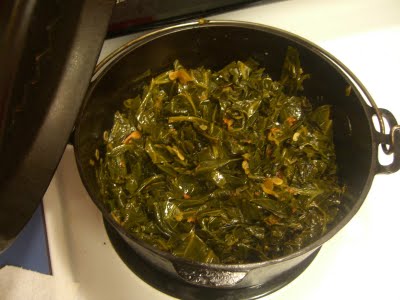
What Do Collard Greens have to do with Marketing Mojo?

Hey y’all, let’s chat…I’m Shellie, they call me the Belle of All Things Southern, and I’m here to talk about marketing. Don’t roll your eyes at me. These talks are good for us. (Right, Super Agent Greg?) Being an incurable storyteller, it’s my natural inclination to open any discussion with a tale to illustrate my point, and my Papa tells a childhood story that perfectly captures my thoughts on marketing. So, please, join me on memory lane.

Ola Mae Rushing was my paternal grandmother. I remember her as a widow woman, worn slap dab out and spending most of her days resting her bones in a squeaky green recliner, watching the seasons of the Louisiana Delta change outside her picture window and Bob Barker charming the masses on her black and white TV. Together my grandparents had raised a dozen kids to adulthood before Papaw Rushing passed away. After his death, Grandmaw sat down and retired–from most everything. Papaw Claude had worked the land as hard as a plot of ground has ever been farmed during those early years, but life was anything but easy. There had always been more month than money and more hungry mouths than food to feed ’em, which brings me to the point of our story.

One day Grandmaw set a single pot of collard greens on the table and told everyone to help themselves. Papa was just a little boy, and collard greens were the last thing he had in mind to fill the pit in his hungry stomach.

“I don’t like collard greens!” he announced. “I hate collard greens. I ain’t eating any collard greens!”

The way Papa tells it, Grandma promptly escorted him outside for a Come to Jesus meeting.  Upon his return, Papa wasted no time pulling his chair up to the table and saying, “Pass the collard greens, please.”

That’s the sort of love/hate relationship I have with marketing. To be perfectly honest, it takes a remedial Come to Jesus meeting to keep my thinking straight on this one, but God is ever faithful to help me adjust my attitude. This writing life is a hard one, but it’s a blessed one. I’m getting to do what I’ve dreamed of doing from childhood when I spent my days in the arms of my favorite tree with a pile of books, a #2 pencil, and my Red Chief notebook. I write words, and people read them.

Sure, my “brand” was a huge surprise. I never intended to be a walking, talking, southern celebration, and I never ever set out to write humor. This is the platform that God built. Due to its perpetual deadlines, I get to build line upon line relationships with people, which brings us to a place where I can speak more important things into their lives than Suck Your Stomach In and Put Some Color On or Sue Ellen’s Girl Ain’t Fat, She Just Weighs Heavy. Not that those aren’t serious issues, but I live to talk All Things Jesus. Towards that end, I’ll gladly pull my chair up to my desk today, tomorrow, and as often as is necessary with a smile on my face and a burning resolve in my heart.

“Pass the marketing notes, please.”

Hugs, Shellie

What helps inspire your marketing mojo?

Celebrate with a Launch Party

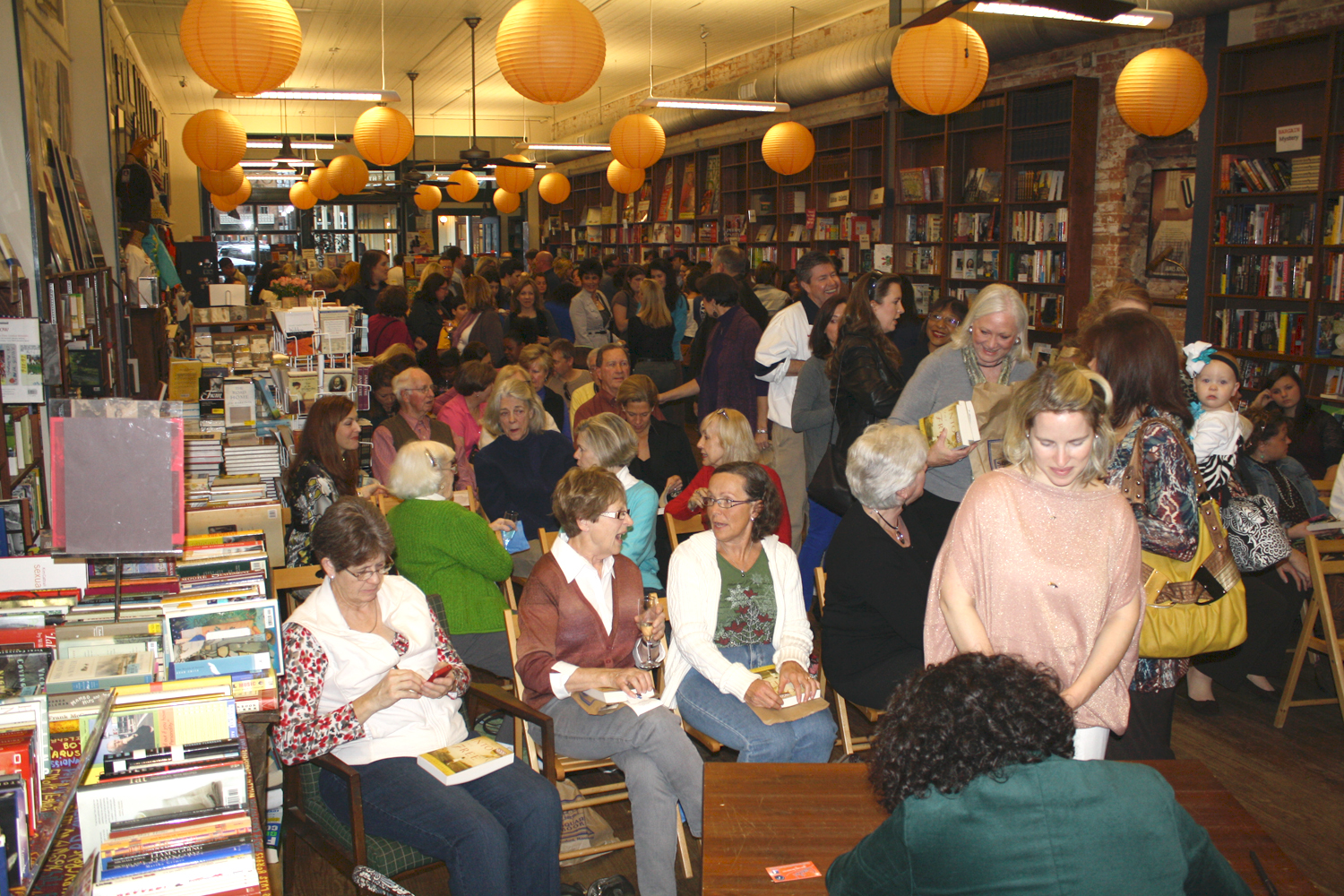
Photo Credit: Jeff McVay

When my debut novel hit shelves, I wanted to do something special. Too many people in my community had played a part in the journey, and I wanted everyone involved to be publicly acknowledged for their contributions to the book.

The night before the official release date, we held a Launch Party at our local bookstore, Square Books. I didn’t have a big budget, so we served Champagne and Chocolate to keep the event nice but affordable. (We also provided non-alcoholic bubbly so everyone could participate in the toast.) The night was lovely. Beyond lovely. And it will always be a favorite memory of mine.

If you’re thinking of having a launch party, and I strongly encourage you to do so, keep these simple tips in mind when planning your big event.

1. Consider your crowd. Ours is a laid back group from all walks of life, so I wanted everyone to feel comfortable. We kept it very low key and emphasized the “come as you are, bring the kids” aspect of the evening. The public was invited.
2. Consider your space. Our bookstore hosts many author events each month and is prepared for such crowds. It’s always great to support a local bookseller, but if you don’t have access to such a store/gift shop, think of themes that correspond with your book (knitting, outdoors, swimming, cooking, etc.) and tie the launch party into a suitable location.
3. Consider your time. A typical schedule is to have a “soft start.” Allow folks to trickle in and mingle, enjoying the free refreshments while you chat and sign a few copies to get the evening going. Then the bookseller (host) introduces you, and you speak for approximately 20 minutes. Then, you sign again.
4. Consider your speech. It’s best to mix up your presentation with a little reading, telling how the book came to be, thanking folks involved, and…if appropriate…inserting some sort of entertainment. I had two singers perform one song each to give voice to two of my favorite characters. Both gave emotional performances that moved many to tears, and I think it was the best part of the night.
5. Consider your signature. I admit I have AWFUL penmanship, but I do plan ahead and bring a stash of good pens. Always a good idea.

You’ll probably be too busy to think about taking pictures, so ask a friend to capture the night on film. Believe me, it’ll all be a blur. And don’t forget the minor details: wine glasses, champagne flutes, bottle openers, cake knife, napkins, plates, utensils, tablecloth, camera, extra books, bookmarks, etc.

Finally, if you plan to sell books at the launch, I strongly recommend you let someone else handle the sales. The last thing you want to worry about is money. It’s a once in a lifetime moment. Live it up!