All. Those. Books.

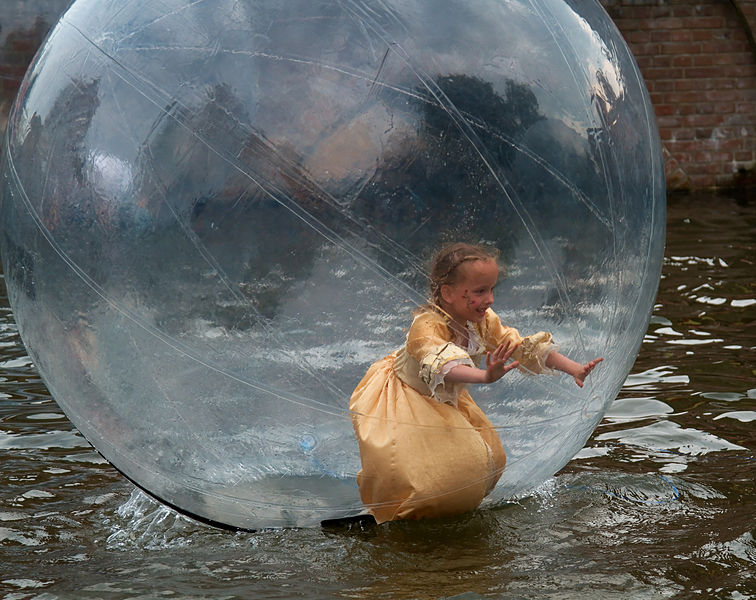
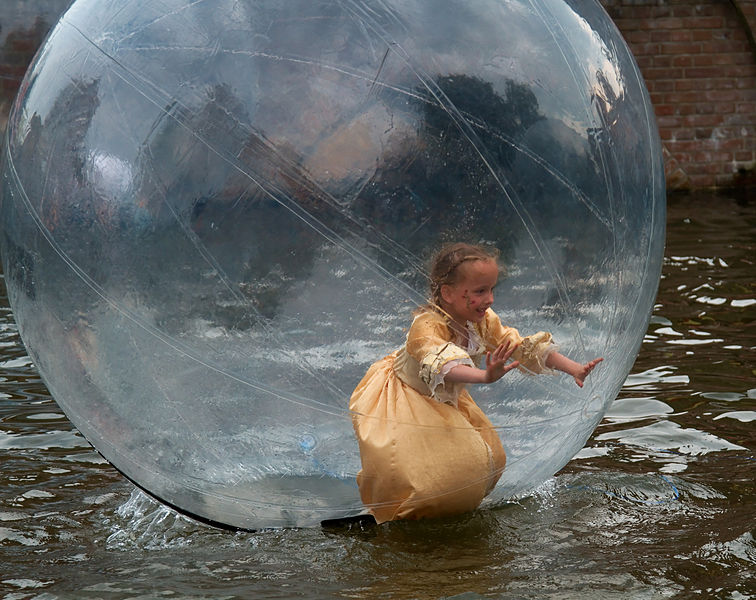
Princess in a Bubble: Sander van der Wel from Netherlands

Recently I totted up that, of the eighty or so college students I’ve taught this year (only about a half of whom were creative-writing-emphasis English majors), a good dozen have written novels. That’s a fifteen percent. They’ve completed novels, they tell me. A couple of them have written more than one.

I haven’t read any of these novels, so I can’t say if they’re any good. Judging from the student-novelists’ writing in other contexts, they’re probably not much worse than a lot of what gets published these days, but they’re probably not masterpieces.

Whether their novels are good or not, though, it seems important that there’s all this fiction-writing going on these days beside and beneath and perhaps instead of all the assignments and tests and papers and other writing that comprise a college education. I certainly wasn’t completing novels—not even short stories—back when I was their age, and I can’t think of a single classmate who was. I’ve been speculating what all these budding—nay, blossoming—young writers might mean for the state of literature in our time and for the writing community at large.

One thing that occurs to me right off is that young people these days must feel more invited and encouraged and empowered to write and publish novels than I ever was. That’s perhaps to be expected of the self-esteem building curriculum promoted in the generations between mine and theirs. I once had my seventh grade teacher’s Little Brown Handbook thrown across the room at me for chewing gum. They, on the other hand, were told they could do pretty much anything they wanted. Consequently, not a few of them went ahead and did that—which is sort of exciting, when you think about it.

Students these days are also very motivated to write. By what? one wonders. One incentive would surely be the myriad publishing opportunities available to writers these days. Several of my students have published their work online and two have paid to have their work published by what we used to call a vanity presses. Publishing has become something anyone can do, at any stage of life, often with little or no investment of resources beyond the time it took stole from a few games of online poker.

Due_sportelli_di_libreria_con_scaffali_di_libri_di_musicaAnother motivation could be the greater variety of subgenres popular with kids nowadays. When I was young, girls read Nancy Drew as tweens, then progressed directly to the classics (Austen, the Brontës, for me Defoe and Dickens); boys who read mostly read adventure or sci-fi then stopped; and everyone liked the odd fantasy stand out like J. R. R. Tolkien. Nowadays, bookstores and libraries have separate young adult sections with whole shelves of mystery/thrillers, even more shelves of fantasies, plus equally popular subgenres we never heard of in my day: apocalyptic, dystopian, historical fiction, alternative historical fiction, cyberpunk, steampunk, contemporary, Christian contemporary, romance, LGBT romance, Amish teen romance. . . The world of fiction these days is like a map of the brain: so much stuff going on, so much new vocabulary you need to even talk about it.

Then there are the novel-writing success stories: J. K. Rowling and her napkin, Christopher Paolini writing Eragon at fifteen, the almost immediate transformation of their and other books popular with young people into big screen movies. It looks so easy nowadays, writing a book. A flick of the pen and you’re there.

I guess the thing that fascinates me most about the novelists among my students is not their license and motivation to write or even the astounding investment of time involved but the enthusiasm they must bring to the fiction-writing enterprise: to prefer it over other more age-appropriate entertainments—such as, for me at their age, hanging out with friends, cooking, reading, learning aikido, making ceramic pots, scavenging my natural and suburban surroundings for sea urchins and kumquats, sewing.

(For them, playing video games, watching YouTube, poking their cellphones? Maybe it’s that. The screen-squinching narrowness of their entertainment alternatives. Writing has become their life before they’ve even had lives, I’m supposing. Although I’d have to read their books to know for sure.)

From everything I’ve heard in the news lately, reading’s on the wane, but writing sure isn’t. Either that or the students at Christian universities like mine are way different—more creative and prolific, harder working, more hip to the possibilities out there—than their secular peers. I’m guessing they’re not all that different, though. I’m guessing my anecdotal fifteen percent of kids these days—perhaps more!—are writing books in lieu of reading them (or maybe in addition to reading them, since somebody’s got to be reading all those cyberEpiscopalian dystopian romances) and will soon be filling the shelves and movie marquees with their opuses.

It’s becoming my new writerly nightmare. Used to, bookstores scared me. All. Those. Books! All that competition for readers. Now it’s them. My students. Our kids. Our kids’ kids.

This isn’t a very encouraging post, I fear, for fellow writers—especially those of a certain age—so let me just close with a little remediation in the self-esteem training some of us missed out on: Don’t. Give. Up. If they can do it, we can too!

Writing with a Hook

What will make your book fly off the shelves? A good story, high quality writing or a strong Fish-hookvoice won’t help you unless readers know your book exists.  And for that, you need such an interesting premise that readers around the country are chatting up your book. In other words, you need a hook.

Yes, the dreaded hook word. I’ve heard about for years, but it seemed rather elusive. But recently, I’ve been studying my bookshelves to find some broad categories of hooks, and it’s getting clearer. Here are a few concepts I’ve found.

  • Give beloved fairytales, historical figures, novels or paintings center or side stage. The Beekeeper’s Apprentice (Sherlock Holmes), While Beauty Slept (Sleeping Beauty), The Girl with a Pear Earring (Vermeer’s painting), Dear Mr. Knightley (a love for all things Jane Austen) and The Constant Princess (Henry VIII’s first wife) are all examples. Readers want to spend time with favorite characters and art.
  • Tie the story together with a hobby. Ordinary hobbies such as knitting and cooking can certainly draw in readers who enjoy knitting or cooking themselves, but if you can find a twist, this will make it stand out from the crowd. For example, in The Language of Flowers, two characters with a love of gardening send each other messages not with notes, but with flowers, each delivery carrying a symbolic meaning only they understood. Unique hobbies can give your story a little flash as well – i.e., custom shoe design or wild life rescue.
  • Allow readers to vicariously do something they’ve always wanted to do. I bought Forgotten because it was about a character who, after being stranded in Africa for several months, returns to find that her job, her romance and her apartment are all gone. She’ll have to recreate her life. Spoiler alert: the book did not live up to its promise of the heroine of getting a life makeover, but that promise is what made me buy it. What other deep seated desires will connect you to readers?
  • Create zinger beginnings or zinger twists. When an old man in the prologue of The Lost Wife tells a wedding guest she looks familiar, and at last figures out that she was his wife just before the Nazis invaded Prague, that certainly sent readers to Amazon’s checkout cart (me included). In Half Brother, a boy arrives home to find his mother holding a baby chimpanzee, and that’s interesting enough to catch a reader’s attention. Burying a zinger in the middle of the book is a harder sell, since it’s not something readers will see when they browse. But if it’s good enough, it can certainly get people talking about your book.
  • Start with vulnerable characters at risk. The little boy locked in the cupboard in Sarah’s Key is a great example of this. But even more ordinary risks – a teen without adult love or support (Dandelion Summer) or a Puritan woman being coerced to marry a man she doesn’t trust (Love’s Pursuit) are good draws. Readers only need to hear the concept to feel they need to see the character to safety.
  • Create a character the world depends on. High stakes Tom Clancy type novels where the character must stop nuclear bombs from detonating or bring an end to a plague outbreak, or fantasy novels where the hero/heroine holds the key to the coming war (Lord of the Rings, Blue Sword) are examples.
  • Begin the story with profound emotion readers can connect with. Remember, readers don’t know the story or the characters yet, so it must be something they can easily connect with. In Coldwater Revival, the heroine is apparently stillborn at birth, but begins to breathe with the loving attention she receives from her father. In If You Find me, a girl sees her father for the first time a decade after she was kidnapped.

Think about what made you pick up your last book, or even better, what had you chatting up the book to every reader you knew? Once you’ve found the quality that made it so compelling, you’ve probably found the hook.

Stupid Marketing Tips

stupidmarketingideasSo, here I was.

Sitting here, trying to think of a fabulous post about marketing books.

The thing is, the “m” word tends to bring up fabulous pictures in my head of those middle of the night moments when one of my children come to me, saying, “Mommy, my tummy hurts–” then proceeds to vomit all over my side of the bed and floor, at times giving me and my PJ’s a good dousing as well.

I, uh, am not the biggest fan of marketing, if you can’t tell.

I take that back. I LOVE the idea of marketing. I KNOW it is needed and I LOVE the bi-product of it: my books being known by people and being PURCHASED by people.

Maybe it just brings back bad middle school memories of trying to get people to like me when I was a pimple-faced, slightly overweight, 4-eyed and teeth-gapped teenager…. the thought of trying to get people to like my books (thereby, it feels like, ME) still creates that knee-jerk reaction to curl up on my bed with chocolate and a romance novel to take me to another place.

But enough about my traumatic teen years.

Marketing is hard for a LOT of writers. Maybe we can WRITE some fantastic marketing copy, but getting out there and trying to peddle books out of our comfort zone is HARD! (Those of you who find it super easy… feel free to market mine too. I won’t mind!)

But in putting ourselves out there, it’s also common to get tripped up by some really BAD marketing ideas, in an absence of good ones.

I remember when I first started researching publishing back in 2007 after I’d completed my first novel. I was searching online tips for getting an agent/editor to look at your book. One place touted the value of STANDING OUT in the slush pile. Print that proposal on colored paper! Use FUN fonts with lots of bolds and italics! Send goofy gifts that relate to your book in the mail to that editor. (one example was a baby shoe for a book about babies…??) Make them be like, WOW, this person is really SERIOUS about wanting to be published!

I laughed, then decided I would probably NEVER be published because no way, no how, would I ever sink that low to use silly gimmicks.

Then I found a few agent blogs that suggested that when they got those out-of-the-norm proposals, they were immediately trashed for their stupidity.

PHEW!

The same goes with marketing. Creativity is a MUST, but sometimes in the name of creativity, we stumble on ideas that can be counterproductive.

Here are just a few things I’ve seen over the past 8-ish years I’ve been on this journey–that have made me NOT want to read a book.

1.) THE WORLD IS ENDING! THIS BOOK IS YOUR ONLY SALVATION! Maybe not those words exactly, but scare tactics or broad, unsubstantiated claims does not a good marketing plan make. “THIS BOOK WILL CHANGE YOUR LIFE FOREVER.” (different than saying something a little more docile like life-changing fiction, etc) “GOD WANTS YOU TO READ THIS BOOK!” (let HIM tell me that, thank you!) Sure, you might get some saps to buy it, but you probably won’t find publishing success with this type of marketing for books.

2.) BUY MY BOOK (five minutes later) BUY MY BOOK (five minutes later) BUY MY BOOK (repeating 100 times per day!) Over posting on social media is a hard one, because there is a fine line. We NEED to be bold and proud of our books and market them on social media, no doubt. However, tact is needed. When my Facebook newsfeed is filled with 6 different posts by the same author marketing the same book all in the same day? It’s a good way to get yourself unfriended or at least blocked. Your Facebook marketing should draw people in, not annoy them.

3.) I MEAN, YOU DID BUY MY BOOK, RIGHT? Guilting people into buying your book is uncool. We all have different budgets and different reading tastes. I’ll readily admit, there are some writing friends I have (who will remain nameless) that I haven’t purchased their books. Why? Partially because I’m a broke mom of 4 kids trying to make a living as a writer. HA HA! But also, I have my writing friends than I have time. The idea of marketing is to ENTICE them to read your book, not twist their arm.

4.) NOTHING. This is the stupidest idea of all. Just not doing anything because you’re afraid of it. It’s the one I’m most guilty of. Oh, I market, but I’ll get an idea and think, ‘Oh, no, that’d totally bomb” and move on. Just like in publishing, sometimes you have to fail a few (or a hundred…) times before you find that golden ticket/agent/editor/marketing scheme. But if you just sit back, cross your fingers and toes, and hope your books sell? Yeah. That is the WORST marketing idea of them all!

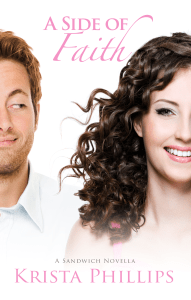
A Side of Faith - front only(putting a picture of my book of my most recent book release as well as a link to purchase it is an example of a not-as-stupid marketing idea… as is to mention that my next book, A Side of Hope, will be releasing later this month…. )

Finding the Fatal Flaw

It is the core of every struggle. The root cause of many reactions. It is a constant enemy lurking below the surface, waiting to rear its ugly head.

It’s the fatal flaw. Everyone has one. Every character has one, too.

I would argue that fatal flaws never completely go away. They just manifest in different ways as we grow and change and conquer certain circumstances. But what does this really look like?

Kariss Lynch Heart of a WarriorTake Superman. I would say his emotional fatal flaw, or one of them, is a deep desire to belong. It shapes his decisions and actions to blend in at the Daily Planet, settle down with Lois Lane, but still seek the true identity of his parents. We all know his physical flaw is kryptonite. Or Lois Lane, depending on how you look at it.

Choosing and shaping a fatal flaw proved an interesting challenge as I finished out my Heart of a Warrior series. I noticed there are multiple factors I need to account for as I select flaws for my characters.

Timeline

All three of my books take place over the course of fifteen months, which made it a challenge to have a fatal flaw that never disappears but consistently morphs. Kaylan, my main character, struggles with fear. Since our fatal flaws never really go away, I had to figure out how to cause this kryptonite to reemerge as she grew. In Shaken, she fears letting people close to her because of the loss of people she loved in the Haiti earthquake. In Shadowed, she has to learn to love a man she could lose at any second, Navy SEAL Nick Carmichael. In Surrendered, she will learn to accept Nick’s career and the constant danger, and not only accept it but thrive in his absences. The root of every one of her struggles is fear of losing a loved one, but as she accepts growth, the flaw manifests differently. Still always fear.

Complementing Characters

If you are writing romance, what fatal flaw will most threaten the relationship and will cause the characters to have to fight together to overcome? In Shadowed, Nick struggles with anger and detachment. This creates a challenge when Kaylan needs reassurance in her fear and Nick needs her to get over it and let him deploy in peace. Both characters grow as they learn what it looks like to merge two lives into one.

Plot and Theme

Shadowed_AUG 1 (1)Each book in this series, had to capture the overall theme: Anyone can develop the heart of a warrior if they are willing to have courage and commitment in the face of insurmountable obstacles. My fatal flaw for each character needed to threaten accomplishing this goal. Kaylan’s fear has the potential to stunt the relationship. Nick’s anger prohibits him from being a strong leader in his home and confident and in control in war. My villain’s flaw causes her to sabotage others in an effort to obtain what she secretly desires most but also never wants to have.

The fatal flaws is one of simplest yet most complex aspects of your character. Which flaws will create complicated conflict? How does that flaw force your character to respond? How will your character grow through the flaw?

One of my favorite ways to identify character growth and a consistent flaw is to follow a specific television series. Over time, you will notice a core struggle emerge. This helps me understand how to develop a character over the course of a book and over the course of a series. I’m still learning, but this is becoming one of my favorite parts of creating characters.

How do you identify your character’s fatal flaw?

Marketing Book #3 in a Series – Part Three

Three months into this marketing plan, I’ve been able to avoid a nervous breakdown, work on the edits for The Aleppo Code, and Kregel Publications is about to launch its spring marketing for the fall releases. Now is the time to pick up the pace.

SocialMediaI’m still working the basic plan:

Social Media:

  • Twitter – Daily
  • Facebook Page Posts – Daily
  • Blog Posts – Weekly
  • LinkedIn – Change Profile Monthly

Newsletter – Send out at least one Newsletter each month:

(One of my goals for the newsletter as we get closer to the launch is to use contests or other vehicles to tie the three books together as THE JERUSALEM PROPHECIES series … accelerate the idea of people thinking of them as a series.)


March – Contest: Guess two of the main scene locations used in The Aleppo Code. Some of the scenes in the first two books were The Collector’s Club and the Humanities and Social Science Library on Bryant Park, NYC; The Western Wall and Zechariah’s Tomb, Jerusalem; St. Anthony’s Monastery, Egypt; Cairn T, Loughcrew, County Meath, Ireland.

April/May – Tie in with Kregel Back List promotions.

June – Contest: What is The Most Powerful Weapon the world has ever seen?

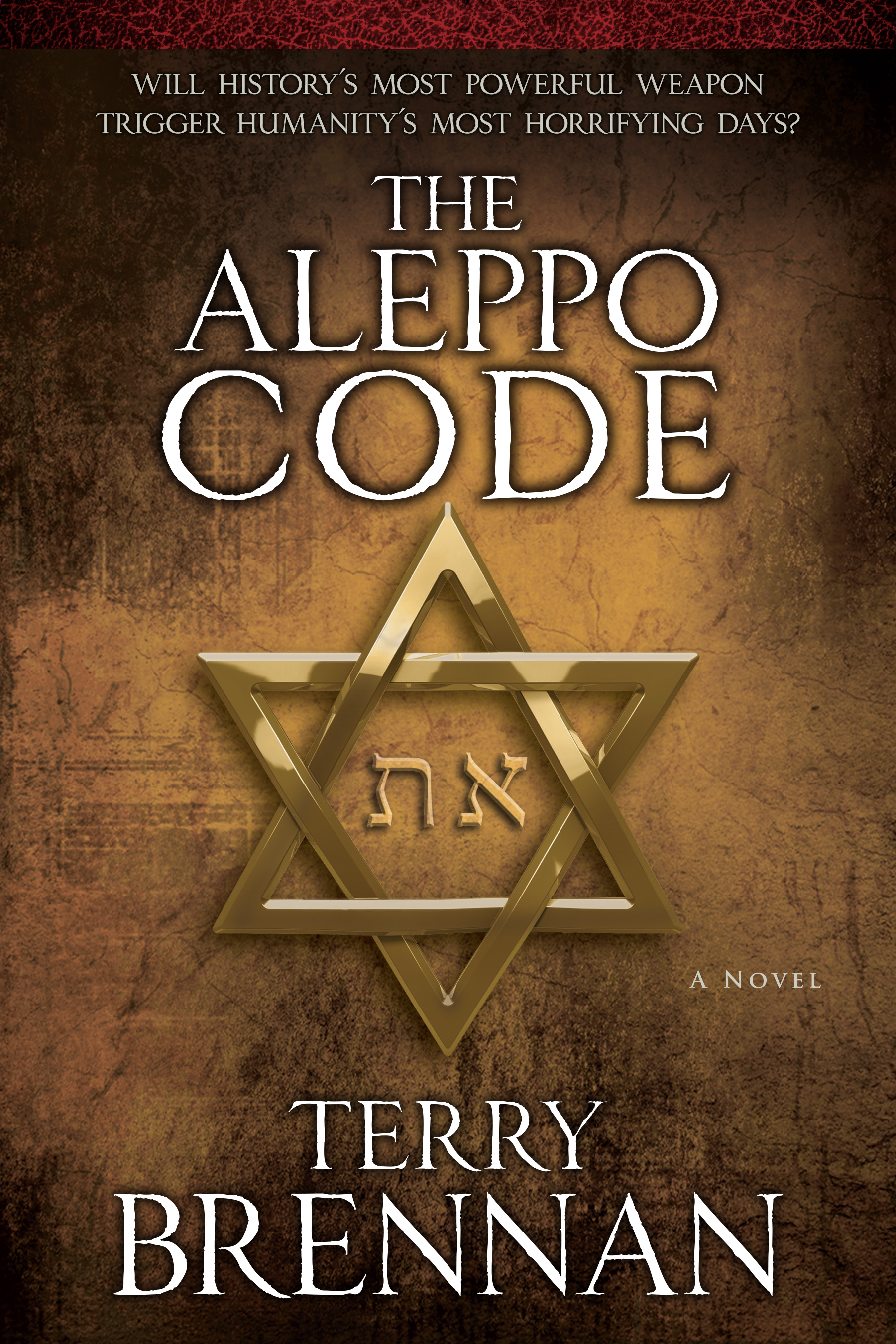
July/August – Unveil the cover of The Aleppo Code.Aleppo Code Cover

September – Promote the coming E-Book promotion from Kregel.

October – Launch date for The Aleppo Code – create some tie in to ‘Midnight Madness’ … at midnight of launch day, the first 12 people who send me an email get a free autographed copy of The Aleppo Code.

Tasks For Me to Tackle:

  • Keep my website and Facebook Author page active and current.
  • Schedule out-of-town speaking engagements for May through December, particularly in those areas where I show higher readership; (This one is a reach, but it’s worth a try.)
  • Engage services of a marketing consultant to increase my standing and visibility as an ‘expert’ speaker on events in the Middle East.
  • In the summer, begin purchasing advertising on Facebook (Goodreads? Other outlets?) and discuss with Kregel and marketing consultant how to get the most impact and best results from these ads.
  • As the launch date gets closer, recreate some of the Guerilla Marketing that I did in New York City prior to the launch of The Sacred Cipher … plaster subways and Metro North trains with The Aleppo Code postcards … when the books show up, visit every B&N in New York City area, hand out post cards, autograph the in-store books, talk to store staff about placement.
  • In September/October schedule local speaking engagements/book signings including local libraries, churches, etc.
  • Arrange in advance for on-line interviews and any other interaction I can have with bloggers, reviewers, podcast producers, etc.
  • Tasks For Kregel to Tackle:
  • Continue to actively market the new series title – THE JERUSALEM PROPHECIES – in all possible outlets.
  • A place we stumbled during the launch of The Brotherhood Conspiracy is that the reviewers on the blog tour were different than the ones used for The Sacred Cipher. Many of the early reviews started “I wish I had known this was a sequel …” For that reason, setting up an effective blog tour for The Aleppo Code is critical.

(One of the great commitments Kregel has agreed to is to strengthen the blog tour for the Aleppo Code. Under consideration is a blog tour that provides all three books for the reviewers, so they can follow the story arc of the series.)


  • Implement a Back-List promotion to drive people to book stores.
    • Create E-Book promotion for both The Sacred Cipher and The Brotherhood Conspiracy prior to the launch of The Aleppo Code.

I’ve learned a few things from creating this marketing plan and then trying to implement it. One, this marketing stuff takes a real commitment – and a lot of time. Two, it’s worth it. And, three, the work doesn’t end once the book is launched. Great … when do I get some sleep?

Have you ever developed a marketing strategy like this? What was the most successful thing you did?

Marketing Book #3 in a Series – Part Two

How to Breathe Life Into A Back-List

MarketingI’ve never been much at the marketing side of this writing business … and I was born in the wrong generation to be adept at social media.

But I knew I had to do something out of my comfort zone. My first book, The Sacred Cipher, is still going strong after five years. Sales for its sequel, The Brotherhood Conspiracy, are disappointing. With the third and last book of the series, The Aleppo Code, due for an October launch, I needed to get to work.

So I proposed a year-long marketing plan to my publisher, Kregel Publications, and asked for their support and participation. This is what I proposed for the first three months:

The Marketing Plan – December thru February:

  • Social Media:
    • Twitter – Daily
    • Facebook Page Posts – Daily
    • Blog Posts – Weekly
    • LinkedIn – Change Profile Monthly
  • Newsletter – Send out at least one Newsletter each month (I currently have over 1,000 active email addresses in my mailing list and cull it after every mailing). A regular newsletter proved to be very valuable in creating buzz for the first book:
    • December – Announce the name of the series – THE JERUSALEM PROPHECIES series; Promote the October launch of the third installment; create a giveaway offer for Conspiracy and promote it in Facebook posts and on website.
    • January – Run a contest – What will be the section titles for The Aleppo Code?
      • Put all contests up on my website and on my Facebook Page – blog post and Tweet about them;
    • February – Additional clues for the section titles contest; Promote Kregel’s month-long Book Giveaway promotion on Goodreads.com.

What Was I Willing to Do?

  • Tasks for me to tackle:
    • Look for ways to expand my marketing reach – Connect with other CBA thriller writers to cross-promote … Follow 10 journalists on Twitter … Follow 10 thriller writers on Facebook – friend them and follow them (all in progress).
    • Begin sending personal messages to my 500-plus Facebook “Friends”.
      • Ask them to “Like” my Facebook Author page and be a follower on Twitter.
      • Write 50 posts per month for 10 months leading up to Aleppo Code launch.
      • Get them all done at least 30 days prior to Aleppo launch, if possible.

Authors on Facebook

(As of January 27, I have written personal Facebook messages to 186 of my 507 Facebook “friends”, asking them to click on the link and “Like” my Facebook Author page. My “Likes” have increased from 134 to 209, up 71 in the last week – 545% from the previous week )


What Was I Asking Kregel to Do?

  • Tasks for Kregel to tackle:
    • There is no obvious link connecting the first two books into a series. I asked a lot from Kregel to help create that linkage.
      • Redesign the E-Book covers to add THE JERUSALEM PROPHECIES to the cover … or add a tag line under my name on the cover, “Author of …”
      • Create “Back Ads” in each book promoting the others … or add thumbnails of the book covers to the bottom of the back cover.

(A lot of these requests were not practical. The marketing staff at Kregel explained that it would be too confusing to make changes to the covers of the E-Books on Amazon or Barnes & Noble but not be able to make any changes to the printed books already in circulation. But they did agree to create Back Ads (pages inside the books promoting the other books in the series) in The Aleppo Code and – if it goes to another printing – in The Sacred Cipher. – Terry)


  • I also asked Kregel to implement an E-Book promotion in February for both The Sacred Cipher and The Brotherhood Conspiracy. During an E-Book promotion in January of 2014, Cipher hit #2 and Brotherhood hit #6 in all E-Book sales on Amazon for that week. Wow! Let’s do it again.

(The entire E-Book promotion I asked for in February has been moved back to coincide with the launch of The Aleppo Code. The marketing staff at Kregel explained that there is a law of diminishing returns with E-Book promotions. They did one a year ago for both books and believe postponing the E-Book promotion until the fall will benefit all three books.)

February 6th: Accelerating the Pace Down the Stretch.

WordServe News: January 2015

Exciting things have been happening at WordServe Literary!

On the final post of each month you’ll find a list of Water Cooler contributors’ books releasing in the upcoming month along with a recap of WordServe client news from the current month.

New Releases

Daniel Allen released his second book, Summoned, with IVP Books. 9780830836871_p0_v2_s260x420

*************************************************************************************************

Jim Burns and Doug Fields released the workbook companion to their book Getting9780781412186_p0_v1_s260x420 Ready for Marriage with David C. Cook publishers.

************************************************************************************************

Michelle Griep released a regency novel with Barbour Books, Brentwood’s Ward. 9781630586799_p0_v1_s260x420


************************************************************************************************

Kate Hurley released her debut nonfiction with Harvest House Publishers, Cupid Is a 9780736962261_p0_v2_s260x420Procrastinator.


***********************************************************************************************

What We’re Celebrating!!

Deb Coty’s Fear, Faith, and a Fistful of Chocolate won an Illumination Book Award: Shining a Light On Exemplary Christian Books!

How to Avoid the Second-Book Slump

How to Avoid the Second-Book Slump @JanalynVoigtWriting, like marriage, is an odd mixture of passion and duty. The same writers who speak of “falling in love” with a story complain about “having to” edit it. Some marriages are easier than others, and that’s also true of books. Some pearls make it to publication with few edits, but often, by the time a novel reaches readers, its writer is sick of working on it. Given these conditions, it’s not surprising to learn that the second book in a series frequently disappoints readers. Preventing this from happening to your second book requires a look at this syndrome’s causes.

Time Frame  

A debut novel usually benefits from years of labor as its author polishes it over and over in order to land a contract. But a second novel, when contracted from a synopsis and likely written in a matter of months, doesn’t go through as strenuous a process.

Solutions:

  • Simply being aware of this as a problem is half the battle. Commit to giving your second book your all, just as you did with your first.
  • Before you submit your second manuscript, make sure you put it in front of a number of “eyes.” Accept knowledgeable critiques, remarks from beta readers, and/or paid editorial advice.

Interruptions

A writer often has to set aside writing the second book in a series to work on edits and/or promotion for the first. While necessary, interruptions stifle the creative flow. Most writers find returning to a cold manuscript difficult.

Solutions:

  • Have all books in a series written before you submit them for publication. Previously, writers held off on writing a second book until the first had sold. This made sense because publication usually went through traditional publishers. These days it’s harder to win that traditional contract but easier to become published. Take this advice if you would hire an editor and independently publish your work, should it fail to land a traditional contract.
  • Learn to write your first draft quickly so that, by the time edits for the first book hit, you’re ready for them.
  • Dedicate part of your day to writing and part to editing, with a break in between. Your brain will learn to readily switch gears.

Conflicting Emotions

During edits, writers must face, accept, and overcome their own weaknesses. The angst this causes can attach itself in the writer’s mind to the series itself. To draw a parallel from marriage: While undergoing marital counseling , it can be hard to remember first love.

Solutions:

  • Go back over your notes or read earlier entries in a writing journal to remind yourself why you love this series.
  • Reconnect with your novel’s theme, which you hopefully drew from one of your passions.  Prayer and meditation can help.

Eroded Confidence

It’s common knowledge that artistic people are their own worst critics, and that’s certainly true of writers. As a result, while dealing with edits it’s easy to lose confidence and take fewer risks with the second book, which can rob it of zeal.

Solutions:

  • Re-read any endorsements or encouraging comments you received for your first novel.
  • Remind yourself that your publisher believes in you enough to work with you.
  • Give yourself permission to dream about what could happen in your story. Don’t censor your ideas, but simply write them down. And when you go back over your brainstorming session, be wise but bold.

Creative Desire  

When the passion in a marriage fizzles, it’s tempting to look elsewhere for fulfillment. In the same way, when a writer loses that loving feeling for a project, other tempting ideas can siphon creative energy and distract attention. This has an adulterating effect on the work at hand.

Solutions:

  • Rather than ignoring new ideas, write them down (briefly) and save them for later. This keeps them percolating on the back burner until you’re ready for them.
  • Stir your passion for the work at hand by dreaming about the story, exploring the nuances of its characters, and mentally writing the next scene.

If you follow these steps, you’ll soon recapture your passion for your series.

Can you suggest some other ways to revive your writing mid-series?

How to Avoid the Second-Book Slump was first published at Live Write Breathe, Janalyn Voigt’s website for writers.

Lessons I Learned From My Editor

From conception to finish, I spent a couple of years on my first novel, Shaken. I had a mentor who coached me, a professor who professionally edited the manuscript, and an internationally acclaimed novelist who provided a critique. But nothing affected my story quite as much as signing with my publisher and beginning work with my editor.

Writing is difficult. You are bleeding your emotional artery on the page, complete with life experiences, beliefs, and creativity. But editing? That became another playing field entirely. In my military-romance-driven brain, it could be described as surgery to remove shrapnel. Each piece of metal must be plucked for an individual to get back to full health. In a similar way, editing requires painful digging to remove everything that does not add value to the character. After the shrapnel of your story is removed, you are freed to enhance and improve your story until it’s as close to perfection as you can get it this side of heaven.

KarissLynch Kill Your Darlings

Working with an editor is refining, a true process of iron sharpening iron (just don’t throw the sword at them if you don’t like what they say), but ultimately, it is a beautiful journey. The longer I work with my editor, the more I am thankful that God gifted her to look at stories differently than I do. She makes me better, and she is constantly teaching me and reminding me of craft tips that just haven’t taken root yet. Over the course of writing The Heart of a Warrior series, here is what my editor has taught me:

  1. Timeline is everything.

By the time my first novel went to my editor, the timeline needed major surgery, something I hadn’t thought about in great detail during crafting. I am a pantser and only use a bullet point outline to guide the major points of my scenes. Everything else just spills out on the page. This can make editing much harder for me. When it came time to edit Shadowed, I had a better timeline in place. Lesson learned? Don’t make the same mistakes on the second novel as you did on the first.

  1. Ground your character. Ground your scene.

Ever heard of floating head syndrome? No? Well, that’s probably because I just made it up. But I have it. Bad. Especially when I am writing in a steady stream of consciousness. Characters speak but you don’t know what they look like or what is going on around them. Thankfully, I am now aware of this ailment and am working to correct it before the manuscript goes to my editor. Each character needs to be firmly grounded in whatever is going on, each person in the scene accounted for, even if only briefly. Your scene also needs to be grounded within the larger story. Your reader should have no question where the character is, what is going on, who the character is with, and what drama is unfolding.

  1. Provide concrete details. Paint the canvas.

I actually love this part of writing, but I also struggle with fear. What if people think that a place or person doesn’t look that way? What if I get a detail wrong? What if, what if, what if? The “what if” game keeps me paralyzed from simply using my imagination and the beautiful tools of my eyes and the Internet to ground a scene exactly as I see it. I use research to make sure I didn’t get a basic detail wrong, but otherwise, I craft exactly what I want the reader to see. They are less likely to question what I paint in great detail than they are a canvas where I leave glaring holes due to my own people-pleasing and insecurity. No fear. Write boldly. Paint that canvas, and give the readers a scene they don’t have to try to imagine. Let it unfold in all of its beautiful detail. And then make that process even better in the next book.

Time for surgery on your manuscript. What weaknesses do you notice that you could improve on next time? What lessons have you learned from your editor (or critique partner)?

Making It Real

Hoh River Cascading Through RainforestWhen I first started writing my Birder Murder Mystery series, I wanted readers to feel like they were actually walking in the footsteps of my protagonist, so it was a logical choice for me to use real locations for book settings. What I didn’t realize at the time was how much readers enjoy books that take place in areas they know and how much those real places can shape what I write. Once I figured out that my real locations were one of the more powerful means of attracting readers, I began using real places as much as possible, not only for marketing later, but to provide me with inspiration for other pieces of my story.

As a result, I now take detailed notes of places I visit in the course of my book research. Fat Daddy's BBQ in WeslacoFor instance, last January, I was researching McAllen, Texas, for my next murder mystery. Since friends had recommended I try the barbeque at Fat Daddy’s, I made sure I had lunch there one day. As I ate, I observed that large groups of National Guardsmen sat at many of the tables, which I also noted in my daily travel journal, along with descriptions of the patriotic posters and flags adorning the walls. When I developed my plot, I found that the soldiers I’d seen could play into my story in a critical juncture, so I wrote them in – something I never would have come up with if I hadn’t personally visited Fat Daddy’s. Now, when anyone from the area reads the book, they’ll immediately be able to say, “this author really was here!” and it gives me the instant credibility which every fiction writer craves to lure readers into the story.

diner open signAnother big benefit of writing real places into your books is that some readers identify so much with a favorite place, they tend to talk about your book simply because of the setting. In one of my books, I used a small diner where one of my daughters waitressed years ago. Not only did it give the story a strong local connection, but once it was published, the diner owners prominently displayed the book, which delighted all their customers, who then told their friends that their favorite diner was in a book. By using the diner as a piece of my story, I also didn’t have to think twice about what that setting would look like, because all I had to do was describe what I saw.

Perhaps the best guideline I can provide about using real places in your fiction is the rule my publisher gave me: If you say nice things about a place, use the real name; if you want to be negative, make up a place. That should give you more readers and happier business owners (who will become your friends if they aren’t already!), and much less chance of getting sued.

Who knows? You might even get a sandwich named after you…