Are We Ready?

My latest romantic suspense novel released yesterday. The Morning Star Rises is the third book in The Seven Trilogy, after The End Begins and The Dragon Roars. In a recent interview, I was asked if I thought I had accomplished the purpose I’d had for the series when I set out to write it.
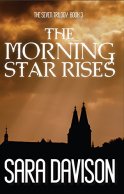
51vdnmrjnkl

It was a great question because it made me stop and ask myself what that purpose had actually been, something every author should probably do. Had I wanted to tell a strong, compelling story? Yes. Did I want to be obedient and write the story God had given me to the best of my ability? Always. But what was my unique, specific purpose for this particular trilogy?

Thankfully, I knew the answer. My hope and purpose in writing The Seven Trilogy was to pose the question, “Are We Ready?” to the North American church, the body of Christ, in the twenty-first century.

Times are changing. There is a shift in society that can be felt in the air and seen and heard in the public square in both written and spoken form. Hostility toward Christianity and the Bible is growing. If, as a society, we continue on our current trajectory, the very real possibility of persecution of believers could soon exist, not just in other countries around the world, but right here, in the west.

Are we ready?

In writing The Seven Trilogy, I created a world, forty years in the future, in which such persecution is not a rumour, not a distant, far-off possibility, but reality. With Canada under martial law after a radical group calling itself Christian blows up several mosques across the country, the military is sent in to oppress and keep an eye on believers. Basic rights such as owning a Bible, teaching Christian principles to children, and receiving a fair trial are stripped away. Punishments are meted out swiftly and ruthlessly.

Army Captain Jesse Christenson and believer Meryn O’Reilly find themselves on opposite sides of a ideological chasm that seems impossible to bridge. Can they find a way to be together?

In the midst of the chaos and confusion of this time, when everything they believed in when it was easy to believe is put to the test, the Christians in the story cling to two truths: God is still on his throne, and he has not abandoned them.

A common thread among reviews of the first two novels is that the story made readers stop and think about what they really did believe, how much they were willing to sacrifice for those beliefs, and whether or not they would be able to withstand the threat of severe persecution.

So we’re thinking about whether or not we’re ready. And we’re talking about it, me as much as anyone. Because I didn’t write the books as someone who had it all figured out and wanted to impart my great wisdom on the subject to everyone else. I wrote them as someone deeply concerned, not only about whether the church as a whole is ready for what is to come, but about whether I am ready.

I still don’t know. There is no way to know, really, until what is coming actually arrives. But we can take steps to prepare ourselves.

The believers in these novels wish they had read more, studied more, committed more Scripture to memory before it was taken from them. We still have time to do that.

They regret not doing more to share the gospel with their children and with everyone else in their lives before they had to risk their lives to do so. We can still talk freely about the gospel and expect to receive openness and interest at best, or mocking and dismissal at worst.

After all churches are closed, they agree to continue to meet in secret, risking imprisonment if they are caught. We are still able to meet and worship openly without fear of reprisal.

There is still time, but time does appear to be running out. If The Seven Trilogy inspires believers (including me) to ask ourselves if we are ready, if it generates discussion and gets us thinking about the best way to use the time, resources, and freedoms we have left wisely and effectively, if it drives us to our knees to ask God to help us prepare ourselves and our families for whatever the future brings, then yes, its purpose will have been served.

The Good Editor

typewriter-584696_640 Every writer needs a good editor. There are no exceptions. Typing away at the computer may be a solitary adventure, but bringing a well-rounded story to readers is a collaborative effort with a lot of players on the team. One of the most necessary players is a good editor. This is so much more than catching a typo or fixing a sentence that ends in a preposition or realizing you meant effect and not affect. It’s more than knowing what AP Style or Chicago Style is and when to use what, where.

Keely Boeving, a freelance editor who has worked with me on one of my novels, said, “I consider myself an advocate for the reader. My goal is not to change a writer’s style or intent, but rather to draw it out—to help them say what they truly want to say in a way that resonates with readers. Translating what a writer conceives in their creative mind into words on a page can be tricky, and an external observer—an editor—can help facilitate the translation in order to help writers achieve their intent.”

A good editor gets you and can see where the story is going without the need to add in their own two cents’ worth. The really good ones are part fan who write notes about the parts they really like, part brave hero who can tell a writer they need to take out that beloved chapter, and part mind reader who can ask just the right question about that part you thought was clear.

Taking the time and investing the money in an editor can help you get an agent or a publisher to read past that first page. Not taking that step may mean a lot of rejections for a good story that just needed a little more work.

Some tips when looking for the right editor:

  1. Gather information. Ask for the editor’s background and do they specialize in your type of work. Ask them for names/emails of writers they’ve worked with before. Write a short email to the writers asking them about their experience. See if the editor has ever worked with your genre. Keely worked in New York for over four years and is now a part of the WordServe family, as well as working as a freelance editor.
  2. Be clear about your expectations. Talk about cost and when payment is expected. Be true to your budget and keep searching if someone is out of your price range. Talk about your timeline and whether the fee includes second or third rounds of edits. If you have a deadline that can’t be missed, say so up front and take no for an answer if you hear ‘maybe’.
  3. Talk about how you expect to receive the edits. Some editors and some writers still use the printed page. I prefer Track Changes and comments but I still run into people who don’t and prefer mailing that manuscript back and forth.
  4. When you get the edits back, read over them briefly and put the manuscript down. Go find something fun to do and let it go for a day. On my initial read there’s always one or two things that I don’t agree with at all… until the next day. Often, those are the changes that fixed something that would have tripped up a lot of readers but was pretty easy to fix. Don’t let that become the reason you don’t sell a work.
  5. Take what you like and be willing to leave the rest. There will be moments when a suggested edit changes the intention of a scene or the voice of a character. Have some confidence in your idea and know when to say no. Reason it out with the editor, as well. It could also be that the setup isn’t fully there but with some tweaking, your story gets stronger. If you don’t feel like you’re being heard, you have the wrong editor.

One last thing. Celebrate every part of the journey as a writer, including this one. You took an idea from your mind and put it down on paper. That’s a big accomplishment. Now on to the next step.

How I boosted my book to 30x more people

ebookI finally bit the bullet. I boosted a post on Facebook.

For years, I’ve seen that annoying little message you get on your author page about paying to boost your posts. Because I’m cheap (and still suspicious of social media’s REAL intent, i.e. who needs to know what I buy, who I connect with, and what I like? Creepy…), I refused to give it a try. If my books can’t make it on their own merits, so be it – I’ll be content with small audiences, extremely limited financial reward, and the personal gratification that I haven’t caved to crass commercialism.

And then last month after I started getting consistent raves about my new thriller “Heaven’s Gate,” I thought, “What the heck. It’s only $20.”

Actually, it ended up being $60, since I decided if I was going to experiment, I wanted to see what a week of boosted posts could do rather than one day, which is what $20 will buy. Knowing that most buyers need to be exposed to a product seven times before they buy (do you know the Rule of Seven?), I figured one day of boosting was throwing away cash, but seven days might just convert into some sales. I can now tell you, without reservation, that $60 worth of boosting on Facebook can go a long way in giving your book exposure and building your audience, and now I can’t wait to give my other books the same treatment.

Here are the numbers from my week-long experiment:

  1. Organic reach peaked at 305 on Day 7, while paid reach was 9045. That’s 30x more people reached than my normal posting! Not only that, but thanks to my OCD tendencies, I checked one last time on Day 10 (remember I only paid for 7 days of boosting) and was happy to see a new total of 9432. The post was still being shared after my paid boosting! Score!
  2. I monitored my book’s print and ebook rankings on my amazon Author Central page (you do have one of these, right?) for the boosting’s duration. By Day 6, my ebook ranking had reached 924 in the Paranormal category after starting on Day 1 at 3366; the biggest jump was from Day 1 to Day 2, which tells me that first burst of posting made an impact that powered the rest of the week. Recalling the Rule of Seven and the impact of repeated impressions, though, I looked again on Day 18, only to find my ebook ranking better than ever at 831!
  3. As for print, my book moved from its initial 76,331 ranking to 8535 on Day 5. Clearly, somebody was paying attention.

Even knowing that rankings are a superficial measure (rankings don’t equal sale units), I decided that post boosting may not be such a bad idea for marketing after all. While the actual sales numbers are still in question, I know for a fact that more people have seen my book’s cover thanks to post boosting than would have otherwise. And that’s one step closer to buying my book.

Have you tried Facebook post boosting? What was your experience?

Surviving the Valley

You hear a lot on the writing journey that it’s filled with highs and lows—probably more so in publishing because it’s rapidly changing and I personally wouldn’t consider any part of the industry stable or predictable.

valley-of-fire-1390258_1920The problem is the valley is hard. What exactly do you do? Do you give up writing? How do you readjust to keep your writing career moving forward when seemingly no one wants the words you’re putting on the page?
My writing valley (really—the deep dark hole of despair) started after my first trilogy was published. I worked really hard marketing those books, had great reviews, and two out of three of the books were each nominated for multiple awards. I was even told by my publisher that I was (at one point) their second-bestselling fiction author.

I thought there was no way my next proposal wouldn’t be picked up—by somebody. Well, it wasn’t and to be honest it put me in a psychological funk. I was pretty convinced that my envisioned bestselling author status dreams were rapidly crumbling in front of my eyes.

I’ve come through my first major valley (I’m sure one of many to come) and I thought I’d share what I did to survive it without throwing my writing career in the trash and lighting it on fire.

  1. Grieve. It’s okay to be sad about it. The writing life is unpredictable—even that’s a pretty generous understatement. Your writing life didn’t go as planned and it’s hard to readjust dreams sometime—but do readjust.
  2. Help other authors. Help them promote their books. Read books for endorsement. Review novels. Keep your name in the reader’s mind by having your name on their books.
  3. Stay active on social media. Even if you’re not publishing, keep engaging with your readers and other authors.
  4. Keep writing and learning the writing craft. Above all else—don’t stop writing. Journal. Blog. Write a new book proposal. Use this time to brush up on the areas of your writing that aren’t strong. Read those numerous writing craft books that have been piling up beside your bed (come on, I know you have them!) Learn those pesky computer things you’ve been putting off. Scrivner. Newsletter distribution sites. Take an on-line writing course. Even James Patterson has one now that’s very reasonably priced.
  5. Write outside your genre. During my valley, an editor from Guideposts reached out to me and asked me to audition for a cozy mystery series they were putting together. Hmm. Cozy mystery? I write thrillers. Straight up thrillers. I honestly didn’t think I could write gentle enough for a cozy mystery, but what else was I really doing? So I tried it. My first submission, well, you could probably predict the feedback I received. Too dark. The heroine’s not cheery enough. By the way, this surprised no one that knew me. But I resubmitted—and they loved it! And then the series didn’t move forward. I auditioned for a different Guideposts series and washed out again. Maybe cozy mystery wasn’t for me, but it did prove I could write something other than thrillers and I built bridges to editors at Guideposts even if they didn’t take me on for those projects.
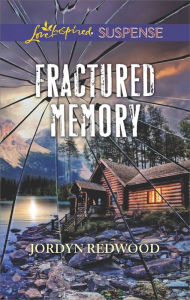
  6. Fractured MemoryListen to God’s nudgings. Looking back with perfect vision, I felt that God used the Guideposts experience to get me to write outside my comfort zone. During this process, I started thinking about a contest called Blurb to Book that Love Inspired was hosting. Never did I imagine I would write for them. I didn’t think I was a good fit, but I found myself obsessing about this contest to the point where I couldn’t sleep. So I entered, and I ended up winning a contract for Fractured Memory, my novel releasing this month from Love Inspired Suspense. Suddenly, I was clawing my way out of that dark writing well.
  7. Go indie. In this writing age, there is literally no reason to not have content out for readers. Don’t quit your day job and scrap and save every penny you can to hire a good editor, proofreader, and book cover designer. I do say this with some caution—be sure you put out a good book! Don’t sabotage yourself into another pit.

Overall, take the valley as a place that can provide rest, rejuvenation, and growth. Perhaps you will need to go back to a paying job or postpone the plans that you had of quitting or reducing your hours. Just know that the valley is survivable and it doesn’t have to mean the demise of your writing career.

Tell me, how have you survived low points in your writing career?


How to make your readers SUPERfans!

supermanWhen you have a book published – be it in print or ebook – you want to get as much publicity as possible to sell copies, right?

Right!

Do your fans know this?

Well, yes, I think they do.

You THINK they do?

Here’s my suggestion: tell them you need their help to generate that publicity. You need their word-of-mouth to help your book get launched amidst the thousands of books that are available.

You need to give them the 3 Rs of superfans: Read, Review, and maybe most importantly, Rave!

With the launch of my newest suspense novel, Heaven’s Gate, I put together a launch team of thirty readers who agreed to read and post a review on amazon.com and whatever other social networks they had, along with any word-of-mouth recommendations they might be able to give. Like many writers, I’m not especially fond of online marketing because it takes a lot of my time, but the fact is, writers in the 21st century need to cultivate their presence on it. (I, personally, have had varying success with different networks, but I continue to learn and work at it because I’ve seen its value at different times. Let’s face it, if there’s a gathering of readers anywhere – even online – don’t you think an author would be remiss to ignore it?) What I’ve discovered since my book debuted last month, however, has added another piece to my formula of reading and reviewing: you need readers to RAVE about a book to influence others to buy.

So far, maybe this seems evident to you, but this next comment might catch your attention: I learned that you need to tell your readers what to write. I don’t mean give them a script – you  want their honest reaction. But what you need to do is empower your readers to write raving reviews, which result from two things: an awesome reading experience (which you have crafted with your book!) and a vocabulary that will reinforce what you want them to say.

Simply suggest key words you’d like your reviewers to use.

At first, I felt odd suggesting words to my readers to use in constructing their reviews. Then I realized that key words are…well…key. Keys, actually, to triggering the all-important call-to-action that every author needs to make to potential readers: You Need To Buy This Book Now. And guess what? Your reviewers are often very grateful to have your suggestions, because they want to write a strong review for you, but are often lacking in promotional experience and don’t know how to best help you with their review. I asked my reviewers to use the words suspense, supernatural, Archangels series, faith and science, String theory, fast ride, and thriller. They did, and as a result, the reviews for Heaven’s Gate present a consistent rave of being a book you can’t put down, which has cued new readers to order the book.ebook

Remember, your fans want you to succeed. Making it easier for them to help you is the least you can do!


How to write REAL dialogue? Listen up!

listenI have a secret weapon when it comes to developing authentic, convincingly real dialogue in my novels: my ear.

That’s not to say that I am an eavesdropper. I do not lurk around others at cocktail parties (Cocktail parties? Do those even exist anymore in our online-saturated world?), nor do I silently sidle up to people talking on their cell phones. The fact is, when I am involved in a conversation, I try to listen very consciously and pay attention to how ideas are expressed, how a dialogue moves from beginning to end, and what it actually sounds like.

And when I hear a particularly memorable line, I steal it.

The result?

My characters say the same things that living, breathing, people actually say.

I know this is one of the keys to my success in creating characters because I always have readers enthuse to me about how “real” my characters are.

“I swear I know your characters,” a reader tells me. “They talk just like my friends do. If I didn’t know better, I’d think that you’d been secretly recording our conversations!”

Confession: I actually considered carrying around a small recorder early in my writing career to capture great lines of conversation, but decided that was too creepy. Instead, I developed the habit of repeating a line in my head until I had it memorized to copy down later. Almost miraculously, the rest of the conversation comes back to me for use in scene development, and that’s when I apply artistic license and my own imagination to craft it into my plot.

Until recently, I thought that was the way every writer developed dialogue: relying on your own ear. But then my daughter shared with me an experience she’d just had with readers of her fan fiction.

“I had so many readers comment on how much they loved this one line from a character,” she happily told me, “and it was verbatim what a friend said to me when he tasted some brownies I made. Seriously, all the best lines come straight from someone’s mouth! Forget struggling to come up with zingers – all you have to do is listen to the people around you.”

That simply confirms what I tell my audiences when I speak about my writing. I can’t take credit for some of the best dialogue in my books, because I didn’t make it up. I just recorded what I heard someone else say. In so many cases, the real world provides much better, more authentic material than I could ever dream up. Not only that, but listening carefully to conversation helps you develop pacing and timing that mimics real people, which is a huge benefit when you’re working with fictional characters.

The next time you’re stumped for dialogue, give your keyboard a rest, and instead, go talk to someone and put your ear to work. It really is surprising what people might say, and what you can do with it.


Pantser or Planner?

All writers are created differently.

We can sit in the same classes, but each of us holds different stories in our hearts and minds. Each of us has our own voice. Each of us has our own process or lack there of when we work on our books.

Thank the Lord we are all so different or we wouldn’t have a variety of stories and books filling the shelves and internet. But no matter how different our process or our stories, there is a rhyme and reason to structuring our novels.

I just got back from the Deep Thinkers Retreat through My Book Therapy where we focused on story and structure. Both Susie and Rachel write fantastic books. Both have different processes. As I sat listening to how they process and plan, I realized that I fall in the middle of their styles. I’m a planning pantser. Like how I just created my own title there?

Planners need an outline, a very specific structure. The story is mostly written before they begin. They just have to weave it. Pantsers don’t like the structure. They have it all in their head and heart and want to sit down and write however the story leads. There is a beauty to both. There is also a danger to both when we overcompensate. It is important to focus on story structure. It makes the story cohesive, focused, and strong. There is also a beauty to allowing yourself the flexibility for letting the scene change.

Historically, I write a very brief outline, focus on some character development and personality, and then hit the page. Often the structure would overwhelm me and make me feel boxed in, so I would toss my hands in the air and just start writing because there I find the freedom to breath.

After this retreat, I have realized I need the structure, I need to plan. I know how and have the tools to accomplish this in a manner that makes my character and plot sing. Then I need to use that to allow the words to just flow.

So where do you fall on the wide spectrum of writers? If you are a planner, plot that thing out. Know the ins and outs of your character. My boss always says to “plan to be flexible,” and I would echo that with your writing. No person, place, or thing is without the ability to change, even if only a little. No matter what you plan, the story will probably change as you write. Enjoy the process!

And for all my pantser friends out there, own it and enjoy! I would encourage taking a little time to make sure it all connects and then rock that flexibility.

I am discovering that I don’t need to follow the process of other writers. They are succeeding with their writing not because they all write the same, but because they have owned their voice, story, and process. Perfection isn’t the end goal. I would argue that connection with reader and excellence in the story is more important. However it works best for you, get that story on the page, write from the voice that God gave you, and do it to the best of your ability as unto the Lord and not unto man.

Are you a pantser or a planner? What works best for you?

Debut Novels, Reprint Rights, and Movie Deal Dreams

I didn’t know how blessed I was to get my first book deal. Love Finds You in Sun Valley, Idaho came out in 2010. It was part of the Love Finds You series. And because the books were written by a bunch of different well-known authors and set across the United States, my book got swept along with the marketing current.

album 155

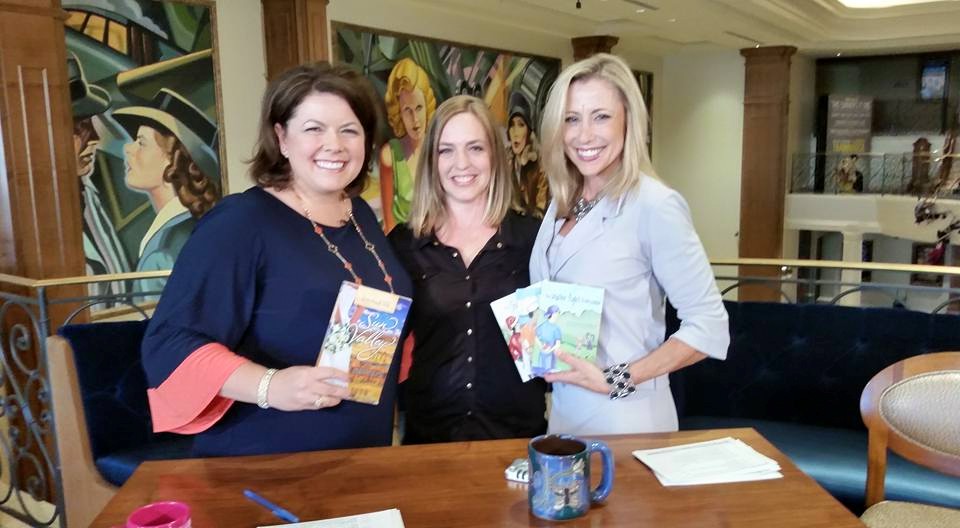
I got to do a television interview.

I had a Costco book-signing.

The novel was featured in the magazines for a Christian bookstore chain.

It was sold in airports.

The hardback edition came out for book clubs.

And now It’s being considered for a MOVIE. When I found this out, I was so excited my husband thought someone had died. Not that I get excited when people die, but I was crying and could barely speak, and he assumed the worst.

Three movies have already been made for the UPtv network. I had a premier party with my writer friends for Love Finds You in Charm, including homemade Amish pastries. Love Finds You in Valentine comes out this month.

I can’t keep from mentally casting actors to play my characters Tracen Lake and Emily Van Arsdale. Especially since Emily Van Arsdale is supposed to be the actress who plays Wonder Woman, and Wonder Woman is releasing in the theaters soon.

The idea of having my debut novel considered for a movie made me want to revisit the story. Then it made me want to write sequels like many of my readers requested. So I got my rights back, and I’m rereleasing the book as the first in my new series titled Resort to Love.

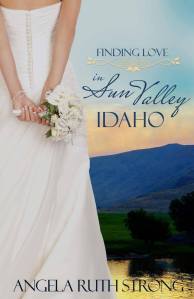
Finding Love in Sun Valley Cover


Finding Love in Sun Valley, Idaho comes out this month. I updated a few things—like how the characters now all have smart phones. And I gave it an epilogue that leads into the following books.

Finding Love in Big Sky, Montana comes out in November. I’m currently writing this one and wish I could throw my responsibilities to the wind so I could go write in a cave until it’s done because the ending is going to be so good!

Finding Love in Park City, Utah comes out in the spring of 2017. This one I’ve plotted, but I’m still researching the location. I’m spending the end of January in the mountain town and attending the Sundance Film Festival. Remember how I said my main character in Sun Valley is an actress? It fits.

I didn’t know anything about getting my rights back, but I ran into Miralee Ferrell at the Oregon Christian Writer’s Conference last summer, and she’d already done it for a couple of her own Love Finds You books. With her help. I was able to find out that my book had been out of print for a couple years. From there I simply had to make my request. Once I got my PDF files, I not-so-simply converted them to a Word document and edited out about a million exclamation points—among other newbie mistakes.

Miralee had been able to get her cover files, but mine weren’t available, so we hired a designer. When I say we, I mean Miralee. She’s releasing my series through her new publishing company, Mountain Brook Ink. But she let me have creative reign over my cover. I especially like the scrollwork around the Finding Love label. That symbol will go on all her Finding Love titles. Another cool thing is that I’ve remarried since my first book came out, so I get to add the name Strong to this cover.

I’m currently getting ready for my Books and Beverages Blog Tour. Check my website for details and the chance to win a Kindle Fire.

Books and Beverages

Even if my book never makes it to the big screen TV, I’m still glad I get to enjoy my debut novel a little longer. And I’m honored to get to share my dreams with you.

What’s a book you’ve read that you think would make a good movie?

All is Calm

Hear that sound? No? That’s because it is the sound of silence. The kind of inexplicable, almost supernatural, silence that expands to fill the void left in the wake of a tornado or an eardrum-shattering fireworks display or, in this case, the Christmas season.

Much is made of the fact that Christmas is a time for peace, for reflection on Christ and the greatest gift ever given, his life, death and resurrection. In reality, though, if they happen at all, those moments of reflection are generally stolen ones, snatches here and there in the midst of rushing through crowded shopping malls, cooking and cleaning madly before friends and family arrive, and squeals of delight as children tear paper off of gifts spilling out from under the Christmas tree.

All good things. Martha things. Things that should be and need to be done. But things that can so easily distract us from the Mary thing. Sitting and listening. Meditating on the words of Scripture. Contemplating the wonder of some of the most profound and stirring words of all, “And the Word became flesh and dwelt among us” (John 1:1).

candle-535149__180

Emmanuel. God with us. What an incredible, almost incomprehensible thought.

And not one we can only contemplate at Christmas, thankfully. It is in this time, in the deep silence that follows the noise and (mostly) joyful rushing around and checking off of lists and the general chaos and confusion, this almost supernatural time of stillness, hibernation and rest, that we are finally able to find minutes, sometimes hours, for uninterrupted, undistracted contemplation.

On the words of Scripture. And on the words given to us as a treasured gift, not to hoard but to give, to share, to continue to pass along the powerful message that the Word dwelt among us. That the Word dwells among us. Not just in Bethlehem, not just at Christmas, but here, now, in the silence and stillness that follows the often frenzied celebration of his birth.

So as we enter into this, a new year, a clean slate, an endless stretch of possibility and potential, may the words of our mouths and the meditation of our hearts be acceptable to him. And may the words he gives us to share with others bless them and draw them back to his presence every day of the year ahead.

Let us continue to share the message of Christmas. That hope came when there was no hope. That light came into deep, impenetrable darkness. That joy came into sadness, grief and loss. It came two thousand years ago. And it comes today when we are finally still enough to know that he is God. When we stop long enough to listen, to meditate, to contemplate and, in the silence, unwrap, discover and experience for ourselves the greatest gift of all.

The Word with us.

For the Love of Writing

Have you ever been around someone who loves Christmas? I can’t quite rival Santa, but I love this season. I love the scent of cider as we decorate the tree and the chaos of Christmas decorations. I love the music, lights, winter clothes, the Christmas parties, and my dad sharing a devotional on Christmas morning. I love time with extended family, laughing and making memories. I love reading the Christmas story and imagining it from the perspective of the people who experienced it. And I love being around people who love Christmas, because their joy is contagious.

It’s the same way with our writing. When we love the story, our readers love it, too. My third book, Surrendered, comes out December 26. It’s the end of a series, the end of an era, the end of a contract, and a beautiful beginning (I hope) to many more stories to come. Under the pressure of deadlines, pursuing a contract, and learning to market, I can forget the joy of this calling. So this month, I’m falling in love with writing again.

Write what you love

Write what you love.

This year, Christmas also comes with a book release. I can’t wait to share Surrendered with readers. I loved crafting the romance that made me swoon, conflict that made me cringe, and action that had me scratching my head to figure out how to rescue them.

Now it’s time to begin again.

I have a couple of different manuscripts going, but I’m also working on one just for me.  A fairy tale. Even if it never sees the light of day, it makes me remember what I loved about my favorite stories as a kid and what I still love about romance, magic, and characters as an adult. The new manuscripts, the ones editors have requested to see are experiencing new life, as well, as I read and remember all that I love about Francine Rivers’s Mark of the Lion series, Karen Kingsbury’s Baxter Family series, and Dee Henderson’s O’Malley series. I look at what other people love about those stories, too. Then I add my own creativity, a new story idea, and something I love is born.

Write because you love it.

It’s taken finishing the Heart of a Warrior series to finally own the fact that I am a hopeless romantic who happens to write romance. But once I fully accepted that, I was able to embrace my new manuscripts in a greater way. I write because I love it, because I have a story to share, because I love bringing a character to life. I love tossing them into trouble and watching them come out shining like gold because they wrestled and emerged victorious. I love writing scenes with courage, heart, and emotion. I write because that’s how God made me. This month, I am writing for the love of the craft and not for the deadline.

Others will love it, too.

It’s important to hole up and remember to write because I love it, to write a heart story, but the beautiful benefit is that even when I close the door to my writing closet and let everything I love and am passionate about spill out on the page, I’m writing something that others will love, too. People connect with emotion, with stories that make them think and dream and imagine. They connect with vulnerability. When I write for me, I  am ultimately writing for them. Out of the overflow of what I have learned as a writer, as a person, as a woman made in the image of Creator God, my experiences, quirks, and imagination pour onto the page and the creativity of the reader is captured.

In this Christmas season, a time of joy and celebration and thanking the God who sent His Son to earth, I’m celebrating in a different way – with the gifts he’s given me. I truly believe when we write what we love because we love it, then others will love it, too.