12 Do’s and Don’ts for a Successful Long-Term Writing Career

1. Do have something in the hopper to pitch at all times. While you’re querying your next book or series, keep your creative mind active by brainstorming, jotting down notes, and organizing research.
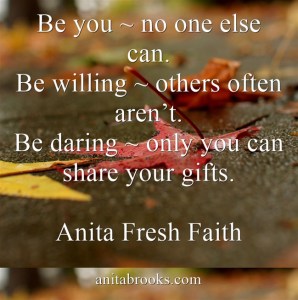
Share Your Gifts2. Don’t try to write like someone else. No one else thinks like you, has your life experiences, your collective information, your communication style, or your voice. Copying someone else’s approach means your unique offering is lost—and the world misses out.

3. Do share yourself authentically with the public. Masks don’t work. Allow the truth of who you are to resonate with readers and listeners as you speak from the page and the stage.

4. Don’t let someone else’s negative opinion of your writing stop you. No published piece is loved by everyone. Editors, agents, and readers will often view your work differently. Accept positive encouragement when it’s helpful and honest, but don’t disregard unbiased criticism—it will make you a better writer.

5. Do get out and live life on a regular basis—otherwise you’ll have nothing fresh to write about.

6. Don’t let resentment over another writer’s success distract you from your own work. Instead, celebrate their achievements with them. Not only will you feel better, but human beings are drawn to help positive people, not those who are jealous, jaded, or jerks.

7. Do focus on improving your writing—constantly. Read and re-read books on honing your craft until you develop a master’s degree worth of knowledge on writing well.
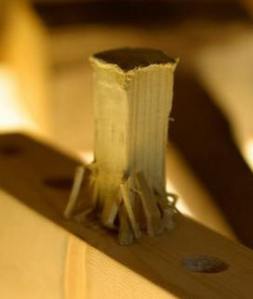
Round Hole Square Peg8. Don’t be afraid to let a word, sentence, paragraph, chapter, or even an entire project go. Sometimes, a piece doesn’t work, and you shouldn’t waste time and energy trying to force a square concept into a round career. Allow yourself to move on if you feel like you’re pulling splinters to make things fit.

9. Do take care of the people who support, encourage, and follow you. We are all in this world together, and readers are more than people we get something from, (sales), they are people who need the same things from us that they give—support, encouragement, and attention.

10. Don’t expect publication to heal all your hurts and provide lasting happiness. The real you will always hide behind the public persona. Learn to like him/her, then no matter what happens with your writing, you will be okay.

Getting Through What You Can't Get Over Endorsement11. Do understand the power of influence. The greater the number of people who like your book(s) and are willing to say so publicly, the more other people will like what you write.

12. Don’t nit-pick, condescend, attack, grumble, or fight with others on social media forums. Followers don’t forget, and often their memory shapes future decisions to support you or not. Breaking the Golden Rule can become a deal-breaker for some of our readers.

Which of these twelve points are the most difficult for you? The easiest? 


Pantser or Planner?

All writers are created differently.

We can sit in the same classes, but each of us holds different stories in our hearts and minds. Each of us has our own voice. Each of us has our own process or lack there of when we work on our books.

Thank the Lord we are all so different or we wouldn’t have a variety of stories and books filling the shelves and internet. But no matter how different our process or our stories, there is a rhyme and reason to structuring our novels.

I just got back from the Deep Thinkers Retreat through My Book Therapy where we focused on story and structure. Both Susie and Rachel write fantastic books. Both have different processes. As I sat listening to how they process and plan, I realized that I fall in the middle of their styles. I’m a planning pantser. Like how I just created my own title there?

Planners need an outline, a very specific structure. The story is mostly written before they begin. They just have to weave it. Pantsers don’t like the structure. They have it all in their head and heart and want to sit down and write however the story leads. There is a beauty to both. There is also a danger to both when we overcompensate. It is important to focus on story structure. It makes the story cohesive, focused, and strong. There is also a beauty to allowing yourself the flexibility for letting the scene change.

Historically, I write a very brief outline, focus on some character development and personality, and then hit the page. Often the structure would overwhelm me and make me feel boxed in, so I would toss my hands in the air and just start writing because there I find the freedom to breath.

After this retreat, I have realized I need the structure, I need to plan. I know how and have the tools to accomplish this in a manner that makes my character and plot sing. Then I need to use that to allow the words to just flow.

So where do you fall on the wide spectrum of writers? If you are a planner, plot that thing out. Know the ins and outs of your character. My boss always says to “plan to be flexible,” and I would echo that with your writing. No person, place, or thing is without the ability to change, even if only a little. No matter what you plan, the story will probably change as you write. Enjoy the process!

And for all my pantser friends out there, own it and enjoy! I would encourage taking a little time to make sure it all connects and then rock that flexibility.

I am discovering that I don’t need to follow the process of other writers. They are succeeding with their writing not because they all write the same, but because they have owned their voice, story, and process. Perfection isn’t the end goal. I would argue that connection with reader and excellence in the story is more important. However it works best for you, get that story on the page, write from the voice that God gave you, and do it to the best of your ability as unto the Lord and not unto man.

Are you a pantser or a planner? What works best for you?

When the Honeymoon is Over

When I firJuly 17, 1982 001st started writing…

I was living the dream. I spent an hour every morning adding words to my Work in Progress before our homeschooling day started. There were no deadlines; no one demanded anything of me. I dwelled happily in my writer’s cave, isolated from the world, reveling in the company of my characters.

Yes, it was a honeymoon, and everything was perfect.

But as we all know, the honeymoon has to end sometime, right? For me it came to a screeching halt when I signed that first contract.


Just like a honeymoon gives way to the reality of married life, my writing honeymoon quickly turned into the reality of being a published author. But that was all right. I didn’t want to live in a perpetual newbie-honeymoon state in my writing career. I wanted substance. I wanted long-term. I wanted a lifelong commitment.

Thanks to my hard-working agent (hi, Sarah!), I’m on the threshold of that long-term writing life. And that means multiple projects. I’m marketing one book, editing another, writing a third, and proposing a fourth. This is the challenge I thought I wanted back in the writer’s cave days.

picture 3

So how does a writer handle a challenge like that?

Here’s some advice I’ve received from writing friends:

  • Keep writing. Write 1000 words a day. Do the math: 1K per day (without Sundays) becomes 320,000 words per year. Piece of cake!
  • Keep on target. There is no magic potion. Get in a groove. Make that 1K per day a habit. Every day, same time, same place.
  • Keep learning. My 1K per day takes about an hour of “bottom in the chair, hands on the keyboard.” I spend part of the rest of my time reading writing craft books or taking on-line classes. Even after publishing four books, with two more in the pipeline, I still have a lot to learn!
  • Keep planning. I also spend part of my writing day planning the next project. After I turn in the last book for my current trilogy from Revell, I’d really like for them to publish another one. So I’m starting to lay the ground work for that series. I’m also in the middle of planning a new series for Love Inspired Historical. These new projects keep my creative juices flowing!
  • Keep dreaming. Kariss Lynch wrote a great post about the difference dreaming makes in our creative life. You can read that post here: The Importance of Dreaming
  • Keep living. The honeymoon really IS over if your writing becomes an all-consuming passion. Spend time with your family and friends. Give yourself time off.

Every once in a while, I ask myself if my current life is meeting 046my expectations.

Is the challenge I thought I wanted during my writing honeymoon satisfying enough? Is it worth the work? Does it have substance enough for a long-term, lifetime commitment?

Yes. Oh, yes.

What about your writing life? Are you still in the honeymoon stage, or on your way, navigating through deadlines and contracts? Is it worth it?

Motivating an Unmotivated Writer

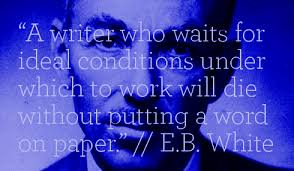
Writing Quote E.B. White I’m going through one of those seasons of life where I’m not feeling motivated. My mind could go in either one of two directions. I could wallow and give up — allowing myself to succumb to fatigue, discouragement, and fear due to circumstances beyond my control. Or I could remind myself that I am an author, and as such, absolutely everything is potential writing fodder. I’m choosing the latter.

Writing is Harder for a WriterTo maintain any productivity, my way of putting words on the page has changed over the past month. For instance, instead of scheduling hours at a time for writing, I’m snatching snippets and seconds. Scrivener is my friend, as I drop ideas, research links, and summaries of real-time happenings for anecdotal use into project files. Life has required I do things differently, but I refuse to let it stop me.

Writing the WorstI’m also offering myself an extra dose of patience and forgiveness. If I expend emotional energy on unreasonable expectations and unhealthy guilt, I will pay for it in wasted physical and mental energy. It’s taken me years to learn this about myself, but now that I know it, I can approach writing with a healthier perspective.

Writing Quote by Stephen KingAnother motivational boost comes from reminding myself that I am a professional. This means I don’t just think about writing, dream about writing, or talk about writing — I do it. A professional writer puts the same integrity, (doing the right thing whether anyone else can see or hear them or not), into their craft as the CEO of a multi-billion dollar company. I refuse to be the amateur Stephen King talks about.

Writing What Others Can't SayMy past and present circumstances are more than writing fodder, they are also qualifiers. My unique experiences qualify me to speak about subjects, while my role as a professional writer enables me to say what others cannot due to willingness or ability. This is why writing is both privilege and responsibility. This thought alone motivates me to action when I feel unmotivated.
In speaking with many of my author friends, I find I’m not the only one who needs the occasional reminder to move my fingers across the keyboard when I feel like pushing buttons on the remote. The truth is, writing is hard under ideal conditions, but it can feel excruciating when life batters you with tough situations. This is where my writing mettle is tested.

  • Am I serious?
  • Will I resolve to follow through no matter what?
  • Can I motivate myself when I’d most like to bury myself in bed and pull the covers over my head?

Writer at WorkThe answer is yes. After all, I am a professional. And professional authors get to work — one intentional word at a time.


Does your writing come easy, or do you require a motivational push to do the daily word grind?


The Importance of Dreaming

Ever feel like your writing time has slipped into a series of tasks you are struggling to check off?

1500 hundred words and counting? Check.
Edits? Check.
Social media graphics for the week? Check.
Blog posts written and turned in? Check.
Responded to readers and answered emails? Check.
Laundry, grocery shopping, life things? Maybe check. Kinda.
Maintain sanity? In process.

If we aren’t careful our writing routine turns into a list that can drain our creativity and make us forget why we are writing. I am the queen of time management and boundaries. I have to be in order to prioritize and get things done. But sometimes in the midst of trying to be disciplined and organized, I miss out on the creativity that comes with dreaming. I actually plan time to dream. It’s vitally important to the rest of my list.

Dream a little bigger

Dreaming rejuvenates me.
One of my favorite questions to ask when it comes to writing is “what if.” What if my characters decided to do something totally unexpected? What if my villain surprises everyone? What if I create a setting that puts a unique spin on a scene? What if I created a character that absolutely fascinated my reader? Then how do I do all this?

“What if” is a powerful question, one I don’t ask nearly enough. But when I do, my writing sings more than normal and my creative juices flow.

I also like to story board. I may love words, but I am attracted to powerful visuals. It’s fun to create the scene and cast my characters by scouring the internet for photos that jog my creativity in a greater way. I pin them on a corkboard so that I can see and move them to help craft the story. This helps dream about possibilities. Possibilities are endless in our writing. We just have to seize them.

Dreaming rejuvenates the story.
I like to set a timer and see how many words I can spill on the page before time runs out, but occasionally this depletes my creativity instead of inspiring it. However, when I take time to dream before I start writing, even if I just spend fifteen minutes on a writing prompt, my writing carries a different kind of power and creativity. When I race the timer, my story has quality and quantity. My characters are also deeper and my settings more vivid.

Dreaming rejuvenates the reader.
Letting readers into my brainstorming and dreaming is fun to share with readers. This makes great social media content to excite them and help them invest in the story before they ever hold it in their hands. Inviting them into the dreaming helps them feel like part of the team and part of the journey. If you do this, be prepared to write faster to satisfy their growing curiosity.

Tasks and deadlines are part of writing, but dreaming and enjoying the writing…that’s the most vital part of the journey, for it informs everything else. If you are feeling overwhelmed or stuck, grab a pen and fun notepad, and don’t be afraid to dream a little, darling. I have a feeling you will like the results.

15 Motivational Quotes for Authors

What Does Writing Teach Us?

What is it about motivational quotes that inspire us to greater endeavors? Daring us, energizing us, prodding us to overcome our fears and anxiety, so we can do what we truly desire?

Maybe it’s the quick, easy-to-remember word bites, or perhaps simply the comfort of knowing we are not the first trodding this territory. Regardless, the human spirit responds to simple quotes with powerful impact.

As writers, quotes from successful authors can move us past blocks, help us overcome anxiety, and keep us from giving up in the face of rejection. Maybe you could use a quick boost of daring, energy, or prodding today.

If so, here are fifteen of my favorite motivators:

“I write entirely to find out what I’m thinking, what I’m looking at, what I see and what it means. What I want and what I fear.” — Joan Didion

“If I don’t write to empty my mind, I go mad.” — Lord Byron

“It’s about getting up, getting well, and getting over.” — Stephen King

“Writing is the supreme solace.” — William Somerset Maugham

“If you’re a singer you lose your voice. A baseball player loses his arm. A writer gets more knowledge, and if he’s good, the older he gets, the better he writes.” — Mickey Spillane

“A wounded deer leaps the highest.” — Emily Dickinson

“Writers write about what obsesses them. You draw those cards. I lost my mother when I was 14. My daughter died at the age of 6. I lost my faith as a Catholic. When I’m writing, the darkness is always there. I go where the pain is.” — Anne Rice

“You don’t write because you want to say something; you write because you’ve got something to say.” — F. Scott Fitzgerald

“Any man who keeps working is not a failure. He may not be a great writer, but if he applies the old-fashioned virtues of hard, constant labor, he’ll eventually make some kind of career for himself as writer.” — Ray Bradbury

“Not that the story need be long, but it will take a long while to make it short.” — Henry David Thoreau

“My own experience is that once a story has been written, one has to cross out the beginning and the end. It is there that we authors do most of our lying.” — Anton Chekhov

“Get it down. Take chances. It may be bad, but it’s the only way you can do anything really good.” — William Faulkner

“I am irritated by my own writing. I am like a violinist whose ear is true, but whose fingers refuse to reproduce precisely the sound he hears within.” — Gustave Flaubert

“The unread story is not a story; it is little black marks on wood pulp. The reader, reading it, makes it live: a live thing, a story.” — Ursula K. Le Guin

“A blank piece of paper is God’s way of telling us how hard it is to be God.” — Sidney Sheldon

Which of these inspires you most?

Advice from the Experts

I love browsing around writing boards on Pinterest with words from the literary experts. When I’m feeling discouraged, I find short, pithy quotes that remind me what my meandering plot is missing or quotes that encourage me to stay the course even when things aren’t going as well as I’d like. In any case, to start off the new year, here are a few I’d like to share with you.

Experts

You can’t use up the creativity. The more you use, the more you have. – Maya Angelou

A story is a letter that an author writes to himself, to tell himself things he would be unable to discover otherwise. – Carlos Ruiz Záfon

I can fix a bad page, but I can’t fix a blank one. – Nora Roberts

The difference in winning and losing is most often in not quitting. – Walt Disney

I’m writing a first draft and reminding myself that I’m simply shoveling sand into a box so later I can build castles. – Shannon Hale

Love the writing, love the writing, love the writing. The rest will follow. – Jane Yolen

The key, the crux of the whole matter, is to FINISH YOUR MANUSCRIPT. You must learn to see this as the goal. Not the perfect word or the polished paragraph. A finished text. – Davis Bunn

The bigger the issue, the smaller you write. You don’t write about the horrors of war. No. You write about a kid’s burnt socks lying on the road. – Richard Price

When I used to teach creative writing, I would tell the students to make sure their character wants something right away, even it’s only a glass of water. – Kurt Vonnegut

When in doubt, make trouble for your character. Don’t let her stand on the edge of the pool, dipping her toe. Come up behind her and give her a good hard shove. – Janet Fitch

Novels are forged in passion, demand fidelity and commitment, often drive you to boredom or rage, sleep with you at night. They are the long haul. They are marriage. – David Leavitt

Be yourself and readers will follow you anywhere. Try to commit an act of writing and they will jump overboard to get away. – William Zinsser

Plot is people. Human emotions and desires founded on the realities of life, working at cross purposes,  getting hotter and fiercer as they strike against each other, until finally there’s an explosion – that’s plot. – Leigh Brackett

Write even when the world is chaotic. You don’t need a cigarette, silence, music, a comfortable chair or inner peace to write. You just need ten minutes and a writing implement. – Cory Doctorow

Dialogue is action. It’s not characters making talk. A character’s words are tools he uses to get his way in a scene. – James Scott Bell

Write a little bit each day. One page a day means 365 pages in a year. – Francine Rivers

One should be able to return to the first sentence of a novel and find the resonance of the entire work. – Gloria Naylor

If there’s a book you really want to read but it hasn’t been written yet, then you must write it. –Toni Morrison

We are cups, constantly and quietly being filled. The trick is knowing how to tip ourselves over and let the beautiful stuff out. – Ray Bradbury


All is Calm

Hear that sound? No? That’s because it is the sound of silence. The kind of inexplicable, almost supernatural, silence that expands to fill the void left in the wake of a tornado or an eardrum-shattering fireworks display or, in this case, the Christmas season.

Much is made of the fact that Christmas is a time for peace, for reflection on Christ and the greatest gift ever given, his life, death and resurrection. In reality, though, if they happen at all, those moments of reflection are generally stolen ones, snatches here and there in the midst of rushing through crowded shopping malls, cooking and cleaning madly before friends and family arrive, and squeals of delight as children tear paper off of gifts spilling out from under the Christmas tree.

All good things. Martha things. Things that should be and need to be done. But things that can so easily distract us from the Mary thing. Sitting and listening. Meditating on the words of Scripture. Contemplating the wonder of some of the most profound and stirring words of all, “And the Word became flesh and dwelt among us” (John 1:1).

candle-535149__180

Emmanuel. God with us. What an incredible, almost incomprehensible thought.

And not one we can only contemplate at Christmas, thankfully. It is in this time, in the deep silence that follows the noise and (mostly) joyful rushing around and checking off of lists and the general chaos and confusion, this almost supernatural time of stillness, hibernation and rest, that we are finally able to find minutes, sometimes hours, for uninterrupted, undistracted contemplation.

On the words of Scripture. And on the words given to us as a treasured gift, not to hoard but to give, to share, to continue to pass along the powerful message that the Word dwelt among us. That the Word dwells among us. Not just in Bethlehem, not just at Christmas, but here, now, in the silence and stillness that follows the often frenzied celebration of his birth.

So as we enter into this, a new year, a clean slate, an endless stretch of possibility and potential, may the words of our mouths and the meditation of our hearts be acceptable to him. And may the words he gives us to share with others bless them and draw them back to his presence every day of the year ahead.

Let us continue to share the message of Christmas. That hope came when there was no hope. That light came into deep, impenetrable darkness. That joy came into sadness, grief and loss. It came two thousand years ago. And it comes today when we are finally still enough to know that he is God. When we stop long enough to listen, to meditate, to contemplate and, in the silence, unwrap, discover and experience for ourselves the greatest gift of all.

The Word with us.

For the Love of Writing

Have you ever been around someone who loves Christmas? I can’t quite rival Santa, but I love this season. I love the scent of cider as we decorate the tree and the chaos of Christmas decorations. I love the music, lights, winter clothes, the Christmas parties, and my dad sharing a devotional on Christmas morning. I love time with extended family, laughing and making memories. I love reading the Christmas story and imagining it from the perspective of the people who experienced it. And I love being around people who love Christmas, because their joy is contagious.

It’s the same way with our writing. When we love the story, our readers love it, too. My third book, Surrendered, comes out December 26. It’s the end of a series, the end of an era, the end of a contract, and a beautiful beginning (I hope) to many more stories to come. Under the pressure of deadlines, pursuing a contract, and learning to market, I can forget the joy of this calling. So this month, I’m falling in love with writing again.

Write what you love

Write what you love.

This year, Christmas also comes with a book release. I can’t wait to share Surrendered with readers. I loved crafting the romance that made me swoon, conflict that made me cringe, and action that had me scratching my head to figure out how to rescue them.

Now it’s time to begin again.

I have a couple of different manuscripts going, but I’m also working on one just for me.  A fairy tale. Even if it never sees the light of day, it makes me remember what I loved about my favorite stories as a kid and what I still love about romance, magic, and characters as an adult. The new manuscripts, the ones editors have requested to see are experiencing new life, as well, as I read and remember all that I love about Francine Rivers’s Mark of the Lion series, Karen Kingsbury’s Baxter Family series, and Dee Henderson’s O’Malley series. I look at what other people love about those stories, too. Then I add my own creativity, a new story idea, and something I love is born.

Write because you love it.

It’s taken finishing the Heart of a Warrior series to finally own the fact that I am a hopeless romantic who happens to write romance. But once I fully accepted that, I was able to embrace my new manuscripts in a greater way. I write because I love it, because I have a story to share, because I love bringing a character to life. I love tossing them into trouble and watching them come out shining like gold because they wrestled and emerged victorious. I love writing scenes with courage, heart, and emotion. I write because that’s how God made me. This month, I am writing for the love of the craft and not for the deadline.

Others will love it, too.

It’s important to hole up and remember to write because I love it, to write a heart story, but the beautiful benefit is that even when I close the door to my writing closet and let everything I love and am passionate about spill out on the page, I’m writing something that others will love, too. People connect with emotion, with stories that make them think and dream and imagine. They connect with vulnerability. When I write for me, I  am ultimately writing for them. Out of the overflow of what I have learned as a writer, as a person, as a woman made in the image of Creator God, my experiences, quirks, and imagination pour onto the page and the creativity of the reader is captured.

In this Christmas season, a time of joy and celebration and thanking the God who sent His Son to earth, I’m celebrating in a different way – with the gifts he’s given me. I truly believe when we write what we love because we love it, then others will love it, too.

Got Writer’s Block?

pencil-918449_640It happens to all of us at one time or another. If you’re anything like me, you probably tend to experience “feast or famine” when it comes to putting words onto a page or screen. At times it is hard for my now middle-aged hands to keep up with my brain; and other times, it is frustrating to these same hands to have little, if any, words I can string into sentences that make sense.

If the season I’m in permits me to do so, I use the down times to invest in my own personal growth. I study. I read. I observe. I take notes. I connect with others. This helps me in several ways, but this one way is what motivates me most:

It allows my brain to rest and receive. As writers, we offer so much output that we need to be careful to prevent our own well from drying up. Without investing in our own personal growth and development through relational and educational resources, we minimize our own effectiveness in what we share through our writing.

Most of the time, though, I have some kind of deadline–whether for an event where I’ll be speaking, a blog post I’m writing, a class I’m teaching, or a book I’m authoring. It’s in these situations that I find this one tip helps me get over writer’s block.

The Power of Story

For me, it helps if I can quiet the noise in my inner world long enough to allow a story to come to my mind. It might be a story I’ve read or a story I’ve lived. Either way, there is much to be said about how story inspires.

Consider the following:

“We may live our lives in prose, but it is poetry that we live for. A compelling story can evolve into a narrative that inspires a shared sense of mission. That, in turn can lead to a long and great legacy. That’s the power of story…

As Geoff Colvin explains in his new book, Humans Are Underrated, we are wired for interpersonal connections and put more stock in ideas that result from personal contact than from hard data. Essentially, we internalize stories much better than we do facts.

As proof he points to research that examined expert testimony in a court case. The study found that jurors considered experts that had a personal clinical experience far more credible than those that merely offered an analysis of the relevant facts, even if they were shown that a data driven approach is more accurate. In other words, the jurors needed a story.

Stories are emotional and we are more likely to remember and react to them.”

(For the entire article, written by Greg Satell for Forbes.com, please click here.)

So, if you find yourself struggling with writer’s block, find a quiet place, or do something with your hands that you don’t have to think much through (chores around the house help me), and allow the story to inspire your writing.

As you share the story with your readers, there’s a good chance you’ll connect with them on a personal level in a way that facts alone–regardless of how powerful those facts may be–could never do.

Consider what Curt Thompson, MD has to say in his book, Anatomy of the Soul, in regard to story:

“When we tell our stories or listen to another person’s story, our left and right modes of processing integrate. This is why simply reading The Ten Commandments as a list of dos and don’ts has so little efficacy…Isolating commands for right living apart from their storied context is at best neurologically non-integrating and, at worst, disintegrating. This is why telling our stories is so important.”

Your story is powerful. Refuse to listen to the negative voices inside your own head that tell you differently. There are a whole ‘lotta someones out there who need what only you have the experience to offer.