Writing With a Day Job

Writing Career Plus a Day Job
Juggling a Day Job With a Writing Career?

Are you a writer, or an aspiring writer with a day job? Ever get tired trying to juggle at least two careers, (day job and writing), along with mommy, daddy, spouse, family, friend, and church duties?

If so, you are not alone. A conference speaker gave this statistic. “About one percent of writers succeed at getting published. Because most drop out of the race.” Here’s my post on that experience.

Embedded within that percentage is a smaller number of those who can actually afford to write full-time. Making the leap to a devoted writing career usually requires long-term planning, intentional strategy, and detailed tactics. Jeff Goins’ recent blog encapsulates a great way to approach the goal of becoming a full-time writer. The steps he outlines, I could have written myself. (More on that in a later post.)

But if you’re reading this now, odds are writing with a day job is your reality. Anything else may feel like something built on fluffy clouds.

So how do you bring home the bacon, fry it up in a pan, serve it to those you are responsible for, and after the dishes are done still find time to pursue that dream throbbing with every heart beat? Can it be done? I believe the answer is a resounding YES!

People often ask me how I accomplish everything at work and home, plus write blogs, devotionals, articles, and books. After I imagine my cluttered living room, (I’m not Wonder Woman, something has to suffer), three things come to mind. “Resolve, listen, act.”

As a writer with a day job:

Juggling a Writing Career and a Day Job
Resolve to Invest Time in Your Writing Business

A. Resolve to invest wisely.

  • Treat your day job with respect. Just because you have a higher calling, or a bigger dream, don’t discount the gift of your employment today. After all, it pays the bills, and you can glean great writing fodder from things that happen in your workplace.
  • Watch less television, and write more. 
  • Create your own Writer’s Cave.
  • Rise earlier, and allow fewer sleep-in days.
  • Write when you’re tired, energized, or just so-so.
  • Schedule writing, don’t wait until you feel like it.
  • Celebrate small victories. Fifteen minutes putting words on a screen are worthy of excitement.

B. Listen to voices of genuine authority.

  • For me, the voice of God rings truth above any other I might listen to. Early on, I asked the Best Selling Author of All Time to mentor me, and He hasn’t let me down yet.
  • Do not disregard those who have written with day jobs before you. Heed their valuable advice.
  • Seek the wisdom of professional agents, editors, and publishers. They are in their positions based on education, experience, and talent.

Writer With a Day Job Book CoverC. Act on what you are taught.

  • Be a doer — not a hearer, dreamer, thinker, talker only.
  • Keep something for notes with you always. Inspiration comes in strange times and places.
  • Make tiny goals like, “Write for five minutes before I leave for work.” You will encourage yourself with things to look forward to, and enjoy a sense of satisfaction when you complete them.
  • Keep your word. It’s better not to make a promise at work, or as a writer, than to make one and break it.

Have you read Aine Greaney’s fabulous book, Writer with a Day JobIt’s full of tips, exercises, and encouragements.

The Letter

Sometimes, I don’t think we as “Christian” authors give credit to how extraordinary our calling is. I’m speaking specifically to those writers who feel it is God’s will for them to write. We write because we feel burdened to do so. Not burdened like a chain around our necks but restless that if we don’t write then we are not fulfilling what we are here to do.

dark portraitSometimes that calling in light of our circumstances is hard to manage.

Long hours at the keyboard. Perhaps long hours banging your head against the wall when the words don’t seem to be flowing as they should. Managing two careers and likely a family. Wondering how long you can keep up the pace of working two jobs (yes, writing is very much a job) when one’s maybe not paying you as much as you thought it would. No, I haven’t gotten a James Patterson paycheck. Wondering when, if ever, we’ll hit it “big”. Wondering what “big” is?

I think, too, there is added pressure if we consider ourselves Christian authors. Now, there’s a whole other level of worrying/thinking. Is this what God wants me to write? Why did God take me down this path if I can’t survive on this income? Am I writing when God wants me to do something different? Am I still working my “real” (and paying) job when all God wants me to do is write?

LampPost

And so we look for God’s little lampposts along the path. Something—anything to affirm that this is the right, chosen path. That our typed words on a white screen would make a difference to someone, somewhere, in a Godly way. That someone’s faith would be affirmed—strengthened. That maybe our words would give sense to what Jesus did on the cross in a way that someone could then believe in that sacrificial offering for their own lives.

Now, after being on this journey for a couple of years, this is what I know. Sometimes these lampposts along the path are not what we think they will be. Maybe my affirmation is not in selling a gazillion copies of my book or hitting the bestseller lists.

But in a letter.

One of the smartest things I did as an author was leave an e-mail address in my published books and ask readers to e-mail when they finish with their thoughts. Some authors don’t do this for fear of spamming, privacy, etc. You can list your own reasons.

So far, I haven’t received any creepy/concerning e-mails. I have gotten over fifty letters from readers which is nice when you’re also getting one star reviews (particularly on Christmas Day—yes, that did happen!)

I’ve only sobbed over one letter—thus far.

It was written by a woman who had just finished Proof—my debut medical thriller. Proof, at its heart, is about Lilly Reeves, an ER doctor without faith and her journey to coming to know Christ through a trial- by-fire series of events.

In the novel, a physician friend tells Lilly the story of Lazarus. How Jesus waited three days to respond to his good friends’ cries for help. At first, this seems unusually cruel. But in the end, when Jesus raises Lazarus from the dead, Jesus does a miracle he’s never performed before and gives a prelude to his own forthcoming sacrificial offering.

The letter that brought me to tears was from a woman who was in the midst of her son being diagnosed with cancer. He’d just been through the surgery to retrieve lymph nodes and the surgeon was fairly certain of a lymphoma diagnosis—they were just waiting for the final biopsy results. She specifically mentions this passage of the book and what it meant to her at that moment – “. . .we are praying for healing for our son, but completely trust him to God’s plan, whatever that is . . .”

So humbling.

Remember, God communicated his presence to us in two ways. Through his creation and through his words.

Typed words on a page.

Consider this and the smaller lampposts along your path when you’re wondering exactly why you’re on this crazy writing journey. Maybe it’s not for a James Patterson type paycheck.

But simply for a letter like this . . . and the impact your words will have for one person.

Would this be enough for you to keep going if God has placed the call to write on your heart?

This post first appeared on Elaine Stock’s Everyone’s Story. Check her blog out.

They Also Serve Who Drink and Weep

Coming home .. .. The writing life takes me away from home often. I write this the day after returning from 2 weeks of travel, home to Kodiak Island, to my husband and sons and daughter and Yorkshire terrier who badly needs a groom. I walk through my door and want everyone to kiss me as if I have just been born, as indeed I have.

photo

I am home, but I cannot stop thinking about her, the woman I met on the plane. It was the fourth and last plane of the trip. I was almost there. I edged down the aisle and saw her—crying. Sobbing on her phone. My eyes went dark, my heart tightened. As I stepped past her, I heard her say, “They just told me. I have pancreatic cancer. He gave me 3 – 6 months to live. I don’t want to die!” and she dissolved again into weeping, running her hands through her hair.

She was beautiful, dark-skinned, dressed in expensive jeans, a leather jacket. Her phone was pink. She gripped it so hard, hanging on to whoever was at the other end. My seat was one row back and one row over. I could see her profile, hear every word. I looked around desperately. A woman was dying! And we were calmly sitting in our seats, buckling our seat belts against death—and would soon follow all the safety requirements, while she was no longer safe. What do I do?

a woman with hands covering face

Men sat in front of her, and in back, each one with the bland face we wear when we pretend we don’t hear because we too are afraid. I wanted to do this too, but there was an empty seat beside her. She would be alone this entire flight with no one .. .. And how could I forget what I had prayed that morning? In the hotel room, on my face, wanting this day, this one day, to have a pure heart, to serve someone . . . “May your kingdom come, Your will be done .. May I hear you and serve you this day . . ..” and off I went into another day of terminals and planes—and there she is near me, still crying, the seat beside her empty.  I have work to do—a chapter is due, edits for an article are due, but the seat beside her is empty.

airplane seat

Shaking, I unbuckle my seatbelt, lift my bag and stand beside her. “Is it okay if I sit beside you?” I smile. She looks up at me, surprised, with her ruined face and nods, trusting, like a child, her eyes again filling with tears. I sit, she watches me settle. “What has happened?” I ask her and it pours out, but there are hands now to catch what falls, our shoulders touch, I stroke her arm, and we mourn and grieve and sit together in the shock of it. She is young. She knows Jesus, but she doesn’t want to die she cries again and again through a twisted mouth. I silently scream to Jesus to give me the words. I need them when I am writing, but I need them even  more now … .and they come. At one point she grasps my hands and says, “God sent you to me.” Mostly I am there to cry with her, to drink chardonnay with her. I know the chardonnay will wreck me, but had she offered me whiskey, I would have drunk that too.

It wasn’t much. I write all this not for anyone to say, “Oh, what a great servant you are!” Because I am not. How many people have I not seen and walked past? How many have I seen and still walked past? But this is instead about this wondrous, terrifying God we serve, who has asked one of his daughters to die a hard, early death, and who asked another selfish frightened daughter to sit with her in her fear and aloneness for a short time. It was so little. And she staggered off the plane to walk into the end of her life—and I staggered into a car taking me to stages and microphones.

Here is what I remember : “They also serve who only stand and wait.” John Milton wrote in his sonnet “On His Blindness.” I was going to speak on podiums, in many places, before many people for two weeks, but none of that mattered then. Of all I did on that trip, perhaps this mattered most: “They also serve who only sit and weep.”

2013-04-01 07.20.39

Can tears really be enough? For that day, for that hour, yes. God will provide another servant, and another for every empty seat beside her.

Do we dare ask this each morning? “May I hear you and serve you this day.” Yes, dare. Then watch for the empty seat. Bring tissues. Drink wine if you must. Become a child. Give whatever you’ve been given. Sometimes it will be words. More, it will be your presence and your tears.

And the kingdom of God will come near.

Voice Recognition

Photo/KarenJordan “… My sheep recognize my voice. I know them, and they follow me.” (John 10:26 MSG).

As I listen to the birds singing their songs every morning, I wish I could distinguish one bird from another. I identify the honking geese as they fly over the lake, and I hear the woodpecker as he raps for his meal. I can see the difference between a robin and a sparrow, but I can’t tell them apart by their voices.

My husband Dan can recognize the voices of several birds. He knows the robin’s sweet song, and he is familiar with the squawking blue jay. He can even point out the mimicking mockingbird. So, I’m trying to learn a few voice recognition tips from him.

I’ve also discovered a few tips for recognizing God’s Voice, since I struggle with the same issue in my spiritual life at times. Is this the voice of conviction or condemnation? Will I let faith lead me, or will I be confused and distracted by fear? Does this voice speak life or death to my heart? Does it give me direction or cause me to dwell on the impossible mistakes of the past?

1. Communicate with God. “Don’t fret or worry. Instead of worrying, pray. Let petitions and praises shape your worries into prayers, letting God know your concerns” (Phil. 4:6).

First, I must remember to communicate with God. Sometimes I get so focused on the worrisome distractions around me that I forget the power of prayer and praise.

I’ve also learned that I can’t focus on many tasks at the same time. And if I try to multi-task, I don’t do anything well. So, I must find some way to silence all the voices around me, so I can hear God.

2. Examine God’s Word. Jesus says, “I am the Good Shepherd. I know my own sheep and my own sheep know me” (John 10:14).

What if you don’t think you can recognize God’s voice?

God’s Word promises, “(His) sheep recognize (His) voice. (He knows) them, and they follow (Him). (He gives) them real and eternal life … No one can steal them from out of (His) hand” (27-29).

Sometimes all I can do is hang on to God’s promises—even when everything around me doesn’t seem to agree with His Word. Often my circumstances cause me to panic, because I can’t see how something can work out. My logic and my emotions resist the truth that I see in God’s Word.

3. Allow God to Examine Your Heart. I don’t want to pray about that! What if you really don’t want to pray about something? That can be a big red flag that we might have a little attitude going on.

I can remember when my kids would avoid talking about something with me—like a report card or a visit to a friend’s house. I would eventually force the issue if they continued to be silent, because I knew my kids well. If they were quiet, something was up.

Investigate my life, O God, find out everything about me; Cross-examine and test me, get a clear picture of what I’m about; See for yourself whether I’ve done anything wrong-then guide me on the road to eternal life. (Ps. 139:23-24).

Photo/KarenJordan4. Embrace the Power of Christ in You.      Sometimes I become distracted from God’s voice by the worries and stresses of my everyday writing life. Yet when I choose to focus on God’s Word—listening for His still, small voice—I find rest and peace for my troubled heart and mind.

… Those who enter into Christ’s being-here-for-us no longer have to live under a continuous, low-lying black cloud. A new power is in operation. The Spirit of life in Christ, like a strong wind, has magnificently cleared the air, freeing you from a fated lifetime of brutal tyranny at the hands of sin and death. (Rom. 8:1-2 MSG).

Many times my prayer is for God to just show up. And at times, He shows up in the strangest places—like this morning, as I listen to the chorus of birds singing again. I realize that I still can’t tell one species from another. But in my spirit I know that I’m listening to a symphony of praise to our Creator.

“Let every living, breathing creature praise GOD! Hallelujah!” (Ps. 150:6).

What distracts you from hearing God’s Voice?

Unpacking a Rebuke

????????????????????????????????????????We’ve all met at least one—the writer who simply cannot take any criticism of his work. Such folk gleefully hand you their writing for review. But when you offer a tiny suggestion about a passage they’ve written, small funnel clouds begin to form over their heads. They’ll have none of it. Their eyes pinch. They are certain you are thick, even dim-witted, and probably don’t floss or exercise. Such writers typically don’t last long in the world of words, because as Justice Brandeis once said,

“There is no great writing, only great rewriting.”

Then however, there are those of us at the other end of the spectrum. We are so certain that the opinions of others must be more credible than our own, that we buy into anything anyone says about our work. This can have us constantly scurrying off in the direction of the most recent advice.

So when evaluating a rebuke or criticism, where is the balance? What questions should we be asking?

Was the rebuke from the wrong person? In my critique group we have a few poets. But I don’t get poetry. There. I said it. Thus, any constructive comments from me must be taken with a grain of salt. In fact, I typically find myself saying the same thing over and over again:  I don’t get poetry, but I love your imagery. Not very helpful. Our poets would be perfectly sane to pause before taking my poetry advice.

But what if the rebuke came from someone a bit higher up? What if a book proposal to an agent was rejected?

Was it a good idea with a bad pitch? I had a great talk in my roster of workshops but no one ever selected it. Finally someone said, “Yes, we want this talk! But you’ve GOT to change the name.” When they explained why, a light bulb went on. My title had completely misled would-be attendees as to what would be presented. Most hadn’t even read the description because the title sent them packing. The same thing can happen in a query or cover letter. You may well have a great idea, and your writing might actually be ready. But if the agent or editor didn’t catch the fever in your pitch, or if it left them confused, they most likely never went on to your writing.

Agents and acquisition editors aren’t magical. They don’t have a clairvoyant wisdom that lets them know exactly what’s going to take off and what’s going to fizzle.  Even with decades of experience and loads of algorithmic analysis, it’s still a highly unpredictable business. Which means they sometimes get it right and they sometimes don’t. (Well, all except for Word Serve Agents. They really do always get it right. Whew. Dodged a bullet there.)

Say what you want about the Harry Potter series; I still cannot imagine anyone reading through some of J.K. Rowlings writing and saying, “Ehhhh. I just don’t see it. This won’t interest a soul.” And yet. . . twelve publishing houses said just that.

Learn to Unpack a Rebuke

Most of the time, we really could improve what we’ve written. Most of the time, our writing needs some work. But don’t chase after every single comment as though it is Gospel. Measure it. Weigh it. Give it reasonable consideration. Develop a mature view of your own work. Most of the time, there is value in the criticism. But in the end, if you think your reviewer got it wrong, stick with the plan a bit longer. Look for the gatekeeper who gets you.

The obvious conclusion of this line of reasoning is that even advice from this writer must be evaluated carefully and perhaps dismissed. I’ll admit, sometimes I get it right. And sometimes I get it wrong. For example, if I had been on the committee to evaluate and select new TV programming, we’d never have heard of World Wide Wrestling or Honey Boo Boo.

Please, Pick Up the Phone

True confessions time: I’m a man, and try as I might, I can’t read my wife’s mind. I know that must be shocking to all of you female authors (or not).

A few weeks ago I’d fallen asleep early, but by 11:15 I woke up and noticed Becky had her robe on. “Are you cold?”

“Yes.”

RedPhoneSince I’ve got great circulation, I know I can warm her up in less than 10 minutes. So does she. But instead of giving me a nudge or rolling over next to me, she played nice, didn’t want to wake me up, and tried to do the job herself. That’s a lovely thought, but shortsighted. I love spooning. And I fall back to sleep very quickly.

“Scoot over next to me and let me warm you up.”

When I’m sound asleep, and Becky’s shivering cold, whose job is it to let me know my circulation is needed for her warm-up? Since I can’t read her mind when I’m awake, I certainly can’t while sawing logs!

When I or any agent takes on a client, we’ve chosen to say, “I’d love to serve you. I’m betrothed to you literarily and hereby am very excited about managing your career; talking to you about your book (or books in general), the industry, your upcoming release, the future, your kids, the weather…”

Look, we all know every agent on the planet is busy. If they’re not, something is wrong. We get about 100 (or more) emails a day that typically ask us to tend to something. We’re editing proposals, creating or tinkering with contracts, talking to editors, staying abreast of the rapidly changing book industry…doing our job. All that, and often looking at our inbox fill up with 100 to 200 queries a week (notice I didn’t say we actually open these queries).

I’ve got several clients who give me a call at least once a week (or every other week). “Got a minute?” they’ll ask. And 98 times out of 100 I’ll say, “Of course!” They then tell me what’s going on, chit-chat about the weather or their book, I answer a few questions and we’re done.

I love it!

For many authors, being tucked away behind a computer for 6 to 8 hours a day is a fairly lonely life. I’ve been agenting for nearly 20 years, so I know this. Part of the job I love is being the ear they need on the other end of the line.

Please hear this: You’re NOT bothering me if you want to talk on the phone!

Do I have things to do? Always assume that I do.

Do I have time for a spontaneous one-hour call? Well, maybe not an hour. But I always have time for a one-hour call if you email ahead of time and ask for an appointment.

And here’s the $64,000 question: Whose job is it to reach out and meet your human voice-to-voice needs, to answer your questions about your book sales or writing future, even to know when it’s time to talk to marketing about your book?

There’s a reason this particular clause is NOT in any agency’s author-agent agreement: “Agent will periodically, as needed, and without you asking, call or email at just the right time to check in on you, your upcoming book, what stock Amazon has, what your publisher is or isn’t doing for you lately, your personal life, and your future.”

If you can find an agent like this, you’re in literary nirvana. Good luck. It may last for a month or two with a new agent, but it won’t last forever. Unless they have four clients, no agent can make this promise.

On a fair amount of occasions I certainly WILL check in. “Anything I can do for you?” I do this all of the time.

But most of the time, though I’m anxious to do things for you, I can’t read your mind. And while I usually do know where we are in the process, I’m not privy to every detail that every client has on every book project done between them and their publisher: the editorial process of a manuscript, having them email about marketing calls or cover questions (many don’t copy the agent), etc. If you expect for me to warm up the literary chill in your life, you really have to give me a nudge.

So I am hereby now giving any client permission to email (always best to set a time to talk if you want more than 10 or 15 minutes) or pick up the phone to ask:

“What’s going on with my book (cover, marketing, sales, or contract)?”

“Please send me an update about how my proposal is doing.”

“Can we talk about my next project I should be writing a year from now when I’m done with my current contract?”

Listen: You’re NOT bothering me! And if you are, too bad. I work for you. Don’t ever start a call with, “I know you’re busy…”

I love serving you. That’s why you’re my client. And even though I’m not dead asleep, I truly cannot read your mind about when the exact moment to check in might be. Yes, I will call or email once in a while myself to check in or give you an update, but I’m usually not that Johnny-on-the-spot. And if I don’t check in, it doesn’t mean I’m not thinking about you or doing work on your behalf.

Please, don’t be insecure. I like you lots, and just because I don’t initiate a call according to when you think I should doesn’t mean I don’t care about you or your career. I want to talk. But I can’t read your mind. Pick up the phone. I’ll be there. And I’ll never say I’m too busy to talk (unless, of course, I am at that very moment).

Question: Do you think it’s the agent’s job to check in all of the time . . . or the author’s? Why?

Hopelessly Devoted to You

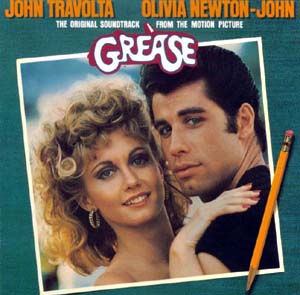
Soundtrack for Grease
I Wore My Album Out

I loved the movie Grease when I was a teenager. My cherished movie soundtrack album wore out, as needle tracks embedded themselves deeper into the shiny, black vinyl. I even played Olivia Newton John’s part as Sandy, in a condensed version with my high school mates.

In the privacy of my bedroom, and a handful of times on the stage, I belted out Sandy’s song of undying love for Danny, Hopelessly Devoted to You. With adoration pulsing through my vocal chords, I too, felt the passion of forever romance.

And today, that’s how I want to feel about Jesus. I want my heart to thump with anticipation every time I hear His voice, smell His scent, brush against His presence, taste His goodness, and see His glory. Though I tremble when I’m near Him, I want to wildly, passionately, and bravely chase after Him for more.

Sandy & Danny at Sunset - Grease
This is my Hopelessly Devotional

Like Sandy in the movie, I ultimately want to transform myself, so at the end, I look more like Him, and less like me. I want my devotion to shine from the inside out, so the whole world knows, I am hopelessly devoted to Him.

Today, I probably wouldn’t watch Grease if it weren’t for nostalgia. As I’ve grown in my desire to please God, I realize there are parts of the movie that don’t honor Him. But when I do allow myself to indulge, I see nuances explaining my draw to the magic of Grease, way back when. The same nuances draw me to intimacy with Jesus. I am hopelessly devoted.

But what exactly does devote mean? According to one dictionary, it’s defined this way. To give all or a large part of one’s time or resources to (a person, activity, or cause). 

This definition makes me pause. Am I giving all or a large part of my time or resources to Christ? Am I offering Him the best of my energy, talents, and love?

Often I think I do, I want to, but deep down, I know I fall short of an active, hope-infused devotion. My vocal cords aren’t pulsing with passion, the way they should.

Danny & Sandy -- Grease
Flying into Forever Romance

Thankfully, Jesus isn’t as fickle as John Travolta, when he played Danny in Grease. Christ is not impacted by peer pressure. He cares little about my outward appearance. His interest in me isn’t self-serving. He loves me enough for both of us. His desire is to meet me in the clouds, where He and I will truly fly away into our forever romance.

As I write this, I can close my eyes, and see us. Jesus and me, in a magical moment, strolling through heaven.

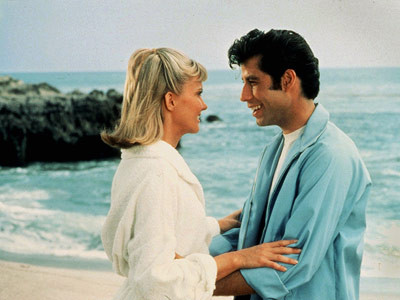
Danny & Sandy on the Beach, Grease
Hopelessly Devoted to Magical Moments with Jesus

I’ll cling to his arm, lay my head on his shoulder, and breathe deeply of his scent while we walk. He’ll stop and turn, so we’re face-to-face. He’ll lift my chin.

Totally engaged, I’ll get lost in His smiling eyes, while I belt out our song. He will know, I’m Hopelessly Devoted to You.

Is there a special song, movie, or memory that offers a unique vision of your intimate moments with Jesus Christ?

A Note to Young Writers: Honor Your Obscurity

woman praying--parodic

In the last month, I spent time with two younger women, both of whom had just released their first book. Sarah and Andrea are both fine writers whom I expect will continue to write and publish books. In the short time I had with each of them, I found myself dumping all my writing and marketing advice, talking about websites, blogging, Facebook, twitter. But I forgot to say the most important thing of all: honor your obscurity.

Very few young writers, musicians, artists value their obscurity. For good reason. We know if we’re to be published in any form, we need an audience, a sizeable audience. We know that most of the time we have to find that audience before that first book contract even lands on our desk. And once it does, and the book is out, we’re tasked to keep racking up bigger numbers. But how do we catch the eye and ear of a world that so often chooses the flippant, the crude, the gaudy spectacle over the good, the authentic, and the true?  If we’re the praying sort, we may resort to prayer, remembering the words another writer made famous a few years ago,

“O, that you would bless me and enlarge my territory! Let your hand be with me, and keep me from harm so that I will be free from pain.”

(Oh, dear Jabez, I want to say. How did you get away with that prayer?)

But we do it too, I suspect. The artists’ version would go something like, “O, that you would bless me and enlarge my platform, increase my followers, expand my twitter peeps and keep me from publishing harm so I will be famous, free from the pain of falling out-of-print.”

woman praying--parodic

I can write this prayer because I know these desires. An hour ago I was on a nationally syndicated radio show, and I find myself, now, against my better will, glued to numbers, trying to measure “impact.” While guiltily number-stalking, a stranger writes me on Facebook immediately after the broadcast and asks how he can become a writer and speaker, like me. (He’s in his twenties and he hasn‘t written anything  yet . . .)   Someone else writes to ask me how to build a fan base for her blog.

I do have advice: if you want others to read you and listen to you, you must listen to others. Do for others what you want them to do for you. That will not make you famous; that will make you better informed and more humble.


man reading2

And second, fame is not what you think. Admittedly, I am not the best source here. My moments of “fame” are modest and sporadic. But I still know this: it isn’t what you think. It’s often over in a moment. It brings more responsibility than freedom. And if you’re not careful, it can pollute or paralyze your writing. I have a friend whose first book shot to the New York Times bestseller list.  His agent, his readers, his global fan base now hold their collective breath for his next book. “How do I write under this weight?” he asks me. He has so many others he must now heed and please.

“Honor your obscurity” is another way of echoing Bill Roorhbach’s charge to “honor your apprenticeship.”  Value these months, years of laboring toward your best work with fewer listening in than you would like. This quiet is your wilderness, your blessing. Here you will sharpen your art. You will lean closer to the sounds around you, for the fragile people who haunt the forests you watch, for the small voice that whispers names you didn’t know.

Enjoy the purity of your efforts, making art and worlds and essays out of the sheer love of words, of theatre, of longing and of hope. Enjoy it now before a woman or a publisher sits down beside you filling your notebook with a thousand necessary tasks, few of which have much to do with why you began writing in the first place.

Finally, what do you imagine fame will bring you? For me (and for many writers I know) I hope mostly to be able to keep on writing, to keep using “that talent which is death in me to hide,” as John Milton writes. If you’re doing this now, pouring life into the truest sentences you can make, you’re already famous.

woman writing journal

How to Get Started Writing: Hamster Wheels and Hurdles

type lettersOf all that a writer can and should do—how, actually, does one get started?

It would be possible, in assembling writing advice from just a handful of the people who are giving it, to come away with the impression that making it in this business requires doing everything all the time.

You must, people say, build and maintain a platform. Start or re-start your website. Pin to boards. Make things that other people will pin to boards. Attend conferences and conventions. Join groups. Pitch ideas. Hone your message. Know your audience. Study writing books. Edit incessantly. Post blogs. Find a writing schedule that works. Tweet and re-tweet updates about all of this. Plus string tens of thousands of words together and hope somebody will see fit to make a book of it. That’s just phase one.

Phase two is its own hamster wheel. With a book in publication you must, people say, promote like crazy. Speak at events. Do interviews. Pursue interviews. Write accompanying articles. Track reviews. Deal with disapproval. Build friendships with booksellers. Have catchy marketing stuff. Improve on sales. Aim for bestseller lists. Figure out your next project. Pin, post, platform-build, edit, update, and speak some more. Promise to tweet and re-tweet, always and forever.

The general question: Who can possibly manage all that?

The specific question: How, possibly, can I?

The general answer is that likely nobody can manage it all, when trying all of it at once. The other answer is that you, specifically you, can work toward all of this by doing so incrementally.

You will not start out on bestseller lists. You’ll begin at the beginning, with the whole unrelenting shebang left to do. Tweet This

There will be potential failures and rejections at every corner and turn. But if you begin—if you sit at a computer or a typewriter or even a small slip of paper, and if you start putting words down and then keep putting words down, you will be writing. Often it is as simple as that.

hurdleHere is a personal example. After having published three books by 30 (two as author, one as collaborator), late last year I didn’t have a single writing project to speak of. I wasn’t sure I wanted any, because being submerged in the mire again—see above paragraphs—seemed exhausting. Other concerns demanded my focus and time too, namely: my husband was on a seven-month combat deployment to Afghanistan, we had moved our lives across the country twice in less than a year, and I had just given birth to a baby, our first. Some days, accomplishing just laundry and dishes seemed out of my league.

But I knew that God had given me a love for writing and the opportunity to publish. He was percolating words in me that I wanted to put down. So on one harried morning, I dared draft an article query. On another day I bravely emailed some book ideas to my agent. It was just a baby toe stepped back into the pool, but from where I stood it was the all-important start, a jump at the big, looming hurdle.

That was trajectory, finally, and in a matter of weeks and months I was actually writing again: ideas flowing, plenty of potential projects on hand, a few materializing, and even (always miraculously) another book contract waiting in the wings. Perhaps more importantly, I was learning to chip away at this job, little by little, reminding myself that it would not be accomplished in a single swing. The laundry and dishes were waiting longer than before, but I figured I could deal with that.

Have you wondered, frustrated, how to get started writing? The solution can be as simple as a little trajectory. Tweet This

Stop trying to figure out how to start writing; instead, start. Aim at a goal and have the courage to start imperfectly and incompletely. As you get a handle on one area, add another. You will likely surprise yourself with all that can be attempted and accomplished. Writing is far more doable when you’re doing it.

WordServe News: February 2013

Exciting things have been happening at WordServe Literary!

On the final post of each month you’ll find a list of Water Cooler contributors’ books releasing in the upcoming month along with a recap of WordServe client news from the current month.

The biggest news is our own Sarah Freese gave birth to a baby boy, Mason. They say writing a book is like giving birth, but I think the comparison breaks down a bit…if you’re the one actually giving birth! Congrats, Sarah! Now…back to work.

New Releases

WhatASonCheri Fuller released What a Son Needs From His Mom (Bethany House)

***********************************************************************************************

wishingonwillowsKatie Ganshert released Wishing on Willows (WaterBrook)

***********************************************************************************************

husbandlistenRick Johnson released How to Talk So Your Husband Will Listen (Revell)

***********************************************************************************************

Jordyn Redwood released Poison, book #2 in her “Bloodline Trilogy” (Kregel)

***********************************************************************************************

permissiongrantedMargot Starbuck released Permission Granted (Baker)

***********************************************************************************************

forsakendreamsMaryLu Tyndall released Forsaken Dreams, the first book in her new “Escape to Paradise” trilogy (Barbour)

***********************************************************************************************

MarianoRiveraMike Yorkey and Jesse Florea released Playing with Purpose: Mariano Rivera, the future Hall of Famer from the New York Yankees (Barbour)

***********************************************************************************************

New WordServe Clients

During the Super Bowl, a storyline grew about Colin Kaepernick, the San Francisco 49er’s starting quarterback. He had been adopted and his faith and family were being talked about, including his birth mother. His birth mother, Heidi Russo, had contacted our agency a few days before and quickly signed in. Margot Starbuck is writing her memoir You’ll Do Great Things, and Alice is circulating it to publishers.

New Contracts

Marcus Brotherton signed with Tyndale to collaborate with a Seattle-area pastor on a book called The Presence.

Tim LaHaye and Timothy Parker signed with Thomas Nelson to write Revelation: Clear and Simple, a chapter-by-chapter explanation of the last book of the Bible.

Margot Starbuck and Jeremy Jones signed with Focus on the Family to publish devotionals called Kingdom Women and Kingdom Men (respectively), using content from Tony Evan’s books of the same name.

Mike Yorkey and Marcus Brotherton signed on with Barbour to do Playing with Purpose: Nascar about Christian race car drivers.

What We’re Celebrating!!

A Higher Call by Adam Makos was able to stay on the New York Times hard cover bestseller list all through the month of February. It rose as high as #6 on the print list. The WWII story also made the NPR hard cover nonfiction list for 4 weeks, Publisher’s Weekly list, as well as USA Today.

Helen Shores Lee and her sister Barbara Shores, authors of The Gentle Giant of Dynamite Hill (Zondervan), appeared on “The 700 Club“.

Carol Barnier flew to Colorado Springs to tape an episode for Focus on the Family for her book Engaging Today’s Prodigal (Moody). One episode turned into two! It should air in March.

Jordyn Redwood got a starred review (her second!) in Library Journal for her new novel, Poison. That’s a pretty rare event, so it’s big news when it happens.

Carolyn McKinstry was on “The Today Show” to talk about Black History and her book, While the World Watched (Tyndale), the story of her losing her 4 girlfriends in 1963 to the 16th Avenue Baptist Church bombing in Birmingham, Alabama.

What can we help you celebrate?