4 Steps to Defeating Distractions

distraction“We demolish arguments and every pretension that sets itself up against the knowledge of God, and we take captive every thought to make it obedient to Christ.” 2 Cor 10:5

I love this passage from Scripture, because it strikes a chord in me that resonates deeply: I have a hard time managing distractions. I don’t know if my shortcoming is a result of training myself to multi-task (which demands that my attention is spread out over many areas at once – a behavior common to many entrepreneur-authors), or if I’m not mentally disciplined enough to shut out all the noise outside (and inside!) my head.

Either way, I know I need help, and this verse from 2 Corinthians offers a powerful strategy to not only strengthen my focus, but to stamp everything I do with the likeness of Christ.

Step 1: Identify the pretensions in my life.

Pretensions are claims to importance or merit. In Matthew’s gospel, the parable of the workers in the vineyard serves as an example of pretension: those hired early in the day believe they merit more pay than those hired last. Yet the landowner makes it clear he is acting justly by paying the agreed amount to his first employees, while still acting generously to those who came last. When I think I ‘deserve’ more, am I subscribing to pretensions or conventional notions of worth, instead of relying on the goodness of God? Does that pull my focus from what God wants and cause me to obsess on what I think I should get?

Step 2: Demolish the arguments that oppose the knowledge of God.

Wow. Demolish. I’m reminded of the Egyptian army chasing the Israelites into the sea. Only when that opposing force is utterly destroyed can the Israelites move forward with confidence. Do I demolish my distractions, or continue to look back at them, handicapping my ability to set my focus on God?

Step 3: Take captive every thought.

In our information-rich world, it’s easy to let my attention off-leash. I need to be bold and exercise my God-given power to choose what I will think about. That’s not to say that distraction can’t be positive – we all need a break at times from purposeful activity and thinking in order to recharge ourselves and give our minds space and time to rest and play. But excessive distraction denies us the chance to focus on the meaningful work God calls us to in our lives. Do I accept responsibility for what I think, or do I give my thoughts permission to rule me?

Step 4: Make every thought obedient to Christ.

The only way this happens is by knowing the Lord, which means making it a priority to spend time in prayer, reflection, and reading God’s word so He can shape you into His own image. I’ve found that even brief amounts of time dedicated to building my relationship with God have a big impact on my daily routine and help me to stay focused on His priorities. Do I ask Christ for help when I am distracted?

What Scriptures help you battle distraction?

Spiritual Marketing: Martha Carr

There are now endless marketing tips and tools available to everyone with every kind of budget. It has gotten much harder to know when to stay strong and push on through a marketing plan that’s not quite working and when to let go and see what happens. It’s a blessing and a curse for a writer.

TheKeeperI’ve been writing and publishing for a few years and I’ve been fortunate enough to get the chance to be traditionally published and to self-publish. I’ve had the chance to have no money for marketing and a healthy budget. The lessons I learned from the experiences have proved to be invaluable to my life as a writer but not in the way I expected, especially when it comes to marketing.

What I discovered has felt like an obvious answer and has given me back my love of writing. Years of frustration over marketing had slowly taken that from me till I wondered if I wanted to write anymore. That’s when I paused and started listening from within and finally got an answer.

First, remember that when it comes to the actual writing, we all have a calling, an urge to write in one style or another and it’s pretty difficult to get us to stray from it. Mine is to write a series of thrillers, the Wallis Jones series, that include big conspiracies and average families searching for a way to deal with it all. For some, the answer is God, while others keep searching, hoping for a different answer.

No matter how many times I went and tried another style of writing, I eventually came back to that mix.

Marketing, however, is altogether different, especially in a quickly-changing world full of experts who say they can help sell your book. I’ve tried quite a few of them and with both good and bad results. In the end, it was all a lot simpler than I was trying to make it.

The answer was to live life on life’s terms. In other words, if there’s enough in my budget to do some marketing, then consult with the experts, weigh the options and set out with a plan. Keep the focus on the one plan and invite God into the entire process.

Instead of focusing on how many books were selling, my attention shifted back to what motivated me in the first place. I wanted to write because I had something to say. The fun returned because it was no longer about the outcome. So much of marketing can be about outcome if you let it.

That’s where I’ve started using spiritual marketing as my guide and letting go of the results. My part is to just do the piece of marketing that’s due today and then stop. I find myself sitting down to write without gritting my teeth or thinking about who might want to read it. I’d still like to sell a lot of books but my stomach doesn’t lurch when someone asks me how many have sold and I don’t feel compelled to hunt down opportunities.

I’ve got a plan in place for The Keeper that is reasonable and in line with my current budget for time and money. Outcome is out of my hands and I turn it over daily to the one place I know will be able to do something with it. I do my part in all of it but I’m not making sure everyone else is also doing their job. Until I adopted the idea that God would need to be part of the marketing as well, it was never enough. But for me, spiritual marketing means God can get me wherever He wants me to be so I can be assured this is my journey and relax into it.

*******************************************************************************************

MarthaCarrMartha Carr is a journalist and author of five books, including the Wallis Jones series. The 2nd thriller in the series, The Keeper has just been released. http://www.wallisjonesseries.com/.


I Wish I Could Google God

Photo/KarenJordanIf only I could “google” God for answers to life’s problems. Then, I could just type a question and get one right answer—the Truth.

As a writer, I don’t always come up with the best questions to ask to find the solutions I need. And at times, I don’t know what to pray when I’m burdened by life challenges.

So, I wish I could enter a word or phrase into my Internet search engine, trusting that God would grant me the exact direction I needed.

As I share in my family’s struggle with their painful issues, I don’t even pretend to know how to help them manage their lives. How can I intercede for someone else, when I don’t know how to pray about my own problems?

Many days, I can’t even express the concerns of my heart. But I’ve discovered some powerful promises in the Bible that help me navigate through the turbulent waters of my worry life.

How can we find rest from our stressful lives?

… Jesus said, “Come to me, all of you who are weary and carry heavy burdens, and I will give you rest. Take my yoke upon you. Let me teach you, because I am humble and gentle at heart, and you will find rest for your souls. For my yoke is easy to bear, and the burden I give you is light.” (Matt. 11:28-30 NLT)

 How can we know that God hears our prayers?

 And we are confident that he hears us whenever we ask for anything that pleases him. And since we know he hears us when we make our requests, we also know that he will give us what we ask for. (1 John 5:15)

What if we don’t know what to pray?

 … the Holy Spirit helps us in our weakness. For example, we don’t know what God wants us to pray for. But the Holy Spirit prays for us with groanings that cannot be expressed in words. And the Father who knows all hearts knows what the Spirit is saying, for the Spirit pleads for us believers in harmony with God’s own will. (Rom. 8:26-27)

What if you don’t believe that you can hear from God? God’s Word answers, “My sheep listen to my voice; I know them, and they follow me … ” (John 10:25 NIV).

What are you worried about today? Philippians 4:6 encourages us, “Don’t fret or worry. Instead of worrying, pray. Let petitions and praises shape your worries into prayers, letting God know your concerns” (MSG).

I still wrestle with how and what to pray at times. I am thankful for the recorded Word of God. It serves as a lifeboat that I can rely on when unexpected storms roll in, or when I need to pray for others who are drowning in their ocean of worries.

Father, we need you, but we don’t know what to say.
Thank You for Your Spirit, Who guides us when we pray.
Holy Spirit, intercede—You alone know our needs. Amen.

Will you share a promise from God’s Word that has helped you find direction?

Training Your Writing Life

056A new puppy joined our family a year ago.

Yes, he was that cute. All puppy smells and fuzzy bums and soft little pads on his feet.

Such a baby! He could hardly run in a straight line back then. He kind of hopped and flailed with his feet, and somehow he made progress.

040

There were a lot of other things he had to learn.

Like going outside to do his business.

And how to get along with the big dog.

And how to play with the cat.


026But he learned all of those things (although he still makes mistakes).

As he reached the ripe old age of ten months, things got interesting. That’s the adolescent age for dogs. He lost all brain power and forgot everything he had ever learned.

29

The rest of the family was ready to give up on him.

But patience and consistency are the keys.

My writing life is much like training a new puppy. Is yours?

Do you sometimes feel like you can’t do the basic things like write a sentence, or come up with a verb other than “was”?

And then there are the “big dogs.” Those multi-published authors can be pretty intimidating sometimes, no matter how nice they are. And whose heart doesn’t start beating faster when you see your agent’s name in your email inbox? Or when the phone rings and you don’t recognize the number?

Have you learned to play with the “cats” in your writing life? You know – your peers who are traveling this same trail with you. Have you made friends, or are you friendly rivals? We’re all in this together, and it’s good when a friend has your back.

001

Or have you passed that beginning learning stage, and are now in the throes of your writing adolescence? Sometimes I feel like my brain has forgotten how to write.

But I keep telling myself, just like with the dogs, and with my children as they were growing, my writing life is growing, too. It needs patient training and consistent discipline.

Without it, I’ll never get past the flailing puppy legs stage!

Here are the steps I’m taking:

1) A dedicated writing time every day. It’s like punching a time clock. I write from 10:00 to noon, and then from 12:30 to 3:00.

2)  A dedicated writing place. My desk is in a corner of the family room, with a view of the creek that runs behind our house. This time of year, birdsong accompanies my writing music.

3) I stay in contact with friends who are ahead of me on the trail, and can encourage me along the way. I also stay in contact with friends who are just starting out on their own writing journey, encouraging them and sharing with them what I’ve learned.

4) I take chances. I try to market myself, even though I dread talking to strangers. I try to write stories that stretch me as a writer and as a person.

 What steps are you taking to help yourself grow beyond the puppy stage of your writing?

006

Marketing Lessons From My Dog

bulldog wearing eyeglasses sleeping over a good novelAlthough my dog knows nothing about online social media, she is a rich inspiration for me when it comes to marketing. Here are the lessons I’m learning from her as I spend this season promoting my humorous memoir, Saved by Gracie, about my life with a four-pawed family member.

1. Persistence pays off. Gracie gets a fresh whiff of ground squirrel in one of the numerous holes in the hillside we walk every day, and for the next three days, she smashes her big nose into that same hole when we pass by. By the fourth day, she tries another approach and begins digging furiously to find the critter she knows is somewhere down there. So far, no squirrel, but she’s produced a mound of fresh dirt to play with. My take-away: keep working a lead until you get what you’re after, or until your work yields other opportunities. It worked for me last week: after a month of trying to get some events press from the alumni office of my alma mater, I tried another approach – I contacted the university’s social media manager, who offered to post and share my events. I knew there was help somewhere, and I found it! And now I have a productive contact in my resource file for future reference. Opossum22. Instead of dancing around an idea, grab it and run with it. Gracie finds an opossum on the edge of our backyard and circles, unsure what to do with it. I try to get her away from the furry ball, but we continue to dance around it until she finally snatches it up in her mouth and tears off for the front yard. She drops it along the way, I snag her collar, and take her into the house. Gracie is unharmed, and the opossum wanders back into the woods. My take-away: be bold and see what develops. I always wondered if there was value in an author book tour, so I decided to put one together myself for Saved by Gracie. It forced me to reach out to new venues and contacts in places I’d never approached, expanding my network of resources and readers. And since I traveled to places where I have family, I got free housing and a chance to visit, too. More importantly, I’ve learned the details that go into a book tour, creating a template for the next time around. (And the book tour didn’t bite me, either.) CC Cookie and Gracie 0533. Take a break. Gracie takes a nap after our morning jog, but by afternoon, she’s eager to go back outside and do it again. My take-away: recharging is just as important as working hard. Like many authors, my to-do lists are long and ever-growing. I have to make myself take breaks, but when I find myself away from my lists, my mind runs free, generating fresh ideas and perspectives. By the time I’m back at work, I’ve got new creative energy to pour into my projects. Which leads me to conclude that whoever said “you can’t teach an old dog new tricks” clearly wasn’t an author. Or at least, not one who sold books…

Is God Talking to Me?

DogAs Christian authors, we often view our books as a way to get God’s Word out in a non-threatening manner. Novels are easier to hand to someone than a Bible and generally an easier way to start a conversation.

However, two recent events are causing me to change my view on that a little. Recently, my minister said that when he’s working on a sermon series, the subject matter is usually something he’s struggling with—something God is trying to teach him.

I had the good fortune to hear Ted Dekker speak during his Outlaw Tour down in Colorado Springs. A big theme of his talk was that his struggles as a Christian come out in his books. His questions about faith. Those uneasy issues that we all contemplate. Is God real? Is He who He says He is? Is there really a Heaven? Is my belief in Christ truly enough?

Perhaps we as authors are actually working through our own issues and the collateral benefit is that we’re frequently able to help other people.

But surely my writing isn’t just about me. It can’t be because my spiritual life is all figured out . . .

I began to think through the books I’d written and the ones I was planning on writing. There were some consistent themes. Truly believing in God’s sacrificial love. Letting God take control. Being submissive to His will for our lives.

If I look honestly at these themes, they are what I struggle with the most. A God . . . people . . . the Lord of the Universe dying one of the most painful deaths ever . . . for me. My heart usually reconciles this easily but my intellectual side waivers occasionally. This is what I believe?

And sometimes with a big gulp . . . I whisper yes.

I’m a control freak by nature. It lends to the job I do every day. As an ER nurse it is expected of me to bring control to chaos. I am stubborn and independent—which is the nature of two out of three of my heroines. They’d rather fix it themselves than reach out for help and yet, when circumstances become insurmountable, they must reach out to survive.

Isn’t this how it is with us? Maybe it is just me and all of you are very good at relinquishing control. If so, please let me in on your tips.

As we write these stories, maybe what we need to do first is read our stories with ourselves in mind and hear what God is trying to say to that person we see in the mirror.

This post first appeared at the ACFW blog. Hope you’ll check it out.

The Heart of An Artist

Hands of Businesswoman Using LaptopWe think, we feel, we bleed on the page. We’re sewers of words, stitch by stitch until our heads unravel fuzzy.  Hey, are you talking to me?

People don’t always “get” us, and we’re okay with that because we already know we’re a bit strange, no shocker. Our dearest people love us anyway.

We writers draw boundaries and let our voice mail field calls. We plop our rears on chairs and pop up prayers and Advils and away we go, ready to transport our readers.

A thousand distractions call, but we have a dream-scream and God put it there. And if God put it there, nobody can take it away. And who needs to clean her house anyway? We have books to write.

We’re emotional creatures, God bless us. We’re well endowed with feelings. We love and hate our emotions with a passion. We get a high when we make readers laugh, cry, and get angry, boom-boom-boom, sometimes all at the same time.

My husband wipes his eyes as he reads the fruit of my year-long labor. He’s lost in the part where Ema McKinley swallows her grandsons into a hug. It’s her first hug since the miracle. And as Ema absorbs the feel of those boys, my husband sniffles and I swell. Swell with the joy of the craft and the miracles and the emotion-packed words.

Jesus had emotions. Remember how he wept? To love is to feel, and when Lazarus died, Jesus felt what we’d feel. In love, He felt for us.

We feel for our audience when we write, and this is our love gift.  We want to love them closer to something. Just like Jesus, the Living Word, wants to love us closer to Himself.

Hey, big-hearted artist, what do you love most about writing? What drives you to do what you do?

Beautiful words stir my heart. I will recite a lovely poem about the king, for my tongue is like the pen of a skillful poet. Psalm 45:1

Watch Your Words: A Mother’s Day Reflection from Nature

Photo/KarenJordan

Understand this, my dear brothers and sisters: You must all be quick to listen, slow to speak, and slow to get angry.  (James 1:9 NLT).

I glanced up the hill behind our home, and I had eye contact with a doe as she watched over her fawn. As I continued to water my wilting tomato plants on my wooden deck, the doe stepped closer to check my reaction to her movements.

I remained painfully still while watering my plants. Any sudden movement from me would have caused the doe and her fawn to scamper beyond my sight.

A few minutes later, I turned my head to redirect my hose toward another plant. When I looked back up, I saw the deer walking quietly away from me, grazing on the grass and plucking leaves from the low-hanging branches.

Without any words, I understood this message from nature, loud and clear, “We feel safe here if you don’t make any sudden moves to threaten us.”

Reality check. As I observed the doe and her fawn, I recalled a recent conflict with my daughter Tara, mother of five children.

How many times have I chased away my children with my impulsive words or quick temper? Too many to count.

Without outlining the nitty-gritty details of my personal life, I’ll “plead the Fifth Amendment” here—on the grounds that my answer may be self-humiliating.

Good word. So, I’ll just quote the wisdom of the Bible.

And now a word to you parents. Don’t keep on scolding and nagging your children, making them angry and resentful. Rather, bring them up with the loving discipline the Lord himself approves, with suggestions and godly advice. (Eph. 6:4 LB)

Am I cautious with my movements and reactions as I relate to my own children and grandchildren? I’m working on that one.

After I expressed my concerns and expectations to my daughter about a situation with one of her children, I regretted my hasty response and unsolicited advice. So, I offered a heartfelt apology, hoping and praying for her forgiveness. I realized that my emotional reactions often bring unintended consequences.

Reflection. Sometimes our silence speaks more clearly than our words. I know my voice can scare away an animal or bird, but sometimes I forget that just one inappropriate word can also repel a child, friend, or loved one.

We often use our written and spoken words to express our thoughts and feelings. But at times, we fail to guard our choice of words or listen to others. As a writer, I know the importance of editing my words. But often, I forget to consider the power of my spoken words, and I fail to be quick to listen, slow to speak, and slow to get angry. (Jms. 1:9 NLT)

When the doe appeared in my backyard again, I knew to be quiet. Opening a squeaky door or stepping on the dry, parched leaves would propel her to run to a safer place with her fawn.

As I watched the doe scamper away with her young a few minutes later, I thanked God for the lessons He sends me in nature for my own family and for my writing life. I offered a prayer of thanksgiving for being exposed to His truth expressed in nature and in my everyday life. Then, I asked Him to help me release my children and all of my expectations once again.

What concerns and expectations do you hope to release to God? 

Should a Non-Fiction Author Write Novels and Vice-Versa?

Gift Wrapped Package
Are Shiny Objects Calling You?

One of my coaching clients has to guard against his propensity to chase every shiny new object. I can identify with his temptations, as I struggle with similar ones in my writing. Can I author both fiction and non-fiction? Can you? Let’s explore the question, and see if we arrive at the same conclusions.

Recently, I had a conversation with my literary agent that went something like this: 

Me, “I’m grateful my non-fiction books are selling, and my platform is building in the genre, but I have these two great novel ideas. What do you think? Would it be okay for me to pursue them?”

Alice, in a gentle tone after taking a deep breath, (I’m sure praying for patience with this crazy, bling-chasing author she has to deal with), “We normally recommend trying to stick with one genre. Otherwise it confuses your audience.”

“Could I do it using a pen name? I have one picked out.”

“Possibly. But then you’re using twice the energy to build two platforms simultaneously.”

That sounded like a whole lot of work to me.

Alice, “Can you turn your novel ideas into non-fiction?”

“Fiction is more fun to write.”

“I’m sure. But why don’t we focus on finishing your current book, then revisit this when you’re done?”

She’s a wise woman. I’m sure she believed the luster of authoring fiction would fade with time. And to a degree, she was right.

I’ve since researched the subject further, and found there are some common concerns and benefits listed from those with vast experience and knowledge. Publishers, agents, and even high-profile authors said much of the same. Here are the highlights of what I learned about the subject.

Keep Your Promises
Reader Expectation Can Drive their Trust

Cons:

1. Most readers will try a favorite author’s book in a new genre once, but if they don’t like it, may not buy any books written by them again. Including those they loved before.

2. Loyal readers often feel betrayed by the switch, and never regain trust. Genre confusion can cause authors to lose whole segments of audiences who now view them as promise-breakers.

3. If you switch genres, and the new book tanks, it can take years to rebuild publisher confidence and marketing momentum.

Pros:

1. Writing too much of a similar thing can cause an author to sound scripted, formulaic, and stale in later books. A change in the creative landscape can infuse fresh dimension into their craft.

2. Opportunities to cultivate new audiences grow with change. For example, if you write murder mysteries, but switch to a practical how-to, you chance reaching people who won’t read the mystery.

3. Authors like C.S. Lewis successfully carried their voices into cross-over markets, reaching many more people. If you are careful to stay true to your writing self, you potentially could do the same.

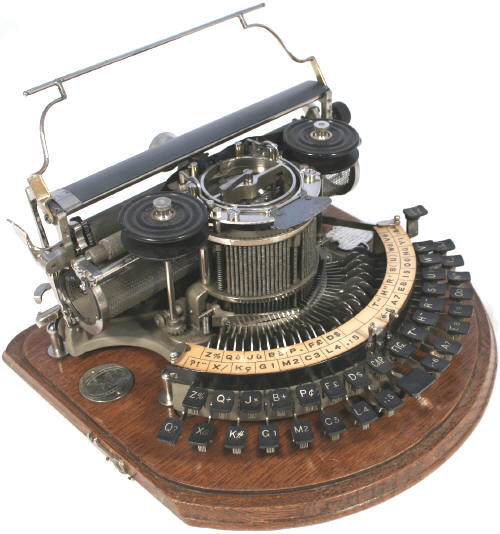
Old TypewriterAfter talking it over with my agent, researching, praying, and much pondering, I think I’ve had a change of heart. Turning my novel ideas into non-fiction is feasible. And I know successful writers are teachable and flexible. If I want to thrive in the writing world, I need to mirror those traits, and listen to those with voices of wisdom.

Down the writing road, I may change my mind or the market may shift, but at this point, why mess with success? I’d hate to have a shiny new object deflect me from the blessings I already have.

Do you think it’s wise to write fiction and non-fiction? Why or why not?


The Most Important Thing You Can Do As a Writer

way of trustI get asked all the time, “Shelley, how did you get published?” The real question, though, that these folks are asking is, “Shelley, what can I do to get published?” We all want to find success in our field of interest, and if you’re reading this, there’s a good chance your field is the same as mine: communication, and in particular, writing.

While there are some GREAT steps of action you can take, and you’ll find a lot of those by following the Water Cooler, I personally have experienced the ONE that is the most important, so I want to pass that along to you as I make my debut here as a contributor. This ONE thing keeps me sane regardless of book sales. This ONE thing helps me know which project to work on and which one to table or forget altogether. The To-Do List of life, family and ministry often blur my vision and confuse my priorities, but this ONE thing really does make ALL the difference.

Ready?

It’s so simple and yet so overlooked by far too many (even Christian) writers.

Trust God.

I told you it was simple, but the truth is, the quality of our lives rises or falls on our level of trust in our Heavenly Creator–the One writing our lives. The One who knows the end from the beginning. The One who has GOOD plans for each and every one of us. Many times a creative soul like a writer gets all jumbled up in the mix of “the next new thing” and trying to have his/her voice rise above the noise of so many voices also trying to make themselves heard. But the motive behind it all is either going to be FEAR or LOVE. And that motivational force will come from the Source in whom I place my trust: myself; my agent; my abilities; my marketing team; my publisher; or my Heavenly Father.

It’s a simple principle, but that doesn’t mean it’s also an easy practice. Thankfully, there is grace for this, too! God cares more about your willingness than your perfection.

As we seek to discover where we’re placing our trust, we can ask ourselves these good questions:

  • Do I have to be a successful (however you define “successful”) writer to be of value?
  • Am I working on this current project because I sense God’s Spirit flowing through me in the process or because I feel pressure to write this?
  • Who is my audience…really? In other words, who am I most seeking to please? (Readers? Myself? God?)
  • If my writing isn’t as successful as someone else’s, is my writing still valuable?
  • What is my source for content? Am I solely relying upon my experiences, education, research, and skills, or am I inviting God’s Spirit to be my greatest influence in what I write?

According to the writer of Hebrews, one we can take some cues from as writers, “The fundamental fact of existence is that this trust in God, this faith, is the firm foundation under everything that makes life worth living. It’s our handle on what we can’t see.*”

Asking ourselves where we are placing our trust, regardless of the size of that trust, will help us navigate through all the ups and downs and unknowns that writers experience. God sees and God cares more about your calling to write than even you do. Trusting Him in the midst of every day life and trusting Him to give you the words to put ‘out there’ will give you the strength and peace to accept His plans for the reach and impact of those words.

#OnlyTrustHim

*Hebrews 11:1 The Message