Stupid Marketing Tips

stupidmarketingideasSo, here I was.

Sitting here, trying to think of a fabulous post about marketing books.

The thing is, the “m” word tends to bring up fabulous pictures in my head of those middle of the night moments when one of my children come to me, saying, “Mommy, my tummy hurts–” then proceeds to vomit all over my side of the bed and floor, at times giving me and my PJ’s a good dousing as well.

I, uh, am not the biggest fan of marketing, if you can’t tell.

I take that back. I LOVE the idea of marketing. I KNOW it is needed and I LOVE the bi-product of it: my books being known by people and being PURCHASED by people.

Maybe it just brings back bad middle school memories of trying to get people to like me when I was a pimple-faced, slightly overweight, 4-eyed and teeth-gapped teenager…. the thought of trying to get people to like my books (thereby, it feels like, ME) still creates that knee-jerk reaction to curl up on my bed with chocolate and a romance novel to take me to another place.

But enough about my traumatic teen years.

Marketing is hard for a LOT of writers. Maybe we can WRITE some fantastic marketing copy, but getting out there and trying to peddle books out of our comfort zone is HARD! (Those of you who find it super easy… feel free to market mine too. I won’t mind!)

But in putting ourselves out there, it’s also common to get tripped up by some really BAD marketing ideas, in an absence of good ones.

I remember when I first started researching publishing back in 2007 after I’d completed my first novel. I was searching online tips for getting an agent/editor to look at your book. One place touted the value of STANDING OUT in the slush pile. Print that proposal on colored paper! Use FUN fonts with lots of bolds and italics! Send goofy gifts that relate to your book in the mail to that editor. (one example was a baby shoe for a book about babies…??) Make them be like, WOW, this person is really SERIOUS about wanting to be published!

I laughed, then decided I would probably NEVER be published because no way, no how, would I ever sink that low to use silly gimmicks.

Then I found a few agent blogs that suggested that when they got those out-of-the-norm proposals, they were immediately trashed for their stupidity.

PHEW!

The same goes with marketing. Creativity is a MUST, but sometimes in the name of creativity, we stumble on ideas that can be counterproductive.

Here are just a few things I’ve seen over the past 8-ish years I’ve been on this journey–that have made me NOT want to read a book.

1.) THE WORLD IS ENDING! THIS BOOK IS YOUR ONLY SALVATION! Maybe not those words exactly, but scare tactics or broad, unsubstantiated claims does not a good marketing plan make. “THIS BOOK WILL CHANGE YOUR LIFE FOREVER.” (different than saying something a little more docile like life-changing fiction, etc) “GOD WANTS YOU TO READ THIS BOOK!” (let HIM tell me that, thank you!) Sure, you might get some saps to buy it, but you probably won’t find publishing success with this type of marketing for books.

2.) BUY MY BOOK (five minutes later) BUY MY BOOK (five minutes later) BUY MY BOOK (repeating 100 times per day!) Over posting on social media is a hard one, because there is a fine line. We NEED to be bold and proud of our books and market them on social media, no doubt. However, tact is needed. When my Facebook newsfeed is filled with 6 different posts by the same author marketing the same book all in the same day? It’s a good way to get yourself unfriended or at least blocked. Your Facebook marketing should draw people in, not annoy them.

3.) I MEAN, YOU DID BUY MY BOOK, RIGHT? Guilting people into buying your book is uncool. We all have different budgets and different reading tastes. I’ll readily admit, there are some writing friends I have (who will remain nameless) that I haven’t purchased their books. Why? Partially because I’m a broke mom of 4 kids trying to make a living as a writer. HA HA! But also, I have my writing friends than I have time. The idea of marketing is to ENTICE them to read your book, not twist their arm.

4.) NOTHING. This is the stupidest idea of all. Just not doing anything because you’re afraid of it. It’s the one I’m most guilty of. Oh, I market, but I’ll get an idea and think, ‘Oh, no, that’d totally bomb” and move on. Just like in publishing, sometimes you have to fail a few (or a hundred…) times before you find that golden ticket/agent/editor/marketing scheme. But if you just sit back, cross your fingers and toes, and hope your books sell? Yeah. That is the WORST marketing idea of them all!

A Side of Faith - front only(putting a picture of my book of my most recent book release as well as a link to purchase it is an example of a not-as-stupid marketing idea… as is to mention that my next book, A Side of Hope, will be releasing later this month…. )

Leave the Luggage Behind

luggage“Where are your bags?” is the most frequent question I’ve been getting lately from the friends I stay with when I travel for author events. I show up at their doors with a small tote in my hands, and they look around me for the rest.

“This is it,” I say, and they marvel at how little my bag is.

For some reason, I guess everyone expects me to be loaded down with luggage, dragging along a carry-on case, a tote on my shoulder and more bags to come. While that may have been the norm for me years ago on the rare occasions I flew somewhere with my five kids, it’s no longer my style.

These days, I fly with minimal baggage, and I love it. Instead of packing car seats, food snacks, toys, games, and multiple outfits for all, I get a kick out of taking as little as possible. I actually look forward to living out of one small bag for three or four days, since it requires me to trim my wardrobe to only the essentials I need. Once on the road, I don’t have to make any clothing choices since I already made them when I packed; I save time and effort with less to manage. Limiting myself forces me to evaluate priorities and pack accordingly. There’s no room (literally!) for changing my mind, or my clothing options.

The result is perfect for traveling: I have what I need and no more. It makes me feel mentally and emotionally light and free, and I don’t have to physically exhaust myself lugging extra bags. To fly unfettered by baggage is a wonderful thing in a world of extra luggage fees, delays, and lost bags.

If only I could do the same with my journey through life!

“Do not get any gold or silver or copper to take with you in your belts— no bag for the journey or extra shirt or sandals or a staff, for the worker is worth his keep,” Jesus tells his disciples when he sends them out to preach and minister in Matthew 10. Clearly, our Lord knew the value of traveling light! Without all that extra baggage to keep track of, his disciples were free to devote themselves to the work to which they had been called. Unencumbered with material concerns, they could focus on the priorities, the essentials of Christian mission.

I’ve found that is also true of traveling through life as a Christian author: when I keep my eyes on the Kingdom, everything else loses its urgency. Sure, I’d like to make more money (who wouldn’t? travel expenses do mount up no matter how many free beds you can find!) and it would be nice to have readers flocking to me in droves. Yet when I’m focused on the essential task of sharing God with others, it only takes one heart-felt ‘thank-you’ from a reader to know that I am ‘worth my keep.’

How do you pack for your journey?

Four Lessons From the Speaking Circuit

Behind the back copy

For 20 years now I’ve dragged a suitcase of books from speaking event to speaking event, telling stories, signing books, listening to people in line innocently yammering on while someone else is waiting impatiently to get an autograph.

I’ve spoken from the Statehouse in Boston to a rain-tattered canopy outside a firehall while firefighters let children blast the siren, from hotel ballrooms with nearly 500 people to three people in an assisted-living home, two of whom seemed comatose by the time I’d finished my intro.

Here, then, are four bits of advice about using your speaking engagements to sell books, 19 of which I’ve written, a few of which have actually sold:

Go where you’re wanted.

I’ve spent far too much of my life trying to convince people that they should believe in me and far too little time appreciating those who do. In the last few years, though, I’ve wised up.

Push on the doors, sure. Push hard. But if they don’t open, stop pushing and go find another door that might. Don’t let your pride get in the way. It’s far more fun doing a small-time gig where people appreciate your being there than beating your head on the door of some larger or more prestigious organization or event that never will.

Partner with one person who believes in you in the community where you’re going to speak.

It was a blustery, rainy Friday night, and I had a speaking gig “up river” in a small community. I honestly wondered if anyone other than the woman who’d organized the talk would come.

After the event, I walked out to my car with more than $500 in book sales, a stomach full of homemade pie and an evening of memories with a bunch of warm, wonderful people.

Why? Because that one woman was an “influencer,” someone people along the river respected. An organizer, someone who can bring an event together. An ally, someone who believed in me.

Someone like that can do more to help your event be a success than hundreds of tweets.

Take time to get to know the place where you’re speaking or the organization you’re speaking to.

Whether you’re selling books afterward or not, this is simply the right thing to do. Why do concert crowds go nuts when some well-known performer mentions something about their town? Because people take pride in where they live and appreciate it when others do, too.

It shows respect. It shows you care. It shows that you’re not just “mailing it in.”

In one of my books, 52 Little Lessons from It’s a Wonderful Life, I devote a chapter to a simple remark that one of the heavenly angels says to Clarence Odbody before the “Angel Second Class” is sent to earth to help a desperate George Bailey: “If you’re going to help a man, you want to know something about him, don’t you?”

Take the time to know something about your audience. Don’t just do a couple of Google searches. Talk to your host. Make a few calls. Do some reporting.

Finally, be interesting.

Never have people had so many options with which to spend their time, so many excuses for not leaving their home.

So, if they’re giving up an evening for you, forget the “first, do no harm” edict inaccurately linked to the Hippocratic Oath. (By me in one book!) No, first, do not put people to sleep. Say something that people haven’t heard before. Or say it in a way they haven’t heard before. Tell jokes. Dispense information. Inspire life-changing action.

But, above all, be interesting. I recently went to an author’s event just to see what other writers do. The guy spent the entire evening reading from his book.

Yawn.

That’s the reader’s job. As writers, we should spend our time offering audiences insight that our books do not. Our stories might be the impetus that draws people to our events, but give them something more than a rehash of our book or books.

Besides, if you’re interesting, people are more apt to believe your books will be, too. And there’s no better way to be asked back.

Writing Through the Storm

No author in her right mind sets out to write a novel in the middle of the craziest year of her mid life. But every author knows that life happens regardless of deadlines, contracted or self-imposed. A year ago I hit the keyboard at the end of December with ACFW in September as my self-imposed deadline. Thankfully I didn’t know the hurdles I’d have to leap to arrive the the finish line, or I may not have tried. Thankfully, God knew better.

Little did I know my day job would test my new revelation that I am bi-vocational. Little did I know life would swirl around me like the outer bands of Hurricane Katrina, or I may not have tried. Thankfully, God knew better.

Every writer has a well-rehearsed list of real-life waves that sabotage word count, goals, edits, and plotting. I was well acquainted with the pitfalls of Twitter, Facebook, and my favorite procrastination tool, Pinterest. For others it’s childcare, homework, housework–the list is long. I’d hit mid point of 50K when the waves mounted and crashed. My day job work partner went on vacation in March, leaving the office in my care for two weeks. I was planning my youngest’s graduation. My husband was in the midst of a new job and we spent an April stay-cation wading through twenty years of classroom supplies stored in our garage between his classroom moves. In the midst of wading through college applications, taxes, FAFSA forms, college visits, and open house planning, my nurse and prayer warrior retired two weeks after receiving a bad diagnosis in May (she is currently well).

My critique partners knew I was floundering with my writing by July, when my work partner had major surgery and was out of the office for six weeks, turning my usual full-time weeks into forty-hour-plus work weeks. They prayed and kept to themselves their worry that I’d just quit writing and give up on ACFW. That’s when my mother became seriously ill. On the way from the office to the emergency room, I stopped at a long red light, and I felt the world swirling around me. But God’s whisper came as clear as it had for Elijah–“I’m not in the storm.” And I could breathe again. The light turned green.

Ed5_Fig4_1

My mother made a miraculous full recovery, and the weeks that followed brought four funerals of family members of my coworkers by August. ACFW was breathing down my neck and I questioned if I could do it. But as miraculous as my mother’s recovery, I put my heart on the keyboard and my measly 50K turned into 80K in six weeks.

I was pinching myself. I stood in the elevator shaking on the way to my room at ACFW with my dear friend and critique partner. I felt I’d finally been spit out of the swirling storm and come up for air. I didn’t even have a pitch, but I’d been given four pitch slots, the last with WordServe. I was sure I was an impostor. I wasn’t really a writer. It wasn’t really me who’d just poured those words on the page. Thankfully, God knew better.

Life happens. Life will happen again, with or without self-imposed or contracted deadlines. But what I’ll take with me this time is a toolkit to survive it. I will remember:

1. God knows better than me. He’s not in the storm. He is sovereign and so is His work.

2. Even though I’m a hybrid plotter-pantser, pre-planning saved me in the end.

3. Critique partners are a life-line for friendship, prayer, counsel, hand-holding, dope-slapping, and yes, last minute pitch preps!

4. Being bi-vocational means God will supply enough for each calling. I’m not betraying one calling to fulfill the other. Like a mother with multiple children, her lap is fuller, but she has enough love for all.

5. Knowing my story, believing in it, and loving it, kept me from giving up.

I offer my work back to my Maker. Thinking of the future publishing possibilities, I tremble with excitement and fear. But I know He’s not in the storm. I entrust He knows the future best.

Looking for Direction and Peace?

Photo/KarenJordan

Overwhelmed? Drifting above the landscape of your work like a hot air balloon?

Lost your sense of direction? Fear your approaching deadlines?

Searching for answers. When life seems overwhelming, it forces us to look for answers and direction. And it’s important to know where to seek help.

At times, I’m tempted to rely on guidance and encouragement from the resources the world offers me, like the evening news. Instead, it breeds confusion and discouragement, revealing more signs of the ultimate demise of our culture and way of life.

In Matthew 24, Jesus described signs of the end times. And His disciples asked, “Tell us … when will this happen, and what will be the sign of your coming and of the end of the age?” (Matt. 24: 3 NIV)

Jesus explained that He didn’t know when the end would come—only His Father knew the answer to that question (36). But He encouraged His disciples to always be ready (44).

How can we “be ready”? Most of the time, I can’t keep up with the pace of my life, much less worry about the future—especially the last days.

Jesus offered a story to encourage His disciples to focus on the things that matter most. He described a servant who had neglected his responsibilities during his master’s absence, as if he expected him never to return. But when the master returned, he held the servant responsible for his disobedience and disrespect.

Facing the truth. Once again, the mirror of God’s Word forces us to look at ourselves—not to shame us, but to confront us with the truth.

Am I living as if He’s not coming back? What responsibilities am I neglecting?

When I come to my senses and examine God’s Word, I’m reminded, “Instead, be concerned above everything else with the Kingdom of God and with what he requires of you, and he will provide you with all these other things” (Matt. 6:33 GNT).

What does God require of me? Am I taking care of the things that He’s entrusted to me? My home? Spouse? Children? Relationships? Work? Gifts or talents?

As I examine this verse in The Message Bible, I find the specific direction I need.

Steep your life in God-reality, God-initiative, God-provisions. Don’t worry about missing out. You’ll find all your everyday human concerns will be met.

Give your entire attention to what God is doing right now, and don’t get worked up about what may or may not happen tomorrow. God will help you deal with whatever hard things come up when the time comes. (Mt. 6:33-34 MSG).

Practicing our faith. How can I focus on God’s presence, guidance, and provision? Once again, I turn to God’s Word for help.

Jesus, help me to discern Your presence, guidance, and provision. What do I need to focus on right now? Give me the courage and strength to trust you with my future and to listen and obey Your Word. Amen.

What do you need to give your attention to right now? Where do you sense God’s presence, guidance, and provision in your life?

The Making of a Masterpiece

In every block of marble I see a statue as plain as though it stood before me, shaped and perfect in attitude and action. I have only to hew away the rough walls that imprison the lovely apparition to reveal it to the other eyes as mine see it.” Michelangelo

I’ve spent the past month living as a hermit while I finished a manuscript. (Insert sigh of relief here.) I spent countless hours after my day job writing and fine-tuning every detail. Some days, I couldn’t wait to share the story with the world. Other days? All I saw were flaws, flaws that sent me running to fast food and the newest Netflix series while I processed what to do next.

That’s one of the many fun aspects of writing, though, isn’t it? I’m making the manuscript, but in the process, the Lord is making me. As my character wrestles through a growth point, I wrestle with it, too. Often what my character is learning is a lesson the Lord has spent months instilling in my own heart. From the overflow of my heart to the page…I think the story of The David illustrates this perfectly.

In the late 1400s, a group called the Operai provided blocks of marble for several prominent sculptors and artisans to create twelve statues of characters from the Old Testament. Work began on The David in 1464 but after initial carving, the piece was abandoned to the elements for twenty-five years. Then Michelangelo begged the Operai to allow him to complete The David. For three years, he carved the statue, shaving away the damaged parts and shaping features in great detail.

Kariss Lynch creating a writing masterpiece

If you hate history, I hope you stuck with me because none of that is the reason I love The David statue. Michelangelo took a wrecked, abandoned piece of marble and he turned it into a MASTERPIECE. Where everyone else saw a useless block, he saw potential and beauty, a story waiting to unfold.

I think the writing process is a lot like this. A story idea with little initial substance becomes a piece of art with a lot of effort. Over time, the author chips away the unnecessary and ugly pieces until a beautiful story is left.

I believe that’s what Jesus does with the author as he/she writes. Just as Michelangelo labored over The David and you labor over your manuscript, so the Lord labors over you, writer friend. He is in the process of creating a masterpiece that lasts for eternity, and he wants to do that with your writing, too.

Yours is a message of truth and hope. As you identify impurities and polish your writing to perfection, know the Lord wants to do that with you. He wants your voice for his glory. Sometimes the polishing and chipping are painful. With every bit you allow him to remove, you enable him to speak more clearly through you.

Keep chipping away at that novel while the Lord chips away at the excess around your heart. The beauty becomes more evident with every fallen piece.

Marketing Book #3 in a Series – Part Three

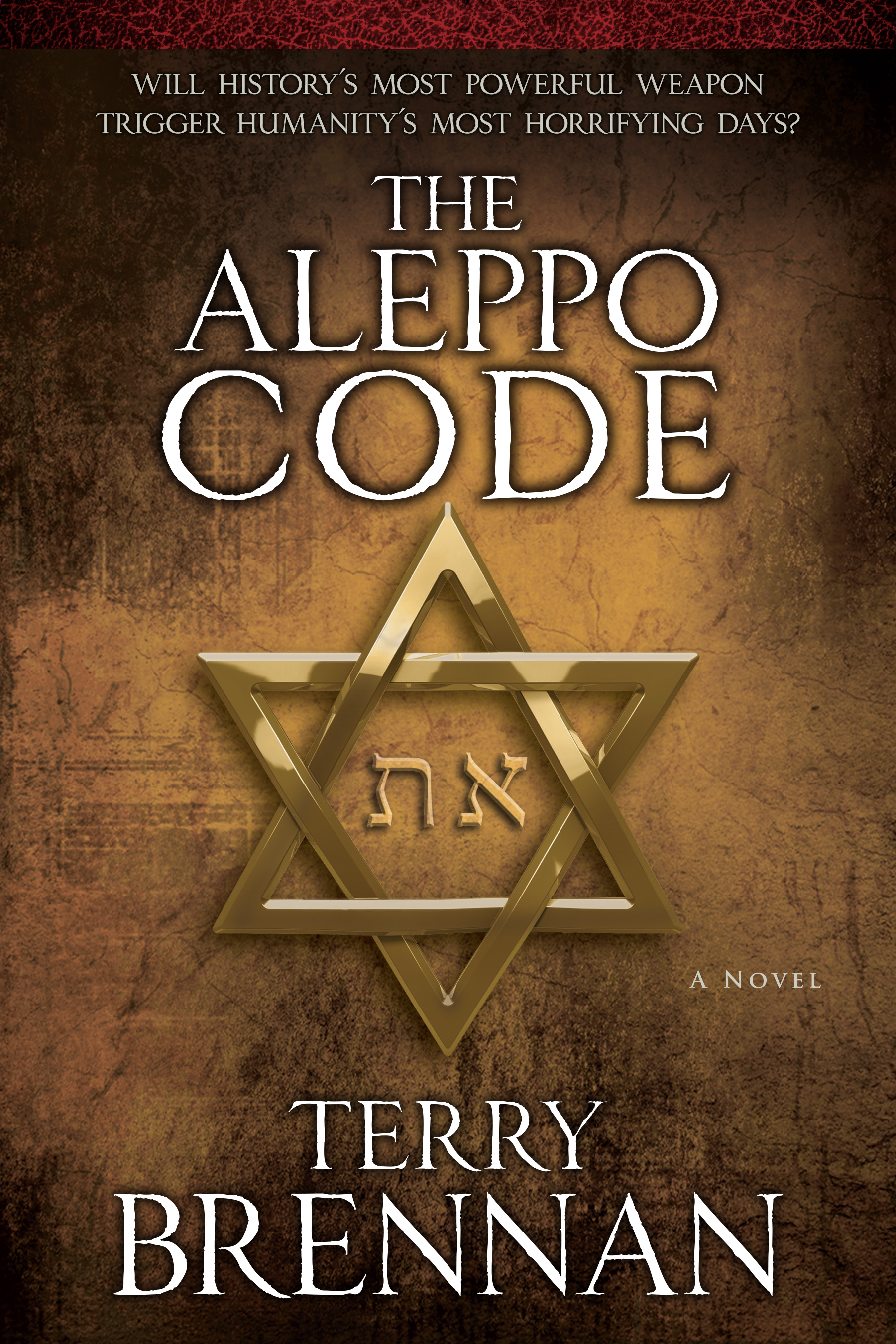
Three months into this marketing plan, I’ve been able to avoid a nervous breakdown, work on the edits for The Aleppo Code, and Kregel Publications is about to launch its spring marketing for the fall releases. Now is the time to pick up the pace.

SocialMediaI’m still working the basic plan:

Social Media:

  • Twitter – Daily
  • Facebook Page Posts – Daily
  • Blog Posts – Weekly
  • LinkedIn – Change Profile Monthly

Newsletter – Send out at least one Newsletter each month:

(One of my goals for the newsletter as we get closer to the launch is to use contests or other vehicles to tie the three books together as THE JERUSALEM PROPHECIES series … accelerate the idea of people thinking of them as a series.)


March – Contest: Guess two of the main scene locations used in The Aleppo Code. Some of the scenes in the first two books were The Collector’s Club and the Humanities and Social Science Library on Bryant Park, NYC; The Western Wall and Zechariah’s Tomb, Jerusalem; St. Anthony’s Monastery, Egypt; Cairn T, Loughcrew, County Meath, Ireland.

April/May – Tie in with Kregel Back List promotions.

June – Contest: What is The Most Powerful Weapon the world has ever seen?

July/August – Unveil the cover of The Aleppo Code.Aleppo Code Cover

September – Promote the coming E-Book promotion from Kregel.

October – Launch date for The Aleppo Code – create some tie in to ‘Midnight Madness’ … at midnight of launch day, the first 12 people who send me an email get a free autographed copy of The Aleppo Code.

Tasks For Me to Tackle:

  • Keep my website and Facebook Author page active and current.
  • Schedule out-of-town speaking engagements for May through December, particularly in those areas where I show higher readership; (This one is a reach, but it’s worth a try.)
  • Engage services of a marketing consultant to increase my standing and visibility as an ‘expert’ speaker on events in the Middle East.
  • In the summer, begin purchasing advertising on Facebook (Goodreads? Other outlets?) and discuss with Kregel and marketing consultant how to get the most impact and best results from these ads.
  • As the launch date gets closer, recreate some of the Guerilla Marketing that I did in New York City prior to the launch of The Sacred Cipher … plaster subways and Metro North trains with The Aleppo Code postcards … when the books show up, visit every B&N in New York City area, hand out post cards, autograph the in-store books, talk to store staff about placement.
  • In September/October schedule local speaking engagements/book signings including local libraries, churches, etc.
  • Arrange in advance for on-line interviews and any other interaction I can have with bloggers, reviewers, podcast producers, etc.
  • Tasks For Kregel to Tackle:
  • Continue to actively market the new series title – THE JERUSALEM PROPHECIES – in all possible outlets.
  • A place we stumbled during the launch of The Brotherhood Conspiracy is that the reviewers on the blog tour were different than the ones used for The Sacred Cipher. Many of the early reviews started “I wish I had known this was a sequel …” For that reason, setting up an effective blog tour for The Aleppo Code is critical.

(One of the great commitments Kregel has agreed to is to strengthen the blog tour for the Aleppo Code. Under consideration is a blog tour that provides all three books for the reviewers, so they can follow the story arc of the series.)


  • Implement a Back-List promotion to drive people to book stores.
    • Create E-Book promotion for both The Sacred Cipher and The Brotherhood Conspiracy prior to the launch of The Aleppo Code.

I’ve learned a few things from creating this marketing plan and then trying to implement it. One, this marketing stuff takes a real commitment – and a lot of time. Two, it’s worth it. And, three, the work doesn’t end once the book is launched. Great … when do I get some sleep?

Have you ever developed a marketing strategy like this? What was the most successful thing you did?

Lessons I Learned From My Editor

From conception to finish, I spent a couple of years on my first novel, Shaken. I had a mentor who coached me, a professor who professionally edited the manuscript, and an internationally acclaimed novelist who provided a critique. But nothing affected my story quite as much as signing with my publisher and beginning work with my editor.

Writing is difficult. You are bleeding your emotional artery on the page, complete with life experiences, beliefs, and creativity. But editing? That became another playing field entirely. In my military-romance-driven brain, it could be described as surgery to remove shrapnel. Each piece of metal must be plucked for an individual to get back to full health. In a similar way, editing requires painful digging to remove everything that does not add value to the character. After the shrapnel of your story is removed, you are freed to enhance and improve your story until it’s as close to perfection as you can get it this side of heaven.

KarissLynch Kill Your Darlings

Working with an editor is refining, a true process of iron sharpening iron (just don’t throw the sword at them if you don’t like what they say), but ultimately, it is a beautiful journey. The longer I work with my editor, the more I am thankful that God gifted her to look at stories differently than I do. She makes me better, and she is constantly teaching me and reminding me of craft tips that just haven’t taken root yet. Over the course of writing The Heart of a Warrior series, here is what my editor has taught me:

  1. Timeline is everything.

By the time my first novel went to my editor, the timeline needed major surgery, something I hadn’t thought about in great detail during crafting. I am a pantser and only use a bullet point outline to guide the major points of my scenes. Everything else just spills out on the page. This can make editing much harder for me. When it came time to edit Shadowed, I had a better timeline in place. Lesson learned? Don’t make the same mistakes on the second novel as you did on the first.

  1. Ground your character. Ground your scene.

Ever heard of floating head syndrome? No? Well, that’s probably because I just made it up. But I have it. Bad. Especially when I am writing in a steady stream of consciousness. Characters speak but you don’t know what they look like or what is going on around them. Thankfully, I am now aware of this ailment and am working to correct it before the manuscript goes to my editor. Each character needs to be firmly grounded in whatever is going on, each person in the scene accounted for, even if only briefly. Your scene also needs to be grounded within the larger story. Your reader should have no question where the character is, what is going on, who the character is with, and what drama is unfolding.

  1. Provide concrete details. Paint the canvas.

I actually love this part of writing, but I also struggle with fear. What if people think that a place or person doesn’t look that way? What if I get a detail wrong? What if, what if, what if? The “what if” game keeps me paralyzed from simply using my imagination and the beautiful tools of my eyes and the Internet to ground a scene exactly as I see it. I use research to make sure I didn’t get a basic detail wrong, but otherwise, I craft exactly what I want the reader to see. They are less likely to question what I paint in great detail than they are a canvas where I leave glaring holes due to my own people-pleasing and insecurity. No fear. Write boldly. Paint that canvas, and give the readers a scene they don’t have to try to imagine. Let it unfold in all of its beautiful detail. And then make that process even better in the next book.

Time for surgery on your manuscript. What weaknesses do you notice that you could improve on next time? What lessons have you learned from your editor (or critique partner)?

Refusing the Writer’s Call

Refusal of the call questis a common element of great stories, fictional or historical. The hero is called to a quest, but, initially, he balks. He says, whether through word or deed, “I’m not big enough for this task.” Or maybe just, “I’ve got better things to do than sacrifice myself for that.”
From Jonah getting on a ship sailing in the opposite direction of Nineveh to Bilbo Baggins telling Gandalf that all he wants is a nice tidy hobbit house with tea served on time, heroes have been trying to escape the call since mankind has been telling stories around the fireside. And for just as long, the stories have been winning the hero over to the adventure.

Why? Few of us see ourselves as heroes. We know we’re not up to the task, whatever the task is, and we’re right. We’re not big enough, strong enough, brilliant enough or good enough for the task at hand. And yet, deep in our souls, we know God made us for more than having our tea on time.

In all good stories, the hero finally accepts the call. After trying to outrationalize his call, Dietrich Bonhoeffer takes on the role of hero as he boards what is likely the last ship home to Nazi Germany, a ship that takes him ultimately to his death.

Having been elected to archbishop because he is quiet and conservative, expecting to make no waves in an El Salvador on the brink of civil war, Oscar Romero finally accepts that he must speak out, as he stands over the bodies of two murdered priests.

Paul accepts what he must do as God calls his name in a flash of heavenly light.

Little Samuel answers God on the third call in his small child’s voice: “Speak, for your servant is listening.”  Not knowing, of course, that he was accepting a lifetime mantle as prophet.

We writers refuse our call, too. Sitting down at the computer and typing out a page is such a small thing, right? It’s tiny in comparison to the heroes that have been written about. And yet, it feels daunting.

There’s the courage it takes to face a fresh scene. Will it be beautiful or fall flat? It’s as if it’s a test of everything inside you.

And there’s the courage it takes to call yourself a writer. The voices are insistent. How many times have you told yourself that you should just concentrate on being a parent, give your talents to your church and your job, and live a peaceful, ordinary life? You don’t have time for this story? Or more likely, you’re not talented enough for the story you want to write?

But if God made you to write, you’re going to be restless until you do. You can play the role of Jonah, and get on the ship going in the opposite direction and fight it out with the big fish. Or you can accept that being brilliant and big-hearted enough for the story is not what’s at stake. If God made you for this writing quest, he’s planning on equipping you as you go. Sit down at your computer and get started.

Revising Aloud

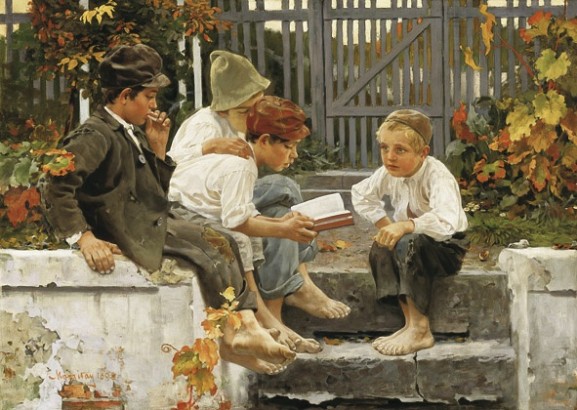
Tihamér_Margitay_Exciting_story“Reading aloud,” I’m always telling my writing students, “is the best way to revise.”

I encourage them—sometimes require them—to find read-aloud partners or start writing groups in which they take turns reading their work aloud.

“Hearing your sentences spoken lets you know whether they’re clear and natural-sounding—whether someone actually could speak them,” I explain. “And it doesn’t work to read to an empty room. You need a warm body, a listener, to complete the communication. Speaking is, after all, a collaborative act.”

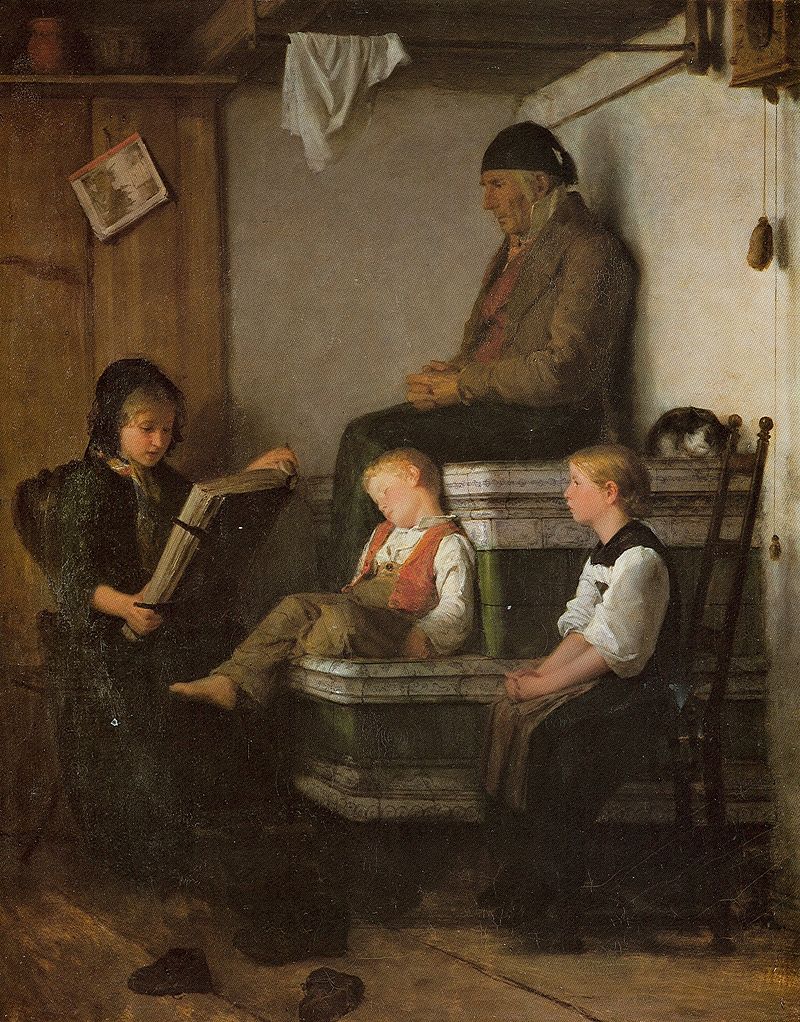
Finding that read-aloud partner is easy at college, where everyone’s engaged in writing all the time. Outside the college setting, though, finding someone willing to listen can be a challenge.800px-Anker_Sonntagnachmittag_1861 People are busy. Few have time to sit still for an hour while some verbose writer drones on. That’s how they’ll imagine it when you propose reading to them. We Americans have lost—or never had—the habit of listening to people read. We had only the shallowest tradition of serial novels, released chapter by chapter as Dickens’ novels were and read to the whole family at fireside. And no comfy pubs—without blaring TVs—like the one where C. S. Lewis, J. R. R. Tolkien, and their writer buddies hung out, drank beer, and read their work to one another. Writers who give public readings these days will tell you it’s hard to get even close friends to attend. Our lives are too busy for read-alouds.

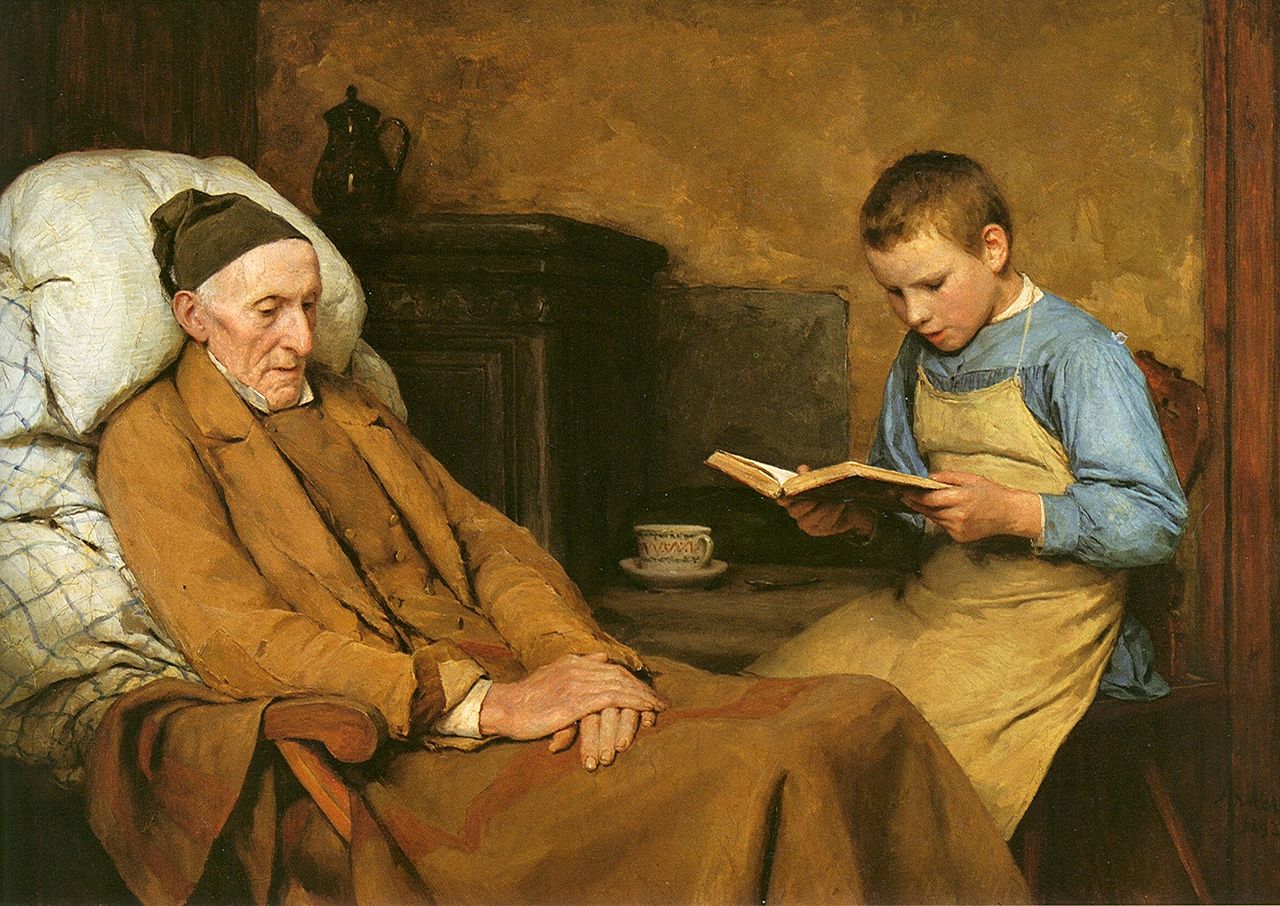
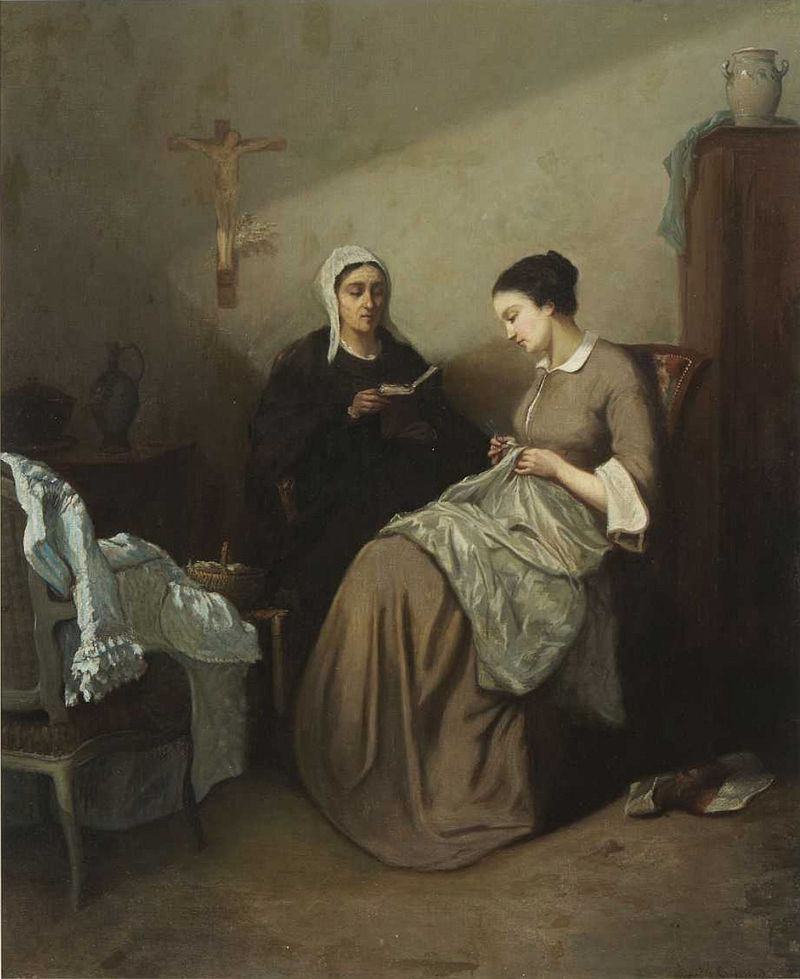
I often recommend to writer friends that they make use of the lonely people in their lives: shut-in relatives, kid-imprisoned friends who wish they had a grownup to talk to, recently retired colleagues with time on their hands. 1280px-Anker-_Die_Andacht_des_Grossvaters_1893It sounds terrible, this “making use” of others, taking advantage of their neediness to assuage your own, but in my experience such mutual exchanges not only helped my writing but also transformed intended acts of mercy—“I should spend more time with my mother-in-law,” I was always telling myself—into pleasurable time together, which we both looked forward to. My mother-in-law not only got longed-for company but also felt needed; I got my warm body but also genuine enjoyment, without having to chide myselfHugo_Bürkner_Lesestunde (usually in vain) to, as Paul recommends, “give what you have decided in your heart to give, not reluctantly or under compulsion, for God loves a cheerful giver” (2 Corinthians 9.7 NRSV). The mutual benefit, I found, guaranteed that cheerfulness, for both of us—because attentive listening and being listened to can’t help but nurture relationships.

My daughter Lulu has been on semester break from college for the past month, with a couple more weeks to go. It’s tricky having a grown daughter home that long. We’ve long since put our Christmas CDs away, but I’m still in the throes of Bing Crosby’s parental prophecy for the season: “And Mom and Dad can hardly wait for school to start again!”

Luckily, Lulu’s engrossed in the final revision stages of her senior project—a hundred-Amédée_Guérard_Bibelstundepage translation of and critical introduction to an East German book—and I’m busy trying to cut 30,000 words from a novel before sending it out, so we have tasks to distract us from the inevitable mother-daughter combat. Also, since we’re in about the same place in our revisions—where what we need most is to hear them aloud and find out if they work—we’ve established a read-aloud schedule: I read her a couple short chapters during her late breakfast, and she reads me one long chapter while I trim vegetables for dinner.

I can’t say it’s the perfect exchange my mother-in-law and I had. Lulu doesn’t end my readings, as my mother-in-law always did, with “That’s the best thing you’ve ever written!” And, as a writer and teacher of writing, I give more critical feedback than Lulu really wants. But our reading fills two hours of our day with mostly pleasurable, mutually beneficial work. More importantly, the listening involved gives us both practice, at this complex juncture of our parental-filial journey, in navigating our new relationship as related but separate adults. As peers, in other words. Equals. Reciprocally heard, appreciated, and loved.