WordServe News: December 2012

Exciting things have been happening at WordServe Literary!

As the year comes to a close, we’re so very grateful that WordServe Authors released 83 books in 2012, and signed 80 book contracts for nearly 119 books to release off in the future.
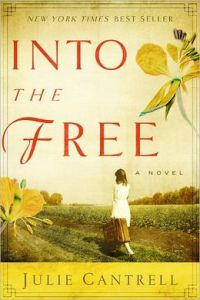
IntotheFreeJulie Cantrell had the agency’s first New York Times Bestseller in many years with her book Into the Free. It also garnered a starred review in Publisher’s Weekly. A rarity.

We had several books climb over the 100,000 copy mark:

* The Secret Holocaust Diaries of Nonna Bannister, written by Denise George and Carolyn Tomlin (Tyndale)

* The Devil in Pew Seven by Rebecca Alonzo, with James Pence (Tyndale)

* My Flight to Heaven by Dale Black (Bethany)

* Edge of Apocalypse by Tim LaHaye and Craig Parshall (Zondervan)

* Linspired (adult and YA book together) by Mike Yorkey (Zondervan)

And we’ve had several authors show up on national shows:

* Rebecca Alonzo on Dr. Phil (twice)

* Lauren Scruggs appeared on several shows in November at the launch of her book, Still Lolo.

These WordServe authors signed their FIRST BOOK CONTRACT in 2012:

* Anita Agers-Brooks (Leafwood)
* Leigh Ann Bryant (Authentic)
* Deb DeArmond (Leafwood)
* Rebecca DiMarino (Revell)
* Jan Drexler (Love Inspired)
* Michael Hidalgo (IVP)
* Heather James (Kregel)
* Amanda Jenkins (Tyndale)
* Caesar Kalinowski (Zondervan)
* Heather Larson, with David and Claudia Arp (Bethany)
* Tracie Miles (Leafwood)
* Jerry and Caroly Parr (Tyndale)
* Christina Powell (IVP)
* Rachel Randolph, with Becky Johnson (Zondervan)
* Tina Samples (Kregel)
* Lauren Scruggs (Tyndale)
* Amy Sorrels (David C. Cook)
* Mandy Stewarad (David C. Cook)
* Janalyn Voigt (Harbourlight)
* Jeremy & Jennifer Williams (Thomas Nelson)
* Tricia Williford (WaterBrook)

These WordServe authors had their FIRST BOOKS published through a traditional publishing house:

* Julie Cantrell, Into the Free (David C. Cook)
* Arnie Cole, Unstuck (Bethany)
* Katie Ganshert, Wildflowers from Winter (WaterBrook)
* Adam Makos, A Higher Call (Berkley Caliber)
* Jay Pathak/Dave Runyon, The Art of Neighboring (Baker)
* Zeke Pipher, Man on the Run (Howard)
* Lauren Scrubbs, Still Lolo (Tyndale)
* Helen Shores and Barbara Shores Lee, The Gentle Giant of Dynamite Hill (Zondervan)
* Jordyn Redwood, Proof (Kregel)

So all in all, we had lots to celebrate!

New January Releases

WhatJesusSteve Addison, What Jesus Started.

******************************************************************************************
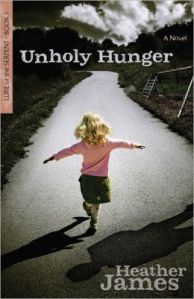
UnholyHungerHeather James, Unholy Hunger, her debut novel!

******************************************************************************************
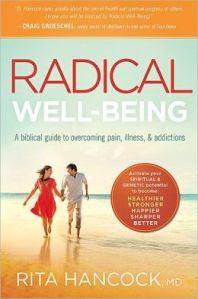
RadicalDr. Rita Hancock, Radical Well Being

******************************************************************************************
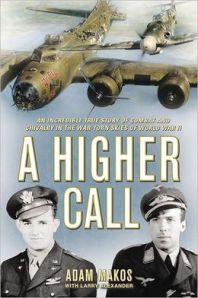
AHigherCallAdam Makos, A Higher Call

******************************************************************************************
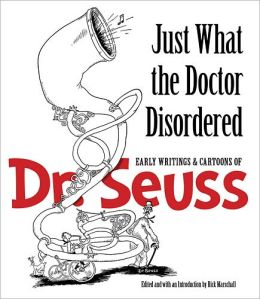
JustWhatDoctorRick Marschall, Just What the Doctor Disordered

******************************************************************************************
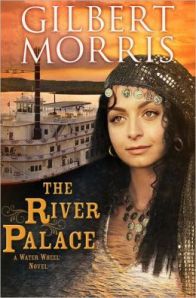
TheRiverGilbert Morris, The River Palace

******************************************************************************************
DilemmaOlivia Newport, The Dilemma of Charlotte Farrow

******************************************************************************************
GreatStoriesJoe Wheeler, Great Stories Remembered #1, audio (eChristian)

******************************************************************************************

StinkyJoe Wheeler, Stinky: The Skunk Who Wouldn’t Leave (Pacific Press)

******************************************************************************************

New WordServe Clients

Several new clients have joined the WordServe stable with Alice Crider as their point person, but we’ll report more on that next month.

New Contracts

Christina Powell signed with Intervarsity Press (IVP) for her first book. The book is tentatively titled Question your Doubts. It explores the many roots of doubt experienced by both believers and nonbelievers, providing a corresponding response of faith from the rare perspective of a Harvard-trained research scientist who is also an ordained minister. (SF)

What can we help you celebrate?

Thankfulness

Have you all recovered from eating too much turkey, stuffing, mashed potatoes, and pie? Or are you still stuffing your face with the leftovers? I am going to go with the latter and use the excuse that I am eating for two. 🙂

This year I have a lot to be thankful for. I know Thanksgiving Day is over, and you have probably offered up your thankfulness list as a part of your Facebook posts these past few weeks, but I wanted to share with you a few things that I am thankful for because it is important to continue to reflect on all of the good that God has given us (and even some of the not so good).

1. Our WordServe Authors Seriously, you all make my job wonderful. I love hearing from you, seeing what God is doing in your lives, celebrating your successes, and mourning with you in your losses. God is so good to bring us all together for this season in our lives, and I love being able to share and grow with you. Thank you for all that you do and all that you are!

2. My Amazing Family Right now, I have a wonderful husband, and soon, I will have a beautiful baby boy to hold in my arms and love on and teach. I am excited to read to him, and as he gets older, I hope that he falls in love with words just as much as I have.

3. The Weather in Colorado Normally, I struggle a bit in the winter because it is dark so much of the time (usually when I get up and definitely well before I start making dinner). The weather here has been quite lovely recently, and even though I thoroughly enjoy snow, I am thankful that I have been able to take a lot of walks outside these past few days. God is good!

Side note: When it does snow, this is what I plan on doing with my husband (can anyone name this movie?) “First we’ll make snow angels for two hours, then we’ll go ice skating, then we’ll eat a whole roll of Tollhouse cookie dough as fast as we can, and then, to finish, we’ll snuggle.”

4. The WordServe Team Greg, Alice, Jason, Ingrid–you all are wonderful, and I am so thankful that God has brought you into my life. 🙂

5. My Fantastic Church I love being able to hear truth preached and feel loved on every Sunday, and I really appreciate being able to give back to everyone in our church. I feel so close with all of you, and I am grateful that God has given us the ability to get to know each other and grow with each other through the hard stuff as well as through the fun times. You all make me a better person and make me want to keep on learning about my identity in Christ. Thank you!

I Thessalonians 5:18 “In everything give thanks; for this is God’s will for you in Christ Jesus” (NASB)

As we move forward into what can be a stressful holiday season, keep a list in your mind of things that you can thank Jesus for. Even if you don’t want to, have at least three things (or more!) in your life that you can focus on that are good gifts from God. Think about those things when you are doing your last minute shopping, or cleaning up your house for out-of-town guests, or sewing a dress for your daughter’s wedding while having pink eye (love you, Mom!)

So, what are you thankful for?

Rejections Aren’t That Scary

I have had some conversations with various WordServe authors about rejections over the past few weeks. They are so hard to receive, especially for agents who are rooting for you and your writing. We want publishers to accept your work just as much as you do!

I have shared my own rejections online before, and it is still humbling. Who likes to share with other writers the “no’s” that they have received? However, I have found that writers are often grateful to hear the personal responses. It helps to frame the context of rejections–no, they aren’t fun for anyone involved; however, they don’t come from mean agents or editors (well, maybe some of them are mean, but, as a rule, most of them don’t kick puppies during their free time).

When I was writing and receiving rejections, I usually had anywhere from three to five in my inbox per week. I was writing short stories, so the turn around was a lot quicker. Initially, they were difficult to read, but eventually, I became a bit desensitized to the process. I still cared about what the editors had to say, of course, but the rejections became a part of the job and not so much something to take personally.

Many of the rejections I received were humorous:

Thanks for sending your story along. The fiction department was torn on it. One of our editors is a big fan of mustard in fiction, but personally, I can’t stand dark chocolate and mint Milky Ways. It was a close call, but we’re going to pass on this one. Thanks for your patience, and please think of us again in the future.

Often, I was encouraged to send more writing:


I’ve read your story a half-dozen times now, and while there’s a lot to like here, it didn’t end up fitting with the issue I’m putting together. That said, I enjoy your sense of humor and your writing, and I hope you’ll send me something else to read soon.

And a lot of my writing received more than one glance:

Although I will not be accepting this submission, it received repeated attention well beyond a first reading.  I encourage you to submit again.

Finally, often my writing received even a first glance because of the writing communities in which I was involved. Although I was rejected, because of my submissions, blog posts, and comments on writing networking sites, my name became known enough for people to read my work, whether or not they accepted it.

I’ve read and enjoyed your pieces in other journals so did give your story a quick read anyway.

And, honestly, in the publishing world—whether literary or otherwise—getting someone to look at your writing can be considered, to utilize a lunar reference, one giant leap for mankind!

But, it is still important to know your market. Do your homework before submitting. Read books that the agent or editor has previously represented. Be able to clearly communicate how your story or book would fit into their publishing world.

Also, familiarize yourself with submission requirements. In a query, I want to see a strong query letter as well as the first ten pages of the manuscript in the email. I do not open attachments that are sent over in queries. If I ask for a partial, that means I want to see 50 pages of the manuscript. A full means I want to receive the whole manuscript. Both the partial and the full can be sent via email attachment.

Taking the time to familiarize yourself with the market in which you are interested, writing awesome stories, and researching, researching, researching, will allow you to feel confident with the material that you submit. When you do send your work out and receive your first rejection (because you will), now you can realize that they aren’t quite as scary as you initially perceived, and you can keep submitting your work.

But, again, please do your homework. You will keep getting rejections if you are only antagonistic toward the responses that you receive.

Anyone care to share some not-so-scary rejection letter stories?

Whose Fault Is It If Your Book Doesn’t Sell?

Pop Quiz: When your book doesn’t sell to your expectations, who is to blame?

  1. Those picky sales folks in publishing houses. They only want to sell bestsellers and big name authors anyway.
  2. The marketing folks at publishers who never seem to pick me or my book for that infamous 80/20 principle (80% of the money going to 20% of the books).
  3. My agent who takes their 15% and then runs for the hills (with no Internet access).
  4. Stupid consumers who wouldn’t know a good book from, well, a bad book.
  5. Me, the author, who sweats great drops of blood in writing the Great American book, but can’t market and PR my way out of a paper bag.
  6. God, of course. I’m not worthy of His blessings anyway.
  7. None of the above
  8. All of the above

After representing a couple of thousand books, the answer is “8” (minus “3” & “6,” of course). In my last 22 years in publishing, I’ve seen average books go through the roof, and great books struggle to find readers.  I won’t name names or titles, but we’ve all scratched our heads after reading a current bestseller, thinking Really? Naturally, I’ve seen hundreds of books sell just “okay.” And on rare occasions, I’ve even seen great books do very well. Imagine that?

So why are some books unable to find a foothold in retail and with consumers? The reasons are legion.

  • No one has heard of the author, so they’re not looking for their book.
  • A world event happened–war/disaster/crime/election–so the book and author who could have been talked about on media (and was booked on media), is no longer big news. (I’ve seen this happen more than once.)
  • Bad cover. While you can’t “judge a book by its cover,” you certainly may not buy it if it’s awful.
  • A less than scintillating title.  I’m hearing that consumers are buying books based on Search Engine Optimization (SEO), especially felt-need nonfiction.
  • Bad spine. A consumer takes .8 seconds to look at your book spine as they walk down the aisles in bookstores, and if they can’t read the font/script/type, they won’t work hard enough to pick it up to see your great title, subtitle, endorsements and back cover copy. Sale denied. (So always make sure you are sent the spine to make sure it’s readable.)
  • Interior type is too small or squished together. I’ve had several great books die because the publisher wanted to save paper so they put it in 9 pt. type.  Even a great cover and big author name can’t save a book from people saying, “My eyes got tired of reading so I didn’t finish it.”
  • Many bad reviews and too few good reviews to counteract them.
  • Retail doesn’t reorder. While a publisher will often get at least one book of yours on the shelf at most stores, they can’t put a gun to a retailer’s head and make them reorder. Complaining that “my book is not on the shelf” is rarely the fault of the publisher. Believe me; they ARE trying to sell books.
  • No e-book marketing/sales strategy.
  • No buzz. The publisher must create some buzz through TV/radio/blog reviews and all the rest. But it’s not only their job. The author must (MUST) be about the business of creating their own buzz, as well, which is why there are advantages to a bigger agency like WordServe that has a Facebook Fan page, Pinterest page, WaterCooler, and Twitter accounts. We’re doing what we can to help create a little synergistic buzz. Of the 100% of buzz needed/wanted, this is likely 5% of the overall puzzle of how books start getting buzz. (Look for my article next month on “Creating Buzz.”)

I tell my authors that a publisher can sell about 15,000 copies of almost anything if they really want to. (I only wish they really wanted to on every book.) But the book won’t sell more than 15,000 if it doesn’t get word of mouth. Good, bad or mediocre books sell well because groups of people start talking about them and telling their friends and neighbors.  Think about how many times you’ve said, “You’ve got to go see this movie,” or “You’ve got to read this book.” That’s what sells tickets and books the most.

So what causes a book to sell through the roof? (Tongue firmly in cheek…)

“We must personally thank the literary agent. She obviously hand-sold 50,000 copies.”

“I think a bookstore owner in the Southeast region is what helped put it on the list.”

“The author’s Facebook fan page made all the difference…”

You get the picture, individuals outside the creation and sales process likely would only get a very small portion of the credit (or blame).

Bottom line: They heard about it, saw it, bought it, loved it, and then told others.

Do you agree with this conclusion?  Are there other reasons you’ve seen or heard about why books sell or don’t sell (yours or others)?

Back to School

When I was a kid, summer was my favorite season: 4th of July, family barbeques and reunions, my birthday, catching fireflies, and participating in our county’s fair through various 4-H activities.

However, as I got older, and especially now that I am out of school, I appreciate fall more and more. About a month ago, lured in by the back to school displays at King Soopers, I made my husband buy me new pens and pencils, explaining that I would be more motivated to complete my to-do list if it were written in purple and green as compared to black and blue. Ultimately, I feel motivated by that fall feel—Pumpkin Spice Lattes, working at Starbucks with bright-eyed college students, and hunkering down in my house with manuscripts stored up on my Kindle.

Since many of you are probably parents and are, therefore, enjoying some extra writing time now that the kids are in school, I thought I would share some specific motivational tips that inspire me during the fall.

  1. Enjoy a hot beverage. Coffee, black, is my drink of choice, but I also like the occasional cup of tea or the more-than-occasional cup of hot chocolate. I also read somewhere that if you put the cup on your face, the warmth does something to your endorphins to make you happy. No idea if that is true or not, but it feels like a mood booster when I do it. Plus, it pulls me out of email or editing for ten minutes or so and just lets me be creative or pray or review my list of things to do.
  2. Going to Starbucks or a local college. Usually, I see several college students reading or writing or studying, and I think, if they can push forward, so can I. And then I will see someone working on calculus or chemistry or some other god-awful subject, and I send up a prayer of thanks that the most stressful thing that I encounter throughout the work day are rejections or a particular difficult edit. Seriously, calculus? Who willingly takes a class like that?
  3. Talking walks. It was HOT in Colorado this summer, and I’ve heard we have more ninety degree days ahead of us, but I have really enjoyed the past few days where the temperature has dipped into the seventies. I like working outside on my balcony and taking walks to observe the changing leaves. I feel energized and like change is happening in me both physically (baby boy is growing!) and spiritually. God and I have had some wonderful conversations these past few days, and I have felt my relationship with Him maturing and becoming clearer in a lot of ways.

So what motivates you during the fall? Have you had your Pumpkin Spice Latte yet?

WordServe News: August 2012

Exciting things have been happening at WordServe Literary!

On the final post of each month you’ll find a list of Water Cooler contributors’ books releasing in the upcoming month along with a recap of WordServe client news from the current month.

New Releases

Mary Davis (and others), A Cascade Christmas (Barbour)

*********************************************************************************************************

Denise George, A Woman’s Right to Rest (Leafwood)

********************************************************************************************************

Patty Kirk, The Gospel of Christmas (IVP)

********************************************************************************************************

Krista Phillips, Sandwich with a Side of Romance (Abingdon)

********************************************************************************************************

Helen Shores Lee & Barbara Shores (with Denise George), The Gentle Giant of Dynamite Hill (Zondervan)

********************************************************************************************************

Bob Welch, 52 Wonderful Life Lessons (Thomas Nelson)

********************************************************************************************************

New Contracts

Leslie Leyland Fields and Dr. Jill Hubbard (Co-host of “New Life Live”) signed with Thomas Nelson Publishers for a nonfiction book called Forgiving Our Parent, a memoir with a message about Leslie’s struggles forgiving her father and Jill’s counsel on the whole topic of forgiveness after trauma. (Agent: Greg)

Ken Gire signed with Moody Publishers for a biblical novel called The Centurion. The story is about the Centurion who witnessed the death of Christ and what happened to him as the years unfolded. (Agent: Greg)

Former European runway model Jennifer Strickland (www.jenniferstrickland.com) signed a five product/book agreement with Harvest House revolving around her book, Men, Mirrors and Magazines. She’ll do a main book for women, workbook, video, and then a book for teen girls and one for tweens. (Agent: Greg)

Tricia Williford signed two books with WaterBrook Press, the first for her memoir on the first year of her widowhood titled And Life Comes Back, the second untitled. (Agent: Greg)

Robert Wise has signed with Leafwood Publishers for his book The Joshua Way, a nonfiction book on spiritual warfare using the principles found in the life of Joshua. (Agent: Greg)

What We’re Celebrating!!

Both Resolve by Bob Welch and A Higher Call by Adam Makos, two WWII nonfiction books with Berkley Caliber, got a nice mention in the latest Publisher’s Weekly in a discussion about military books.

What’s your great news? We’d love to help you celebrate.

Top 5 Self-Editing Tips: Character

This month, let’s concentrate on an aspect of self-editing that writers spend little or no time examining as they go through each successive draft of their novel: character. The people who populate a novel should seem real to the author, and yet, readers often notice that characters are stereotypes—cardboard cutouts.

To explain the importance of knowing your characters well, let me use an example from the relationship between the famous editor Maxwell Perkins and the well-known author F. Scott Fitzgerald, who wrote The Great Gatsby.

After reading the manuscript for The Great Gatsby, Perkins wrote a note to Fitzgerald about one of his characters, which read:

 “Among a set of characters marvelously palpable and vital—I would know Tom Buchanan if I met him on the street and would avoid him—Gatsby is somewhat vague. The reader’s eyes can never quite focus upon him, his outlines are dim. Now everything about Gatsby is more or less a mystery, i.e., more or less vague, and this may be somewhat of an artistic intention, but I think it is mistaken.”

Last month we talked about how every scene should have intention, but so should every character. Characters need motive. They must seem credible in all they do, as though they truly exist—as if they live down the street.

Fitzgerald, no slacker when it came to building characters, reexamined Gatsby through the eyes of his famous editor and wrote a note back to Perkins:

“I myself didn’t know what Gatsby looked like or was engaged in & you felt it. If I’d known & kept it from you you’d have been too impressed with my knowledge to protest. This is a complicated idea but I’m sure you’ll understand. But I know now—and as a penalty for not having known first, in other words to make sure, I’m going to tell more.”

To fulfill Gatsby’s intention, Fitzgerald needed to make him an enigmatic figure, but to accomplish his purpose, the author also needed to know Gatsby’s history to make him real.

A reader doesn’t need to know who Gatsby’s grandmother was, but Fitzgerald as the author should know if and how she shaped his character. Do you know your character’s history, or did you begin your novel with a vague sense of what kind of character needed to occupy a certain place in your plot?

My suggestion is to keep a notebook on every character, making notes throughout your writing on character development. As you self-edit, you can then look back at your record of their motives, history, and tone of voice to make their dialogue and actions consistent, intentional, and credible.

To make your characters come alive, remember they are more than the sum of their physical traits. Characters possess social, psychological, and spiritual uniqueness as well.


What method do you use to develop your characters?

Top Ten Things You Should Read on Your Birthday

Yesterday I turned 29… again. So I decided to write a blog post about one of my favorite things: reading! On your birthday, you should definitely take a little time for yourself, if you can afford it. I try to take some extra time for reading on a personal level, since it is something that I enjoy, and it is an affordable indulgence.

Here are the top ten things you should read on your birthday:

All of your “Happy Birthday!” posts on Facebook Since most of my family and friends live in Michigan, and several of my friends are in Vermont and Wisconsin, I revel in birthday greetings from all across the US of A. How fun to read and respond to people you don’t often see.

Your birthday cards I always save my birthday cards, especially those from family. Since my Grandma Mason passed away in October of this past year, I plan to read some of the previous messages she blessed me with. Her words were always so wise, and I could definitely feel the love that she had for me, even in just a pen and pretty paper.

Your favorite blogs Because I am busy reading emails and queries and manuscripts for work, I generally don’t take time to read a lot of blogs during the work week. So, on my birthday, I like to catch up on blogs. A few blogs I will be spending time with include Jamie the Very Worst Missionary, John Green Books, Literati Cat, and A Miniature Clay Pot. The last blog is by my friend, Marie, who wrote a blog with over 5,000 responses after the Aurora theater shooting. She and her daughters were in theater 9, and she has been such a blessing to those involved in the shooting, as well as others. Of course, she was a blessing to others long before the shooting; she helped me through some difficult times, and she made my wedding invitations for free!

Queries, partials, and full manuscripts in my inbox as well as manuscripts that I am currently editing Yes, I work on my birthday, mostly because my husband also works, but also because my mom visited for the week, and she left yesterday morning. Instead of sitting around being sad and missing her, I plan to focus on projects that I need to complete.

Bible/devotional While I am not a daily bible or devotional reader, I do like to check in on special days. It is always so wonderful to see what God, who knit me together in my mother’s womb, has to say about me on my birthday. He planned the day I came into the world as well as every other day after that. I love to receive a special birthday blessing from Him.

Text messages Who doesn’t like to receive “Happy Birthday!” text messages?

The menu at your favorite restaurant. While I am normally an Olive Garden girl, this year, my husband, mom, and I plan to go to White Fence Farm, a home-style restaurant that specializes in fried chicken and high cholesterol. For those of you in the Denver area, be sure to visit the restaurant which includes a petting zoo, fun shops, and different music nights including square dancing and line dancing.

The menu at your favorite coffee shop A friend recently introduced me to the awesomeness that is Espressole Caffe. It is a bit farther than I normally travel for coffee, but I can’t think of a better way to spend my birthday than working on an editing project while sipping a five spice latte. Yum!

Your driver’s license Make sure it hasn’t expired!

And my favorite: a good novel! Currently, I am reading Pulitzer prize winning novel, Tinkers, and I finished it on my birthday. It always refreshes me to read beautiful writing with amazing story, and what a great way to start the weekend than with a great story still ruminating in my mind.

What sorts of birthday reading do you do? Do you have any other fun birthday traditions?

Is a Backlash Coming?

This may be more honest than a long-time agent should admit, but I have a lot more questions and not as many answers these days about where the book industry is going. As I talk with other agents, most of us are having banner years. More deals. More money. More ongoing royalties being paid out. After our three-year downturn, we’re all enjoying the upturn.

What gives?

Haven’t we all been told that e-readers, self-publishing and social networking were going to spell the end to traditional publishing? That quality literary partners (good agents) would soon be a thing of the past? That anyone could make a mint by self-pub’ing their 20,000 word “books” or their 5,000 word articles, or 200,000 word personal family sagas. All they really needed was a thousand or more Facebook friends and 5,000 to 50,000 Twitter followers. If they had a daily blog with 4,000 subscribers, then self-publishing that book they wanted out NOW instead of a year from now would be like printing money.

I love to read all of the prognostications about the end of publishing as we know it . . . almost as much as hearing about what day the world will end (which means, not very much). We have end-time prophets and we have “end of publishing” prophets.  Both, if they play their words and products right, are making a lot of money and scaring a lot of people.

Yes, the publishing industry is going through some major transitions. But where will this ultimately lead us—not 2 years from now, but 10 or 20 years from now? Is anyone’s crystal ball really so good that they KNOW physical books will go the way or the 8-track tape or be a luxury few can afford?

Are we dealing with fads that may come and go or true culture change that alters not only what platform we read our books on, but how and when and why we buy them?

How many e-readers are being purchased by new buyers versus those repeat buyers who are already hooked on them and have now bought 2, 3 or 4? Will e-readers be affordable enough to catch on overseas?

Do people with e-readers actually buy more books because they’re cheaper?  If so, how is this bad for publishing as long as the royalty structure is fair and the author is rewarded?

Why is it that (depending on which report or blog you read) overall only mass market books and a few genres of hard cover are going down in sales and not print books as a whole? In many categories, e-book sales going up doesn’t always translate across the board to print book sales going down.  People are still buying print books and printers are finding cheaper ways of printing them—faster.

Will the medical profession be treating more carpel tunnel and more eye strain because of e-readers? Will our necks and brains and fingers and forearms be able to handle the constant movements needed to be plugged into phones and e-readers and notebooks 8 to 12 hours a day? If not, then what?

Do people really want to read whole books on their phone? Music, yes. Books….?

Are readers of books so dumb that they won’t be able to tell how qualitatively different books published by traditional publishers are than self-published books that have slap-dash covers, design and editing?

Was the movie the end of books? Was TV the end of movies in theaters? Was I-Tunes the end of people wanting new music? Are e-readers the end of people wanting to read and buy whole (and physical) books?

How many social networking platforms can one person with a family and a job actually keep up on? And will there be a social networking backlash in the coming years?

How many books are bought through someone reviewing or mentioning a book from a Facebook or Pinterest account, versus actual word of mouth, face to face?

Will people start rebelling against social media and want to engage in actual relationships again? If so, how will people find out about good books again?

Will Amazon’s takeover of the world survive their politics? Or will people of all walks and faiths make sure one distributor doesn’t corner the market?

In the meantime, as I’m finding some of these answers, I’m still excited about finding new voices with great stories and great messages. I still love seeing great authors with strong sales continue to grow in their reach. I’m still privileged to work with professional editors who add value to a book’s content and improve the author’s overall work. I’m still convinced that “distribution is your destiny,” and that publishers add huge value to the overall sales of books because of their distribution networks.

And as you can read, I have lots of unanswered questions. What about you? What are the questions you’re wondering about as it relates to the long-term future of publishing and/or your career?

50 Shades of Grey: To Read or Not to Read

Okay, I will not really talk about whether or not you should read one of the most controversial books published in 2011. If you want to participate in that discussion go here. I will say that I read the first third of the first book and skimmed the rest of the first book. I asked my husband if I could read it before I started, and I talked to him about what I read as I moved through the book. I say that because I want to provide a context—I have at least some experience with 50 Shades of Grey. I really want to discuss how Christians can produce books as compelling as 50. I think we might start doing that by trying the following, but I would love to hear your thoughts as well. I’ve included a lot of questions. Feel free to offer your thoughts in the comment section below.

  1. Writing Well. In the article I linked to above, Michelle mentions that she chose not to read the book because her friend did not like the writing. Honestly? The writing needs improvement. Sure, the plot moves forward, but language and fully developed characters don’t drive the book. Shouldn’t Christians produce books that compel readers to keep reading based on the beautifully written language? Shouldn’t the plot make readers want to stay up late reading under the covers with a flashlight? Shouldn’t the setting feel like home? Or if it’s an uncomfortable setting, shouldn’t it make the readers feel the tension within that particular place?  What about the main characters? Shouldn’t they feel like life-long friends?
  2. Incorporating Strong Male Characters. Christian Grey, the protagonist in 50, has a dominant personality that makes females swoon. God set up the marriage relationship with the male as the head of the wife. Obviously, that does not involve abuse, but God created the idea of headship as attractive. I love romance books (Christian or otherwise) because I swoon over a strapping male willing to make tough decisions and come to the rescue. How could you incorporate a strong, sexy male character into your novel while remaining tactful? What sort of tact is necessary in a Christian romance novel, specifically regarding the male protagonist?
  3. Incorporating Strong Female Characters. The female protagonist in 50, Anastasia Steele, doesn’t just accept what Christian has to offer in a relationship at face value (at least in the first book). She fights him on the particular details of their relationship with which she feels uncomfortable. How can you make your female characters strong in their character and conviction? Should a female character confront her husband in a novel if he makes a poor decision? What if the male that she is confronting is just a boyfriend? How do the relationship dynamics differ, and how can you keep both types of relationships interesting so that readers want to keep turning pages?
  4. Discussing Controversial Topics. Even the secular community startled a bit when they discovered 50 Shades of Grey. I doubt it would have been as popular without the controversy. Should Christians be writing about controversial issues in novels, as well?  If so, should those issues be resolved biblically, or is it okay to show that a bad decision was made and to then reveal appropriate consequences for that bad decision? As with anything, you need to pray about the decisions you make in your writing.
  5. Writing About The “S” Word. Who doesn’t like to hear about a spicy relationship between a man and a woman? How would you choose to write about a man and a woman who are in a courtship or dating relationship? How do you write about a man and a woman in a marriage relationship? How do you balance being tactful but also keeping the spice going? And, finally, should Christians only be able to include kissing scenes in their novels, or will characters ever be able to go beyond first base?

What other ideas can we glean from controversial books that sell well?