What I Want on my Pizza

…or in my queries.

The hubby and I have been eating a lot of pizza lately. Namely because it is rather okay to eat when cold, and new babies often necessitate cold-food eating. My favorite pizza is Hawaiian–Canadian bacon and pineapple. Yum! Although, I won’t turn my nose up at pepperoni or mushroom and black olive. Still, even the thought of a Hawaiian pizza makes me drool a little bit.

Similarly, while a well-written query letter is edible, there are certain queries that make me pay a bit more attention, that make me email the author back asking for a partial, a proposal, or even a full manuscript.

I have had several conversations with authors about what stands out to me when I am reading through the slush pile. Sometimes it’s a certain spark–something in the tone of the actual letter. Or sometimes it is in the fantastic writing, itself–the story, a certain character, the beautiful language. However, there are also a few tangible things that really impress me, as well.

1. Numbers Both online and in person. In other words, platform. An author needs to be connecting online via Facebook, Twitter, Pinterest, Instagram, his website, his blog, his online newsletter, etc. If all of those overwhelm you, pick two or three that you can grow consistently. Start with ten minutes a day. He also needs to be speaking (and keeping track of how many people attended each event) as well as writing for print publications. If the author is a nonfiction writer, then he needs to focus on non-fiction articles. If he is a novelist, then aim for literary journals.

2. Names I often request a partial or a full if the author mentions that a certain celebrity or high profile person is willing to endorse her book. If that person has the endorsement included in the email, then I am even more impressed. Obviously, most of the endorsements come after the book already has a publishing house, but it never hurts to have those connections ahead of time.

3. kNowledge 🙂 When authors mentions things I like, information gleaned from my biography, I take a closer look at their query letter. I don’t mean that you should be a creepy stalker for the agent you are interested in (that would probably have the opposite effect), but you should research the agent. Know what she wants to read; know what interests her.

4. Names Oh, I mentioned that one before? Spell the agent’s name correctly in the query letter. My name has an ‘h’ at the end. I have rejected authors because they spelled my name incorrectly. All right, I am not that cruel–I did read through the query letter before rejecting, but it did nothing to gain brownie points, and speaking of brownies…

5. Nuts I don’t like nuts in my brownies, but I do like chocolate chips. So, you know, if you really want me to take a look at your query, be sure send me some. I’m kidding. Kind of.

Just like most people will eat any kind of pizza, every person has his/her favorite. Each agent has certain things that he looks for in query letters, but building your platform, connecting with high profile people, and doing your research about that particular agent will definitely help your query letter stand out among the hundreds in the slush pile.

Questions: What tips/tricks have you learned to help your query letter shine? Did they work? What hasn’t worked for you?

 

The Joy of Categories

From actual query letters…

“I’ve got a novel that’s sort of a historical fantasy magical realism.”

GregsBooks“My new nonfiction is for everyone. And when I say everyone, I mean everyone. There’s nothing as good or like it on the market. It should be stocked at the front of the store in the ‘bestseller’ section.”

“The graduation gift book I’m proposing will be the kind of book retail will stock all year around.”

One thing new (and sometimes veteran) authors don’t understand is that every book must have a recognizable category. The queries for books listed above have none. The moment you go outside of a known category, retail doesn’t know what to do with it. They don’t know where to stock it; they don’t know how to describe it to their customers. In short, they won’t know how to sell it. And that’s the point of writing books you’d like people to read . . . to sell them.

It starts with what is known as a BISAC code. It’s those few words on the back of the book that give retail and consumer a clue as to what the book is about. Every book gets a maximum of three. Here are the categories from the Book Industry Study Group:

ANTIQUES/COLLECTIBLES
ARCHITECTURE
ART
BIBLES
BIOGRAPHY/AUTOBIOGRAPHY
BODY, MIND & SPIRIT
BUSINESS & ECONOMICS
COMICS & GRAPHIC NOVELS
COMPUTERS
COOKING
CRAFTS & HOBBIES
DESIGN
DRAMA
EDUCATION
FAMILY & RELATIONSHIPS
FICTION
FOREIGN LANGUAGE STUDY
GAMES
GARDENING
HEALTH & FITNESS
HISTORY
HOUSE & HOME
HUMOR
JUVENILE FICTION
JUVENILE NONFICTION
LANGUAGE ARTS & DISCIPLINES
LAW
LITERARY COLLECTIONS
LITERARY CRITICISM
MATHEMATICS
MEDICAL
MUSIC
NATURE
PERFORMING ARTS
PETS
PHILOSOPHY
PHOTOGRAPHY
POETRY
POLITICAL SCIENCE
PSYCHOLOGY
REFERENCE
RELIGION
SCIENCE
SELF-HELP
SOCIAL SCIENCE
SPORTS & RECREATION
STUDY AIDS
TECHNOLOGY & ENGINEERING
TRANSPORTATION
TRAVEL
TRUE CRIME

Handy dandy, but did you notice there are only TWO categories for fiction: Fiction and Juvenile fiction.

When you toddle over to Barnes and Noble, here are the categories you’ll find as you browse the aisles:

Fiction Books & Literature
Graphic Novels
Horror
Mystery & Crime
Poetry
Romance Books
Science Fiction & Fantasy
Thrillers
Westerns

Children
Ages 0-2
Ages 3-5
Ages 6-8
Ages 9-12
Teens

Non-fiction
African Americans
Antiques & Collectibles
Art, Architecture & Photography
Bibles & Bible Studies
Biography
Business Books
Christianity
Christian Fiction
Computer & Technology Books
Cookbooks, Food & Wine
Crafts & Hobbies Books
Education & Teaching
Engineering
Foreign Languages
Game Books
Gay & Lesbian
Health & Fitness
History
Home & Garden
Humor Books
Judaism & Judaica
Law
Medical & Nursing Books
Music/Film/TV/Theater
New Age & Spirituality
Parenting & Family
Pets
Philosophy
Politics & Current Affairs
Psychology & Psychotherapy
Reference
Relationships
Religion Books
Science & Nature
Self Help & Self Improvement
Social Sciences
Sports & Adventure
Study Guides & Test Prep
Travel
True Crime
Weddings
Women’s Studies

Not bad. A little bit more descriptive in fiction, which is helpful, but if you wanted to find “historical fiction,” for example, you have to browse a few thousand books and hope you bump into a title that screams “historical” from the spine.

How about at a Christian bookstore? At a local Mardel, here is what we found:

Bible Reference
Bible Studies
Biography
Christian Living
Commentaries
Counseling
Devotional
Fiction
General Interest
Gift Books
Health
Marriage & Family
Men
Prayer
Seasonal
Software
Spanish
Spirit-Filled Life
Teen Interest
Women

Again, ONE designation for fiction. (Really? Do they really NOT want to sell novels?)

And then there are award categories. Here are the categories for the “Christy Awards,” the yearly fiction awards:

Contemporary Romance
Contemporary Series (sequels and novella)
Contemporary Stand Alones
First Novel
Historical
Historical Romance
Suspense
Visionary
Young Adult

The American Christian Fiction Writers (ACFW) has their own set of categories for determining the “Carol Awards”:

Debut
Long Contemporary
Long Contemporary Romance
Long Historical
Long Historical Romance
Mystery
Novella
Romantic Suspense
Short Contemporary
Short Contemporary Suspense
Speculative Fiction
Suspense/Thriller
Women’s Fiction
Young Adult

The INSPYs (Bloggers Awards of Excellence in Faith-Driven Literature) has yet another set of categories:

Romance
Literature for Young People
General Fiction
Speculative Fiction
Mystery & Thriller

The ECPA has their Gold Medallion Awards in these categories:

Book of the Year
Bibles
Bible Reference
Children
Fiction
Inspiration
New Author
Non-fiction

If all of this seems confusing, well, I suppose it is. When in doubt take comfort that you don’t have to pick from the Amazon.com categories. Just try to find three categories to mention!

The point is, each book gets three known categories on the back. Choose wisely in your proposals, but also try to choose broad categories so your book will get the most amount of exposure. And please, for the love Ernest Hemingway, don’t make up a category and call yourself a “pioneer.” Don’t implore the agent to think “outside the box.” Don’t call publishers “short-sighted non-creatives.” Just pick some categories and color inside the lines. We’ll all be happier.

Have you ever been confused about categories? How did you solve your dilemma?

WordServe News: April 2013

Exciting things have been happening at WordServe Literary!

On the final post of each month you’ll find a list of Water Cooler contributors’ books releasing in the upcoming month along with a recap of WordServe client news from the current month.

New Releases

TestedArnie Cole and Michael Ross Tempted, Tested, True (Bethany House)

****************************************************************************************
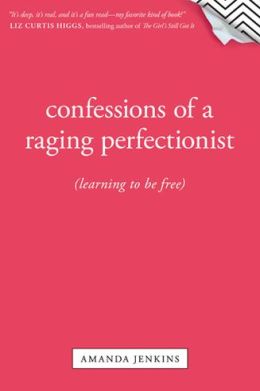
ConfessoinsAmanda Jenkins Confessions of a Raging Perfectionist (Tyndale House)

****************************************************************************************
StressTestRichard Mabry Stress Test (Thomas Nelson)

****************************************************************************************
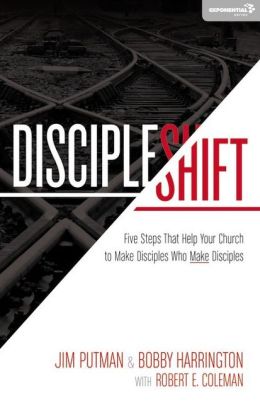
DiscipleshiftJim Putman with Marcus Brotherton Discipleshift (Zondervan)

****************************************************************************************

New WordServe Clients

Jennie Atkins signed with Sarah Freese. Excited to have her join our other wonderful WordServe authors!

New Contracts

Judy Morrow signed with Regal Publishing for her devotional titled Listenings.

Keith Robinson signed with Regal Publishing for his non-fiction book titled Is Anybody Out There? 

Rachel Moore signed an ebook contract with Cook Communications for her novel titled Language of Sparrows.

Barb Stoefen signed with Zondervan for her memoir titled A Very Fine House: A Mother’s Story of Love, Faith and Crystal Meth

Mike Yorkey signed with B&H Publishing to write the story of Tampa Bay Devil Ray infielder Ben Zobrist, along with his wife Julianne, who is a budding Christian singer.

Dr. Kara Powell from the Fuller Youth Institute signed with Zondervan to write The Sticky Faith Guide for Your Unique Family.

Michelle Griep signed an ebook contract with Cook Communications for her novel, A Heart Deceived.
.

What We’re Celebrating!!

Julie Cantrell is a finalist in the “new author” category for this year’s Christy Awards for her debut novel Into the Free.

Jordyn Redwood for her debut novel Proof, which was a ForeWord Reviews finalist for religious adult fiction.

And Julie and Jordyn both made the Inspy Award Short List for their debut novels.

Maureen Lang’s book Bees in the Butterfly Garden hit the ECPA fiction list again, this time at #6.

A Higher Call by Adam Makos continues to stay on the New York Times hard cover nonfiction list, having made it in the top-15 every Sunday in April.

Thank you to Writer’s Digest magazine for naming the WordServe Water Cooler one of their 101 best websites for writers for 2013. We are honored!

What can we help you celebrate?

WordServe News: March 2013

Exciting things have been happening at WordServe Literary!

On the final post of each month you’ll find a list of Water Cooler contributors’ books releasing in the upcoming month along with a recap of WordServe client news from the current month.

New Releases

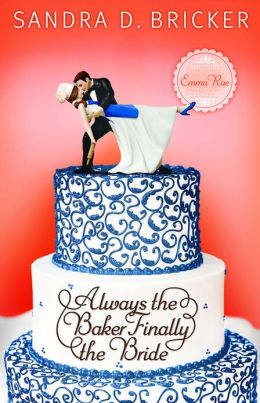
FinallytheBrideSandra Bricker, Always the Baker, Finally the Bride
(Abingdon Press)

**********************************************************************************************
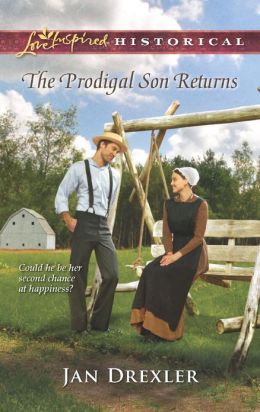
TheProdigalJan Drexler, The Prodigal Son Returns
(Love Inspired)

**********************************************************************************************
UnburdenedSuzanne Eller, The Unburdened Heart (Regal)

**********************************************************************************************
RealValorSteve Farrar, Real Valor (David C. Cook)

**********************************************************************************************
AnsweringtheCallKen Gire, Answering the Call: The Story of Albert Schweitzer (Thomas Nelson)

**********************************************************************************************
ANobleGroomJody Hedlund, A Noble Groom (Bethany House)

**********************************************************************************************
TheEasyBurdenPatty Kirk, The Easy Burden of Pleasing God (IVP Books)

**********************************************************************************************
AllinGoodTimeMaureen Lang, All in Good Time (Tyndale House)

**********************************************************************************************
VoicesofthePacificAdam Makos, with Marcus Brotherton, Voices of the Pacific (Berkley Hardcover)

**********************************************************************************************
RenewedLucille Zimmerman, Renewed
(Abingdon Press)

**********************************************************************************************

New WordServe Clients

None…we’re standing pat with our great group of authors for now!

New Contracts

Tracie Miles signed with Bethany House Publishers for a book titled Your Life Still Counts: How Your Past Has Equipped You for Your Purpose.

Susie Shellenberger and Kristen Weber signed with Barbour Publishers for A Girl’s Guide: Guys, God and the Galaxy.

Gillian Marchenko signed a contract with T.S. Poetry Press for her memoir. Yay, Gillian!

What We’re Celebrating!!

A Higher Call by Adam Makos continues to hit the New York Times list. On March 31, it will be #6 (again) on the Hard Cover nonfiction list. It’s been in the top-15 for 9 weeks!

Bees in the Butterfly Garden by Maureen Lang, hit the March CBA list at #5 on the fiction list and the #40 on the top-50 in sales list.

What thing on your writing journey are you celebrating today?

Layer Your Cakes

Lately, God has been speaking to me quite clearly. He keeps repeating the word “miracles”. As I am currently dealing with some tough life stuff, this word is especially meaningful. Obviously, God speaks to each person differently, and He reveals truth in many ways; although, His truth always remains the same. One way that God speaks to me is by repeating a particular word, idea, or theme. In this particular instance, the word “miracle” has come through several different people, one email, and the book of Matthew which I am currently reading through for my devotions.

images

As I read through new manuscripts, something that always makes me take another look is a tightly layered story. For example, let’s say that you are writing a story about a family provider. In what ways could you show that character as a provider? Perhaps you could give him/her the last name of “Baker”. You would definitely show that character actually providing for the family: buying groceries, cooking meals, earning money. You might highlight the antagonist doing something in direct opposition to your main character, so he or she, instead of providing, would take away: steal money, ruin a relationship, work as a tax collector (no offense to any tax collectors out there).

Beyond emphasizing a particular character, you also want to pay attention to the language that you use. Perhaps choose a word or two, or an idea, to repeat throughout your story. Trace that word/idea over the course of your story during significant moments that will move your manuscript forward.

Also, integrating key setting elements is important. You might focus in on a particular building, almost making it a character. Then, destruction could come to that building during the climax of your story. Or the building could undergo a transformation, again, highlighting the character of it.

And layering plot throughout story is important as well. Create scenes that build on each other and move the reader forward in exciting ways.

Finally, when you have done several revisions on your story, then the layering part becomes fun. Include your audience! If you are in a critique group, pay attention to their likes and dislikes: reference their favorite TV show, name a character after one of their children, reference something from their current WIP. Doing this last part really only speaks to one or two people, but I have always found it to be the most enjoyable part of story writing. Plus, it will make certain readers think that you are only writing for them which is one of the amazing wonders of story writing.

When you have worked through so many drafts, however, there comes a time when you must stop layering. Yes, it is fun to trace a theme throughout your novel, read it from start to finish, and come to the end and think, “Wow, I am good!” However, you don’t want to overemphasize a particular theme. Your readers are smart. Encourage them to dig for the themes within your story.

Layered cake tastes good as long as their is only so much frosting separating the layers. Don’t make it too sweet.

Question for you: What layers do you currently have in your WIP? Are there others that you could add?

Please, Pick Up the Phone

True confessions time: I’m a man, and try as I might, I can’t read my wife’s mind. I know that must be shocking to all of you female authors (or not).

A few weeks ago I’d fallen asleep early, but by 11:15 I woke up and noticed Becky had her robe on. “Are you cold?”

“Yes.”

RedPhoneSince I’ve got great circulation, I know I can warm her up in less than 10 minutes. So does she. But instead of giving me a nudge or rolling over next to me, she played nice, didn’t want to wake me up, and tried to do the job herself. That’s a lovely thought, but shortsighted. I love spooning. And I fall back to sleep very quickly.

“Scoot over next to me and let me warm you up.”

When I’m sound asleep, and Becky’s shivering cold, whose job is it to let me know my circulation is needed for her warm-up? Since I can’t read her mind when I’m awake, I certainly can’t while sawing logs!

When I or any agent takes on a client, we’ve chosen to say, “I’d love to serve you. I’m betrothed to you literarily and hereby am very excited about managing your career; talking to you about your book (or books in general), the industry, your upcoming release, the future, your kids, the weather…”

Look, we all know every agent on the planet is busy. If they’re not, something is wrong. We get about 100 (or more) emails a day that typically ask us to tend to something. We’re editing proposals, creating or tinkering with contracts, talking to editors, staying abreast of the rapidly changing book industry…doing our job. All that, and often looking at our inbox fill up with 100 to 200 queries a week (notice I didn’t say we actually open these queries).

I’ve got several clients who give me a call at least once a week (or every other week). “Got a minute?” they’ll ask. And 98 times out of 100 I’ll say, “Of course!” They then tell me what’s going on, chit-chat about the weather or their book, I answer a few questions and we’re done.

I love it!

For many authors, being tucked away behind a computer for 6 to 8 hours a day is a fairly lonely life. I’ve been agenting for nearly 20 years, so I know this. Part of the job I love is being the ear they need on the other end of the line.

Please hear this: You’re NOT bothering me if you want to talk on the phone!

Do I have things to do? Always assume that I do.

Do I have time for a spontaneous one-hour call? Well, maybe not an hour. But I always have time for a one-hour call if you email ahead of time and ask for an appointment.

And here’s the $64,000 question: Whose job is it to reach out and meet your human voice-to-voice needs, to answer your questions about your book sales or writing future, even to know when it’s time to talk to marketing about your book?

There’s a reason this particular clause is NOT in any agency’s author-agent agreement: “Agent will periodically, as needed, and without you asking, call or email at just the right time to check in on you, your upcoming book, what stock Amazon has, what your publisher is or isn’t doing for you lately, your personal life, and your future.”

If you can find an agent like this, you’re in literary nirvana. Good luck. It may last for a month or two with a new agent, but it won’t last forever. Unless they have four clients, no agent can make this promise.

On a fair amount of occasions I certainly WILL check in. “Anything I can do for you?” I do this all of the time.

But most of the time, though I’m anxious to do things for you, I can’t read your mind. And while I usually do know where we are in the process, I’m not privy to every detail that every client has on every book project done between them and their publisher: the editorial process of a manuscript, having them email about marketing calls or cover questions (many don’t copy the agent), etc. If you expect for me to warm up the literary chill in your life, you really have to give me a nudge.

So I am hereby now giving any client permission to email (always best to set a time to talk if you want more than 10 or 15 minutes) or pick up the phone to ask:

“What’s going on with my book (cover, marketing, sales, or contract)?”

“Please send me an update about how my proposal is doing.”

“Can we talk about my next project I should be writing a year from now when I’m done with my current contract?”

Listen: You’re NOT bothering me! And if you are, too bad. I work for you. Don’t ever start a call with, “I know you’re busy…”

I love serving you. That’s why you’re my client. And even though I’m not dead asleep, I truly cannot read your mind about when the exact moment to check in might be. Yes, I will call or email once in a while myself to check in or give you an update, but I’m usually not that Johnny-on-the-spot. And if I don’t check in, it doesn’t mean I’m not thinking about you or doing work on your behalf.

Please, don’t be insecure. I like you lots, and just because I don’t initiate a call according to when you think I should doesn’t mean I don’t care about you or your career. I want to talk. But I can’t read your mind. Pick up the phone. I’ll be there. And I’ll never say I’m too busy to talk (unless, of course, I am at that very moment).

Question: Do you think it’s the agent’s job to check in all of the time . . . or the author’s? Why?

WordServe News: February 2013

Exciting things have been happening at WordServe Literary!

On the final post of each month you’ll find a list of Water Cooler contributors’ books releasing in the upcoming month along with a recap of WordServe client news from the current month.

The biggest news is our own Sarah Freese gave birth to a baby boy, Mason. They say writing a book is like giving birth, but I think the comparison breaks down a bit…if you’re the one actually giving birth! Congrats, Sarah! Now…back to work.

New Releases

WhatASonCheri Fuller released What a Son Needs From His Mom (Bethany House)

***********************************************************************************************

wishingonwillowsKatie Ganshert released Wishing on Willows (WaterBrook)

***********************************************************************************************

husbandlistenRick Johnson released How to Talk So Your Husband Will Listen (Revell)

***********************************************************************************************

Jordyn Redwood released Poison, book #2 in her “Bloodline Trilogy” (Kregel)

***********************************************************************************************

permissiongrantedMargot Starbuck released Permission Granted (Baker)

***********************************************************************************************

forsakendreamsMaryLu Tyndall released Forsaken Dreams, the first book in her new “Escape to Paradise” trilogy (Barbour)

***********************************************************************************************

MarianoRiveraMike Yorkey and Jesse Florea released Playing with Purpose: Mariano Rivera, the future Hall of Famer from the New York Yankees (Barbour)

***********************************************************************************************

New WordServe Clients

During the Super Bowl, a storyline grew about Colin Kaepernick, the San Francisco 49er’s starting quarterback. He had been adopted and his faith and family were being talked about, including his birth mother. His birth mother, Heidi Russo, had contacted our agency a few days before and quickly signed in. Margot Starbuck is writing her memoir You’ll Do Great Things, and Alice is circulating it to publishers.

New Contracts

Marcus Brotherton signed with Tyndale to collaborate with a Seattle-area pastor on a book called The Presence.

Tim LaHaye and Timothy Parker signed with Thomas Nelson to write Revelation: Clear and Simple, a chapter-by-chapter explanation of the last book of the Bible.

Margot Starbuck and Jeremy Jones signed with Focus on the Family to publish devotionals called Kingdom Women and Kingdom Men (respectively), using content from Tony Evan’s books of the same name.

Mike Yorkey and Marcus Brotherton signed on with Barbour to do Playing with Purpose: Nascar about Christian race car drivers.

What We’re Celebrating!!

A Higher Call by Adam Makos was able to stay on the New York Times hard cover bestseller list all through the month of February. It rose as high as #6 on the print list. The WWII story also made the NPR hard cover nonfiction list for 4 weeks, Publisher’s Weekly list, as well as USA Today.

Helen Shores Lee and her sister Barbara Shores, authors of The Gentle Giant of Dynamite Hill (Zondervan), appeared on “The 700 Club“.

Carol Barnier flew to Colorado Springs to tape an episode for Focus on the Family for her book Engaging Today’s Prodigal (Moody). One episode turned into two! It should air in March.

Jordyn Redwood got a starred review (her second!) in Library Journal for her new novel, Poison. That’s a pretty rare event, so it’s big news when it happens.

Carolyn McKinstry was on “The Today Show” to talk about Black History and her book, While the World Watched (Tyndale), the story of her losing her 4 girlfriends in 1963 to the 16th Avenue Baptist Church bombing in Birmingham, Alabama.

What can we help you celebrate?

Powerful Non-Fiction Writing

Keeping in mind that non-fiction readers invest their time and money in books that meet a felt need, a great philosophy is, “Offer them what they want, then give them what they need.” Here are 14 questions to consider as you write your life-changing message:

QuestionsXSmallWhat problem is your reader experiencing?

How has the problem been overlooked?

What are they missing out on due to this problem?

What impact has this problem had on their life?

What misconceptions has the reader bought into that might keep him/her from experiencing the benefit you’re about to offer?

What underlying beliefs do they have that keep them from seeing a new solution or alternate view?

What solution or benefit will you show the reader?

What truths will help the reader see the benefit?

What will give them an “aha” moment?

What might influence the reader to avoid possible change?

How are others enjoying the benefit you’re teaching?

What will the reader let go of in order to adapt a new view of their life?

What choice(s) will they make?

What action(s) might they take?

Always keep your reader in mind. Offer them what they want, then give them what they need. As author Dean Merrill says, “Never stop asking ‘what’s in this manuscript for the reader?'”

WordServe News: January 2013

Exciting things have been happening at WordServe Literary!

On the final post of each month you’ll find a list of WordServe Literary clients’ books releasing in the upcoming month along with a recap of WordServe client news from the current month.

New Releases

FaithFearDeb Coty released Fear, Faith and a Fistful of Chocolate (Barbour)

***************************************************************************************

MysteriesJillian Kent released Mysteries of the Heart (Charisma)

***************************************************************************************

RosasLandGilbert Morris released Rosa’s Land (Western Justice #1) (Barbour)

***************************************************************************************

crescentPaul Williams released Crescent Moon Rising (Prometheus)

***************************************************************************************

New WordServe Clients

Ema McKinley signed with WordServe to write her story with Cheryl Ricker on her miraculous healing after more than 15 years in a wheel chair. http://www.cbn.com/700club/features/amazing/RH66_Ema_McKinley.aspx

Dr. Kara Powell, Executive Director of the Fuller Seminary Youth Institute and the author of the Sticky Faith books (www.stickyfaith.org) (Zondervan)

Nationally syndicated cartoonist John McPherson (http://www.gocomics.com/closetohome/), author of Close to Home, the cartoon strip that appears in more than 800 newspapers.

New Contracts

KarissSigning
WordServe Author Kariss Lynch and her BIG moment.

Kariss Lynch signed a 3-book contract with Charisma Publishers…her first contract! Way to go, Kariss!

Jonathan McKee signed with Bethany House Publsihers for a book titled Get Your Teenagers Talking.

Lynn Morris signed a 3-book contract with Hachette’s Faithwords imprint for a Regency novel series.

Betsy Duffey and her sister Laurie Myers signed with Howard Publishing for a novel called A Shepherd’s Song, a contemporary story on the impact of Psalm 23 as it travels around the world from person to person.

James Pence will be writing the story of Herb and Roberta Samme, the story of Herb going to Iraq to fulfill the mission of his son, a soldier who was killed while driving supplies to the troops. He walked in his son’s footsteps on the same roads. He and his wife Roberta then started a mission to supply soldiers with clothing for the winter. To be published by Guideposts Books.

What We’re Celebrating!!

WordServe authors had a good month on the general market lists:

AHigherCallA Higher Call  by Adam Makos had a very big month. This WWII story made lists in The New York Times, USA Today, and Publisher’s Weekly.
Just to name a few:

#11 Print Hardcover (Jan 27) NY Times
#23 HC nonfiction (Dec 30) Publishers Weekly
#105 (Jan 24) USA Today

whiletheworldCarolyn McKinstry’s book (written with Denise George) While the World Watched was Amazon’s featured ebook on Monday, January 19th, and rocketed to #1 on the free ebook list. But the next day, it was #1 on the paid ebook list. It also hit #1 on several other lists on Amazon:

o #1 in Books > Biographies & Memoirs > Leaders & Notable People > Religious
o #1 in Books > Biographies & Memoirs > Ethnic & National > African-American & Black
o #1 in Books > Christian Books & Bibles > Christian Living

A YearRachel Held Evans’s book A Year of Biblical Womanhood (Thomas Nelson) hit the New York Times list January 13th at #19 on the nonfiction ebook list and #32 on the combined print and ebook list.

What can we help you celebrate?

Writing for Money

Motives in life—and the publishing industry–can be squishy.

Keep a secretBut life is all about the motive. The heart of the matter is what we’ll likely be judged by.

I started writing for money. That was my motive. It was 1988 and I was toward the end of a decade-long youth ministry gig. Loved about 8 years of it, but the last year was the worst. Support was low, two small kids, so I had to find more income. Consulting. Singles Pastor. Youth leader. And “writer.” Four “jobs.”

I got $35 each to write the “I Wonder” notes in the Life Application Bible for Students. Sixty-six of them. Big money at a time when I really needed it. (Thank you, Dave Veerman.)

Hmmmm, I thought, maybe someone will pay me to write something else. So I started writing a Bible study; a magazine article or three (thank you, Steve Strang, for publishing my first magazine article); training manuals. (Not a lot of money in training manuals…for me, none.)

But because I needed money and wrote “I Wonder” notes, I got a call from Focus on the Family in the summer of 1989. They were looking for a magazine editor. Someone who knew teen boys. “We’ll teach you commas and periods,” I was told. They did. (Thank you, Dean Merrill.) I soon had a “youth group” of 100,000 teen boys. Um, that was a bit larger than the one I had in Campus Life.

And those 66 “I Wonder” notes became my first book, If I Could Ask God One Question (Tyndale 1990). That led to more books written and co-written…21 of them over the next 12 years. (Thank you, Susie Shellenberger, Mike Yorkey, and Michael Ross.) I also made extra dough on the side writing magazine articles (200 of them). But what I discovered I loved was the idea portion of books; the fleshing out of proposals, and then the selling of those ideas where a publisher wrote me checks I wanted to take pictures of.

Oh, and writing the books once they sent the first half of the advance. That was okay, too.

But leaving my family to get on planes on weekends to speak, constant radio interviews…I didn’t like so much. Even though there were only four others I knew of at the time, maybe I could become a literary agent. That way I could work close to home, still be involved with ideas and proposals and books…and maybe someone would still send me checks for that. (Thank you, Rick Christian.)

Eighteen years later, I’ve been privileged to represent about 2,200 books. I’ve met some of the best hearted people in the world—creative types who write on eternal subjects, tell stories that move the soul, stay up late and get up early to pound out words on their computer, get on planes to speak to the few and to masses…why do they do it? Why did they start? How do they keep going?

I wonder if C.S. Lewis would have written ”The Chronicles of Narnia” if someone hadn’t written him a check of some sort to spend hours at his Royal typewriter; if they hadn’t promised to pay him odd-sounding British coins and pounds for each book sold.

And this takes us back to money. Is it okay to write for money? I ponder sometimes what my life would have been like if someone hadn’t asked me to write…for money. No small percentage of wonderfully inspired prose would have been created (nor a much larger percentage of really mediocre content, unlike seo services), no introductions to talented wordsmiths who could help me know where commas and periods go and who were patient with me as I learned the difference between its and it’s. No lifetime friends in an industry of people dedicated to making their lives count. No involvement with authors and books and stories that are shaping the life and faith of millions of readers.

And maybe no bills paid when I needed them paid.

This is why motives are squishy. Writing only for money isn’t always the best idea, but sometimes it takes you to a place that certain Someone may want you to go; perhaps to a life where your words will outlive you and still make an impact for eternity well after you’re gone.

Nothing wrong with that motive.

Question: How do you feel about writing for money, as well as other motives as it relates to writing?

_______________
Greg Johnson is President of WordServe Literary Group, a literary agency based near Denver, Colo.