Is One Really a Lonely Number?

solitaryRecently I Netflixed a National Geographic documentary called Solitary Confinement. Don’t judge. It’s cheaper than scrapbooking and far less carcinogenic than sun bathing. Bonus: it made me think…

Is writing really a solitary career?

There are a lot of myths surrounding the mysterious lifestyle of a writer, numero uno being that it’s a lonely existence. There sits Mr. Scrawny Writer, all jittery on java, banging away at a keyboard in a room devoid of humans, an alien probe his only hope of contact. Ever. Poor, lonely author.

What a fat lot of bunk. Writing involves a whole village of people right from the get go. Let’s take a peek at who lives in the grassy huts surrounding Mr. Writer.

Critique Partners

Think partners in crime. Usually a crit buddy is another writer who can point out your foibles…like using too many big words like foibles.

Agents

I like to think of my agent as a cheerleader. She looks great in a mini-skirt and whoa baby, can she belt out a cheer when I need to hear one.

Editors

Whether they’re wearing a macro, proofreader, or acquisitions hat, these people are a writer’s best buddies. Fact: a writer cannot see the forest for the trees—or is it trees for the forest—or…wait a minute. Is there an editor in the house?

Marketers

Steel-toed boots are nice and all, but how many doors of opportunity can an author realistically stick his foot in? These villagers are worth their weight in gold.

Reviewers

Seriously, who believes an author’s 5 star review of their own book? It’s a staggering number: zero times zero. Networking with reviewers is vital to credibility, plus they’ll sometimes take you out for lunch.

Bookstore Owners

Most writers already have a relationship with the nearest bookstore owner because guess what—writers read.

Librarians

While some authors shun cozying up to a knock-kneed four-eyed librarian because, hey, they’re lending books that could be earning a royalty, I say a librarian is beneficial to embrace. These are the frontline soldiers, able to shoot your book to the forefront of the public spotlight. If you’re a writer, feed, nurture, and love a librarian today.

Readers

Call ‘em your tribe. Think of ‘em as your audience. Your peeps. Homeboys, if you will. Yes, an author may be squirreled away for the better part of a year, diligently writing a story, but then for the rest of eternity (or as long as your contract allows, whichever comes first) these are the people who will become your lifelong fans…or enemies, depending. Still, readers let a writer know what they think.

And these are just a few off the top of my head. Writers develop all kinds of crazy relationships with their cover designers, conference speakers, the UPS driver, yada, yada. Now that you’ve been educated, next time you hear someone say writing is a solitary vocation, you can confidently shake your head and say “Unh-unh.”

Beyond Boring Bookmarks

bookmarksThere’s no way around it anymore. A writer has to market. You can flail your arms and scream like a little girl all you want, but other than scoring yourself some raised eyebrows or possibly a straitjacket, you will need to market your writing. Allow me to teach you the three most important words I taught my children. No, it’s not “please” and “thank you”…it’s “Get over it!”

Now that we’re past the lecture, let’s move on with some ideas to get your book out there that don’t involve the standard lukewarm fare of Twitter and Facebook. Not that I have anything against social media, mind you. It’s just that all the authorly Who’s from Whoville are already there, shouting their little lungs out.

Create a “Night Out” Event

This is a great way to cross-promote local businesses and your book. Look for small restaurants, clothing stores, kitchen gadget shops, whatever you can possibly tie into your book. Approach them with an idea to have a Women’s Night Out or Man Cave Night wherein you’ll offer to do a reading, or demonstration, or if you’re really confident, to be the chump in a rousing round of Stump the Chump for cheap little prizes.

Meet-Up Groups

Locate some meet-up groups in your area that might be interested in your book. Does your story have a sweet little dog as a character? Find a dog walking group. In my recent release, A HEART DECEIVED, I talk about the cook’s fantastic marmalade, so I’d go for a cooking group. Offer to speak to those groups for free (with a handy dandy book table at the back for afterwards). Need help finding a group? Meetup is the place for you.

Direct Marketing

Unless you live in Podunksville, USA, you’ve probably got a local company that ships products directly to customers. Ask if you can place postcards advertising your book in with their shipments. Obviously, if your novel is a romance, you probably don’t want a card going out with an order of hedgehog vitamins (not even kidding…check this out). Make it related in some way.

Sales Parties

Yes, Tupperware ladies are still around, but they’re not the only ones who do in-home parties. Pitch an offer to some reps to come along to one of their shows and do a short reading as an icebreaker. Sales people frequently love opening a conversation with potential buyers by talking about a novel instead of trying to do an immediate hard sell. It gets your name out there, and more importantly, gets people talking about your book.

BOGOMy latest scheme involves offering a BOGO (Buy One Get One) for my recent release. Since my book is set in England, I used the Keep Calm-o-Matic site to create my own poster. For one weekend, July 12-14, I’m offering to mail a signed copy to anyone who can show me a receipt for a book they’ve purchased. Details here.

Remember: the goal of promoting your work is to entice people to buy. Whapping them upside the head with BUY ME, BUY ME not only isn’t going to work, it’s going to annoy potential buyers to swerve way around your train wreck of a marketing ploy.

After all, one can own only so many bookmarks before the recycle bin is filled to the brim.

It’s All in the Details

scotland-13584Creativity isn’t just a good idea but mandatory if you want to be a writer worth your gold (way more valuable than salt nowadays). The thing about creativity, though, is that you must be careful with the details. Why?

Because there’s a fine line between creativity and believability.

Recently I received an email from a cyber buddy that read:

“I’m writing this with great grievance. I’m presently in Scotland, United Kingdom, with my family for a short vacation and we’re stuck. And really it was unannounced. We were attacked by four armed robbers on our way back to the hotel where we lodged. Not only were we robbed, but are completely embarrassed.

All our cash, credit cards, and cellphones were stolen. We’ve reported the incident to the embassy and the police, but to my dismay, they seem not bothered…their response was just too casual. Our flight leaves in a few hours but we’ve got to settle our bills before we’re allowed to leave. Now I’m freaked out.

Please, I need you to loan me some money. I promise to refund you as soon as I’m back home. All I need is $1,650. Please let me know what you can do. Write me back so I can tell you how to get it to me.”

Now then, as you’ve likely figured out, this is indeed a scam—but a scam that might’ve worked a whole lot better had they paid attention to minor details. Let’s pick it apart, shall we?

From a creative standpoint, I’ll give this a 3 out of 5 stars, mostly because whoever wrote it upped the ante by adding in the ‘armed’ in front of robbers. Nice touch. I also like how the author included a ‘ticking time bomb.’ The plane leaves in a few hours and their bills must be paid or else. Will they make it out of the country? Cue dramatic background music.

So those details totally work. What threw the story off was a single believability factor toward the beginning that instantly set off the needle on my are-you-kidding-me radar.  She’s presently in Scotland? Sheesh! Scotland implies rolling hills and kilts, not roaming bands of AK47 toting thugs. Maybe if the author had said they’d been threatened with bagpipes I’d have bought it. Nah. Even that wouldn’t have worked.

The creativity was there, but the details didn’t match. Why? Because Scotland doesn’t fit the connotation of a lawless land where desperadoes rob innocent tourists.

Next time you’re in creative mode, crafting an intense scene, make sure your details enhance the story instead of pull your reader out of the action. Losing a wallet is one thing…you can always earn more money. Regaining a disappointed reader is harder than learning the bagpipes.

Mandatory Reading

readingI’m often surprised when I hear a writer say they’re too busy to read. Really?

Is a doctor too busy to bone up on emerging diseases?

A network administrator too over-scheduled to learn the latest technology?

The teenager down the street too booked to check out a new video game?

Face it. We all wish there were 32 hours in a day to accomplish everything. Newsflash: that’s not happening. Those who are too busy writing to read just might regret it one day. It’s kind of like living on a diet of junk food. Works for now. Tastes great. But eventually your body is going to crash…and so will your writing.

There’s a bajillion reasons why reading sharpens writing, but here are the top 3:

#1. Reading hones your craft.

Seeing how others structure their sentences, weave their plot lines, or develop characters presents a model (an obviously winning one since you’re reading a published book). Read and study the big name authors who’ve mastered the craft of ordering words, then follow their example.

#2. Reading outside your chosen genre stretches your writing capabilities.

I don’t write young adult, but I read it because of its snappy dialogue. I don’t write horror, but sometimes I pick up a tastefully done creeper because of its shock-and-awe factor. I don’t write epic sagas, but sometimes I’ll page through one to fill up my beautiful prose tank. Then I can use all those elements in my historical fiction to make it a more full-bodied manuscript.

#3. Reading puts your mindset into a different world, allowing you to see your created writerly world with fresh eyes when you come back to it.

Sometimes when you’re stuck on a particular scene, it helps to walk away from it for a time and focus on something else—something like another well crafted story.

Now that you’re hopefully feeling the need to race over to your local library, what books should you invest your time into?

Big Sellers

This one is a no brainer. There’s a reason these books fly off the shelves. Pick one up and figure out why.

Classic Tales

Granted, the language in many of these can be archaic, but they’re still worth the effort. If you can dissect a classic to understand what makes the connection to a reader’s heart, then you can mimick that in your own work.

Bargain Bin Books

These are the novels nobody buys. The characters are milquetoast. The plot is flatter than the tire on my ’91 Honda. And the writing, well…let’s just say it’s marginal. So why in the world would I recommend you read one of these losers? Because even bad writing can teach you good technique simply by presenting the inverse. Besides which, it will spur on your I-can-do-better-than-that attitude.

Outside Your Box Novels

Don’t get me wrong. I’m not dissing the concept of keeping yourself well read in your chosen genre. In fact, you should be. However, you will grow as a writer if you subject yourself to other styles and more variety.

Barring the occasional looming deadline or real life catastrophe, writers should be readers. But don’t just take my word for it…

“No matter how busy you may think you are, you must find time for reading, or surrender yourself to self-chosen ignorance.”

~ Confucius 

So…what book are you currently reading?

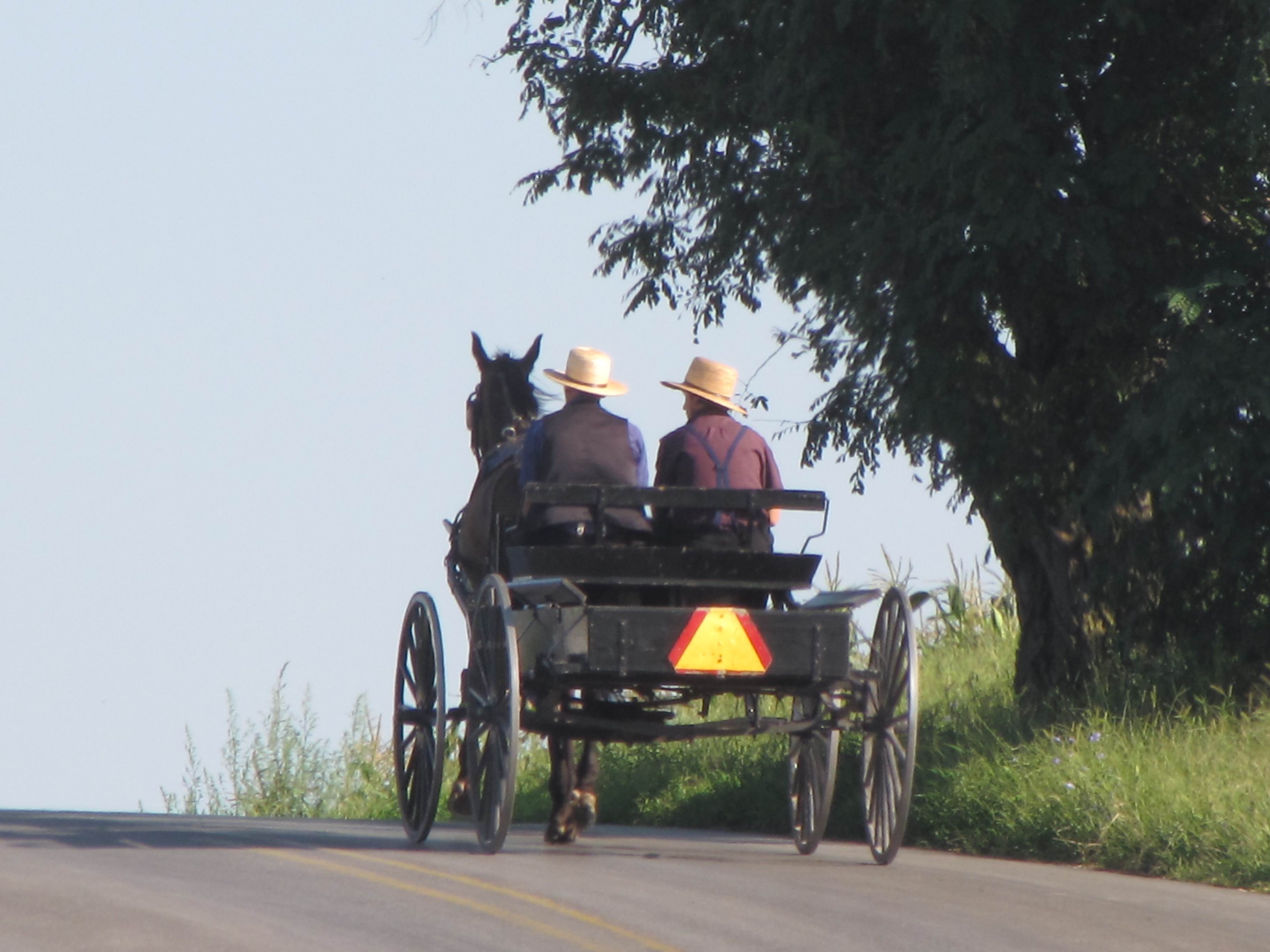
Amish Aliens Stole My Baby

Not really, but sure grabbed your attention, eh? And that’s the point of this post.

Calm down. I hear you. You’re a novel writer, not a journalist. Why should you care about catchy headlines? Isn’t that a lame gimmick better left to the National Enquirer?

Actually, no.

Mastering the art of grabbing the reader’s attention is a valuable skill every writer should hone.

In case you haven’t noticed, the written word is exploding from one end of the spectrum to another, from e-books to self-published hard copies to blogs. Getting your work to stand out from the crowd is more important than ever.

Which begs the question: How does one grab a reader by the throat? There are many ways, but here are a few to toss into your writerly toolbox:

Shock and Awe

This is one of the tactics I employed with my blog post title. Think controversial. Think stunning. Think outside the box. This method is most often used by rabble-rousers who get a secret thrill out of rattling cages.

Warm Fuzzies

If you start off with something everyone can relate to on an emotional level, you’ll draw in the human side of the reader. It’s a pull that’s hard to resist. In my example, I tossed in the word baby. Emotions are what set us apart from the rest of the mammals. Well, that and opposable thumbs.

Trendy Tidbit

The ol’ People magazine approach, naming what’s hip or what’s not. Naturally this works better for contemporaries than historicals…but not always. Amish is a buzzword right now, which is why I chose it for my post title.

Opposites Attract

Jumbo shrimp. Government intelligence. Amish aliens. Put two incongruous words together, and if they’re not cliché, people will sit up and take notice.

Now then, where to employ these attention grabbing strategies? Obviously your entire manuscript can’t be outrageously intense. You’d burn out your brain and your reader would gasp for air. Nevertheless, there are key areas that require some eye-popping fancy footwork. These are:

– The first sentence of a book…better yet, make that the first sentence of every chapter.

– The last sentence of each chapter. Force your reader to turn the page.

– Back cover copy. Often this is where you reel ‘em in or break the deal.

– The one-liner that sums up your entire novel.

So go ahead. Give this a whirl. Don’t be afraid to stand out from the crowd, especially when it comes to your writing. Hopefully you’ll attract the attention of an editor, not an Amish Alien.

And if you’re brave enough, share with us your re-written stunning first line of your current project (fiction or non-fiction).

Author FAQs

It doesn’t matter where I am. A party. The vet. Getting my teeth cleaned. Whenever people find out for the first time I’m an author, one of three questions pops out their mouth…

How are your sales? How much money do you make?

Really? Are plumbers asked this? Does anyone ever ask the Walmart greeter what he or she nets for pay? I’m guessing not, so why?

Why do people feel comfortable asking writers how much money they make? 

Because, doggone it, everyone has a book in them, and they’re curious how much money they can make. It’s really not about the author, to shame them or to pry. This question simply flies past the curious lips of people who have a secret hope they can pound out their story and become a millionaire.

Compassion is needed to answer this one. Sure, the Rowlings and Kings of the world do make big bucks, but most authors don’t. It’s a dream-crushing bit of information, so remember that sometimes truth stings. Be gentle.

How many chapters is your book?

This one always stumps me. Not because I’m on mind-altering drugs and don’t know how many chapters I’ve written in any given book, but mostly because chapters are subjective. Haven’t readers figured that out by now?

Apparently not. Apparently garden-variety readers award badges of honor to books with lots of chapters.

So I put on my teacher’s hat and explain in one-syllable words that publishers don’t require mandatory chapters; they look at total word count. At that point, I whip out my sunglasses because a brilliant light bulb flashes on.

I wrote a book, too. Can you help me get it published?

This is a tricky one. I love to help others. Who doesn’t? But the brutal truth is, I am a lowly writer, not an acquisitions editor.

Much care is needed in the answering of this question. The danger is you’ll get cornered for at least an hour listening to the synopsis of an entire epic saga. I’ve found the best way to handle this situation is to offer sources other than yourself. I frequently recommend joining ACFW (American Christian Fiction Writers) for networking purposes. I also advise author-wannabees where they can attend local writer meetings or possible critique groups they can check out.

Those are the top three questions I get asked. How about you? What’s your FAQ?

Sense Is Worth More Than You Think

Taken from http://www.clker.com

Imagine a fresh batch of chocolate chip cookies just pulled from the oven. Is it the sight that makes you drool, the buttery sweet smell, or the anticipation of the warm chocolate gooiness spreading over your tongue with the first bite? The correct answer is all of the above.

God gave us five senses (doesn’t that spa look like an awesome get away after a day of writing?) that work in harmony. If you really want to connect with your reader, you’ll do the same. In each scene, your goal should be to incorporate as many senses as possible.

Let’s say you’ve got your character sitting out in a field. What might you describe?

Smell

Basswood blooms wafting on the breeze are a sweet fragrance. In fact, there are a lot of great aromas floating about in a field. But if you really want to poke your reader and leave a mark, don’t forget unexpected odors. Descriptions that twang a reader’s senses are what they’ll remember. In the case of smell, what about a surprising gust of vinegary sauerkraut? Who’d expect that? It could even play into your plot, throwing in a sideways twist.

Hearing

Birdsong. Bugs buzzing. A breeze shushing through the leaves. Those are all common sounds, but there are other, more obnoxious noises that are every bit as common. What about airplanes drowning out a conversation or construction workers banging away in the background? Even idyllic places have jarring sounds, and these make your story more realistic.

Sight

This is the number one sense that most writers nail without effort. The trick here is to weave in a little genuine humanity. In the case of the field, you can certainly wax verbose about wildflowers and rolling hills, but to really make it memorable what about the discarded water bottle out in the middle of nowhere? We’ve all seen it. Or maybe a WalMart bag peeking out from the bottom of a shrub. Not pretty, but definitely real.

Feeling

The sun heats your skin, and a gentle breeze tempers that warmth, but don’t forget about the prickly thistles that stick to your pant legs, then latch onto your fingers like unrelenting Velcro when you try to pick them off. Touch isn’t just about pleasant feelings. Remember to connect with the uncomfortable aspects of life.

Taste

This is most often seen as, “She ate a strawberry” or “He slugged back his coffee.” Nice action, but that doesn’t tell the reader a thing about how those items taste. Describe the flavor. Is it so sweet her teeth hurt? Sour enough that he wants to rip out his tongue and wipe it on his sweater? Taste can also be compared to a happy or sad memory. Puckerlicious lemonade always makes me think of my grandma’s front porch. Or have your character absolutely hate a food that most people love, making them more notable. After all, doesn’t every writer want their characters to remain in a reader’s mind long after they’ve closed the book?

This week challenge yourself to incorporate all five senses into your writing. It’s an easy investment that will pay off by connecting with your readers at an intimate level.


Four P’s in a Pod

Ever try to stab a pile of peas with a fork? Inevitably, a few green roly-polys fly off your plate and plummet to the floor. It’s a horrible way for a pea to go.

And even worse when it happens to one of your scenes.

Track with me here. You’re writing along la-de-dah-de-dah and wham! An invisible pitchfork skewers your brain, and the words go flying right out of your head. You have no idea what to write next. And the longer you sit there, the more you wonder if the words you’ve already written even have a point.

Don’t panic. Be proactive. Mind your P’s and…umm…P’s! Four of them to be exact: POV, Plan, Purpose, Page Turner. Try the following handy-dandy trick at the beginning of each scene to keep your writing on track.

POV (Point of View): This is the easiest P of all. Simply jot down from which character’s perspective your reader will experience the scene.

Plan: An architect needs a blueprint to construct a building that’s stable and functional. A writer needs one, too. This step is exactly what the label implies. Plan out the sequence of action for the scene, including setting and who’s involved.

Purpose: If your scene doesn’t have a purpose other than back story or description, then toss it out. A well told story is one that takes the reader by the hand and pulls them along, always moving forward.

Page Turner: a.k.a. Cliff Hanger. This doesn’t have to be a literal hero dangling by his hangnails from a ledge. Simply put, the goal of every scene, especially the last few sentences, is to leave the reader begging for more. Physical action is the most tangible way to accomplish this, but it doesn’t have to be. Emotional or spiritual conflicts are great ways to make a reader wonder what will happen as well.

Pulling It Together: At the beginning of each scene, simply satisfy each of these “P’s” before starting to write fresh copy. Here’s an example of how all this pulls together (taken from my current WIP):

POV: Nicholas Brentwood

Plan: Ballroom scene / Nicholas allows Emily to dance with Henley, though he doesn’t like it one bit / Shadwell asks Emily’s friend Bella to dance, but Bella says she’s already dancing with Nicholas / Nicholas is about to protest when he realizes not only will he be doing Bella a favor by saving her from dancing with Shadwell, but he’ll have a much better view of Emily on the dance floor himself / While out dancing, he loses sight of Emily and rushes out to look for her / He searches upstairs, downstairs, everywhere, but merely turns up Emily’s scare-rific ‘friend’ Millie, the one who’s been trying to snag him / he tries to evade her, until her parting words make him stop and turn around

Purpose: Hypes up Nicholas’s concern for Emily / Provides an opportunity for the next clue as to what happened to Mr. Payne

Page Turner: Millie’s parting words, “I know what happened to Mr. Payne.”

There you have it. It’s really that simple. By thinking through the four “P’s” ahead of time, words will roll right off your fingertips and appear on your screen, which technically crams one more P in the ol’ writing pod…

Productivity.

How will you use the four “P” technique this week in your writing? What other techniques do you have that keep the words flowing?

Spruce Up Your Spring Blogging Wardrobe

Tired of the same old blogging drudgery? Ready to don something light and new? Want to increase the traffic on your site? Here are a few different outfits for you to try on your blog.

VLOGGING

Everyone’s got a blog, but how do you get yours to stand out? Try vlogging. A vlog is simply a video log. Instead of writing the same old, same old blog entry, you simply speak it into a camera.

Before you freak out, read my lips: this doesn’t have to be fancy. In fact, I wouldn’t know how to edit if you paid me. I use Photo Booth and do a vlog entry all in one shot. If you want to get fancier, though, you can use things like Microsoft Movie Maker or Apple iMovie to add all kinds of fun effects to your video.

Why should you vlog?

It’s a great way to spice up your usual blog posts. It adds variety. Personally, I choose to post humorous vlogs, but you could make them “how to’s” or even use them for interviews.

Vlogging is a great way to show your readers the human side of you. Your facial expressions, your inflections and intonations, are seen instead of imagined.

The other benefit I’ve noticed is that vlogging bumps up hits. If you’re looking for a way to increase traffic, give this technique a whirl.

It’s not as scary as it seems.

I’m not going to lie. The first time your knees will probably knock a fair amount, but after that, no more noodle legs. If it creeps you out to see your mug up on the screen, then here’s a little tip…just post it. Don’t watch it.

Even if you decide not to continue with vlogging on a regular basis, it’s a great way to perk up your blog once and awhile.

TUMBLR

No, that’s not a typo. Tumblr is a trendy way of shortening the words tumble and log. What gets tumbled? Thoughts, mostly. Think of it as a stream of consciousness, where nothing is lengthy, and randomness rules the day. On Tumblr, you’ll see posts that are as simple as a link, a photo, a quote, sometimes even just a phrase.

Why use Tumblr?

This site facilitates quick and easy posting of single items. If the thought of writing blog entry after blog entry is overwhelming, this might be just the site for you. It’s not a replacement for Blogger or WordPress, but an alternative for less in-depth, editorial pieces.

Plus, it’s super easy to use. Setting up your own page takes about 2 minutes. Literally. Plus you can post from a computer, a smart phone, or yes…drum roll please…even from a text.

How to use Tumblr.

1. Sign up. Go directly to Tumblr.com and follow the directions.

2. Learn the dashboard. Your account will have a private dashboard that only you will see. This is also where you’ll find the different kinds of posts that are available for you to utilize.

3. Customize your page. Make it your own. You can upload background images or use some of the free templates.

4. Start posting. The best way to figure out Tumblr is simply by putting your hands on the steering wheel and hitting the gas pedal. It’s a creative place, so go ahead and run free. Try out new things you’ve maybe never done before, like a vlog, or post a stanza of poetry, or maybe a photo you shot recently.

5. Follow other users, kind of like Twitter. It will get your name out there in Tumblville, and eventually you’ll be pulling in followers of your own.

Even if you’re not quite ready to take the Tumblr plunge by setting up your own page, go ahead and check it out. It’s a fun place to hang around.

Vlogging and Tumblr are just a few ways to zest up your blog. Share the love…what’s one way you’ve discovered to update your spring blogging wardrobe?

Hero Worship

James Bond. Batman. Robin Hood. Every reader longs for a hero, and it’s not just a girl thing. Men admire champions as well. This means that as a writer who wants to gain readership, creating a heroic protagonist isn’t just a good idea.

It’s crucial.

But what makes a great hero? Six-pack abs? Bulging biceps? A smile that makes every woman within a 5 mile radius sit up and beg?

No. Even villains can look like Michelangelo’s David can still be rotten to the core.

So, outward appearances aside, what goes in to writing a heart-stirring fella that makes you want to whip out some pom-poms and cheer until your throat burns?

I’ve given serious thought about the ultimate hero I can use for a model. King Arthur wins hands-down for chivalry, but Atticus Finch trumps with social justice. After much consideration, I finally came up with one all-time, can’t-argue-with-this heroic figure…

Jesus.

I know. I know. To some it might seem sacrilegious to be so presumptuous as to try to create a fictional character based on the son of God. Far be it from me to think I can infuse divine qualities into a pen and ink creation.

But, hey, it’s worth a shot. So here’s a list of attributes to infuse superhuman memorable traits into your hero that will stir the heart of any reader.

Determination

This is the dude who never gives up. He’s got a mission, and nothing will stop him from completing it. Readers admire a hero who takes hardships on the chin, all in the name of carrying out his responsibilities.

Strength

I’m not talking merely physical might. A hero must be able to withstand any number of blows, from mental to spiritual. Notice I didn’t say he doesn’t stumble or get hurt. Strength has an undertone of perseverance.

Compassion

A leading character must be able to look beyond an outward situation, zero in on the heart, then respond with love—even if it’s tough love.

Defender

Any memorable hero is going to stick up for the underdog. There’s a time and place for righteous anger over injustice, and this character is willing to take action to do something about it

Confident

Who doesn’t admire a person that knows exactly who they are? Just remember there’s a razor-thin line between confidence and conceit.

Sacrificial

Giving for the good of others is an irresistible attribute that inspires awe and loyalty—not just from the other characters, but from your reader as well.

Those are just a few. I’m sure you can think of more. Obviously, there is only one, Jesus, so there’s no way a ‘real life’ fictional character could embody all these traits and still be believable. Don’t overdo it, and keep in mind that your hero still needs to have a flaw or two.

There you have it. Now that your character is super on the inside, go ahead…slap on some bulging biceps, and you’re good to go.

So, what traits are you working on incorporating within your protagonist? Or, on a lighter note, who was your childhood hero/heroine?

And for the procrastinators among us, which superhero are you?