I Didn’t Sign Up For This!!!

Babies CryingSometimes I wonder if I’m a masochist, because a writing career is a mixed bag of blessings and curses.

The blessings are many. You finally get to hold in your hands your words published in a book (yes, electronic versions count!). You have the satisfaction of knowing others are reading your work. You get your name in the local paper for doing a booksigning, or you’re a guest author at a local book club. You might even get paid to speak to an audience!

And then there are the curses. A reviewer hates your book. You knock on the doors of the local media till your knuckles are sore, but no one answers. Your great idea for marketing falls flat. You check your Amazon.com sales numbers on your author central page, and it’s like getting slapped in the face with the wet towel of reality. (“What? I’ve only sold 17 copies of my book in the last six months? That CAN’T be right!”)

The fact is that for us writers, who pour our heart and soul into our writing, all those negative responses drip, drip, drip onto the rock of our confidence, until the sharp edges of our desire and motivations (those things that enabled us to set out on the road of writing in the first place) become worn down, replaced by recesses of self-doubt and exhaustion. It takes a lot more energy and perseverance to repair that accumulating damage than it does to bask in the sunshine of the blessings we experience.

This, then, is why a writer needs a talent to forget.

As Philippians 3:13-14 instructs us, “Brothers and sisters, I do not consider myself yet to have taken hold of it. But one thing I do: Forgetting what is behind and straining toward what is ahead, I press on toward the goal to win the prize for which God has called me heavenward in Christ Jesus.”

Every writer I know acknowledges that they have been called to write. The thing we don’t like to acknowledge is how hard it can be at times to do that very thing. None of us embraced our call to write with a joyful shout of “I can’t wait to experience frustration, misunderstanding, isolation, and a hundred painful book signings in almost deserted bookstores!”

At least, I know I didn’t.

And yet the promise remains for us as powerful as it did for St. Paul. We might not have to endure blindness, or imprisonment, or persecution like that famous evangelist, but we can still ‘strain toward what is ahead’ when we fix our eyes on the prize that is Christ Jesus, and not on the obstacles we have to surmount to get there. Like St. Paul, we need to consider ourselves ‘as yet to take hold of our goal,’ no matter how accomplished we might feel when our names are in the local events calendar, or someone contacts us to speak at a program.

Forget what is behind, then, and press on, because that mixed bag you’re holding is well worth the prize.

What is your favorite way to forget and then press on?

What’s YOUR Holiday Plan?

balloons-25737_150Do you know what today is?

It’s National Black Dog Day! Roll out the carpet, crank up the tunes, and open the bags of doggy treats!

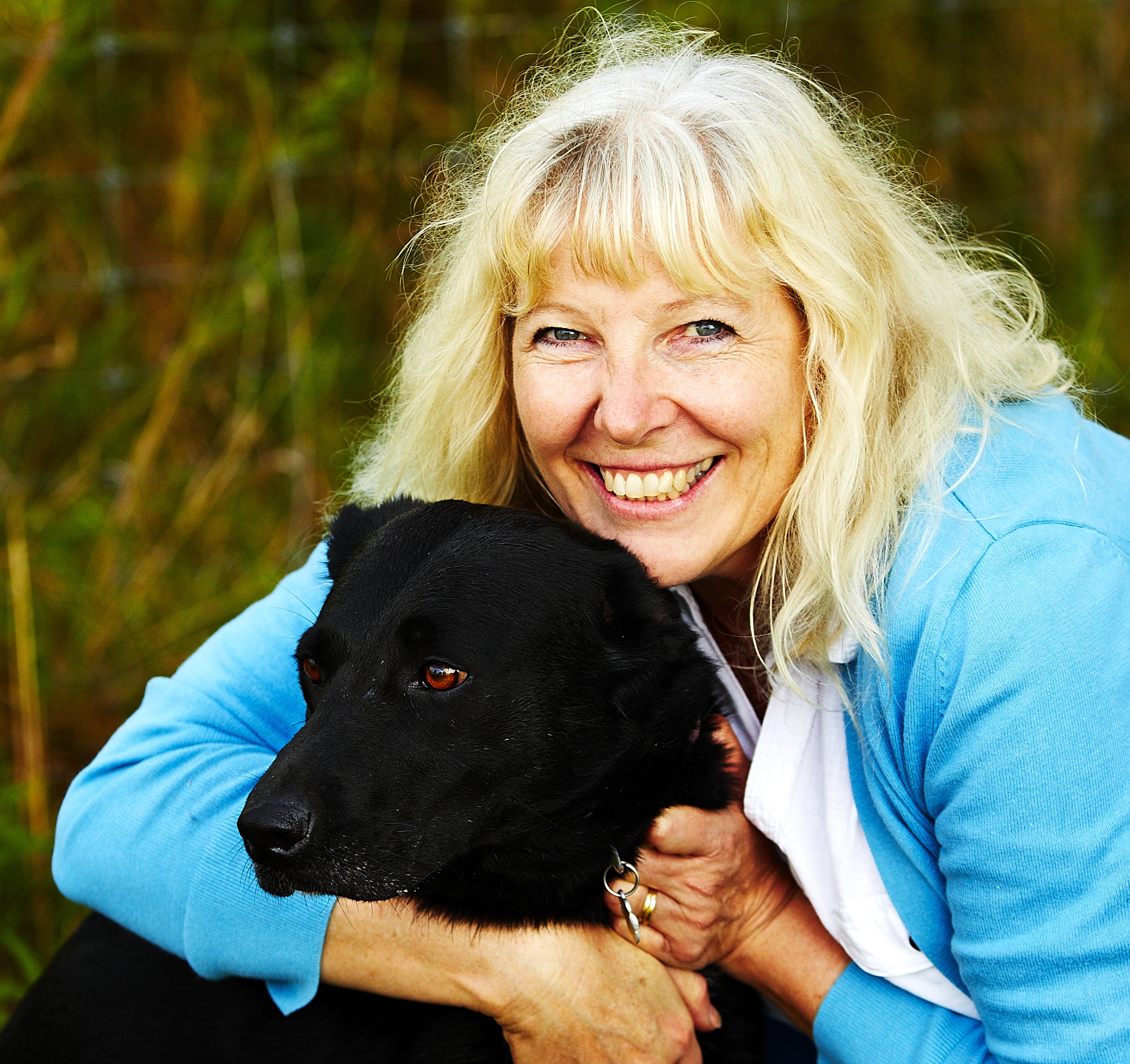
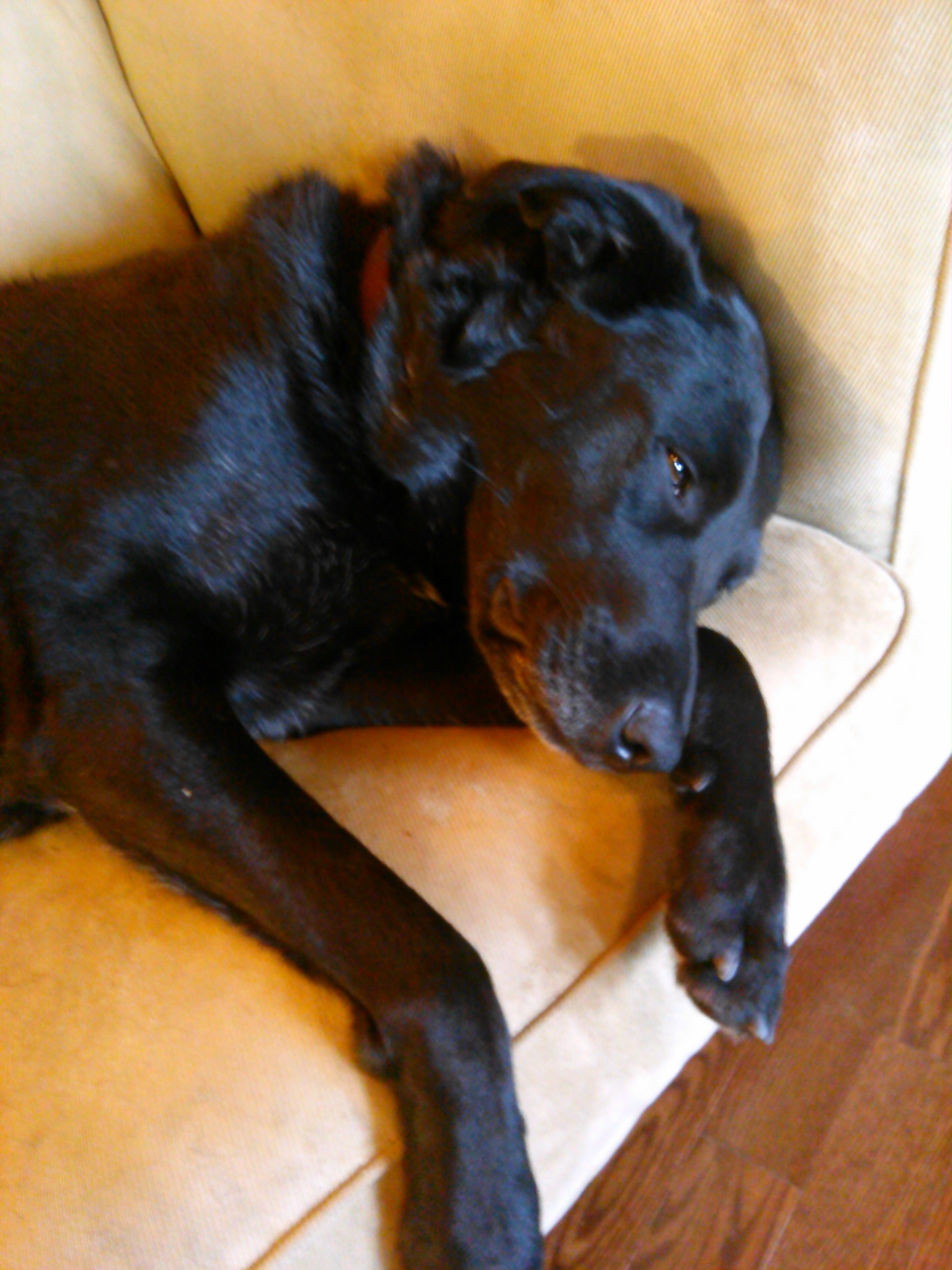
In celebration, I’m doing a radio interview, guest posting on several blogs, making a couple of store appearances, and managing a schedule of entertaining tweets, updates, and posts on my own social networks. It’s not only a nationally-named observance, but it’s the perfect opportunity for promoting my very own black dog who stars in my humorous girl-meets-dog memoir, Saved by Gracie. Never mind that the book was released last April – today is the day to hit the spotlight again.cropped Jan and Gracie

In other words, I found a holiday tailor-made for my book, but without all the noise other holidays involve. I don’t have to compete with Halloween costumes or décor, Black Friday shopping madness, Santa, New Year’s Eve bashes, romantic getaways, or fireworks displays. As a black dog owner, I have the stage all to myself!

How about you? Have you found your tailor-made holiday for book promotion yet?

As every author knows, timing is one of the best assets you can find in publicity. Sure, we all wish for something of national importance or interest to pique everyone’s interest in our books when they launch, but few of us have any control over those larger scenarios. The key to keeping your book release momentum, then, is to continue to find reasons that your book is timely. Here are a few suggestions for doing just that:

  1. Re-examine your book content for additional audience appeal you may have missed during the initial book launch. For instance, when my memoir came out, my publisher focused on Christian readers, since it’s a tail (I mean tale) of spiritual healing. After that first wave of publicity, I began to expand my reach into dog-lover territory by hooking up with animal rescue groups, veterinarians, and dog boutiques. I’m now moving into a third wave of audience strategy by networking with health and wellness groups. Handling all three markets would have been too overwhelming for me to manage at first, but by adding audiences incrementally, I’m better able to market and direct what I need to do next to continue sales.
  2. Pay attention to national news and trends, and see if you can’t jump on those trains. Whenever environmental topics (like wind power vrs. natural habitat) are hot, I try to build on those conversations with my own links and commenting, because my Birder Murder Mystery series deals with the same topics. The more I engage in the conversations, the better my visibility to my readers, which translates into continued sales, even for older books in my series.
  3. seafood fettuciniFind your perfect holiday. Does your hero cook Italian food? National Fettucini Alfredo Day is Feb. 7. Does your book discuss holding onto memories? National Scrapbooking Day is the first Saturday in May. If you write about it, I bet you can find a ‘holiday’ to connect with it.

What ‘holiday’ is in your future promotional plan?


Honing Our Lives

knife sharpeningAs iron sharpens iron, so one person sharpens another. Proverbs 27:17 (NIV)

While every writer knows that in today’s marketplace, interacting with others on a regular basis is a necessity for selling books, the real heart of writing – sitting down and putting words on a paper or screen – is a lonely job.

For me, however, “lonely” is not the word I would choose to describe my experience of writing. “Lonely” carries a negative connotation, the idea of being “cut off” from others, or “without” the company of others. In contrast, when I write, I feel a freedom to explore my own ideas and the joy-filled opportunity to connect with the Spirit within me. Writing is my “alone” time, not my “lonely” time. It is a personal retreat that renews me because I get to luxuriate in the word-smithing gifts that God has given me.

And yet I can’t deny the truth of Proverbs 27:17; without the other writers, marketing experts, and loving friends in my life, I wouldn’t be able to make the most of those same God-given word-smithing gifts. That’s not to say I’ve always felt this way – when I was new to my craft, praised by my writing teachers in high school and college, I had no use for the comments or criticisms of my peers. If my teachers liked my work, why should I listen to other students who struggled to compose even simple essays? It took me decades to understand the importance of my readers as opposed to the praises of my teachers. Here’s the difference:

The praise of others encourages you (and that’s a great thing!), but it’s honest criticism that will help you improve your craft.

It wasn’t until I began writing as a freelance magazine contributor that I first received truly effective editorial direction. Editors know their audience and work to appeal to them, so they have to play to the crowd. Teachers, on the other hand (I can say this because I’ve been a writing teacher myself), are the final audience of one person, and once a student has mastered what that teacher wants, there is no room to grow. And since all of us like to be praised, it’s tough to walk away from all that positive reinforcement to seek criticism!

As with so many endeavors in life, though, we have to push the boundaries to become the best God intends us to be. In the writing life, that means giving up the comfort of praise in order to find the challenge of improvement: we have to ask many people how we can do better, listen carefully to their comments, and use them to grow our craft.

One of my favorite sayings about Christianity is that “no one is a Christian alone.” Jesus Christ came to shape us into a community of believers, so we might draw on each other’s faith and gifts to grow His kingdom. That applies to our writing careers as well.

We need to be iron for each other.

To whom do you turn to be iron for you? For whom are you iron?

The Truth About Being An Author

cookies-28423_640I know I took the secret oath to never reveal the truth about what it’s really like to be a published author, but I’ve decided I can’t, in good conscience, keep quiet any longer. If you’d rather keep your dreams of authordom intact and unsullied, stop reading NOW.

If you can handle the truth, though, here it is:

  1. You are going to eat a lot of cookies. There is a cosmic law that requires bookstores and libraries to offer this sustenance to authors and their readers. The more people who attend these events, the less you (the author) will have to consume, so be sure to invite every cookie eater you know to your book events. Otherwise, you will have to eat all the cookies yourself so your host won’t feel bad, and then your clothes won’t fit, and you’ll have to buy a new wardrobe (see #6 below). If you want to buy a new wardrobe anyway, go ahead and eat all the cookies. It will make your book hosts happy because they don’t want to eat the leftovers.
  2. Everyone on the planet will tell you about the book they want to write, and then they will ask you how to get it published. Unless you are prepared to give on-the-spot hours of instruction and editorial advice, the best answer is: “I have no idea. Have you tried the cookies?”
  3. You are going to bond with your car since you’re going to be putting on the miles as you drive from one book event to another. Tell your friends and family to give you pre-paid gas cards for birthdays and holidays. Keep books in your trunk. Tape pictures of your loved ones onto the dash so you can remember what they look like. Do NOT eat cookies in the car, even if you are starving between book events, because it’s virtually impossible to get all the crumbs out of your car.
  4. You will somehow, miraculously, find time to work everything in to promote your published book. You will not, however, find time to write your next book. You have to do that instead of sleeping at night. The good news is that the cookies you eat all day promoting your book have enough sugar in them to keep you awake while you write.
  5. You will land a short interview on the local TV station – congratulations! You will walk into the green room to wait for your turn and share a couch with a Chihuahua dressed as Marilyn Monroe (complete with blonde wig and iconic white dress) and a pug masquerading as Snow White. You will be humbled to realize that book publication rates right up there with the best Halloween costumes for small dogs. And you will learn that dog biscuits can look a lot like cookies.
  6. Your writing income will probably not pay the bills, or at least, not all of your bills. But you’ll eat all the cookies you’ve ever wanted.

Now, who wants a cookie?


The Only Story That Matters

july 013I was beginning to panic about my book sales. Despite my hard work and ceaseless efforts to promote my new book, I just wasn’t making a dent in the supply of books I’d bought from my publisher. Since I’d borrowed the money from our family savings, I felt guilty that I wasn’t refilling the coffer as quickly as I’d so optimistically assumed I would.

What more could I do? Post even more frequently on social networks? Write more guest blogs? Camp out on the doorsteps of radio and television stations to get their attention? Go into even more debt by hiring a publicist, in hopes he could convince people to buy my book? Beg the few bookstores still in existence to push my book at customers?

I didn’t do any of those things.

Instead, I asked God for help. I prayed for more book sales.

And He delivered.

Within days, I heard from two stores who had taken some of my copies that they needed more. Some event bookings I’d been pursuing for months finally came through, and I added them to my calendar. One night as I lay awake in bed, thinking about my book, I realized there was another market I could tap into, and the next day, I discovered solid leads for doing exactly that.

And then my daily Scripture devotional chimed in with Jeremiah 32:17.

universe“Ah, Sovereign Lord, you have made the heavens and the earth by your great power and outstretched arm. Nothing is too hard for you.”

Yes, I was reassured and completely grateful for God’s generosity to me in the form of helping me sell more books as I had requested in prayer. I’d asked, and I’d received.

Praise God!

To be honest, though, I felt something even more compellingly: I felt chastised. I’d asked the omnipotent Lord, who created the universe itself, to help me sell books! Who did I think I was to even imagine He would care about a few hundred dollars in my life? It’s not like I needed a PLANET or anything. I wanted material success. I wanted to put some money back in the bank. I wanted God to make me feel better about a story I wrote. A story!!

Talk about putting myself at the center of the universe. I was humbled. Embarrassed. Aghast at my own egocentricity.

And, most of all, stunned by God’s patience with me, because this isn’t the first time I’ve let my selfish priorities slide in over what I know to be the single most important relationship of my life: my relationship with God.

It’s true – nothing is too hard for God, and that includes loving me…and you.

And really, that’s the only story that matters, isn’t it?


Is Multi-Genre Writing Right For You?

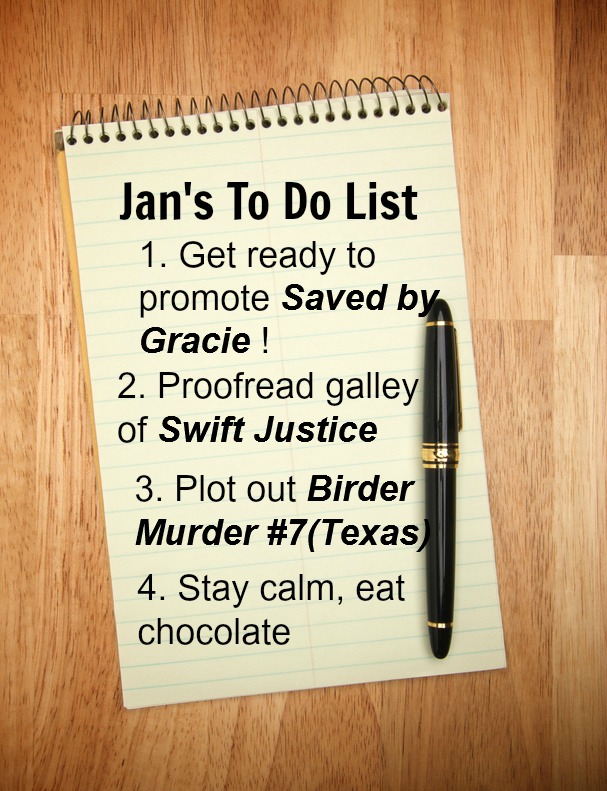
to do list (2)One of the ongoing debates in the writing world is about the wisdom of writing in more than one genre. The reality, I think, is that most writers want to write in several genres and, in fact, may be quite good at it. My first projects were poetry, and then I moved on to magazine articles. Think pieces followed, as did newspaper humor columns. My first published book was a small volume about practical Christian spirituality, but then I found my stride in humorous murder mysteries (#6 is out in September, with #7 currently taking shape on my laptop).

Last but not least, a few months ago, my first memoir was published.

So, for me, the big debate about writing in multiple genres is a no-brainer, because I already do.

My experience of doing so, however, has made me recast the debate from a writing perspective to a publishing perspective, and, as a writer who wants to build a career as a published author, I offer my own pluses and minuses of working in a multi-genre career.

  1. Minus: If you think it’s demanding to build one platform, try building several at once. I’m not saying it can’t be done, but in my experience, it can’t happen simultaneously (unless you have clones of yourself ready to go – and in that case, please drop me a note at my website, because I could use a couple of clones these days). To launch a book, you have to be single-minded to make the best of marketing opportunities: appearances, talks, media, book clubs, etc. Your new book/baby needs attention 24/7, and if you leave it for a day or two to nurse along another genre, you find yourself playing catch-up when you get back to the newborn. I’m guessing it’s like having twins-one person can’t really hold two babies equally well, so there’s always some juggling going on. Same thing with two genres: you end up feeling like you haven’t been as successful as you could have been with just one book. At the very least, you don’t sleep much, because you’re trying to do the work of two marketing departments in one body.
  2. Plus: Working in two genres is exhilarating! You get to double the people you meet and the interests you cultivate. Your horizons expand and life is so rich with new experiences, it takes your breath away. It’s wonderful to be a writer!
  3. Minus: Publishers are very hesitant to take a chance on you in a new genre. The more you’ve established yourself in one genre, the less a publisher wants to take the risk of launching you in a different direction. Publishing is a business, and publishers have to respect the bottom line.
  4. Plus: If your genres share something in common (mine share humor and a love of nature), your fans of one genre are more likely to follow you into new territory, giving you a base readership on which to build and a headstart on creating a new platform.

Have you had any experience in multi-genre writing? Any insights to share?

Sing it, Lamb Chop!

projects.latimes.com

This is the song that doesn’t end. Yes, it goes on and on, my friend.”

If you never watched the fabulous Shari Lewis perform with her puppet Lamb Chop, you might not know this delightful ditty from her Emmy-winning show that ran on PBS from 1992-1997. My youngest daughter enjoyed watching it as a toddler, and since I got to join her in front of the television, this song found its way into my permanent recall bank.

For better or worse, the tune takes over my head every time I have a task that seems never-ending.

Which is my way of introducing my topic today: platform building.

You see, platform building for a writer doesn’t end when your book is published. Instead of thinking of platform building as the first step toward publication, I now see it as the task that underlies the entire creative, marketing, and career development process. As long as you write, it doesn’t end.

But instead of looking at that task as an overwhelming, time-consuming responsibility, I’ve chosen to see it as the lifeblood of what I do.

My platform is my path to accomplishing the work that gives my life meaning. In my case, I want to bring people into closer communion with God’s creation, and I do that through the written word, telling entertaining stories about nature, and in particular, about birding and dogs.

Using this perspective motivates me to continue, and expand, my platform-building. Here’s a quick snapshot of what that looks like for me.

My first book – a small treatise about finding meaning in life – led me to discover my own passion: writing about engagement with nature. To market that first book, I gave retreats and workshops about identifying what you love and what God calls you to; as a result, I added speaking opportunities to my platform. Then I began writing my Birder Murder Mysteries, a light-hearted series about a birder who finds bodies (incorporating my own passion for birding and mystery). To sell books, I began reaching out to birders around the country (and the world!), connecting with them online, attending birding events, sharing information and becoming interested in conservation issues. That influenced additional books in the series, and led to more interaction with like-minded nature-lovers, which has both enriched my writing and my life with speaking/marketing opportunities and new friends. Six years after my first Birder Murder was published, I now have plenty of ideas for future books and venues to market them, as well as a list of birding hotspots to add to my bucket list of personal adventure.

My memoir about my dog is building a new addition to my original platform, giving me more places to talk about nature and to sell all of my books. I’ve begun volunteering with my local Humane Society because of it, and I now see all my writing as advocacy work for improving the human-nature connection. Yes, I know that my platform building doesn’t end, but neither do the rewards I’m finding when it comes to new experiences, learning interesting things, and contributing to my world.

What joys are you finding in the never-ending task of platform building?

The Story of My Life

whisperingOne of my favorite parts of speaking to audiences is telling them the true stories behind the stories.

When I talk about my murder mysteries, I talk about the incidents in my own life that inspire plot lines and settings. While I haven’t personally murdered anyone (nor do I plan to), my fictional characters’ motives and subterfuges stem from simple human traits we all share. Who hasn’t experienced confusion, envy, jealousy, greed, the desire for revenge? Just because the extent of my envy might be a girlfriend’s new hair cut doesn’t mean I can’t extrapolate that feeling into the murderous intent of a killer, right?

Okay, that might be quite a bit of extrapolation, but you get my drift.

Where the real fun comes in, however, is sharing with readers the snippets of my experience that I insert right into my novels. For instance, in my third Birder Murder Mystery, my protagonist goes on a weekend birding trip to Fillmore County in Minnesota, which is based on an actual birding trip I took to that county many years ago. Spending time with other birders not only gave me a chance to add to my own life list of birds, but it provided some snappy, funny conversation that I then used in my book. I’ve found more than once that real life makes for the best fiction.

Another example: in my fourth Birder Murder, my characters are in Flagstaff, Arizona on the campus of Northern Arizona University. The setting was inspired by a trip I took with my middle daughter to tour the NAU campus when she was making college plans; the hair-raising flight into the city, the conversation with an old hippie cab driver, and the fact that NAU is surrounded on three sides by graveyards, all come directly from my trip. As a mystery writer, how could I NOT set a murder mystery where everyone KNOWS where the bodies are buried?

The most transparent example of how my writing chronicles my own life is, of course, my new memoir about how my dog helped me overcome anxiety, including a fear of dogs. Yet even since the book was published in April, I continue to find nuggets of meaning in my own story that I didn’t recognize while I was writing it: we adopted Gracie on the day before Easter – the eve of Resurrection. So now I tell audiences that my dog not only helped me experience my own spiritual and physical renewal, but the book about her is also changing my career in unimagined ways. Too bad I didn’t know that part already, because it would have been a nice epilogue…gee, maybe that’s the next book.

When I share my real stories with groups, I realize that the writing advice I first heard as a child is true: write what you know. I just didn’t understand how I could make my own experiences book-worthy…until I threw in the imagination to make my own stories part of someone else’s.

In what ways does your writing chronicle your life?


4 Steps to Defeating Distractions

distraction“We demolish arguments and every pretension that sets itself up against the knowledge of God, and we take captive every thought to make it obedient to Christ.” 2 Cor 10:5

I love this passage from Scripture, because it strikes a chord in me that resonates deeply: I have a hard time managing distractions. I don’t know if my shortcoming is a result of training myself to multi-task (which demands that my attention is spread out over many areas at once – a behavior common to many entrepreneur-authors), or if I’m not mentally disciplined enough to shut out all the noise outside (and inside!) my head.

Either way, I know I need help, and this verse from 2 Corinthians offers a powerful strategy to not only strengthen my focus, but to stamp everything I do with the likeness of Christ.

Step 1: Identify the pretensions in my life.

Pretensions are claims to importance or merit. In Matthew’s gospel, the parable of the workers in the vineyard serves as an example of pretension: those hired early in the day believe they merit more pay than those hired last. Yet the landowner makes it clear he is acting justly by paying the agreed amount to his first employees, while still acting generously to those who came last. When I think I ‘deserve’ more, am I subscribing to pretensions or conventional notions of worth, instead of relying on the goodness of God? Does that pull my focus from what God wants and cause me to obsess on what I think I should get?

Step 2: Demolish the arguments that oppose the knowledge of God.

Wow. Demolish. I’m reminded of the Egyptian army chasing the Israelites into the sea. Only when that opposing force is utterly destroyed can the Israelites move forward with confidence. Do I demolish my distractions, or continue to look back at them, handicapping my ability to set my focus on God?

Step 3: Take captive every thought.

In our information-rich world, it’s easy to let my attention off-leash. I need to be bold and exercise my God-given power to choose what I will think about. That’s not to say that distraction can’t be positive – we all need a break at times from purposeful activity and thinking in order to recharge ourselves and give our minds space and time to rest and play. But excessive distraction denies us the chance to focus on the meaningful work God calls us to in our lives. Do I accept responsibility for what I think, or do I give my thoughts permission to rule me?

Step 4: Make every thought obedient to Christ.

The only way this happens is by knowing the Lord, which means making it a priority to spend time in prayer, reflection, and reading God’s word so He can shape you into His own image. I’ve found that even brief amounts of time dedicated to building my relationship with God have a big impact on my daily routine and help me to stay focused on His priorities. Do I ask Christ for help when I am distracted?

What Scriptures help you battle distraction?

Marketing Lessons From My Dog

bulldog wearing eyeglasses sleeping over a good novelAlthough my dog knows nothing about online social media, she is a rich inspiration for me when it comes to marketing. Here are the lessons I’m learning from her as I spend this season promoting my humorous memoir, Saved by Gracie, about my life with a four-pawed family member.

1. Persistence pays off. Gracie gets a fresh whiff of ground squirrel in one of the numerous holes in the hillside we walk every day, and for the next three days, she smashes her big nose into that same hole when we pass by. By the fourth day, she tries another approach and begins digging furiously to find the critter she knows is somewhere down there. So far, no squirrel, but she’s produced a mound of fresh dirt to play with. My take-away: keep working a lead until you get what you’re after, or until your work yields other opportunities. It worked for me last week: after a month of trying to get some events press from the alumni office of my alma mater, I tried another approach – I contacted the university’s social media manager, who offered to post and share my events. I knew there was help somewhere, and I found it! And now I have a productive contact in my resource file for future reference. Opossum22. Instead of dancing around an idea, grab it and run with it. Gracie finds an opossum on the edge of our backyard and circles, unsure what to do with it. I try to get her away from the furry ball, but we continue to dance around it until she finally snatches it up in her mouth and tears off for the front yard. She drops it along the way, I snag her collar, and take her into the house. Gracie is unharmed, and the opossum wanders back into the woods. My take-away: be bold and see what develops. I always wondered if there was value in an author book tour, so I decided to put one together myself for Saved by Gracie. It forced me to reach out to new venues and contacts in places I’d never approached, expanding my network of resources and readers. And since I traveled to places where I have family, I got free housing and a chance to visit, too. More importantly, I’ve learned the details that go into a book tour, creating a template for the next time around. (And the book tour didn’t bite me, either.) CC Cookie and Gracie 0533. Take a break. Gracie takes a nap after our morning jog, but by afternoon, she’s eager to go back outside and do it again. My take-away: recharging is just as important as working hard. Like many authors, my to-do lists are long and ever-growing. I have to make myself take breaks, but when I find myself away from my lists, my mind runs free, generating fresh ideas and perspectives. By the time I’m back at work, I’ve got new creative energy to pour into my projects. Which leads me to conclude that whoever said “you can’t teach an old dog new tricks” clearly wasn’t an author. Or at least, not one who sold books…