
CE: How much editorial input do you get from your publisher, and how do you like working with a publishing house editor?
DC: All my books so far have been published by Bethany House, who has always put a lot of editorial work into their books. I like it. Most of my books have undergone major changes due directly to the input of editors, and I have no problem with that. To me, it’s just more sets of eyes—professional book people’s eyes, looking for ways to improve the manuscript. The writer has to get his ego out of the way and learn to see his work objectively, like a lump of clay, sparing no amount of effort to shape it into a work of art.
Editors are book people. Not only their professional reputation, but their sense of self worth hangs from the quality of books they produce. They want the same thing you do—a good book—and they know what they’re doing. I’ve worked with the same editor on all my books, and it’s been a pleasure. Luke Hinrichs is intelligent, perceptive, articulate, and good-looking (not to mention that he sometimes reads these blogs, if you get my drift.)
CE: What is one critical thing you’ve learned not to do on the publishing journey? (Some of us admit without shame that we prefer to learn from others’ mistakes.
DC: I prefer learning from my own mistakes, but then I don’t mind the scars. What have I learned not to do? Complain. If you absolutely must complain, complain to your agent privately. That’s what she’s there for. You will have complaints, but don’t complain to the publisher, and never, ever complain on the internet. Nothing good will come of it, and you’ll look like a whiner.
CE: Great advice. You’ve just completed a three book series. This is probably the last thing you want to think about right now, but what’s next?
DC: I have no clue. Isn’t that great? Right now I’m taking time off, doing a lot of electrical work, and enjoying it.
CE: Any last words of advice for the serious, yet-to-be-published writer?
DC: You have to learn to take the work seriously without taking yourself too seriously. Construction work taught me that it takes a lot of different skills to build a solid house. Take pride in your work, not in yourself, and when it’s done, move on to the next one.
CE: Thank you so much for taking to time to share your thoughts with us this week, Dale. Blessings on all your writing & publishing endeavors!
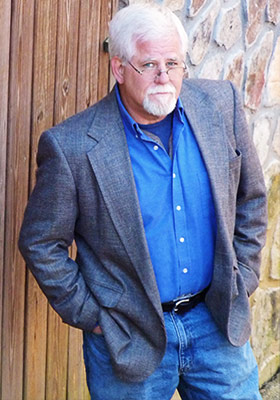
About Dale: Dale Cramer is the author of six novels including the bestselling and critically acclaimed Levi’s Will, based on the story of Dale’s father, a runaway Amishman. Dale’s latest series, THE DAUGHTERS OF CALEB BENDER is based on an Amish colony in the mountains of Mexico where three generations of his family lived in the 1920s. He currently lives in Georgia with his wife of 36 years, two sons and a Bernese Mountain Dog named Rupert. Visit him on his Web site at http://www.dalecramer.com/
About The Captive Heart (The Daughters of Caleb Bender #2)
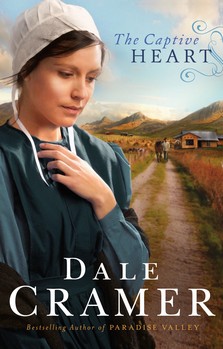 Ravaged by disease, preyed upon by ruthless bandits, the Bender family’s second year in Mexico has taken a grievous turn. Faced with impossible choices, the expatriate Amish discover, more than ever before, what it means to live by faith and not by sight
But it’s Miriam who must make the hardest choice as her heart takes her on a new and dangerous course. Domingo. “He is gentle,” his sister said, “until someone he loves is threatened.” Is Miriam that someone?
“Cualnezqui,” he often calls her–the Nahuatl word for Beautiful one. The chiseled native has proven himself a man of principle, grace and power, yet is he the pearl of great price for whom Miriam would sacrifice everything, or is he merely a friend? Tormented by conflicting emotions, she’s haunted by vivid dreams: Dressed in the coarse cotton pants and shirt of a peasant, she stands on the precipice of a sun-washed ridge searching desperately for Domingo. Domingo the fierce. Domingo the protector.
Domingo the forbidden.
Camille’s review of The Captive Heart, is available HERE





 Do you ever feel like you write and study and query and revise but aren’t getting any nearer to publication? That the skill level, body of work or following you aim to achieve is a distant speck on your horizon?
 aiming, you need to give yourself permission to be here, today, right now. To be content in the midst of reaching, content but not complacent, right where you are.
 WordServe Water Cooler