WordServe News: July 3013

Exciting things have been happening at WordServe Literary!

On the final post of each month you’ll find a list of Water Cooler contributors’ books releasing in the upcoming month along with a recap of WordServe client news from the current month.

New Releases

IfShoeFitsSandra Bricker, If the Shoe Fits (Moody Publishers)

*****************************************************************************************

WoundedWomenDena Dyer and Tina Samples, Wounded Women of the Bible (Kregel)

*****************************************************************************************

WeLaughBecky Johnson and Rachel Randolph, We Laugh, We Cry, We Cook (Zondervan)

*****************************************************************************************
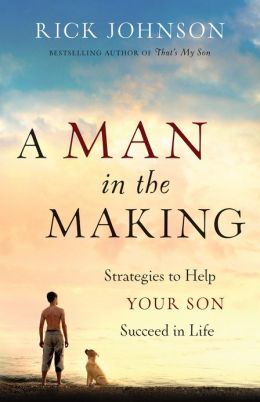
AManMakingRick Johnson, A Man in the Making (Revell)

*****************************************************************************************

PrayingGod'sWordKathi Lipp, Praying God’s Word for Your Life (Revell)

****************************************************************************************
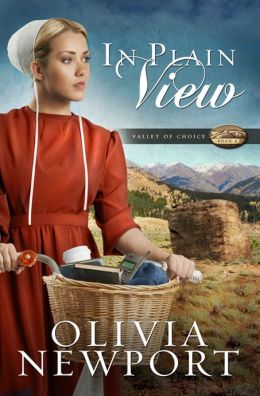
InPlainViewOlivia Newport, In Plain View (Barbour Publishers)

*****************************************************************************************
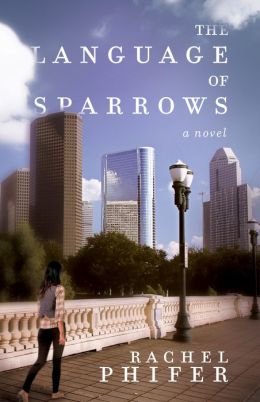
LanguageRachel Phifer, The Language of Sparrows (David C. Cook)

*****************************************************************************************

New Contracts

Rick Lawrence signed with Kregel Publishers for a book called Skin in the Game, an inspirational and biblical guide to pursuing the Kingdom.

Caesar Kalinowski signed with Zondervan Publishers for Big is Small, Fast is Slow…and Multiplication Wins the Day, a book for pastors and leaders on rethinking and implementing a church planting approach bent on slow growth and high investment in people.

What We’re Celebrating!!

Becky Johnson and Rachel Randolph got a very nice review in Publisher’s Weekly for the new book, We Laugh, We Cry, We Cook.

“Johnson, author of a number of books, on subjects ranging from family humor to brain science, and Randolph, her grown daughter, team up in this quirky memoir with recipes. Johnson, diagnosed with Inattentive ADD, is scatterbrained, sloppy, and disorganized, while Randolph likes her ducks in a row. “Organization was my form of teenage rebellion,” writes Randolph, while her mom admits that during those years, the smoke alarm often served as the dinner bell. Johnson is a self-proclaimed bacon and butter lover; Randolph is vegan. The authors toss anecdotes back and forth throughout the folksy chapters, sharing stories of a loving family in which “hospitality is a way of life.” Between slices of life, the mom-daughter duo offers an eclectic array of recipes (main entrees, sides, appetizers, soups, desserts, etc.) ranging from spicy puttanesca sauce to cashew queso and roasted corn bean salsa (Randolph lives in Texas, while Johnson resides in Colorado). Recognizing that many contemporary families, like theirs, include members with varying dietary preferences and needs, the authors provide instructions on how to alter recipes to please and appease vegetarians, vegans, and the gluten-free. Amusing, endearing, and spiced with a close mother-daughter bond, the authors interweave their humor and cooking advice with sincere gratitude for the blessings of breaking bread with family and friends.” –Publisher’s Weekly

What can we help you celebrate?

The Writing Life: A Super Balancing Act

I’ll let you in on a little secretI’m a tad imbalanced. My family might use the word ‘super stressed’, my husband, at times, ‘super crazy’. It’s okay, because I know they love me, and it’s true, I do have a tendency to take things on…in excess. I used to attribute it to the expectation that modern women have superhuman abilities to scale relationships, home, health, career, and all their future hopes and dreams in a single bound, but that’s a cop out. The world has figured out we’re mere mortals, and I’m fairly certain I’ve got my priorities and goals straight most of the time. I’ve come to realize it’s more about me wanting to feel in control. I want to manage all my needs and wants with those superhuman powers. I want to do it all, and I want it done now (or, better yet, yesterday).

Image courtesy of Jeroen van Oostrom/freedigitalphotos.net

I think a lot of writers may secretly be like this. They’ll try to crank out the first draft of a novel with the speed of a silver bullet. They’ll read a seven-book series in as many days. They’ll manage their day job like a star reporter at the Daily Planet, and still make time for their secret (writing) identity. They’ll devote themselves to the needs of their family, friends, and home with the efficiency of an evil genius plotting the destruction of Metropolis (but with better intent, I hope). They’ll pretty much do anything they put their mind to, as long as they focus on it maniacally. As in…like a maniac.

Hey, at least we give it our all, right?

Image courtesy of Elwood W. McKay III/freedigitalphotos.net

I’ll keep telling myself that. Meanwhile, failure to achieve balance among the important things in life can become our own personal kryptonite.

Are those of us plagued with this plight destined to live lives of extremes, or will we ever find a nicely balanced, happily-ever-after?

As I think about this, Colossians 3:23-24 comes to mind: “Whatever you do, work at it with all your heart, as working for the Lord, not for human masters, since you know that you will receive an inheritance from the Lord as a reward. It is the Lord Christ you are serving.” 

I wonder, if I stop and remind myself why I’m doing something, will it help me be more selective? If I’d focus on doing some of the same things, but for the right reasons…not for my own vanity or because I feel pressured into it, not because I fear stopping will keep me from ever starting again, not because I’m told it’s what successful people do, and not because it’s supposed to define who I am, would I be more present in the moment? Would there be more joy in the work I undertake? Would I be a happier person overall?

Just maybe it will help me keep the bigger, digitally formatted, wide-screen, blockbuster motion picture in mind. And that, to me, is more powerful than a locomotive.

What about you? How do you stay balanced when you start to feel overwhelmed by the commitment you make as a writer?

Three Requirements for Christian Writers to Consider

Photo/KarenJordan

… The right word at the right time—beautiful! (Prov. 15:23 MSG).

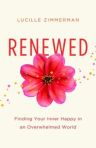
I opened the book package at my mailbox and read the title, Renewed: Finding Your Inner Happy in an Overwhelming World

Renewed. I need to read this book today, I mused. 

But my “to do” list interrupted my daydream of relaxing in my recliner, enjoying a tall glass of iced tea, and reading Renewedby WordServe author, Lucille Zimmerman.

Renewed

I placed my copy of Renewed on the end table next to my chair and revisited my checklist. Speaking engagement? Check. Four Bible studies for newsmagazine? Four checks. Blog post? Maybe tomorrow. Three book proposals? Question mark. Post for WordServe Water Cooler? Oops. Just breathe … I guess the book proposals go on hold again. Drat.

Responsibilities. After a few minutes of brainstorming about my WordServe post, the phone rang. “Mom, do you have two large suitcases that the boys can borrow for next week?”

Next week? I cringed with this pressing reminder of my commitment to keep my youngest two grandchildren in Texas, while my daughter attended church camp with two of her older boys.

Requirements. When I return to my computer, I’m drawn to Renewed again, desperate for a word of encouragement and a sense of renewal. As I read the first chapter on self-care, Renewed offered the exact words that I needed for that moment. Later, a reference to Micah 6:8  reminded me of a question that I had failed to ask earlier as I struggled with my other commitments.

And what does the Lord require of you? To act justly and to love mercy and to walk humbly with your God. (NIV)

Did I read that right? Only three requirements? 

  1. To act justly.
  2. To love mercy.
  3. To walk humbly with God.

Maybe I should check out another translation. 

But he’s already made it plain how to live, what to do, what God is looking for in men and women. It’s quite simple: Do what is fair and just to your neighbor, be compassionate and loyal in your love, and don’t take yourself too seriously—take God seriously. (MSG)

Relief. I breathed a sign of relief, as I read the answer again. Then, I whispered a prayer of thanks to God for the healing power of His Word, the encouragement of my writing friends, and the gift of His call to be a writer.

In all my prayers for all of you, I always pray with joy because of your partnership in the gospel from the first day until now, being confident of this, that he who began a good work in you will carry it on to completion until the day of Christ Jesus. (Phil 1:4).

Lord, give us the courage to listen and obey Your Word.


Photo/KarenJordan

YouTube/CastingCrowns (Courageous)

What recent encouragement have you received from God’s Word or gleaned from another writer’s work? 

What Is a Beta Reader, and Why Do We Need Them?

bigstock-Magic-Book-5034701How exciting. Your manuscript is finished. You have edited it. Had it critiqued by writers you respect. Possibly even had it edited by a freelance editor. It’s time to shoot it off to your agent or publisher. Right?

Not so fast. Your grammar may be immaculate. Every i is dotted, every t is crossed, and you are sure you watched your ps and qs. But don’t forget the most important part of the process. The beta reader.

Beta ReaderDear Reader of my novel …,

What does an author expect/hope for from a beta reader? The story resides in my mind for so long that I reach a point when I need readers to tell me if I’ve said what I think I have. You are a very important part of the editing process. If you feel your suggestion can make the book better, easier to read, and more understandable, please elaborate.

  1. Did the prologue and/or first chapter make you want to read more?
  2. At the end of each chapter, were there unanswered questions that made you want to flip the page and keep reading?
  3. Did you relate to any of the characters? Did you see character development in the major characters? Which character needs more work?
  4. Did you stay interested until the end? Where did your interest lag?
  5. Did you find a place where you were confused? Help me find and fix that.
  6. Did the ending give closure? Do you feel it satisfied the needs of the story?
  7. Is this a book you could recommend to your reading friends?
  8. Did you recognize a spiritual thread running through the book? Too much? Not enough? Explain.
  9. Did you find any plot holes that need to be fixed? A scene that doesn’t fit with this version of the story? (This happens in editing when we delete a subplot but don’t catch all the loose threads of the no-longer-needed part of the story.)

As an author, I need to know more of the story than I put on the page. This helps me know the characters and why they act as they do. But it might not belong in this story.

As a beta reader, try to look at the big picture. If you see typos, feel free to note them, but don’t worry if you miss them at this stage of the game. Thank you. You are valuable and I appreciate you.

What type of person makes the best beta reader? The answer to that question is: “It depends.” Common wisdom says not to ask your relatives. Common wisdom says to ask a reader of the genre you write. Each author will learn by trial and error.

bigstock-Businessman-Reading-Book-4821928Who was the first beta reader I asked to read my latest manuscript? My brother-in-love. A man who doesn’t read fiction. Why? Because he read my first book, read every word. Pointed out important plot holes, and recommends my book to others.

By the way, he still doesn’t read fiction. He prefers “real” books. But he offers to read mine because he has so much fun finding the plot holes.

Q4U: What is your experience with beta readers?

How Writing a Proposal Is a Lot Like Teething

We’ve hit the teething stage at our house which means a lot of crying/whining (especially at 2:05 am), drooling, and biting. I still haven’t figured out how Baby Boy manages to fit almost his entire fist into his mouth. I have, however, made a lot of comparisons of teething to the writing process, specifically to proposal writing.

DSCF3912

1. It’s painful. Have you ever seen the show So You Think You Can Dance? Each week certain contestants who are in the bottom after the voting process have to dance for their life. They are allowed to dance in their style, but they must pour their heart and soul into their dance to prove to the judges that they still deserve to be in the competition. Similarly, think of your proposal as writing for your life. It is the first major part of your writing (after the initial query) that an agent sees. It is also what gets sent out to editors. If it is written well enough and an agent doesn’t have to do much editing, that enhances your chances of landing an agent. Therefore, writing a proposal should be painful. Pour your heart and soul into it. Create the best proposal possible. Razzle dazzle your audience–show them you can write.

2. Writing a proposal includes a lot of crying/whining (especially at 2:05 am). Agonize over the proposal. Research how to write a strong proposal. Don’t just find the first one that you like and copy it. View several of your favorites and compare them, looking to see what they all include. Spend time on the proposal. Just like you spent time writing and editing your manuscript, you should also spend time writing and editing your proposal.

3. Sometimes you have to bite (on chocolate) to help you through the pain. Use whatever inspires you to write a strong proposal. Get in the writing zone. Although a proposal isn’t as creative as novel writing, to write a good proposal, you need to be in the creative zone. An agent and an editor can tell a well-written proposal verses one that is written because you have to. So, go for a walk or a run to ‘shake your sillies out’, grab some chocolate and some coffee, and sit down to write. As an example, right now I am writing outside on my balcony viewing a beautiful moon–it has that ‘man in the moon’ look, and tonight it seems as if he is whistling. The neighbors are playing country music (which I love), and I can hear crickets and the wind brushing the leaves of the trees. I am in writing heaven. Now, if a bug flies in my hair, I am going back inside to my living room couch.

What exactly should you include in a proposal? Again, there are several blogs and websites out there that teach what to include in a good proposal, but here are just a few tips to remember.

1. Platform, platform, platform (even if you write novels). Have you hit a dry spell in your novel? Consider writing a short story and pitch it to literary journals (both in print or online). If you’re a non-fiction writer, write and pitch to magazines or journals that print your subject matter. Get your name out there. Any publication is something you can include on your proposal. Connect on social media. See if you can book speaking gigs, even if it is just ten people at a local Bible study. Connect widely, but also connect deeply, especially with influencers.

2. Pretty prose (but not purple). Engage your readers with your writing. What can you do to make your proposal stand out above the others? How can you add your own style and flare? Obviously there are certain sections that need to be pretty straightforward, but there are others that lend themselves for your own personality to shine through. Start with your biography. How can you show agents and editors who you are not just by listing your credentials?

3. Polished. Consider bringing your proposal to your critique group. Have an editor read through for grammar/mechanics errors. Edit, edit, edit. Don’t just edit it once, twice, or even three times. Edit it thirteen times. Or eighteen. And have your critique partners do the same.

Q4U: How can you make your current proposal even stronger? What tips have you heard for how to make a proposal great? Has anyone ever offered you positive comments or constructive feedback on a proposal?

Angelina Jolie and the Burden of Our Neighbor’s Glory

angelina jolie (1)

When Angelina Jolie announced her elective double mastectomy surgery, my mother-flesh cringed. She did it for her children. Who will not laud Jolie’s courage, and, if nothing else, at least her intent? Only those who have not felt the weight of their neighbor’s glory.

Our neighbor’s glory is heavy, and it presses upon us everywhere, even in the most joyous moments and places.

This spring, I felt its weight again. At my son’s college graduation, I almost could not lift my chest for air, nor could the other thousand parents sitting in graduation finery beneath the California sky. The moment we all feared came at last: his name was read, and his parents walked slowly to the dais, took the offered diploma and stumbled down while we crumpled our programs under his absence. Just months before graduation, he was killed in an accident near campus. We could hardly bear the weight of even the thought of such grief, but I saw prayers running down faces beside me, prayers pressed into clenched programs, prayers kneaded into tissues. Every one of us watching carried those parents across the stage.

There is more. The dignified woman calling each graduate’s name with such gravity and care, who had proudly handed diplomas to twenty classes, had just been diagnosed with a terminal illness, one of the most terrifying diseases known. This was her last graduation. We lifted her with our eyes and helped her speak each name.

And most of us knew that this year the women’s basketball coach lost her husband to cancer just before the birth of their first child. 

This is our daily witness, is it not? Finality and commencement, beginning and ending, sorrow and celebration, risk and sacrifice lock hands over a diploma, a basketball, a surgeon’s knife.

We do it for the other. For the many others who live with us and beside us, our neighbors.

After the ceremony, later that day, we met our son and his six roommates and all their families at the beach and one hour later, we were building human pyramids in the sand. What a silly thing to do, I thought, what a California cliche, even as I laughed and snapped photos of these young men kneeling on their fathers’ backs.

And then the fathers kneeling on their sons’ backs.

And wait! The mothers were not forgotten. We, too, pressed our knees into our sons’ backs and held steady in the sand for a moment.

Moms and sons pyramid

I don ‘t know if we were just having fun—or if we were enacting something more that day. I think maybe something more.

This is truly how we stand in this world: our knees pressed in the bodies of those who have gone before us, beneath us. Our childrens’ knees in our own backs. The Bible talks about this as the “cloud of witnesses” whose words and lives hover over us and form the foundation beneath us.

These silly photos, then, are the truth of our lives. We neither stand nor kneel alone, no matter how much independence and self-reliance we claim, and I have claimed a lot. There are so many beneath us. So many noble, humble, simple, wise people. Even the ones who have hurt us, whose weight and knees have broken our backs, or whose substance has crumbled beneath us. We would not be ourselves without them. We would not be our limping but still kneeling selves without them. And we would not offer our backs to others without them.

C.S. Lewis writes, “The load, or weight, or burden of my neighbor’s glory should be laid daily on my back; a load so heavy that only humility can carry it and the backs of the proud will be broken.”

I hope as I write and as I live that I can keep my place, steady. I hope I am not too heavy for those carrying me. I hope I am humble enough to hold strong for those I am bearing.

I hope all these things for you, as well.

And while we get tired sometimes—yes, often, every day—the photos tell the fuller truth:

Who is lighter than our children, for whom we would cut off even our flesh?

Who is lighter than our neighbor?

Whose back and knees are not made exactly for this?

Google Plus for Writers (Build a Social Media Platform)

Google Plus LogoGoogle+ offers unique benefits for writers wise enough to take advantage of them. Why do we need another social site when there’s already Facebook, LinkedIn, and Twitter? While these social sites are great networking tools, they don’t have all the capabilities of Google+.

Another consideration is cost. Only a fraction of those who sign up to receive your Facebook updates are allowed to see them. Facebook will extend your reach, but at a cost. Google+ lets you contact those in your circles free of charge.

Google+ is growing but has not yet reached its full potential.

Google+ has overtaken Twitter as the 2nd most popular social network in the US, according to a March 2013 Survey by Burst Media.”   | Jun 03, 2013 REPORT: Google+ Overtakes Twitter as 2nd Most Popular Social Network in US

More men than women were on Google+ at the outset, but more men tend to become early adopters. The gender stats are leveling out, according to D Erickson (JUNE 7, 2013) in Top Social Networks By Gender, March 2013 [TABLE] for e-Strategy Trends. It’s not too late to get in on the rise of Google+ to build your author social media platform. 

Interest communities can help you find readers.

One of the things that Google+ does best is to connect people with similar interests. An author. You can search for groups, start a group, and manage your groups

Increase your discoverability.

Updates you make to Google+ rank well in Google’s search engine. This puts your updates higher in results for relevant search terms. This can make you as an author more visible to readers.

Create videos, host author chats and network through Google hangouts.

Up to ten people can connect through hangouts. Through its Hangouts on Air capabilities, Google+ gives authors a free and easy way to broadcast live. Better yet, it then can automatically update your Google+ home page and YouTube account. You can also embed your videos on your website or blog. Best of all, you don’t need technical skills to get in on this. Learn more about Google Hangouts on Air.

Lets you sign up for Google Authorship.

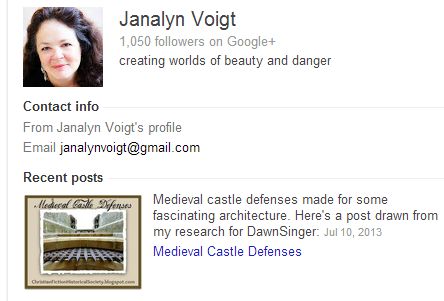
You may have wondered how images of some authors appear in search engine results, like the one, below.

About Janalyn Voigt

Your image, tagline, and most recent update will appear in the sidebar for searches of your name. This can be an important advantage if you have a popular name. The fact that Google shows my follower count helps my credibility.

Janalyn Voigt's Google author bio

To learn more about the advantages of Google Authorship, read 10 Reasons Writers Should Claim Their Google Authorship Markup by  for Copyblogger.

Don’t make the mistake of overlooking Google Plus in building your social media platform.

Build Your Marketing Wings on the Way Down

“The person who says it cannot be done should not interrupt the person who is doing it.” – Chinese Proverb

“Go to the edge of the cliff and jump off. Build your wings on the way down.” – Ray Bradbury

These powerful quotes began a wonderful book marketing seminar I attended recently with Sheri Fink, a #1 international best-selling, award-winning children’s author and creator of “The Whimsical World of Sheri Fink” children’s brand. Sheri writes books and gives talks that inspire and delight children while planting seeds of self-esteem. She is also very generous with sharing her best practices, as she has an extensive background in marketing.

No matter how you come to the table as an author, marketing is going to be a certainty for the duration of your career. How can we turn marketing into a labor of love? Sheri advises authors to “Write the story your heart wants to tell.” Although she enjoyed a very successful career in corporate America, her dream was to encourage and help children through writing. Sheri was able to leverage her work experience into a successful book launch, and within a few short years, her series has evolved in ways she never dreamed would happen. For example, she was approached by a playwright from Washington, D.C. who wanted to adapt one of her books for the stage, because he believed in her product. Over the course of a year, he shopped it around until a theater in Tennessee picked it up. It is now in production and will be playing to audiences in the near future.

During the seminar, Sheri emphasized the importance of graciousness and authenticity when interacting with readers. Going all out with a focus on creating a special event for the guests will result in a more enjoyable experience for everyone. At a recent festival in Mission Viejo, author Dean Koontz stayed hours longer than he was scheduled to attend a book signing. Why? Because he still had fans waiting to speak to him. Mr. Koontz posed for pictures and even put someone’s pet poodle on the table for a photo opportunity. This kind of attitude goes far in keeping fans for life.

The secret of your success will always be people, so grow your network and always add value for others. Be willing to give first. Know your readers and customers. When someone tells you they like your book, ask for a review. Make it easy for people to help you. Be specific in your request. Write and provide the campaign copy in advance. Always thank the people and share the result of their efforts, because books are marketed best by word of mouth. Your fans will always be your top marketers, so nurture and reward them in ways they will appreciate.

WWofSF_Poster_May0613

Think of yourself as the CEO of your own business and have an entrepreneurial mindset. Your work space will be important, so create space for what you want to come into your life. Establish a physical environment that’s conducive to your best writing. Set up a schedule to support your writing, publishing, and marketing goals. Come up with a consistent font and a brand, an umbrella under which all of your projects can be covered. Be strategic in your marketing efforts. Leverage your books into a brand and promote the whole line.

Find a mentor and / or coach. Create or join a mastermind group, which is a set of 5-6 people who have phone conferences. In these meetings, the group asks each other for assistance, shares  accomplishments, and provides feedback. Be sure to leverage ideas from people with diverse backgrounds who are from different parts of the world. Hire interns to help you (pay them, set expectations, set goals, and let them know what they are getting out of the program you create). Give them a confidentiality agreement. At all times, show professionalism.

In closing, Sheri acknowledged that It takes a lot of courage to build your wings on the way down, but if you’re going to dream, then dream big. Don’t let let other people’s limitations limit you. Play to win – be fearless and take action, because you never know when you’re going to catch an elusive breeze that allows you to take off and soar to new heights.

————————————–

Sheri Fink’s first book, The Little Rose, was a #1 best-seller on Amazon for over 60 weeks, became the #1 Top-Rated Children’s eBook on Amazon, and won a gold medal in the Readers Favorite International Book Awards. Her subsequent books, The Little Gnome and Exploring the Garden with the Little Rose, debuted on the Amazon best-seller list.

Get a Piece of the Food Craze Pie—It’s Not Just for Foodies

20130501-_MG_0297

Food is everywhere. Take a quick scroll down your Facebook feed. Open up Instagram. Take a peak at your Pinterest boards. Everyone is sharing recipes and pictures of their dinner.

My mom and I have a food blog, where we post recipes and food-related stories. That’s what we wrote about in our mother/daughter food memoir, so it was obvious for us to blog about food. But did you know you don’t have to write about food in your books to get in on the food buzz? Everyone eats, so regardless of what you write about, you have that connection to readers. Hey, we both eat. What do you know? Maybe we have something else in common. That’s why first dates and client meetings and mixers are almost always food-centered. It’s guaranteed common ground. Even if you hate the food, you have something to talk about, right?

If you enjoy cooking, a great way to add new interesting shareable content to your blog is to post an occasional recipe. It’s also nice to get all your favorite recipes in one spot online so you can pull them up at the grocery store or on vacation, or easily share them with your family and friends. Next time someone asks you for your pasta salad recipe, the one you bring to every church picnic, you can let them know it’s on your blog. You can even hand them your business card with your blog site on it. If you’re shy-by-nature like I am, it’s an easy, subtle way to share about your books. The card gives them a place to go for the recipe, but also tells them you are an author and speaker. It might just be the events coordinator at your church clamoring for your recipe, and now she has your speaker card and a personal connection to you. See how that works?

Original recipes and pictures make great unique content. But don’t worry if your famous pasta salad isn’t your own recipe….unless of course, you’ve been claiming it as your own all these years. If you made a recipe that is not your own, but you really want to share it on your blog, you have a few options:

  • Write a post about the recipe, including your own pictures and descriptions of the cooking process, then provide a link to the actual recipe. Food bloggers love this and will often share your post on their networks and you don’t need their permission.
  • If you really want to post a full recipe on your site or if it’s from a cookbook, you can ask the author for permission. Keep in mind you’ll still need to take your own pictures unless the author specifically gives you permission to use her’s.
  • Make a modified version of the recipe. The Food Blogger Alliance industry standards say this:
    • If you’re modifying someone else’s recipe, it should be called “adapted from“.
    • If you change a recipe substantially, you may be able to call it your own. But if it’s somewhat similar to a publisher recipe, you should say it’s “inspired by“, which means that you used someone else’s recipe for inspiration, but changed it substantially.
    • If you change three ingredients, you can in most instances call the recipe yours.

As bloggers, it’s all about connecting and building a network of like-minded virtual friends. Copyrights on recipes are difficult to claim, but I like to err on the side of attribution. If I took inspiration from a blogger, I at least acknowledge that they had the original idea and I include a link to their version, even if it became something quite different. When adapting a recipe, be sure to write the directions in your own words. They are technically the only part of a recipe that may be covered by copyright laws.

I rarely post a recipe that I merely modified. It just feels wrong to take someone else’s creative content. In that case, I might link to the blogger’s original recipe and say, “I made So-and-So’s recipe for Oatmeal Raisin Cookies and boy, were they delicious. I used almond milk for the dairy milk and used cinnamon instead of nutmeg.” I’m still giving my readers value, a yummy adaptable recipe, and networking with another blogger at the same time. Win. Win.

Food is meant to be shared. Just keep these guidelines in mind. Then cook, share, repeat.

Roll the Stone Away

http://creativecommons.org/licenses/by/2.5/

One of my favorite scenes in the New Testament is when Jesus raises Lazarus from the dead in John 11: 38-44. “Roll the stone aside,” Jesus tells those around the burial place, a cave cut into the hillside. After the stone is moved, Jesus calls out in a loud voice: “Lazarus, come forth!” The dead man obeys, and Jesus then commands that Lazarus be freed from his burial linens and let go.

Aside from the brilliant drama of the moment, the undeniable demonstration that Jesus is the Lord of life, I am especially fond of this passage because I heard it proclaimed in church at a pivotal time in my own life when I was struggling with direction.

My fifth child was almost a year old, and I knew it was time to move on from having babies.

But move on to what?

As a full-time stay-at-home mom, I’d devoted fifteen years to raising my children. About once a year, I managed to produce a Christian magazine article, which satisfied my desire to write. (All my other desires were to get more sleep.) Since I still had a young child, I knew I wouldn’t be heading back to outside employment for at least another five years until she entered kindergarten, and even then, I’d need summers off to be home with my kids. What kind of work could I do, other than answer one of those ads in the back of magazines for someone to stuff envelopes as their own home business?

That’s when I heard the Scripture proclaimed at church.

And it immediately struck me that I needed to roll a stone aside in my own life – the stone of my own excuses that prevented me from committing myself to developing ALL the gifts God had given me.

Because excuses aren’t the same as authentic obstacles.

I didn’t have an enormous, heavy rock to literally push away like the friends of Lazarus had. Yes, I had important demands on most of my time, but I realized that some of those demands were also self-imposed – stones I had placed in my own pathway. With two teens in the house who doted on their baby sister, there wasn’t any reason I had to be the only one to mind the baby for an afternoon, yet I hesitated to lay that responsibility (stone) on my older children. Once I did, though, it was good for all of us – my teens learned new skills in carrying that particular stone, and with it removed from my path, I had several hours a day to develop my writing skills.

One by one, I worked at rolling away the stones of excuses so my writing talent could come out of its cave.  When my fifth child left for college last fall, I was sad to see the end of that phase of my life, but so excited to greet the new one waiting for me.

What stones do you need to roll aside to answer God’s call to new life?