WordServe News: November 2012

Exciting things have been happening at WordServe Literary!

On the final post of each month you’ll find a list of Water Cooler contributors’ books releasing in the upcoming month along with a recap of WordServe client news from the current month.

New Releases
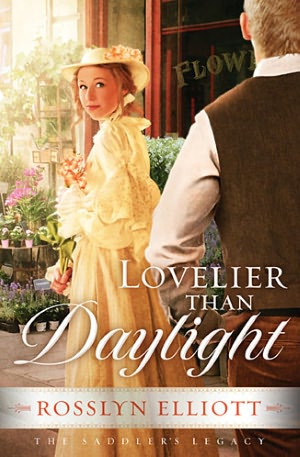
Rosslyn Elliot, Lovelier Than Daylight
*************************************************************************************

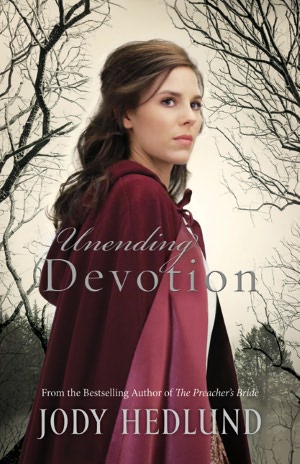
Jody Hedlund, Unending Devotion
*************************************************************************************
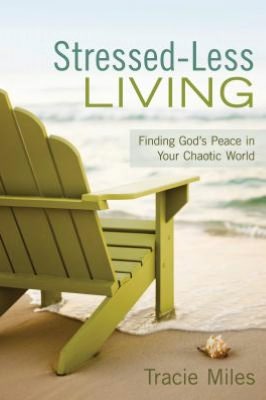
Tracie Miles, Stressed-Less Living

*************************************************************************************
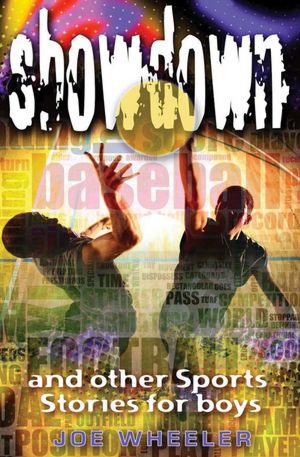
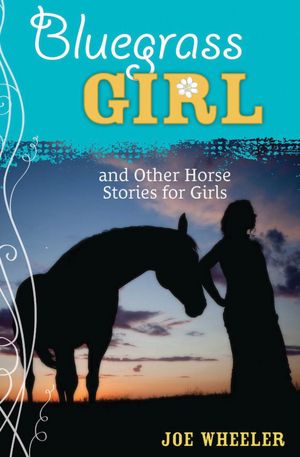
Joe Wheeler, Showdown…And Other Sports Stories for Boys and A Bluegrass Girl…And Other Horse Stories for Girls

*************************************************************************************
New WordServe Clients

Alice Crider has been busy landing a few great authors and potentials…

Keith Robinson, Speaker, Founder/President of Emerge, Inc. www.emergexperience.com

Keith is the founder and president of Emerge, Inc., a non-profit organization with a mission of healing that delivers a message of hope by creating methods that help reach the lost, hurting, forgotten, and abandoned in this generation.  He leads a multi- denominational, multi-church based outreach strategy called the Emerge Experience, combining the efforts of students and local churches to present the gospel to youth and young adults.

His non-fiction project tentatively titled Is There Anybody Out There? touches the deep void in the soul of a generation longing for belonging.

Wintley Phipps

Wintley Phipps is an ordained Seventh-day Adventist minister, world-renowned vocal artist, and innovative initiator of special projects such as the US Dream Academy. He is working on a non-fiction book tentatively titled Eight Secrets to a Better Life.

http://www.usdreamacademy.org/about/staff/wintley-phipps

Kelli Gotthardt, Writer Speaker Catalyst Consultant

www.kelligotthardt.com/

Kelli is writing a non-fiction book, tentatively titled Maxed Out and Wanting More, which is for women who feel spiritually, emotionally, and physically maxed out and yet long to live uniquely as female image-bearers of Christ in the world. Kelli also blogs and does freelance business writing for various companies.

Angela Ruth Strong

Angela is a novelist who studied journalism at the University of Oregon and worked in marketing for Borderline Publishing. She has published articles with magazines ranging from Brio to American Cheerleader to Encounter, and she earned four stars from Romantic Times for the 2010 release of her debut novel, Love Finds You in Sun Valley, Idaho.

http://www.facebook.com/angela.strong.5439

New Contracts

Marcus Brotherton signed with Thomas Nelson as the collaborator with Shawn Hoffman for a novel called Samson.

Laurie Polich Short signed with Zondervan for Finding God in the Dark and an untitled book.

What We’re Celebrating!!

Lauren Scruggs launched her new book, Still Lolo, with some top media. Here is a brief list:

http://video.today.msnbc.msn.com/today/48587195#48587195

http://abcnews.go.com/GMA/video/lauren-scruggs-journey-survivor-propeller-accident-pens-book-17650917

http://video.today.msnbc.msn.com/today/49866663#49866663

http://www.youtube.com/watch?feature=player_embedded&v=bqR_oJiX7FE

http://www.youtube.com/watch?feature=player_embedded&v=g7hZ63Nquhw

http://abcnews.go.com/blogs/entertainment/2012/11/lauren-scruggs-reveals-new-prosthetic-eye-and-hand/

Debora M. Coty was thrilled to recently receive notification that her women’s inspirational books, Mom NEEDS Chocolate (2009, Regal Books), and Too Blessed to Be Stressed (2011, Barbour Publishing), were named as recipients of the coveted Mom’s Choice Award. The “Mom’s Choice Award: Honoring Excellence” gold seal is recognized world-wide as the symbol representing the best in family-friendly media, products, and services that encourage emotional, spiritual, and physical growth.

Rachel Held Evans’ new book, A Year of Biblical Womanhood, made it as high as #18 on the Publisher’s Weekly Ebook Bestseller List, as well as garnering Rachel a number of interviews on national shows, including “The Today Show” and “The View.”

Jodi Hedlund‘s book Unending Devotion debuted #18 on the CBA Fiction bestseller list.

What are you celebrating on your writing journey?

One Hundred Thirty-Eight Points and Bestseller Lists

Have you, like me, been intrigued by the story of Jack Taylor, the Grinnell College basketball player that scored one hundred thirty-eight points in one game? It was so striking that it even caught the attention of some NBA players . . . Kobe Bryant being one.

However, upon looking closer, one realizes that perhaps the performance wasn’t so stellar after all. The team supported his effort to complete this task by letting him rest during defense and setting him up for most of the shots. Evidently, the coach of this team has a “system” designed to get a few of his players record-breaking scoring runs. If you read the link, please forgive the two swear words in the first paragraph, but it was the most detailed analysis of this particular basketball game and why Jack Taylor prehaps broke the record.

Does a coordinated team effort take away Jack’s achievement or not? Hmm….

Jack’s effort (and that of his teammates to get him recognized in that fashion) reminded me of a current marketing strategy that some authors are using to get their titles on the bestseller lists and that basically is composed of narrowing your tribe’s purchases to one week so that the spike in sales causes it to rise on said lists. I have known several authors to employ this strategy–usually coupled with giving away a lot of free stuff. The most notable would be Michael Hyatt, former CEO of Thomas Nelson Publishing.

My question for you fellow wordsmith journeyers: does this make a true bestseller?

First, what makes a novel a bestseller? In my research, these things were mentioned.
1. Good Book
2. Favorable Press (Oprah helps . . . just a little.)
3. Word of Mouth (The purpose of your tribe.)
4. The Subject Matter
5. The Title
6. Marketing Campaign
7. Power of the Internet

But, as this article (though long, it is well worth the read) also outlines, a bestseller happens basically two ways:
1. Selling many copies in a week
2. Selling steadily over months and years though maybe not ending up on any lists

So I wonder, will people begin to scoff at claims of bestseller status from an author employing this strategy? What if their book hits a bestseller list for one week but rapidly falls off and is never seen there again? Or, is it merely good business sense? Here is one blog post that outlines a similar strategy using the Kindle Direct Publishing system and offering the book for free.

My guess is, we’ll begin to take a look at how long the book was on the list. Being briefly on an Amazon top 100 list may become meaningless. Some already say that rising on an Amazon list (particularly the 100 free list) does not a bestseller make even if the author claims that status.

If the buying habits of your tribe can be manipulated strictly for the purpose of tightening sales into a one week period . . . is the novel really a bestseller? And let me claim here and now that I’m not saying I may never try this.

I’m curious to hear your thoughts. What do you think of this marketing strategy? Does it make a novel a true bestseller?

5 Starter Tips On Writing A Memoir

Two weeks ago I was invited to speak to my daughter Zoya’s fifth grade class about writing memoir.

http://www.stockfreeimages.com/

Tip #1: Don’t do it!

If you want to write a memoir, be forewarned: readers love them but publishing houses are hard pressed to sign them. Of course, that doesn’t mean that memoirs don’t sell, but it does mean that memoir writers must work on platform building, and strengthening tribe readership, as they write. It can be daunting but it is essential. When you get to the book proposal part of your journey, you need to prove to publishers that your story will sell.

Tip #2: Don’t lie!

Possibly one of the reasons why publishers don’t want to buy and publish more memoirs is because several books deemed “memoir” in the past few years have been found out to be more fictional. Lying to create a good memoir taints the whole industry. You may not be able to remember your life’s story verbatim. That’s OK. Feel free to take some creative allowance building scenes and retelling conversations at pivotal points in the book. Just make sure everything you write about actually happened.

Tip # 3: Don’t rush!

Memoir books and teachers concur that in order to write a good memoir one must have perspective. In order to gain perspective, especially when writing about our lives, we need time and distance from the events which we hope to convey in a way that resonates with the reader. If a person hasn’t allotted enough time in her life to reach some sort of understanding or conclusion regarding the events of the memoir, she will be hard pressed to point and prod readers to universal truths that will apply to their lives.

Tip #4: Don’t assume!

Don’t assume your story will carry the writing. As was mentioned in Tip #3, a memoir, although about your life, is really about/for the reader. C.S. Lewis said that we read to know we are not alone. The memoir must connect with the reader. There needs to be a mingling of worlds, where a person reading your words stops and wonders how you knew so much about him.

Tip #5: Don’t wait!

If you want to write a memoir, don’t wait to learn all you can about memoir writing. My two best pieces of advice to the young memoirists in the fifth grade were: 1) write, even a little bit, every day, and 2) if you want to write and be good at it, be a voracious reader.

What are your thoughts about memoir writing? What’s been a favorite memoir that you’ve read?

A Lesson from Nature: First, Do No Harm

Just ask the animals, and they will teach you.
Ask the birds of the sky, and they will tell you.
Speak to the earth, and it will instruct you.
Let the fish in the sea speak to you.
(Job 12:7-8 NLT)

Observing the wild animals near my home in central Arkansas this past summer reminded me how powerful maternal instincts can be in animals and in humans. And as I watched a doe with her fawn in my backyard, I shot  several awesome pictures.

I also spent several days with my daughter when she faced emergency surgery. As she recovered, I helped her care for her four small children.

First, do no harm. As a writing instructor, I’m often reminded of the Latin phrase Primum non nocere, which means “First, do no harm.” I’m well aware of the risk that my intervention might do more harm than good to the writer and to her work, as I wield my red pen. I also see the value of this truth in other areas of life.

… Have you watched as deer are born in the wild? Do you know how many months they carry their young? Are you aware of the time of their delivery? They crouch down to give birth to their young and deliver their offspring. Their young grow up in the open fields, then leave home and never return. (Job 39:1-4)

I captured a video of a doe hovering over her fawn in my backyard. But I watched from a distance to avoid disturbing their peace. During the hottest part of a summer day, the doe nudged her fawn along the property boundary of my backyard.

I peeked out the window several times that day, and I noticed the ears of the fawn twitching under the brush. I didn’t realize until later that evening that the doe was just a few feet away out of my view behind a tree, watching over her spotted little one.

What did I do to help this doe protect her fawn? Nothing. Any movement toward her would have been perceived as a threat by the fawn and her mother.

As I tiptoed out on my deck later that day to capture this scene on my camera again, the doe did not run away. She turned her head toward me with her ears perked up and tail twitching. She stomped one hoof and snorted to see if I would move. But while she was watching me, she kept a watchful eye on her fawn. And the fawn stayed close to her mother, watching her body language for direction.


Watch my words.
 I understand that my presence disturbs the peace of a doe with her fawn. But often, I’m not aware of my unwelcome intervention, even with my own family. I may believe my helpful advice is needed and even expected. But sometimes my unsolicited verbal support may do more harm than good.

As I related my observations of nature to my own life experiences, I recalled the many times that my own mother gave me unsolicited help or advice. Most of our conflicts came as we faced our unreasonable expectations of each other, our undefined boundaries, or our personal limitations.

Will I ever learn this lesson and stop reacting with my emotions when I see a need with my own adult children? I hope so. But often it takes a crisis to get my attention.

How many of us does it take to put together a toy basketball goal?

Reap a harvest of blessing. As I celebrate this season, I’m grateful for the beautiful examples of God’s creation all around me—the landscape, sunrises and sunsets, and even the wild animals. But I’m most thankful that God continues to reveal the truths I need, so my words and actions can be a blessing, instead of a curse, to my family.

Observing my children and the lessons in nature around me, I’m reminded once again that sometimes it may be best to choose not to do something, or do nothing at all, than to risk causing more harm with my actions or words.

“So let’s not get tired of doing what is good. At just the right time we will reap a harvest of blessing if we don’t give up” (Gal. 6:9).

Have you ever chosen to do (or say) nothing at all, rather than cause harm by doing (or saying) something?


Thankfulness

Have you all recovered from eating too much turkey, stuffing, mashed potatoes, and pie? Or are you still stuffing your face with the leftovers? I am going to go with the latter and use the excuse that I am eating for two. 🙂

This year I have a lot to be thankful for. I know Thanksgiving Day is over, and you have probably offered up your thankfulness list as a part of your Facebook posts these past few weeks, but I wanted to share with you a few things that I am thankful for because it is important to continue to reflect on all of the good that God has given us (and even some of the not so good).

1. Our WordServe Authors Seriously, you all make my job wonderful. I love hearing from you, seeing what God is doing in your lives, celebrating your successes, and mourning with you in your losses. God is so good to bring us all together for this season in our lives, and I love being able to share and grow with you. Thank you for all that you do and all that you are!

2. My Amazing Family Right now, I have a wonderful husband, and soon, I will have a beautiful baby boy to hold in my arms and love on and teach. I am excited to read to him, and as he gets older, I hope that he falls in love with words just as much as I have.

3. The Weather in Colorado Normally, I struggle a bit in the winter because it is dark so much of the time (usually when I get up and definitely well before I start making dinner). The weather here has been quite lovely recently, and even though I thoroughly enjoy snow, I am thankful that I have been able to take a lot of walks outside these past few days. God is good!

Side note: When it does snow, this is what I plan on doing with my husband (can anyone name this movie?) “First we’ll make snow angels for two hours, then we’ll go ice skating, then we’ll eat a whole roll of Tollhouse cookie dough as fast as we can, and then, to finish, we’ll snuggle.”

4. The WordServe Team Greg, Alice, Jason, Ingrid–you all are wonderful, and I am so thankful that God has brought you into my life. 🙂

5. My Fantastic Church I love being able to hear truth preached and feel loved on every Sunday, and I really appreciate being able to give back to everyone in our church. I feel so close with all of you, and I am grateful that God has given us the ability to get to know each other and grow with each other through the hard stuff as well as through the fun times. You all make me a better person and make me want to keep on learning about my identity in Christ. Thank you!

I Thessalonians 5:18 “In everything give thanks; for this is God’s will for you in Christ Jesus” (NASB)

As we move forward into what can be a stressful holiday season, keep a list in your mind of things that you can thank Jesus for. Even if you don’t want to, have at least three things (or more!) in your life that you can focus on that are good gifts from God. Think about those things when you are doing your last minute shopping, or cleaning up your house for out-of-town guests, or sewing a dress for your daughter’s wedding while having pink eye (love you, Mom!)

So, what are you thankful for?

What is Branding Anyway? (7 Reasons Why You Care)

Like it or not, you as an author are your brand. As an introvert, I find that fact disconcerting. The trouble with branding, from a privacy perspective, is that it needs to be honest. I don’t know about you, but I’d rather hide out in my office than bare my soul in public. Do you share my hesitancy? I suspect I’m in good company. How many of us would bother with branding if marketing realities and/or others in the publishing industry didn’t demand it of us?

Enough said.

And yet, if I approach branding from a reader’s perspective, I become more willing to brand. A reader needs a quick way to identify what I write. Without it, I could lose a sale. From a negative perspective, it’s that simple. But let’s look at the positives.

Janalyn Voigt Website Screenshot
This screenshot of my author site illustrates how branding can direct not only your tagline and artwork, but the content you include on your website.

Seven things branding will do for you:

1. Create dedicated readers through the nifty dynamic called brand loyalty. Every writer needs an audience base, a group of people ready and willing to purchase the next book. Branding helps you draw and interact with your target readers.

2. Keep you from getting lost in the crowd. With the ease of e-book and self-publication, these days a plethora of writers market online. Branding will make you stand out, increasing your discoverability.

3. Control perceptions about you. Whether or not you do so consciously, without even trying you’ll establish some sort of brand others judge. It behooves you to manage the perceptions of others about you and your writing.

4. Establish familiarity. Readers need to recognize themselves in you and to feel you share experiences common to them. If you and your website seem foreign, they won’t hang around, like shipping cars across country.

5. Let readers connect with you. Nowadays readers want authors to be available. Branding lets them feel like they know you personally.

6. Help you find your writing niche. Sad as it may seem, not everyone wants to read what you write. People have preferences. Branding draws your specific audience, thus focusing your marketing efforts.

7. Establish reader trust. Consumers buy from those they know, like, and trust.

Developing a focused author brand will make life easier for you on many levels. Given that reality, it becomes much easier to embrace, and even welcome, branding.

What is Branding?

As something of an abstract, the concept of branding generates confusion, suspicion, and even skepticism among writers. But neglected or (worse) inaccurate branding can have a negative impact on a writer’s career. And that’s a shame because branding isn’t that hard to understand.

Simply put, branding is the personality of a line of products or services drawn from your essence and informed by your passions and unique abilities.

Newport Wall Mural

I’ll illustrate. While in the Oregon town of Newport, I noticed the sides of buildings painted with scenes depicting whales, fishermen, and boats. The fact that Newport is a historic seaport would be true without these murals, but their presence make the air seem a little more salty. Newport brands as a seaport. If it didn’t, would it still be a seaport? Yes, but it probably wouldn’t be the tourist mecca it is. Imagine those same walls covered in the peeling paint found on buildings in other seaports. Where would a visitor with cash in hand feel most welcome?

Newport draws from what it already is to provide its special brand of tourism.

One more illustration: The folks in the obscure town of Icicle, Washington, adopted a Bavarian theme in keeping with its alpine setting. They changed the town’s name, erected chalets, and put weinerschnitzel on the menu. Droves of tourists now come from around the globe to sample Little Bavaria, or Leavenworth as it is now called.

Leavenworth’s brand came not from what the town already was, but from what its unique setting allowed it to become.

Key Point: To discover your own brand, ask yourself what you can willingly offer others based on who you already are or can realistically become.

Understanding your brand identity eases the process of developing social networking strategies. Further reading: 10 Strategies to Keep You Afloat in the Treacherous Social Media Waters.

As always, your comments and questions are welcome.

Marketing Beyond Social Media and the Internet

We know how powerful social media and the internet can be in marketing and building our author platform. But have you been overlooking your own back yard?

Backyard

With the launch of my new book, Pioneering Today-Faith and Home the Old Fashioned WayI embarked on  traditional on-line marketing with guest posting, blog tour, and special bonus gifts for those who purchased the book.

But I’ve had the most sales from my home town. I asked our local pharmacy and grocery store to sell copies of my book. They agreed and I’ve sold out at both locations. I made sure to let the owners know I’d be announcing on my social media pages that copies would be available there. (It needs to be a win for both parties)

We have a local movie theatre that is in the homestretch of fundraising for a new digital projector so they can stay in business. The owner is running an ad for my book in the previews before every movie and selling copies with part of the proceeds going to their digital fund.

I’m teaching two classes for the community. The first was a bread class where I showed how to make the artisan bread and thin crust pizza dough. The second is a jelly making class (all from my book). I sold out of books at the first class with more ordered.

Social media is great, but don’t forget about local. Think of places in your home town where people go frequently.

Tips for making businesses say yes to your book:

1. Make an appointment ahead of time with the owner or manager to discuss putting your book in their store. Remember they’re busy and show up on time. Think of this like a job interview.

2. Think of ways their business will benefit from having your book.

3. Don’t expect them to just let you sell your book without giving it to them at a discount so they make money off the sale too. Be sure you know what your bottom line price per book is so you both make a profit.

4. Bring a large amount of copies with you, but ask them how many they’d prefer to start with on their store floor.

5. Keep a file at home noting how many books are at each place. Check in on a regular basis to see if they need to be re-stocked. Make sure they also have your contact info. One of the store’s employees called me to let me know they’d sold out and needed more books.

What ways have you marketed your book in your home town? Are there businesses you could tie the content and theme of your book to beyond bookstores?

The Blessing in a NO

Ever feel like you just can’t catch a break? Nothing seems to be going your way? Have you ever heard no so many times it starts to lose its meaning? Welcome to the world of writing.

In the last three years, I have heard no so many times that I have learned to laugh and look for the next open door. When I first started hearing no it was a foreign concept to me. All my life I worked hard for what I had – job, grades, academic standing – and then I put one foot into the real world, and for some reason none of my achievements carried much weight. Crazy how that works, isn’t it? But it took a series of closed doors to teach me the blessing in no.

  • Applied to grad school at Texas Tech – No
  • Applied to 11 other grad schools (About the eighth letter, I started laughing instead of crying.) – 11 No’s
  • Moved back home and applied for A LOT of jobs – A LOT of No’s
  • Wanted to move out of state – No
  • Applied for more jobs and internships – More No’s
  • Submitted my book for publication – A lot of silence (which equals a “no” in the publishing world)

Starting to get the picture? No started to lose its meaning. But the more I heard that dreaded word, the more I began to find my way. Know what happened when I stopped trying to make things happen and allowed the Lord to direct my steps? A lot of those no’s became yesses in directions I never would have explored.

  • Got an acceptance letter to Focus on the Family Institute in the same month I was rejected from Tech. The Lord changed my life. – Yes
  • Found a freelance writing position two days after my most recent job rejection. – Yes
  • Attended a writers conference and was accepted into a writing course with a mentor doing the exact same thing a graduate degree in writing would have given me for an eighth of the cost. Found Christian authors to encourage me. – Yes
  • Attended another conference and found agents and editors who are interested in my book. At least I’m on the right track. – Yes

The Lord began to open doors to all the things I had been pursuing, except He determined the direction and the timing! It turns out that I’m in pretty good company. In the Bible:

The Lord told Abraham to leave everything He knew and travel to a land He would show him.

Abraham prayed for a child, and the Lord said no until Abraham was so old it seemed impossible, and then the Lord blessed Abraham with Isaac, the promised child.

Jonah didn’t want to go to Nineveh to preach. He ran away but the Lord said no to Jonah’s direction. He sent a whale to swallow him and then spit him up on the beach near Nineveh. It changed that city.

Mary probably expected to go into her marriage a pristine virgin. The Lord said no to that plan. She was still a virgin, but she was shamed by her people with a child, who turned out to be the Christ child – the One who changed the world.

My no’s seem pretty insignificant in the grand scheme of things. The Lord used redirection in the Bible for His glory and the good of His people. There is blessing in this dreaded word.

In his heart a man plans his course, but the LORD determines his steps. (Proverbs 16:9).

I follow my own way so much. But the Lord wants to tell me YES. He just wants to do it in His own time and in His own way. Just as He has been faithful in all His covenants and promises in the Bible until now, I know that He will be faithful to answer my no’s with yesses in far better ways than I could. They never look like what I thought or planned. They are always, always better.

Trust Him with your no’s. Embrace closed doors. They are blessings in disguise! He is so FAITHFUL!

Deep into NaNoWriMo

Every author knows that it’s National Novel Writing Month – thirty days dedicated to flexing our writing muscles and whipping out 50,000 words of an original manuscript. The idea is to give ourselves permission to pursue our writing passion with all our hearts, minds, and laptops in a frenzy of creative expression and production.

What a great idea!

What unfettered freedom to write!

What joy!

What planet are these people from?

Like most authors I know, writing a novel gets sandwiched in between a part or full-time job, parenting, spousing, volunteering obligations, pet maintenance, cooking and cleaning, and – oh yes! – occasional opportunities to sleep. So, at least for me, while NaNoWriMo sounds like a fabulous idea, that is, unfortunately, all it will ever be for me – an idea, not a reality. During the month of November, while other lucky authors suspend every claim on their time and energy to immerse themselves in writing bliss, I’m still teaching college sophomores how to construct a grammatically correct sentence, walking the dog at least twice a day, cooking dinner for my husband and me, doing laundry, answering emails, and maintaining personal hygiene. Until I can figure out how to do all that AND write at the same time, NaNoWriMo will continue to be an elusive dream, and I will go on wondering what it would be like to write a novel in thirty consecutive days.

Note that I wrote ‘consecutive’ days.

That’s because I do write a novel every year in thirty days. The days are just not back-to-back, or consistently eight hours of effort, but all in all, it ends up being around the same amount of ‘work.’ In other words, I write when I can. Some days, that ‘writing’ may actually be hours of mental plotting while I’m otherwise physically engaged (can you spell ‘spring cleanup’?) or it could be an uninterrupted ten-hour words-pouring-out-of-me marathon when I forget to eat (easiest to do when hubby and kids are out of town). I have, at least twice, written the first chapter in a methodical manner, sitting down to my laptop for four hours a day. But then it’s been weeks, or even months, before I get back for Chapter Two. As I often excuse myself to those who ask, I was trained as a journalist, and I work best under pressure, but as an example of writerly discipline, I stink.

It works for me, though. I find that downtime between chapters, or even mid-chapter, gives me time to play with my story, working out different arcs or conflicts. My writing breaks allow my characters to form more completely in my mind, often without my interference. And sometimes, my story takes turns I never would have predicted, thanks to the people or events I encounter while I’m in the middle of slowly, erratically, crafting a story.

Write a novel in a month?

If you can do it, go for it.

Me? I’m simmering stew, along with story plots. The really good stuff takes time, you know.

How’s your NaNoWriMo going?

Overcoming Your Speaking Fears to Market Your Books

Overcoming Speaking Fears
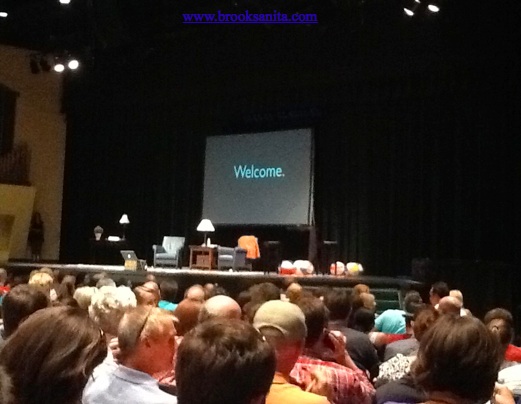
Writers as Speakers — Welcome Your Audience

Does terror of speaking in front of crowds threaten to paralyze your writing career?

Imagine a large stadium filled to capacity. The announcer introduces the main speaker. The audience claps and cheers. Adrenaline pulses in a flood through your veins. You approach the podium in slow-motion, while your legs beg to run away as fast as they can.

You arrive at the center of the stage, open the presentation slides on your electronic tablet, even as you pray you don’t make a fool of yourself. Your mouth opens, at the same time the heel of your hand brushes the edge of the tablet, knocking it on the ground. The clatter echoes across the hushed platform. Your fingers tremble as you lift the darkened screen. You scan the crowd in front of you; noticeable fidgeting causes a contagious rustle. You clear your throat, offer a half-smile, and scramble to remember what your notes said.

Once again, your lips part, but instead of a greeting, a guttural growl boomerangs through the microphone. 

Is this a nightmare for anyone but me?

These days, whether writing non-fiction or novels, authors need to work twice as hard as public speakers to market their books. 

But why do our minds threaten to sabotage us when we stand in front of smiling faces, in a sea of expectant people clamoring to hear the messages we’ve waited to share? Are we doomed to fail when panic replaces our passion? What goes on inside our brains?

Though I agree with most people who rank public speaking in their top five worst fears, there are tips I’ve learned to help reduce my anxiety.

1Study your material intently.

2Practice in front of a mirror.

3Read the Bible. This simple answer saved me in the past, when anxiety medication, panic inhibiting techniques, and other methods failed to help me move past fear. I discovered that immersing myself in God’s Word calmed my frazzled nerves.

4Follow sound advice. The Anxiety Coach offers practical instructions to settle emotions that threaten to keep you from spreading your message.

5Wear comfortable clothing. Function along with your fashion.

Water -- How Input Affects Output

6Get serious about laughter. Humor relaxes emotions, body, mind, and spirit. Watch a funny program immediately before leaving to speak. Read a riotous book or article. Listen to a comedic CD or download on your way to the presentation.

7. Thirty minutes before speaking, drink water to hydrate your vocal chords, brain cells, and emotional sensors. Water is a miracle drug. (Thirty minutes should allow your body time to shed waste, so you can visit a restroom before taking the stage.)

8. Prior to walking onto your platform, breathe in slowly through your nose, count to ten, and release slowly through your mouth. Repeat twice, so you follow the process a minimum of three times.

9. Prayer walk to the front of your audience.

10. Don’t make a big deal out of flubs. Remember, most audiences won’t recognize mistakes, so carry on, or make light of it. Besides, mess-ups make us more human to observers.

Speaking is part of the modern writing model, but no need to worry. You can overcome and share with confidence.

How do you take courage in the face of public speaking fears in order to promote your books?

Overcoming Fear to Market Your Book
Promote Through Speaking