WordServe News

Exciting things have been happening at WordServe Literary!

On the final post of each month you’ll find a list of Water Cooler contributors’ books releasing in the upcoming month along with a recap of WordServe client news from the current month.

New Releases

Sifted by Wayne Cordeiro (Zondervan). This was the lead book at the Exponential (church planting) conference in Orlando.

**********************************************************************************************************************************

You’ll be Sor-ree by Sid Phillips (Berkley Caliber). Sid was one of the men portrayed in the HBO series “The Pacific.”  He’s still alive and well and living near Mobile, AL. A very fine Southern Christian gentleman.

*******************************************************************************************************************************

Red Blood, Black Sand by Chuck Tatum (Berkley Caliber).  Chuck was another one of the Marines portrayed in “The Pacific”. He’s also still alive and living in Stockton, CA. Stephen Ambrose called this book (originally self-published in 1995) “Probably the best WWII memoir ever written.”  Chuck’s book served as part of the basis for the 10-Part HBO series.

**********************************************************************************************************************************

The Pursuit of Lucy Banning by Olivia Newport (Revell).

*******************************************************************************************************************************


Playing with Purpose: Baseball by Mike Yorkey (Barbour).

**********************************************************************************************************************************

Always the Designer, Never the Bride by Sandie Bricker (Abingdon).

*********************************************************************************************************************************

Toward the Sun Rising by Lynn Morris (Hendrickson) book #4 in the republished Cheney Duvall series.

**********************************************************************************************************************************

New WordServe Clients

James A. Hall was a successful businessman for many years before working as a vice president with Walk Thru the Bible Ministry. For 15 years, he led their Seminar Division and currently is the Executive Director of a 25-year-old national ministry, Saints Prison Ministry. Some Jungles Have No Giraffes is his exciting memoir that details his amazing and compelling life. From a childhood tarnished because his father was on the run from the law, through his boarding school experiences at a Catholic seminary, to his days as a wealthy businessman involved with the Mafia, and his time spent in prison, the author’s life story reads like fiction, but is true. The miraculous conclusion of this tale again proves that without God life is indeed a jungle. (Agent: Barbara Scott)

Kariss Lynch began her writing career in third grade when she created a story about a magical world for a class assignment. Since then, she has received a Bachelor of Arts in English with a specialization in creative writing from Texas Tech University. Kariss believes her readers should expect a journey. Readers can expect to see the beauty that God creates through broken lives and the adventure that comes when we follow the Lord. We serve a God of big dreams, daily adventure, and lasting hope. Making her home in Dallas, Texas, Kariss recently finished the Craftsman course through the Christian Writer’s Guild. She became a freelance writer and blogger for Demand Media Studios in January 2011. In March 2012, Kariss accepted the writer position in the Communications Ministry at First Baptist Dallas. She is very active with her church and family, is an avid Texas Tech fan, and enjoys photography and swimming in her spare time. (Agent: Sarah Freese)

New Contracts

Terry Brennan signed another contract with Kregel Publications for his next book The Brotherhood Conspiracy, a sequel to Sacred Cipher. Terry is in his 14th year of senior management for New York City nonprofits dealing with homelessness. Prior to his present focus with nonprofits, he had a 22-year career in journalism with the Pottstown (PA) Mercury, winning the Pulitzer Prize for editorial writing while he was editor. His first novel, The Sacred Cipher, was published in 2009. (Agent: Barbara Scott)

Rebecca DeMarino signed a three-book contract with Revell Books for her debut Blue Slate series. The first novel, A Love of Her Own, will be released in 2014, followed by Heather Flower and Pure Patience. A 2011 ACFW Genesis semi-finalist, Rebecca and her husband Tom live in the Pacific Northwest. When not writing, Rebecca enjoys reading, running, gardening, and trying to keep up with her eleven grandchildren. (Agent: Barbara Scott)

Steve Addison signed with IVP for What Jesus Started, a follow up book to his first release onMovements. Steve works with Church Resource Ministries in Austraila.(Agent: Greg Johnson)

Calvin Miller signed with Baker Books for The Vanishing Evangelical, a penetrating look back and forward on what has happened to the Church in the last 30 years, where it’s going, what good and what harm has been done, and what we can learn from it all.  This is the 61st book Greg has represented for Calvin in the last 18 years.  (Agent: Greg Johnson)

Joe Wheeler signed with Howard Books for The Civil War Stories of Abraham Lincoln, a follow up to his book: Abraham Lincoln: Man of Faith and Courage (also with Howard). One of America’s top-three story anthologizers, this is the 74th book Greg has represented for Joe, as well as his 64th short story collection. (Agent: Greg Johnson)

Lauren Scruggs signed with Tyndale Houe Publishers for Still Solo: A Plane Ride, a Horrific Accident and a Family’s Journey of Hope. The book tells the story of losing Lauren losing her hand, her left eye, and becoming scarred for life after a tragic airplane propeller accident in December 2011. It is written with collaborator Marcus Brotherton, and it will be published this November. Also signed was a second book to young girls on body image. (Agent: Greg Johnson)

Jonathan McKee signed with Youth Specialties/Zondervan for More 10-minute Youth Talks, a follow up to his previous book for youth pastors. (Agent: Greg Johnson)

Ken Gire signed with eChristian/Mission Books for Finding God in the Hunger Games, an insta-ebook and follow up trade book on the spiritual themes in the book series and the new movie. The ebook will come out in June!  (Agent: Greg Johnson)

What We’re Celebrating

The Christy Awards committee has announced that Dancing on Glass (B&H Publishing Group) written by WordServe Literary author Pamela Binnings Ewen is one of three finalists in the Contemporary Series, Sequels, and Novellas category. The winner will be announced at a dinner to be held at 7p.m. Monday, July 16, at the Rosen Centre Hotel in Orlando.

Amy Sorrells is the grand prize winner of the 2011 Women of Faith Writing Contest for Comfort and Salvation (now titled Canary Song). Amy is a wife, mother, registered nurse, and blogger, but most importantly, she is a woman of faith and a WordServe client. Recently, Amy received an offer for the manuscript from a well-known publisher. More to come later. (Agent: Barbara Scott)

Sarah Freese attended the Festival of Faith and Writing in Grand Rapids, Michigan, April 19-21. She met with several editors and potential future WordServe authors. Various current WordServe authors, including Patty Kirk, Anne Lang Bundy, Leslie Leyland Fields, and Margot Starbuck, were in attendance, and a few of them presented on panels and led forums. Leslie and Patty’s forum was so full that people sitting in desks and on the floor had to make more room for people to stand around the perimeter of the room! The picture below doesn’t even show the room at its fullest.

What can we help you celebrate?

Spring Fever and Social Media

It’s almost summer time, and focusing on social media is becoming especially difficult. I think it is Spring Fever. I have a little fever; actually, I am burning up, and it’s hard to focus on anything right now. So I admire you writers who are actually sitting down and getting ‘er done! In lieu of my spring-induced ADD, I want to talk about three elements that I am loving about the world of social media.

1. I recently had a Word Serve author ask me about Good Reads. Yes, another platform for you to market, represent yourself, and interact with people socially. ANOTHER SOCIAL NETWORKING SITE, REALLY? Yes. And I get it. As overwhelmed as you can be, it is more work and another learning curve, but I actually like Good Reads for those of us who are really “reading.” I find it to be an authentic community of readers.

Here are a few of my favorite things about Good Reads:

First, I love the quote system. I search quotes here ALL the time and add my favorites. It’s extensive, thematic, and easy to navigate.

Second, Good Reads gives authors a chance to be very interactive with their readers. Groups, book clubs, discussions, and great author profiles are available where authors can integrate their blogs, twitter, videos, and advertise upcoming events for free.

2. I am in love with the Facebook extension. (It’s a little geeky, but true.)  Socialbell is a browser add on for Facebook. Socialbell makes browsing the internet from Facebook so much easier. You can only use it if you have the following browsers: Chrome, Firefox, and Internet Explorer. I hear that Safari is coming soon.

Here is a picture of what it looks like on my computer screen. I am really enjoying this little plug in seeing that I spend a lot of my time on Facebook, and it enables me to post straight from the plug in to my Facebook pages as well. Go to their website and check out the video.

3. Facebook bought Instagram this past week, and they bought it for a cool billion dollars. Instagram is a very fun photo-sharing platform. People do use it to post their pictures. You can’t share anyone else’s photo’s like Pintrest yet, but you can have a ton of fun on it. You can share your Instagram photos on Twitter, Facebook, Foursquare, and Tumblr. Iphone users have had it for years, and this month they have opened it up for Android users to join in the fun. I am constantly looking for creative ways for people to promote their books.  Instagram offers filters to make your pictures look professional, retro, and just over all fun. If you haven’t started using it, this springtime is perfect to start and have fun sharing photos with your friends.

What are some creative ways that you have used new social media for marketing your book?

I Will Prevail! (And Other Things I Tell Myself in the Shower.)

One admonition I can’t seem to scrub from my brain is my mother’s bit about wearing the right underwear in case I’m in a car accident. Maybe your mother used the word, “clean,” when giving underwear life lessons, but mine specified “right.” Her reasoning was if I had on a pair of lacy deals or something even more scandalous, the attending physician in the ER might think I’m loose.

Yeah. That’s going to be a flash of thought for me, I suppose, when the doc is trying to volt me with paddles, and is tweezing shards of glass from my forehead. “Whoa, this chick might not live through the night, but, oh well. She’s got on frilly underwear, and you know what that makes her.”

Whenever I hear naysayer anthems in any walk of life, I have this strange tendency to contemplate the difference between the undies my mom wishes I’d wear, and the undies I do wear. (Yes, sorry, my brain works that way.)

One naysayer anthem I’ve heard relates directly to my newest gig in becoming a published author and venturing into the land of woe and book sales.

What’s said: “Don’t expect much because you won’t get much.”

What I hear: “Wear your granny panties.”                     

Well, you know what? I don’t want to wear my granny panties. And you know what else? I don’t care what I should expect. And I don’t care if an ER doctor thinks I’m loose, and I don’t care if people think I’m chasing unrealistic dreams.

(OK, I actually do care if an ER doctor thinks I’m loose, so don’t quote me on that. I got lost in the moment.)

One thing I do care about is what moves me. I need a juicy little nugget of hope, dangling just out of my hungry grasp. Yes, I know the odds are not in my favor of being a best-selling author. Yet, I still tell myself it’s a matter of when, not if, because anything short of that . . . well, if I didn’t have that particular hope to chase each day, then I’d be lying on the floor pressing a Life Alert button just to see if anyone comes.

I might have failure after failure, never even getting as far as putting one tiny finger on the first stair to success, but I’m sorry, I won’t stop striving and dreaming for more until I’m dead.

(Oh, and when it is my time to go, I hope whether or not the doctor resuscitates me isn’t predicated on my underwear choice.)

What moves you? What are your dreams? What kind of undies do you wear? (Kidding!)

Trying to Break In? Think Out of the Box!

Photo Credit: © Winterberg | Dreamstime.com

Trying to break into publishing can be daunting, to say the least. For me, it was something akin to scaling the wall of a fortified castle, surrounded by a mote filled with hungry crocodiles.

I tried to break in as a fiction writer for years, first with a young-adult novel, then with a suspense-thriller. Both were well-written and polished. Both received good reviews from published authors. And both had received wonderful, glowing rejection letters, complete with encouraging notes from editors.

“This is great writing. Sorry, it’s not for us.”

“We love this, but we’re stocked up on YA material for the next three years.”

“The entire publishing committee wants to encourage you to keep writing. We feel you have what it takes.”

The first few times you get notes such as these, it is indeed encouraging.

After you get about 30, you begin to wish someone would say, “Hey, pal, don’t quit your day job.”

By May of 2000, I’d been trying to scale the wall of Castle Publishing for six years and had little to show for my effort aside from a stack of rejections and a seriously-bruised ego. For all intents and purposes, I had given up on the idea of ever breaking through and winning that coveted publishing contract. This was especially disappointing, as I had recently resigned my position as a pastor in order to devote my time and attention to prison ministry.

I’d hoped to have a publishing contract in hand by that time because I planned to support my prison outreach by royalties from my books. (Yes, I know that was a pipe-dream, but that story is for another post.)

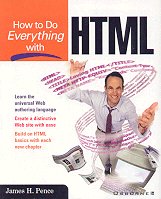
Now that I was officially unemployed, I had to turn my attention to generating some sort of income. My brother-in-law, who teaches computer languages, offered to help by asking me to develop a course in HTML (the language in which Web pages are written). He told me that if I developed the course, he could hire me to teach it. The idea sounded good to me, so I started to research HTML.

During my research I discovered two things. One, HTML was very easy to learn. And, two, most of the books out there were much harder to understand than they needed to be. They were written by “techies” who could communicate well to like-minded people. However, for readers who didn’t grasp the technical aspects of web authoring, these books might as well have been written in Chinese. The more I considered it, the more I saw a need for a book on web authoring written in easy-to-understand language.

I looked at the class outline that I’d just developed, and it looked remarkably like a book outline. I knew that it wouldn’t take much work to further craft it into a book proposal. Over the next few days I wrote a query letter for a book on HTML written “for non-techies by a non-techie.” I sent the letter out to thirteen computer-book publishers.

Out of the thirteen, I received two positive responses.

One was from Osborne/McGraw-Hill.

They liked the idea and asked if I would modify the book to fit a series called “How to Do Everything With…”

Writing a computer book was completely "out of the box" for this non-techie!

I agreed, and within a few months I had my first book contract.

I never intended to be a computer-book author. That wasn’t even on my radar. My plans were to be a novelist. But when I allowed myself to think out of the box and consider a different type of writing, the walls of Castle Publishing came crashing down.

If you’re frustrated with trying to break in to publishing, in what ways could you think “out of the box”?

Sergio: A Memoir from My Writing Life

My writing life continues to take me to places that I never dreamed possible. A few years ago, I decided to go back to college to pursue a degree in writing. And my academic journey gave me the opportunity to study a second language in another country.

In Spain, I learned more than just the language—I learned about their culture, their history, and the every day life of the people there. I also learned things about myself and human nature. Plus, this experience provided numerous stories to share, like this one about my young friend, Sergio.

One of my best language teachers proved to be a five-year-old boy named Sergio, the grandson of my hostess, Beni.

Sergio would sit with me every day at the kitchen table, after the others had finished their meals and retreated to watch television. He enjoyed pretending to be my teacher.

Child Teacher. As Sergio picked up each piece of fruit, one-by-one, from the ceramic bowl on the kitchen table, he would hold it up and wait for me to say the name of the fruit in Spanish. If I didn’t respond fast enough, he would look at me with his big brown eyes and teach me the appropriate word.

“Me-lo-co-tón,” Sergio said slowly, as he held up a peach and waited for me to repeat after him. And after I responded, he would flash his bright smile, clap his hands, and applaud, “¡Qué bien!” [Great!]

Then, Sergio would grab another piece of fruit and continue to quiz me, until he thought I had mastered each Spanish word. When he grabbed a banana, I would always laugh as I responded, “Ba-na-na.” [Sergio didn’t know we used some of the same words in English.]

I bought Sergio candy and toys to express my gratitude to him. One day, I gave him the mini-flashlight that I carried in my purse from home. As he ran to show his mother, he danced around the apartment snapping the light off and on.

Sergio reminded me of my own grandson, Miles, who was just a few years older. And Sergio helped me fend off being homesick, as I interacted with him.

Adult Student. In studying Spanish as an adult, I experienced both humiliation and judgment. My host family often seemed very impatient that I had not mastered their language. And since I was somewhat shy, the looks they exchanged when I tried to speak in their tongue embarrassed me. They would sigh heavily and roll their eyes. Then they would speak slowly with raised voices as they repeated phrases toward me.

I felt ignorant when I couldn’t find the words to express what I wanted to say. But Sergio always responded to me with patience and kindness. He helped me because he wanted to be with me, and we both enjoyed our time together.

Life-long Learner. I suppose I was too stubborn to give up on my goal of becoming bilingual during my studies in Spain, even with the difficulties I faced. I now appreciate the Hispanic population in my own community and the struggles they encounter in a country where most people do not understand their native language.

I discovered some surprises about myself in my efforts to learn another language. My husband, Dan, became more aware of my weaknesses than anyone. I’m sure he’ll never forget the night he walked into our family room at midnight and found me on our carpeted floor in a fetal position—crying because I had received a “B” in a conversational Spanish class.

I laugh when I think of that moment now. But at the time, I didn’t see the humor in the situation. Learning a new language proved to be one of the most humbling and difficult experiences of my life. But it gave me insight into teaching others to write, and I later became a writing instructor. In fact, I discovered that learning to write is much like learning a second language–but that’s another subject for a future post.

And in spite of the hardships and disappointments I encountered during my language school experience in Spain, my most memorable and effective teachable moments came with my young friend, Sergio.

Where has your writing journey taken you?

In the Wrong Place at the Right Time

This may not be the place to admit it, but I’m having an affair. We go on dates, doing things together that we love. Other times we pull down the shades, dim the lights, and cuddle up close. And–dare I admit–sometimes we whisper in agreement about our future.

Yes, I confess, I am having a torrid love affair with books. We were meant to be together. I believe in them; they believe in me. We’re inseparable.

The intimacy of this relationship explains the uncontrollable urge that surfaces each time I finish reading a great book, this impulse to write my own hope-filled book that leads women right to Jesus.

As a new writer, I used to scour the bookshelves coveting the author names on the spines. I traced my fingers across compelling covers and inhaled the new-book freshness as I dreamed of my very own name gracing the art. I envisioned countless days spent whittling my words and learning to be a master craftsman.

Later, as a career writer, I fell into a whole new world. Today’s publishing culture demanded I become an expert not only at writing, but marketing and social media as well. A bit disconcerting to a shy writer who simply wanted to write well.

How could I improve my craft if I had to concentrate on building my platform before I was ever published? How would I offer both a high-concept idea and a stop-you-in-your-tracks platform that agents and publishers couldn’t refuse?

It was time to reconsider. Instead of my name on a book spine, maybe, for now, my place was a magazine byline? While focused on writing books, I couldn’t discount that writing for magazines might help me reach my goal. I couldn’t ignore the platform-building opportunity that freelance writing offered.

While an average book may sell 5,000 copies, the readership of some magazines hits millions. Last month, I wrote a feature for Guideposts that offered me an audience of five million readers. My audience expanded as I cast my writing net a little deeper, a little wider. That article led to about 10,000 hits to my website within a very short period of time and connected me to some amazing new readers and relationships. Oh, and I sold books like crazy.

I didn’t start out with Guideposts, I started regionally. My first published print article was for a women’s magazine in my hometown—monthly circulation about 50,000. But from that article came a couple of joint ventures and writing assignments that led to later features in national and international magazines. Today, I have a healthy following of women with whom I am honored to share hope and inspiration on a regular basis.

Without taking time to go to where my readers were (to build my platform), I imagine my first royalty check would have come from a small base of hardcore fans (all relatives). Not only did writing for magazines allow me the chance to make new connections, but I also honed my craft while cushioning my bank account—not a bad deal overall.

Ready to get started? Here’s a helpful article I found online on how to break into the national magazines.

By the way, feed my curiosity. What book can you not live without?

Honoring the Writer’s Call

Remember the Call

As ambassadors of the written word, we’re called to awaken people to truth. Rubbing words together, we set the world on fire!

Above publishers and agents, God’s our number one boss. With pure, submitted hearts, we make it our mission to please him first.

Am I on the right track, Father? What do you want me to share today? These are the questions we ask.

We try not to judge and compare ourselves with other writers because we know God equips each of his instruments for different specific tasks.

When fearful, overwhelmed, and wondering why we chose this career/ministry path in the first place, we remember… God never calls us where his grace won’t sustain us.

So let’s not get tired of doing what is good. At just the right time we will reap a harvest of blessing if we don’t give up. Gal. 6:9

Persevere in the Call

When tempted to distraction by potentially good things like social media, movies, and chats, we’re privileged to consult our boss: “Please show me what to do and give me the strength to carry it through.”

When tempted to discouragement by trials, we understand they’re God’s method of making us stronger, more Christ-like, and more effective in our writing.

And we know that God causes everything to work together for the good of those who love God and are called according to his purpose for them. Rom. 8:28

Because we clearly know we have been called to write, we persevere when people judge us, and we remind ourselves it only matters what God thinks, and the Lord sees every heart. 1 Chron. 28:9

We persevere when our paychecks are sparse because we know God will supply all our needs from his glorious riches, which have been given to us in Christ Jesus. Phil. 4:19

We persevere when the road is rough and slow and we can’t see ahead because we know who leads us each step of the way. (Ps. 37:23)

Balance the Call

Balance starts with rest, and rest starts with prayer. Jesus walked a tight deadline, but rose before dawn to commune with his Father. He snuck away from the crowds to reconnect. Do we sneak away from our characters to bless the Word of words?

Jesus waited on His Father for wisdom and wants us to do the same; but it takes trust.  (James 1:5-6)  When it comes to trusting in the Lord with all our hearts, we often get it backwards, and lean on our own understanding first. Then, when things go awry, we cry “Help me!” and ask him to direct our path. He will, but we must first acknowledge him.  Prov. 3:5-7

Jesus only spent three years in ministry; however, his thirty preparation years were just as important because they defined and nurtured the Father/Son relationship, enabling him, in the right time, to turn the world upside down by submitting to His Father’s peculiar but brilliant plan of reaching the Jews first, then the Gentiles.

God writes a different plan for each one of us. He calls some of us to blog first, others to write books first, and still others to do both at the same time – in balance.

Whether we’re writing, speaking, networking or spending time with the family, God isn’t just interested in what he’s doing through us; He’s interested in what he’s doing in us.  He wants us to joyfully trust him so we can honor him with our calling.

“For I know the plans I have for you,” says the LORD. “They are plans for good and not for disaster, to give you a future and a hope.”  Jer. 29:11

Please talk to us about remembering, persevering, and balancing God’s call to write. We’d love to hear your stories, lessons, insights, and experiences.

And what is God reminding you about today?

Your Rights

Publishers are in the rights business, pure and simple. They are printers, sometimes marketers, hopefully good editors, but their business is charged with making money over the long haul. That means they want to control any and all rights to your book to license, sell, adapt, modify, translate…you get the picture. So what should an author know?

Every publishing house is different; that’s why an experienced agent is so essential. Some houses grasp onto a right like it’s their only child (bigger publishers, especially). They’re stubborn and unreasonable and hold all of the cards. Why? Money. They write the checks. If it’s a big check, that entitles the publisher to try to keep whatever they can. Unless an author is willing to walk away from that check, they have little leverage but to play the publisher’s game. Having said that, publishers also have a good amount of experience in selling these rights, and a big machinery to manage the process.

Primary rights that are typically non-negotiable include (and this includes the right to sell anything we grant them to anyone, anywhere, almost at any time):

  • North American (and sometimes World) English language print rights;
    • Any format, style, derivation
    • Book club
  • E-book rights (and enhanced ebook rights);
  • Large print and braille;

These primary rights are often granted because the publisher can ultimately make more money than an agent:

  • In the Christian market, foreign rights. In the general market, if the agent has good contacts overseas or good co-agents in bigger parts of the world (Europe, the Pacific Rim, etc.), there is more money to be made by the author in keeping these rights.
    • Unless the agent can negotiate a larger percentage for his author (60% to 75%). Publishers often have deeper means to keep squirrely foreign publishers accountable (due to doing lots of deals with one house).
    • Like most experienced agencies, our agency has some contacts with foreign editors, but not as many as we’d like.
    • Audio rights are sometimes non-negotiable, as publishers want to control what may compete with them out in the marketplace. But I’ve withheld audio in a few instances and sold these rights myself.
  • For Christian non-fiction especially, curriculum rights are sometimes granted to a publisher, sometimes not. Publishers are rarely putting curriculum packages together for churches, but if it’s a big book (read: big author), or has potential over the long haul to make a mark in retail, they’ll typically want to keep these rights for two or three years just in case it hits.
    • Sometimes reversion can happen after the first year if the author simply wants to produce and fund the creation of some sort of curriculum piece for his/her own sales.
    • Curriculum can also include non-dramatic video. This is even rarer, as it’s insanely expensive to produce.

Other rights:

  • Dramatic and film rights. Oddly, some Christian publishers want to hold onto 20% to 50% of these rights. What used to be automatically retained by the author is now being held onto by the publisher for up to two years, stubbornly by some houses. In New York, there is no question that dramatic rights are retained by the author, but some portions of CBA want a piece of the action. A few publishers, of course, have had some success getting producers to notice bestselling books and then getting them made into film. It’s rare, but it happens. And the money isn’t insignificant if something gets made (overall, anywhere from $50,000 to $250,000, if a book gets made into film).
    • Option Money:  Signing an option agreement to take a book to film (especially for Christian books), is common (5% to 10% of all novels published), but not lucrative. Anywhere from $500 for a one-year option (renewable at $1,000 or $2,000) to perhaps a high-end of $25,000. There are exceptions and lots of variety, depending on the entity optioning the rights. The “option” allows them to start raising money, hiring a script writer, getting a director, and attaching other talent, all with the hopes of presenting it to a studio for the green light of turning on the cameras. In 18 years as an agent, I’ve done a dozen options or so, with one finally being put into film. It’s not our core business, and the money is not large on 98% of the properties. WordServe works with an experienced Hollywood co-agent when a property is close to being optioned.
  • Calendars, magazines (1st and 2ndSerial rights), gift books, anthologies, quotations
    • Small money; typically publishers want to keep these rights.

Do you have any other questions about rights issues you’ve been wondering about?

Your Book: Impacting the Final Product

I recently had a conversation with an editor at a medium-sized publishing house. She shared a few horror stories of difficult authors she has worked with over the years. Authors with giant egos and immoveable demands. Authors who argued and insisted they knew what was best.

I was quite stunned to hear this. Then I got sad and then a little mad. Isn’t it presumptuous to think that an author knows more than an entire team of experts at a publishing house?

There will always be times when an author must take control of some of the details of their own books and career. But authors of faith ought to consider a bit more of consistent humility during the publishing process. Here are a few reasons why:

1. The publisher is taking a risk, spending a great deal of money, and they want the book to succeed as much as you. I read one agent’s stats. Of the 2,000 proposals he looked at, he selected 20. Of those 20 selected I’m guessing a publisher bought 10. Publishers pour thousands of dollars into your book, usually more than $20,000 when it’s all said and done. They assign teams to consider titles, covers, fonts, layout, book length, back cover copy, catalogue copy, marketing and ad copy, etc. Your book endures several types of edits. Those of you who are published know it takes at least a solid year to edit, design, print, market and distribute a book, and the publisher is betting on you with the realization that only 10 to 20 percent of books earn back their advance.

2. Editors understand how important your book is. I recently read these comments from an editor:

When an author submits a text to an editor, the author has handed over a sacred object, one that has been countless hours in the construction, and into which the author has poured immeasurable amounts of his or her mind, body, and spirit. The author and everything he or she has put into a text becomes vulnerable to the suggestions, revisions, and deletions of the astute and discriminating editor. The author must trust the editor to do his or her job forthrightly, honestly, and in full awareness of personal biases and areas of intellectual and creative weakness.…. Manuscript in hand, the editor holds an object as precious as a newborn baby, and the posture he or she assumes is that of midwife, responsible for the nurture and health of the ideas to which an author has given birth.

3.  Editors are eager to change the culture together with you. They are for you, not against you. David Zimmerman, editor for InterVarsity Press, shares, 

On a good day I’m a midwife, holding authors’ hands and breathing anxious breaths alongside them, helping them through the arduous and emotionally wrenching work of bringing their gift to publication. I get to be a witness to the evolution of great ideas, to be the sounding board of audacious thoughts, to be the student of great undiscovered teachers. I get to celebrate countless milestones with authors, from the news of their book’s acceptance for publication to the signing of their contract to the registration of their book with the Library of Congress and the Copyright Office, to the book’s first printing, first sale, first review, first reprint. I even get to dole out money to authors, demonstrating the real material value of the thoughts in their heads.

4. God loathes pride. If you are a good writer, and I’m guessing you are if you’ve caught the eye of agents and editors, your gift comes from God. God crafted you with the ability to put words side by side in a way that causes people to think, cry, and laugh. Your gift impacts the world. The only response to that gift is gratitude.

Praying for your agent, editors, design team, publishing house, and readers is a much more productive way to control the outcome of your book. Trust that they want the same result as you.

Humble yourselves before the Lord, and he will lift you up.

(James 4:10)

How has God asked you to demonstrate humility during the publishing process?


*When Throats are Parched: Writing (On Deadline) In the Land of Drought

Image

Years ago I crossed the Sahara desert the back of a truck. No GPS. No roads, no signs—we followed the train tracks. We did have a crude map with water holes marked. We’d get to the hole or the well—and it would be dry. We’d set out for the next one—and it was dry. Our water supply got lower every day and was closely rationed. At one point we were lost for three days. And we were on deadline—we had to get to Kenya before the rainy season started.

That’s what the writing life can feel like at times, yes? The stations of usual refreshment aren’t open; we’re getting drier and drier; the manuscript is withering. We’re plain out stuck. Here are some sources of “stuckness,” and suggestions to get you moving back to the watering holes!

Image

*You’re STUCK because you’ve been seduced by your own luscious language.

You’ve followed a trail of language, lured by its sound, rhythm, maybe even its profundity. Soon—you’re sunk. In love. In a trap.  No water. No trail, no way out.

*Get UNSTUCK  by leaving the page. Free yourself by taking your core idea (or character) off the page and walking it out in the world. Wrestle with its logic, its meaning, until you can articulate the concept clearly in new language and out loud. You’ll find it much easier to break your “engagement” with your sand trapped manuscript.

*You’re STUCK  because there’s dissonance between form and content.

Maybe you committed to a form or a genre or a particular structure too soon before fully exploring your content. (We do this when hurrying under deadlines!) When we externally impose an ill-fitting form upon our material, we’ll soon find ourselves and our manuscript immobilized.

*Get UNSTUCK  by returning to the exploration stage and really listening to the work itself, teasing out from its deepest levels the organic  form/genre/structure that best illuminates its meaning.

*You’re STUCK because of the limits of your genre.

Every genre is an attempt to discover and construct some form of knowledge. But every genre has limits. Narrative finds meaning through sequence, context, causality. By its very definition it reveals order—and potentially meaning—from the disorder of our lives. But sequence and causality don’t tell the whole story. Poetry relies heavily upon metaphor, imagery, the moment, sensation, but poetry may miss the truths that narrative can discover. Each needs the other at some point.

*Get UNSTUCK by changing genres (for a short time). We need to stay open to new truths as we write. If you’re stuck on the chapter in your memoir about your mother’s death, write a poem about the day she died. If your poem is stalled, try writing a short story or a vignette about something related that happened to you.  You will see, hear, and process memories in new ways when entering a new genre.

Let’s admit it—writing is an unnatural act. Sitting at your keyboard for hours on end every day is like crossing the desert. You have to find ways to rehydrate and rehumanize this most glorious of labors.  So I end with these final admonishments:

*Ask for an extension. Believe it or not, most writers do this at some point. There’s no shame in it. Your editor wants you to produce the best material possible. It’s not always possible, but getting a little more time can magically create a breakthrough.

*Go to bed early. Eat. Exercise. Drink yummy beverages. Be nice to yourself.

Image

(The end of my Sahara story. We made it out, but I never wrote about it—just a single poem. I was too parched to write.)

*A VERY condensed form of my presentation at the Calvin Festival of Faith and Writing April 20. More helpful details here.