Is Multi-Genre Writing Right For You?

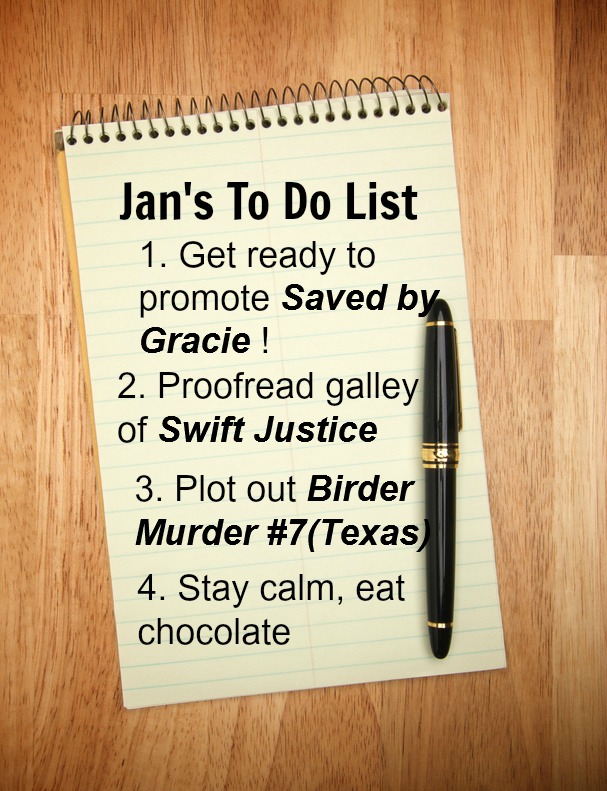
to do list (2)One of the ongoing debates in the writing world is about the wisdom of writing in more than one genre. The reality, I think, is that most writers want to write in several genres and, in fact, may be quite good at it. My first projects were poetry, and then I moved on to magazine articles. Think pieces followed, as did newspaper humor columns. My first published book was a small volume about practical Christian spirituality, but then I found my stride in humorous murder mysteries (#6 is out in September, with #7 currently taking shape on my laptop).

Last but not least, a few months ago, my first memoir was published.

So, for me, the big debate about writing in multiple genres is a no-brainer, because I already do.

My experience of doing so, however, has made me recast the debate from a writing perspective to a publishing perspective, and, as a writer who wants to build a career as a published author, I offer my own pluses and minuses of working in a multi-genre career.

  1. Minus: If you think it’s demanding to build one platform, try building several at once. I’m not saying it can’t be done, but in my experience, it can’t happen simultaneously (unless you have clones of yourself ready to go – and in that case, please drop me a note at my website, because I could use a couple of clones these days). To launch a book, you have to be single-minded to make the best of marketing opportunities: appearances, talks, media, book clubs, etc. Your new book/baby needs attention 24/7, and if you leave it for a day or two to nurse along another genre, you find yourself playing catch-up when you get back to the newborn. I’m guessing it’s like having twins-one person can’t really hold two babies equally well, so there’s always some juggling going on. Same thing with two genres: you end up feeling like you haven’t been as successful as you could have been with just one book. At the very least, you don’t sleep much, because you’re trying to do the work of two marketing departments in one body.
  2. Plus: Working in two genres is exhilarating! You get to double the people you meet and the interests you cultivate. Your horizons expand and life is so rich with new experiences, it takes your breath away. It’s wonderful to be a writer!
  3. Minus: Publishers are very hesitant to take a chance on you in a new genre. The more you’ve established yourself in one genre, the less a publisher wants to take the risk of launching you in a different direction. Publishing is a business, and publishers have to respect the bottom line.
  4. Plus: If your genres share something in common (mine share humor and a love of nature), your fans of one genre are more likely to follow you into new territory, giving you a base readership on which to build and a headstart on creating a new platform.

Have you had any experience in multi-genre writing? Any insights to share?

Note to My Younger Self, On Writing

file6681269982727Dear Dena,

Congrats! I know you’ve written two entire book manuscripts and had some poems published. That’s a big accomplishment, especially for a teenager.

It is a tough one, though, this craft you’ve chosen (or, more accurately, the craft that chose you). I want to give you some advice, since at age 44, I’m a little lot older and—hopefully— wiser than you are.

First, drop the attitude. You are not God’s gift to writing. When your mom suggested that you put your current age on the book manuscripts you were submitting to publishers, you said, “No. I want to be known for the quality of my work, not get attention because of my age.” Sheesh.

Girl, you are taking yourself WAY too seriously. After all, you’re not building the Sistene Chapel. Currently, you write teen romance novels. Just look at the titles of your two books: “Someday, Somewhere” and “Magical Daydreams.” Need I say more?

Yes, you have some talent. But you need to be open to all sorts of editing/coaching if you’re serious about becoming a professional writer. Being humble and teachable will take you further than talent alone.

Second, continue submitting to magazines. Many of them have a much bigger circulation than you realize. Today’s popular magazines, which are mostly read on a crazy/wonderful thing called the Internet, have tens of millions of readers from all over the world! Guideposts, which your parents receive, has hundreds of thousands of faithful subscribers. While you dream of writing books, and that’s a worthy goal, your most powerful legacy might happen when a reader picks up a magazine and finds hope at just the right moment.

Third, keep journaling. The diaries you’re keeping will provide endless sources of ideas in the future. (They’ll also provide your future husband with hours of enjoyment at your expense, but that’s beside the point.) Write honestly about your heartaches and joys. Journal about what you eat and drink, and try to capture in words specific sounds, smells, and tastes. Jot down story ideas, snippets of dialogue, and funny character names. Never forget that everything, even especially the lessons learned in life’s darkest moments, is material.

Fourth, find a community of like-minded artists. The drive to write is both a gift and a burden. At times, your path will be strewn with obstacles, rejections, and discouragement. You’ll need people who “get” you. And over the years, in many different ways, God will bring creative soulmates into your life.Being-wellknown-here

Trust me on this: treasure and maintain those friendships. After more than two decades as a writer, I’ve had six books and hundreds of articles published. Some of the journey has been joyful; other parts have been excruciatingly difficult. But by far, the best part has been the relationships I’ve built with my fellow writers. They have enriched my life far more than any acceptance, contract, or award.

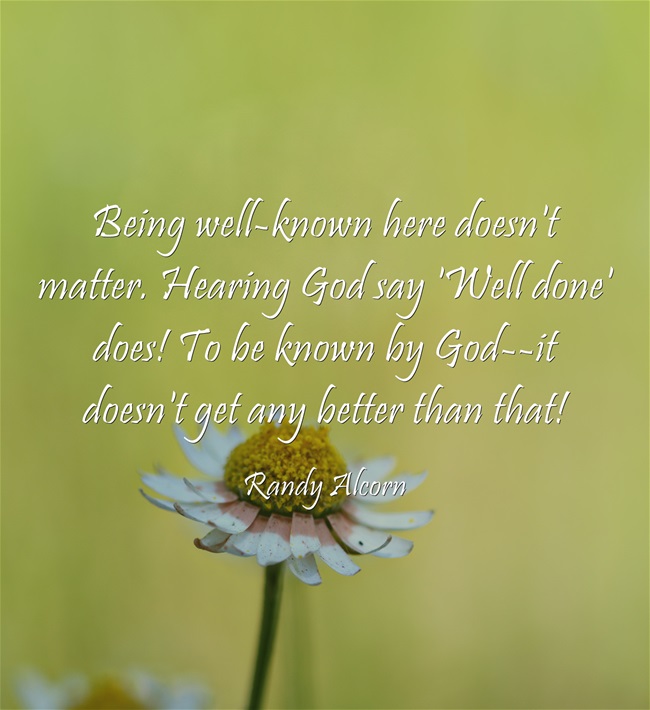
Above all else, keep listening to God’s voice. Never let other people’s voices (especially those of your critics) drown out His approval and love. He gave you the talent and desire to write, and He will be faithful to give you opportunities to hone and use your gift. As Randy Alcorn says, “Being well-known here doesn’t matter. Hearing God say ‘Well done’ does! To be known by God–it doesn’t get any better than that!”

Much love,

Me

5 Things the Theater Taught Me About Writing

OLYMPUS DIGITAL CAMERAThe smell of popcorn takes me back…backstage, that is. From 1998 to 2007, my husband and I, along with several other talented individuals, performed thousands of shows to enthusiastic crowds in two small-town Texas theaters. The experience taught me enduring lessons about creativity, professionalism, and making a living through the arts. These tenets apply to your writing life and other creative endeavors, as well. Here are five things the theater taught me about writing, in no particular order:

1. Word of mouth is the best publicity

Our audiences, though small, were passionate. We provided quality entertainment and our most ardent supporters talked about us…a lot. They brought groups, gave their friends tickets, and sometimes drove hours to see us. Though we bought print ads, paid a few publicists, and had a large email newsletter, the theater’s best advertisement was—without a doubt—word of mouth. 

It’s the same with promoting your writing. Today’s readers are consumers, just as our season ticket holders were. They long for quality and consistency. They’re busy, and they need a reason to keep reading past the first few lines. And when they are delighted by what they’ve read? They’re the most loyal, vocal folks around. Because we live in an instant-communication society, bad word-of-mouth spreads fast. Make sure your writing product is stellar, and great publicity will follow.

2. Give the audience what they want

One of the owners of the first theater in which I performed often said, “Give ‘em hamburgers!” He meant that we shouldn’t mess with success. If tickets sold quickly for a 1950s music revue, we wrote another similar show. Of course, we also experimented and pushed boundaries (otherwise, all of us would have grown bored). However, we changed our product in small increments. We also created special experiences—behind-the-scenes tours, holiday packages, giveaways—for avid supporters. Cast members even called our VIPs (those folks who came to the theater over and over) on their birthdays and anniversaries, which the VIPs greatly appreciated.

In your writing, think about creating a memorable experience for the reader. How can you provide extra value (giveaways, incentives, free resources) in a professional, winsome file3691295046962manner? In what ways could you creatively and tangibly thank those who willingly support you and talk about your books?

3. Leave your ego at home

Most of the performers I worked with over the years have been gracious, humble, and diligent. A few, however, turned me off with their arrogance, over-the-top demands, or lack of discretion. The most successful artists, long term, are those who go out of their way to thank people and who treat the sound technician as well as the venue’s owner. Those are the performers who are offered more opportunities.

Ask yourself: am I approachable, warm, and thankful for the opportunities life has given me? Or I am on a mission to impress everyone I meet, in order to “build my brand”?

4. There are no small parts, only small actors

So said Constantin Stanislavski. When you perform a small role with professionalism and excellence, the people in charge notice–and they’ll eventually give you more responsibility.

The same goes for becoming a better writer. If an editor asks for a 400-word piece, I’ve learned to take it seriously and do my best work. In this age of instant access, anyone can read your work at any time, from anywhere. Who knows what small beginnings might lead to larger opportunities?

And, finally, in related wisdom…

5. Know when to stop

On stage and in writing, creatives need to develop an important skill: how to bring a something to a close. In the theater, we say that last line, spin on our heels, and exit, stage left. In writing, we find the right moment, the right phrase, the right word, and that’s it. The end.

This post is a reprint from Tweetspeak Poetry.

When Your Muse Takes a Vacation

wheeled-bags-143413_640It’s that time of year to start reserving your campsite or cabin or airline seats. Yay for summer vacation! But who’s got time for that?

Your week is slammed—chock full of appointments and meetings and paperwork that you don’t want to fill out in the first place. And, dutiful writer that you are, you realize you must make time amidst the chaos to write or it’s not going to happen. So, you whip out a crowbar and pry open a block of precious hours to work on your bestseller. It’s hopeful. It’s a handhold on your rockslide of a schedule and you’re looking forward to it.

Fast forward. The blessed time has arrived for you to lose yourself in the muse and surge ahead in your WIP. Java in one hand, laptop in the other, you cozy up in your favorite chair, ready to write and—

Apparently your muse didn’t get the memo. Your mind is blank and you are exhausted. Panic sets in. This is your only chance to write for the week and you don’t want to blow it. So you sit there with a crazed look on your face, whimpering.

Yeah. I hear you. I’ve been there. Frequently. Take a deep breath and read on because I’ve got a few tricks in my writerly bag that often are helpful.

470077_13483801Say What?

Close your eyes for a moment and listen to your characters. Just listen. Then open your eyes and write down what they’re saying. That’s right…I’m giving you permission to simply write dialogue. Don’t worry about attributes. You can go back and do that later. Simply start typing in a conversation between two of your characters (any two) and something magical will happen. You’ll get lost in the dialogue and pretty soon your word count will sky rocket.

Show & Tell

Open up to your collection of pictures that inspire your particular story. And if you don’t have any, then use this time to get some. What am I talking about? Well, I now keep pictures of each of my stories on Pinterest (here is an example). You don’t have to use that site, but you can look at my board and it will give you an idea of what I’m talking about. Pre-Pinterest days I simply opened a Word file and kept them there. Pre-laptop days I cut out pictures and tossed them into a file folder. Sometimes all it takes to get you writing is to physically look into your hero or heroine’s eyes.

1427476_92609932Slash & Burn

Go back to a previous chapter and edit. Even if your muse doesn’t happen to show up during that entire block of time, at least you’ll be making some kind of headway on your WIP and you’ll feel a lot better about it.

Mind Game

Release the pressure by telling yourself it’s quality not quantity. Focus on writing a single paragraph of description, either describing a character, a setting, an object…whatever. Make it a game by throwing out convention and using prose that’s crazy and you’ll find that one of two things will happen. It will either spur you into a creative new bent for the scene and you’ll move on in your story, or you’ll wonder what kind of drugs you’re on and snap out of it.

1439836_95143378Chocolate

Honestly, is there any situation that chocolate doesn’t make better? Go for the biggest brownie in the batch and see if that doesn’t put you in a better frame of mind

There you have it. Try one. Try all. Or go ahead and share with us other surefire ways you’ve tried to plead with your muse to pack up the suntan lotion and get home.

Five Essentials of Character Building

No matter the genre, every story has characters; otherwise you’d be writing a phone directory. Hold on. Bad analogy. I know plenty of characters in a phone book, and who in the wide, wide world of sports uses a phone book anymore anyway?

1262267_47588357
Creating a memorable character doesn’t have to be daunting!

As I was saying, sans phone books, characters are an essential ingredient in a story recipe. There are lots of tricks to jazz up a character to make him memorable, but EVERY character needs some basic elements right from the get-go.

#1. FEAR

What makes your character scream like a little girl? Centipedes? The IRS? The threat of an alien abduction and subsequent probe . . . wait a minute . . . I’m scaring myself. And that, my friends, is the point. Everyone is afraid of something, fictional or not. Identify what terrifies your character so that you can use that fear to ramp up the tension.

#2. STRENGTH

I’m not talking six-pack abs here, though in the case of your hero, that’s never a bad idea. What sweet skills does your character possess? Is he a crazy freak with nunchucks? Can she hit a raccoon in the eyeball from fifty yards away with a slingshot? Maybe this character has x-ray vision and can see into people’s souls. Whatever. Give them something to work with. Even Charlie Brown excelled with his spirit of compassion.

#3. FLAWS

Perfect characters make readers want to punch them in the head. Nobody is flawless, so make sure your character isn’t either, even your super stud that swoops in to save the day and the damsel in distress all with one arm tied behind his back. This can be something as small as an inability to balance a checkbook, or feeding a gambling habit using stolen money copped from nuns. It’s not mean to give your character a flaw. It’s a necessity.

#4. A SECRET

Psst. Hey buddy. Come over here and I’ll whisper you some covert information because have I got something juicy to tell you! Are you leaning toward the screen? That’s because you want to know what I’ve got hidden. Secrets are like big, juicy nightcrawlers wriggling on a hook, irresistible to the reader fish. Characters with secrets reel a reader in.

#5. MOTIVATION

Everybody wants something. A brand-spanking-new Tesla. A mutton lettuce tomato sandwich. The stupid hangnail on your thumb to go away. Your character wants something as well. After you identify what it is, then dig a little deeper and find out why they want it. What drives them to go after their desire? That is motivation. I’m not saying you have to spell this out to a reader with a ton of backstory, but it’s important for you as a writer to know because it will show up in their mannerisms and even in the way they speak to others. Motivation manifests in attitude. What kind of aura do you want your character to portray?

These are the building blocks of creating a memorable character, someone who will stick with a reader long after they’ve read the last page of your story. What character haunts your head from one of your favorite authors? Chances are that the author used each one of these elements in his/her creation.

January Kick in the Writerly Pants

martial-arts-225397_640It’s that slumpy time of year. The holidays are over. Resolutions have hit the wall like a crash-test dummy on steroids. It’s Mars-cold outside and really…who’s got time to write when you’re working every conceivable hour to pay off the mongo credit card bill that’ll hit your mailbox at the end of the month?

Now that we’ve got all the whining out of the way, it’s time to buck up, little writing mongrels. Park your rear in a chair, stick your shnoz on the writerly grindstone, and get down to business by using a few of the following tips.

5 AWESOME WAYS TO CRANK OUT MORE WORDS PER DAY

#1. Kick your internal editor to the curb.

Newsflash: in order to up your daily word count, you have to actually write the words. If you muss and fuss over each one, you’ll end up with a total of about twenty-five words by the time the sun sets. At that rate, it will take you a bajillion years to finish your manuscript. So whip out some duct tape, slap it on your internal editor’s mouth, and pound away at the keyboard until your fingers are stubby little nubs. You can—and will—edit those words later.

#2. Pull up your pants.

At heart, I am a seat-of-the-pants writer. I don’t like to know what’s coming because hey, writing should be as much fun as reading, right? Nope. Not if you want to succeed at finishing a novel in a timely manner. If you come to your WIP without a clue of what you’re going to write, you will spend time thinking of what to write. Savvy? Map out your story. Write a general outline. And always make sure to end your writing time with a sentence or two of how you will pick up the plot when you return to it the next day.

#3. Put first things first.

Write in the morning, whether you’re a night owl or not. Psychologically, it’s a mental game of beat the clock. In the morning, you’ve got hours and hours ahead of you. If you wait until late at night, you’re more likely to nod off and give in to the siren call of Pillowland. Starting out your day by writing means you get to pass Go and collect $200.

#4. Write all day.

Before you start the tomato throwing and Hey-Princess-I-Have-A-Real-Job snarkiness, hear me. I understand. Life is all up in my business as well. But that doesn’t mean you can’t snatch and grab snippets of time throughout the day. Pound out a few words during your lunch break. Traffic jams sucking up minutes? Voice note a plot idea on your phone. Waiting for an appointment? Jot down a character trait you’ve been meaning to add in.

#5. Be a track star.

Mapping out a schedule sounds like a whopping nerd of a plan, but dude, it works, kind of like a food journal keeps you on track for a diet. Shoehorn in writing time on every day of your calendar for the next month and you’ll feel like a legit writer. Setting a goal on paper (or cyberly via keyboard) will keep you accountable.

There you have it. Tools for your writerly workbox. Which one will you put into practice today?

You Still Haven’t Fill-in-the-Blank?

1327383_64930133In case you haven’t noticed, it’s that holiday time of year. You know the routine. Parties and calories galore. Crowds and credit cards smoking from overuse. Getting together with relatives you haven’t seen for an entire year.

And—worst of all—having to answer the inevitable, “How’s your writing going?”

Oh, on the surface, it’s a harmless enough question. Much less in-your-face than a glitzy-gaudy Christmas sweater gone wrong. Don’t misunderstand, either. I’m not dissing the genuine interest that others hold in regards to the writing journey. In fact, the question shows care and concern from loved ones.

Still, why in the world do those four simple words, “How’s your writing going?” always drop me to my knees?

Because this question is like a bag of potato chips. You can’t have just one, folks. It’s the follow-up questions that sucker punch a writer into a drooling idiot . . .

“You still haven’t finished that book?”

“You still haven’t been published?”

“You still haven’t gotten an agent?”

“You still haven’t heard from Publisher X?”

“You still haven’t made it to the NY Times Bestseller list?”

The definition of insanity, according to Albert Einstein, is doing the same thing over and over again yet expecting different results. This year, stop the madness. You know those questions are coming, so writers, let’s be proactive. How? Plan ahead.

Share an interesting bit of research you’ve uncovered.

An engaging tidbit of information oftentimes turns the conversation in a whole new direction. And who knows…you just may have found someone who can add to your knowledge base on a particular subject.

Prepare a fun and snappy comeback.

You don’t have to feel defeated because you “still haven’t.” Lighten up the situation with a quippy reply. Don’t just grin and bear it. Really yuk it up.

Flip it.

No, not your finger. Flip the question back to the questioner. Be honest and admit you haven’t whatever-they-asked, then ask them if they’ve accomplished one of their goals yet. Only use this tactic, however, if you really care. Otherwise, you’re going to come off as a sour grapes connoisseur.

Remember, ‘tis the season to be jolly, not crabby. Instead of cringing in the corner at the next holiday gathering, go out there and have fun!

Puppies, Unicorns and Dolphin-Shaped Balloons

notes-md

Have you heard of the term bait-and-switch? Yep. This is one of them, and for good cause. If the title had read “3 Reasons to Outline,” would you seriously have stayed tuned? Not only is the topic of outlining boring, it often causes big hivey welts to break out on some people. So if you need to slug back a few gulps of Benadryl, go for it, and let’s move forward with…

3 REASONS TO OUTLINE

1. To keep from crashing head first into the lack of confidence wall.

Yes, you can write an entire novel without drafting an outline, but the chances of losing steam and curling into the fetal position about midway through are pretty high. What you thought was a plot screeches to a halt. Characters wander around like zombies on steroids. Your narrative is a flaming train wreck of twisted words. Reaching this state of mind has a way of sucking all the confidence marrow from your bones. This is where an outline comes in handy. Think of it as a safety net and/or anti-zombie mega-gun. When you hit midway in your story, you can reach out and grab the outline rope to pull yourself up to the grand summit of a finale.

2. So you know where you’re going.

I’m not a huge map fan. I can’t fold the dang things. I know. I know. There’s this great new invention called MapQuest. Yeah. That’d be great if I had a smart phone—which I don’t. Even so, there have been a few family vacations where I’ve been awfully thankful for a map. That’s what your outline is. Writing a story is a lot like going on a road trip. Sure you can throw your bags in the car and hope for the best, but what happens when you hit construction? Or worse…road closed? That’s when a map is your best friend. Same thing with a meandering story. An outline will keep you on track to end up where you wanted to go.

3. It works out the kinks.

Don’t get me wrong. Writing an outline is not a magic pill that takes you to happy writer land (but if you could market that, you’d make scads of money.) Planning out the major scenes ahead of time, thinking through all the what-if-that-happens scenarios, straightens out your plot so you’ll be less likely to have to rewrite unnecessary chapters.

Convinced yet that outlining is the greatest thing ever? I wouldn’t be, either. Outlining sounds about as much fun as scrubbing the toilet—outlining as in Roman Numerals and sub-points and all that analytical falderal. I say it’s time to start thinking outside that no-fun box and reinvent the outline.

Newsflash: there’s no law that says you have to write a text-on-screen outline.

Maybe you’re a Pinterest type of person who creates story boards. That counts. Perhaps you love the smell of dry erase markers and get off on mind mapping a tale on a large whiteboard. Shoot, I even know some writers who adore 3M sticky notes and plan out a novel by decorating a wall with their scenes. Go ahead and get creative. That’s what fiction is about, folks.

One parting thought to shoot down the scare factor of outlining. You have my permission to outline only chunks at a time. If scribbling down the entire story totally freaks you out, just do the first third, then take a break and write the first chapter. Before you end the first third, however, you should plan the next third. Savvy?

Outlining does not have to steal the joy from your writing. Turn it around to enhance the joy of your writing…and keep from having a nervous breakdown halfway through.

What about you? Are you fans of the outline or more pantsers types?

Writing Life Lessons

photoNo matter what stage I’m at in the writing journey, whether it’s researching, plotting, writing, or editing, I continue to learn. Currently, I’m in my last round of edits for my debut novel, Shaken. Man, has it been humbling. I don’t claim to have all the answers to this writing journey, but here are a few tips I’ve learned from trial and error. Like my novels, I’m always a work in progress.
Paint a scene

This seems like a no-brainer, right? I thought it was, too. Except sometimes I don’t write all that is in my head. Thank goodness for an editor who reads the story and asks me to fill in the holes. Use the senses. Again, you would think this is obvious, but too often we forget. In my second book, I open with a beach scene. Can my reader smell the smoke from the bonfire, taste the salt in the air, feel the whip of the sea breeze, hear the lap of the waves, see the fireworks exploding? If not, I need to keep crafting.

Make connections

Link scenes, events, and characters. As my granddad told my brother when he came home from college late one night, “Account for yourself!” Make sure all your elements are accounted for, and again, not just in your head. If a character just spoke yet the scene ends and they are nowhere to be found, make sure there is a clue to the reader of where they went and when they exited the conversation. Again, these should be obvious, but sometimes when I focus on the story line at large, I forget these important little details that further immerse the reader in the story.

Books are not movies

I tend to see my book playing out like one of Nicholas Spark’s movies – sweeping, southern, and characters that tug at your heart. Except, books are not movies. What a viewer can take in in a few seconds of a new scene takes a lot longer to paint in a book. The best movies come from books that paint vivid scenes. Think the party scenes in Gatsby where Fitzgerald describes the house and guests in great detail. If you don’t know what I’m talking about, stop reading this right now and at least read those scenes.

Kill your “darlings”

This is a lesson one my college professors shared with me, and regardless of the time passage, it doesn’t get easier. First, let’s define “darlings.” It is any piece of your story that you are attached to that does not ultimately propel the story forward. You may think a scene is epic, but will your readers care? Does it demonstrate an irreplaceable character quality or scene that is essential to your reader’s knowledge of the story line? Is your attachment greater than the reader’s? If yes, then don’t be afraid to kill that “darling.” Your story will be better for it. Trust me, I know it’s painful, but strike with your red pen and make the page bleed.

You’ll never be completely satisfied

photo copyStop looking at the blinking cursor. Save and send. Your story will never be perfect. If you are waiting for that, choose a different career. I emailed my mentor a couple months ago and told her I thought my story sucked and I wanted to start from scratch. She laughed (I could sense it over email), and told me that it was great for where I’m at now. The next novel will be better than the first, and the third better than the second. If you know you have done all you can do right now, then allow yourself to be satisfied with the results and send that sucker. I still find mistakes in my short stories from college, and I couldn’t count how many times I have edited those pages. But I’ve also increased in my ability and my knowledge since college. I’ll focus on doing my best now and realize that I’m always growing.

What writing tips have you picked up along the way?

Mandatory Reading

readingI’m often surprised when I hear a writer say they’re too busy to read. Really?

Is a doctor too busy to bone up on emerging diseases?

A network administrator too over-scheduled to learn the latest technology?

The teenager down the street too booked to check out a new video game?

Face it. We all wish there were 32 hours in a day to accomplish everything. Newsflash: that’s not happening. Those who are too busy writing to read just might regret it one day. It’s kind of like living on a diet of junk food. Works for now. Tastes great. But eventually your body is going to crash…and so will your writing.

There’s a bajillion reasons why reading sharpens writing, but here are the top 3:

#1. Reading hones your craft.

Seeing how others structure their sentences, weave their plot lines, or develop characters presents a model (an obviously winning one since you’re reading a published book). Read and study the big name authors who’ve mastered the craft of ordering words, then follow their example.

#2. Reading outside your chosen genre stretches your writing capabilities.

I don’t write young adult, but I read it because of its snappy dialogue. I don’t write horror, but sometimes I pick up a tastefully done creeper because of its shock-and-awe factor. I don’t write epic sagas, but sometimes I’ll page through one to fill up my beautiful prose tank. Then I can use all those elements in my historical fiction to make it a more full-bodied manuscript.

#3. Reading puts your mindset into a different world, allowing you to see your created writerly world with fresh eyes when you come back to it.

Sometimes when you’re stuck on a particular scene, it helps to walk away from it for a time and focus on something else—something like another well crafted story.

Now that you’re hopefully feeling the need to race over to your local library, what books should you invest your time into?

Big Sellers

This one is a no brainer. There’s a reason these books fly off the shelves. Pick one up and figure out why.

Classic Tales

Granted, the language in many of these can be archaic, but they’re still worth the effort. If you can dissect a classic to understand what makes the connection to a reader’s heart, then you can mimick that in your own work.

Bargain Bin Books

These are the novels nobody buys. The characters are milquetoast. The plot is flatter than the tire on my ’91 Honda. And the writing, well…let’s just say it’s marginal. So why in the world would I recommend you read one of these losers? Because even bad writing can teach you good technique simply by presenting the inverse. Besides which, it will spur on your I-can-do-better-than-that attitude.

Outside Your Box Novels

Don’t get me wrong. I’m not dissing the concept of keeping yourself well read in your chosen genre. In fact, you should be. However, you will grow as a writer if you subject yourself to other styles and more variety.

Barring the occasional looming deadline or real life catastrophe, writers should be readers. But don’t just take my word for it…

“No matter how busy you may think you are, you must find time for reading, or surrender yourself to self-chosen ignorance.”

~ Confucius 

So…what book are you currently reading?