You’ve Got “Connections”

It’s a great privilege to connect with the world through our words and a greater privilege to connect with the Word about our worlds.

Connect with God about our writing

“God gave you this dream,” my pastor told me.  “You need to give it back to Him in prayer because He’s the only one who can make it count for eternity.”

One of my friends posted this on Facebook:  “I struggled with my writing for three hours, but after praying, I couldn’t stop the flow.  Why did I wait so long?”

When we’re not intentional about prayer, it falls by the wayside like everything else we’re not intentional about.

God wants to be our writing partner.  He says, “Let me have it!”

  • Lord, give me wisdom and direction today.
  • Inspire me and keep me focused.
  • Help me to persevere for your glory. 

“Commit everything you do to the LORD.  Trust him, and he will help you. ” Psalm 37:5

Connect with “the connected”

“You need prayer partners,” a well-known Christian author told me.  “Trustworthy, faith-filled people who will intercede on your behalf before God.”

Because we’re missionaries of words, the enemy stops at nothing to hinder us.  We need to call on our allies.

I took my friend’s advice and prayed for a little army of intercessors I could add to my email prayer list.  They encourage me to keep going, and I encourage them that they’re a key part of my ministry’s eternal reward.

“The man who plants and the man who waters have one purpose, and each will be rewarded according to his own labor.” 1 Corinthians 3:8

Connect with God about our readers

If we’re missionaries, our readers are the mission field.

I wrote the poems in A Friend in the Storm, with only one reader in mind, my friend Chantale who was dying of cancer.  I didn’t know my audience would grow from one to hundreds when she asked me to read them at her funeral.  I didn’t know my audience would grow from hundreds to thousands when Zondervan published them in a gift book.  I simply wanted to be a faithful friend.

“Whoever can be trusted with very little can also be trusted with much.”  Luke 16:10

Here’s how I pray for my readers:

  • Father, draw the right people to my book today.
  • Anoint my words to jump off the page into their hearts.
  • Please bring Holy Spirit peace and transformation.

Connect with God about your agent

If we’re going to pray about our God-given gift, we’re going to pray for our agents because they’re a big part of the gift!  Just as they represent us before editors, we’re privileged to represent them before the Father.

  • Lord, may she stay close to you, in the Word and in prayer.
  • Please help her be balanced and manage her time wisely.
  • Give her favor, Father.  Please open all the right doors for her today.

Connect with God about other writers

“The harvest is plentiful, but the workers are few.  Ask the Lord of the harvest, therefore, to send out workers into his harvest field.” Luke 10:2

We need to pray for other writers the way we would want them to pray for us.

Here are three great groups to remember in prayer:

  • Writers that feed us
  • Writers in our immediate circles
  • Writers we DO NOT want to pray for

Who are we currently reading?  Karen KingsburyMax LucadoKathi Macias?  We need to ask the Lord to continually inspire and bless them.

If we’re a part of a writer’s group or literary agency like WordServe that shares prayer requests, we have a community opportunity to practice true, selfless love.

Are we envious or jealous?  We need to pray!  God even calls us to pray for those writers who wronged us.  It happens.  And prayer changes us ever as much as it changes them!

“The prayer of a righteous person is powerful and effective.” James 5:16

I’m wondering, dear friends, what is your experience with the power of prayer?

WordServe News Update and New Releases

Exciting things have been happening at WordServe Literary!

On the final post of each month you’ll find a list of Water Cooler contributors’ books releasing in the upcoming month along with a recap of WordServe client news from the current month.

January New Releases

Shaped by the Cross:

Meditations on the Suffering of Jesus

by Ken Gire

IVP Books

Non Fiction/Christian Living/Easter

That’s My Girl

How a Father’s Love Protects and Empowers His Daughter

by Rick Johnson*

Non-fiction: Parenting

Revell Publishing

Shadow of the Mountain

(Cheney Duvall, M.D. #2)

by Lynn Morris

Hendrickson Publishers

Historical Fiction

A City Not Forsaken

(Cheney Duvall, M.D. #3)

by Lynn Morris

Hendrickson Publishers

Historical Fiction


Small Things with Great Love:

Adventures in Loving Your Neighbor

by Margot Starbuck

IVP Books

Non-Fiction/Christian Living

The Redemption (reprint)

(The Legacy of the Kings Pirates)

by Marylu Tyndall

Mission Books (a division of eChristian.com)

Historical Fiction

The Reliance (reprint)

(The Legacy of the Kings Pirates)

by Marylu Tyndall

Mission Books (a division of eChristian.com)

Historical Fiction

The Restitution (reprint)

(The Legacy of the Kings Pirates)

by Marylu Tyndall

Mission Books (a division of eChristian.com)

Historical Fiction

• • •

Agent News

Sorry to see Rachelle Gardner go, but wish her very well in all of her new endeavors. God’s best to Rachelle and all of the clients she’s taking with her. Serve God well…and keep putting out great books! ~ Greg

• • •

Bestseller News

New York Times Bestseller List for December 25, 2011

Rebecca Alonzo The Devil in Pew 7 took the #6 spot on the New York Times E-book Nonfiction Bestseller List for December 25, 2011.

After being on Dr. Phil to meet with the man who killed her mother 33 years ago, and having Dr. Phil hold the book up and say glowing things about it, this stirring story of forgiveness started to move a few copies.” ~ Greg

ECPA January 2012 List

Erica Vetsch*A Log Cabin Christmas, a nine-author novella collection that includes Erica’s story, “Christmas Service,” hit #4 on the ECPA (Evangelical Christian Publishers Association) Fiction Bestsellers list, #13 on the Multi-channel Bestsellers List, and #23 on the Top 50 Bestsellers List.

CBA Fiction Bestseller List for January 2012

Erica Vetsch*A Log Cabin Christmas, a nine-author novella collection that includes Erica’s story, “Christmas Service,” hit #7 on the CBA (Christian Booksellers Association) Fiction Best Sellers list.

• • •

Contest News

Passport Through Darkness by Kimberly Smith, David C. Cook, 2011, won the INSPY Award for Creative Nonfiction.

Yesterday’s Tomorrow by Catherine West*, Oak Tara, March, 2011, won the INSPY Award for romance.

• • •

Barbara’s New Clients

Anita Agers-Brooks* (nonfiction)

Rebecca DeMarino* (fiction)

John Daly (nonfiction)

Pamela Binnings Ewen (award-winning author, multiple novels – fiction)

Mindy Ferguson* (multiple-book, nonfiction author)

Rita Gerlach (multiple novels – fiction)

Michelle Griep (multiple novels – fiction)

Frederick Hurr* (published author – U.K. fiction)

Karen Jordan* (nonfiction)

Henry McLaughlin (award-winning author – fiction)

Tracie Miles (nonfiction)

Melissa K. Norris* (fiction)

Cheryl Ricker (published author – nonfiction)

John Robinson (multiple novels – fiction)

Paul L. Williams (bestselling, multiple-book, nonfiction author – general market)

• • •

Greg’s New Clients

Leigh Ann Bryant, a domestic abuse survivor writing her story of killing her abusive husband during a terrible beating, her trial and short jail sentence, her conversion in prison and release, and how God put her life back together these last 18 years.

Glenn Frazier, Bataan Death March survivor from WWII.

Heather James, attorney by day, contemporary novelist by night (and mornings, and weekends)

• • •

Contract News from Greg

Steve Farrar signed a two-book contract with Thomas Nelson for a book for younger men on how to lead their families called Point Man 2.0, and then a book on providing well, tentatively titled Manna.

Mandy Steward, pastor’s wife, and Messy Canvas blogger, signed her memoir, I’m Tired of Being (that type) of a Christian, with David C. Cook.

• • •

Other News from Greg

Julie Cantrell’s* debut novel, Into the Free, received a starred review in Publishers Weekly.

(* = WordServe Water Cooler Contributor)

• • •

That’s our good news for the month.

Please share yours in the comments so we can celebrate with you.

• • •

Post Author: Keli Gwyn

I write inspirational historical romance. My debut novel, A Bride Opens Shop in El Dorado, California, will be released July 1, 2012. I live in the heart of California’s Gold Country. My favorite places to visit are my fictional worlds, the Coach factory outlet store, and Taco Bell.

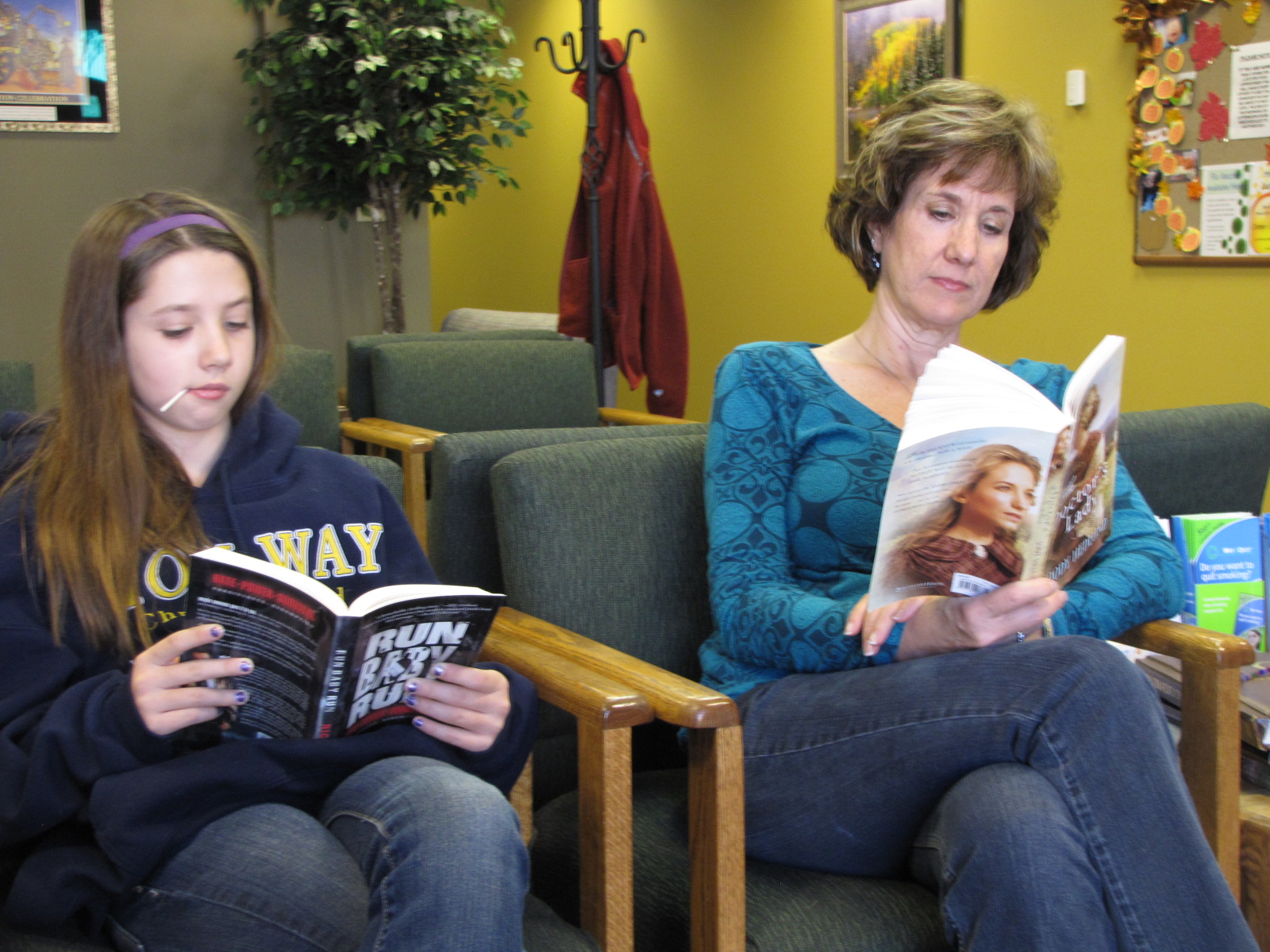
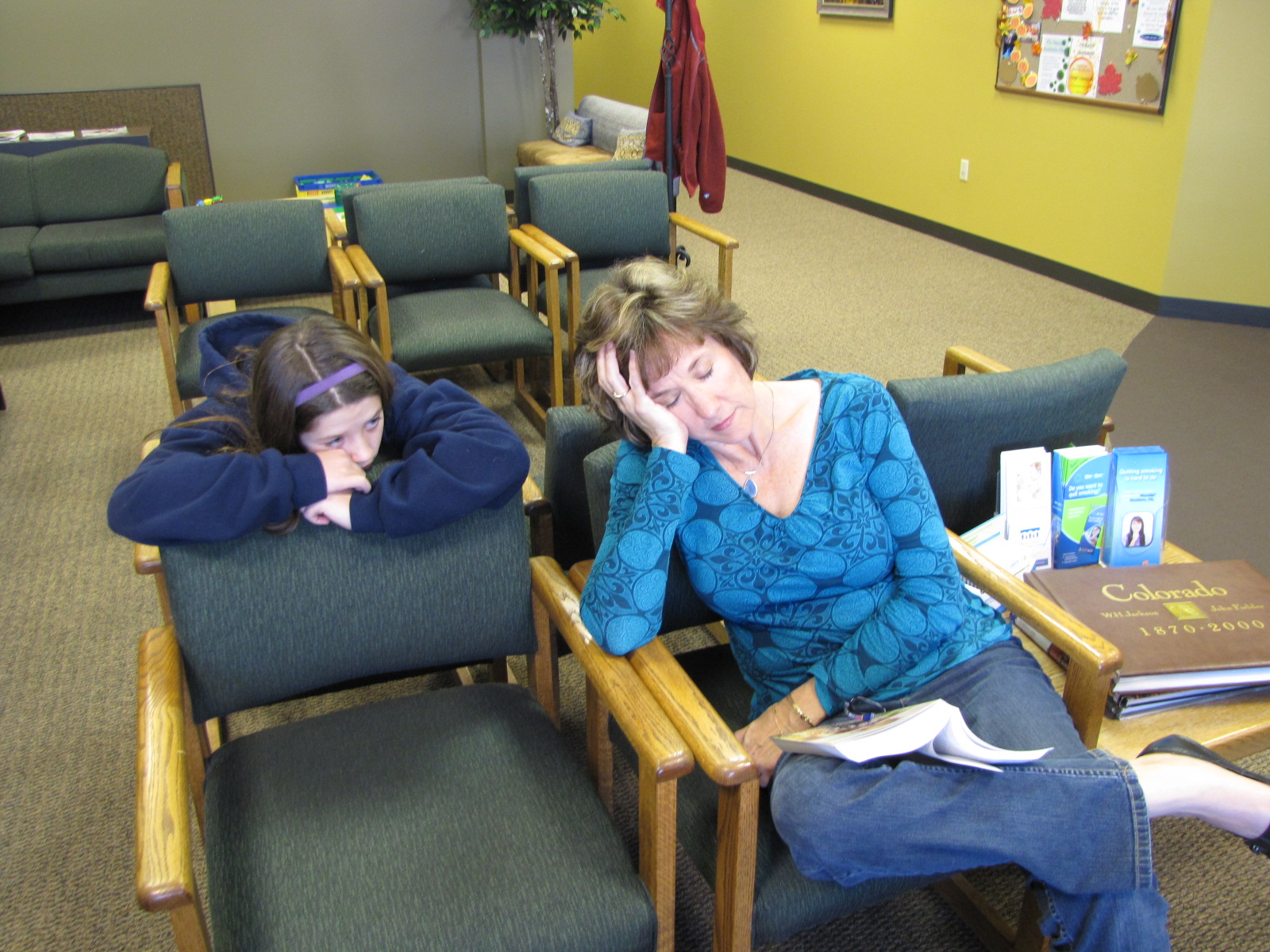
A Writer’s Life: The Waiting Room

Today I’d like to invite you to join me someplace most, if not all, writers are familiar with. Where’s that, you ask?

The Waiting Room.

Oh. My. Word. Your groans probably registered on the Richter scale. Stop it right now and come on in. Yeah, the Waiting Room is crowded. And the magazines are out-of-date. But we’re here to talk, not peruse the 2005 issue of Bowhunter magazine

If you’re a writer, the Waiting Room is unavoidable. Truth is, if you stay the course, you’ll make repeated trips to this room where the hands on the clock never seem to move and you languish forever, wondering when someone will call your name and say, “We’ll see you now.”

Aren’t I just the messenger of all things light and breezy today?

Why, you ask, why the Waiting Room? It’s such a waste of time.

Is it really? 

What can you learn while you wait? (Yes, I know you’d rather get seen and get out of here. But stick with me.)

  1.  Understand attitude is key. If I expect to wait then I avoid the “Woe is me” attitude — or at least succumb to fewer attacks of self-pity. If I get into my appointment on time or — gasp! — early, then I celebrate. Translation: No one is an overnight success. If some author tells you that they were, they’re lying. (You can tell them I said so.)
  2. Come prepared to wait. Do I want to waste time thumbing through magazines I’d never read even if I was stranded on a desert island? Translation: What are you doing while you wait for “the call”? Are you counting time or making time count by revising your manuscript, attending conferences, connecting with other writers — maybe even encouraging other writers?
  3. Realize everyone hates waiting. Medical professionals hate being behind schedule as much as you hate waiting. Translation: Editors wait too. And agents. And publishers. (Side note: Please, no comments with “waiting for my doctor” horror stories.  Not the point of this post. If you really need to vent, email me at beth@bethvogt.com. I’m married to a doctor. I can take it.)

Time for me to sit back and see what y’all have to say about time spent in the Waiting Room. Tell me how you handle waiting for feedback from your critique group. Or from your agent. Or for the “sign here and would you like an advance with that?” phone call. How do you make waiting worthwhile?


*Photo credit: That’s me and my daughter. In my husband’s waiting room. With a copy of author Jody Hedlund’s latest release, The Doctor’s Lady. The sleeping pose is for the sake of the column — not a statement on Jody’s writing. I loved reading The Doctor’s Lady!

Post Author: Beth K. Vogt

Beth K. Vogt is a non-fiction author and editor who said she’d never write fiction. She’s the wife of an air force physician (now in solo practice) who said she’d never marry a doctor—or anyone in the military. She’s a mom of four who said she’d never have kids. She’s discovered that God’s best often waits behind the doors marked “Never.” She writes contemporary romance because she believes there’s more to happily ever after than the fairy tales tell us.

Social Media – When Less is More

When I first joined Facebook I thought, “This is ridiculous. Who would ever do this?”

But I was told if I ever wanted to be considered by a book publisher, I better have an author platform. One of the foundational ways to build a platform is by using social media venues such as Facebook and Twitter.

So I grudgingly used my Facebook account. I logged in once a week to see what others were up to.  But then a weird thing happened. I discovered I loved social media. I made real friendships online and looked forward to hearing from my “peeps.” I enjoyed getting ideas and opinions from people all over the world. I loved knowing what people were thinking and talking about. I looked forward to laughing, crying, and praying with my online friends.

As soon as I mastered Facebook, I noticed authors talking about something called Twitter. Twitter seemed overwhelming so I read a few books about it:

*Twitter Revolution by Warren Whitlock and Deborah Micek. I wrote about it here

*Twitter Means Business by Julio Ojeda-Zapata You can order it here.

I learned that Twitter is very different from Facebook. Twitter is a powerful tool for specific purposes such as checking how snowy the roads near Vail are, what Judge Belvin Perry is ordering Casey Anthony’s jurors for lunch, discovering what the police are doing near I-70, talking out loud to politicians and celebrities, and telling companies about their bad (or good) service.

As I settled into my social media routine, I saw my heroes adding tens of thousands of friends, so I did likewise. I added and “friend-ed” everyone who crossed my path.

It makes sense. We all want to be part of the group like this little guy:

My friends and followers list grew, but I dreaded getting on my computer. I didn’t know whom I was talking to, and I felt like I was being spammed when I wanted to relate. So one day I deleted all 800 of my Twitter friends and started over.

I carefully and deliberately chose which friends I would follow (now less than 100) and paid little attention to who was following me. Every few months I clean out my Facebook account. I unfriend lurkers, spammers, and people who spew their message but never interact. One thing I’m proud of is that people I interact with on social media are not strangers, they are my friends. I have found several benefits to cutting back:

  • I am more eager to login to my Facebook and Twitter accounts.
  • I have built relationships with my online friends, so when my book gets published I won’t be a nameless face spamming everybody.
  • My friends and followers are more likely to pass my books, videos, and blog links to others.
  • I’m interacting with people who share my interests.
  • I’m filling a social need by relating instead of spamming. Research shows that people form communities on Facebook and Twitter in order to get social needs met.

More and more people, whose expertise I admire, are limiting the ways they interact on social media. As authors we are continually trying new marketing ideas, so we experiment, take risks, and try new things. I don’t know if the way I do social media is right for you…

Do you think more followers and friends are better? Why or Why Not?

The Long View of Getting Published

Photo by Michael Hirst

There are two distinct parts to my career as an author. Part one, when I saw myself as more of a lone wolf and part two, when I finally started admitting I don’t know everything.

The second half where humility has played a lot bigger part has been more rewarding in every way, particularly financially and spiritually.

Funny little thing I’m learning about life is that when I stop trying to force my will and realize I may not get what I want but I can still be of service, more of what I wanted all along shows up. However, to head down that path the first few times took a lot of courage and hope because I didn’t have any personal proof. Fortunately, I had worn myself out trying things my way. I became willing.

To be an author, whether it’s as an independent or through the traditional venues takes more people and therefore a lot more willingness. The independent route sounds like it would be easier to stick to your own common sense and that would be more than enough, except for the occasional question. But publishing a book is a process that requires a lot of hands.

Besides, I was more arrogant than that anyway, running down the traditional path and still telling everyone how I saw things.

However, when I stopped listening for just the small kernel I wanted and expected to hear, dropped any agenda and not only took in the information but gave it time to sink in, things really began to move in a better direction. That opened things up even more.

What if I even followed through on some of the suggestions to see if other people who are actually the professionals in their slice of the publishing game were right? Perhaps my part in the entire process is to be a team player, be open to all of the information that’s coming in and just do what’s been suggested.

Some wrong turns are to be expected and even that’s okay because  the last tool I keep close by is the one that makes all of it okay.

I am powerless over the outcome but there is One who has His hand on everything, loves all of us beyond our ability to understand and has a plan that includes everyone. This is the most important part to me and makes it possible to relax and go back to the day I’m in when I’m worried about how book sales will go or if a book will get published at all.

The answer is, maybe it will, maybe it won’t.

In the past I couldn’t live with that answer so I tried harder to fix things. That just didn’t work and I wore out others as well as myself. Doors closed.

Now, I ask myself if I’ve done my part? Do I trust the professionals I’m working with on this book? What’s in front of me to do? How can I go be of service?

I know, all of that sounded really contrary to becoming published to me too, at first. But I had tried the lone wolf gig and only gotten mediocre results, at best.

I became willing to try a new tack. God is everything or God is nothing and I wanted, maybe even needed God to be everything so I started listening with a new ear. I asked for help and admitted when I didn’t know something. I grew more patient and less ‘helpful’ with suggestions. I did what was asked of me, on time and nothing more, allowing others to do their job without my interference. I became willing to change structure or style and see what happened.

And on the days when my anxiety still sits on my chest like an angry gorilla, I go pray, turn it all over to God and ask for peace of mind and heart. Then I get back to my day, do what’s right in front of me and keep going. As a result, more of my publishing life has fallen into place and my relationships in that area are a lot stronger.

New Agent at WordServe!

Guest Post by Rachelle Gardner

Effective immediately, we at WordServe have added thirty years of experience to our service for authors with the addition of industry insider Barbara Scott as a new literary agent.

“Publishing continues to evolve, but finding and guiding the careers of new and established authors will always be a big need,” says 17-year agent Greg Johnson. “Barbara has worked as an in-house sales rep for a publisher as well as an editor, and authored numerous books of fiction and non-fiction. Her strong editorial eye, relational skills and professionalism make her a natural to join the WordServe team.”

Barbara Scott brings 30 years of publishing experience to WordServe having worked at Zondervan, McGraw-Hill, Honor Books, and most recently Abingdon Press where she developed and built the fiction line.

Barbara has partnered with best-selling authors such as Brandilyn Collins and Melody Carlson for the YA fiction line at Zondervan, and many of the authors in her fiction launch at Abingdon Press received rave reviews in Publisher’s Weekly and Library Journal. Two of her most recent authors at Abingdon Press, Cynthia Ruchti and Richard Mabry, have been nominated for Carol Awards by ACFW in 2011. The fiction line at Abingdon Press exceeded all sales expectations, and Barbara has been credited for kicking off a well-rounded series of quality, highly-reviewed novels.

I’m thrilled that I get to work alongside this talented lady, who is already well-loved in CBA. Please join me in welcoming Barbara to our team!

~Rachelle

P.S. Barbara won’t be at ACFW, but I’ll be there scouting projects for her!

What Barbara is Looking for:

Adult Fiction:
Full-length fiction, 65,000 to 100,000 words. General market or Christian market.
Genres: Women’s, Romance, Suspense/Thriller, Mystery, Romantic Suspense, Historical, Family Saga, Amish, Political Thrillers, Mainstream, Supernatural/Speculative, including End Times.

Short contemporary and historical fiction, 40,000 to 65,000 words. Christian market.
Genres: Romance, Historical, Romantic Suspense. Will accept queries for Barbour, Steeple Hill Love Inspired, Summerside Love Finds You, and Avon Inspire.

Kids:
Middle grade and YA books

Non-Fiction:
Both Christian market and general market projects. Current Affairs, Political, Management, Sales, Money, Home Life, Marriage, Family, Parenting, Health & Diet, How-to, Popular Culture, Psychology, Science, Self-Help, Women’s Issues, Devotionals. Authors should have established social media, consulting, or speaking platforms.

Christian theology, apologetics, pastoral, spiritual growth:
I will only take on this type of project if the author has well-known credentials and/or a large, established platform.

What she is NOT looking for:
• Gift books
• Poetry
• Short stories
• Screenplays
• Graphic novels
• Children’s picture books
• Horror

Contact Barbara Scott: barbara {at} wordserveliterary.com (This email might not be active yet – give it a couple days!)

Besides Using Google, How Can I Do Research for My Book?

Research Tools for Fiction and Non-fiction Writers

The majority of writers know how to use the Internet when they need to investigate a topic. Most of us pop onto a search engine like Google, bing, or Yahoo! Search and type our subject of interest into the search box.

But let’s say you are researching a term like “cancer.” Thousands of sites are going to show up. Some may offer helpful material, but many of the links are going to be useless. You may get scams and offers of miracle cures all mixed in with legitimate websites.

So how do you sort through all the extraneous material to get to the good stuff?

Here’s a simple trick I always use: Type the words “site: edu” after the term you are searching. (Don’t use quotation marks.) Inside your browser it’s going to look like this:

cancer site: edu

Now, the first websites that are going to be listed have been sifted through an educational institution. You are much more likely to find helpful material for your writing.

I write about self-care, so let’s say I have a question in my mind like, “I wonder how listening to music benefits cancer patients?”

Once again I could Google my question, but how will I know if the answers are valid? Maybe someone wrote them on a blog post without verifying the facts. Wouldn’t it be nice to know that the answers have been studied scientifically? Vetted by other scholars? Wouldn’t it be nice to know how the study was done, and whether the research was current?

Even as recent as ten years ago, you had to search tomes or giant stacks of professional journals in an actual library in order to get valid research. But with today’s computer technology it is simple to access serious research for your fiction or non-fiction book.

Hang with me here. It’s not as difficult as it might sound.

My library here in Littleton, Colorado (Jefferson County Library) lets me access professional journals from my home computer. I’m going to show you how Jefferson County’s library system does this. Your library system may vary, so If you need help, ask your librarian for assistance. Also, you need to make sure you have a library card so you can access the system. Here’s what I do:

  1. I go to Jefferson County Library’s web site
  2. I click on the maroon icon labeled, “Research Tools”
  3. I click on “Magazines and Newspapers” (on the left-hand side)

*My library subscribes to something called EBSCOhost, which provides online databases to libraries worldwide. All libraries are different, but most will give you access to two “workhorse, all-purpose” databases: Academic Search Premier and/or ProQuest. These allow you to search specific topics under a broad umbrella rather than having to narrow your research to certain journals (e.g. nursing journals or psychology journals).

Now you’re going to guess at some key words to put into the search box. I start by entering the words:

 affects music cancer patients

This next part is important:

Before I click the search button, I narrow my search by using limiters:

I want to limit my search to scholarly material because I don’t want information to come from non-scholarly magazines such as People or Newsweek, so I check “Scholarly (Peer Reviewed) Journals.”

I only want to look at the articles where I can read the entire article, not just the summary or abstract, so I check “Full Text.”

And lastly, I want the research to be current, so I’ll limit the date to the last ten years.

As I find articles, I look to see which key words are noted so I can try searching those if I’m not finding what I need. When I find my article, I can read it online, print it out in PDF format, or even email it to others or myself. If you are a visual learner, maybe a video showing how I do research will be a helpful addition.

 Do you have some research tips to offer other writers?

Celebrate!

Let's all celebrate! (Pic by Photobunny)

Today is both my birthday and my agent, Rachelle Gardner’s birthday. Reason enough to start a party!

As if that weren’t enough, as a bonus to really get in the mood to celebrate I have a few words of wisdom from Rachelle about building a career rather than just selling a book.

I was one of Rachelle’s first clients and right from the start I knew there was the potential for something special. It started with the way Rachelle chooses her clients, the writers.

Rachelle has never been afraid to take on a new author. She now has about 50 clients, 90 percent of whom are new authors, which says something wonderful about her approach to the publishing business. Her intention is to build a strong roster of credible writers rather than make the quick sale. That takes time and talent on both the author and the agent’s part and can be just as rare in an agent as it is in a writer.

“It’s great for me because as agents go, I’m still one of the newer agents, coming up on four years, and it’s kind of neat for me to help build writers from the ground up,” said Rachelle. “Now, keep in mind, I’m making very intentional decisions,” she added, as she looks for writers who have something to say and are willing to work with her.

I’ve had agents before, good agents who quickly sold my work but I’d never had anyone speak to me in terms of a career. Not only in general terms but specific steps I could take if I was interested in making a decent living. Rachelle was doing that from the start even while we were talking about the project at hand. She was taking the long view of me as a writer.

That approach was going to take more work and a lot more patience but has the potential to payoff with steadily rising book sales.

That’s like gold in this business. Continue reading “Celebrate!”

Writing Bible Studies: Feeling the Nudge?

Writing Bible studies is my passion, but it used to scare my freckles white. How are we supposed to improve on the inerrant Word? Thankfully, that’s not our goal. Whew! A good Bible study provides practical, 21st-century application to timeless truths filtered through the author’s life experiences.

So where do we begin? Some writers start with a theme such as comfort or joy. I love to start with a few passages of Scripture that resonate in my heart and mind that I’ve read during my morning quiet time, or heard in a sermon or Bible class. Both approaches work well because they provide a solid starting point.

Whether you’re writing a full-length Bible study, an abbreviated study for a magazine, or teaching a Bible class, I’ve learned there are five basic steps that seldom change. Begin by asking God for His wisdom and guidance, then:

1. Immerse yourself in the scene.

Writing Bible studies involves telling a story, so don’t neglect the scenery, human interaction, or history. Who wrote the passages? Where do they take place? What season is it? What’s the emotional temperature? Is there conflict? Who’s involved? From whose POV is the story told? How is God revealed? What’s the overarching lesson? Incorporating some or all of these elements invites readers to relate on a personal level.

2.  Look up the passages in their original language.

Whether Greek (New Testament) or Hebrew (Old Testament), it’s crucial to understand the accurate meaning of the words used. The Hebrew language contains no vowels, so English translators added them so we could understand the text. But sometimes the interpretations fall short of capturing the original connotation. For example, Psalm 23:3 promises, “He restores my soul.” In the Hebrew, “restores” means “to reset.” In other words, God reboots us! The rich meanings that I learn during this step often alter the trajectory of an entire study.

3. Research the culture of that time period.

For example, it’s hard to understand the depth of love that drove the prodigal son‘s father to run and welcome his son home until we learn that it was utterly disgraceful in that culture for a man of the father’s stature to lift his robes, run, and reveal his hairy knees. (Yes, really!) That cultural detail allows us to grasp on a deeper level God’s passionate pursuit of us when we go astray. Researching the cultural background provides vivid history and valuable insight.

4. Read Biblical commentaries.

Scholars use their theological expertise to point out nuances in the original languages and cultural idiosyncrasies that help you parallel today’s trends. They often cross-reference words, verses, and similar scenarios throughout Scripture that aid your writing perspective. Also, several commentators lived in the 19-20th centuries, so that really cool, old-school writing style lights up my imagination!

5. Use reference books and resources.

Just like the Chicago Manual of Style represents a must-have for fiction writers, Bible study writers need particular resources readily available. I find these indispensable:

Last, but by no means least, every Bible study writer needs to be a faithful student of Scripture. Here’s a handy Bible Reading Checklist to download and tuck in your Bible. It’s a useful tool to check off the books and chapters as you read them.

Regardless of how you approach writing Bible studies, keep writing. Relentlessly ask God to guide you. Your freckles will return, I promise! This process enriches your spiritual journey and provides that same opportunity for others. This may be a tedious process, but you’re not just writing about any story. It’s THE story.

Let’s chat:  If you write Bible studies, what works for you?  If you’ve never written one, what did you find most helpful?

WordServe News Update and New Releases

Exciting things have been happening at WordServe Literary!

On the final post each month you’ll find a list of Water Cooler contributors’ books releasing in the upcoming month and a recap of WordServe client news from the current month. (Since this is the first New Releases and Recent News post, we’re playing catch-up.)

• • •

September New Releases

(The titles are links to Amazon.)

A Bride’s Portrait of Dodge City Kansas

by Erica Vetsch*

Historical Romance

Barbour Publishing

 •

“Christmas Service” in A Log Cabin Christmas

by Erica Vetsch*

Historical Romance

Barbour Publishing

 •

The Doctor’s Lady

by Jody Hedlund*

Historical Romance

Bethany House

 •

Light to My Path

by Erica Vetsch*

Historical Romance

Barbour Heartsong Presents

 •

Lily and the Lawman

by Erica Vetsch*

Historical Romance –

Thorndike Large Print Edition

Bestseller News

CBA September 2011 Lists

Tim LaHayeEdge of Apocalypse hit #19 on the Fiction list.

Tim LaHaye and Craig ParshallThunder of Heaven hit #29 on the Top 50 list and #3 on the Fiction list.

Karen Witemeyer*A Tailor-Made Bride hit #17 on the Fiction list.

• • •

Contest News

ACFW 2011 Agent of the Year

We’re excited that Rachelle Gardner is one of the three finalists

ACFW 2011 Carol Award for published novelists:

Jody Hedlund* is a finalist in the Debut Novel category with The Preacher’s Bride.

Richard Mabry* is a finalist in the Mystery/Thriller category with Medical Error.

S. Dionne Moore is a finalist in the Short Historical category with Promise of Tomorrow.

ACFW 2011 Genesis Contest for unpublished novelists:

Camille Eide* is a finalist in the Women’s Fiction category with My Father’s House.

• • •

New Clients

Charise Olson accepted an offer of representation from Rachelle.

Wendy Paine Miller* accepted an offer of representation from Rachelle.

• • •

Contract News

Greg announced the following deals on Publishers Marketplace:

Carol BarnierA Prodigal Speaks sold to Moody Press. Going from parsonage to atheist to Christian, Carol writes to parents and gives valuable lessons on loving a child who is away from the faith.

Rick MarschallOne Year Book of Cartoon Devotions sold to Tyndale. The book uses syndicated cartoonists and contains 365 cartoon panels and devotional readings after each one. Rick also signed with Tyndale for a YA devotional to be written with Clubhouse editor Jesse Florea.

Dave Runyon and Jay PathakThe Art of Neighboring sold to Baker Books. What does it mean to be a great neighbor with no motive but to serve and care for those around you? Combining practical stories from a whole city whose churches practiced this concept with radical biblical thoughts on what Jesus meant when he said “love your neighbor,” the authors make a compelling case for a new way to neighbor as a person of faith.

Rachel St. John-GilbertThe Well Lived Laugh sold to Barbour. Rachel uses Seinfeld-style observations, offering comic relief from the pressure to check off all the “culturally correct, socially responsible, and spiritually edgy” boxes that are confronting today’s overwhelmed woman. The reader is encouraged to shape her own unique perspectives based on her gifts and limitations that have characterized her life experiences thus far.

Chuck TatumBlood Red, Black Sand sold to Berkley Caliber. The story is about Chuck, a WWII veteran who trained under and fought with Medal of Honor recipient John Basilone; chronicling their “two weeks in hell,” where he would watch his hero, Basilone, fall, where the enemy stalked the night, where snipers haunted the day, and where Chuck would see his friends whittled away in an eardrum-shattering, earth-shaking, meat grinder of a battle. Before the battle for Iwo Jima ended, Chuck would find himself, like Basilone, standing alone, blind with rage, firing a machine gun from the hip, in a personal battle to survive from a relentless foe.

Bob WelchWonderful Life Lessons sold to Thomas Nelson. Bob, a Eugene Register Guard journalist, uses the classic movie It’s a Wonderful Life as a springboard and mines 52 gold-nugget lessons that everyone should consider.

More News from Greg:

Wayne Cordeiro signed with Zondervan for a book called Sifted, the lead book for the Exponential Conference next April in Orlando.

Cheri Fuller signed with Bethany House for a non-fiction book, What Sons Need In A Mom.

Tim LaHaye signed with Zondervan for Book #4 in “The End” series.

Calvin Miller signed with Worthy Publishers for a non-fiction book, Letters To Heaven.

Gilbert Morris signed on for a new 3-book historical series with Barbour.

Jordyn Redwood* started out by signing just one book with Kregel, but they quickly signed on for two more in the series

Margot Starbuck signed a two-book deal with Baker Publishing Group, the first with a working title of Jesus In Vegas.

(* = WordServe Water Cooler Contributor)

• • •

That’s our good news for the month.

Please share yours in the comments so we can celebrate with you.

• • •

Post Author: Keli Gwyn

I write inspirational historical romance. My debut novel, A Bride Opens Shop in El Dorado, California, will be released July 1, 2012. I live in the heart of California’s Gold Country. My favorite places to visit are my fictional worlds, the Coach factory outlet store, and Taco Bell.