
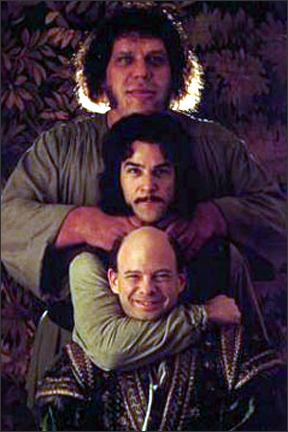
 When things go wrong along the writing road, what do you do?
- When you face writer’s block as formidable as Fezzik (and please, no debate on whether writer’s block exists) …
- When rejections attack you like a pack of shrieking eels …
- When your plot collapses like Vizzini’s battle of wits with the Dread Pirate Roberts …
What’s your go-to plan for getting back on course?
In the much-beloved movie The Princess Bride, Vizzini was the brains, Fezzik the brawn, and Inigo was, well, the swordsman. (Sorry, I couldn’t come up with a “b” word for the guy wielding the sword.) Despite the fact that Plato, Aristotle and Socrates were all morons compared to Vizzini — or so he said — his plan to kidnap and murder Buttercup imploded.
Inigo: bested.
Fezzik: beaten.
Vizzini: plain ol’ dead.
Remember what Inigo did when the plan went south — well, besides drinking himself into a stupor?
He went back to the beginning … and waited for Vizzini.
Smart man, Inigo.
What do you find when you go back to the beginning?
“This is where we got the job, so this is the beginning.”
Inigo may not have been able to see clearly — heck, he couldn’t even stand up straight — but he remembered a fundamental truth: When a plan fails, go back to the beginning.
Are you discouraged? Did that long-anticipated yes turn into an unexpected no? Walk away from it — but don’t abandon who you are. Go back to the beginning and remember your purpose: You are a writer. You have a job to do. Sometimes things don’t go according to plan. You get bested. Beaten. A dream dies.
Catch your breath, renew your heart … and then dream a new dream.
Who do you find when you go back to the beginning?
“I … am … waiting … for … Vizzini.”
Inigo was waiting for someone. For better, for worse, Vizzini was Inigo’s leader — the one he followed.
Going back to the beginning, waiting, doesn’t mean wasting time. Did you round the bend in the writing road and hit a dead end? Don’t be too proud to back up, turn around. Go back to the beginning and remember who you are as a writer. Answer this question: What makes your fingers fly across the keyboard? What keeps you up late and drags you out of bed early because you can’t not write this story?
Can’t remember?
Who is your Vizzini? Who first mentored you (maybe mentors you still)?Who helps nurture your dream? Who believes in you when you don’t? Go back to the beginning and ask them to help you remember.
It’s been fun talking about a writer’s life and the Cliffs of Insanity, the Fire Swamp, the Pit of Despair — and now Waiting for Vizzini. Everyone’s comments have made this more than a blog post — it’s become a conversation. So tell me, what lessons have you learned by going back to the beginning?
*Just for fun, here’s a YouTube clip of Inigo waiting for Vizzini.
Post Author: Beth K. Vogt
Beth K. Vogt is a non-fiction author and editor who said she’d never write fiction. She’s the wife of an air force physician (now in solo practice) who said she’d never marry a doctor—or anyone in the military. She’s a mom of four who said she’d never have kids. She’s discovered that God’s best often waits behind the doors marked “Never.” She writes contemporary romance because she believes there’s more to happily ever after than the fairy tales tell us.
 WordServe Water Cooler