Are You a Good Literary Citizen?

ID-10032339

Are you a good literary citizen?

I’ll never forget it. I was probably eight or nine years old, and my family had gotten up early to get a spot in the front for the Blossom Time Parade in a neighboring town.

This was a big deal. Every year, thousands of people from Southwest Michigan gathered, anticipating a show of marching bands, fire trucks, homecoming queens, and buckets of candy thrown out to kids scurrying in retrieval around the pavement like ants.

The year I recall was an extra-big, super duper deal, because “Samantha”–the youngest child from the quasi popular 1980 sitcom Gimme a Break!–was scheduled to appear.

Now, I wasn’t a big fan of Gimme a Break!, nor did I think Samantha was the best child-actor of my youth, but she was going to be there, in my small town parade, and I loved to act in school, and every time I thought about meeting a real life star, a firecracker lit and crackled in my gut. I pushed my way to the front of the crowd at the parade, armed with a glittery pink pen and my diary.

Samantha waved and smiled as she sat on top of a cherry red Corvette. And then it happened. The car paused in line, waiting for the parade to continue, and a swarm of preteen girls crowded around Samantha, holding out pictures and paper for her to sign. My legs took off, and before I knew it, I was there too, in the swarm, buzzing, waiting for my turn to ask for an autograph.

Once most of the girls got their autographs, the car started to move. Panicked, I held out my diary to Samantha as her handler winked at me and said, “Surely we have time for one more.”

My heartbeat skipped.

“No! We don’t have time for any more,” Samantha hissed, pushing my diary towards my chest. Her eyes met mine coldly. “I’m done.”

The driver switched from the brake to the gas. I watched Samantha creep forward in the parade, once again smiling and waving to her adoring fans.

Who knows what was going on with Samantha. Everyone has bad days. But I have to admit, I was one disappointed, disenchanted little girl.

I decided that if I were ever fortunate enough to do well at something I loved, I’d be sure to be kind.

Fast forward more years than I care to admit, and I’m pleased to announce that time and again, as a new author, I’ve encountered kindness and generosity in the literary world.

What is a good literary citizen?

This is my definition: a person who supports creativity, who esteems work, and helps others grow in their craft. It’s a person who buys books (and lots of them!) and networks on behalf of authors and writers she or he admires.

I think about Samantha when authors share their knowledge of writing and publishing with me. I think about Samantha when I witness someone farther down the publishing road give a nod and a hello to another starting out.

I hold out my diary and these kind souls take my glittery pen and jot me a note. “Congratulations! Keep going! Try this agent. Sure, I’ll review your work.” Or even this: “I can’t help you now, but all the best to you!”

I don’t take it for granted. People in the publishing world are busy. There is no reason why some should respond to my letters or emails with such goodwill, but they do. And I learn that sure, there are Samanthas in the world. But that’s okay. There are also authors and writers who do their best to help strong work rise to the surface for all to enjoy.

There are people who value being good literary citizens.

Not every author or writer can help. Not everyone will care to help. But of course, everyone can pass on a measure of goodwill as another pursues her dreams.

And we can do it with kindness for the sake of our literary world.

*In an effort to pay it forward in the literary world, I am doing a daily author interview and book giveaway (from writers who happen to be mothers and write about it) the week of May 6th, leading up to Mother’s Day. Drop by to hear from great authors such as Shauna Niequist, Jennifer Grant, Kate Hopper, Claire Bidwell Smith and one more (waiting on a confirmation :)). Find out more at www.gillianmarchenko.com.
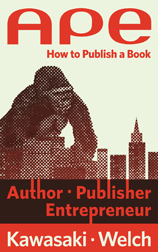
Monkey Read, Monkey Should Do!

apeDoes the acronym HARO mean anything to you?

It should, because it just might be your ticket to free publicity, extensive exposure as a writer, and the means to grow a national reputation as an expert in your field.

HARO stands for Help A Reporter Out, and it’s a website where you register as an expert and news source. There is no fee to register, and while there is no guarantee that you will get tapped for information, it’s a chance you don’t want to miss. For nonfiction writers, it can become one more piece of a marketing plan to become known for their unique expertise, while fiction writers might consider their own research in specific topics as fodder for story ideas. According to HARO’s website, 30,000 members of the media have turned to HARO for assistance in developing stories; is there any reason you shouldn’t be one of those folks helping out a reporter?

Learning about HARO was just one of the things I learned from recently reading APE: Author, Publisher, Entrepreneur-How to Publish a Book by Guy Kawasaki and Shawn Welch. While I have no desire to publish my own books, I still found the book informative and helpful, especially as I’ve grown from an author-wannabe to someone with five years of publication experience. The first section of the book was a good reminder that writers come in all shapes and sizes, with a range of motives, and that’s okay. It made me consider again the tenacious nature of writers who want to publish and gave me a new understanding of why people choose self-publishing. (It also made me realize that if I did decide to do a short ebook as a promotional opportunity for my other books, I could probably pull it off using APE as my guide.)

What I especially appreciated, though, was the book’s insistence that there is no escaping from the truth of today’s book business landscape: authors need to take responsibility for their books’ success, no matter how they are published.  APE gives valuable insight into the entire publishing process, which I’m convinced every author needs. Publishing is a business, and the sooner authors accept that, the more successful they will be! As an early publishing mentor of mine insisted, if you’re going to succeed, you better know how the business works. Kawasaki and Welch have done a fine job in giving readers the essentials of publishing.

Seeing as I’ve spent the last year trying to educate myself about platform and marketing, I found the last part of the book packed with practical suggestions and resources, like HARO, that I can play with as I continue to polish my marketing skills. The authors even include their own list of what they did to publish/market APE itself, providing readers with a basic outline for promoting any book, and offering links to learn more.

What are you APE-ing these days?

(Special thanks to Lucille Zimmerman, my agency-mate, who gave me the book to read!)

A Note to Young Writers: Honor Your Obscurity

woman praying--parodic

In the last month, I spent time with two younger women, both of whom had just released their first book. Sarah and Andrea are both fine writers whom I expect will continue to write and publish books. In the short time I had with each of them, I found myself dumping all my writing and marketing advice, talking about websites, blogging, Facebook, twitter. But I forgot to say the most important thing of all: honor your obscurity.

Very few young writers, musicians, artists value their obscurity. For good reason. We know if we’re to be published in any form, we need an audience, a sizeable audience. We know that most of the time we have to find that audience before that first book contract even lands on our desk. And once it does, and the book is out, we’re tasked to keep racking up bigger numbers. But how do we catch the eye and ear of a world that so often chooses the flippant, the crude, the gaudy spectacle over the good, the authentic, and the true?  If we’re the praying sort, we may resort to prayer, remembering the words another writer made famous a few years ago,

“O, that you would bless me and enlarge my territory! Let your hand be with me, and keep me from harm so that I will be free from pain.”

(Oh, dear Jabez, I want to say. How did you get away with that prayer?)

But we do it too, I suspect. The artists’ version would go something like, “O, that you would bless me and enlarge my platform, increase my followers, expand my twitter peeps and keep me from publishing harm so I will be famous, free from the pain of falling out-of-print.”

woman praying--parodic

I can write this prayer because I know these desires. An hour ago I was on a nationally syndicated radio show, and I find myself, now, against my better will, glued to numbers, trying to measure “impact.” While guiltily number-stalking, a stranger writes me on Facebook immediately after the broadcast and asks how he can become a writer and speaker, like me. (He’s in his twenties and he hasn‘t written anything  yet . . .)   Someone else writes to ask me how to build a fan base for her blog.

I do have advice: if you want others to read you and listen to you, you must listen to others. Do for others what you want them to do for you. That will not make you famous; that will make you better informed and more humble.


man reading2

And second, fame is not what you think. Admittedly, I am not the best source here. My moments of “fame” are modest and sporadic. But I still know this: it isn’t what you think. It’s often over in a moment. It brings more responsibility than freedom. And if you’re not careful, it can pollute or paralyze your writing. I have a friend whose first book shot to the New York Times bestseller list.  His agent, his readers, his global fan base now hold their collective breath for his next book. “How do I write under this weight?” he asks me. He has so many others he must now heed and please.

“Honor your obscurity” is another way of echoing Bill Roorhbach’s charge to “honor your apprenticeship.”  Value these months, years of laboring toward your best work with fewer listening in than you would like. This quiet is your wilderness, your blessing. Here you will sharpen your art. You will lean closer to the sounds around you, for the fragile people who haunt the forests you watch, for the small voice that whispers names you didn’t know.

Enjoy the purity of your efforts, making art and worlds and essays out of the sheer love of words, of theatre, of longing and of hope. Enjoy it now before a woman or a publisher sits down beside you filling your notebook with a thousand necessary tasks, few of which have much to do with why you began writing in the first place.

Finally, what do you imagine fame will bring you? For me (and for many writers I know) I hope mostly to be able to keep on writing, to keep using “that talent which is death in me to hide,” as John Milton writes. If you’re doing this now, pouring life into the truest sentences you can make, you’re already famous.

woman writing journal

Already Loved: Encouragement for This Writing Life

file9431319827916Another rejection. My agent gently relayed that though my dream publisher had said “yes” to a proposal all the way up the chain of command to the last committee, they finally decided to nix it.

As I hung up the phone, tears spilled down my cheeks. Two years of canceled book contracts, low sales figures, and repeated “thanks but no thanks” emails had left me discouraged, frustrated, and confused. Writing—and the marketing tasks necessary to be a professional writer—now seemed like drudgery, not play. No matter how many marketing rules I tried to follow, my efforts failed.

I felt like a failure, too.

I still believed God wasn’t through using me. But I couldn’t help but wonder, Will I ever get another book contract? And what happens if I don’t? Is God trying to tell me something?

Later that day, I sat at my desk, playing a computer game with my three year-old son. As Jackson sat in my lap, I kissed his ear and inhaled his little-boy scent; a combination of milk, grime, and chocolate. Nearby sat a copy of my first book, which I had referred to earlier in the day for a radio interview. Jackson looked at the illustration of a frazzled mom on the cover and asked, “Is that you?”

“No, sweetie,” I said, “but I wrote that book. See, mommy’s name is on the cover. It says, ‘by Dena Dyer.’ “

“Oh!” Jackson said, grinning up at me. “I love Dena Dyer!”

Stunned, I blinked back tears. “I love you, too,” I murmured.

After a few minutes more at the computer, I found a quiet corner and prayerfully pondered Jackson’s simple expression of love. He didn’t care if I published books or not. He simply loved me for me. He loved me the way God does.

In all my disappointments, I had thought more about selling books than surrendering my heart. It was painful to admit that somewhere in the midst of trying to serve Jesus, I’d become goal-driven instead of God-driven. I seemed to care more about what the publishing powers-that-be thought than what my Heavenly Father thought.

Satan is crafty. He takes our God-given talents and twists them into temptations. Gradually, my calling had become an idol. Who I was became less important than what I did.

“Lord, I’m sorry,” I prayed, crying for the third time that day. “My heart is so full of sin. I know you couldn’t care less how many books I sell. You just want ME.”

In the weeks and months to come, as I asked God to help me believe the truth of His unconditional acceptance, I began working freely and joyfully again instead of writing just to be published. God continued to close some doors, and another book proposal was rejected, but He gave me other opportunities–ones I hadn’t even known to pursue.

The truth is, though, I will probably always have a tendency to think I must perform to be loved. So I’ve ask God to whack me upside the head (as we say here in Texas) before I get too far off track.

If experience is any teacher, He’ll be faithful to do just that.

(This article first appeared at The High Calling. Used by permission) 

When Your Book Doesn’t Sell: Separating the Writer From the Wannabe

http://www.stockfreeimages.com/

“I’m so glad it is our first year here so that the pressure’s off to win an award. I heard you have to be returning to be in the running,” my friend Kim leaned over and whispered as we sat in the back of Mount Hermon Christian Writers Conference’s auditorium last April.

“Seriously, right?” I said, slouching down in the pew and sighing. We were settled in for the final night of programming; awards, music, and a message from the great Liz Curtis Higgs, who, if I am being honest, seemed so inviting and encouraging that it took all I could muster not to walk over and crawl up in her lap.

The week in California had been a dream for this mother of four, prone to piles of laundry, homework with kids, housework, and therapy and doctor appointments for my two daughters with Down syndrome. One week by myself, ensconced with like-minded people, authors, agents, publishers, and writers with dreams of their own, in one of the prettiest parts of God’s creation.

So you can imagine my surprise when my bio was read and my name was called. I won the Ethel Herr 2012 Most Promising New Writer Award for submitting 25 pages of my memoir about giving birth to my daughter Polly, and her diagnosis of Down syndrome, while serving as a missionary in Ukraine. My friend and I jumped up and down, and I ambled to the stage. The bright lights made me dizzy. Liz Curtis Higgs gave me a huge smile. “Wonderful!” Ethel Herr (Ethel Herr!) gave me a hug. The award thrilled me, and embarrassed me. After all, I was just a mom, trying my hand at this writing thing.

I naively left the conference sure that I would secure an agent and a publisher for my book within minutes of walking in the door back home.

Yeah. That didn’t happen. I secured an agent, but months later, through a different writing venue. The manuscript garnered interest from publishing houses that even resulted in two frightening, sweat-producing face to face meetings.

But so far, my book hasn’t sold.

Here are three things I’ve learned from this experience so far:

1. Keep writing

Someone offered me sage advice once I completed my manuscript. “Start another one.” Diving right back into another book length project has been one of the best things I’ve done as a writer. I’m a writer, not a wannabe, because I want, no, I need to write, not just to be published. I am growing in my craft, and I am still having fun doing it.

2. Grow your platform

I’ll admit it, there have been days that I’ve wanted to curl up in a ball over my memoir not finding a publishing home. OK, there have been days I have curled up in a ball because my memoir has not found a publishing home. But I’m a writer, not a wannabe, because I get back up and keep trying. I am building my platform and brand through articles, speaking, social media, and blogging.

3. Trust God’s timing

As a person of faith, although my carnality wants what I want in my timing, this experience has been a great exercise in trusting God and his timing. I am called to write. And by God’s grace, he uses my words in other people’s lives, and in my personal pursuit to become more like Jesus. So I practice trusting him. If it is God’s will for my memoir to be in print, it will happen. In the meantime, I’ll keep writing.

I may not be a published author, but I am a writer, not a wannabe.

And today, that’s enough to get back to this crazy, exciting, challenging work of putting pen to paper.

Half Baked: A Publishing Recipe

Is most of your writing only half-baked? It’s easy to get distracted with all the wonderful topics to write about, and many of us have manuscripts that are still rising on shelves in the garage. That being said, it’s sometimes nice to go through the steps of what happens when a book does in fact make it all the way to publication. Here is a basic recipe detailing the steps that are required in creating a fully baked book:

For a first time author, a book usually starts with a completed, edited manuscript for fiction, or a proposal and sample content for non-fiction. Published authors can sometimes sell novels on proposal, but not usually. Best practices suggest that unpublished authors should try and find a literary agent, once their manuscript is ready for submission. Few publishers accept work directly from authors sans representation, and a good agent can greatly aid a manuscript’s success rate.

After a literary agent has taken on a manuscript, they then send it to editors at different publishing houses. The literary agent targets the submissions to the publishing houses that they feel are most appropriate for the book. The editors take a look at the project, and if it’s something they are interested in they will share it with their colleagues to determine the level of interest. If the editor receives word that they can move forward with the manuscript, they will send an offer to the literary agent.

The submission process can take anywhere from weeks to months (or even years), depending on how long it takes to find an interested editor. An offer may include advances and / or royalties. Sometimes the offer may even be a contract for several books. If more than one editor is interested, there may even be a bidding war situation to determine which publisher can create the best offer. When the terms have been agreed upon and the author accepts an offer, the publisher will send a contract to the literary agent. The literary agency may have a contracts expert review the fine print and negotiation points. Once the contract has been signed, it’s time for the author to get writing (if the book was only sold on a proposal).
Little Chefs

Once the manuscript is completed (non-fiction), or after the contract is signed (fiction), the editor will usually send a letter recommending changes to the manuscript. These changes are more or less negotiable, but authors usually follow the recommendations of editors. After all of the recommended changes have been made and the manuscript is deemed ready to go, it is copy edited. Spelling and grammatical errors are corrected. The pages are laid out to show what the book will look like. The author reviews the different versions of the completed manuscripts. The publisher works on the design of the book (including cover, trim size, font, paper type, and other details).

The editor manages the process of having marketing experts write copy for the publisher’s catalog, come up with the cover details, create buzz, and launch marketing plans. Several months before the book’s publication, sales specialists will coordinate with their bookstore partners and take book orders. This part of the process helps determine how many copies of the book will be printed. The agent might oversee this process to verify everything is on track. It usually takes a year or more for the publication process to go from finished manuscript to book for purchase. It can be fast tracked if it is an especially hot project, but the process usually requires quite a bit of lead time. When the publication date arrives, the book goes on sale. The book is now available to customers, and the customers often take it from there. Positive feedback, great reviews, and word of mouth are still some of the best forms of marketing. After that, the author is launched into instant literary stardom (or not). The author then writes a second book and the process repeats.

Hopefully this recipe for completing a half-baked book has been helpful – and now, I’d better get back in the kitchen.

The Power of People Watching

“How vain it is to sit down to write when you have not stood up to live.”
Henry David Thoreau

FFISummer092253Almost four years ago, I stood in an apartment parking lot with twenty-three strangers from all over the country. We made awkward conversation, silently sizing one another up and wondering how people so different would ever survive a semester together.

That summer was the best of my life with some of the most unique personalities I’ve ever had the privilege to know. In class, we studied personalities, strengths and weaknesses, character, opinions, and worldview. I knew how each person reacted in the midst of passion, anger, joy, or grief. I knew struggles and victories. Our common denominator was a desire to lead and a heart for the Lord.

And I had to know my characters the same way.

Through these people and because of that summer, I had ideas to propel me into my first book. My characters took on the physical traits and personality of one of my roommates. My supporting characters share names in common with some of the guys.

The best characters are the ones the reader can relate to as a close friend, soul mate, enemy, or victim. The best stories emerge from the people, places, and experiences around us.FFISummer090523

Spending night and day with these people for two months taught me the beautiful complexity of people’s stories. It also taught me the depth of people. The best stories come from people watching, from intimately engaging in life, and embracing the good and bad.

As I work on my current WIP, I watch the people around me. I study emotional reactions, goofy quirks, language patterns, clothing style, facial expressions, and character. Slowly, my characters take shape on the page. Fair warning: if you are in my vicinity, one of your odd habits may make it into my book.

As writers, we tend to isolate. Or at least some of us do. We are content to people watch without interacting. Big problem. As Thoreau said, writing is flat if the writer has not lived.

Get out of your chair. Abandon your laptop. Spend time with friends and family. Sit at your favorite park or Starbucks. Take a note pad and record people’s conversations. Listen to the words they use, how they form sentences. Interact with the guy behind the counter or the people walking their dogs. Engage them in conversation.

Live and live well. Abundantly and fully. Engage with people intimately, not for the sake of a story or character, but because every person we cross paths with has a story that can teach us something about life and the Lord and yes, even writing.

People are weird and quirky and complex. We all have different personalities and reactions. People are full of surprises and opinions. Fashion your characters that way, too. God created people in His own image. Fall in love with them. Embrace the uniqueness. Embrace your uniqueness. Then write with eyes wide open, heart full, and a mind overflowing with memories to make your stories rich.

Have you people watched lately?

A Few Christmas Thoughts On Marketing

VIVITAR DIGITAL CAMERA

Would you trust a Christian?

How about a Puritan?

A Quaker then?

On cold winter mornings before I head out, I love a bowl of hot steaming porridge oats, with a dash of maple syrup.

With this in my belly, I am ready for anything the day may throw at me…well, at least until the mid-morning coffee break.

Look at the image of the Quaker man on the box. He’s adorable, trustworthy, decent, a law-abiding citizen. His smile is certainly reassuring. Admiring his rosy cheeks? Well, he could be Santa Claus.

His face says it all. Buy my products and you’ll feel as good as I look!

a pic of quaker%20oats%20man

I was in my local supermarket recently, when my keen eye spotted a bargain. I saw an offer on the shelves that was just too good to miss. A double-size box of my favourite porridge oats, with twice the usual contents, for a knock-down, give-away price of 30% below normal cost. My hand flashed out quicker than lightning. The big box was in my cart. The next day, ready for breakfast, I broke into my double-sized box of….what? I was shocked, then embarrassed at being so gullible. I trusted the Quaker man to deliver on his promise. What I got was, yes, a double-sized box, but inside it was 60% air! The actual contents came up to the level (take a look at the first picture) of the top of the wooden post.

As we head towards to the Christmas season when billions of dollars change hands, maybe we should all take a step back and reflect upon the potential of marketing and its ability to persuade us to buy products that patently don’t live up to the advertising.

Just for the sheer sake of it, I did a trawl through Bible Gateway to check if the following words and phrases ever appeared in the Bible.

Marketing, Selling, Sales Strategy, Search Engine,

Keywords, Customer Centric, Optimization.

You guessed it. None of them have a place in the Good Book. As writers, of course, we need marketing to get our message out there and reach communities, whether they be local or global. But we need to be discerning and careful to avoid the trap of believing and buying into the same secular trickery that sells anything to everyone. We should not be inveigled by the World, the Flesh and the Devil. Not be seduced to sell our sacred message by secular means.

I have often pondered this: What would I say, if God said these words to me?

”Fred, your book is great, but it will only sell one copy. The person who reads it will be changed and will become my servant and take the Gospel to millions of people all around the world, and all because he read your book. Alternatively, I can have your book sell millions of copies, you will be rich beyond your dreams, but only a few will be saved. My son, it’s your free choice.”

What do we ultimately want from writing books? Fame and fortune? Or to be walking in God’s will?

Of course, the Lord has a strategy to communicate his message to the world. Undeniably, he uses the power of the Word to get the message across to the greatest number in the most effective way. And he uses great orators to reach the lost, but persuasion is not their business. Their business is communicating the truth about the Son. The way God markets his message turns human wisdom and cleverness on its head.

When God wanted to free the Israelites from Pharaoh’s tyranny he sent a guilt-ridden, reticent, stuttering, fearful man called Moses to get the job done.

When God wanted to proclaim the coming of Jesus Christ he used an eccentric wild man, dressed in animal skins, eating locusts and honey in the desert.

When God wanted to save the world, he sent his all-powerful and eternal Son to be born naked in a stable for animals. As a human child he was vulnerable, weak, dependent and unable to live without his mother and father’s protection and care.

When God wanted to reconcile us to him, he allowed his Son be crucified, killed on a cross of wood, dying as a common criminal rejected and alone.

I wonder what the top marketing gurus and the best advertising companies would have come up with, if God had asked them to create a package to ‘sell salvation to sinners?’

They might have come up with a great sales strategy and a winning message to achieve customer optimization, perhaps throwing in an unforgettable slogan, an amusing jingle too… yet somehow, like the Quaker box of porridge oats I bought, I think it would fallen short, been so much air and less substance. I think their sales plan would have missed the target, somehow betrayed the truth, don’t you?

5 Ways to Break Up a Writing Iceberg: The Book Proposal

http://www.stockfreeimages.com/

I remember the day well.

After four years, hours and hours of writing, time away from my kids, countless books read on craft, writing classes Spring TX, and two professional edits, I finally finished my 260 page memoir.

“Success is a finished book, a stack of pages each of which is filled with words. If you reach that point, you have won a victory over yourself no less impressive than sailing single-handed around the world.”- Tom Clancy

Mr. Clancy’s quote, once my eyes stumbled upon it, coaxed a satisfied sigh from my gut. I closed my eyes, imagining myself at the helm of a ship, arms stretched out like Rose and Jack from The Titanic.

Jack-And-Rose-jack-and-rose-dawson-24253023-1000-710

But seriously, like the next day, my excitement and feelings of great accomplishment hit an iceberg when I forced myself to pay attention to two words that had floated around my mind throughout the project:

BOOK PROPOSAL.

If my manuscript is the Titanic, then the book proposal is the iceberg.

A book proposal is a thorough description of a manuscript, the market it would serve, and a sample of the story, usually the first two or three chapters.

And something I had no idea about until my manuscript was nearly completed.

Once my manuscript was finished, I assumed I could change the sail on my writing ship, pound out a quick proposal, and venture into new waters of querying agents.

Not so.

I had no idea about the painstaking amount of work a thorough, well-written, well-representing book proposal entailed. It took time and several confusing revisions to write an acceptable book proposal.

So here’s some advice, sailor to sailor:

1) Discern the genre. Book proposals, and when to submit them, are different depending on fiction or non-fiction. Fiction and memoir manuscripts should be completed before the proposal is submitted to an agent or a publisher. Non-fiction books can and do sell on proposal with a couple of chapters to provide the flavor and quality of the writing.

2) Work on your proposal while you are writing your manuscript. I should have started researching book proposals right away. Writing the proposal while working on the manuscript would have provided needed focus. A proposal can be a great map of where you are in your project, and where you need to go.

3) Write well. Your book proposal is probably the first writing sample a prospective agent or editor will see from you. Don’t rush. Let the voice rendered in your manuscript seep onto the proposal page. Agents and editors see many proposals. Take the time and attention required to make your proposal flawless and flavorful.

4) Stick to the basic elements of a proposal. Some include a cover page, an overview of the story, the hook, a biography of the author, marketing strategies, chapter summaries, and sample chapters.

I purchased a template from a famous author. It was a great way to get me started, but once an agent was landed, she preferred I use her agency’s template. Though similar, it wasn’t quite the same. Realize that an agent or editor will probably want you to tweak your proposal.

5) A successful book proposal requires research. Learn from the best. Check out:

Terry Whalin’s Book Proposals That Sell: 21 SECRETS TO SPEED YOUR SUCCESS

Have you written a book proposal? Are you in the process of writing a book proposal? Any advice? What’s been the most challenging part of the process? Please share with your fellow sojourners.

His Words, Not Mine

Insecurity was a daily battle for me as Book One slowly unfolded. Sentence by sentence, page by page, the words and story poured from me. I tasted fear with my characters, laughed at their jokes, cried in their heartbreak.

You never write a book without pouring yourself into every facet. As Ernest Hemingway said, “There is nothing to writing. All you do is sit down at the typewriter and bleed.” It’s a lot easier said than done, isn’t it? My insecurities constantly surfaced: You can’t do this. No one will want to read this. It will never get published. Just stop now.

But I had a story to tell.

So I began every writing day with this prayer: Your words, Father. Not mine. And slowly, red turned to black on the page until I typed the final words: THE END. Sweetest thing ever written.

Insecurities equal self-focused writing. It was time to refocus. But before I could do anything, I first had to remember that this was not my story to tell. In Exodus 4:10-11, Moses receives a command from the Lord to go and speak to Pharaoh. His insecurities came out full force, and he complained to the Lord. I mean, Moses literally gave every excuse in the book. “Oh, my Lord, I am not eloquent, either in the past or since you have spoken to your servant, but I am slow of speech and of tongue.”

I love the Lord’s response in the next verse: “Then the Lord said to him, ‘Who has made man’s mouth? Who makes him mute, or deaf, or seeing, or blind? Is it not I, the Lord? Now therefore go, and I will be with your mouth and teach you what you shall speak.’”

Who made your mouth, writer? Who gave you hands to type, eyes to observe, and a brain for creative thinking? Wasn’t it the Lord? What idea can you claim on your own? What dream has come to fruition without His hand in the midst of the journey?

Write in faith, knowing that the Lord will use it for His glory if He has truly called you to this career. Success as the world defines it is rarely success as the Lord defines it, but He will use this gift in ways you will never see and understand. Your job is to be obedient. Write.

Every time your hands hover over the keys, remember Who made your mouth. Get your heart right and commit every word to Him. As the words flow onto the page, remember the One who stirred the stories in your heart and the characters in your mind in the first place.

“…for out of the abundance of the heart his mouth speaks.” Luke 6:45b

As writers, we pour ourselves into every story, but they are stories we ultimately can’t take credit for. When I finished my first book, I looked back at the journey and couldn’t believe the result. 85,000 words. Countless hours. So much prayer. I have no idea where it all came from, but He Who called me to this field is faithful.  I will be faithful to do this as long as He allows. All the credit goes to Him. I never could have finished alone.

As I begin the next book and the next, I will continue to pray the Lord gives me the words that others may need to hear, the stories that will tell of the hope, dreams, and adventure that come from following a good God. Will you join me as we commit our writing journeys to the master Author?

“Let the words of my mouth and the meditation of my heart be acceptable in your sight, O Lord, my rock and my redeemer.” Psalm 19:14