The Trick to Becoming an Author

Pavillion_d'Armide_by_A._Benois_05The other day, a colleague asked me if I thought the burgeoning popularity of memoir-style books of the sort I had published had to do with the fact that the people who read them wanted to write such books themselves.

Reflecting on what he asked, it occurs to me now that—the underlying argument being that my writing’s appeal had nothing to do with my writing itself but only the envy of my readers and that the underlying argument of my readers’ envy being that anyone could write as well as I could—I should have gotten offended. But I didn’t. (Thanks, surely, to the Holy Spirit, who tries to protect me, usually in vain, from bouts of narcissism that make me think I’m a great writer and cause me to take offense at any reminder that I’m not.)

I didn’t get offended, too, because I knew, as anyone who’s ever published a book of any sort does, that what he said was true. We know it from the people who show up in our doorways wanting publishing advice. We know it from acquaintances who know about our good luck as writers and come up to us in the grocery store, or sitting at the vet’s office, or walking to our cars after church, and want to tell us their latest book idea. We know it from the mail we get when our books come out. Fast on the heels of a fan email, if not within the fan email itself, comes a question about how to get the fan’s own work published.

Everyone these days has not just a story in them, as they used to say, but a published book—even though it’s rarely written or even begun. All it takes to write a book, the would-be writer hopes or believes, is an idea and the need to tell it. What happens between that and getting something published is a trick they plan to learn from established writers.

But there is no trick. Just the arduous and time-consuming work of writing and rewriting and sending stuff out and waiting and trying to believe there’s a chance that someone who makes a difference in the world of publishing likes it and finding out there mostly isn’t (or, if you really are lucky, that there might be a chance with some major changes to what you’ve written) and then writing and rewriting again. That’s the part no one wants to hear or even know about. That to be a writer is to write. Period.

They’re like Simon the Magician, that guy in the book of Acts who—though Luke makes clear that he’s a genuine believer—tries to buy from the apostles the trick of touching people and thereby filling them with the Holy Spirit.

“Just teach me the trick of getting published!” EveryWriter begs. Often, as Simon does, they even offer to pay for the trick.

But there is no trick.

Sermons on Simon’s story often go on about how wrong-headed Simon was, thinking to buy the Holy Spirit, and sometimes they posit that Simon wasn’t really a believer at all, even if Luke says he was. But such sermons miss the point, I think—whether it’s the gift of writing we’re talking about or of imparting the Holy Spirit. Being a servant of the word, or the Word, is not a magic trick. You have to get out there and do it.

Hard Work--George Herriman 1907-11-24That said, I remember having had the same response to other writers’ writing—not just to their memoirs but to their novels and even textbooks. I’ve thought to myself, if they can do it, why then so can I. And so began this article and that book. So began my current writing project, a novel–my first. So began, indeed, my entire career as a writer.

If others can do it, so can you, but don’t sit around hoping to discover some trick to make it happen effortlessly. If you want to write, if you want to inspire others, if you want to fill them with good news, with the very spirit of God, you’ll just have to get out there and do it.

Inspired

As a teacher of writing and a writer myself, I’ve long been in the habit of examining others’ writing for what it has to say about the creative process. Nonfiction, my primary genre, lends itself most naturally to such scrutiny, since the solipsistic Scarecrow--Daniel Schwenwriters who tend to write in this genre love to write about what they’re up to. The writing of memoirists and essayists thus provides valuable glimpses into the process. In nonfiction workshop, Hemingway’s A Moveable Feast is my go-to handbook.

As I blogged last month, I’ve been listening to the Bible on my iPhone while I run. Since I run in five to ten mile chunks, I’ve heard whole books at a time and am making my way quickly, if haphazardly, through the text, following not the order of the Bible’s original organizers but spurious impulse (or, as I like to think, the Holy Spirit). Listening to scripture aloud, I’ve become newly appreciative of the almost constant reverberations between biblical accounts. The echoes of one story in another, of one biblical author’s phrasing in the voices of others, of the words of Hosea and Isaiah in the mouths of John and Paul and Jesus. The Bible is a masterpiece of intertextuality, a tapestry of voices in sentences that mesh and thicken from one chapter to the next.

I don’t know whether it’s because of the biblical writers I’ve happened to choose thus far or because of my new way of “reading” the Bible—that is, hearing the words aloud rather than reading them from a page—or just my old habit of paying special attention when writers mention writing, but I’ve noticed that the biblical writers talk a lot about writing. As such, the Bible offers considerable insight for me and fellow writers about our line of work.

Forgive my foray down a path we Christians like to avoid in considering the Bible—namely, the exact nature of divine inspiration that led to its composition in the first place—but one biblical writer after the next, from Moses to Isaiah to Jeremiah to John, describes the initial inspirational moment pretty much exactly as I’ve experienced it myself. An urgent voice—sometimes identified as God’s, sometimes an angel’s, sometimes unspecified—commands, “Write this down!” For these ancient writers, writing was not a choice—not a career goal or the desire to influence or educate others or even a matter of passion—so much as a dutiful response to that voice. An idea rises like a vision in the mind and the voice says, simply, “Write.”

“A writer,” I tell those who say they want to be writers, “is someone who writes.”

The most common writerly methods in scripture, which several biblical writers go out of their way to explicate, are the same ones I recommend to my students: in the words of Luke, “after investigating everything carefully from the start, to write an orderly account” so that readers “may know the truth” (Luke 1:3-4 NRSV). Careful investigation and organization are what convince.

Regardless of genre—whether they are writing poetry, chronicles, stories, or philosophical treatises—the biblical writers take pains, as Paul assures the recipients of one of his letters, to “write you nothing other than what you can read and also understand” (2 Corinthians 1:13). Nothing show-offy, though the words of scripture are often as artistic as they are true. No erudition for erudition’s sake.

And though their accounts and rhetorical goals are diverse, the biblical writers share, it seems to me, one essential writerly skill: they tell what they actually see and hear and smell and taste and feel. Unlike my students, who would rather explain their thoughts, the biblical writers are, to a person, concrete. Here’s Jeremiah (whose repetitive ranting could be boring, were it not so vivid) showing, not merely telling, how ridiculous it is to worship idols:

Their idols are like scarecrows in a cucumber field,
and they cannot speak;
they have to be carried,
for they cannot walk.
Do not be afraid of them,
for they cannot do evil,
nor is it in them to do good.

(Jeremiah 10.5 NRSV)

Wow. Like scarecrows in a cucumber field. I wish I had written that!

OLYMPUS DIGITAL CAMERAMy students typically define creative writing as writing that doesn’t have to follow any rules. Grammar rules, especially, are irrelevant. When I talk about sentence-level problems in their writing, they roll their eyes. In poetry workshop, many abandon the sentence altogether, writing instead in fragments. Creativity, in their view, constitutes the opposite of order.

The biblical writers, by contrast, seem to model their creativity on that of God himself. The creation, as described in Genesis, is a work of separation and sorting, of repeating and omitting, of drafting and considering before declaring anything “good.” Again and again, the biblical writers are selective in what they opt to tell. They keep only the best episodes of a given narrative—key conflicts, the rising action—and leaving the rest mysteriously, sometimes frustratingly, elliptical, in this way to engaging the reader’s own imagination and mental processing. There’s never a pat moral to the story. As hard as we Bible-readers try, we can never read the Bible as a straightforward primer or even a narrative account of holy living, cleansed of all confusing or upsetting or unholy details. Rather, it portrays real life—convincing in its familiarity—and real characters, the holiest of whom, as we ourselves, struggle and fail and fail again.

For writing instruction, I’m learning, the Bible is unsurpassable. Even better than Hemingway.

And God Said . . .

maypoproadside flowersLast month, inspired by a woman at a conference whose phone told her where we could get a hotdog, I decided to replace my dinosaur of a cellphone.

My daughters were delighted. They soon had me instagramming photos of their dogs, whom they rarely get to see, being off at college and internships much of the year. Before long, I was posting all the time: my garden’s amazing abundance this summer, pies about to go in the oven, snakes and spotted fawns and wildflowers I see on my runs.

Then, a visiting former student and I entered into a psalm-memorizing pact, and she downloaded a Bible app onto my phone that she said would help me, and soon I was listening to scripture as I ran, the voice of God booming forth from the net pouch I wear on my stomach—I hate earphones—to the astonishment of cattle, dogs, horses, and the occasional human passersby.

Almost immediately, I ditched the psalms for the gospels and soon settled on John—now esoteric, now fatherly—as my favorite voice. On one long run, I listened to everything we have of John’s writing. His three odd little letters I’d never paid much attention to before (one addressed to a woman, who knew?!) His gospel, with its baffling beginning:

In the beginning was the Word, and the Word was with God, and the Word was God. He was in the beginning with God. All things were made through him, and without him was not any thing made that was made. (Genesis 1.1-3 ESV)

And Revelation, for me always an unsettling narrative, in which heaven seems such a strange and off-putting place.

Listening to John’s whole opus read aloud in one go was transformative for me. His wise, kind voice pulled everything together in a new way: the creation, the fall, Jesus’ life on Earth, the struggles and successes and sheer realness of the early church—so recognizably the church of today—and the resolution of everything in the end.

After my run, I stood sweating in my driveway and listened to the beginning of Genesis and had new thoughts about it all. The creation was a work of words:

“And God said . . . And God said . . . And God said . . . And God said . . . And God said . . . And God said . . . Then God said . . .” (Genesis 1.3, 6, 9, 11, 14, 20, 26 ESV).

God spoke everything into being. And speaking being a communal act, involving a speaker and a listener, God would have been speaking to someone. So, not only the Spirit hovering over the waters but the Son—or, as John calls him, “the Word”—was present. And, if John is right that the world was created through Jesus, a narrative of the conversation preceding the creation might have had Jesus speaking with his Father, making suggestions, perhaps coming up with the whole idea.

volunteer arugulaI imagined it so:

“Hey, Dad, let’s make a world swarming with swarms of creatures—live creatures like us. And in it, a beautiful garden full of people just like us that we can love, and they can love us back, just as you love me and I love you.”

And the Father, besotted with love for his Son and surely impressed by his good ideas, spoke, the very words from his mouth giving flesh and movement and life to the words of the Son.

running shadowI didn’t let myself think about what happened afterwards—when, as John tells it, Jesus “came to his own, and his own people did not receive him” (John 1.12 ESV). It was too horrifying. Instead, I stood there in the driveway, teary-eyed about that unwritten conversation into we’ve been invited, not only as people made in God’s image but, the more so, as Word-mongers—God-lovers in the business of inviting still others into the same conversation.

What a responsibility.

What a delight!

Writing Aversion Disorder

I am currently suffering from writer’s block—or, to use a term more descriptive of how it actually feels on the rare instances when it seizes me, Writing Aversion Disorder (WAD), an ailment of much more serious proportions than mere blockage. Pointless No Entry sigh--James YardleyIt’s not just that I can’t think of anything to say or don’t like what I do say or even that the words are there but just won’t emerge from my brain or fingers onto the virtual page. Rather, I’m incapable of even approaching my computer. The thought of writing nauseates me.

As such, I’m late posting this month, which has surely not endeared me to the tireless and underappreciated editors of this blog. We’re supposed to set our posts two weeks early to give them time to look our writing over before letting it loose into the blogosphere. I feel bad about my sloth. I can’t help it, though. I’m in a bad way.

It should be good writing time for me. As a professor, I have summers off, and, with both daughters occupied with faraway internships, I’ve had big writerly plans this summer. I’m right in the middle—the most exciting part, where all the narrative strands start coming together—of a novel-in-progress, and my goal, before WAS set in, was to get ’er drafted by summer’s end.

Now my goal is to do anything but write. Read. Relearn “Minuet in G Minor” and “Für Elise” from my year of piano lessons as a child. String beads from stashes I found in my daughters’ rooms to make gaudy bracelets for myself and them. Play Spider Solitaire on my new phone. (My brother recently clued me in on how to Control-Z back to a game’s beginning to avoid wrecking my win-percentage.) Clean my deceased mother-in-law’s house down the road. (I’m not joking: I spent all day yesterday there, sorting, tossing, soaping, scrubbing.) Weed my garden out in the hot sun.

Raised bed--photo by SrlI was thinking about this problem as I crouched, hands in the dirt, today, and it occurred to me that, while I usually love working in the garden, even weeding, I’m also overcome on occasion by Gardening Aversion Disorder (GAD)—surely related to WAD. So, with no other blog post in view, I decided to examine what triggered my GAD episodes for anything that might illuminate and, ideally, solve my current dilemma.

Here’s what I came up with: I suffer from GAD when tasks or trips have taken me away from the garden for bit and, upon my return, everything has gotten out of control. Vegetables need harvesting, many having overgrown their tastiness. Itchy weeds carpet the gravel paths between the beds. Sand fleas have made lace of my eggplant leaves; my bean vines are encrusted in ants; my tomato plants are speckled with big black beetles. I know I have to regain control but don’t know where to start.

The answer to my own question—where to start—is to not ask it in the first place. Don’t look, I tell myself. Just leap! Whatever task I choose, my gardening soul has learned to believe, will be more productive, more creative, than wallowing in indecision.

Maybe I don’t want to write, I speculated, because I’ve lost control and uncertain where to start in reclaiming it. And, indeed, as soon as I thought these words, I knew them to be true. That little lightbulb of insight was all I needed.

Perhaps, I thought—or hoped, or both—I need to quit trying to figure what part to work on next and just do whatever comes to hand.

And somehow, having just that much—that little—of a plan sent me back to my desk to dash off this post and then leap back into story.

WordServe News: March 2013

Exciting things have been happening at WordServe Literary!

On the final post of each month you’ll find a list of Water Cooler contributors’ books releasing in the upcoming month along with a recap of WordServe client news from the current month.

New Releases

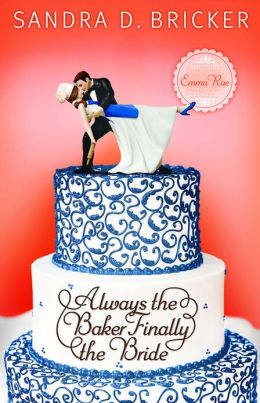
FinallytheBrideSandra Bricker, Always the Baker, Finally the Bride
(Abingdon Press)

**********************************************************************************************
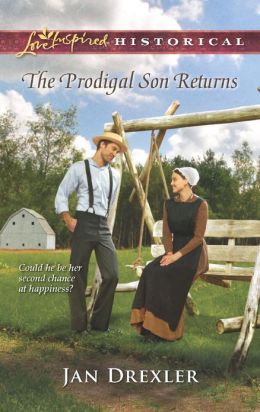
TheProdigalJan Drexler, The Prodigal Son Returns
(Love Inspired)

**********************************************************************************************
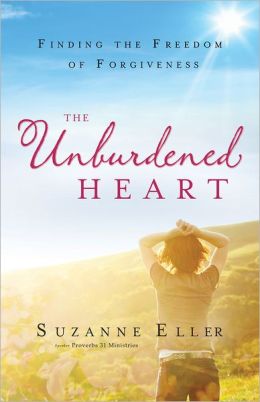
UnburdenedSuzanne Eller, The Unburdened Heart (Regal)

**********************************************************************************************
RealValorSteve Farrar, Real Valor (David C. Cook)

**********************************************************************************************
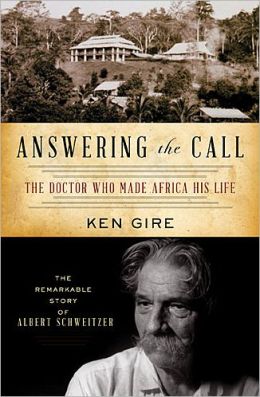
AnsweringtheCallKen Gire, Answering the Call: The Story of Albert Schweitzer (Thomas Nelson)

**********************************************************************************************
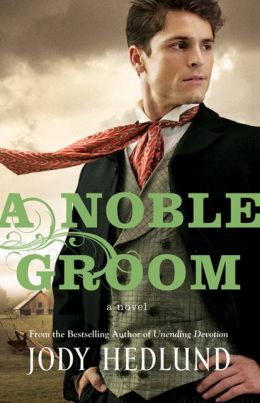
ANobleGroomJody Hedlund, A Noble Groom (Bethany House)

**********************************************************************************************
TheEasyBurdenPatty Kirk, The Easy Burden of Pleasing God (IVP Books)

**********************************************************************************************
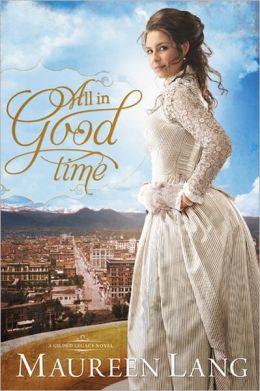
AllinGoodTimeMaureen Lang, All in Good Time (Tyndale House)

**********************************************************************************************
VoicesofthePacificAdam Makos, with Marcus Brotherton, Voices of the Pacific (Berkley Hardcover)

**********************************************************************************************
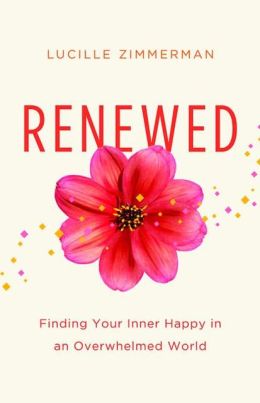
RenewedLucille Zimmerman, Renewed
(Abingdon Press)

**********************************************************************************************

New WordServe Clients

None…we’re standing pat with our great group of authors for now!

New Contracts

Tracie Miles signed with Bethany House Publishers for a book titled Your Life Still Counts: How Your Past Has Equipped You for Your Purpose.

Susie Shellenberger and Kristen Weber signed with Barbour Publishers for A Girl’s Guide: Guys, God and the Galaxy.

Gillian Marchenko signed a contract with T.S. Poetry Press for her memoir. Yay, Gillian!

What We’re Celebrating!!

A Higher Call by Adam Makos continues to hit the New York Times list. On March 31, it will be #6 (again) on the Hard Cover nonfiction list. It’s been in the top-15 for 9 weeks!

Bees in the Butterfly Garden by Maureen Lang, hit the March CBA list at #5 on the fiction list and the #40 on the top-50 in sales list.

What thing on your writing journey are you celebrating today?

Reflection on the Writing of Books

After a conversation with a Catholic friend the other day, I got to thinking about the nature of revelation. My friend and I believe the same exact good news—that God orchestrated his son’s human birth and death and coming back to life so that we humans could live forever—but we come to it so differently: my friend through tradition mainly, beliefs passed down and solidified over the centuries since Jesus’ time, and I mainly on the basis of what Jesus’ friends and their followers wrote down long after he left them.

If my friend and I were to argue the superiority of our respective views—which we do not, being content to share the essence of our faith, if not the minutiae of how we came to embrace it in the first place—we would soon reach an argumentative impasse. My friend’s sources are certainly older, since the passing down was already happening when Jesus still walked among us and words still dropped from his tongue and people around him were still being amazed by the miracles he performed in their midst. I would argue that, while my sources are centuries younger, they were surely more authoritative for having been written down rather than left to a millennia-long game of telephone, in which the message changes, often comically, every time it’s passed from mouth to ear. He would surely counter that mindless adherence to an ancient book produces its own, often comical, misunderstandings about God, and I would have to agree. And so it would go. If, that is, we lowered ourselves and risked our friendship to argue in this way. But, as I say, we don’t.

It struck me in thinking about this non-argument, though, how crucial a role words and books do play in my faith—even though, as the apostle Paul rightly asserts, “since the creation of the world God’s invisible qualities—his eternal power and divine nature—have been clearly seen, being understood from what has been made” (Romans 1:20 NIV). Even small children, incapable of reading, can know God—as I did when I was little—just as non-literate believers have throughout the centuries.

Faith, in other words, does not have to depend on written words. And yet, for many of us—for me—it does. Or, perhaps not faith itself but faith growth.

And although my friend might argue that my dependence on specific words and passages of scripture surely limits my capacity to believe, I am confident that, in the main, the Bible enlarges my faith, challenging me to see and hear and inhabit the world differently than is my wont and to recognize God in it more readily. So, too, do other books. Something about words, written down, demands reflection.

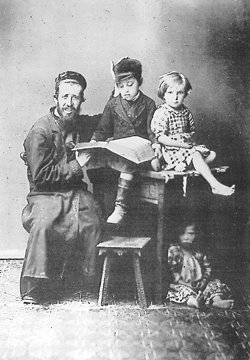
A melamed (teacher) and his students in 19th century Podolia

So, it seems to me, we writers of books have a significant role to play in the furthering and nurturing of faith. And, though God is bigger than anything we or the biblical writers of old can convey, bigger indeed than the Bible itself, we have a rare responsibility. We govern unseen cities already, through our words, and tutor the very children of God.

WordServe News: September 2012

Exciting things have been happening at WordServe Literary!

On the final post of each month you’ll find a list of WordServe authors’ books releasing in the upcoming month along with a recap of WordServe client news from the current month.

New Releases

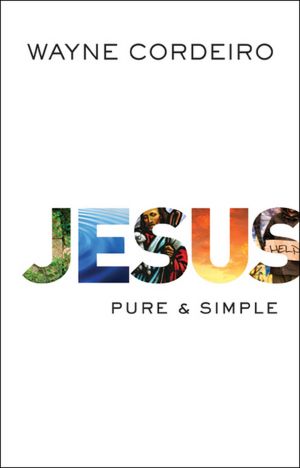
Wayne Cordeiro, Jesus Pure and Simple (Bethany) (GJ)

************************************************************************************************

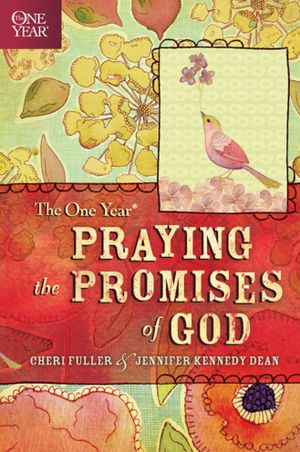
Cheri Fuller & Jennifer Kennedy Dean, The One Year PRAYING the PROMISES OF GOD (Tyndale) (GJ)

************************************************************************************************

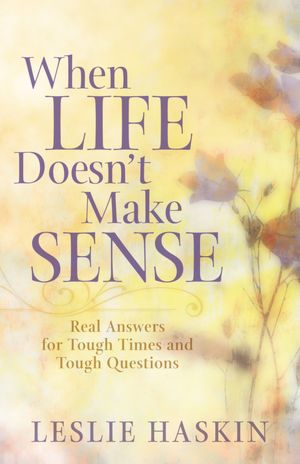
Leslie Haskin, When Life Doesn’t Make Sense (Bethany) (GJ)

************************************************************************************************

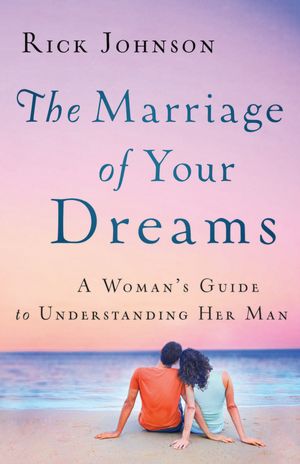
Rick Johnson, The Marriage of Your Dreams (Revell) (GJ)

************************************************************************************************

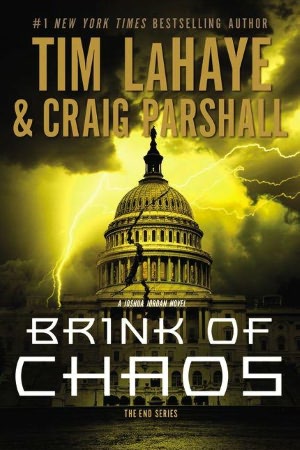
Tim LaHaye and Craig Parshall, Brink of Chaos (Zondervan) (GJ)

************************************************************************************************

Kathi Lipp, 21 Ways to Connect With Your Kids (Harvest House) (RG)

************************************************************************************************

Lynn Morris, Secret Place of Thunder (Hendrickson) (GJ)

************************************************************************************************

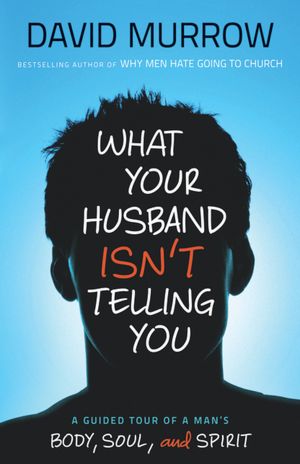
David Murrow, What Your Husband Isn’t Telling You (Bethany) (GJ)

************************************************************************************************

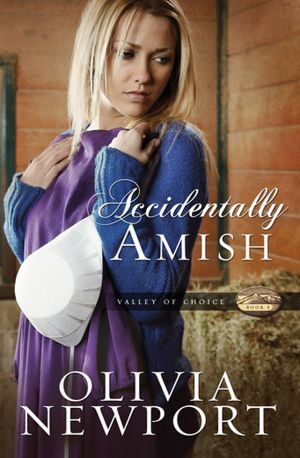
Olivia Newport, Accidentally Amish (Barbour) (RG)

************************************************************************************************

In the, “We didn’t represent these books, but are happy to make the announcement because Rita is now a WordServe author and we like her writing a lot…” category, we’re excited to tell you about these books.

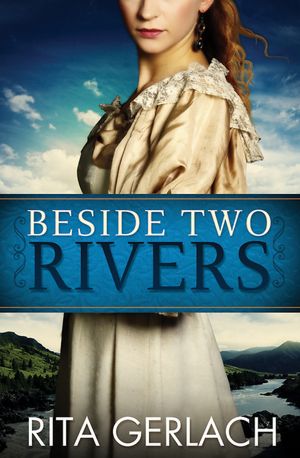
Rita Gerlach, Beside Two Rivers: Daughters of the Potomac, No. 2 (Abingdon)

************************************************************************************************

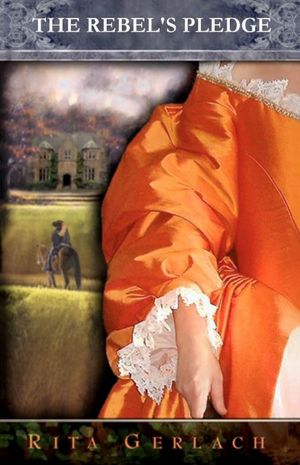
Rita Gerlach, The Rebel’s Pledge (Re-release, Kindle Version)

************************************************************************************************

New Contracts

Dave and Claudia Arp, with Peter and Heather Larson, are collaborating on four new books for couples. The first will be 10 Dates to Grow Together Spiritually. The others will be books on “dating” sons and daughters. They will all be published with Bethany House Publishers. (Agent: GJ)

Ken Gire signed with Harvest House for a gift book called Winters Promise. It’s a collection of his best writing from previously published books about how God uses life’s trials to bring about a spring in our life and faith. (Agent: GJ)

Tara Reeves and Amanda Jenkins are writing two children’s books for B&H Kids. The first is called The Knight and the Firefly, and the second will be a sequel. (Agent: BS)

Dr. Dave Stoop signed with Revell for a nonfiction book called The Power of a Renewed Mind, a message about how today’s science is proving the wisdom of Scripture and its ability to thrive in a chaotic world. (Agent: GJ)

Robert Wise signed with Revell for a new novel called Network of Deception, a contemporary thriller. (Agent: GJ)

************************************************************************************************

What We’re Celebrating!!

Greg Johnson and Sarah Freese, along with nine WordServe authors, were able to attend ACFW this month. It was wonderful to connect with so many writers from the WordServe team. YOU are what make WordServe such a wonderful place to work and serve!

************************************************************************************************

Welcome, Alice Crider!

While WordServe is very sad to be losing Barbara Scott (resigned to go back to freelance editing), we’re honored that Alice Crider has joined WordServe. She’ll get the handoff from Barb on many of her clients, and will be working to find her own select stable of authors to serve. Greg worked with Alice at Alive Communications 10 years ago. Alice then worked at WaterBrook Press for many years, the last several as an acquisitions editor. When Alice left that position in December of last year, she started her own editioral and coaching company. She’ll get to use those same skills as an agent.

************************************************************************************************

Carol Awards at ACFW

Though these authors are no longer with WordServe, we were honored to represent their books when Rachelle Gardner was with the agency. Congrats to all of them!

Rosslyn Elliot won in two categories for her novel with Thomas Nelson, Fairer Than Morning. She won in the “Debut Novel” and the “Long Historical” categories.

Karen Witemeyer won in the “Long Historical Romance” category for her book with Bethany House Publishers, To Win Her Heart.

Lisa Jordan won in the “Short Contemporary” category for her book with Love Inspired, Lakeside Reunion.

What can we help you celebrate?

WordServe News: August 2012

Exciting things have been happening at WordServe Literary!

On the final post of each month you’ll find a list of Water Cooler contributors’ books releasing in the upcoming month along with a recap of WordServe client news from the current month.

New Releases

Mary Davis (and others), A Cascade Christmas (Barbour)

*********************************************************************************************************

Denise George, A Woman’s Right to Rest (Leafwood)

********************************************************************************************************

Patty Kirk, The Gospel of Christmas (IVP)

********************************************************************************************************

Krista Phillips, Sandwich with a Side of Romance (Abingdon)

********************************************************************************************************

Helen Shores Lee & Barbara Shores (with Denise George), The Gentle Giant of Dynamite Hill (Zondervan)

********************************************************************************************************

Bob Welch, 52 Wonderful Life Lessons (Thomas Nelson)

********************************************************************************************************

New Contracts

Leslie Leyland Fields and Dr. Jill Hubbard (Co-host of “New Life Live”) signed with Thomas Nelson Publishers for a nonfiction book called Forgiving Our Parent, a memoir with a message about Leslie’s struggles forgiving her father and Jill’s counsel on the whole topic of forgiveness after trauma. (Agent: Greg)

Ken Gire signed with Moody Publishers for a biblical novel called The Centurion. The story is about the Centurion who witnessed the death of Christ and what happened to him as the years unfolded. (Agent: Greg)

Former European runway model Jennifer Strickland (www.jenniferstrickland.com) signed a five product/book agreement with Harvest House revolving around her book, Men, Mirrors and Magazines. She’ll do a main book for women, workbook, video, and then a book for teen girls and one for tweens. (Agent: Greg)

Tricia Williford signed two books with WaterBrook Press, the first for her memoir on the first year of her widowhood titled And Life Comes Back, the second untitled. (Agent: Greg)

Robert Wise has signed with Leafwood Publishers for his book The Joshua Way, a nonfiction book on spiritual warfare using the principles found in the life of Joshua. (Agent: Greg)

What We’re Celebrating!!

Both Resolve by Bob Welch and A Higher Call by Adam Makos, two WWII nonfiction books with Berkley Caliber, got a nice mention in the latest Publisher’s Weekly in a discussion about military books.

What’s your great news? We’d love to help you celebrate.

On Telling the Truth, Sort Of

Yesterday my daughter, Charlotte, was talking to me about churches. She’s away at college, and beneath our conversation I was pray-hoping her speculations might indicate she was thinking about attending church there one of these days.

“I hate churches where the preacher tells those fakey stories,” she told me. “You know, the kind that starts out, ‘A woman once said to her husband…’ or something like that. I mean, it’s obviously made up and just wrecks his credibility.”

Our conversation went on—to the endless sermons of the church we’d attended in her youth and her preference for the brief, strictly Bible-passage-focused homilies of Catholic masses she’d gone to with her grandparents—and then moved on to other subjects, but I’ve kept thinking about this business of the fakey stories preachers tell.

They arise, I’m guessing, from a problem nonfiction writers often confront. I mean, I told Charlotte, it’s not like the guy can actually tell a true story from his own life in church, especially one about something sensitive, like meanness or covetousness or lust—a story, that is, about something truly relevant to the people he’s addressing—with his wife and kids sitting right there among his listeners. If he wants to tell a story from real life—which he likely does, since that’s the best way to interest an audience—he must take pains to remove its realness.

Whenever I go to writers conferences, there are nonfiction workshops dealing with precisely this problem, because publishing a story from one’s actual experience is likely to upset the people involved. (More important, at least from your publisher’s perspective, is that upsetting the people involved can get you, your editor, and your publisher sued. Most publishers have lawyers on staff to prevent such eventualities. That’s how problematic telling true stories can be.)

At the conferences, writers are advised to do everything from changing the names of the people involved in a story to getting permission first to waiting to tell a story until all the people in it are dead. In my experience, the permission solution is best…unless, of course, you have a story you really want to tell and you’re certain someone involved will never grant you permission to tell it. Like when it’s about your kids, who must be legally fair game, since I’ve never had a publisher demand I get their permission for any of my daughters’ many appearances in my writing.

Which is good, as getting permission from them would have been impossible. What kid is going to want you writing about her spate of evil tantrums at age eight? Or your terrors as a parent when she started developing pubic hair?

When my other daughter, Lulu, at age six or so, figured out what I was up to when I sat at the computer, she flat out refused to be written about.

That stymied me a bit. With only one daughter’s foibles and my own to plumb, what could I write about?

“You’re the daughter of a writer,” I finally told Lulu. “It could be worse. You could be the daughter of a preacher and never allowed to do anything wrong. Or the daughter of a soldier and always worried about my being killed. There are worse things than being in the public eye.”

But I’ve trodden carefully since then. I opted not to write about Lulu’s potty training trials when the idea bounced through my consciousness the other day. And I have decided to put the sketchier of my daughters’ college experiences (that I know about) on literary hold until after they graduate. When I just can’t resist, I make up fakey stories that probably damage my credibility. But, oh well.

Publishing Is Publishing

This Fourth of July, I watched the fireworks from the exotically landscaped grounds of a ritzy Malibu mansion overlooking Santa Monica Bay. I was admiring an Anna’s hummingbird perched in a tree that could have been invented by Dr. Suess when a beautiful woman I’d never met before came up to me to find out how to get her children’s books published.

“They rhyme,” she told me. She had written them together with her three children, whom she homeschooled.

She seemed sweet, one of those amazing moms who can take charge of all children present (in this case, at least twenty of them)—supervising them in the pool, sunscreening them on a schedule only she knew about, braiding hair to keep it out of faces, correcting their behavior toward one another, taking one to the bathroom, moving them en masse to the trampoline, seeing to it every last picky eater among them got something to eat, keeping track of the dog—and all the while initiate and maintain extended conversations with various of the adults present.

“Well,” I said. “I don’t have any experience whatsoever in children’s books. I write nonfiction for adults.”

“Yeah, but I heard you write, um, like, spiritual books.”

I nodded.

“And they’re published, aren’t they? So they’re, you know, regular books, right? Like, you can buy them in bookstores? I mean, publishing is publishing, isn’t it?”

It intrigued me that she was seeking my advice at all. I was such an oddity at that party. Visiting from Oklahoma. Not rich. The only woman present with grey hair. Not at all the sort of person someone like her would go to for advice about anything—except maybe birdwatching. I seemed to be the only one at the party paying attention to the magnificent hummingbirds and house finches and hawks whooshing around us.

But she was right, I guessed. Publishing is publishing. I recommended she get the latest edition of Writer’s Market.

“Did that already,” she said.

“And I think I’ve seen a special Writer’s Market just for kids’ books.”

“Got that too. Read it cover to cover.”

“Then you know what to do. Write a proposal that has all the parts they ask for and send it out to agents listed in the book who represent the sort of thing you’ve written.”

“You mean a query letter?”

“Yes, that too. I mean, for publishing adult nonfiction, you’d need a book proposal, but maybe with kids’ books you can get everything you need to say said in your query letter. Send it to agents who seem in the same place professionally as you are—that is, just beginning your career as a writer.”

“But don’t I need to copyright my stuff first? I mean, they could just steal my ideas.”

I said I didn’t think copyrighting was necessary. Why would an agent want to steal her ideas? “Agents make money from selling your book to publishers,” I told her, “not by stealing ideas and writing books of their own. They get fifteen percent of whatever you make. They want you to make money.”

She seemed unconvinced.

“Well,” I said, “Just do whatever it says to do in your children’s Writer’s Market.”

“I did all that,” she said. “So what do I do now?”

“You wait to hear back. And then, if you don’t get any takers, you revise and do it all again with another list of agents. If your stuff is good, eventually you’ll find someone who wants to represent you.”

“But how long should I wait? I mean, it’s been a few weeks already. Isn’t there anything else I can do?” This woman was a doer. As we spoke, she was rearranging the bowls of dips and crudités that the pool-wet children had left in disarray.

“No,” I told her. “Just write. Revise. Submit. And wait. That’s all I know about how to get published. Unless it’s different with children’s books. Which I’m guessing it isn’t. I mean, publishing is publishing, right?”

So what do you think? Is all publishing the same? If it’s different, how is it different? If it is the same, how is it the same?