Why Do You Want to Write a Book?

voice matters2I love words. Slices of words on my tongue satisfy me like a sweet, icy watermelon on a sweaty July day. Whether I twist those words into colorful quotes, mash a couple of them together to create my own new word, or string just enough of them into countless paragraphs that eventually produce a book, I. Love. Words.

It took me a few years to realize I’m different that way—not everyone shares my passion. Few people consider their office or library a haven like I do, a place of refuge where shelves of categorically arranged books permeate the air with the faint mist of paper and ink.

Chances are, you’re somewhat similar to me. Yes, I suspect I’m in good company as I share today with you. We writers with lofty dreams, we have a way of finding each other. As an often insecure tribe who spends the majority of our days writing and waiting, vacillating between confidence and fear, we need the support of each other on this sometimes lonely and highly competitive journey.

It’s not new news: the publishing industry is shrinking. Larger publishers have nabbed smaller ones, and some have simply closed their doors. E-readers have reshaped the way consumers think about, and purchase, books. As a result, today’s publisher tends to seek new authors with the lowest risk.

Here’s the good news: God is bigger than statistics.

Publishers still need new authors; I imagine publishers will always want a well-rounded catalog of books to offer booksellers. While, yes, the best-selling authors sometimes carry the majority of sales, booksellers are usually on the lookout for “What’s new?”

This newness, though? I’ve discovered it costs us. Many hours of learning the industry, honing the craft, and most importantly, uncovering our unique voices.

Only you can determine if it’s worth the sacrifice; it’s the same choice I recently had to make. You see, I have a book releasing in a couple of weeks, When A Woman Finds Her Voice, and I wrote this book during a very difficult season. Many days, the morning sun rose right over the rim of my keyboard. In the only quiet time available to me, I would tuck away most of the night pleading for this heart-message to come. {I write about sensitive topics that today’s Christian women face, and that requires an unwavering authenticity that for me can only come in the stillness.}

I wonder what you’re willing to invest. The time it takes to pen the words—even if the book never sells? The sacrifice of certain relationships that might be put on hold while you pursue your dream? Your own reputation ?

Your turn: Why this book? Why are you willing to give this slice of time and energy? Is the investment worth it to you? I’d love to hear why!

Memoir Writing: Scene, Summary, and Musing

Photo/KarenJordanWhat is a memoir? “I had to look up the definition of a memoir before I wrote my entry for this contest,” one writer confessed to me.

“Congratulations!” I responded, acknowledging her award.

This writer’s research paid off. Plus, she chose an inspiring, true story from her life, and she engaged her readers with a meaningful message using creative nonfiction techniques.

Being a judge of the contest entries, I also noticed that some of the other aspiring and experienced writers needed to do a little research before they wrote a memoir. So, I’m sharing here some of what I’ve learned as a memoirist.

My road to memoir writing started with enrolling in a class on writing for publication while in college. But I really didn’t hear the term “memoir” much until I took nonfiction writing classes a decade later.

One of my favorite professors at the University of Arkansas at Little Rock, Dr. Sally Crisp, recommended a very helpful book on that subject by another writing teacher, Judith Barrington. Barrington describes her book, Memoir Writing, as a “practical guide to the craft, the personal challenges, and ethical dilemmas of writing your true stories.”

Defining memoir. Since I’m knee-deep in writing a memoir with my daughter Tara, I needed a refresher course. Here’s my own memoir checklist.

  • Focused theme or topic. William Zinsser discusses the memoir in his book On Writing Well. “Memoir isn’t the summary of a life (like autobiography); it’s a window into a life, very much like a photograph in its selective composition” (136).
  • Narrative. Memoir tells a story about certain people, places, or events from the writer’s personal life.
  • Reflection. The writer’s thoughts and beliefs about the events are a vital part of  the memoir.
  • Conversation. The narrative voice reflects on her thoughts and feelings in an intimate, conversational, and honest manner.

Creative NonfictionThe memoir tells true stories using creative nonfiction techniques.

  • Contains all the elements of fiction.
  • Moves back and forth in time.
  • Requires believable dialogue, based on truth.
  • Switches from scene to summary to musing.

Photo/KarenJordanScene, Summary, and Musing. Musing takes a vital role in the memoir. But scene and summary provide two useful ways to move through the narrative.

Judith Barrington describes the memoir’s characteristics of scene and summary in cinematic terms. I’ve often used photographic terms to describe the editing process.

  • Summary. Here the writer focuses on the panoramic view. This may include numerous details, but examines the person, place, or event from a distance. For this viewpoint, I imagine myself taking a photo of a sunset or sunrise over a lake with my long-distance camera lens.
  • Photo/KarenJordanScene. For this macroscopic view, you zoom in for a closer look at your story and focus on a particular point of view or incident. Consider using some dialogue to illustrate your scene or another descriptive device to describe an intimate detail of that moment. In photography, I change my lens and focus for a closer view of a child or the reflection over the lake.
  • Musing. I visualize this characteristic of a memoir as the microscopic view, zooming in on the writer’s intimate feelings and thoughts. The reflective voice of the writer expresses her feelings and thoughts at the time of the event. She might choose to express her current understanding or the wisdom that she gleaned from her personal experience. For instance, I love to capture the memories by the lake close to my home–the awesome sunrises and the poignant moments with my grandkids. It reminds me to record the stories that matter most to me as a gift for the next generation.

Storytelling. In memoir, the writer tells a true story from her life, using her best creative nonfiction skills. As you examine your memoir for revisions, focus on your areas of strength and weakness. Do you tend to focus on summarizing your story rather than zooming in on some important scenes? Have you reflected on what a certain person or event means to you or what you’ve learned from this experience?

I challenge you to work on the weaker elements of your memoir. Your story will become stronger and even more meaningful, as you examine your scene, summary, and musing.

Photos/KarenJordan

What helpful insights could you offer about memoir writing?


Monkey Read, Monkey Should Do!

apeDoes the acronym HARO mean anything to you?

It should, because it just might be your ticket to free publicity, extensive exposure as a writer, and the means to grow a national reputation as an expert in your field.

HARO stands for Help A Reporter Out, and it’s a website where you register as an expert and news source. There is no fee to register, and while there is no guarantee that you will get tapped for information, it’s a chance you don’t want to miss. For nonfiction writers, it can become one more piece of a marketing plan to become known for their unique expertise, while fiction writers might consider their own research in specific topics as fodder for story ideas. According to HARO’s website, 30,000 members of the media have turned to HARO for assistance in developing stories; is there any reason you shouldn’t be one of those folks helping out a reporter?

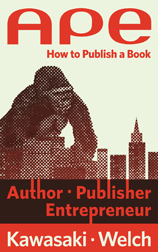
Learning about HARO was just one of the things I learned from recently reading APE: Author, Publisher, Entrepreneur-How to Publish a Book by Guy Kawasaki and Shawn Welch. While I have no desire to publish my own books, I still found the book informative and helpful, especially as I’ve grown from an author-wannabe to someone with five years of publication experience. The first section of the book was a good reminder that writers come in all shapes and sizes, with a range of motives, and that’s okay. It made me consider again the tenacious nature of writers who want to publish and gave me a new understanding of why people choose self-publishing. (It also made me realize that if I did decide to do a short ebook as a promotional opportunity for my other books, I could probably pull it off using APE as my guide.)

What I especially appreciated, though, was the book’s insistence that there is no escaping from the truth of today’s book business landscape: authors need to take responsibility for their books’ success, no matter how they are published.  APE gives valuable insight into the entire publishing process, which I’m convinced every author needs. Publishing is a business, and the sooner authors accept that, the more successful they will be! As an early publishing mentor of mine insisted, if you’re going to succeed, you better know how the business works. Kawasaki and Welch have done a fine job in giving readers the essentials of publishing.

Seeing as I’ve spent the last year trying to educate myself about platform and marketing, I found the last part of the book packed with practical suggestions and resources, like HARO, that I can play with as I continue to polish my marketing skills. The authors even include their own list of what they did to publish/market APE itself, providing readers with a basic outline for promoting any book, and offering links to learn more.

What are you APE-ing these days?

(Special thanks to Lucille Zimmerman, my agency-mate, who gave me the book to read!)

5 Starter Tips On Writing A Memoir

Two weeks ago I was invited to speak to my daughter Zoya’s fifth grade class about writing memoir.

http://www.stockfreeimages.com/

Tip #1: Don’t do it!

If you want to write a memoir, be forewarned: readers love them but publishing houses are hard pressed to sign them. Of course, that doesn’t mean that memoirs don’t sell, but it does mean that memoir writers must work on platform building, and strengthening tribe readership, as they write. It can be daunting but it is essential. When you get to the book proposal part of your journey, you need to prove to publishers that your story will sell.

Tip #2: Don’t lie!

Possibly one of the reasons why publishers don’t want to buy and publish more memoirs is because several books deemed “memoir” in the past few years have been found out to be more fictional. Lying to create a good memoir taints the whole industry. You may not be able to remember your life’s story verbatim. That’s OK. Feel free to take some creative allowance building scenes and retelling conversations at pivotal points in the book. Just make sure everything you write about actually happened.

Tip # 3: Don’t rush!

Memoir books and teachers concur that in order to write a good memoir one must have perspective. In order to gain perspective, especially when writing about our lives, we need time and distance from the events which we hope to convey in a way that resonates with the reader. If a person hasn’t allotted enough time in her life to reach some sort of understanding or conclusion regarding the events of the memoir, she will be hard pressed to point and prod readers to universal truths that will apply to their lives.

Tip #4: Don’t assume!

Don’t assume your story will carry the writing. As was mentioned in Tip #3, a memoir, although about your life, is really about/for the reader. C.S. Lewis said that we read to know we are not alone. The memoir must connect with the reader. There needs to be a mingling of worlds, where a person reading your words stops and wonders how you knew so much about him.

Tip #5: Don’t wait!

If you want to write a memoir, don’t wait to learn all you can about memoir writing. My two best pieces of advice to the young memoirists in the fifth grade were: 1) write, even a little bit, every day, and 2) if you want to write and be good at it, be a voracious reader.

What are your thoughts about memoir writing? What’s been a favorite memoir that you’ve read?

Hello, Fellow Publishers!

I’m a publisher.

I thought I was just an author doing some social marketing, but thanks to what I’m learning from Beth Hayden’s book Pinfluence: The Complete Guide to Marketing Your Business with Pinterest, my whole perspective on my writing career is changing. Yes, I write mystery and suspense novels, but in support of that endeavor, I need to be creating and presenting content online that is meaningful and valuable for my customers. I need to give my social media friends and visitors what they are looking for, or as Hayden explains on page 61 of her book, “You need to make sure that every piece of content you publish either solves a problem for your audiences, or entertains them – preferably both.”

That’s a big responsibility. Every piece of content. We’re talking about images, information, links, comments – anything you publish anywhere on the internet that has to do with your writing. It’s all part of your ‘company.’ The really exciting part of using Pinterest as part of your company is that it allows you to get creative with visual content, which, psychologists tell us, can evoke emotional responses in a viewer. The bottom line is that by publishing the right images, you can build enthusiasm and loyalty in your viewers, which will help sell your product (books).

Culling through whatever is already on Pinterest boards, however, is not the way to find the ‘right’ images for your viewers, Hayden points out, just as consistently using someone else’s words doesn’t make your work original. Instead, put together your own content. That doesn’t mean you have to take a hundred photos or hire a graphic artist. It means you have to collect compelling images that represent your unique brand. (Be very careful of image copyrights.)

Do you write historical romance? Pin beautiful images of the places where you set your stories, or sketches of period clothing, or the flowers of the region – anything that helps your reader connect to your book. Think of it as publishing a behind-the-scenes guide to your story.

Do you write motivational memoirs? You could pin pictures of famous people who have overcome hardship, or framed inspirational quotes, or maps that trace incredible journeys. Think of it as pulling together an illustrated companion piece to your book.

The possibilities are limited only by your time and imagination, but if you keep focused on your ‘company,’ it will help eliminate some of the time-draining wandering we all do when we get online; if you’re collecting images of old barnyards for an Amish board, it will be a lot easier to not get distracted by all those cute animal pictures that pop up in the blogosphere. (If all else fails, put a sticky note on your computer screen that reminds you “No puppies!”) Make your publishing goals as specific as possible, pin appealing and evocative images on your boards, and Pinterest can become a great billboard for your books on the global internet highway.

Enjoy your publishing!

What are some examples of images that you have been pinning lately? Do you have any creative ideas for pins besides those I mentioned above?

Top 5 Self-Editing Tips: Intention

In my first post last month on the topic of the Top 5 Self-Editing Tips, I covered in detail how a novel is structured and how you can be more aware of how to build the structure of your novel.

This month, let’s concentrate on an aspect of self-editing that writers rarely hear much about:  intention.

Merriam-Webster’s Collegiate Dictionary defines intention as “(1) a determination to act in a certain way: resolve; (2) import, significance; (3) what one intends to do or bring about.”

The definition of intention includes other topics, but for our purposes, we can examine the synonyms for intention and determine how we might find intention in a piece of writing, whether fiction or non-fiction. Synonyms: intent, purpose, design, aim, end, object, objective goal.

Once you finish your first or second draft, ask yourself, “Did I fulfill my overall intention for writing this piece, and did I achieve my intention in each scene or section?”

Whoa! That sounds like a tall order, doesn’t it? You might be thinking, how long am I supposed to spend on an edit? The answer: as long as it takes. Because if you have not fulfilled your intention in writing your book, then how can your reader know what you were trying to say?

Let me make this a little simpler by starting with a chapter or even a part of a chapter. Did you intend to make your character unsympathetic in this scene? If not, then you have not communicated the soul of your character to the reader. You have not fulfilled your intention. The reader might even think, “Marsha would never say that. Why is she being so rude?”

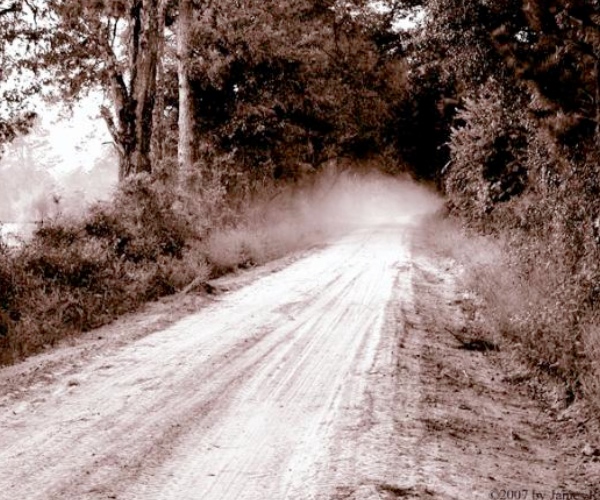
On a greater scale, your story or your non-fiction book should have an over-arching aim or goal. It is the road that connects you to the reader and pulls the story along. Yes, even a non-fiction book is more successful if it tells a story that persuades your reader to believe in what you’re writing about.

Your road will twist and turn in a novel, but you, as the author, should always keep the goal in mind. You don’t want to tell your reader up-front what your intention is, but you should know where you’re headed. If you take readers down a rabbit trail and nothing of significance happens, they will soon stop following you through the brush.

Only you know what you want to achieve in your book. If you’re leading your reader down a “road less traveled,” the trip may be leisurely or it may zip along. You may travel on a super highway, on a country lane filled with potholes, or you may walk with your reader down a garden path.

But if you veer off that highway/road/path just because you have a sudden inspiration, your book may be filled with pointless arguments (non-fiction) or characters who pop out of nowhere to deliver a useless piece of dialogue (fiction).

My intention in this post is not to say that plotters are better writers than pantsters. You can write your book as you please, but if you know your beginning and where you aim to end—intention—then the journey will be that much sweeter.

To be continued…

How will you self-edit your novel or non-fiction book to make sure your intention is clear and that you have achieved your goal in every chapter? 

Memoir Makes It Better

5 ways practicing memoir will improve both writer and writing.

There is fiction, and there is nonfiction; then somewhere in between lies memoir, their mutant spawn.

The last decade or so has been a heyday of sorts for memoir. Much of what makes the genre appealing to readers is that it combines the artfulness of fiction with the real-life validity of non-fiction. It’s the refined, literary version of reality TV.

But what appeals to memoir readers is often the same thing that confounds memoir writers. To piece together a good memoir, the tenets of fiction must be employed within the constraints of non-fiction. Likewise, the aims of non-fiction must be achieved through elements of fiction.

Still, this blurring of lines is precisely what makes memoir a worthy and worthwhile effort for any writer. Here are a few of the lessons you might find yourself picking up in the practice:

1. You Aren’t So Wonderful

In a world of bad characters and good ones, most of us would seat ourselves in the “good” group. But memoir might suggest we are being too generous in this. Try turning yourself into a protagonist: take a recent conflict in your life and record what your thoughts, actions, and interactions were in it. Leave out your motives and intentions, and instead write what actually happened. How did you respond when given a backhanded compliment, when annoyed in the check-out lane, when cut off in traffic, when insulted or demoted or hurt? Write it honestly.

I thought of myself as a capable and accomplished person, more or less—a kind one too, until I had to become a character in my memoir. The character-me was not nearly so magnanimous as the “me” that I had perceived myself to be. Seeing my unedited self on paper was startling. There was far more sin and selfishness than I would’ve been willing to admit. But that awareness made me better: more repentant, less proud, more forgiving, less afraid of making mistakes. I became newly grateful for what I have been given because I could see like never before that I don’t deserve it. And grateful is a great place from which any writer can start.

2. Characters are Complicated

Walk a mile in somebody’s shoes, as the saying goes. Real people have real complexities; this is impossible to ignore when writing memoir because the subjects you’re writing about are displaying their complexities all the time, from head to toe. Let this be a lesson. The people in your stories will be stronger subjects if you’re willing to appreciate nuance and even paradox in them. That means creating/presenting subjects who have dimension: likeable and unlikeable qualities, consistencies and inconsistencies, weaknesses and strengths alike.

3. Story Is Good

Setting, plot, characters, conflict, rising action, falling action, dialogue. Fiction writers tend to be experienced in weaving together these elements in their writing, while many non-fiction writers spend little time developing their story muscle. The result is often a non-fiction writer with a profound writing weakness: four parts tell for every one part show. Take a crack at memoir, and you’ll see that story can make a point on its own. Events and truths don’t necessarily require further explanation from an omniscient author voice. When the story you’re telling is complete, resolution is already there.

4. Reality is Simple

To keep things fair, here’s one for the fiction folks. You have zero limitations on the creativity you can bring to your story lines, which is likely why the rest of us so thoroughly enjoy your work. But memoir can remind you that most happenings in life are not extraordinary, at least not at first glance. While it can be tempting to rely on spectacular details to move your story along, often that’s an easy way out. It might take more effort and more practice in writing to instead craft a more plausible storyline that has every bit as much resonance.

5. “Interesting” is Necessary

But it should also be said that spectacular things resonate spectacularly. Few people will want to read your work if nothing in it drums up any interest. Far too often we let ourselves settle for an existence that is boring and wimpy. Ask yourself: In the last year, have I changed? Have I pursued something? Have I discovered something? Have I been part of something that matters?

We are creatures made in the image of a bold, reckless, zealous God, the One whose story grips people and sets their lives on an entirely new course. If there is nothing in your life that seems worth writing about, let memoir be an alarm that wakes you up to live bravely. Chase after something. Commit to something. Let go of something. Be moved to action. Give generously. Receive graciously. Love with tenacity. Or write some memoir, if you dare.

What Do Collard Greens have to do with Marketing Mojo?

Hey y’all, let’s chat…I’m Shellie, they call me the Belle of All Things Southern, and I’m here to talk about marketing. Don’t roll your eyes at me. These talks are good for us. (Right, Super Agent Greg?) Being an incurable storyteller, it’s my natural inclination to open any discussion with a tale to illustrate my point, and my Papa tells a childhood story that perfectly captures my thoughts on marketing. So, please, join me on memory lane.

Ola Mae Rushing was my paternal grandmother. I remember her as a widow woman, worn slap dab out and spending most of her days resting her bones in a squeaky green recliner, watching the seasons of the Louisiana Delta change outside her picture window and Bob Barker charming the masses on her black and white TV. Together my grandparents had raised a dozen kids to adulthood before Papaw Rushing passed away. After his death, Grandmaw sat down and retired–from most everything. Papaw Claude had worked the land as hard as a plot of ground has ever been farmed during those early years, but life was anything but easy. There had always been more month than money and more hungry mouths than food to feed ’em, which brings me to the point of our story.

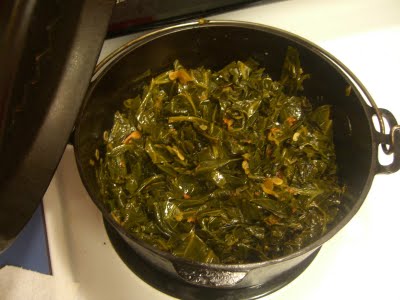
One day Grandmaw set a single pot of collard greens on the table and told everyone to help themselves. Papa was just a little boy, and collard greens were the last thing he had in mind to fill the pit in his hungry stomach.

“I don’t like collard greens!” he announced. “I hate collard greens. I ain’t eating any collard greens!”

The way Papa tells it, Grandma promptly escorted him outside for a Come to Jesus meeting.  Upon his return, Papa wasted no time pulling his chair up to the table and saying, “Pass the collard greens, please.”

That’s the sort of love/hate relationship I have with marketing. To be perfectly honest, it takes a remedial Come to Jesus meeting to keep my thinking straight on this one, but God is ever faithful to help me adjust my attitude. This writing life is a hard one, but it’s a blessed one. I’m getting to do what I’ve dreamed of doing from childhood when I spent my days in the arms of my favorite tree with a pile of books, a #2 pencil, and my Red Chief notebook. I write words, and people read them.

Sure, my “brand” was a huge surprise. I never intended to be a walking, talking, southern celebration, and I never ever set out to write humor. This is the platform that God built. Due to its perpetual deadlines, I get to build line upon line relationships with people, which brings us to a place where I can speak more important things into their lives than Suck Your Stomach In and Put Some Color On or Sue Ellen’s Girl Ain’t Fat, She Just Weighs Heavy. Not that those aren’t serious issues, but I live to talk All Things Jesus. Towards that end, I’ll gladly pull my chair up to my desk today, tomorrow, and as often as is necessary with a smile on my face and a burning resolve in my heart.

“Pass the marketing notes, please.”

Hugs, Shellie

What helps inspire your marketing mojo?

Embracing Sacred Moments

Lake Cortez at dawn

Have you ever wanted to hold on to a moment in time and savor the amazing experience a little longer?

The radiant fog bank settled just above Lake Cortez at dawn, a stark contrast to the winter landscape surrounding my home. I tried to focus on my writing deadline, but I halted my work to observe the breath-taking view.

The glowing mist at sunrise brought a familiar Bible verse to mind, encouraging me to embrace the moment. “How do you know what your life will be like tomorrow? Your life is like the morning fog—it’s here a little while, then it’s gone” (James 4:14 NLT).

Such memorable experiences happen when I least expect them, and they vanish without warning. But I always want to hold on to those special moments longer than possible.

The first time I heard my child’s heartbeat, I tuned out everything else, as I wondered about the new life inside me. Etched on the tablet of my heart, I recall those firsts—feeling him move, seeing his face, and holding him in my arms.

Those rare occurrences happen in my writing life, too. When I received my first contract to write an article for a well-respected publication, I held the envelope close to my heart a long time before opening it. Then, I unfolded the letter with great care and examined every word to be sure I didn’t skip any details.

Another momentous occasion occurred in December, as I shopped for Christmas gifts with my grandson Miles. “Wait, wait,” I drew a deep breath and raised my right hand to stop our conversation, so I could read the e-mail on my iPhone.

Confused by the interruption, Miles offered me a wrinkled brow.

“Seriously—wait,” I exhaled. “I’ve got to hold on to this moment.”

I read the message again, basking in the power of the encouraging words. “They like my proposal! And she wants to discuss signing me as a client!” I couldn’t restrain myself from expressing my thanksgiving and praise. “What a great Christmas gift!”

Later that week, my heart raced again when the agent called to confirm her offer. I found it hard to suppress my enthusiasm and joy, so I could listen to her instructions and tell her about my writing goals and dreams.

When my husband, Dan, asked about the details of my phone call, I still couldn’t gather my thoughts because of my excitement. “Maybe I should have taken notes,” I admitted.

So how can we embrace our sacred moments? We know such blessings vanish as fast as they appear, just as morning fog dissipates when exposed to the first rays of sunlight.

We can capture the essence of our experiences with descriptive words and well-chosen phrases in our narratives. And through this writing process, others will also be encouraged to tell the stories that matter most to them.

Photo/KarenJordan

Did my story remind you of a sacred moment in your life? Write that story!

Write With Realistic Expectations

Aspiring or first-time authors sometimes hold the misconception that they will hit it big with their first book. Visions of bestsellers dance in their heads.

It’s time for a reality check from The Agent’s Desk. One of our jobs is to manage your expectations through every stage of this long process called publishing.

The statistics have not changed much in the years that I’ve been involved in the book industry. In the entire Kingdom of Books, which includes every title sold in every category—not just Christian—only ten percent of authors make a living solely by writing books.

The authors you meet at conferences may still have day jobs, or if they freelance, they edit manuscripts, ghostwrite books, or conduct their own writing workshops. Or they still have day jobs. They work all day and then come home and write their novels at night. Or if they’re early birds like me, they hop out of bed at 4 a.m. and sit down at the keyboard before rushing out the door to make it to work on time. Some pound out two or three pages every day while riding a commuter train.

Another group of writers may be blessed with a spouse who is the sole breadwinner of the family. Mothers who are writers take care of the kids and write during nap time. I’ve known stay-at-home writer dads as well. The whole family tightens the purse strings and lives on a budget.

Of course, a few authors inherited their fortunes and live on Fantasy Island.

Here’s the reality. The average Christian novel sells about 5,000 copies. Some sell less; some sell more. You notice I didn’t say that the first-time author only sells about 5,000 copies. No, that includes experienced and newbie authors as well. Do the math.

A smaller percentage may sell 10,000 to 15,000 books each time. This is our hope for you because it will assure you a place at the table and a long-term career. Now we enter more rarefied air.

A much smaller group sells 20,000 or 25,000 books, but those are usually long-time authors or a new author who happens to write a book that hits a nerve with readers. We hope you are the exception and will publish books in this range.

Only a handful of authors sell in the 50,000 to 100,000 or more range consistently. You know their names. They live on the bestseller lists. You see their names month after month and year after year on the CBA or ECPA bestseller lists.

Then, once in awhile, an author catches lightning in a bottle, and you have a series such as Left Behind or a single book title like The Shack.

So please, if you are a newcomer to publishing, adjust your expectations, and if you knock it out of the ballpark, you’ll be as ecstatic as your agent and your publisher. We pray for bestsellers!

Image: Nutdanai Apikhomboonwaroot / FreeDigitalPhotos.net