Do You Want to Change The World?

signing declarationWriters can be agents of social change.

I was reminded of that truth after hearing a keynote address at a conference for animal humane workers. The speaker, Amy Mills, CEO of Emancipet, discussed the importance of social change to transform communities in order to improve our treatment of animals. But her words could also be applied to what traits writers need to cultivate to do their job well; in fact, I felt that Amy’s characteristics of social change makers accurately described many of the writers I know. Here are Amy’s six key traits; do you see yourself in any of them?

Social change makers:

  1. Collaborate across sectors. In my own writing, be it the fiction of the Birder Murder Mysteries or my best-selling memoir Saved by Gracie, I draw from many fields of expertise. My sources are birders, dog owners, psychologists, trainers, sociologists, scientific researchers, conservationists, biologists and historians, to name just a few. To be effective, writing has to draw from the world of knowledge.
  2. Are inclusive. Writers want their message to reach wide audiences. To do that, we keep an open mind about who might benefit from our work, and we rejoice when a new market presents itself as one that we might engage productively.
  3. Build empathy. For any piece of writing to succeed, it has to appeal to the heart of the reader. Having something meaningful to share is the first step of the writing process.
  4. Choose curiosity over judgment. The best writers try to see the world with fresh eyes to uncover what is true. Judgment can shut down avenues of investigation that might just lead to new revelations that will transform myself and my readers.
  5. Check assumptions. Writers make careers out of questioning assumptions. Sometimes, we even turn them upside down in the course of our creative process and/or production. The result is new perspectives and new ideas that can often improve readers’ personal or public lives.
  6. Learn from those they serve. Whether it’s hearing about new conservation efforts to protect bird habitat, or effective approaches to increasing animal adoption, or the need for more transparency about mental illness, every bit of research I’ve done for my books has not only taught me more about the world and the people and creatures in it, but how I myself can better connect with and serve my readers by passing along what I have learned. On a regular basis, I hear from readers about the ways my writing has affected them, and it guides me as I plan my next project. Without that feedback, my writing lacks focus, not to mention effectiveness.

Given these shared characteristics of writers and social change makers, I find myself considering my own work as a potential agent for change in the world; I won’t be the first author to do so, nor the last. “The pen is mightier than the sword,” may have come from the pen of English author Edward Bulwer-Lytton in 1839, but it expresses a timeless truth.

What will your pen accomplish today?  
How a Non-Writer Like Me Got Published (conclusion)

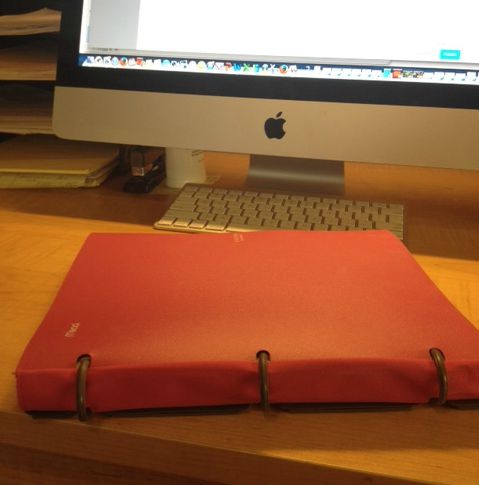
(Continued from Part I, Part II and Part III) Image, pink binder

I will never forget the feeling that day when I collated thirty chapters, punched holes, and neatly stacked all 330 pages of my first draft into a pink, soft-cover binder. I wasn’t Rocky at the stop of the stairs with pumped fists, but rather felt a peaceful satisfaction unlike any I’d ever experienced. It was a book in my hands, and I’d written it.

At the prescribed time, I emailed a digital copy to Jim Lund, the editor who had agreed to help me. His feedback arrived about three weeks later.

Jim’s comments were mostly about structural issues. The timeline was chaotic and he had trouble following what happened when. We shuffled chapters and paragraphs, and “trimmed” unnecessary copy. For example, when describing the time Annie broke into our upstairs bedroom, I’d “squirreled” a three-page tangent about the bats that flew into our house throughout that entire summer. “Kind of interesting,” Jim said, “in a creepy sort of way. I’d trim this.” “Trim” being the kind word for “chuck it.”

Over a period of months, I integrated Jim’s recommendations into a cleaner draft. I read and re-read that manuscript dozens of times, sometimes aloud, and fine-tuned the cadence and the prose into a finished product that sounded like me. It was then ready for beta readers.

I paid Office Max $110 to print eleven copies of the manuscript. I then assembled the pages into inexpensive binders and began to share my work with friends and family. Copies went to my brother, Paul; to Annie, of course; my son, Jeff; a couple of dear friends; my pastor’s wife, Kari; plus my therapist and the four women in our long-standing support group. My husband, Pete, continued to show little interest in reading, remaining insistent that it took me 330 pages to say what he likely would have said in 11.

I can’t remember a time when I ever felt so vulnerable… and I was terrified.

It’s a huge commitment to read someone’s work, especially 330 pages of it, and comments began to trickle in over a period of weeks. “This is good, Barb. This is really, really good. I read tons of books and frankly could not put this down.”

Yeah… that’s what friends are supposed to say.

I continued to edit and trim, ultimately heeding the advice of others and slashed/reworked/condensed the first few chapters. I couldn’t read a paragraph without reworking it, and wondered if I’d ever know when the book was done.

In the meantime, I bought hundreds of dollars worth of books on self-publishing. Jim taught me that only famous people received publishing deals these days, or people who had developed strong national platforms. He thought my story was powerful, but I was unknown. Completely unfamous.

Nevertheless, after two years of hard writing, I thought it would be fun to query some agents and see how the process worked. Maybe I’d get some helpful feedback. I’d already drafted a query letter in a “How to get your book published” class up at our community college. Next I needed to write a proposal, and Jim provided some templates.

Writing the proposal was miserable. While my business background proved helpful, I found this part of the process a chore. The manuscript was written first-person past tense, yet Jim instructed me to write the proposal in third-person present tense. So each of the thirty plus chapters needed to be condensed and translated into a different form of speech. It was a grind, and I shelved the book for months. This just wasn’t going to happen.

Until… until, I felt the nudge again. “It’s time,” said the voice within my own.

Two days later I sent a query letter to two agents, and both responded within a week. Requests for the proposal followed, and the manuscript followed after that. My brain could scarcely take in the enormity of what was happening.

One of the agents was the wonderful Alice Crider and she signed me with WordServe Literary. Within a few weeks, Alice had secured two publishing offers.

grunge image of a field

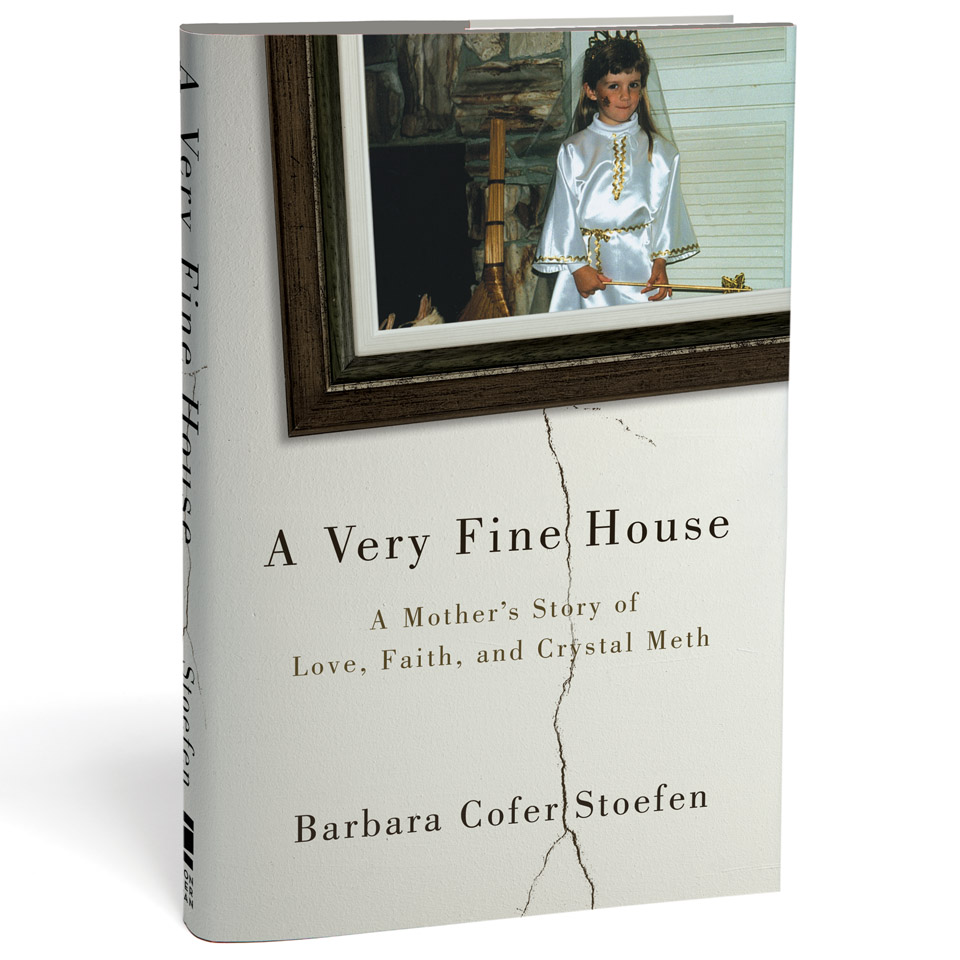
The rest is history, as they say. I’m not a famous author by any means, but I am an author nonetheless. It was four years after I received that first nudge from God to “write a book about the gifts you were given,” that Zondervan released A Very Fine House: A Mother’s Story of Love, Faith and Crystal Meth. They even retained my working title.

Miracles can and do happen. First was my daughter’s return from the abyss of drug addiction. Then a book followed about the gifts, the lessons learned. Whew. Both experiences have strengthened a simple faith, and changed me forever.

Sharing Insights Through Stories

I first learned the value of stories in sharing insights through public speaking. A fascinating story can captivate an audience, build rapport, illustrate an important point, and make the speaker’s message memorable. In writing, an appropriate story can keep a nonfiction book from becoming dull, and teach truths about life in a work of fiction. So, what makes a good story?

Opened magic book with magic light

1. Vivid and Sufficient Details

In reading along with my daughters several children’s books awarded the Newbery Medal, I found myself transported to a different time and place by the skillful writing of the authors. In these books, the authors provided enough details to help the reader enter into the world described in the book. In describing a food foreign to most American readers, one author provided such vivid descriptions of the taste and smell that I felt as though I, too, was sitting down for dinner next to the characters in the story. In any story, too many extraneous details can cause the impatient reader to start skimming the page to the next section. These award-winning books had the proper balance of information and brevity.

2. Relevance

For a nonfiction writer seeking to illustrate a certain point with a story, relevance is vital. To illustrate the author’s message, the characters and plot must be relevant to the theme of the book, the intended audience, and the point to be made. In writing my nonfiction book, Questioning Your Doubts: A Harvard PhD Explores Challenges to Faith, I learned to edit out parts of a story that slowed down the reading of a passage without further elucidating the concept I was illustrating. In fiction, story lines that do not further the plot may be interesting, but they may also confuse the reader and become a distraction that takes away from the flow of the book.

3. A Story Arc

All stories, even short illustrations contained within one paragraph, need to have a story arc. We need to meet the character or characters in their everyday setting. Next, we learn of an event that brings a challenge to these characters and starts off the story. Then we must see the character(s) grow, learn something new, overcome a hardship, resolve a conflict, or make a difficult decision. Finally, we need a sense of closure as the changed character(s) resume everyday life in a new set of circumstances, perhaps a bit wiser for the experience.

Knowing what elements to include within each section of the story arc is an art. Timing makes the difference between a forgettable story and one that drives home the author’s message. Sometimes I find that reading a passage aloud can help me identify which words can be deleted and what sentences should be smoothed. Feedback from beta readers also can be useful for determining if a story succeeds in illustrating your point.

As a reader, I remember the insights I glean from stories more than those presented through statistics, lists of information, and persuasive language. When writing, I include stories for my readers to make it easier for them to process the insights I hope to share with them.

What do you think makes a good story?

How to Write a Nonfiction Book that Sells — Pt. 2

Good NewsIn Part One, I talked about the importance of subject, title, and content for writing nonfiction books that sell. All of these are key elements. Missing just one could mean the difference between a publisher’s bite on your bait, or their swimming away.

Equally, if you neglect the power of your marketing strategy, including future books you can write, a publisher might say no instead of yes. Short-cutting is not worth the risk of losing a book deal.

So let’s talk specifics.

  • Intriguing marketing strategies are an integral piece of your non-fiction book proposal. Every author’s heard it, “You must help promote your own book.” But most, even those of us with sales and marketing backgrounds from other industries, can feel overwhelmed at how to effectively boost book sales on paper or in application. So what’s an author to do?

Think outside the industry. How do movies and TV programs promote their wares? What are the big producers doing to move sales? Think Coke, Wal-Mart, Apple, Under Armor, Cabelas, or others you see frequenting the air and radio waves, or filling store shelves. Learn from the big boys while creatively using your small budget.

For instance:

  • Getting Through What You Can't Get Over Book CoverBuild human curiosity into the heart of your sales tactics and specify samples in your book proposal. i.e. Six Secrets to…, How to…, What ______ Want, Three Things Most People Forget that Could Cost You Sales. See the pattern?
  • List all of your speaking events, including those you volunteer for, or that may feel more like family than a professional gig. Any exposure to a potential buying public counts — and those with built-in fans increase the odds of book sales.
  • Look at conferences, organizations, businesses, that don’t immediately seem like a fit for your message. Is there a way to connect your book to their needs? For Getting Through What You Can’t Get Over, I’m promoting the impact personal issues have on the workplace and vice-versa. I’ve booked new speaking opportunities as a result.
  • Include something unique. *Talk about the psychology of color and how you can use it in your marketing materials. Note your intent to attract those looking for peace through shades of green, your strategy to pursue passionate responses with strokes of red, or your ability to stir deeper thinking by adding blue.

*After you’ve made the sale, don’t forget to work with your publisher on appropriate colors when considering cover art for your book.

  • Future books you’d like to write are like adding scent to the lure for a publisher ready to bite. After writing your proposal on a subject matter readers are interested in, brainstorming a dynamite title, writing clear content, and adding unique marketing flavors, offer a list of intriguing future titles, true to your brand. This shows the publisher you are more than a one-hit-wonder. You are an author readers will follow for a long time to come.

In conclusion, I must stress the need for a teachable attitude and patient demeanor. Two common challenges we must overcome if we want to succeed. There is no place for arrogance or impatience in any professional venue. Be a turtle, not a hare, and in time, you will write a nonfiction book that sells.

Have you sold books and if so, can you offer insights I missed?

How a Non-Writer Like Me Got Published (Part II)

(Continued from Part I)

I began writing my memoir by starting near the end. That first night, while sitting in front of a blank computer screen, I tapped out the images closest to memory, and likely closest to my heart. It was the account of a remarkable day… the day I delivered my daughter, Annie, to a drug treatment center in California.

 “It wasn’t at all the institutional setting I’d expected for detox… At that late hour, the street was quiet and still. A woman emerged from the far side of the darkened house, brushing by a wall of hydrangeas that cast an eerie glow of amethyst and silver in partial moonlight. Her hushed tones made it seem a clandestine transfer as she took hold of the pull handle on Annie’s bag and turned to escort her inside… Just before both disappeared into the darkness of an open gate, Annie turned around to me and mouthed the words, ‘Thanks Mom.’ I thought I might burst. “

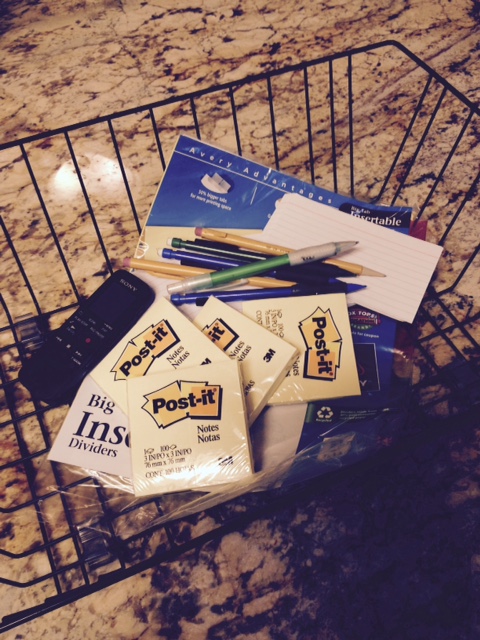
Within a week, I had one, full chapter completed. “Not bad,” my college-aged son reported after a quick read. He showed all the enthusiasm of dry cement. My husband refused to read it at all.Image, post-its and pens

My brother, Paul, on the other hand, provided terrific support for my intentions with the book. He had been the smart one, the accomplished student. While I was sunbathing and reading Cliff Notes during our college years, Paul studied Comparative Literature as a graduate fellow at a top university. “So Goose,” he asked (yes, he calls me Goose), “are you going to write this sequentially or thematically? You also need to pay close attention to your voice. My what? I struggled with how to continue. What was a “voice” and where could I get one? Was I really capable of writing a book? What initially had seemed nothing more than a quick chronicle of a story I already knew, the magnitude of the task ahead started to overwhelm me.

Image, Book binder

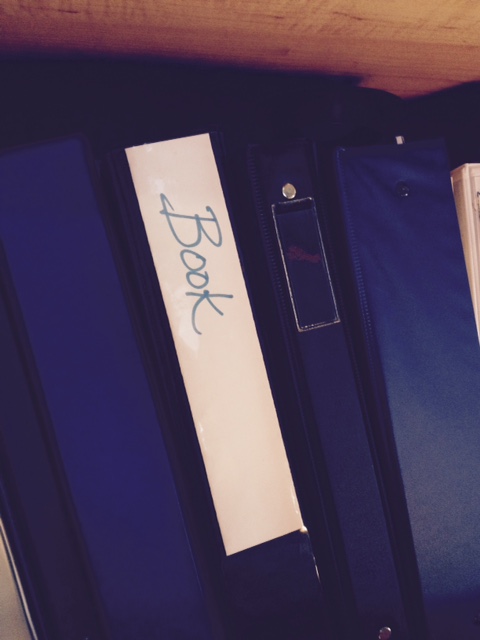
I decided equipment would help. A lover of bins and boxes and anything organizational, I ventured into Office Max and filled my cart with a large black binder, numbered dividers, a year’s supply of yellow sticky notes, white 3×5 cards, and multi-colored mechanical pencils.

Once home, I affixed a sticker to the spine of the binder with the word “Book” written on it in blue felt tip marker. I placed my new materials throughout the house: at my desk, on the coffee table in the great room, at my bedside table, near the bathroom sink, and in both cars. Ultimately finding it perilous to jot notes while driving, I purchased a small recording device. “Don’t forget to tell them what happened in the garage,” I recorded into the mic.

Each night before I sat to write, I filed the day’s sticky note inspirations onto the dividers throughout the binder. Then I prayed. “This was your idea, God. Help, please!” Six months later I had an outline and about six chapters written. This feat coincided with the weekend visit of a close friend, and one of the smartest people I know. Bright, articulate, and extremely well read, my friend-who-shares-the-same-name-as-me, demanded to read what I’d written. She in fact seemed hurt that I hadn’t yet asked for her input and advice.

I knew better than to share my work so early in the process, and especially with someone who tends to be critical, but I yielded to her insistence. I really hoped for some encouragement. You see it coming, don’t you? My friend emerged from our guest room the next morning, with the “Book” binder in hand, avoiding eye contact as she headed to the coffee pot. Oh boy, I thought.

“So Barb,” she finally said, once settled in at the breakfast bar, “I, uh, think, uh, this is an important story for, uh, people to read. It’s not, uhhhhh, gonna be a best seller or anything, but it’s, uh, good.” She then looked up at me and added enthusiastically, “You sure have a great memory!” I laughed. Kind of.

“Memory isn’t exactly what I was going for. But I guess that’s something. Thanks for reading.” Unable to leave well enough alone, she added, “You sure didn’t use many big words, did you?”

At that point my heart went “thunk”… and I stopped writing. (Stay tuned for Part III when I share how the Jordan River helped me start writing again….)

I’m a Glutton for Information!

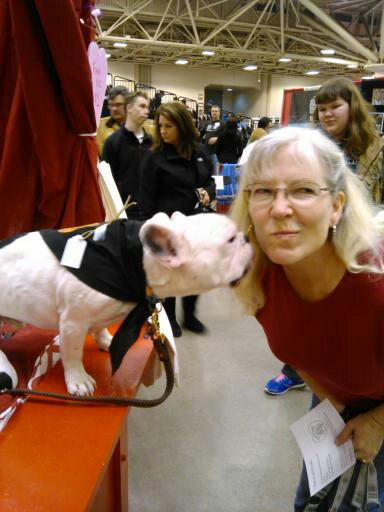
French bulldogSelling books and signing them is a happy experience for any author, but if I had to name my favorite part of the writing process that leads to publication, it would be doing the research that goes into my books.

I love doing research. In high school and college, I was the student who jumped for joy when the instructor assigned a research paper. I couldn’t wait to dig through the library for books, or hunt down obscure magazine articles. These days, research is even more expansive (unending, even!) thanks to the internet, but I love it, along with the hands-on research I encounter in the course of writing manuscripts. I’m just a glutton for information, I guess.

In celebration of that nerdy writerly trait, here are a few of my favorite research moments.

  1. I got a personal, private tour of a donut shop. Need I say more?
  2. I spent hours in the dark one night with some good friends checking nets for owls to band. We never got one, but I did get to wear a really cool headlamp while we strung up nets in the woods and told funny stories to pass the time.
  3. I took a firearms safety course and learned how to shoot a gun. I put 19 of 20 shots into the center of the target, so you can call me Eagle Eye from now on!
  4. I puckered up for a kiss from a French bulldog at a Pet Expo and posed with rabbits running an obstacle course. (Yup, that’s me and the bulldog above.)
  5. I spent a week in January at one of the world’s premier birdwatching areas in southern Texas. It was sub-zero and snowing back home in Minnesota at the time, which taught me the critical importance of timing when it comes to planning research trips.
  6. I took my husband on a very special summer date night to watch 300+ Chimney Swifts go to roost in an old chimney stack at dusk. It was a breathtaking aerial display and possibly a once-in-a-lifetime event as the populations of these birds dramatically decline.
  7. I met a World War II veteran who worked as an ordnance officer, which led to learning about camouflaging British air bases to hide them from Nazi bombing raids.
  8. I got to sit in the mixing booth of Prince’s Paisley Park Studio while interviewing a pre-eminent Christian composer as he completed mixing his musical tracks for a new CD.

Do you count your research as one of the best parts of your writing pursuit? What is your favorite research moment?

How to Write a Nonfiction Book that Sells — Part 1

Nonfiction Readers Want in a BookYou can have the greatest book idea in the world, but if it won’t sell, what’s the point in writing it? Unless you simply want to leave a legacy for your family and friends with no concern for sharing the message with anyone else.

As a Christian author, I’m driven to offer lasting hope to those who might read my words. So it’s important I wisely choose the subjects, the titles, the content, the marketing plan, and the future books listed in my proposals. There’s a lot I still don’t know about this process, why some titles are purchased while others languish, but I’ve certainly picked up a few secrets. Some of them, I wish I’d known earlier. Maybe what I’ve learned will help someone else in the place I was a short time in the past.

  • The first and most important thing is choose your subject(s) wisely. But with so many books in existence, and a plethora of authors scrambling for attention, how do you find a fresh subject to write about? Here’s one of my secrets. I listen to others, but I also listen to myself. Both of my initial book titles came about that way. With First Hired, Last Fired, someone said to me, “Anyone can be replaced.” I automatically replied, “Is that really true?” Voila, the subtitle, How to Become Irreplaceable in Any Job Market was born as Greg’s variation from my first take on the idea of being irreplaceable at work. My second title happened when I heard myself say to someone, “You know, there are things in life we learn to get through, but no matter what anyone says, we just won’t get over.” A little tweaking and tightening later, Getting Through What You Can’t Get Over became a book that a lot of people say they or someone else needs to read.Getting Through What You Can't Get Over Book Cover

Listen to your own conversations. What scares us? What are we complaining about? What confuses us? What aha moments do we encounter and why? What works and what doesn’t? How have we discovered hope and healing? For Christian authors, what does the Bible say that’s relevant to 21st century issues, in the here and now?

  • The second most important thing is titling. I’d say the process you use to choose a topic works as well for picking a title. What grabs you? Can you turn a cliché upside down? Is there a pithy quote you can tweak to make your own and spread the message in your topic? What do you hear yourself and others say?

For subtitling, follow the advice of Alice Crider, my former coach and agent with WordServe, “Make a promise you can keep to the readers in every subtitle.” Anytime someone offers us a solution to a big problem, we’re interested. Right?

  • For this segment, I’d conclude with the power of valuable content. Slapping a few words together will not provide opportunities to grow your career as a professional author. Do your homework by reading books on writing well. Hone your craft constantly. Connect with other professionals and barter for editing/critiquing services; look for that rare mix of honesty and encouragement. Karen Barnes Jordan deserves credit for every book of mine that’s sold. You can have the best concept in the world, but if you can’t communicate it clearly, it’s lost on potential readers and they will tune you out.

In part two, I’ll share insights about marketing and future books. No proposal worth its words will sell without showing you have great message promotions in the hopper. There’s a basic formula to writing a non-fiction book that sells, the key is in following it all the way through.

What obstacles are you hitting in your efforts to sell your projects?

Three Lessons From The Abyss

We hear people say that true faith stands regardless of circumstances. It’s easy to love God when life is going well, but what about sustained faith when life is hard? Really hard. What does faith look like when our child is out of control, a parent is dying, we receive a difficult medical diagnosis, or experience betrayal by someone we trust? How do we move forward?

When my daughter fell into active drug addiction, and lived on the streets of our community as a meth addict, I was furious with God. Everything I held dear, and had come to believe in, came into question. The daily uncertainty, not to mention gigantic hole in my heart, were almost more than I could bear.

It was a painful time, and this journey of suffering taught me more than I ever wanted to learn. I’d like to share three key discoveries that helped me cope: Image, woman on beach

1. Seeking God

Even though I was angry with God, I knew I was hopeless without him. James tells us to “draw nigh to God and he will draw nigh to you.” (James 4:8) My drawing nigh became angry, desperate wails in the garage. I all but dared God to account for himself! But I soon discovered he could take it… so I kept wailing.

In desperate times we often think, when is God gonna show up and handle this? We wait for this to happen. But maybe he’s already here and just waiting for us? I discovered that drawing nigh was about me showing up… wails and all.

It was in my garage, at the end of myself and at the point of true surrender, when it became clear to me that God was already there. He spoke into my spirit and said, “Give her to me.” I frankly had to think about that for a while. I found surrender to God’s will a terrifying prospect. Yet it was freeing at the same time. Turning my daughter over to the will of God meant the outcome would not be up to me. But the truth of the matter is, it never was up to me.

2. Choosing joy

Joy is something we often think of as happening to us. You know, a passive event, some blissful occurrence or special blessing. We also sometimes think of joy, or happiness, as something we can attain when “x” happens. I’ll be happy when my child gets her act together, when my spouse shows me more attention, when the front door gets painted or that leaky faucet is fixed… when my book sales soar. I’ll be happy when.

In the darkest time of my life, I discovered I could actually choose joy. Joy came when I took my focus off of problems, off trying to change my daughter, and I set my sights on blessings. It came when I realized my life was so much bigger than any one problem in it. There is a Power, and a purpose, at work in the world that is greater than I am. It’s bigger than my pain, and bigger than my own wants and needs.

I may experience loss, grief, I may even experience suffering. But I always have God, which means I always have hope. For that I can choose joy.

3. Taking care of myself

My pastor’s wife shared not long ago in our women’s Bible study, that she has a wooden plaque in her kitchen which says, “I am here to serve with joy.” I jokingly screeched, “Get rid of that thing!”

Like I said earlier, I’m all for joy. And we are indeed called to serve. But what is often left out of the equation is self-care.

Women, especially Christian women, are notorious for poor self-care. And that was certainly true for me. We are the chief “fixer,” organizer and problem solver, prayer warrior, food preparer, and angel-to-others. Yet we often lose ourselves in the process. Therapist’s offices are filled with well-intentioned women like us who are simply overwhelmed trying to hold up the world.

Most mothers are codependent to at least some extent, and I was no exception. I was motivated by the belief that if I could just try hard enough, I could control everything and everyone, force outcomes, and then life would be ship-shape. I sometimes became so enmeshed in other people’s problems, and in “doing,” that I nearly lost myself.

I learned that self-care begins with solid boundaries, asking for help when needed, and allowing others to be responsible for their own stuff. It means saying “yes” when I want to, and probably saying “no” more often. It means my life is as important as the ones I serve.

Please share how you seek God, choose joy, and care for yourself during tough times.

Conquering the Blank Page

For most professional writers, the incessantly blinking cursor on the computer screen functions like the blank sheet of paper reminiscent of unfinished homework. This nagging reminder of the writing task awaiting completion dares the writer to rise to the challenge. On days when the needed word count looms large and inspiration falls short, I have learned to pull out my writing bag of tricks to make progress. In this bag, I keep different elements of writing. Selecting the right elements helps me conquer the blank page.

iStock_000027717935Medium

Here are the elements I keep handy in my writing bag of tricks.

Factual Information

When I am not sure how to begin writing a particular passage, I start by listing the factual information relevant to what I will be writing. Often when creating this list, I discover that I need to check a source or gather additional information. Once I have the information entered onto the page, I create an outline and sort the information into its proper place.

Dialogue

While the importance of dialogue in creative writing goes without question, nonfiction writers also should consider the place of dialogue in their passages. Dialogue between two characters adds action and excitement to a scene, drawing the reader into the story more effectively than descriptive language alone. Dialogue also forces shorter paragraphs, helping the reader move forward rapidly and read with greater ease.

When you need to illustrate a point, consider using dialogue, even if the dialogue simply conveys the thoughts going through one person’s mind. A few sentences of dialogue can serve as an ice-breaker for a section of nonfiction writing explaining a concept or offering instruction. Pepper sections of factual information with a few tidbits of dialogue and the blank page will begin to fill!

Sensory Language

Long sentences filled with too many adjectives and adverbs can bog down a reader, but a few well-chosen words that appeal to a reader’s senses can make a paragraph come alive. In everyday life, we form memories that encode the sights, sounds, smells, tastes, and textures we experience. Help your readers enter into the world of your book by supplying them with information that appeals to more than one sense. Instead of appearing dull, your factual information will sizzle with delectable style.

Transitional Phrases and Structuring Elements

By now, your blank page is nearly full. To polish what you have written, make sure that the connections between the various elements of writing are clear and smooth. Use words that convey a sense of order such as first, second, and finally. In addition, weave your thoughts together by picking up a key phrase from one paragraph and carrying it into the first sentence of the subsequent paragraph.

Each project and style of writing requires a different combination of writing elements, but if you think in terms of adding these elements one by one and then stitching them together, you will be well on your way to completing the writing task of the day.

What approaches work for you when you need to conquer the blank page?

Marketing: Sharing the Treasure You Discovered

Sharing the Treasure

In a charming café tucked in the corner of an eclectic bookstore not far from the center of town, you stare into your latte, mesmerized by the heart-shaped swirls of steamed milk. This peaceful instance of solitude is so perfect you decide to share it on Instagram.

After venting the domed lid of your new Big Green Egg backyard cooker, you reach for tongs to lift ribs dripping in a tangy barbeque sauce onto your plate. Your friend, sensing the momentous nature of this occasion, captures the moment for Facebook with her smartphone.

You weren’t trying to market a bookstore or a cooker. You simply found a treasure and you were sharing it with friends.

Draw A Treasure Map
As I prepare for the launch of my first book, Questioning Your Doubts: A Harvard PhD Explores Challenges to Faith, I am learning how to assist in the marketing process. Buried treasure helps no one. A book cannot fulfill its purpose unless readers find it. So I have begun to view marketing as the process of drawing a treasure map to help potential readers locate my book.

Everyone draws a map unique to a particular treasure, but here are some ideas:

  • Have your social media bio mention your book and link to your website.
  • On your website, include links to a variety of online retailers and bookstore websites that are selling your book. Use a pull down menu of retailers if the list is long.
  • Mention your book in bylines to articles you write.
  • Blog and guest blog, mentioning your book in your post or your bio.

Supply the Digging Tools

Once the map leads you to the buried treasure, you need tools to dig it out so you can enjoy the treasure and share it with your friends. In the same way, marketing involves not only drawing a treasure map for potential readers, but also supplying the digging tools so others can unearth the treasure and share it with others. Here is a list of a few tools I am using to help others spread the word about my book:

  • Bookmarks
  • Flyers (both paper and PDF format for sharing by email)
  • Publicity photos
  • Link to discussion guide for book
  • Social media page for each book

Prepare to Celebrate!

What are some things you’ve found helpful for marketing your books?