Stuck in a Corner

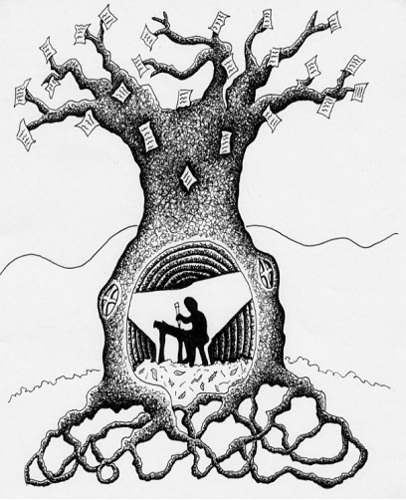
Photo by Keith Lyndaker Schlabach

There’s a kind of fear most writers have that can inspire a clammy feeling even faster than waiting to hear if a book’s been accepted by an agent or a publisher. It’s the blank mind, particularly when there’s a deadline looming just ahead. Some people call it writer’s block, as if there’s something sitting in our heads that stands between our keyboard and creative brilliance.

It happens to all of us, no matter how long we’ve been writing or how successful we’ve become in our writing careers. However, I have learned a few tricks to remove the blocks and get going so that I don’t go sliding past a deadline and just make myself, and everyone else, feel worse. Even better, occasionally a reader will point out that very spot in a book as their favorite, and I marvel, once again, at how important it is to just keep going without expectations or attachments.

First Tip: Be gentle with yourself. Berating, digging around in your past for reasons, imagining a bleak future, or even waiting for the muse are not helpful. A walk might be, though. Also follow the HALT rule. Are you hungry, angry, lonely or tired? Take care of those first and then get back to work.

Second Tip: Pull out your character descriptions you hopefully wrote out before you started the book, whether it’s fiction, nonfiction or a memoir. Reintroduce yourself to all the idiosyncrasies, some of which you’re not even using on paper, and even add a few if you feel so moved. If you haven’t done this, do it now. We’re the driver on this literary trip, and we need to know all of the passengers in order to see where it’s going.

Third Tip: This one has gotten me out of more than one corner. Write the words, “Once upon a time,” and then let your imagination go. Write whatever comes up and follow the trail. You can delete those four little words later along with anything else you needed in order to get the left side of your brain going again. Most of us were read a fairy tale or two as a child, and those words can often create a sense of wonderful anticipation of what might be coming next. Our brain recognizes that too.

Fourth Tip: Pull out the description you have, however brief, for the arc in the story. That’s the place that’s most climatic, where everything changes. Is the arc still satisfying? Does it need beefing up, more research, more details? Is everything still pointing to that arc? That may be why you’re stuck. You’ve gone a little off course and need to delete some, add some more, so that you’re once again heading toward a big moment. Stories usually have several smaller arcs on both sides that can be used as places to aim toward as well till you’re driving for the ending.

Fifth Tip: Read the last portion you got down on paper to a trusted friend, preferably another writer that you respect. Hearing it out loud may help you hear what comes next. A brief conversation about what you’re writing and where it’s headed next may do the same. If you have to call more than one or two friends, though, you’re serial dialing as a distraction and not to help the writing. That usually leaves me overwhelmed.

Keep in mind that every job has its down days, and even though we love being writers, some days we’re bored or anxious or frustrated. That’s okay, but we have to also keep going because this is a business as well as an art form and someone’s made plans with that deadline in mind. So do your best, hammer out what you can and come back tomorrow. This too shall pass.

Q: What do you do to get out of a literary corner?

Through A Curtain Darkly

“You should close your eyes and rest,” my husband said. “Doctor’s orders.”

He led me to our room, this kind man of mine, and started to pull the shades.

“Leave them open,” I said. “I need to see.”

I’d just lost our first son to miscarriage. I’d held his perfect body in my hands, his spirit by then already flown to Jesus. We baptized him ourselves with our tears, somehow finding the grace in that holy moment to accept the most solemn of truths:

The Lord both gives and takes away.

And so my love left me there upon our bed, a mother without a child, to focus through wispy curtains on the outdoor landscape. The land of the living, so far beyond my reach.

Out there, somewhere in the sky, was my baby, my heart. The trees bore only the merest buds of springtime that afternoon, little more than hopeful witness to the coming leaves of summer. But the frothy valances, stirred into sashaying billows by the open windows’ April breeze, slipped into ethereal life.

When I narrowed my eyes, the roses woven into the lace became buoyant blooms superimposed on the naked treetops like bouquets of pure white, their stems wrapped in brown satin ribbons.

I opened the drawer of my table, pulled out a paper and pencil, and began to write. The words flowed from my brokenness through my fingertips—a poem about how God counts the leaves on the trees, the grains of sand around the seas, and most of all, His children’s tears.

How He saves those tears in a bottle.

As I neared the end of the page, I squinted against the dimming of the day’s slanted light, unsure even then if the growing shadows were cast by the sun or by my soul. The lacy roses blowing through the treetops glistened like diamonds. I imagined our baby sprinkling fairy dust onto the blossoms, laughing with delight as he made each one twinkle.

For my eyes only.

The last lines of the poem came to me then, and I scribbled them beneath the others.

“There He’ll give us each a crown; Each tear will be a gem.                                            The bottles will be emptied, and we’ll never cry again.”

It happened many years ago, this otherworldly vision, almost another lifetime ago. But I still recall feeling suspended between heaven and earth as I captured my fleeting feelings, and I’ve never forgotten the magic of the rose trees swaying in the breeze.

Whenever I lay my head upon my pillow, from then until now, a journal and pen rest nearby. Of the hundreds of thousands of words I’ve composed since that tear-stained afternoon, many have been written between dusk and dark.

Who knows? Perhaps in the filtered light at sunset on an evening yet to come, roses may once again take flight.

And my words will reach God’s heart on petals of shimmering lace.

Creative Nonfiction: Top Tips for Memorable Memoirs and MORE!

Photo Credit: Simon Howden / http://www.freedigitalphotos.net

My husband parks our silver F150 in a turnoff, which is really a patch of pounded land where folks have repeatedly turned their cars around after realizing the road goes nowhere. I imagine drug dealers, prostitutes, meth heads, and hormonal teens fighting for this spot on steamy summer nights, but for now, it’s just Charles and me. And my doubts.

He turns off the engine, and in the silence, we wait. We are surrounded by thousands of acres of farm fields, old growth hardwoods, and murky cattle ponds. The land is beautiful, and this type of setting would normally calm my nerves, but not this time. Not now, as I’m waiting at the end of the road for a stranger to arrive. My heart races and my breath quickens, as I realize, with sudden alarm, that we might be in danger.

“Should we have brought the gun?” A question I never thought I’d ask. Even though I despise America’s love affair with arsenals, in this position, I wish I was holding a gun.

“What gun?” He’s barely paying attention to me as he checks email on his phone.

“The one in the garage.”

Charles laughs. “It’s a 22.” With sarcasm he insinuates that if we find ourselves going head-to-head with a coyote or a tom cat it might come in handy. A hardened criminal? Not so much.

“Well what if it’s a setup. One of those Craigslist crimes?”

He doesn’t answer. Just keeps emailing.

11:49. No sign of the white Ford truck we are waiting for. “Of course it’s a white Ford,” I say. “Does anyone drive anything else around here?” I’m sure we’ve passed at least forty-seven white trucks since we left the interstate. Forty-six of them, Fords.

I open the door and get out to stretch my legs. The sounds of rubber tires and gasoline engines roar in the distance. Somewhere, within earshot, the newer highway ribbons through these fields, and I feel a little comfort thinking I can run toward the noise if it comes to that.

Then the engine noise comes closer, and the white truck we’ve been waiting for eases its way into a corner field and comes to a stop in front of a metal gate, a rusty chain locking the gate closed.

In the movies, headlights would have flashed, drums would have punched a dramatic rhythm, and a heavy pause would have filled the screen. Instead, Charles’s phone rings. “Yep, I see you. We’re headed that way now.”

I return to my passenger perch and close my door just in time, as Charles is already putting the truck in gear.

“You have the money?” he bites his nails, a habit he’s had all his life.

“Yes,” I check my purse, just to make sure. Cash only, I remember the stranger’s instructions. My pulse shoots flares.

And then it happens. We climb down from the bench seat and enter an isolated pasture with a man we’ve never met.

What’s this scene about? Do you suspect this couple is about to engage in some sort of illegal transaction? Are they in danger? Or is it just a creative twist on something as ordinary and realistic as buying a cow?

If you guessed a cow, you’re right. This is part of a creative non-fiction proposal that enabled me to become the 2012 recipient of the Mississippi Arts Commission’s Literary Arts Fellowship, an honor I am privileged to accept.

Whether writing about cooking or canines, remember non-fiction doesn’t have to be dry.

Try these tips:

  • At some point, let us know exactly where and when the event takes place, but use subtle hints to set the scene (music, tv, news, technology, etc., to hint at the era.)
  • Use sensory details – smells, sounds, sights (avoid writing “I see… I smell…I hear…”)
  • Involve more than one person in the scene…it’s not all about YOU. Describe something specific about the other characters. Use a few snips of dialog and let unique personalities shine.
  • Elicit an emotional response from the reader. How do you want them to FEEL when they read the story?
  • What is the main point of the story? What question do you want to answer? Try to leave the reader with one main thought, all while trying to show rather than tell.

When you write, what approach do you take to make the mundane magnificent? Share your thoughts about creative nonfiction and learn more about this interesting genre by visiting http://www.creativenonfiction.org/

Julie’s first novel, Into the Free, hits shelves February 1. Learn more at www.juliecantrell.com

Are You Ready For A One-Star Review?

It’s no fun getting a one-star review on Amazon.  What’s worse?  Having your 10-year-old son read it in front of you.
When Nick looked up, he was fighting the tears.  Trying to stay strong.  Trying to act like it didn’t matter.

Then he gave his own critique.

“You know, Mom, some of this is probably true.  But, you know what really upsets me?  She didn’t criticize your book.  She criticized you.  And she doesn’t even know you.”

Like Nick, I was fighting the tears.  Trying to stay strong.  Trying to act like it didn’t matter.

But public criticism is a big deal.  And first-time authors are never prepared.  I wasn’t. 

Now, at this point in the blog, I’m supposed to give you the magic formula.  You know, the three-step plan to prepare you for a public flogging.  The things I wish I knew.  Wish I did.  Want you to know.  Then, you’ll walk away with some value added, and I can bask in the comments.

But I’m not going to do that. 

Don’t get me wrong.  If I had a secret sauce I would probably share it.  Heck, I’d probably write another book and maybe even make some money off of it.  But since that’s not in the plans (and Rachelle would probably give me a hard time about platform), the best I can do is share my story and let you draw your own conclusions.

Here’s how it works.  When you’re an author, you are supposed to actually say something.  If you’re lucky enough to get people to read what you have to say, some people may actually like it.  Others won’t. 

Certain gluttons for punishment, like me, end up writing memoirs.  So if readers don’t like our story, it means they don’t like us.  Plain and simple. 

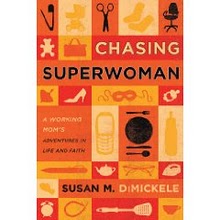
In my case, Chasing Superwoman is a very personal story.  It’s my story about my struggles (and failures) being a working mother who admits she is trying to do too much.  And while I love Jesus madly, I don’t always act like it.  This apparently offended a few readers who told me both publicly and privately that I should really set my priorities straight, act more like a “Christian” and hang up my “worldly” ambition.

Sure, I could feel sorry for myself.  I don’t deserve the criticism.  It’s not fair.  These readers haven’t met me (or my darling children!).

But let’s face it.  I kind of asked for it.   Didn’t I?

When we tell our stories, we put ourselves out there.  We make it personal.  We pour out our lives on paper, give people loaded guns, and yell “shoot”! 

Which means we have no business complaining about it. 

Now, if you’re a fiction author, you’re thinking, “What does this have to do with me?  I write fiction.  It’s not my story.” 

Think again. 

We all know deep down that your first novel is secretly autobiographical and that all the characters are based on your family and friends.  So when people criticize your book, you are equally going to feel like they are criticizing you.  Trust me.

The good news?  We not only live through it, we become stronger.  I promise.  (I’m going to blog about that next month.)

For now, just know to expect it.  And don’t complain about it, ok?

Aspiring authors, are you ready for a one-star review?  Old-timers, what’s your advice?  And how do you protect those closest to you — like your family — in the process? 


The Tough Critique

My best friend of more than 30 years was one of the first people to read a draft of my manuscript. I packaged all 299 pages in an envelope, mailed them 1,500 miles to her home and then chewed my nails ragged while I waited for her response.

I stalled for what I considered the proper amount of time. And then finally I couldn’t bear it any longer. I picked up the phone and dialed her number.

“Soooo…what did you think?” I blurted when she answered. I tried not to sound desperate and sweaty. “Do you like the book? Have you finished it? What do you think so far? Seriously, you can tell me the truth. I mean it!”

I waited.

Silence lay heavy, like a suffocating blanket suddenly strewn over the vast plains between us .

“Well…” She hesitated. A dull ache began to gnaw in the pit of my stomach.

“Well…to be honest, I, um, I put it down, and I’m having trouble picking it back up again,” she offered quietly.

“What? What?! Are you kidding me? You’re having trouble picking it back up again? What does that mean? Are you saying my book is boring or something?! What, like Reader’s Digest boring? Like Henry James boring? Like iphone manual boring?!”

I didn’t actually say those things aloud, of course. My actual response went more like this:

“Okay.”

 Deep, shaky exhale.

“Okay, so tell me more. What exactly is the problem? Can you be more specific? Which part is bogging you down? Does it go awry at any particular point, or is the whole thing giving you trouble?”

During that difficult conversation I learned that Andrea had enjoyed a lot of the manuscript, especially the anecdotes, which comprised the meat of the memoir. But when she got to the sections that delved into Biblical instruction, she lost interest.

I give her credit for her honesty and courage. Although Andrea knew exactly how important this writing endeavor was to me and exactly how insecure and fearful I was, she told the hard truth because she knew in the long run that it was important that I hear it. (Granted, she could have phrased it a bit more delicately. Then again, I did hound her like a salivating Saint Bernard). 

But I admit, it was a hard truth to swallow. And even though we had a fruitful and constructive conversation, and she didn’t deem the whole book an abysmal failure, when I got off the phone that afternoon I felt a weight on my chest like a stack of crumbling bricks. What’s more, I didn’t take her advice – I made none of the changes she suggested.

The funny thing was, in the end, she was right.

A year later, when I paid a professional editor to review my manuscript, guess what he advised? That’s right: he suggested I cut all the instructional sections woven into the book because they “interrupted the flow of the story.” And later, when Rachelle Gardner accepted me as  client, she admitted that the book wouldn’t have appealed to her, had it included all the Biblical analysis and instruction.

Andrea had been spot-on in her observations, and she had been honest, courageous and diplomatic in her critique. The real problem was that I simply hadn’t been ready to listen.

Let’s chat:  How do you decide who critiques early drafts of your writing? Have you ever received a negative critique from a friend? How do you balance a critiquer’s opinion with your own ideas? How do you know when you are ready to have your writing critiqued?