All Blogged Out: A Rant (Fair Warning)

Scream--Annemarie BusschersThe other day a fellow writer from way in my past—semi-famous, author of many highly regarded books—friended me.

It was so exciting. To be remembered by someone I had admired long ago but hardly knew, someone whose books I have on my shelf.

As soon as I accepted her friendship I was invited to like her author page. Then read her blog. Which explained everything.

I don’t want to be a partypooper here about the self-promotion mandate. Really I don’t. I know that publishers these days demand that writers have author pages and blogs and followers and all that. I try to be, in fact, dutiful, in my way. But it must be said. Something about all this facebooking and author-paging and blogging just stinks.

It reminds me of how, at my university, some colleagues and I used to convene every year to plan women’s events. Multiple times, meeting upon meeting, to schedule and scheme and come up with funding and talk about decorations and cookies and such. Then, when the day came for whatever it was to happen—the reading group, the tea, the birdwatching we had so arduously planned—there we’d be again, the five of us, the only attendees.

How does one find time to write books when there’s forever a blog post due? Not to mention reading all the other writers’ blogs that I say I’m following—and that, if I were  truly friend-worthy, I would be commenting upon. Confession: the only blogs I willingly visit are the ones I land on after a Google Images search for a very specific recipe, one that looks like a dish I remember from my childhood, or some stew of lentils I’ve been fantasizing about, or some bizarrely complicated goodie I said I’d cook up for one of my ever ravenous daughters.

All this to say—am I the only one who feels this way?—that blogging, which appears to be de rigueur in the world of publishing these days, slurps up my writing time like an old dishrag, and sometimes I fear that the only ones who read what I write are fellow writers (more generous ones than I am) obliged, as I am, to squeeze it out when I should be working on my current writing project and between all the other things I do to actually support myself. (That sentence doesn’t work, I fear…) Those who follow me—I’m sure of this—do so for the same reason I follow that writer acquaintance of mine: because I was asked. I’m not going to buy any more books of hers than I’ve already bought. Having heard an interesting writer interviewed on Fresh Air, I’ve never gone to his author page or read her blog. If I’m interested enough, I ask for the book in Barnes & Noble. And when they don’t have it—they never do!—I order it for cheaper anyway on Amazon.

Here’s how it goes with buying books and me. In the ideal world that used to be, I heard about a book or picked it up from a bookstore table or shelf, I read a few pages, I bought it and brought it home, eventually it made its way to my bedside table and into the stack to wait its turn, and then, one happy day, I turned over and reached for it and started to read. In that perfect world, it is a perfect book, and I can’t stop reading till it’s finished. Then I tell my sister, off in Colorado, about the book on the phone. And in a few more days I lend my copy—though it has a swollen edge from my having accidentally let part of it sag into the bathwater—to one of my colleagues. Then I assign it in one of my classes. No blogs or author-pages or anything like that. Just hear about it, buy it, read it, lend it.

I’m not feeling very encouraging today, I’m afraid. Maybe this post will generate some useful discussion among us writer-blogger-authorpagers, though.

(Feel MUCH invited to chime in if you’re not a writer. It would cheer me immensely.)

Scary Publicity Stories

????????????Like most authors, I have a second job title: Doer of Whatever It Takes to Get My Books in Front of the Public So They Will Sell. Much of the time, it’s a pretty cool job with a lot of variety.

Sometimes, though, it’s almost scary, like…

The bookstore signing

I spend an hour and a half at a table outside a bookstore. The place is mobbed – not with readers frantic to buy my book, but with adults and kids participating in a fun run to benefit the local children’s hospital. It is also the weekend for children to trick-or-treat in the indoor mall. Sitting at my table, I get lots of attention, though. The two most frequent questions I get asked are: “Where is a bathroom?” and “Is there some place around here where we can get something to drink?” Being the helpful person I am, I point people in the direction of the former and offer the others some of my bottled water. And people think being an author isn’t glamorous…

The best part of the gig is watching the costumed revelers go by. I see a pint-sized Dracula in tears, a little Spiderman whose foam-padded muscles are slipping off his shoulders, several princesses, and a standard-sized poodle dressed as a duck. But my day takes on cinematic proportions when two adult Star Wars storm-troopers, fully armed with plastic laser guns, walk down the hall. Oh my gosh! Man the Deathstar! Call the Jedi! Tell Spielberg to get the cameras rolling again!

A mom with her baby in her arms poses next to the storm-troopers while a friend takes a picture with her cell phone. The baby takes one look at the helmeted man and goes to sleep. I know how she feels.

Storm-troopers are so passé.

My first television interview

“You’re not allergic to dogs, are you?” a nice young intern named Kurt asks me before he opens the door to the green room, where I’ll wait for my turn on the show.

“How big are the dogs?” I ask, since I don’t do well with big dogs in open spaces, let alone big dogs in small windowless rooms where they can slobber all over you while you cringe in abject misery on a hard plastic chair.

“They’re little,” he says.

“No, I’m not allergic,” I tell him, and he ushers me into the room.

Kurt’s right, the dogs are little. Really little. They are also dressed up in costumes. One is a shark, one is a pumpkin, and one is a Chihuahua wearing a blonde wig and red dress.

“Who’s the Chihuahua?” I ask.

“Marilyn Monroe,” the handler answers.

I give myself a mental head slap. Of course it’s Marilyn Monroe. What was I thinking?

I’ll tell you what I’m thinking. I’m thinking I’m waiting to be interviewed about my novel with a bunch of dogs dressed up for Halloween. I’m thinking I’m going to fire my publicist, except that I’m my publicist.

Now that’s scary.

How to Market Your Work Without Running Screaming into the Streets

timeline_heartwideopenRaise you hand if you just love marketing and you can’t wait to get started promoting that book, blog post, or magazine article you’ve written?

I see.

Well, raise your hand if you would like that book, blog post, or magazine article you’ve worked so hard on to find its way in front of real life readers?

What a conundrum.

Or an opportunity.

It’s that perspective thing again.

Like so many of my author friends, I dislike the “look at me” aspect of marketing my own work. I feel like the youngest of three little girls vying for my parent’s attention at the annual elementary school open house.

“Look at me!”

“This is my desk!”

“That’s my drawing on the bulletin board!”pleasingus_heartwideopen

That may have been TMI–too much information. Y’all probably don’t say that anymore, do you? Forgive my outdated references. I’m never using the cool phrases at the right time. Ask my kids.

But we were talking about our love/hate relationship with marketing and I wanted to let you in on one of my game plans.

I read an article recently that gave some startling statistics on comparative “face time” our messages are given on the various social media platforms. Of course, I can’t find that piece again because I had fallen down an Internet rabbit hole and have no idea how I got there or how I climbed out. You’ll have to trust me: The amount of time a reader’s eyes “paused” on an image (and shared it!) just slayed the time the same reader spent on mere text.

Poor little words. (I love you, words!) Words are my life, too, y’all, but we need to be wise about using other media to get them some face time, which we hope will translate into sales, shares, and retweets, right? Right.

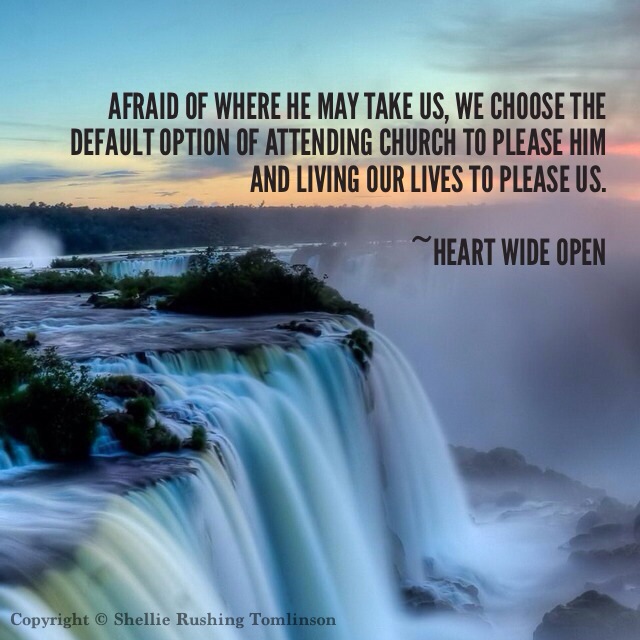
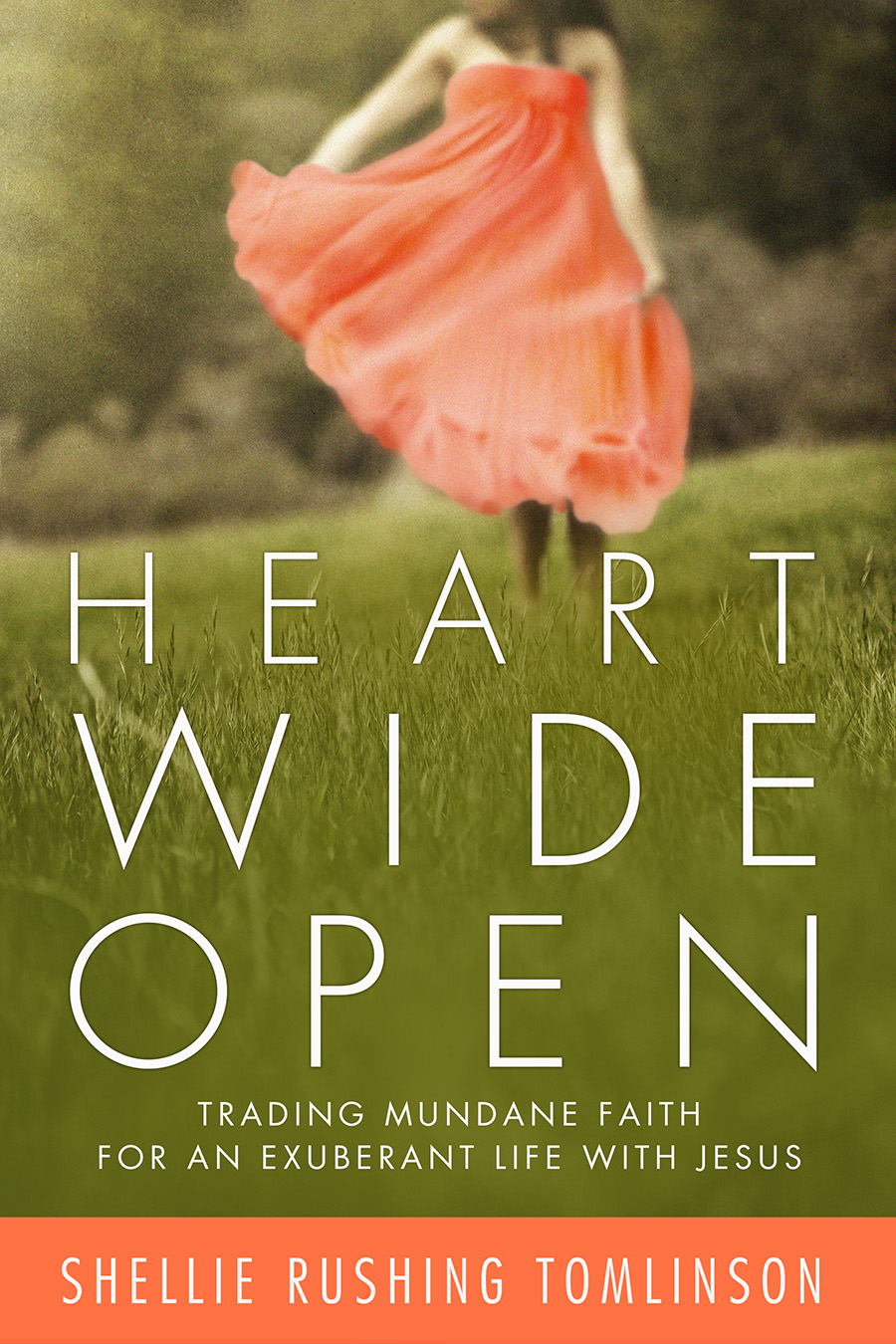
A few simple apps on our smart phones will help. I’ve used InstaQuote to show you Heart Wide Open_n1a few examples of what I’ll be doing when my next book releases. I would stop here and tell you about Heart Wide Open and how it will be in a store near you March 18th, 2014, but this is not the time or the place.

Along with InstaQuote, I used PhotoMarkr to add a copyright to my images before posting them on Instagram. Now, seeing as my Instagram is connected to my Twitter, which is connected to my Facebook, which is connected to my hip bone…wait, too far, again. The point–one share hits all of my platforms.

And since I composed the text so it just happens to fall into Twitter’s 140-character count (Oh, the intimacy_heartwideopenthinks we can think!) I can post the full text in Instagram’s status box and Twitter will get the quote. Then, if interested, Twitter friends can hit the link and see the Instagram image.

My intention is to create a file folder of these tweetables and the images in my spare time. (Insert maniacal laughter at the mention of spare time.) Seriously, it only takes a moment to make these images. I made these three in about ten minutes. As the release nears, I’ll share these with the publicity team at my publishing house and with anyone else who has agreed to act as an influencer.

We’re done here! I hope I’ve given you a marketing idea that you can build on without running into the streets crying. I’ve tried that, y’all, and it doesn’t do a thing for sales.

Hugs, Shellie

The Journey from Idea to Bookstore

Someday I’d like to write a book. 

Book on the beachHaving spent most of my adult life as a research scientist affiliated with Harvard University, I like to break down goals into doable steps and analyze the process needed to achieve a certain result. While the publishing process is more art than science, here are some basic steps you will need to take to move from dreaming about writing a book to holding the finished product in your hands.

What’s the big idea?

Your nonfiction book of tens of thousands of words starts with one sentence that captures the main idea, or theme, of your book. Ernest Hemingway talked about writing one true sentence, and this goal is your first task. While this sentence may never appear in the book itself, you will need it in the book proposal your literary agent will send to publishers. Crystallizing the big idea of your book also will help you write a working title.

For my first book, Questioning Your Doubts: A Harvard PhD Explores Challenges to Faith (InterVarsity Press, 2014), I started the process by writing down a list of words and short phrases that captured the essence of my message. A cluster of these words became the working title. Once I had a working title, I was ready to write the outline for the book.

Who is the audience?

Books are for readers, not the writers. Publishers want books to sell, not collect dust on bookstore shelves. Accordingly, once you have your big idea, you need to determine who will desire to read the book. These readers are your audience. Perhaps your book is for a general audience, and you hope everyone will read it. However, publishers will require that you define your audience more clearly.

Is there an age group more likely to read your book? Will the book appeal to certain specialists or professionals, like pastors or counselors? What interests do your potential readers have that would make them likely to buy your book? Will your readers use the book in a group setting such as a Bible study or classroom, or will they tuck it into a carry-on bag for entertainment on an airplane ride or while soaking up the sun on a distant beach?

Think in terms of primary, secondary, and tertiary audiences. These categories will help you define who is most likely to buy the book as well as the wider audiences that may express interest. You will need to describe your audience in your nonfiction book proposal. Knowing your audience also will shape your writing style for the book. For example, a book for teens will use a different vocabulary than a book for seminary professors. A book useful for a specialist may need to include references and an index, while a book used in a church setting may benefit from a discussion guide.

 Why write this book?

The journey from idea to bookstore usually measures in years not months, so knowing why you are writing this book will fuel your motivation early in the morning or late at night as you face publication deadlines. The answer to this question will come in handy when family members and friends wonder why you are spending your free time in your office instead of having fun anywhere else.

Understanding what need your book will meet in the marketplace of ideas will provide direction as you decide what material you need to cover in your chapters and what falls outside the scope of this book. Ultimately, focusing on the purpose for writing this book will keep you connected to your calling as an author and the original dream that has moved from someday to today.

My Book is Published, Now What?

culture of numbers

These words, they urged me to somehow live them.

Since my small hand cupped my first #2, painted-yellow pencil, I’ve experienced life through story. Stories to entertain me, yes, but my mind also craved stories that taught life lessons (although I couldn’t comprehend or articulate that at five years of age.)

There’s something about story that somehow makes our lives better, easy to live.

It seems only natural that after (way too) many years of traipsing across the country in various marketing positions, I became a storyteller myself.

Matthew West is responsible. Well, somewhat—he did play an important role. About four years ago, Matthew released this song that flat messed me up. The song, The Motions, was about how we oftentimes live this complacent, ordinary life, how we fall into these stale daily routines unaware.

The song uncovered some stalled dreams, desires I had long ago tucked away.

For months, those dreams were stirred fresh. Seems each time I dropped into the driver’s seat and clicked on the radio, I heard, “just okay is not enough,” and “I don’t wanna spend my whole life asking, ‘What if I had given everything instead of going through the motions?’”

So that’s how I spend my days now—giving “everything I have.” As a blogger and author, I share heart-stories that bring hope to women when their days are hard. Don’t we all have those hard days?

And that stalled dream, the one of crafting a traditionally published book that would make its way into the tender hearts of other women, it recently became a reality. About six weeks ago, When A Woman Finds Her Voice: Overcoming Life’s Hurts & Using Your Story to Make a Difference was released.

We shot streamers, and I won’t hide it, we shed a few joyful tears.

But then, reality.

Within a couple of days a very real responsibility leaned in, one of partnering with the publisher to now sell thousands of these books. And gut-honest here, I’m tired, because I’ve just spent the last six months sacrificing many nights and family events to pen this book. And while the book is packed with hope, it wasn’t an easy write.

There are those times a cord of hope runs a scarlet red.

Now I love painting hope thick, and I’m a connector who loves meeting women far and wide, but to feel the weight of sharing a book that I authored with others, and to (over and over again) suggest they purchase it? Not so much.

Soon I fell into conversation with a wise and trusted friend (who also happens to be a best-selling author), and we uncovered my true heart to market this book.

Serve the reader.

Yes, that’s right, serve, not manipulate. In a world of hype among thousands of new books released every year and a responsibility to a publisher who risked a partnership with me, my goal is to find my reader and serve her. To engage heart-to-heart with love, support, prayer, and encouragement. To be a trusted resource.To put her first.

From that sincere offering of mine, she can decide if she wants more of my hope-filled words.

There’s this awesome conference for bloggers, Allume, and recently I sat alongside hundreds of other storytellers as Ann Voskamp brought the room to a pondering silence when she posed the question, “In a culture of numbers, how do you kneel?”

This is it for me; this is how I’m learning to kneel. I’m feeding this desire, nurturing and cultivating this servant-heart in the hopes it will defeat the anxious fingers that numbers tempt.

How about you? Who is your reader, and what are some specific ways you can serve them?

Crowdfunding: Is It a Writer’s New Marketing Tool?

I’m pleased to host author Ken Gire who stops by to share a little about Crowdfunding and his current project.

Welcome, Ken!

WealthWith the technological, social, and demographic upheavals that have happened within the publishing landscape over the last decade, many writers have found themselves having to get more involved with things that most writers hate—sales and marketing.

Myself included.

My last book sold under 500 copies, and that experience was so discouraging I felt like giving up writing entirely.

Faced with fewer and fewer bookstores to sell our books, and smaller and smaller advances to fund the writing, what’s a writer to do?

There’s not a lot of options, honestly, but here are a few.

Marry rich.

Consider “Breaking Bad”.

Crowdfunding.

Crowdfunding is growing in popularity, and, though it has had its share of failures, it has had its share of successes, too. Numerous sites have sprung up. Kickstarter and Indiegogo are the two most popular. And there are faith-based crowdfunding platforms you can google. They are newer, less successful, and generally the funding is lower.

Here’s a sample of an almost unheard-of success in publishing with one of Seth Godin’s books.

I had been following Seth’s TED talks for some time, so his campaign really intrigued me. When I looked at the numbers, I had to do a double-take. Who needs that kind of money to write a book? I wondered. Then I realized what he was doing. He wasn’t trying to get an advance; he was trying to generate pre-sales. And he did that through the platform of crowdfunding.

Seth is an internationally-known marketing guru, and so he probably shouldn’t be used as a poster child for crowdfunding, but I used him anyway to show the possibilities.

Well, the long and short of it is . . . I decided to try it.

Though I am not the least bit tech-savy, I managed to do it all myself, with the exception of the video. I found someone on Elance who did that for me fairly cheaply.

I also thought it would be helpful for those involved in the campaign if I gave regular updates on the progress I was making on writing my book. I remembered reading Steinbeck’s, Working Days, a journal he kept while writing Grapes of Wrath, and I remember how much I enjoyed it. So I decided to write a blog (Centurion) aimed at aspiring writers so they could see what the process of writing a novel was like.

The daily posts have been really fun for me, a nice break from my writing, and also a creative outlet to try to find things on the internet that would help illustrate my blogs.

I think this could be a good option for many of us. For those of us who don’t have a publisher. For those whose advance wasn’t enough to finish their book. For those needing expense money to travel to a foreign country in order to do research (say, for example, your novel is set in Ireland, but you have never been to Ireland, and an extended stay there would add authenticity to your story and to the dialect of your characters.)

Maybe we, as writers, can help each other through this difficult transition in publishing by helping to fund each other’s campaigns.

I’m sure mine won’t be anywhere as successful as Seth Godin’s. But it doesn’t have to be. If just 10% as successful, it would be a game-changing experience for me and my career.

Here is my crowdfunding campaign that I hope you will check out. Check out this post for more information on these type of fundraisers.

There are only two weeks to go, and my campaign is only 10% funded. For perks, I am offering everything from signed books to services such as personal mentoring to public speaking.

I appreciate you all taking the time to consider being a part of this. Truly.

What do you think of crowdfunding? Would you ever consider doing it as an author to raise money for a book project? Why or why not?

********************************************************************************************

kengirephotoKen Gire is the author of more than 20 books, including The Divine Embrace, Windows of the Soul, The Work of His Hands, the Moments with the Savior series, and the Reflective Living series. Two of his books have been awarded a Gold Medallion. A full-time writer and speaker, Ken is the founder of Reflective Living, a nonprofit ministry devoted to helping people learn how to slow down and live more reflective lives so they can experience life more deeply, especially life with God and other people.

Ken is a graduate of Texas Christian University and Dallas Theological Seminary. He has four children and three grandchildren and lives in Baltimore, Maryland.

What I learned from Leo Kottke

GuitaristLast month, my husband and I enjoyed an evening concert at Big Top Chautauqua outside Bayfield, Wisconsin. Leo Kottke was the featured performer, and while I wasn’t particularly familiar with him and his music, he has long been a favorite of my husband’s. The concert took place under a big tent on a beautiful September night, very near the shore of Lake Superior, and Kottke did not disappoint, either as a guitarist or an entertainer. I came away a fan…and with a new perspective on what I do when I give a book talk.

I realized that the key word is entertain.

While the need to entertain my audience remains uppermost in my mind when I write, I haven’t always kept that focus during speaking engagements. Sometimes, I get too bogged down in the details of crafting a narrative when I talk with writers’ groups, or my presentation begins to sound stale when I answer the same questions over and over from audiences of readers. If I’m getting bored with repeating the same “this is my book, why I write, how I write,” then I expect my listeners are getting bored with the same old book talk they hear from every writer.

Enjoying Kottke’s performing style convinced me I needed to think of myself as a featured entertainer when I speak, not as the featured author. Yes, the man could play amazing guitar pieces, but it was his in-between chatter that tied it all together into a neat package of entertainment. Too much chatter and it would not have whetted my appetite for his music; too much music and I wouldn’t have formed a connection to the man. Instead, he balanced the two pieces and sold me on his entertainment value – which is exactly what I need to do to find new fans of my books.

After our evening at Big Top Chautauqua, I revamped the way I approach and present a book talk.

Instead of focusing on what goes into the book when I speak to groups, I now read short selections from several of the books – selections that are particularly meaningful or funny for me – and explain where in my own life those passages came from (and I always tell it with humor!). The result has been increased active engagement with my listeners, and they become more intrigued with the books, which results in more sales after the presentation concludes. I’m getting more comments about how enjoyable/entertaining the talk was, which not only makes it fun for everyone, but also leads to a greater number of speaking referrals for me! After all, if you’ve enjoyed an event, you’re likely to come back for more – whether it’s another book by the same author, or a CD recording of a musician – because you want to tap in again to that source that gave you an entertaining experience.

Authors need to think of themselves as entertainers – both in print and in person – and then present themselves that way, too.

How do you craft your talks for entertainment?

Takeaways fom the Writer’s Digest Convention West 2013

I just attended my first writers convention, which turned out to be among the most interesting and informative experiences of my life. Never before have I received so many insights into the craft of writing. The Writer’s Digest Conference West in Los Angeles took place at the end of September. During that time, I was able to meet people I never would have otherwise, such as journalists who have been working in the writing field for ages. There was so much great information it was hard to capture it all, but here are a few points that that definitely resonated:

1) Writing, editing and marketing are totally different competencies, so bucket them, don’t batch them. In a discussion led by Ivory Madison, CEO of redroom.com writers community, writers were advised to keep those activities separate, as they engage different parts of the brain. I’ve been trying out the Red Room Method and can see a positive difference in my writing. It staves off the frustration of trying to do everything at once, and only producing one paragraph an hour. She suggested not to combine the three buckets of writing, editing and marketing. In this way, you end up not only being nice to yourself, but also more efficient as well. Writing is about your relationship with yourself. Marketing is an expression of everybody else. Take one book, make it as great as you can, and then worry about marketing. Don’t wear multiple hats at the same time.

WDCW132) Read your work aloud. You will find a great deal of errors that you might not have otherwise by reading aloud. When you do write, be authentic. Your readers want to be able to get to know you and trust you. Find great people to make your book as good as it can be. Don’t jump the gun just because you want to get it out there. Make your book easy to find and as accessible as possible.

3) Growing scope of the literary agents. Gordon Warnock, Founding Partner of Foreward Literary, has a vision of literary agents taking on a similar role as the agents of actors and songwriters. The future literary agents, he thinks, will manage the author’s entire career. The job scope would become more like an umbrella for their representation overall. This would include creative directing over the author’s website, branding, image, et al.

And above all else – write an outstanding book.

Promotional Items: The Good and Bad

I recently returned from the ACFW conference held in Indianapolis. This is an annual gathering of the largest membered group of Christian fiction authors. It’s a great time to connect with fellow writers and hope some of the writing genius from authors like Dan Walsh, Tosca Lee, James Scott Bell, and Frank Peretti infuses life into my writing cells.

Promo1Most conferences have a “freebie” table where writers are allowed to leave promotional items to get the word out about their product. This year I thought I’d give you my take on them. The good and the bad.

Think of a promotional item with a goal in mind. What do you want it to do for you? Consider the return on your investment and what you hope to achieve. I think most people view a promotional item as a chance for exposure. Most marketing types will tell you it takes six-ten exposures for someone to buy your product. So a good promotional item is something a person will keep and look at over and over.

I’ve determined that giving away bookmarks is not a good idea. EVERY author/writer does this and last year when I had bookmarks I ended up taking most of them home. They are not unusual enough anymore and with the advent of e-readers I think many do not need them anymore either.

One way bookmarks could work is if you are a very popular, well-known author and they are signed. But, sigh, that is not me. Yet.

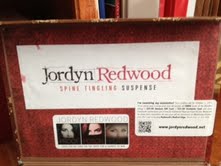
RedwoodNewsletterQRMy goal was to get people to subscribe to my forthcoming newsletter. I gave out full-size Hershey Bars and packs of gum with the stickers you see on the first photo. The sticker includes this QR code that links to a newsletter sign-up form where I’m giving away a prize worth over $75.00. It includes all three books of my Bloodline trilogy, a $25.00 Amazon gift card, a $25.00 Starbucks gift card and some fun Halloween items (yes, this is still happening, so sign up!) and goes on until October 1st, 2013.

I brought 108 chocolate bars (okay, I did eat ONE) and 36 packs of gum. I didn’t have to bring any home, which was great. People were interested enough to pick them up but, thus far, I’ve only gotten about six new newsletter subscribers, making it a very expensive venture with few results. Perhaps the QR code is not intuitive for people yet.

Other promotional items and my thoughts.

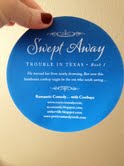
promo2 promo3 promo4 promo5 promo6 promo71. Luggage Tag: This is a good idea because not only do you use it but also other people along the way can see it.

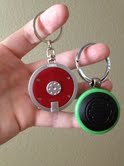
2. Small button flashlights for key chains: I’m iffy on these. The writing on one is hard to read and the light is weak. They are fun to have but I don’t know if I would use them.

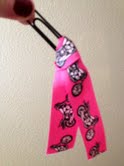
3. Ribbon bookmark: I’m personally not a fan. I am a no-wrinkle-on-the-pages kind of girl and putting a large plastic paper clip on pages would wrinkle them. Plus, it was not very intuitive to me what it was at first because it was attached to a business card.

4. Pack of sticky notes: This was given out by a publisher. Nice, as most authors love office supplies.

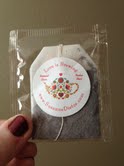
5. A bag of tea: This one I liked because I’m a tea lover. I think this would also be more economical than what I did, as mine ran about 50-60 cents apiece. I think it’s a good tie-in for some genres (romance, cozy mystery, historical set in England) but not so much for suspense. It might not work for my books.

6. Grippie lid opener: Someone can post in the comments what the real name of this is. I like this one for its durability. It’s something I’ll keep on hand and use and therefore will expose me to this author’s name multiple times.

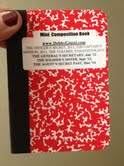
7. Small composition notebook: This one I’m actually giving a gold star and I’ll tell you why. I still have the one from last year in my purse. Every time I pull it out, I see that author’s name. I actually looked into doing this myself but they run (at the cheapest) about $1.00 apiece and that was too spendy for me.

What about you? Which promotional items do you like? Which do you think you’d actually pick up and keep? What have you used as a promotional item and did you appreciate the return on investment?

Seven No Nonsense Book Launch Tips for Broke Authors

Seven no nonsense book launch tips


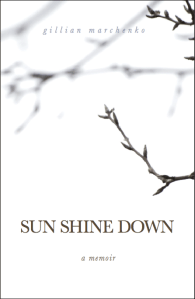
Sun Shine DownI am launching a book.

My memoir, Sun Shine Down, published at the end of August with T. S. Poetry Press. Eeek!

As a broke, green as the grass in mid-July first time author, I tackled the daunting assignment of launching a book like any other able-minded individual in North America.

I googled ‘book launch.’

In .02 seconds, reputable results-driven marketing and publicity firms jumped into my line of vision. These people surely could launch my book into the stratosphere!

But after some number crunching and a realistic talk with my husband about where hiring a publicist falls in the needs of a family of six (braces, soccer, therapy, FOOD), I conceded. We could not hire help for Sun Shine Down.

These days, whether we sign with a big publisher, a small press, or self-publish, we bear much of the responsibility for launching our own books. And it’s hard work.

If you, too, are a broke new author, here are seven no-nonsense book-launching tips:

1) Plan ahead

If you wait to plan your book launch until your book is out, you’re toast. Plan ahead. Start six months before you are to publish. Research, and consider elements of a book launch you will utilize.

2) Launch your book online

Social media is a marketing ocean. You’ve got Facebook, Twitter, Pinterest, Instagram … Where do you spend your time online? How can you introduce your book in those venues? With Amazon stomping on the book industry, it is a mistake not to market online.

3) Launch your book offline

Is a book party right for you? I’m hosting a party at a bar down the street from my house. I’m doing it on a Monday (because the venue is free then), providing appetizers, and using evites and Facebook events to publicize. Extra tip: Don’t call your gathering a book signing. Call it a book party. Who doesn’t love a good party?

4) Don’t spam people to death with your book

Not everyone is excited to hear about your book all day every day. Post about your book (especially on your Author Fan Page–don’t have one? Um, get going), but don’t post several times a day. It just makes you look full of yourself. The trick is fun, cool content, and looking like you’re not trying that hard even when you are.

4) Create a Facebook launch team

In an effort to build buzz about Sun Shine Down, I invited Facebook friends to join a super secret launch group. I offered perks for joining ( a free PDF advanced copy of the memoir, a thank you on the blog, access to a secret group, and interaction with the author) and requirements (help promote for five weeks, post about the book on your blog, etc.). My secret group has been the highlight of promotion so far. Why? Because relationships are being strengthened and we are having fun! It is also a great way to ensure Amazon reviews once the book is published (make it a requirement).  Read this post to see how I did it. 

5) Get help!

OK, I know that I sound like I am contradicting myself. But next time (God willing), I will hire someone or ask a friend to assist with some promotion. I’m talking about someone to help with a couple time consuming tasks and who is affordable (as opposed to a publicist who would do everything and is expensive). I’m talking a flat rate per month to run a blog tour or help with the launch group. I’d like not to have that pressure, and I am finding out with this book that there are virtual assistants and others who could fit this description. *Note: I LOVE publicists, so If I get to that point in my career when I can hire one, I probably will.

6) Create a new email address to send out official book launch news

I simply created a new Gmail account with the name of my book and merged it with my current email account so that when I send out press releases and other book emails, it looks official (instead of the author sending them, which she is 🙂 ).

7) Set expectations low

This is my Eeyore personality coming out, but I suggest you set your expectations low. Then you’ll be pleasantly surprised when something remarkable happens. Not an Eeyore? More a Tigger? OK, then expect like crazy. We are all different. In my experience, though, the people I thought would help publicize and raise excitement about Sun Shine Down haven’t. I did have one or two wild cards, individuals I knew for a short time long ago who have become cheerleaders and promoters complete with pom- poms and cardboard signs.

Here’s to successful book launches, and to many more hours with our butts in chairs, getting books written so that we can, gasp, go through the nonsense of launching again and again!