Creative Venue Planning

If bookstores are the only place you’re signing and talking about your books, then you’re missing the boat.

Perhaps even literally.

In the last year, in addition to bookstores, I’ve talked and signed books at gift shops, diners, book club gatherings, Rotary Club breakfasts, libraries, senior community dinners, and summer festival booths. Since my novels are about a bird lover, I’ve also signed books at bird feeding supply stores and an annual birding meeting, not to mention an international owl festival, a regional hummingbird celebration, and the National Eagle Center. At every venue, I’ve sold more books than I have at any bookstore signing, not to mention the new readers I’ve found and the publicity such events generated.

So how do you pack your calendar with venues that will work hard for you? The answer is Creative Venue Planning, and here’s my three-step recipe:

  1. Look past your story, and instead, brainstorm your book’s topics. Like trying to identify keywords or tags for a blog, pulling out the topics, and even specific characters, in your book can lead you to new audiences and venues. Since my protagonist began birding as a child, I give talks about the importance of nature education for kids at family-oriented programs. A restaurant I included in one book happily hosted a signing for me, and displays my books in a prominent place. HINT: Does one of your characters run a small business? Your local Rotary Club or Chamber of Commerce might be delighted to have you come speak to them about how that plays into your novel. Many groups are eager for new ideas and personalities to book for their meetings. Find a link between them and your work, and you’ve got a foot in the door.
  2. Research opportunities. What groups in your community need speakers? My current goldmine is senior living communities who have busy activity calendars for their residents. Since many of my readers are older and enjoy birdwatching, speaking at these venues is a perfect fit for me. I’ve learned that many communities have on-site book clubs, too, and having an author (you!) available to join a gathering can mean a shortcut to your book being selected for reading. HINT: Would you be willing to talk to a high school class about something related to your book? Teachers are generally thrilled to have a guest speaker, and while you may not make any sales in the classroom, you can bet on word-of-mouth publicity (and perhaps a small fee from the school field trip budget!).
  3. Pick up the phone. Nothing beats personal contact when it comes to booking events at creative venues. Find the right person to ask (research on the internet or by phone) and prepare a short, convincing, sales pitch as to how they’ll benefit from your visit. Offer to email your photo, a brief bio, and talk description for their use in promotion. Take your bookmarks to hand out, and books to sell and sign.

What’s on your creative venue plan?
What Food Network Star Taught Me About Author Branding

Marketing your Debut Novel: Part Two

Last month, I started this series on how to market your debut novel. You can find Part One here. We’re going to stick with the same time period of the writer’s life–the pre-contract phase.

In brief, I discussed those things an author should be doing pre-contract phase, which is identifying and building your brand through social media. You are working to build a well-defined tribe. (You are reading Seth’s book by now, right?)

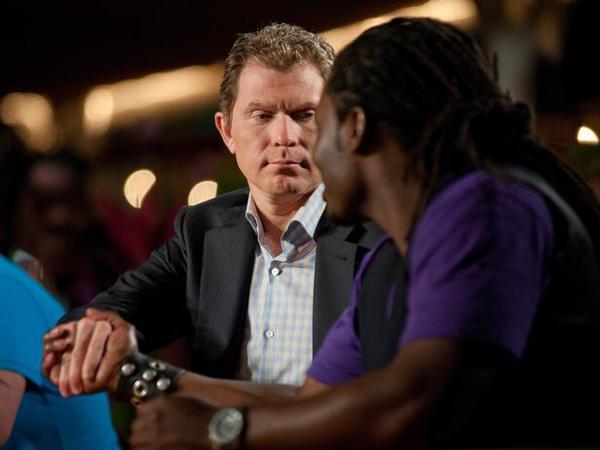
The issue of branding became very apparent to me while watching The Next Food Network Star. Yes, hand straight up in the air, I like reality TV. If you’re not familiar with the series, earnest chefs attempt to win their own show on Food Network by doing next to impossible cooking tasks for a panel of feisty food judges they may work for someday.

The judges want to know what their POV is. This season one contestant, Malcolm, was often heard saying, “I don’t need a POV. I just need to cook great food. That will speak for itself.”

I’d like to indulge a few different words. “I don’t need a brand. I just need to write a great novel! The words will speak for themselves.”

The problem is where do said judges, or in our world, publishers, place you?

If you’re seeking publication and you’ve not been published before (particularly in fiction) you are going to have to 1. finish your novel and 2. write a book proposal.

A book proposal is essentially a marketing tool for your book. It’s the sales plan. It’s the blueprint of how your tribe (again, reading it?!?) will purchase your product.

One section of the book proposal is the dreaded “comparison” section. It can be called other things. Market analysis. Comparable books. In this section, you list books that are like yours (and what sets yours apart in a nice, professional way.) The purpose of this section is to help a publisher identify what type of audience you’re trying to reach. Is there consistency amongst the authors you picked and what type of novels they write? This helps a publisher know that you know yourself pretty well. You have brand awareness and can plug into the group of people who also like those authors.

But say I have little brand awareness. My novel is a Steampunk, alien invasion set during Roman times with a population of Amish quilters–and if a book like this makes it big, you heard it here first! My website looks like a Steampunk machine tossed out a Roman gladiator who just tousled with an alien on the prairie–and throw in a couple of Amish looking bonnets for good measure since those books sell really well.

In your comparable books section, you list these books: Proof by Jordyn Redwood (a medical thriller), The Half-Stitched Amish Quilting Club by Wanda Brunstetter (Amish gives a clue there), Not a Fan by Kyle Idleman (this is Christian non-fiction), and Francine Rivers’s A Voice in the Wind (which is historical fiction).

A publisher is going to be scratching their collective head. How can one fiction book possibly be placed by each of these novels? They’re so different. Not even in the same section.

But, you say, my book will satisfy all of those readers. A publisher shakes their head. No, it won’t. The books above represent very diverse readers. I’ve personally read two: my own and Not a Fan. Not to say the other two by Wanda and Francine are not excellent novels– but they don’t appeal to me and what I like to read.

Don’t be Malcolm. Discover your brand. BE the BRAND (think Miss Congeniality– BE the CROWN!)

So, you may ask, what happened to Malcolm? Voted off midway through the season. Great chef but “we don’t know who he is.” They didn’t know how to brand him.

What about you? How did you like writing your book proposal? How easy or hard was it to write the comparable books section?

Take Beautiful Pictures with Instagram

I get random questions from people all the time, “Ingrid, how do I block my Aunt Beatrice who won’t stop tagging me in pictures that are not even of me?” These are the things I know. These are simple things to me, but to some of you figuring this out is like wrestling with air: impossible. So I always love your input on what to learn and how you can better use your social media skills to influence your tribe and build your readership.

What is happening in my social media world? My new obsession: Instagram!

Yes, I am a little bit late to this game, I know. (It is very rare that I am tardy, but on this one my friends, I AM!) My friends have all had it for a few years, and I have watched them. I have played with it many times, but it was for the “elite” iphone users. I have had T-mobile for years, and yes, they lock you into a contract, and then you are stuck. But Instagram for Android was released a few months ago, and I hopped on the bandwagon with no convincing.

Instagram is doing well. In case you didn’t know, Facebook bought Instagram for 1 billion dollars. You don’t even know what Instagram is? Well, check this out. Here is a picture of mine; right now I am at the Telluride Blue Grass festival.

What is Instagram? Instagram is a free and fun way to share your life with family and friends with edited fun photos. Each picture is taken through your iphone or android phone. You then choose to edit your photo through with very different filters. Instagram’s intuitive set up lets you link your photo to your social media world, either via Twitter or Facebook.

As an author, Instagram can be a valuable tool in using pictures to tell stories about your life and the life of your books.

1. Maybe if it is a novel, you can post pictures of things related to your characters; be creative. I would love to hear your ideas about how you can use this tool to create more buzz and excitement for your books.

2. Connect with your audience, your readers, and your friends. Publish your fun photos. Be creative and show a little bit of your world without intruding into your private world. Use this as a valuable tool to connect. It is a necessity to connect with your readers visually. Help paint them pictures of things you want them to understand about your books.

3. Hash tag your photos like you do on Twitter, and if you can, pick the same Twitter name for your Instagram name. I would love to hear your feedback and see your Instagram photos.

Follow me at @gridlocked on Instagram and Twitter. ☺ Let’s take beautiful and inspiring pictures.

P.S. My favorite new joke: How much does a hipster weigh? An Instagram. If you don’t get it, don’t worry. 🙂

Goodreads

Here is some Social Media just for authors and just for readers. You are probably thinking, “Am I dreaming?”

No! It does exist, and it is an amazing place to devote time and energy. This little heaven for authors is called Goodreads. Goodreads has approximately 4.6 million users. While it may not seem to be as grand as Facebook’s 800 million users, these 4.6 million users are just on Goodreads as readers!

Goodreads is a place people go to only to think about reading. What an awesome concept. There are no random pictures of kids, like on Facebook, pictures of things you can’t afford like on Pinterest. Instead, there are readers, some virtual books shelves, and people talking about BOOKS!  Think about this as Facebook just for authors and their audience.

What are some of the things that you can do on Goodreads?  You can create an author page that “fans” can share with others.  Within Goodreads, you can also start pages specifically for your book. ( I do not encourage people to start book pages on Facebook, just fan pages.  But on Goodreads, you can have both, and they link back to your author page.)  It’s designed just for you, the author. You can easily chat with your readers, add video clips, and link it to your Facebook and/or Twitter pages.

I recommend to authors that they spend money on Facebook, programming a page with their books, so it directs them to buy the author’s books. If you are an author with many books, start a store on your fan page. Goodreads does this for you! (Score!) If your book is on Amazon or Barnes and Noble, it is automatically connected to Goodreads.

Goodreads is super user friendly and very intuitive.  When you sign in, there are tips and tricks that are posted on their pages everyday.  It will give you more ideas and walk you through the site.  This makes it very easy to learn and be more adept in controlling the site. Have fun with this site, and don’t just put your books on it, but really get involved. Dialogue with friends, readers, and other authors.

These were my three tips from Goodreads when I signed in today.

My personal favorite thing on Goodreads is their quote section.  You can add quotes from your book or quotes from your favorite author. I love to search the quotes by words and topics. There are no ads with these quotes, and it is such a great resource for writing. Quotes are also a good way to promote yourself!

Goodreads is definitely a top social networking site for authors.

Go here to start your adventure as a Goodreads author. Also, here is some great information about how to effectively utilize all that Goodreads has to offer: Using Goodreads to Promote Your Books

Have you been using Goodreads to promote your writing? How so?

With Us Here Tonight

Shortly after my first book was published, I gave a book talk at our local library.

Then I gave another talk at another library. And then a third library.

Then a Rotary Club called me. A few months later, I found myself the featured speaker at a Shriners dinner. Last month I presented a talk at the National Eagle Center. Birding festivals, book conferences, annual meetings, schools, service organizations–I’ve addressed them all.

Wait a minute. I thought I was a writer, not a speaker.

Guess what? Book authors get to do both!

The fact is, you NEED to do both if you’re going to successfully build your readership and market your writing. That means you should work on your public speaking skills, and the best way to do that is to take every opportunity you find for a speaking engagement. Develop the following five types of speeches, and you’ll be ready for anyone!

The Sound Bite is the one you will use a bazillion times. It’s the one-liner you’ll utter every time someone asks you what your book is about. It’s also one of the hardest to compose because you need to distill your book and its value down to one sentence. My sound bite for my series is “The Birder Murders is a humorous series about a really nice guy who happens to find bodies when he’s out birding.”

The Book Talk is the speech that focuses on your book’s content. If it’s nonfiction, you can give a general review of the topic itself, or focus on just one chapter’s point and why it’s important. If it’s fiction, you discuss characters, their relationships, the plot, how you came up with all of it, what you want to accomplish with it. This works best with audiences who have already read your book because they will have questions about what they’ve learned and/or enjoyed from reading it.

The Business Talk is about your experience with the publishing business of being an author. The changes we’ve seen in publishing, including the growth of e-books and marketing paradigms, is a topic that appeals to audiences composed of business people or future authors.

The Writing Talk is about your own process of writing a book. Do you do research? Conduct interviews? Journal or set word goals? The beauty of a Writing Talk is that it is appropriate for a variety of groups, and depending on the slant you give it for the group you’re addressing, it works equally well as a classroom talk, a keynote address for a gathering of library supporters, an awards speech, a writers conference, a book club… you name it.

The Topic Talk is the newest talk in my own arsenal of speeches. Because my books are about nature, I’ve started giving talks about nature education and conservation issues. If it is mentioned in my books, it’s fair game for a talk and a great way to use extra research.

Here is a great resource to help you to continue to develop your public speaking skills.

What talks could you present for your book? Do you have any ideas for talks that I have not mentioned?

In the Wrong Place at the Right Time

This may not be the place to admit it, but I’m having an affair. We go on dates, doing things together that we love. Other times we pull down the shades, dim the lights, and cuddle up close. And–dare I admit–sometimes we whisper in agreement about our future.

Yes, I confess, I am having a torrid love affair with books. We were meant to be together. I believe in them; they believe in me. We’re inseparable.

The intimacy of this relationship explains the uncontrollable urge that surfaces each time I finish reading a great book, this impulse to write my own hope-filled book that leads women right to Jesus.

As a new writer, I used to scour the bookshelves coveting the author names on the spines. I traced my fingers across compelling covers and inhaled the new-book freshness as I dreamed of my very own name gracing the art. I envisioned countless days spent whittling my words and learning to be a master craftsman.

Later, as a career writer, I fell into a whole new world. Today’s publishing culture demanded I become an expert not only at writing, but marketing and social media as well. A bit disconcerting to a shy writer who simply wanted to write well.

How could I improve my craft if I had to concentrate on building my platform before I was ever published? How would I offer both a high-concept idea and a stop-you-in-your-tracks platform that agents and publishers couldn’t refuse?

It was time to reconsider. Instead of my name on a book spine, maybe, for now, my place was a magazine byline? While focused on writing books, I couldn’t discount that writing for magazines might help me reach my goal. I couldn’t ignore the platform-building opportunity that freelance writing offered.

While an average book may sell 5,000 copies, the readership of some magazines hits millions. Last month, I wrote a feature for Guideposts that offered me an audience of five million readers. My audience expanded as I cast my writing net a little deeper, a little wider. That article led to about 10,000 hits to my website within a very short period of time and connected me to some amazing new readers and relationships. Oh, and I sold books like crazy.

I didn’t start out with Guideposts, I started regionally. My first published print article was for a women’s magazine in my hometown—monthly circulation about 50,000. But from that article came a couple of joint ventures and writing assignments that led to later features in national and international magazines. Today, I have a healthy following of women with whom I am honored to share hope and inspiration on a regular basis.

Without taking time to go to where my readers were (to build my platform), I imagine my first royalty check would have come from a small base of hardcore fans (all relatives). Not only did writing for magazines allow me the chance to make new connections, but I also honed my craft while cushioning my bank account—not a bad deal overall.

Ready to get started? Here’s a helpful article I found online on how to break into the national magazines.

By the way, feed my curiosity. What book can you not live without?

Spruce Up Your Spring Blogging Wardrobe

Tired of the same old blogging drudgery? Ready to don something light and new? Want to increase the traffic on your site? Here are a few different outfits for you to try on your blog.

VLOGGING

Everyone’s got a blog, but how do you get yours to stand out? Try vlogging. A vlog is simply a video log. Instead of writing the same old, same old blog entry, you simply speak it into a camera.

Before you freak out, read my lips: this doesn’t have to be fancy. In fact, I wouldn’t know how to edit if you paid me. I use Photo Booth and do a vlog entry all in one shot. If you want to get fancier, though, you can use things like Microsoft Movie Maker or Apple iMovie to add all kinds of fun effects to your video.

Why should you vlog?

It’s a great way to spice up your usual blog posts. It adds variety. Personally, I choose to post humorous vlogs, but you could make them “how to’s” or even use them for interviews.

Vlogging is a great way to show your readers the human side of you. Your facial expressions, your inflections and intonations, are seen instead of imagined.

The other benefit I’ve noticed is that vlogging bumps up hits. If you’re looking for a way to increase traffic, give this technique a whirl.

It’s not as scary as it seems.

I’m not going to lie. The first time your knees will probably knock a fair amount, but after that, no more noodle legs. If it creeps you out to see your mug up on the screen, then here’s a little tip…just post it. Don’t watch it.

Even if you decide not to continue with vlogging on a regular basis, it’s a great way to perk up your blog once and awhile.

TUMBLR

No, that’s not a typo. Tumblr is a trendy way of shortening the words tumble and log. What gets tumbled? Thoughts, mostly. Think of it as a stream of consciousness, where nothing is lengthy, and randomness rules the day. On Tumblr, you’ll see posts that are as simple as a link, a photo, a quote, sometimes even just a phrase.

Why use Tumblr?

This site facilitates quick and easy posting of single items. If the thought of writing blog entry after blog entry is overwhelming, this might be just the site for you. It’s not a replacement for Blogger or WordPress, but an alternative for less in-depth, editorial pieces.

Plus, it’s super easy to use. Setting up your own page takes about 2 minutes. Literally. Plus you can post from a computer, a smart phone, or yes…drum roll please…even from a text.

How to use Tumblr.

1. Sign up. Go directly to Tumblr.com and follow the directions.

2. Learn the dashboard. Your account will have a private dashboard that only you will see. This is also where you’ll find the different kinds of posts that are available for you to utilize.

3. Customize your page. Make it your own. You can upload background images or use some of the free templates.

4. Start posting. The best way to figure out Tumblr is simply by putting your hands on the steering wheel and hitting the gas pedal. It’s a creative place, so go ahead and run free. Try out new things you’ve maybe never done before, like a vlog, or post a stanza of poetry, or maybe a photo you shot recently.

5. Follow other users, kind of like Twitter. It will get your name out there in Tumblville, and eventually you’ll be pulling in followers of your own.

Even if you’re not quite ready to take the Tumblr plunge by setting up your own page, go ahead and check it out. It’s a fun place to hang around.

Vlogging and Tumblr are just a few ways to zest up your blog. Share the love…what’s one way you’ve discovered to update your spring blogging wardrobe?

Stealth Marketing

Like many writers, I have issues with shameless self-promotion: I really hate blowing my own horn because isn’t that exactly what Christian humility tells us NOT to do?  Like every writer, though, I have to get myself into the marketplace to not only make sales and gain a readership, but also to spread the word that God has given me to share.

What’s a humble Christian to do?

One answer I’ve found is what I call ‘Stealth Marketing’ – marketing that doesn’t feel or look like traditional book selling yet still puts my name and book in front of new audiences I might not otherwise reach. Basically, I do non-profit events.

In particular, I donate books to silent auctions or hold a book signing to benefit a local charity. I’ve found that what I forfeit in cash revenue, I get back many times over in free publicity, good will, new readers, and a personal sense of contribution.

In the past year, I’ve donated books to local, regional, and national silent auction fundraisers. I started with the annual dinner auction at my children’s school, which is usually attended by some 300 people. I wrote up a brief sketch of the book and submitted it along with a photo to be used on the display card at the auction, as well as in the auction booklet. After the event, I had a call from another school parent who told me that she thought the books were such a great item idea, that she was going to buy a set of my books to donate to another group’s auction. I estimated that would double the exposure I’d just gotten from the first auction. Out of curiosity, I checked my website tracking to find that the number of hits clearly rose after the dinner. Good intentions and a book donation can go a long way, I realized.

Deciding I’d found a productive way to publicize my books and generate sales without the self-promotion I dreaded, I began to look for non-profit groups that corresponded with my target market – birdwatchers and mystery readers – to reach new audiences. In the past year, my books were listed in  programs for a variety of fundraisers, including the Raptor Research Foundation’s annual (international) meeting, the national conference of MIA/POW families, a Savannah (GA) Rotary Club, and the International Festival of Owls. After each event, I’ve seen increased traffic to my website.

Closer to home, I really enjoyed the book signing hosted by my favorite local eatery. It was a success for all of us involved: I asked customers to bring items for the local food shelf, and I discounted each book they bought. We collected bags of food to restock the shelves just before the winter holidays, the diner had increased business that morning, and I got free publicity in the bulletins of area churches that support the food shelf, not to mention that warm feeling of doing something good for my community!

Do you practice stealth marketing?

What Do Collard Greens have to do with Marketing Mojo?

Hey y’all, let’s chat…I’m Shellie, they call me the Belle of All Things Southern, and I’m here to talk about marketing. Don’t roll your eyes at me. These talks are good for us. (Right, Super Agent Greg?) Being an incurable storyteller, it’s my natural inclination to open any discussion with a tale to illustrate my point, and my Papa tells a childhood story that perfectly captures my thoughts on marketing. So, please, join me on memory lane.

Ola Mae Rushing was my paternal grandmother. I remember her as a widow woman, worn slap dab out and spending most of her days resting her bones in a squeaky green recliner, watching the seasons of the Louisiana Delta change outside her picture window and Bob Barker charming the masses on her black and white TV. Together my grandparents had raised a dozen kids to adulthood before Papaw Rushing passed away. After his death, Grandmaw sat down and retired–from most everything. Papaw Claude had worked the land as hard as a plot of ground has ever been farmed during those early years, but life was anything but easy. There had always been more month than money and more hungry mouths than food to feed ’em, which brings me to the point of our story.

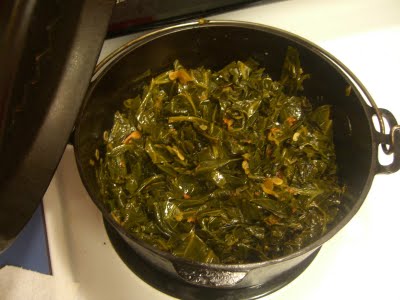
One day Grandmaw set a single pot of collard greens on the table and told everyone to help themselves. Papa was just a little boy, and collard greens were the last thing he had in mind to fill the pit in his hungry stomach.

“I don’t like collard greens!” he announced. “I hate collard greens. I ain’t eating any collard greens!”

The way Papa tells it, Grandma promptly escorted him outside for a Come to Jesus meeting.  Upon his return, Papa wasted no time pulling his chair up to the table and saying, “Pass the collard greens, please.”

That’s the sort of love/hate relationship I have with marketing. To be perfectly honest, it takes a remedial Come to Jesus meeting to keep my thinking straight on this one, but God is ever faithful to help me adjust my attitude. This writing life is a hard one, but it’s a blessed one. I’m getting to do what I’ve dreamed of doing from childhood when I spent my days in the arms of my favorite tree with a pile of books, a #2 pencil, and my Red Chief notebook. I write words, and people read them.

Sure, my “brand” was a huge surprise. I never intended to be a walking, talking, southern celebration, and I never ever set out to write humor. This is the platform that God built. Due to its perpetual deadlines, I get to build line upon line relationships with people, which brings us to a place where I can speak more important things into their lives than Suck Your Stomach In and Put Some Color On or Sue Ellen’s Girl Ain’t Fat, She Just Weighs Heavy. Not that those aren’t serious issues, but I live to talk All Things Jesus. Towards that end, I’ll gladly pull my chair up to my desk today, tomorrow, and as often as is necessary with a smile on my face and a burning resolve in my heart.

“Pass the marketing notes, please.”

Hugs, Shellie

What helps inspire your marketing mojo?

Revolution, not Resolutions

So, how are you coming on those New Year’s resolutions?

(Are those crickets I hear?)

Yeah, me too.

That’s why I’ve been thinking about doing away with the whole resolution thing (or “thang,” as we say here in the Lone Star State). Instead, I’m praying for a revolution. After all, without God, I wouldn’t be able to accomplish anything…even getting out of bed in the morning.

I’m greedy this year, but in a good way. I’m greedy for more of His presence, more answered prayers–not just for me, but also for all those who are hurting–and more of His words in my ear, on my lips, and in my mind.

I’m asking God…

  • To take my thoughts away from the markets and focus them on stewardship. I truly want to honor Him with my writing. This means (gulp!) that I’ll need to ask for His strength to be more disciplined. When He gives me an idea, I need to turn off the television, put down the latest decorating magazine, and write–without worrying about how the piece will fit into a publisher’s plans. Oh, God, help me stop obsessing over markets and contracts and instead be faithful to write the things you want me to write.
  • To help me be content. I’ve always been goal-oriented…to a fault. Too often, my ambitions led me off-track. Instead of being led by the Spirit, I’ve been driven. And since I’m being honest, I’ll admit that I have compared my blog stats/Amazon numbers/speaking schedule to other writers and felt insecure–or, worse, envious. I’ve browsed bookstore shelves and gone from admiring to coveting. I’ve admired another writer’s website and wished it were mine. Oh, Father, forgive me. Help me to know the secret Paul talked about–of being perfectly fine right where you’ve placed me….whether on bestseller lists or in remainder bins, in Barnes and Noble or on my blog, on a designer site or a “homemade” masterpiece. You have given me so much! Help me to count my blessings instead of my bills. In the midst of economic uncertainties, may I covet nothing but your peace.
  • To fill my heart with simple joys. Too often, I get mired in the past (Should I have Twitter-ed that? What did he think of my idea? Did I mess up my career for good this time?) or the future (Will I make enough $$$ for us to have a real vacation this year? What’s my editor going to say?– and–How in the world will I find time to write when I actually get the contract?!). What I really need to do is 1) take a deep breath and 2) let ordinary miracles bowl me over, preferably every five minutes. Frederick Beuchner wrote, “Life itself is grace.” So are used bookstores, computers, and online friends.  Abba, remind me to read and write more deeply. Prod me to study and meditate on scripture, instead of just quoting from it for my latest WIP. Rip my blinders off so I can appreciate every connection and blessing you’ve given on this path you’ve ordained for me.  
  • To show up and show off. I once had a music director who prayed a version of this during Wednesday night choir practice. He believed that we should spend as much time talking to God together as we did rehearsing…and boy, was he right. This same director invited anyone to sing in “his” choir–church member or atheist, bank president or convenience store clerk. Many who came out of their love for music–or just pure curiosity–stayed week after week, and their lives were inevitably changed. They showed up, and God showed off. Lord, never let me forget that I can do nothing without You. In You, and You alone, I move and live and have my being. You are my source, my guide, and my goal. Please show up and show off in my career, family, and relationships. Do what you do best, Lord. 

A few years ago, I led worship at a ladies’ retreat. The speaker was wise, peaceful, and totally centered on Jesus. I wanted what she had, but I guess I was afraid to ask God for such a faith (maybe I knew it would be costly).

After dinner one night, she and I were discussing the books I had written (my first three books had come out, but then I received a ton of rejections and was sure my career was over), and she mentioned that she was considering writing a book based on her retreat material.

“I’d love to write more books,” I admitted, “It’s a passion of mine. But I can’t get another contract, and I don’t have the money to self-publish. It’s really discouraging!”

She looked at me and smiled. The next words out of her mouth went straight to my egocentric heart and lodged there, like a stubborn splinter.

“I don’t need a contract,” she said. “I just need more of Jesus.”

I’ve been working that out ever since.