
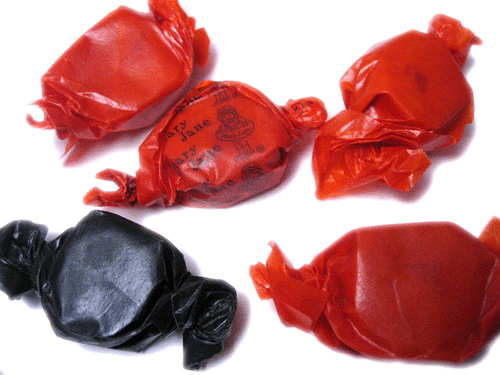
 In today’s free and easy e-book climate, e-texts of traditionally-published books are passed around like wax-paper toffee on Halloween night–you want some of this? Have four! Have six! No one likes ’em anyway. And that’s not even counting the scads of self-published e-books that are either free or 3 cents each. Most of those are the strawberry candies in the red plastic– no one wanted them either.
OK, I’m exaggerating. It’s not that free books are actually bad. Few books are as awfully nasty as wax-paper toffee, and many free books are very good–it’s just that their plentiful availability threatens to devalue them, like so many strawberry candies dumped straight in the trash can.
Seth Godin, prophet of social media and cultural change, thinks free books can be a good promotional tool. In fact, he thinks the way for debut authors to make it in this day and age is to give away their first books for free.
He said so, in this interview with Michael Hyatt of July 6, 2011. It’s well worth watching simply for all the debatable points he raises about where our book culture is headed and how we should handle that change. Seth Godin is an excellent persuasive speaker–but that doesn’t mean he is always right.
Free books have a very serious downside, and the best article I’ve read on that downside is by Janet Kobobel Grant of Books and Such Literary Agency. Here’s one of her main points, paraphrased:
Will free books flood the market to the extent that readers realize they no longer have to pay for their reading material?
Will readers think: “Why should I buy Ms. Ninja-Writer’s book now, when I can wait 9 months and get that same book for free as a marketing ploy for her next book?” In a tight economy, readers may resolve: “I am going to save money by never paying for a book again.”
My husband works in sales, and he is very good at it. He understands you can sometimes give away free stuff, but giving away too much or giving away the wrong products destroys your own customer base. He thinks this free e-book and 99 cent e-book stuff in the publishing industry is going to smash the market to tiny little pieces.
How many corporations can resist the lure of the quick buck?
Here’s the problem: corporations have always been very bad at resisting the lure of short-term gratification (such as temporary increased sales for a certain author) in favor of a wise long-term strategy (such as limiting or refusing the issue of free books). They have to compete, they want to make money in the ways they see others making money, whether it’s going to work in the long-term or not. For many executives, it’s easier to believe those who tell them that the short-term strategy is awesome and won’t cause any problems. Fewer executives want to hear the voice of caution and contrarianism–it’s too inconvenient.
My question for you: Will the changes caused by free e-books permanently affect the ability of authors and publishers to make a living at their work? Will the major publishers collapse and only the best entrepreneurs rise out of the internet heap… entrepreneurs who may not be the best writers? Or do you agree with Seth Godin that free books are a fabulous strategy and the wave of the future for marketing?
 WordServe Water Cooler