
 Every writer wants to believe that he or she can write a bestselling book.
I’m here to tell you there’s nothing wrong with believing that. I have no doubt that many times, my belief in that idea is the only thing that keeps me pounding out words on my laptop. To be completely transparent, I’ve never had a book reach the NYT bestseller list; the closest I came was learning that my memoir of dog adoption, Saved by Gracie: How a Rough-and-Tumble Rescue Dog Dragged Me Back to Health, Happiness and God, was a bestseller – at one point in time – for my publisher. Whether that one point in time was a week or a month, or even three hours, I honestly don’t know. And actually, it doesn’t matter, because the terrible truth of best-selling-ness is that it’s truly a transitory thing, as well as completely unpredictable.
As a reader, I also find that “bestseller” doesn’t necessarily predict my own evaluation or enjoyment of a book. I read plenty of books on the bestseller lists that leave me cold, to say the least. Other books I stumble across are amazing, but languish forever in No One’s Heard of It Land.
As a result, I’ve decided that I probably know as much as anyone about writing a bestseller, which is to say, no one really does know why some books win the lottery and others don’t. So the next time you’re struggling with your belief in your ability to write a bestseller, here are my tips(laughs?) to keep you moving forward:
- Sit down and write. Or you can stand up and write (I’ve been reading a lot lately about the health benefits of sit/stand desks). Either way, actually writing seems to be an uncontested avenue to producing a bestselling book. (Caveat: unless you’re famous, in which case you can pay someone else to do the writing and still put your name on it and get even more famous, although I think that’s kind of cheating, don’t you?)
- Write short sentences. Really. Bestsellers have short sentences. Like this one. If you want to write a literary novel, though, you can make the sentences as long as you like because the people who read literary novels generally read at a higher reading level and more assuredly appreciate the sheer beauty of the written language, even if they don’t have the market clout to send your book’s rating skyhigh.
- Use active verbs. (They even tell you this in graduate writing programs. I just saved you a ton of money and two years of your life. You’re welcome.)
- Put a dog on the cover of your book. Even if it’s not about a dog. Books with a dog on the cover sell better. Even the latest statistics show that dogs get more internet time than any other animal. Want attention? I’m telling you, put a dog on it.
In closing, I want to share with you the writing advice of a bestselling author named W. Somerset Maugham: “There are three rules for writing the novel. Unfortunately, no one knows what they are.”
Happy writing!
 Value-added describes the enhancement a company gives its product or service before offering the product to customers. Value-added applies to instances where a firm takes a product that may be considered a homogeneous product, with few differences (if any) from that of a competitor, and provides potential customers with a feature or add-on that gives it a greater sense of value….
 One of the things I enjoyed most about writing my cozy
 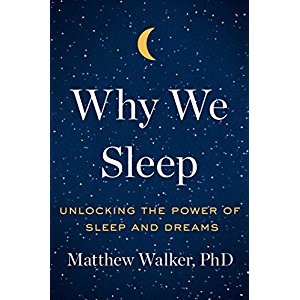 What makes a book a great read?
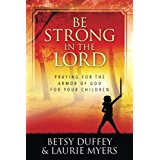 But if you asked me why they were the best books of the year for me, I would have specific reasons for each. I choose Walker’s book because it literally changed my behavior in two ways: I now try to get more sleep to improve my health, and I refuse to drive a car if I’m in the least bit tired (yes, he scared the heck out of me with statistics!). Moore’s book impressed me deeply with its story of women who suffered terribly, yet fought industry to make it responsible for employees’ health on the job. Be Strong in the Lord deepened my faith for both my children and myself, and Picoult’s novel gave me new eyes and a new heart to confront racism in America.
 Remember all those things you were going to do this year to update and enhance your online presence, like upload recent photos, add new publication credits, revise your bio? With 2017 approaching the half-way point, here’s a checklist to remind you to take the time now to tackle that list and mark off the tasks. Not only will it make you look active and engaged, but many social media platforms automatically post to your networks the changes you make to your profile, which means you get a boost in exposure. And that’s always a score for a writer…as long as it’s good exposure, that is!
 I think every published author wishes they could go back in time to whisper in their younger self’s ear. Doing so would certainly save volumes of time and energy. I’m sure five years from now, I’d wish for the opportunity to tell today’s me something I need to know right now.
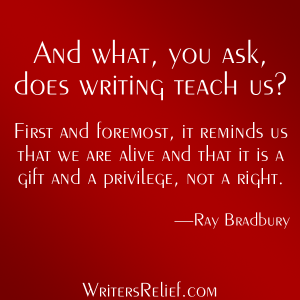 Read as much as you can. Phrases such as, “Great writers are great readers,” hold a wealth of truth. The more we study, the more prepared we are to succeed. Reading teaches us the subliminal art of sentence flow, heart tugs, and scene staging. It also shows us what to avoid, as we learn from the mistakes of others. It’s the best motivator I know.
 Set time-stamped writing goals. I’ve really let this one slip lately, and my work is showing it. But my One Word is Reset, so I am resetting my goals. The difference between a dream and a goal is a measurement. So my refreshed writing goals include a minimum of 5,000 words per week. This reasonable number allows for flexibility, while pushing me beyond a normal comfort zone. It’s doable.
 I can write until my fingers are numb. I can start writing at dawn’s break, pushing until the wee hours of the next morn, but if I am not inspired, it’s all for nothing. My personal inspiration come from prayer, provision, and praise for my Maker. He’s the one who gifted and called me. This is my most powerful secret.
 A few years ago, I got the oddest suggestion I’d ever heard from an editor: write a few scenes between my novel’s characters that I wasn’t going to include in my final manuscript.
 I have a love-hate relationship with book reviews.
 And then there is the flip side of my love-hate relationship with book reviews.
 There’s an old adage in marketing that says in order to get a consumer to pull the trigger and buy something, they have to hear about the product three times. There was a time when the blueprint to accomplish that was pretty straightforward. Get reviews from newspapers or magazines and get interviewed on television or radio. Then, go make public appearances at bookstores or book fairs or local meetings, and don’t forget to keep writing.
 Every writer needs a good editor. There are no exceptions. Typing away at the computer may be a solitary adventure, but bringing a well-rounded story to readers is a collaborative effort with a lot of players on the team. One of the most necessary players is a good editor. This is so much more than catching a typo or fixing a sentence that ends in a preposition or realizing you meant effect and not affect. It’s more than knowing what AP Style or Chicago Style is and when to use what, where.
 WordServe Water Cooler