The Truth About Being An Author

cookies-28423_640I know I took the secret oath to never reveal the truth about what it’s really like to be a published author, but I’ve decided I can’t, in good conscience, keep quiet any longer. If you’d rather keep your dreams of authordom intact and unsullied, stop reading NOW.

If you can handle the truth, though, here it is:

  1. You are going to eat a lot of cookies. There is a cosmic law that requires bookstores and libraries to offer this sustenance to authors and their readers. The more people who attend these events, the less you (the author) will have to consume, so be sure to invite every cookie eater you know to your book events. Otherwise, you will have to eat all the cookies yourself so your host won’t feel bad, and then your clothes won’t fit, and you’ll have to buy a new wardrobe (see #6 below). If you want to buy a new wardrobe anyway, go ahead and eat all the cookies. It will make your book hosts happy because they don’t want to eat the leftovers.
  2. Everyone on the planet will tell you about the book they want to write, and then they will ask you how to get it published. Unless you are prepared to give on-the-spot hours of instruction and editorial advice, the best answer is: “I have no idea. Have you tried the cookies?”
  3. You are going to bond with your car since you’re going to be putting on the miles as you drive from one book event to another. Tell your friends and family to give you pre-paid gas cards for birthdays and holidays. Keep books in your trunk. Tape pictures of your loved ones onto the dash so you can remember what they look like. Do NOT eat cookies in the car, even if you are starving between book events, because it’s virtually impossible to get all the crumbs out of your car.
  4. You will somehow, miraculously, find time to work everything in to promote your published book. You will not, however, find time to write your next book. You have to do that instead of sleeping at night. The good news is that the cookies you eat all day promoting your book have enough sugar in them to keep you awake while you write.
  5. You will land a short interview on the local TV station – congratulations! You will walk into the green room to wait for your turn and share a couch with a Chihuahua dressed as Marilyn Monroe (complete with blonde wig and iconic white dress) and a pug masquerading as Snow White. You will be humbled to realize that book publication rates right up there with the best Halloween costumes for small dogs. And you will learn that dog biscuits can look a lot like cookies.
  6. Your writing income will probably not pay the bills, or at least, not all of your bills. But you’ll eat all the cookies you’ve ever wanted.

Now, who wants a cookie?
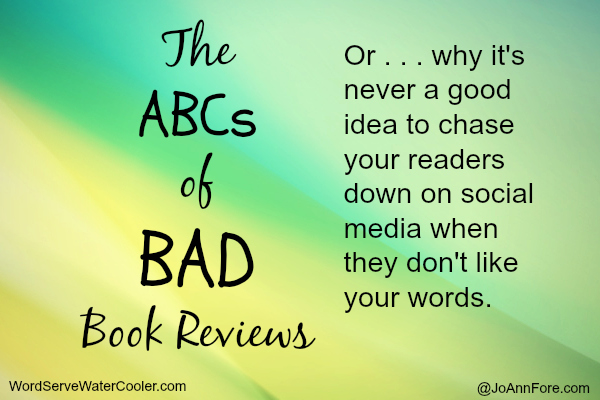
 

When the Bad Reviews Come {And They Will}


bad book reviews

“She needs to have more respect for the process . . . trying to claim that everyone should heal like her.”

The words pierced my heart.

Until then, I had enjoyed a couple good months of positive feedback, those heartwarming days after the release of my debut nonfiction book, When A Woman Finds Her Voice. The book hit #1 on Amazon’s Hot New Releases charts and then walked the Amazon {paid} bestseller list {in its genre} for a couple weeks in the top five. It also won some literary awards. But more importantly, my words were reaching the hearts of readers as comments like “inspiring,” “introspective,” “encouraging,” and even “life-changing” peppered online reviews.

That sort of feedback overwhelms a girl with God’s goodness, giving value to this shy writer’s words. To think He had somehow exchanged these primitive ramblings of one who simply longed to spread hope and had used them as encouragement for others, that’s humbling.

I’d finally felt the freedom to say it above a whisper: I am an author.

But then that two-star review hit my screen, attacking my sense of worth. It shouldn’t have, I know. Mentors warned me it was coming; they’d suggested I not even read it.

I didn’t listen.

I determined to mentally counter the negativity and then quickly return to my illusory sense of fulfillment. After all, I welcomed reviews—good or bad. Perpetual student that I am, I’m known to {relentlessly} solicit constructive criticism as an opportunity to learn. And here it sat, this chance for free education, this two-star review therapy.

But in a review-driven culture where we allow others to determine what we read, watch, eat, and even where we spend the night, how can we not be impacted when someone misunderstands our heart?

The judgement sliced soul deep, challenging insecurities I’d long ago buried.

This is the sort of vulnerability we open ourselves up to when we cast our words, our heart, into a public arena that holds potential for not just admiration and esteem but also misunderstanding.

You see, there’s nothing I’m more compassionate about than reaching the heart of a wounded woman and leading her to the restoring, redemptive feet of Jesus. But this particular reader didn’t know that, didn’t know me.

So how do we filter through these words when they come?

  1. We anchor. It’s crucial to anchor any negativity with perspective. We can’t allow disapproval to overtake our thoughts. For the one poor criticism, I had 49 positive reviews from folks who had been uplifted by my words. I worked hard to focus on those. {Very hard.}
  2. Bounce back. To feel defensive at first is natural, but if you find yourself wanting to respond negatively {as in hunt the person down on social media to blast them back}, walk away from the screen and refocus. Immediately.
  3. Consider truth. Ask yourself, “Is this true? Is the criticism valid? Did I somehow fall short?” If so, use this information in a positive manner and seek to write with excellence. However, if the negatives aren’t well-rounded and constructive, the point baseless, you simply have to let it go.

As word-weavers, this should become our default: in the face of bad reviews, let’s practice our ABCs to rebuild our confidence. Anchor. Bounce. Consider.

Okay, I’m curious now: How do you handle criticism?

Making Connections

Publishing is a funny beast. The author wears many hats – writer, editor, marketer, publicist, sometimes frazzled human being (all right, maybe it’s most of the time). There are moments when the load seems overwhelming and I feel incapable of wearing every hat with excellence.

Kariss' teamMarketing tends to be my weakest link. I’m passionate about my books, love to talk about them, enjoy sharing the story of God’s faithfulness. But when it comes to selling the idea of why others should read them, I prefer to let people determine the quality on their own.

I know. I know. I’m still learning how to do this well. But the key is that I’m learning. Guest posts, social media, contests, etc. are all great tools that I am adding to my belt, but the most powerful tool in my arsenal is my network. These people fall into multiple categories, and every group is important

  1. Close friends and family.
    You’ve got to love this group. They are your biggest fans and cheerleaders. Occasionally they may be more biased than constructive with their feedback, but enjoy the affirmation. They’ve watched the journey, battled the insecurities and joy with you, and want to celebrate the finished product.
  2. Fringe friends and acquaintances.
    These are the people familiar enough with you to ask about the book every time they see you. They are also the ones who bought the book out of curiosity and support and are excited to watch the journey from a distance. If they love the story, you better believe they will share with their friends and family.
  3. Unknown readers.
    These are the people whose constructive opinion you can count on most. If they love the book, then job well done. They hail from all over the country, sometimes out of the country, and their word of mouth is powerful. They don’t know you, but love the heart in your books and will shout it from the mountaintops and anxiously wait for the next book. I love networking with this group. Their excitement fuels my own.
  4. Critics and commentators.
    These are your influencers, bloggers, Amazon comment critics, etc. I don’t necessarily advocate taking their opinions as gospel. But often, they have a powerful voice in their particular online spheres. Learn what they love and what they don’t, filter it to see if there is truth, and build on these admonitions in your next book.
  5. The unreached.
    The good news is that with all these other groups on board, the unreached are now reachable. Diligently work to add this group to the fold. Build relationships with your readers. Write stories that people can’t ignore. And don’t grow discouraged. This is a journey, not a short-distance sprint. Growth happens over time, and it’s exciting to see.

Shadowed_AUG 1 (1)But there is one connection that is the most important. Talking to the Master Storyteller. He knows your story intimately, and He alone can weave your network into something beautiful.

Prayer is powerful. In moments of frustrated marketing, I’ve prayed that the Lord will get Shaken and Shadowed into the hands of people who need to read them, despite my best efforts.

And He has.

Some of my favorite interactions from readers come from those who never heard about the book but wandered into a bookstore, loved the story, laughed, cried, and found hope in Christ. Every time I read one of these messages, I praise the Master Marketer. In spite of my best efforts, He is still placing these books in strategic places.

More than spinning a great story and growing my craft, I want to make an impact. And that only comes through surrendering my ideas in marketing to the One who knows best. I figure with Him at the wheel, I’ll do what I can and let Him do the rest.

The Only Story That Matters

july 013I was beginning to panic about my book sales. Despite my hard work and ceaseless efforts to promote my new book, I just wasn’t making a dent in the supply of books I’d bought from my publisher. Since I’d borrowed the money from our family savings, I felt guilty that I wasn’t refilling the coffer as quickly as I’d so optimistically assumed I would.

What more could I do? Post even more frequently on social networks? Write more guest blogs? Camp out on the doorsteps of radio and television stations to get their attention? Go into even more debt by hiring a publicist, in hopes he could convince people to buy my book? Beg the few bookstores still in existence to push my book at customers?

I didn’t do any of those things.

Instead, I asked God for help. I prayed for more book sales.

And He delivered.

Within days, I heard from two stores who had taken some of my copies that they needed more. Some event bookings I’d been pursuing for months finally came through, and I added them to my calendar. One night as I lay awake in bed, thinking about my book, I realized there was another market I could tap into, and the next day, I discovered solid leads for doing exactly that.

And then my daily Scripture devotional chimed in with Jeremiah 32:17.

universe“Ah, Sovereign Lord, you have made the heavens and the earth by your great power and outstretched arm. Nothing is too hard for you.”

Yes, I was reassured and completely grateful for God’s generosity to me in the form of helping me sell more books as I had requested in prayer. I’d asked, and I’d received.

Praise God!

To be honest, though, I felt something even more compellingly: I felt chastised. I’d asked the omnipotent Lord, who created the universe itself, to help me sell books! Who did I think I was to even imagine He would care about a few hundred dollars in my life? It’s not like I needed a PLANET or anything. I wanted material success. I wanted to put some money back in the bank. I wanted God to make me feel better about a story I wrote. A story!!

Talk about putting myself at the center of the universe. I was humbled. Embarrassed. Aghast at my own egocentricity.

And, most of all, stunned by God’s patience with me, because this isn’t the first time I’ve let my selfish priorities slide in over what I know to be the single most important relationship of my life: my relationship with God.

It’s true – nothing is too hard for God, and that includes loving me…and you.

And really, that’s the only story that matters, isn’t it?


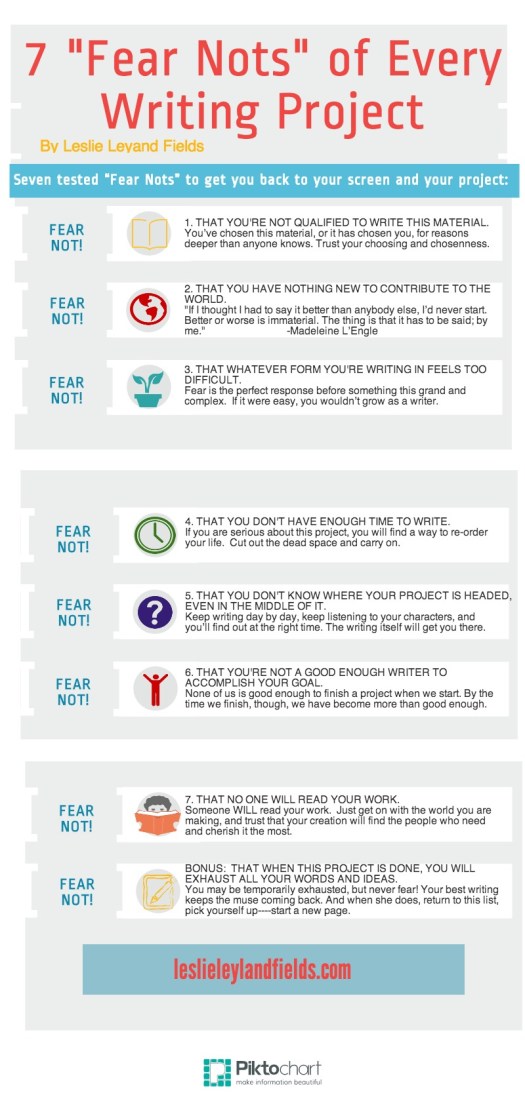
The 7 Fear-Nots of Every Writing Project

Woman afraid (funny)

Whenever an emissary from another world showed up in all its effulgence, men and women fell down terrified, overcome, filled with God-brilliance and self-loathing. Our own writing projects, delivered by the other-worldly muse, can inflict and inspire a similar terror at times (Woe is me! Why did I think I could write this novel?). When you’re visited by these angels of brilliance-and-woe, (and you will be!), remember what usually came next, after the Visited fell facedown in the dirt: “Fear Not!” And then words of hope and direction were given to the stricken to lift them to their feet and their new purpose.

Here are 7 tested “Fear Nots” to get you back to your screen and your project:

Woman smiling with hands folded

1. Fear Not!—-That you’re not qualified to write this material. You’ve chosen this material, or it has chosen you, for reasons deeper than anyone knows, including you (unless you’re purely market-driven). Your desire, your interest, your life experience, your questions, maybe even your prayer life may have something to do with this insistent need to address this subject. Trust your choosing and chosenness.

2. Fear Not! —–That you have nothing new to contribute to the world. Listen to Madeleine L’Engle:
“My husband is my most ruthless critic. . . Sometimes he will say, ‘It’s been said better before.’ Of course it has. It’s all been said better before. If I thought I had to say it better than anybody else, I’d never start. Better or worse is immaterial. The thing is that it has to be said; by me; ontologically. We each have to say it, to say it our own way. Not of our own will, but as it comes out through us. Good or bad, great or little: that isn’t what human creation is about. It is that we have to try; to put it down in pigment, or words, or musical notes, or we die.”

3. Fear Not!—–That the article, short story, memoir, sonnet, sci-fi trilogy, whatever form you’re writing in, feels too difficult. Fear is the perfect response before something this grand and complex. This is partly why you’ve chosen it. If it were easy, you wouldn’t grow as a writer.

4. Fear Not!—–That you don’t have enough time to write. Of course you don’t. No one does. But if you are serious about this project, you will find a way to re-order your life: stop watching TV, write while the kids are napping, get up 2 hours earlier than everyone else, take your manuscript with you on vacation. Yes, it costs you ( and it costs others too, you must realize). Did you think otherwise? Count the cost to everyone. Then, if still so moved, cut and carry on.

5. Fear Not!—-That you don’t know where your novel, trilogy, even your memoir is headed. No one you know informs you of the outcome of their lives, do they? How many of your friends know where their lives are headed and how they will get there and who they will be once they’re there? You will not know this for your characters or story until they do. Keep writing day by day, keep listening to them, and you’ll find out what you need at the right time. The writing itself will get you there.

6. Fear Not!—–That you’re not a good enough writer to accomplish your goal. None of us is good enough to finish a project when we start. Some of us aren’t even good enough to start! By the time we finish, though, we have become more than good enough. The struggle, the long hours and the word-wrangling and prayer-wrestling will all get you there.

7. Fear Not! —-That no one will read your work. Someone WILL read your work. Maybe a few friends, the ones you really care about, maybe thousands of strangers. No one knows this when they are writing, and it has nothing to do with the writing. Just get on with the world you are making, and trust that your creation will find the people who need and cherish it the most.

BONUS: Because fears often multiply, one more to put to rest: Fear Not!—-That when this project is done, you will exhaust all your words and ideas. Not so. You may be temporarily exhausted, but never fear! Your best writing keeps the muse coming back. And when she does, return to this list, pick yourself up—-and turn a new page.

The Seven -Fear Nots- of Every Writing Project (1)

Staying on Course

Photo/KarenJordan

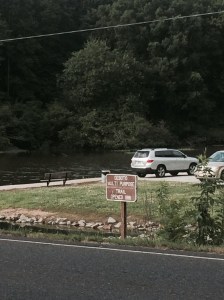
I failed to consider the length of the trail when I started walking it.

Temptations and expectations. I had hoped that a two-mile, brisk walk along a wooded path overlooking a beautiful golf course near my home would clear the cobweb of worry from my mind. 

Instead, my impulsive, adventuresome nature ignored the signpost, describing this four-mile loop through the challenging hills and valleys in Central Arkansas.

I knew the path would eventually lead me back to the trailhead. So, when I noticed the third mile marker, I decided to press on. I assumed that going forward would be faster than turning around and returning to where I started. Plus, after investing so much energy, I wanted to finish the course.

Confusion and distractions. I tried to determine my location on my cell phone’s GPS. But I couldn’t locate the trail on my screen, and the diverging paths confused me. So, I just kept walking.

I stopped from time to time to shoot a few pictures. These gave me some short breaks  from the summertime heat and rest for my throbbing feet, as I avoided the pesky bugs, spider webs, and poison ivy sprigs at the edge of the forest.

Photo/KarenJordanElation. By the end of the trail, my worries had  abandoned me, and the strain of the long walk through the woods subsided. Refreshed, I paused by the lake and enjoyed a bottle of cold water.

I also experienced a surge of self-confidence when I reached my destination. I knew that I wouldn’t have attempted such a feat in the summer heat if I’d known the length and difficulty of the trail.

Looking back on the experience, I realize that I’ve learned this lesson in other areas of my life—marriage, parenting, academics, and writing for publication.

I’m not saying that I have this all together, that I have it made … By no means do I count myself an expert in all of this, but I’ve got my eye on the goal, where God is beckoning us onward—to Jesus. I’m off and running, and I’m not turning back … So let’s keep focused on that goal, those of us who want everything God has for us. (Phil. 3:12-15 MSG)

Are you tempted to quit right now!? I challenge you to focus on God and allow Him to guide you with His promises.

Let the peace of Christ rule in your hearts … And be thankful. Let the message of Christ dwell among you richly … And whatever you do, whether in word or deed, do it all in the name of the Lord Jesus, giving thanks to God the Father through him. (Col. 3:15-17 MSG).

What helps you stay on track when you’re tempted to get off course?

YouTube/YamahaBill (Disney’s Hercules – “Go the Distance”)
Photos/KarenJordan

The Power of Story

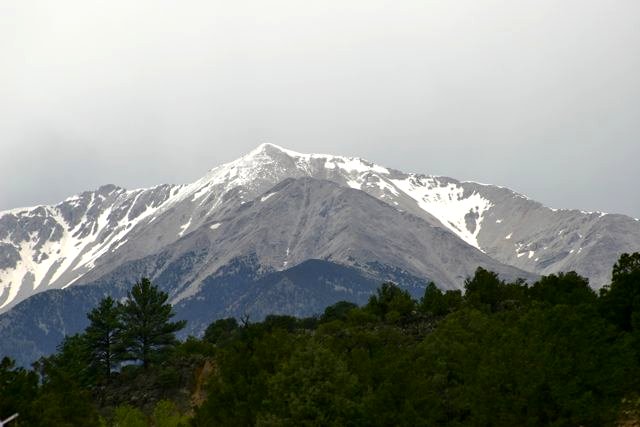
It was pitch black as my car slowly followed Micah’s along the winding mountain roads, our tires kicking up dust in our wake. My adrenaline sizzled, preparing both my mind and body for the next hours of our night hike up Pike’s Peak in Colorado Springs.

My friend Brad sat next to me in the passenger seat, keeping my mind occupied on our conversation. I shared with him about my last year – graduation, what the Lord had been teaching me at Focus on the Family that summer. As he thanked me for sharing, a response spilled from my mouth without my permission.

“It’s not my story to withhold. God’s writing it. I’m just living it.”

My mind froze as I replayed that comment over and over in my head, realizing both the truth and the responsibility that came with it. Have you ever had one of those thoughts? You know it didn’t come from you because there is no way that you are that brilliant. And it both hits you and spills out of your mouth in the same breath with the unmistakable ring of truth to it. I knew it was a Holy Spirit inspired response. Divinely inspired light bulbs are great, aren’t they?

Kariss mountains

In the few years since that night hike that changed so many things for me, I have come to understand and value the power of story. The more I read and watch, I realize that there are only two stories that matter in life and everything else is a cheap imitation.

1) The story of Jesus Christ

2) Your story

That’s right! Your story is the second most important story in history. Why?

There was a man in the Bible named Nicodemus. For those of you reading this who do not claim to be Christians, you are in good company. Nicodemus wasn’t either, at least he wasn’t at the time he talked with Jesus. He was curious and confused. He came to talk with Jesus in the middle of the night. In John 3:11, Jesus tells him, “I tell you the truth, we speak of what we know, and we testify to what we have seen…”

Never mistake that Jesus has the most powerful and influential story in history. But because He made you and gave you life, your story is the second most influential to people in your sphere of influence. Most people do not appreciate a know-it-all. However, your story automatically has credibility because you are standing before them and telling it, physically present and accessible to them. You lived it and they can relate to it, or at least ask questions.

Story is a powerful thing. We live in a culture where we want to hear what the next Hollywood star is up to or which politician created a national scandal. People want to know stories. No matter how nondescript you feel yours may be, you have the ability to influence people mightily for Jesus through a willingness to share what God has brought you through.

My mom has always told me, “Never forget from whence you came.” You don’t have to have a successful career or a story worthy of Lifetime. You simply have to be willing and open to share.

Let your writing imitate life in the best ways. In fiction, no one has to know where some of the intimate details come from, but I have learned that what some of my readers love the most came from experiences I had or watched.

What the Lord laid on my heart to share with Brad is very true. My story isn’t mine to withhold. Listen for His gentle whispers. He will give you the words to say when the time comes, and He will use your story, in writing and in life. The pressure is off of you! So share. You have a powerful story because it was and is being written by a mighty God!

How have you seen God use your story to impact others?

Sing it, Lamb Chop!

projects.latimes.com

This is the song that doesn’t end. Yes, it goes on and on, my friend.”

If you never watched the fabulous Shari Lewis perform with her puppet Lamb Chop, you might not know this delightful ditty from her Emmy-winning show that ran on PBS from 1992-1997. My youngest daughter enjoyed watching it as a toddler, and since I got to join her in front of the television, this song found its way into my permanent recall bank.

For better or worse, the tune takes over my head every time I have a task that seems never-ending.

Which is my way of introducing my topic today: platform building.

You see, platform building for a writer doesn’t end when your book is published. Instead of thinking of platform building as the first step toward publication, I now see it as the task that underlies the entire creative, marketing, and career development process. As long as you write, it doesn’t end.

But instead of looking at that task as an overwhelming, time-consuming responsibility, I’ve chosen to see it as the lifeblood of what I do.

My platform is my path to accomplishing the work that gives my life meaning. In my case, I want to bring people into closer communion with God’s creation, and I do that through the written word, telling entertaining stories about nature, and in particular, about birding and dogs.

Using this perspective motivates me to continue, and expand, my platform-building. Here’s a quick snapshot of what that looks like for me.

My first book – a small treatise about finding meaning in life – led me to discover my own passion: writing about engagement with nature. To market that first book, I gave retreats and workshops about identifying what you love and what God calls you to; as a result, I added speaking opportunities to my platform. Then I began writing my Birder Murder Mysteries, a light-hearted series about a birder who finds bodies (incorporating my own passion for birding and mystery). To sell books, I began reaching out to birders around the country (and the world!), connecting with them online, attending birding events, sharing information and becoming interested in conservation issues. That influenced additional books in the series, and led to more interaction with like-minded nature-lovers, which has both enriched my writing and my life with speaking/marketing opportunities and new friends. Six years after my first Birder Murder was published, I now have plenty of ideas for future books and venues to market them, as well as a list of birding hotspots to add to my bucket list of personal adventure.

My memoir about my dog is building a new addition to my original platform, giving me more places to talk about nature and to sell all of my books. I’ve begun volunteering with my local Humane Society because of it, and I now see all my writing as advocacy work for improving the human-nature connection. Yes, I know that my platform building doesn’t end, but neither do the rewards I’m finding when it comes to new experiences, learning interesting things, and contributing to my world.

What joys are you finding in the never-ending task of platform building?

Overwhelmed by Your “To Do” List?

Photo/KarenJordan

“Liberty means responsibility. That is why most men dread it” (George Bernard Shaw).

Buried beneath a mountain of paperwork? Paralyzed by some impending deadlines? Dreaming of a week on the beach?

I considered a “real job” until I read the job description: “Ability to work independently and multitask.”

I love to work independently. But I tend to hyperfocus most of the time. And I struggle with multitasking all of the time. So, I passed on that job opportunity.

I’m not so sure multitasking works well for my daughter Tara, either. She seems frustrated at times when I call as she prepares dinner—holding a screaming baby, listening to a whining preschooler, dealing with two squabbling little boys, and talking on the phone, all at the same time.

I can’t even concentrate on my writing projects at times with dishes in the sink or a hamper of dirty laundry waiting on me. And if the phone rings, I lose focus completely. Then, when I start worrying about all the details of my life, writer’s block paralyzes me.

Revelation. I woke up early one morning overwhelmed with my “to do” list. So, I decided to take an early morning walk at sunrise.

As I walked down the street toward the lake, the view of the sunrise surprised me. And I forgot about all of my worries as I soaked in the beauty of the dawn. I tried to capture the moment with my camera.

After pausing a few minutes to admire the view, I continued my walk. Most mornings, I enjoy listening to the sounds of nature as I walk the trails near my home. But since I took another route to the lake, I decided to listen to my favorite radio station.

Imagine my delight as I encountered the lyrics to “Light Up the Sky” by the Afters: “You light up the sky to show me that you are with me ….”.

In an interview with cbn.com, Matt Fuqua, vocalist/guitarist for the Afters, says, “The story behind Light Up the Sky is a part of the story of all of us … [It’s] a picture of what it looks like when you make it through [a] really challenging time, and you look back and see how God was using all of those things for good and that you were never alone.”

Reflection. God drew my attention to the majesty of His creation as I observed the heavenly canopy of the sunrise reflected on Lake Cortez, glowing through the trees near my home the next morning.

Did God light up the sky to show me that He was with me?

I couldn’t deny it. He opened my eyes, and I could see evidence of His Presence all around me.


How has God revealed Himself to you?

Photo/KarenJordan
YouTube/theaftersvideos (“Light Up the Sky” by The Afters)


Training Your Writing Life

056A new puppy joined our family a year ago.

Yes, he was that cute. All puppy smells and fuzzy bums and soft little pads on his feet.

Such a baby! He could hardly run in a straight line back then. He kind of hopped and flailed with his feet, and somehow he made progress.

040

There were a lot of other things he had to learn.

Like going outside to do his business.

And how to get along with the big dog.

And how to play with the cat.


026But he learned all of those things (although he still makes mistakes).

As he reached the ripe old age of ten months, things got interesting. That’s the adolescent age for dogs. He lost all brain power and forgot everything he had ever learned.

29

The rest of the family was ready to give up on him.

But patience and consistency are the keys.

My writing life is much like training a new puppy. Is yours?

Do you sometimes feel like you can’t do the basic things like write a sentence, or come up with a verb other than “was”?

And then there are the “big dogs.” Those multi-published authors can be pretty intimidating sometimes, no matter how nice they are. And whose heart doesn’t start beating faster when you see your agent’s name in your email inbox? Or when the phone rings and you don’t recognize the number?

Have you learned to play with the “cats” in your writing life? You know – your peers who are traveling this same trail with you. Have you made friends, or are you friendly rivals? We’re all in this together, and it’s good when a friend has your back.

001

Or have you passed that beginning learning stage, and are now in the throes of your writing adolescence? Sometimes I feel like my brain has forgotten how to write.

But I keep telling myself, just like with the dogs, and with my children as they were growing, my writing life is growing, too. It needs patient training and consistent discipline.

Without it, I’ll never get past the flailing puppy legs stage!

Here are the steps I’m taking:

1) A dedicated writing time every day. It’s like punching a time clock. I write from 10:00 to noon, and then from 12:30 to 3:00.

2)  A dedicated writing place. My desk is in a corner of the family room, with a view of the creek that runs behind our house. This time of year, birdsong accompanies my writing music.

3) I stay in contact with friends who are ahead of me on the trail, and can encourage me along the way. I also stay in contact with friends who are just starting out on their own writing journey, encouraging them and sharing with them what I’ve learned.

4) I take chances. I try to market myself, even though I dread talking to strangers. I try to write stories that stretch me as a writer and as a person.

 What steps are you taking to help yourself grow beyond the puppy stage of your writing?

006