
I’m nearly finished writing my fifth book, but I quickly discovered one thing has remained consistent with every title I’ve penned: the pull of distractions, threatening to hamper my work.
I’ve had to exercise intentional practices to help me maintain momentum. And through dedication and determination, I’ve discovered the following 10 powerful ways to increase your writing productivity.
 Schedule writing as an event on your calendar. If it’s a priority, formalize your intent by putting it in black and white with a time stamp.
- Prepare in advance. The evening before, fix energizing food and drink that will provide convenient and easy sustenance. Lay out comfortable clothes to help you get right to work. Make sure all of your tools are organized and ready. Then get a good night’s rest. (I use a touch of lavender essential oil to help me sleep deeply.)
- Keep your word. Often, we are mindful to keep our promises to others, but don’t think anything of breaking the vows we make to ourselves. When you tell yourself you are going to write — just do it!
- Create your own writer’s cave. When I started out, this was a very specific place in my house. For me, the word cave fit, because my writing room was first located in a basement bedroom. There were no windows, it felt isolated, and frankly, I had to force myself to stay in what often felt like a dungeon. But by practicing discipline, I learned something important — I can write anywhere.
 Clearly communicate writing rules to family and close friends. When I started writing passionately, my loving peeps did not consider it a serious endeavor. To some, working from home meant I was available for them to pop in for extended visits, to call or text about random things, or to pressure me to participate in endeavors I had neither the time or inclination for. Didn’t they know I needed to write? I fought frustration until I remembered a rule I had incorporated for my business coaching. So, I told family and friends that when I closed the door to my office or posted cave-dwelling on social media, that this was a Do Not Disturb symbol. I asked my peeps not to bother me, unless it was important enough that they would call me out of a meeting 500 miles away. It took a couple of weeks for training, but now it works beautifully.
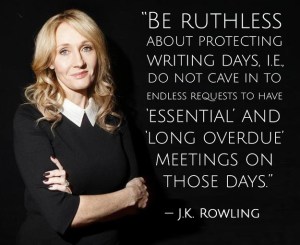
- Protect your writing time fiercely. Beware of interruptions — especially from yourself. I love the J.K. Rowling quote above, but I would have to add, sometimes the endless requests come from an internal voice. Guard yourself against distraction through unnecessary activities like television, social media, or scrubbing the toilet.
- Turn off the tube. This may sound silly and simple, but how many of us have lost volumes of time to mindless television shows. If it isn’t feeding what you are writing about, flip the switch to off.
 Get up and move on a regular basis. I do one-minute intervals at least hourly when writing. Running in place, jumping jacks, leg kicks, and air boxing all keep my blood pumping and my mind working.
- Don’t fall prey to overwhelm. Break your work into chunk-sized fragments. Instead of focusing on the entire chapter you need to write, just set a goal to write the next paragraph. If a whole paragraph still throws you into a tailspin, pen your next sentence.
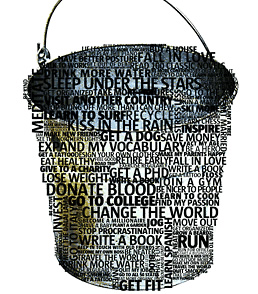
- Enjoy the experience. Remind yourself of that younger version of you who dreamed of this opportunity. Most people never get to mark this off their bucket list. Relish these moments — they’re what you were made for.
How do you protect your productivity?
 The new year has come and gone, and we’re in the full throes of fresh starts, new goals, and updated resolutions. This has me thinking about the definition of success — and more specifically, defining real writing success.
 I have goals to write and sell many more books, but part of my planning strategies now include more time set aside to enjoy walks with friends, cups of coffee with people I respect, and to laugh often with my family. I want to catch up on life, and I believe by doing so, I’ll have even more to write about. I don’t want to “make it” as a writer, only to look around and discover I’m perched in a precarious position — standing all alone.
 Has the date snuck up on you? Maybe you were hunkered down all of November to participate in this year’s NaNoWriMo challenge. Or perhaps you’ve got a book deadline, and the focus on your writing sphere has kept you from realizing what’s going on in the real world. Yikes!
 The Story of Us: Write a condensed version of your special moments with the gift recipient, the traits or talents you especially appreciate in them, or a shared dream. How did you meet? Did you watch them enter the world?
 When I was starting out, I learned some of my expectations were myth instead of facts. For me, it’s another reminder that there are things in life I don’t know I don’t know, until I experience for myself. Can you relate? In hindsight, there are several things I would tell my younger writing self.
 Book signings rarely spur big sales — they’re more hype than help. But good speaking events still consistently drive buyers to your book tables.
 It’s often harder to sell books than to write them, until you publish enough titles. The more you write, the more your followers tell their friends, who tell their friends, and so on, and so on. Many writers don’t stick it out that long.
 The longer I write, the more I realize my best work comes when I use my voice just as I would if I were sitting across from the reader in a relaxed setting. I’m actually imagining you and I chatting together right now, as I pretend we are enthralled in a deep, funny, poignant, or otherwise stimulating conversation.
 As Stephen King’s quote reminds us, the inner scars, the deep thoughts, and the vulnerable spaces in our lives are often the ones other people connect with the most. If we hold our tender areas captive, we can’t free someone else who needs permission to release their own fears.
 So what if every person on the planet doesn’t share your perspective? Some of the greatest minds in history were scoffed at in the beginning. Do your due diligence, then dare to risk so you and your readers reap a greater reward.
 I was referring to writing.
 “Oh, Anita. I’m so glad you answered. I had to call you. I just finished reading your book,
  “You can have everything in life you want, if you will just help other people get what they want.” Zig Ziglar, the ultimate motivator, knew that when we authentically and unselfishly support other people, great things happen. I’ve experienced the truth of this principle many times in my life, but especially recently, when I joined forces with two other WordServe authors.
 One of our most exciting accomplishments came from developing a women’s conference based on our book’s title and message. We outlined options for a one-day conference as well as a two-day event. We came up with a suggested ticket price and estimated income from the event based on a variety of attendance number ranges. We brainstormed ideas for other creative ways to support the Untangled Women’s Conference. And we reviewed different expense scenarios, weighing convenience against cost.

 Maybe you can relate to days like I’ve had. Where you need a dose of inspiration to get you moving — or a swift kick in the fingers. When this happens, I’m grateful for quick, motivational, and uplifting thoughts from other experienced writers.
 “Write what you want to know more about — the teacher always learns more than the student. Become passionate about the stories you tell and the people you are writing about. Finish your writing day with something that makes you want to know what happens next. Give yourself periods of rest — mental breaks sharpen the mind. And keep writing, especially when you don’t feel like it.” — Anita Agers Brooks, author of Getting Through What You Can’t Get Over and other titles
 I remember when my pulse quickened and my heart thumped at the thought of “making it” as a writer. The first time I gingerly brushed the soft cover of my first book, flicked through its pristine pages, I felt awed. The young girl inside of me, who’d always dreamed of seeing her name on a book, shed a happy tear.
 3. The writing life is not a solitary endeavor. It takes a team to successfully publish. Critique groups, writing peers, or advance readers help us delve deeper into our subject matter, and pick up on flaws we often miss. Agents, publishers, and editors polish our projects and help promote them to reach a bigger audience. Readers become fans who sometimes become friends — if we are so blessed.
 I’m still working on all of these areas in my own writing, and anticipate the need to keep them in mind until the day I type my very last word. I don’t simply want to write, I want to use my words well.
 WordServe Water Cooler