After You Sign the Contract

You did it! You succeeded in acquiring an agent, your book sold, and you just signed your contract. Ahhh. Life is amazing.

But…

There’s more work to do. Maybe the hardest work of all. This is where an author truly needs encouragement, practical ideas, and inner strength. But it all starts with thoughts.

Magic of Thinking Big Book
Little Thoughts Keep Your Writing Small

“Success is determined not so much by the size of one’s brain as it is by the size of one’s thinking.” The Magic of Thinking Big by David J. Schwartz

Allowing any task to become daunting can deter us from doing all we are capable of. Especially when there’s a lot at stake — like the completion of a life’s dream. I know, I almost let it happen to me.

I was approximately 85% finished with my final manuscript and three weeks from deadline. Then I froze. There’s no reasonable explanation I can offer as to why. My outline was solid, and until that morning, my words flowed smoothly.

At first, I attributed it to exhaustion. After all, I was still working over sixty hours a week as the general manager of a large river resort, and it was early September. But after taking a couple of extra days off, catching up on rest, and trying again, still no go.

I panicked. A swell of fear felt like it was swamping over me. In a choked voice, I told my husband, “I guess I’ll send the advance money back.”

“What’s wrong?”

“I can’t finish.” I felt my chin quiver. “I don’t know why I ever thought I could write a book. It isn’t good enough to send in, and I can’t get any new words on the page.”

“I thought you wanted this.”

I ran out of the room. My husband meant well, and he was right. It was what I wanted, but in that moment, I didn’t know how to get it done.

First Hired Last Fired
Available in Major Bookstores and Online

The next morning, I awoke feeling no less anguished, but one thing had changed. My determination not to give up. My husband’s final words on the subject resonated in my heart. I did want this. So I got on my knees and thanked God for helping me finish what He had started. Then I took advice from my own book, First Hired, Last Fired — How to Become Irreplaceable in Any Job Market, and resolved to get the job done, regardless of how I felt.

I won’t lie and tell you things suddenly got easy. Those final pages were excruciating, and to this day, I can pick them out of my book by the weakness I see in the sentences forced into existence. But I did it. Exactly on my deadline date, I submitted the full manuscript according to contract. And I learned something.

Michael HyattI’m not the first author to experience soul-crushing panic deep into the book writing journey. Many have relayed similar experiences, including best-seller Michael Hyatt.

But I also learned how to push past my fears, and whether the world likes it or not, to put the message out there. It was hard, but the satisfaction is sweeter than my earlier efforts and emotions.

I’m not sure where you are on the path to publication. But if you’re new to the process, be prepared for some emotional bumps after you sign the contract. And remember — sometimes we need to do what we love, versus what feels safe.

Have you ever panicked in the middle of a big accomplishment? It’s never too late to start again.

Anita Fresh Faith
Standing on God’s Promises.

ImageHow many times have you questioned God’s plan for your life? How many times have you asked, “God, are you sure this is what you wanted me to do?” Then you wait . . . and wait for God’s plan to unfold, only it doesn’t. At least, it doesn’t according to the time schedule we have set for our lives.

Imagine Abraham, or Abram, at the time of God’s promise. He was seventy-five years old when he received God’s call, along with a promise to bless him and make him the father of a great nation. (Genesis 12:2) The Bible says Abram immediately set out for the land of Canaan hundreds of miles away. I’m sure that was no easy journey. Still, Abram pressed on, trusting God every step of the way.

For writers, the road to publication is not an easy one. It’s filled with rejection letters and a lot of hard work. We strive to make everything right and in frustration sometimes question the gift of storytelling God has blessed us with. Abram also questioned God. Eight years after God’s initial promise, Abram, who was now eighty-three, wondered how he’d be the father of a great nation when he had no children of his own. That’s when God showed him the stars, promising him an equal number of offspring.

I don’t know about anyone else, but I think I would have been skeptical. I would have pointed out my age, the fact that my wife was beyond childbearing years, or at least walked away scratching my head. Not Abram, the Bible says. He believed the Lord. He stood on God’s promise.

It took twenty-five years of waiting before both Abraham and Sarah started to doubt, to the point of laughing at the thought of Sarah conceiving a son. But it occurred, just as God had promised, in God’s perfect timing.

Jeremiah 29:11 says: “For I know the plans I have for you,” says the Lord. “They are plans for good and not for disaster, to give you a future and a hope.”

Can we be as patient as Abraham? Do we stand strong on his promise or hold on with a white-knuckled grip in hopes of it occurring? If God has given us the gift of writing (or anything else), are we willing to wait twenty-five years for His promise to come to fruition?  Are we strong enough to wait through the myriad of rejections for “the call”? Are we able to trust in God’s perfect timing?

I leave you with one of my favorite scriptures. I pray it reminds you that whatever trial you are going through, whatever promise you are waiting for, God is with you every step of the way. When we wait on God, everything will fall into place, perfectly.

Isaiah 40: 29-31

He gives power to the weak and strength to the powerless.

Even youths will become weak and tired, and young men will fall in exhaustion.

But those who trust in the Lord will find new strength.

They will soar high on wings like eagles.

They will run and not grow weary.

They will walk and not faint.

Frozen in Time: Writing and Healing

Photo/LeahSchultzHealing … is change from a singular self, frozen in time by a moment of unspeakable experience, to a more fluid, more narratively able, more socially integrated self. (Writing and Healing, Charles Anderson & Marian M. MacCurdy)

These words challenged my heart. Am I “frozen in time”?

The writing process helps me work through the painful trauma of my “unspeakable” experiences. It enables me to view my story from a more objective viewpoint, melting my frozen numbness, offering me hope beyond the icy boundaries of emotional bondage.

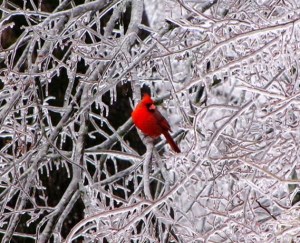
Helpful process. When I write about traumatic events, I often sense fear closing in on me like the twisted, frozen branches of a tree—wrapping its bone-chilling claws around me, choking the inspiration right out of me.

When I work on certain writing projects—like my book proposals—I freeze. I can’t control my thoughts, and chaos emerges, stealing my creative energy and organizational skills.

I try to forget some things for fear of stirring up painful memories, but they resurface when I least expect them. Often something unrelated triggers a memory—like a smell, a song, a picture, a person, or a place. Then, panic sets in again. And I freeze from the memory, unable to cope, until I regain control of my thoughts and reactions.

Healing narratives. Sometimes I‘m not sure how to begin composing my healing narratives. But I know the writing process will bring restoration. So I just start writing, even if I don’t know where the process will take me.

Do you fear writing certain projects? Are the stories too painful to consider? Do you fear the memories will trigger hidden emotional scars? Can we escape being “frozen in time”? Yes!

Hopeful vision. I long to write my stories without fear of a panic attack rooted in painful memories. But sometimes the writing process seems impossible. Luke 1:37 promises, “… nothing is impossible with God” (NLT).

I’ve observed the power of writing and healing as a writing instructor. Many students seem compelled, like I am, to write their own gut-wrenching narratives. And many of those writers come out of their secret hiding places, free from their emotional bondage. They experience change and healing—“to a more fluid, more narratively able, more socially integrated self.” And they begin to live new stories, delivered from their “frozen in time” memories.

As I write my healing narratives, I pray that I have the faith and courage to tell the stories that matter most and encourage others to experience the power of writing and healing.

What stories have you written that have brought healing to you and others?

Photo/LeahSchultz

Entertaining Angels

My illustrator, Tom, with one of 48 hot dogs we grilled at a book event.

I’ve been  marketing books of mine now for more than 20 years but only recently realized a big mistake I was making:

Thinking it was only about books and sales. 

Instead of, say, salt and light. Or experiences. Or giving instead of getting. 

Example: I used to fret when I’d show up for an event and only a handful of people would be there. It made me feel like a failure. Like I was wasting my time and, given my poor-me attitude, the time of those who showed up.

Then it dawned on me: God must have some purpose for me to be wherever I was. And if people are important to God then they should be important to me, whether three or three hundred show up.

“I don’t worry about the folks who didn’t show up,” I now tell people if there’s a sea of empty chairs. “I’m just thrilled to be with those of you who did. Thanks for coming.”

Changing my attitude changed everything. Realizing my worth is defined by God’s love for me and not by any popularity I might get from people, I loosened up and had more fun.

Sure, I’ve had my moments, but, more often than not, I started laughing at situations that otherwise might have angered me. “OK, OK,” I might say to a group of eight people amid 25 chairs, “let’s all scoot to the center to make room for others.” (Proverbs 18:12: Humility comes before honor.)

I became less concerned about selling books than about making sure people were having a good experience.

I became more attuned to others, reminding myself that perhaps there was just one person in the audience who needed some inspiration or a good laugh from me that day.

Recently, one event hammered home this lesson. In the spring I had set up an event at a small-town library regarding a new children’s book I’d written and my friend Tom had illustrated. At the time, I had casually joked with the librarian that maybe we’d make it a barbecue.

Six months later — and three days before an event that I’d all but forgotten about — I got an e-mail from the librarian. “Can we help you at all with the barbecue Wednesday night?”

I called Tom. “I guess I sort of promised we’d do a barbecue for their town,” I said.

He didn’t say, “You WHAT?” He’s way more grounded than I am. Instead, he said, “Let’s do it, baby!” and organized who would bring what. 

As I rolled down a freeway with a grill in the back of my ’95 pickup, I said to myself: Are we really putting on a barbecue in a town of 600 people?

That’s when I heard a thud. Despite my tie-down job, the grill had flipped over, its guts strewn around the pickup bed. It was 95 degrees. I was on the side of a freeway trying to re-secure a grill. And I was not happy. Does John Grisham have to do stuff like this to sell a few books? 

Once Tom and I reached the town, 30 minutes away, nobody showed up. At first.

Then, slowly, people trickled in. Five. A dozen. More. Tom started grilling dogs. A group broke out in “Happy Birthday” to a friend of theirs. I realized people were having a blast. 

A woman took me by the arm. “I brought my neighbor,” she said. “She’s dying of cancer and said she would love to meet you. She loves your writing.”

Two hours later, in the pink light of an Oregon sunset, Tom and I were heading home when he said something I’ve never forgotten: “This was one of the coolest nights of my life.”

Same here. We’d grilled and given away 48 hot dogs, sold two dozen books and brought together people in a small town for an evening of fun. 

What’s more, I’d had the privilege of spending time with a woman who would, three months later, be dead, but who somehow thought seeing me was important.

Now, I don’t even like to call it “marketing.” I call it a privilege to spend time with people — sometimes many, sometimes just a few — who think I’m important enough to give up a few hours of their time to see.

And I remember Hebrews 13:2: “Do not forget to show hospitality to strangers, for by so doing some people have shown hospitality to angels without knowing it.”

All Blogged Out: A Rant (Fair Warning)

Scream--Annemarie BusschersThe other day a fellow writer from way in my past—semi-famous, author of many highly regarded books—friended me.

It was so exciting. To be remembered by someone I had admired long ago but hardly knew, someone whose books I have on my shelf.

As soon as I accepted her friendship I was invited to like her author page. Then read her blog. Which explained everything.

I don’t want to be a partypooper here about the self-promotion mandate. Really I don’t. I know that publishers these days demand that writers have author pages and blogs and followers and all that. I try to be, in fact, dutiful, in my way. But it must be said. Something about all this facebooking and author-paging and blogging just stinks.

It reminds me of how, at my university, some colleagues and I used to convene every year to plan women’s events. Multiple times, meeting upon meeting, to schedule and scheme and come up with funding and talk about decorations and cookies and such. Then, when the day came for whatever it was to happen—the reading group, the tea, the birdwatching we had so arduously planned—there we’d be again, the five of us, the only attendees.

How does one find time to write books when there’s forever a blog post due? Not to mention reading all the other writers’ blogs that I say I’m following—and that, if I were  truly friend-worthy, I would be commenting upon. Confession: the only blogs I willingly visit are the ones I land on after a Google Images search for a very specific recipe, one that looks like a dish I remember from my childhood, or some stew of lentils I’ve been fantasizing about, or some bizarrely complicated goodie I said I’d cook up for one of my ever ravenous daughters.

All this to say—am I the only one who feels this way?—that blogging, which appears to be de rigueur in the world of publishing these days, slurps up my writing time like an old dishrag, and sometimes I fear that the only ones who read what I write are fellow writers (more generous ones than I am) obliged, as I am, to squeeze it out when I should be working on my current writing project and between all the other things I do to actually support myself. (That sentence doesn’t work, I fear…) Those who follow me—I’m sure of this—do so for the same reason I follow that writer acquaintance of mine: because I was asked. I’m not going to buy any more books of hers than I’ve already bought. Having heard an interesting writer interviewed on Fresh Air, I’ve never gone to his author page or read her blog. If I’m interested enough, I ask for the book in Barnes & Noble. And when they don’t have it—they never do!—I order it for cheaper anyway on Amazon.

Here’s how it goes with buying books and me. In the ideal world that used to be, I heard about a book or picked it up from a bookstore table or shelf, I read a few pages, I bought it and brought it home, eventually it made its way to my bedside table and into the stack to wait its turn, and then, one happy day, I turned over and reached for it and started to read. In that perfect world, it is a perfect book, and I can’t stop reading till it’s finished. Then I tell my sister, off in Colorado, about the book on the phone. And in a few more days I lend my copy—though it has a swollen edge from my having accidentally let part of it sag into the bathwater—to one of my colleagues. Then I assign it in one of my classes. No blogs or author-pages or anything like that. Just hear about it, buy it, read it, lend it.

I’m not feeling very encouraging today, I’m afraid. Maybe this post will generate some useful discussion among us writer-blogger-authorpagers, though.

(Feel MUCH invited to chime in if you’re not a writer. It would cheer me immensely.)

Smokin’ Hot

fried eggsSometimes my day feels like a cracked egg, running all over the pan in a yellowy glob of goo. Time slides fast. Out of control. Joy skitters away in the wake of unmet expectations.

From this broken shell of a place, the Holy Spirit whispers in the midst of waning joy, “Rejoice in me, the one who breathes fresh life in you.”

“Are you kidding?”

Of course, he isn’t. I know the chapter and verse:

“Rejoice in the Lord always. I will say it again: Rejoice! Let your gentleness be evident to all. The Lord is near.” Philippians 4:4-5

His invitation rings warm. And in this hope-stirred moment, I unclench my fists, wondering, Is joy really a choice? By focusing on God’s truth, can I turn up the joy knob a notch? Watch this broken egg that’s staring back at me bubble up warm in its rawness?

I look up joy in Bible Gateway and find it singing and shouting everywhere, even in the broken places of defeat.

“Burst into songs of joy together, you ruins of Jerusalem, for the Lord has comforted his people, he has redeemed Jerusalem.” Isaiah 52:9

I’m not used to singing in the midst of chaos. It hasn’t quite become habit yet. But I know neuroscience shows it positively affects our brain chemistry. Healthy thoughts register deep in our dendrites.

I also know that it’s easier to sing when I know who I am: chosen, redeemed, clothed in God’s righteousness. The same spirit that raised Christ from the dead dwells in me. In me. This little writer who longs to make a big difference.

God-dreams tick louder than time bombs. Do you feel their press to keep moving forward? We have much to say, but sometimes we stare blankly at that empty egg pan.

“Rejoice in the Lord always. I will say it again: Rejoice!”

Thank you, God, for the gift of words. Crack me open for you. Pour me out raw. I want to flow in your joy and hope and all things good.

When life turns up the heat, we wait with confidence in his presence: hopeful, grateful, and open to the fact we’ll soon feel that first bubble. And one bubble will lead to another and another. And before we know it, whoa–we’re cooking, Baby! Smokin’ hot for Jesus. All we need to do is stay open in God’s great pan. Let him stir up our gifts and see what happens.

“The Lord directs the steps of the godly. He delights in every detail of their lives.” Psalm 37:23

WordServe News: February 2014

Exciting things have been happening at WordServe Literary!

On the final post of each month you’ll find a list of Water Cooler contributors’ books releasing in the upcoming month along with a recap of WordServe client news from the current month.

New Releases

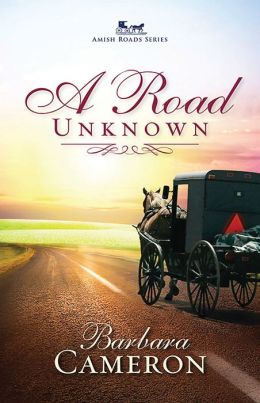
RoadUnknownBarbara Cameron released A Road Unknown (part of the Amish Road Series) with Abingdon.

***************************************************************************************

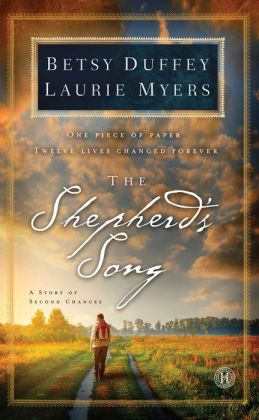
Shepherd SongBetsy Duffey and Laurie Myers release The Shepherd’s Song, their debut novel with Howard Publishers.

***************************************************************************************

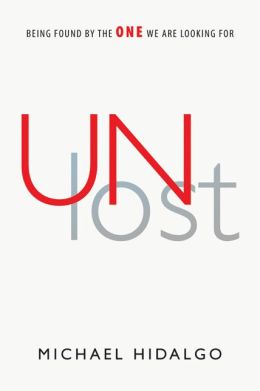
UnlostMichael Hidalgo released Unlost: Being Found by the ONE We Are Looking For, with IVP.

***************************************************************************************

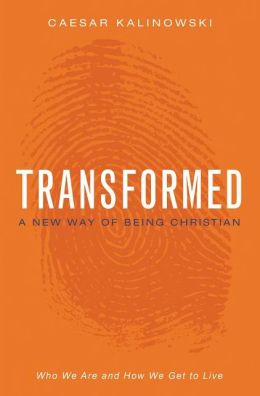
TransformedCaesar Kalinowski released Transformed: A New Way of Being a Christian with Zondervan Publishing House.

***************************************************************************************

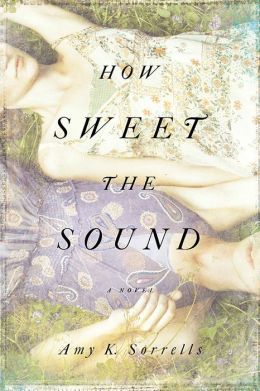
How SweetAmy Sorrells released How Sweet the Sound, her debut novel, with David C. Cook.

***************************************************************************************

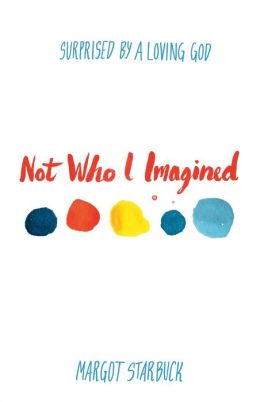
NotWhoIImaginedMargot Starbuck released Not Who I Imagined: Surprised by a Loving God with Baker Books.

***************************************************************************************

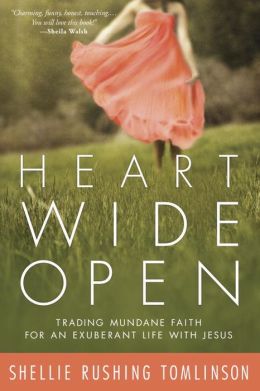
HeartWideOpenShellie Tomlinson released Heart Wide Open: Trading Mundane Faith for an Exuberant Life with Jesus, with WaterBrook Press.

***************************************************************************************

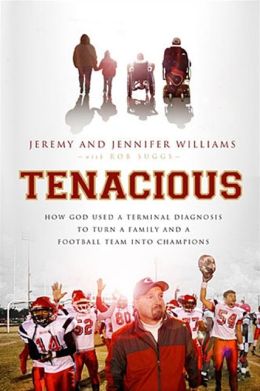
TenaciousJeremy and Jennifer Williams released the DVD and audio of their book Tenacious through Brilliance Audio.

***************************************************************************************

New WordServe Clients

Bill Myers, longtime CBA novelist and filmmaker.

Kathy Carlton Willis, platform coach, editor, and member/trainer with Advanced Writers and Speakers Association and CLASSeminars, signed with Alice Crider.

Cassandra Soars, narrative non-fiction writer and cofounder of iheartus, a new social media website for couples, signed with Alice Crider.

New Contracts

Robert Wise signed with Barbour to write Bible Lands: An Illustrated Guide to Scriptural Places.

Back to the Bible signed a 13 book agreement with Barbour Publishers to write short, felt-need books that will be distributed directly to churches through a back of the church spinner rack (as well as in all other outlets).

Sarah Varland signed with Love Inspired to write Tundra Threat, a romantic suspense novel.

Bryan Bishop signed with Baker Books to publish Boundless Jesus: Radical Faith from a Hidden Global Trend.

Kelli Gotthardt signed with Kregel to write her memoir, Unlikely Rebel.

Kate Hurley signed with Harvest House to publish a memoir about making sense of the unexpected single life.

Sarah Parshall Perry signed a two-book contract with Revell for her projects tentatively titled Sand in My Sandwich and Mommy Wants a Raise.

What We’re Celebrating!!

YouFoundMeKeith Robinson’s book, You Found Me, landed on three bestseller lists this month!

Scary Publicity Stories

????????????Like most authors, I have a second job title: Doer of Whatever It Takes to Get My Books in Front of the Public So They Will Sell. Much of the time, it’s a pretty cool job with a lot of variety.

Sometimes, though, it’s almost scary, like…

The bookstore signing

I spend an hour and a half at a table outside a bookstore. The place is mobbed – not with readers frantic to buy my book, but with adults and kids participating in a fun run to benefit the local children’s hospital. It is also the weekend for children to trick-or-treat in the indoor mall. Sitting at my table, I get lots of attention, though. The two most frequent questions I get asked are: “Where is a bathroom?” and “Is there some place around here where we can get something to drink?” Being the helpful person I am, I point people in the direction of the former and offer the others some of my bottled water. And people think being an author isn’t glamorous…

The best part of the gig is watching the costumed revelers go by. I see a pint-sized Dracula in tears, a little Spiderman whose foam-padded muscles are slipping off his shoulders, several princesses, and a standard-sized poodle dressed as a duck. But my day takes on cinematic proportions when two adult Star Wars storm-troopers, fully armed with plastic laser guns, walk down the hall. Oh my gosh! Man the Deathstar! Call the Jedi! Tell Spielberg to get the cameras rolling again!

A mom with her baby in her arms poses next to the storm-troopers while a friend takes a picture with her cell phone. The baby takes one look at the helmeted man and goes to sleep. I know how she feels.

Storm-troopers are so passé.

My first television interview

“You’re not allergic to dogs, are you?” a nice young intern named Kurt asks me before he opens the door to the green room, where I’ll wait for my turn on the show.

“How big are the dogs?” I ask, since I don’t do well with big dogs in open spaces, let alone big dogs in small windowless rooms where they can slobber all over you while you cringe in abject misery on a hard plastic chair.

“They’re little,” he says.

“No, I’m not allergic,” I tell him, and he ushers me into the room.

Kurt’s right, the dogs are little. Really little. They are also dressed up in costumes. One is a shark, one is a pumpkin, and one is a Chihuahua wearing a blonde wig and red dress.

“Who’s the Chihuahua?” I ask.

“Marilyn Monroe,” the handler answers.

I give myself a mental head slap. Of course it’s Marilyn Monroe. What was I thinking?

I’ll tell you what I’m thinking. I’m thinking I’m waiting to be interviewed about my novel with a bunch of dogs dressed up for Halloween. I’m thinking I’m going to fire my publicist, except that I’m my publicist.

Now that’s scary.

5 Ways to Add Humor to Your Writing

1373807555xxxa8


Humor is a life-giving stress reliever and ice breaker. I often sprinkle my talks, articles and books with funny word pictures and phrases, because laughter opens a reader/listener’s heart to the serious points I want to make. Thankfully, my home is full of crazy guys (including my husband, who’s the most hilarious person I’ve ever met) and I’m a ditzy, accident-prone bundle of midlife hormones. Thus, I’m never short on material.

It’s true that humor, like writing, is an innate gift, and some people have it in abundance. Others…well, not so much. However, certain aspects of both crafts can be taught. As a follow-up to this popular post, here are a few ways to humorously pump up your prose:

1. Wordplay.

Mae West said, “I used to be Snow White, but I drifted.” Classic!

Cultivate your LOL quotient by reading children’s books, which are full of 1362536802le12smarvelous wordplay. Humor writers and comedians are childlike spirits–playing constantly with sounds, alliteration, and rhyme. Let loose a little, and see what happens.

2. Exaggeration.

Never stop at one when fourteen will do. In humor, less is not more and more is better. Erma Bombeck, one of my all-time favorites, was a master at exaggeration: “I’ve exercised with women so thin that buzzards followed them to their cars.”

Remember George Burns? He often exaggerated about his age: “When I was a boy the Dead Sea was alive.”

3. Surprise.

When my nine-year-old saw that our local drive-in was up for sale, he said, “Mom, I’m sad about that. It’s such an iconic part of our town.” I laughed because I was surprised that he knew the word at all, let alone used it correctly.

Want your reader to laugh? Take a phrase and change the ending to something unexpected, like Jim Carrey did:  “Behind every great man is a woman rolling her eyes.” Stephen Wright makes a living by crafting surprise endings to one-liners: “A lot of people are afraid of heights. Not me, I’m afraid of widths.”

4. Parody.

“Weird” Al Yankovich has been doing parody songs for years. More recently, Christian comedians Tim Hawkins (“Cletus, Take the Reel,” etc.) and Anita Renfroe (“All the Wrinkled Ladies”) have gotten into the act. There’s even a clever parody of the infamous song “Blurred Lines” called “Church Signs.” The writers make fun of Christians’ tendency to preach mini-sermons with little plastic letters.

A word of caution (especially for Christian writers): let’s be careful when poking fun at other people. Sarcasm can be soul-crushing, as can insult humor. Remember the Golden Rule.

5. Learn from the best.

Read funny writers, watch comedy videos on Netflix, take courses in humor writing, or read books about the craft. You can also hire professional humor writers to spice up your work (I did this with the first book proposal I sold, and learned a ton from the experience.)

While you’re learning, though, remember to be yourself and not a copy of someone else. Readers can tell when you’re trying to force a joke, and it will make them uncomfortable. Find a style of humor you like, and try it on for size. Ask for opinions from people you trust–if it doesn’t fit, simply try another.

Most of all, have fun!

How have you used humor in your writing?

Loving, Listening, and Writing

“The truth is that careful listening feels so much like love that most of us can hardly tell the difference.” –Dr. James Dobson

This quote was presented at a leadership meeting I attended last week and it has been on my mind ever since. February is known as the month of love. We Americans spend billions of dollars on flowers, candy, and jewelry every February 14th in an effort to communicate our love for our children, our spouses, or other significant people in our lives. Yet, according to Dr. Dobson, careful listening is one of the most loving gifts we can give to our friends and families.

My daughter Brianna communicated her need for my focused attention, even as a toddler.  If I attempted to do household chores or work on my computer while she was telling me a story, she would say, “Listen to me with your eyes, Mommy.”  She had a speech impediment at the time, so it sounded more like, “Lithen to me wiff your eyes, Mommy.” She was adorable. She was also correct in her assessment that her mother was not actually listening to what she was saying. Whenever possible, I would walk away from my computer or put down my dusting cloth, look her in the eyes, and give my storytelling toddler my full attention as she talked.

When asked what command in God’s Word is most important, Jesus said, “Love the Lord your God with all your passion and prayer and intelligence. This is the most important, the first on any list. But there is a second to set alongside it: Love others as well as you love yourself” (Matthew 22:37-39 MSG).

We all like to know our thoughts have been heard. Carefully listening to the thoughts, opinions, and feelings of others makes them feel validated and lets them know we value their ideas. It occurs to me that, as writers, careful listening will not only communicate love to the people we care about and enhance those relationships, but it will also improve our writing.

what did you say

Writing requires inspiration and inspiration requires input. Listening—really listening—to the people God places in our lives is a great way to spur fresh ideas. Children often have an amusing, unfiltered way of describing our world. Older adults, if we’ll take the time to listen, offer a wealth of knowledge and wisdom gained through their many life experiences. A husband brings perspective to an emotional topic. A wife enhances historical facts with empathy and compassion. Carefully listening to humanity—even strangers in a busy city park—can provide fresh ideas for a blog post or inspire a new twist in plot for a novel.

This February—the month when we talk a lot about love—let’s love like Jesus said we should. Let’s love our God with our passion and our prayers and with the intellect He has given us. Let’s love people by carefully listening to their thoughts and feelings. Keep a pen handy to jot down a quote or a blog post idea (after the conversation is over!), but be fully present as you interact with the people God has placed in your life. Listen to them with your eyes as well as with your ears.

Our relationships will be richer and we may even discover that our writing takes on new depth.

How has careful listening enhanced your relationships or your writing?