5 Things the Theater Taught Me About Writing

OLYMPUS DIGITAL CAMERAThe smell of popcorn takes me back…backstage, that is. From 1998 to 2007, my husband and I, along with several other talented individuals, performed thousands of shows to enthusiastic crowds in two small-town Texas theaters. The experience taught me enduring lessons about creativity, professionalism, and making a living through the arts. These tenets apply to your writing life and other creative endeavors, as well. Here are five things the theater taught me about writing, in no particular order:

1. Word of mouth is the best publicity

Our audiences, though small, were passionate. We provided quality entertainment and our most ardent supporters talked about us…a lot. They brought groups, gave their friends tickets, and sometimes drove hours to see us. Though we bought print ads, paid a few publicists, and had a large email newsletter, the theater’s best advertisement was—without a doubt—word of mouth. 

It’s the same with promoting your writing. Today’s readers are consumers, just as our season ticket holders were. They long for quality and consistency. They’re busy, and they need a reason to keep reading past the first few lines. And when they are delighted by what they’ve read? They’re the most loyal, vocal folks around. Because we live in an instant-communication society, bad word-of-mouth spreads fast. Make sure your writing product is stellar, and great publicity will follow.

2. Give the audience what they want

One of the owners of the first theater in which I performed often said, “Give ‘em hamburgers!” He meant that we shouldn’t mess with success. If tickets sold quickly for a 1950s music revue, we wrote another similar show. Of course, we also experimented and pushed boundaries (otherwise, all of us would have grown bored). However, we changed our product in small increments. We also created special experiences—behind-the-scenes tours, holiday packages, giveaways—for avid supporters. Cast members even called our VIPs (those folks who came to the theater over and over) on their birthdays and anniversaries, which the VIPs greatly appreciated.

In your writing, think about creating a memorable experience for the reader. How can you provide extra value (giveaways, incentives, free resources) in a professional, winsome file3691295046962manner? In what ways could you creatively and tangibly thank those who willingly support you and talk about your books?
3. Leave your ego at home

Most of the performers I worked with over the years have been gracious, humble, and diligent. A few, however, turned me off with their arrogance, over-the-top demands, or lack of discretion. The most successful artists, long term, are those who go out of their way to thank people and who treat the sound technician as well as the venue’s owner. Those are the performers who are offered more opportunities.

Ask yourself: am I approachable, warm, and thankful for the opportunities life has given me? Or I am on a mission to impress everyone I meet, in order to “build my brand”?

4. There are no small parts, only small actors

So said Constantin Stanislavski. When you perform a small role with professionalism and excellence, the people in charge notice–and they’ll eventually give you more responsibility.

The same goes for becoming a better writer. If an editor asks for a 400-word piece, I’ve learned to take it seriously and do my best work. In this age of instant access, anyone can read your work at any time, from anywhere. Who knows what small beginnings might lead to larger opportunities?

And, finally, in related wisdom…

5. Know when to stop

On stage and in writing, creatives need to develop an important skill: how to bring a something to a close. In the theater, we say that last line, spin on our heels, and exit, stage left. In writing, we find the right moment, the right phrase, the right word, and that’s it. The end.

This post is a reprint from Tweetspeak Poetry.

Is God Talking to Me?

DogAs Christian authors, we often view our books as a way to get God’s Word out in a non-threatening manner. Novels are easier to hand to someone than a Bible and generally an easier way to start a conversation.

However, two recent events are causing me to change my view on that a little. Recently, my minister said that when he’s working on a sermon series, the subject matter is usually something he’s struggling with—something God is trying to teach him.

I had the good fortune to hear Ted Dekker speak during his Outlaw Tour down in Colorado Springs. A big theme of his talk was that his struggles as a Christian come out in his books. His questions about faith. Those uneasy issues that we all contemplate. Is God real? Is He who He says He is? Is there really a Heaven? Is my belief in Christ truly enough?

Perhaps we as authors are actually working through our own issues and the collateral benefit is that we’re frequently able to help other people.

But surely my writing isn’t just about me. It can’t be because my spiritual life is all figured out . . .

I began to think through the books I’d written and the ones I was planning on writing. There were some consistent themes. Truly believing in God’s sacrificial love. Letting God take control. Being submissive to His will for our lives.

If I look honestly at these themes, they are what I struggle with the most. A God . . . people . . . the Lord of the Universe dying one of the most painful deaths ever . . . for me. My heart usually reconciles this easily but my intellectual side waivers occasionally. This is what I believe?

And sometimes with a big gulp . . . I whisper yes.

I’m a control freak by nature. It lends to the job I do every day. As an ER nurse it is expected of me to bring control to chaos. I am stubborn and independent—which is the nature of two out of three of my heroines. They’d rather fix it themselves than reach out for help and yet, when circumstances become insurmountable, they must reach out to survive.

Isn’t this how it is with us? Maybe it is just me and all of you are very good at relinquishing control. If so, please let me in on your tips.

As we write these stories, maybe what we need to do first is read our stories with ourselves in mind and hear what God is trying to say to that person we see in the mirror.

This post first appeared at the ACFW blog. Hope you’ll check it out.

WordServe News: May 2014

Exciting things have been happening at WordServe Literary!

On the final post of each month you’ll find a list of Water Cooler contributors’ books releasing in the upcoming month along with a recap of WordServe client news from the current month.

New Releases

Rebecca DeMarino released her debut novel A Place in His Heart with Revell publishers.9780800722180_p0_v2_s260x420

************************************************************************************************

Doug Fields released 7 Ways to Be Her Hero with Thomas Nelson publishers. 920563

************************************************************************************************

Kathi Lipp released I Need Some Help Here! with Revell publishers.9780800720780_p0_v3_s260x420

************************************************************************************************

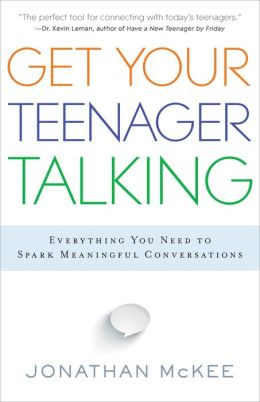
Jonathan McKee released Get Your Teenager Talking with Bethany Hou9780764211850_p0_v3_s260x420se Publishers.


************************************************************************************************

Spencer Moses released his suspense thriller with Revell publishers, Network of Deception.9780800722562_p0_v3_s260x420

************************************************************************************************

Gilbert Morris released the third book in his Western Justice series with Barbour 9781616267605_p0_v2_s260x420books, Raina’s Choice

************************************************************************************************

Dr. Arnie Cole and Michael Ross released Worry Free Living with Authentic.9781780782263_p0_v1_s260x420


************************************************************************************************

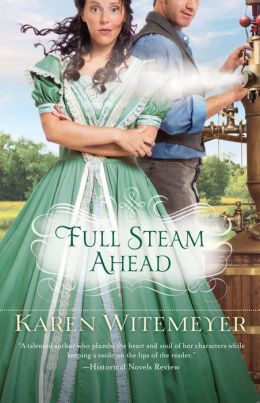
Karen Witemeyer released Full Steam Ahead with Bethany House Publishers. 9780764209673_p0_v2_s260x420


New WordServe Clients

Mark Atteberry, pastor and multi-published author, signed with agent Alice Crider.

Larry Dugger, pastor and Christian counselor, signed with agent Alice Crider

John Merritt, founding pastor of CrossWinds Church in Dublin, California, signed with Alice Crider

Bill Sanders, award-winning journalist, signed an agency agreement to be represented by Alice Crider.

New Contracts

Jan Drexler signed with Love Inspired to release A Home in Deadwood. Sarah Freese, agent of record.

Anita Agers-Brooks signed with Barbour for her non-fiction book, Getting Over What You Can’t Get Through. Alice Crider, agent of record.

Angela Strong signed with Ashberry Lane for her YA novel, The Water Fight Professional. Alice Crider, agent of record.

What We’re Celebrating!!

Jennie Atkins is a semi-finalist in the Romance category of the ACFW Genesis contest for unpublished authors!

Carol Barnier made the awards list in both humor and evangelism for two of her articles for the 2014 EPA Higher Goal Awards!

Debora Coty (Fear, Faith and a Fistful of Chocolate), Jo Ann Fore (When a Woman Finds Her Voice) and Jordyn Redwood (Poison) all made the shortlist for the 2014 Selah Awards!

Wounded Women of the Bible by Dena Dyer and Tina Samples is a finalist in the AWSA Golden Scroll Awards!

Leslie Leyland Fields was featured on Christianity Today as the cover story. You can read it here!

Adam Makos’ A Higher Call hit the New York Times, Publisher’s Weekly, and Washington Post bestseller lists!

Jordyn Redwood’s Poison and Julie Cantrell’s When Mountains Move are on the short list of Inspy finalists!!

Kimberly Smith wrote an article for Time magazine. Read the full story here!

What can we help you celebrate?

When Your Muse Takes a Vacation

wheeled-bags-143413_640It’s that time of year to start reserving your campsite or cabin or airline seats. Yay for summer vacation! But who’s got time for that?

Your week is slammed—chock full of appointments and meetings and paperwork that you don’t want to fill out in the first place. And, dutiful writer that you are, you realize you must make time amidst the chaos to write or it’s not going to happen. So, you whip out a crowbar and pry open a block of precious hours to work on your bestseller. It’s hopeful. It’s a handhold on your rockslide of a schedule and you’re looking forward to it.

Fast forward. The blessed time has arrived for you to lose yourself in the muse and surge ahead in your WIP. Java in one hand, laptop in the other, you cozy up in your favorite chair, ready to write and—

Apparently your muse didn’t get the memo. Your mind is blank and you are exhausted. Panic sets in. This is your only chance to write for the week and you don’t want to blow it. So you sit there with a crazed look on your face, whimpering.

Yeah. I hear you. I’ve been there. Frequently. Take a deep breath and read on because I’ve got a few tricks in my writerly bag that often are helpful.

470077_13483801Say What?

Close your eyes for a moment and listen to your characters. Just listen. Then open your eyes and write down what they’re saying. That’s right…I’m giving you permission to simply write dialogue. Don’t worry about attributes. You can go back and do that later. Simply start typing in a conversation between two of your characters (any two) and something magical will happen. You’ll get lost in the dialogue and pretty soon your word count will sky rocket.

Show & Tell

Open up to your collection of pictures that inspire your particular story. And if you don’t have any, then use this time to get some. What am I talking about? Well, I now keep pictures of each of my stories on Pinterest (here is an example). You don’t have to use that site, but you can look at my board and it will give you an idea of what I’m talking about. Pre-Pinterest days I simply opened a Word file and kept them there. Pre-laptop days I cut out pictures and tossed them into a file folder. Sometimes all it takes to get you writing is to physically look into your hero or heroine’s eyes.

1427476_92609932Slash & Burn

Go back to a previous chapter and edit. Even if your muse doesn’t happen to show up during that entire block of time, at least you’ll be making some kind of headway on your WIP and you’ll feel a lot better about it.

Mind Game

Release the pressure by telling yourself it’s quality not quantity. Focus on writing a single paragraph of description, either describing a character, a setting, an object…whatever. Make it a game by throwing out convention and using prose that’s crazy and you’ll find that one of two things will happen. It will either spur you into a creative new bent for the scene and you’ll move on in your story, or you’ll wonder what kind of drugs you’re on and snap out of it.

1439836_95143378Chocolate

Honestly, is there any situation that chocolate doesn’t make better? Go for the biggest brownie in the batch and see if that doesn’t put you in a better frame of mind

There you have it. Try one. Try all. Or go ahead and share with us other surefire ways you’ve tried to plead with your muse to pack up the suntan lotion and get home.

How To Create An Author Press Kit

ImageOne of the most effective strategies for book marketing is to create a press kit. This costs no money, but it’s a worthwhile investment of time because the kit will be used from pre-launch throughout the full life of the book.

WHAT IS AN AUTHOR PRESS KIT?

A well-designed author press kit serves as an easy-to-read source of information about a particular book. The goal is to convince folks to read this book and to share it with others.

Of course, the author’s unique skills should be highlighted as well, because media outlets need a reason to interview an author OTHER THAN the fact that their book is for sale. In other words, what makes THIS particular author worthy of air time/ink/review/shelf space?

WHO READS THE PRESS KIT?

The kit should be designed to reach:

  • Bookclubs
  • Booksellers
  • Print and online editors (magazines, newspapers, review sites, etc.)
  • Media outlets and journalists (print, radio, web, podcast, etc.)
  • Librarians
  • Readers (as far reaching as possible but target specific readership)
  • Reviewers (both professional and arm chair)
  • And anyone interested in the work

With millions of books on shelves/cybershelves, the kit must convince people to choose THIS ONE.

HOW TO CREATE AN AUTHOR PRESS KIT:

An author press kit consists of five components.

  • Cover Art: A high resolution jpg of the book’s cover.
  • Sell Sheet: A quick list of the book’s publishing information. Include back-cover copy, the specific editions of the book and availability; date of publication; name of publisher; and a general scope of the marketing/promotion plan (regional vs. national tour, blog tour, media interviews, advertising campaign, publicist, etc.). Give folks an idea of how much effort is being put into this campaign and be sure to include contact information for author and/or publicist.
  • Press Release: This serves as the official press release for the book. Follow the traditional format and exhibit professional know-how.
  • Interview Q&A: Provide a sample interview. Let this show the author’s personality, interesting background, or special skills. Offer something unique that would engage listeners/readers.
  • Sample Chapters: Link to a free chapter or two on Scribd. Offer a sneak peek that showcases the author’s talent and the tone of the book.

HOW TO SHARE THE PRESS KIT?

Once the kit is complete, convert it to PDFs and organize a PRESS KIT folder.

  •  Upload pdfs to an author website for easy download.
  • Before launch, research bloggers, media outlets, libraries, booksellers, bookclubs, etc. and create spreadsheets for each. Send email or postcards to these targets inviting them to download a free author presskit with sample chapters of the soon-to-be-released book.
  • Also share links via social media and other sites geared toward reaching readers.

With a little effort, a proper press kit can impress and intrigue. If done right, the kit will lead folks to a new book before it ever hits shelves.

Julie Cantrell is the New York Times and USA TODAY bestselling author of Into the Free and its sequel, When Mountains Move. Learn more: www.juliecantrell.com

Organizing Ideas into an Outline

The bridge between brainstorming great ideas to fill the blank pages of your book and coherent writing that communicates your message to readers is a detailed chapter-by-chapter outline.

But how do you begin to organize all the puzzle pieces of ideas?

Organizing Ideas
Organizing Ideas

Write down your random ideas

Like someone preparing to solve a jigsaw puzzle, you need to gather your ideas without worrying how they fit together. Collect your thoughts on a piece of paper or type them down the page of a Word document. If you must, scribble on a napkin as creativity strikes. Decorate your desk with post-it notes. Just capture the ideas and spread them out like puzzle pieces on a table.

When writing my first book, Questioning Your Doubts: A Harvard PhD Explores Challenges to Faith, I thought of illustrations and concepts that helped to communicate the main concepts in a certain chapter. I knew those ideas would shape the paragraphs yet to be written, but I needed more time to figure out how to make those ideas flow together. My first step was to capture those ideas and polish them into gemstones in their own isolated and random paragraphs. The process of stringing the gemstones together to make jewelry would come later.

Look for relationships between ideas

How do you begin to work a section of a jigsaw puzzle? I usually start by grouping together the pieces with similar colors or the pieces that have complementary shapes. Like a jeweler preparing to make a bracelet out of polished gemstones, I think about patterns. Before writing an outline for a book, I consider the relationships between the ideas in the chapter. Do I need to present the ideas in a chronological order? Should I arrange concepts next to each other in a way that creates contrast between different ideas? Should I build reader interest by adding a little suspense into the chapter, carefully delineating the problem before sharing the solution?

This grouping process helps me begin to write sections of an outline and start to order the sections of the chapter. If I have created paragraphs in the chapter itself, I cut and paste my ideas and write a few transitional sentences. I am on my way to filling those blank pages.

Make the central idea the focal point

The key to ordering the puzzle pieces correctly often involves finding that one central piece that helps you place all the others in the right place. In making jewelry, a jeweler will often select one gemstone as the focal point. When I write an outline, I ask myself what idea is the most important for the message I want to convey? Depending on my organizational pattern, that idea may need to come first, last, or even in the middle of the chapter. Placement of that idea is not about position so much as focus. Every other idea in my chapter will drive attention to that one main concept. Once I choose my central idea, the chapter outline falls into place. Writing the chapter is now as easy as filling in the blanks underneath each section of the outline with supporting details.

For non-fiction writers, a chapter-by-chapter outline is an essential component of the book proposal you will send to publishers. Deep into the publishing process, that outline may help you make structural changes to your book in order to sharpen your message. However important the outline may be to editors, think of that outline as a gift to you. It is your map through the thick forest of your ideas, keeping you from wandering off the path, and safely leading you to your destination. It will help you meet your deadlines on time and keep the ink flowing onto those blank pages. The time you spend writing your outline is an investment. So, go ahead, open the box, dump the puzzle pieces onto your desk, and outline your next book!

What method do you use to organize your writing?

The Value of Advisors

The role advisors have in our writing, our ministries, and our spiritual growth is invaluable.

Proverbs 15:22 tells us: Plans fail for lack of counsel, but with many advisers, they succeed. (NIV)

We set ourselves up for success when we surround ourselves with wise people who have our best interests at heart, cheer us on in worthwhile pursuits, and are willing to tell us what we need to hear. But we have to be open to critical input as well as encouragement if we truly want to develop our writing, be effective in ministry, and experience long term spiritual health.

Writing
Are you open to input or do you become defensive when your editor asks you to make changes to your manuscript? Just this past week I talked with my editor about my newest Bible study, Eyewitness to Glory: Moses, scheduled to be released this summer. We have a great working relationship. He said the writing was clean and the content was good. I was thrilled. But he also mentioned one particular lesson that he thought could be worded better and explained his concern about how it might be misinterpreted. I was grateful for his candor and told him I would look at his comments and re-work the lesson. In addition, he also mentioned a punctuation error I consistently made throughout the manuscript. How embarrassing! This will be my forth published book and I should know better. I am anxious to get the edited manuscript to see my error so I don’t make the same mistake next time. I also plan to run my manuscript by another writer next time, prior to turning it in to my publisher.

We are all growing and when we remain open to input from experienced writers and editors, our manuscripts will be richer and we will become better at our craft.

Business Discussion

Ministry
As Christian writers, we are all in ministry. In Michael D. Miller’s Bible study, Keeping Your Heart for Ministry, Miller says:

“You are on dangerous ground when you construct barriers to prevent others from confronting you with truth. The leader who desires to keep his or her heart for ministry will be open to question or challenge, realizing that ‘iron sharpens iron’. God graciously provides good counsel to help us continue growing through our Christian experience.” (Keeping Your Heart for Ministry, Lifeway Press, 2001)

In order to broaden your perspective and reach more people through your ministry, consider creating a group of advisors. It is easy to develop blind spots along your ministry journey. By choosing wise, spiritually mature advisors who are available for questions (and will give you honest answers), you will enhance the effectiveness of your ministry.

Spiritual Health
As Christian writers, it is important to be connected to other believers and, in my opinion, there is no better (or more biblical) place to do so than in your local church. If you are a believer in Jesus, you are part of the body of Christ.

1 Corinthians 12:27 says: Now you are the body of Christ, and each one of you is a part of it. (NIV)

It is in the context of a local church body that we find accountability to “spur us on to love and good deeds” (Hebrews 10:24). In our local church we learn to encourage one another, to “grow in the grace and knowledge of our Lord and Savior Jesus Christ” (2 Peter 3:18), practice forgiveness, and learn to love one another deeply, as our Lord loves us. Being connected to a church body is important for our long term spiritual health.

My writing friend, “I pray that all may go well with you and that you may be in good health, as it goes well with your soul” (3 John 2 ESV).

Let’s ask God to give us teachable spirits and to help us be open to critical input as well as encouragement. Consider creating a group of advisors to give you honest feedback in your writing and your ministry. And if you aren’t currently involved in a local body of believers, ask God to lead you to the right church; a safe place where you can grow, serve, love, and be loved.

What advisors are you thankful for today?

What My Students and I Learned This Semester in Creative Nonfiction Workshop

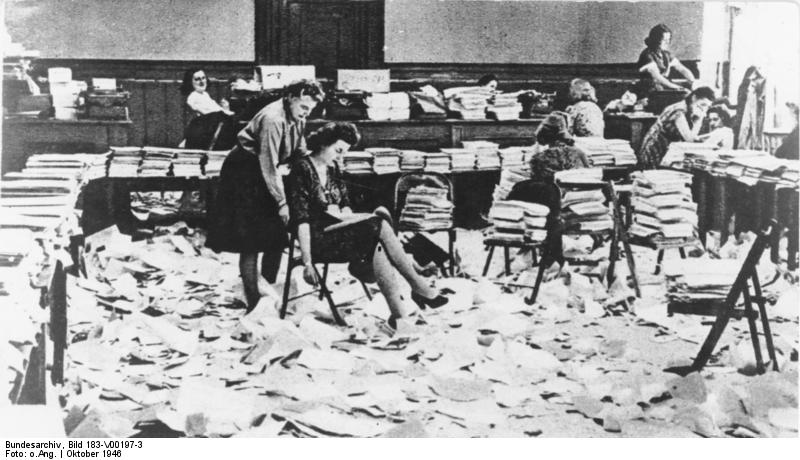
Big Thing #1: Neatening the messy truth never works. Nürnberg Prozess, Büro für Druckschriften-HerstellungStory: A sweet-hearted student wrote a moving essay about her difficulty with “being held” following her father’s death. She began her essay with an amusingly awkward forced hug—an assignment from her Family Sexuality class to practice “hugging until relaxed”—and concluded with her “surrender” into her friend’s arms at the hug’s end. Everyone loved the essay except for its conclusion.

In a conference with the student after workshop, I explained what I thought was the problem: the resolution just wasn’t as concrete and thus convincing as the wrenchingly funny opening scene. “Did this surrender really happen?” I asked. “It sounds like you’re lying.”

I didn’t really mean to accuse her of lying, only to convince her of that disparity in concreteness. Turns out, though, she had lied—not intentionally, of course, or even with intent to deceive but just to simplify the messiness of her struggle into a more satisfyingly redemptive conclusion. There’d been no surrender in that hug. After we both recovered from her surprising lie—as much to her as to me—she revised the piece to reveal what really happened, transforming a good essay into a publishable one.

Application: Tell the truth, don’t prettify it.

Big Thing #2: Contrary to the usual creative writing mandate to “Show, don’t tell,” most good writing requires both.

Story: Two students who particularly explored this truth were a chemistry major and a woman from a missionary family in Kenya. Both wrote from a knowledge-base completely foreign to us, thus running into a classic writerly problem which the missionary-kid characterized as “balancing explanation with story.” Explain too much, and you end up with a boring commentary on what happened; explain too little, and readers get lost. As the chemistry major said, “The audience cannot read your mind.”

Throughout the course, the students tugged at the delicate membrane between showing and telling, testing the delights and dangers of being too baffling or too, as I call it, “explainy.” By semester’s end, both consistently wowed us with their work, delighting us especially with a close-up of cosy Nairobi teatimes and a wacky book review/lab manual hybrid on the chemistry of poisons.

Application: To take us somewhere we’ve never been—which is, after all, every creative nonfiction writer’s job—you need to show AND tell, judiciously.

Big Thing #3: Scheduled, specific assignments not only motivate idea-less students but—counter-intuitively—often result in their most creative work.

Story: Several students struggled with motivation and, as one put it, “finding something to write about” for the course’s ten pieces. The first six assignments were pretty narrowly defined and came one right after the next; pretty much everyone found those fun, easy to write, and creatively empowering. Open assignments with longer deadlines were more challenging.

Application: If you’re stuck, give yourself an assignment. And a due date.

Embarrassed_Father_-_Vintage_family_PhotoBig Thing #4: Learning to write better teaches humility.

Story: Several students identified “taking criticism” as a struggle in the course of the semester. Here’s a reflection from one student’s revision account: “I was pretty judgmental of the big guy, so I tamed that part down. It felt mean when I looked at it again. I don’t think I lost anything at all, the scene wasn’t really about him anyway.” The student’s introspection and writerly focus say it all.

Application: Find yourself some honest readers, then pay attention to them. It’ll help your writing and your soul.

Malassezia_lipophilis_3_loresLittle Thing #1 (Big Thing #5): Clichés are like fungus: ubiquitous but strangely more embarrassing and disgusting than most other writerly ills.

Story: Student after student confessed to clichés. They hardly needed to, since I routinely point them out in class. Even their revisions had clichés—as do my own, unless I’m super vigilant. In class, I put quotation marks around their clichés in Google to convince them. The phrase “inextricably linked,” for example, gets “About 715,000 results (0.15 seconds).”

In a way, clichés are wonderful: someone’s once-creative, collectively approved wording. That said, clichés remain the bane of good writing—Oh no! That’s “About 3,160 results (0.51 seconds.)”

Application: Look again. And again. They’re there.

Marketing for the Introverted Writer

Sing Your Unique Song via Janalyn Voigt | Wordserve Water Cooler“All you need is you, yourself,” marketing expert and author James Rubart once said with regard to marketing. His comment, given at a meeting of Northwest Christian Writers’ Association, stuck in my mind because I didn’t believe him.

That’s easy for you, Jim, I thought with a touch of asperity. You are an extrovert who can walk into a book store and chat with the owner without breaking into hives. 

I am an introvert. If I had my way, I’d retire to a closet to write, coming out only to eat, sleep, and possibly notice the existence of my family. Okay, I’m exaggerating, but I really do have a closet office. My post describing it spiked visits to my website, which makes me suspect I’m not the only introverted writer. Welcome, and here are some of the lessons I’ve learned along the way.

  • Promoting is not nearly as hard as I was making it. Once I busted through my own resistance and consistently marketed my book, I harnessed the power of routine. I was looking at the whole marketing puzzle at one time, but we really only solve a puzzle one piece at a time.
  • I don’t have to be a social butterfly to effectively market a book. All I need is the willingness to touch people using whatever format I find comfortable. That doesn’t have to be face-to-face, necessarily. The Internet allows me to promote to those I probably will never meet. As a writer, I’m wired to be a communicator, and communicators need listeners. That makes me a people person. Who knew?
  • Marketing is not the same as going to the dentist. It can even be fun. Really. The key is to employ platforms that work well for you and that you enjoy or at least can tolerate. Your platforms can be in-person or online. Sometimes you need to compromise to attain a goal. For example, although I would rather not speak in public, if I want to fulfill my desire to teach other writers, I have to overcome my reluctance.
  • I can market with my writing. I had a Hallelujah moment when I realized I could promote my book by writing related content for magazines, book sites (like Wattpad and Goodreads), or on my website as a subscriber incentive.
  • I don’t have to be at every social site. I have better results when I specialize at one or two sites rather than trying to keep up with them all. As a bonus, I have more time for writing.
  • Keeping track of people is important. I confess. I lose people online. I don’t mean to, but there are too many conversations with so many people. List the most important people to you as an author, and then make sure you engage with them on a regular basis.
  • Push past your fears. This lesson was one of the hardest for me, and something I have to learn all over again on a regular basis. If I let fear stand in the way, I cheat myself of fulfilling my God-given calling. Not only that, but I deprive others I want to reach with my writing. In light of that, my fears don’t seem quite so compelling.

Jim Rubart was right when he said that you only need you, yourself, to market your book. Don’t worry about being someone you are not. Instead, use your talents to sing your unique song to those who need to hear it.


Rewriting: 7 Simple Tips – Part Two

file6681269982727

A book is made in the rewrite. We take the words and begin to refine and reshape them into the finished book. We compose the first draft quickly, getting the words down on paper as they flow. Then we begin the work of rewriting.

Here are our final four tips on rewriting with examples from The Shepherd’s Song. You can read the first three tips here.

4. Watch out for the word “felt” when describing a character’s feelings.  Remember the old saying: show don’t tell.

FIRST DRAFT: She felt confused and out of control.  

This is okay for a first draft but needs rewriting.

FINAL DRAFT: “What’s your name?”

She tried to focus. Her name?

“Kate . . . McConnell.” She gasped out each word.

“Your birthday?”

She tried to come up with the answer, but it was too confusing. Tears welled up.

“It’s all right. Just stay with me.”

“What hap…?” She wanted to finish the sentence but could not.

5. Eliminate prepositional phrases that tell us about the character or action.

FIRST DRAFT:  Without hesitation the nurses joined Dr. Belding in pushing the stretcher toward the elevators.

Instead of telling the reader “without hesitation,” why not put the scene in play and show them?

FINAL DRAFT:  Dr. Belding grabbed the end of the stretcher. “Okay, people. Let’s get her down to the OR.” He turned to the nurse. “Has the family been called?”

file0001346272648

6. Watch out for the word “saw.” Show us what the character is seeing instead.

FIRST DRAFT: He slipped the phone out of his pocket and saw the text message from his dad.

We don’t need to explain that the character saw something.  Show it from the character’s POV.

FINAL DRAFT:  Matt slipped the phone out of his pocket.

‘Emergency. Call me.’

A text from his dad. That was unusual.

7. Evaluate each adverb. Is there a better way to show the reader what is happening?

FIRST DRAFT: John McConnell looked up in irritation at his secretary.  

“I said hold all calls,” he said impatiently.  

Telling reminds the reader that it is not real. Staying in the character’s head means we show through the character’s actions what is happening, and how they are feeling. We had to rewrite to show his impatience.

FINAL DRAFT: “Mr. McConnell. A phone call, line three.” His secretary spoke from the doorway.

“I said to hold all calls.” He continued scanning the document in front of him.

“I know, but.”

“I am well aware that we all need to get out of here.”

IMG_0105

These simple tips help us with our writing. Do you have others to share?

Betsy and Laurie

http://www.WritingSisters.com

Grunge ornamental cover for an album with photos