What is a Literary Publicist?

WomanwithBookA publicist is a professional who has both the know-how and the network in place to help bring your name to the public. In the literary world, a publicist is key to the marketing plan, to create consumer appetite for a book title, and to stimulate buzz for the author.

A literary publicist promotes the book title directly to consumers through niche markets with an interest in the storyline or subject matter of the book. The publicist also networks with media by pitching specific interview angles the author can provide—setting up the writer as an expert on certain subjects.

Sometimes publishing houses hire independent PR firms to manage specific book campaigns, or entire lines of books. Other times, they pay half toward an outside campaign, and the author matches that. The third option is for the author to pay all of the expense from their advance, believing that publicity and marketing is what will make or break the overall sales for the book. Publicists also assist with author branding for the career of the author, so the buzz extends beyond the life of one book.

Most PR and communications firms offer a wide array of services. They come alongside of you at any stage in the writing game. They can help expand your platform, branding, and name recognition. Need some help making sure your website is selling you in the best possible light? Ask your publicist. Some will even edit your manuscripts and write your book proposals, query letters and marketing plans. Many customize plans to work with your goals, no matter where you are in the literary process.

After the book contract, your publicist will customize a plan for promoting you and your titles with the goal of maximizing exposure—with hopes that the promotion goes “viral.” This requires multiple reaches to the public, through traditional media presence, online spotlights, and waves of social networking.

Why Hire a Publicist?

1. A publicist has the media contacts and relationships needed to secure interviews/ reviews.
2. A publicist knows how to pitch your book to the media and how each journalist prefers to be contacted.
3. Most writers do not have the time to devote to a publicity campaign. It is a full-time job.
4. When an author pitches his own book to media or consumers, it is sometimes viewed as being too self-promotional. A publicist is seen as a third party. Others are more receptive to discussing book promotion with a publicist rather than the author.
5. When media, retailers, and consumers hear an author has a publicist, they seem to think the author has more “clout.” It legitimizes the expert-status of the author and elevates them to a higher professional standing.
6. An author with a publicity team has “peeps.” It’s that whole “I’ll have my people contact your people” approach.

**********************************************************************************************
KathyWillisKathy Carlton Willis spins many plates as writer, speaker, editor, and platform coach. She writes and speaks with a balance of funny and faith—whimsy and wisdom. Kathy discusses the key issues that hold believers back and shines the light on their paths to freedom. Kathy’s passionate about helping audiences have lightbulb moments. All told, nearly a thousand of Kathy’s articles have been published online and in print publications. Speaker to Speaker: The Essential Speaker’s Companion (OakTara) and Grin with Grace (AMG) are set to release in 2014. She serves alongside her pastor husband, Russ Willis, in local church ministry.

The Miserably Fabulous Craft of Writing

I have a confession to make. The only Stephen King book I have ever read is his fabulous book On Writing: A Memoir of the Craft. That said, if you can only read one book about writing, this might be it. Mining some of my favorite gems from this work, I hope to help you polish your own rough stones.

king

“The scariest moment is always just before you start.” I can only echo a hearty “Amen!” Whether I’m working on a term paper, a short article, a book proposal, or an actual book, I always sit down and enter my title, my name, and anything else I know, just to avoid that blank page. Perfection is the enemy of writing. If that’s your initial aim, you’ll procrastinate and you won’t write. You’ll likely never read anything you’ve written and smile to yourself, “Well, there is absolutely NOTHING I can do to improve this beauty!” Nope. Your editor will get a hold of it if you don’t. [Insert evil laugh here.] But when you begin a story, that’s not the time to labor over each word. Get it down. Start. You’ll have lots of time to labor over rewriting and editing later. “The definition of a writer is someone who writes,” declared a now-forgotten workshop leader at my first-ever seminar. Write already.

“If you don’t have the time to read, you don’t have the time or the tools to write.” It’s quite possible that I am addicted to reading. I read at stoplights. I read on a float in the pool, in the bathtub, by the stove while I stir things, on my lunch break when teaching, while taking my mile walks, and the last thing before I turn in at night. Reading sparks ideas, allows you to admire fresh turns of phrase, and inspires you to work that same magic, carrying future readers to your setting, helping them to fall in love with your characters.

“Amateurs sit and wait for inspiration, the rest of us just get up and go to work.” I don’t remember where I read this, but one novelist wrote that he never writes until he’s inspired. “And I see to it,” he continued, “that I am inspired every morning at 9:00 a.m.” Writing is work. Writing is dedication. Writing is a miserably fabulous craft!

“Kill your darlings, kill your darlings, even when it breaks your egocentric little scribbler’s heart, kill your darlings.” When my second book with Harvest House came out, I got the proofs and asked my amazing editor, Hope Lyda, what had happened to some of the quotes and paragraphs I had so lovingly delivered. She was gracious. “Ahem, those went to keep company with some other lonely words and paragraphs.” I see. She had kidnapped and killed my darlings. It was a better book for their absence.

“The road to hell is paved with adverbs.” Taped to the windowsill above my desk is this little gem by Dwight Swain:

Strive for:

The Vivid Noun

The Active Verb

The Colorful Phrase

The Intriguing Detail

The Clever Twist

The Deft Contrast

All of us have fallen asleep during a long paragraph in which the writer has gotten carried away by his own love of (too much) language. She ran her fingers through the water languidly, indolently, lethargically, lazily….All right already! Crisp. Clear. Concise.

“Books are a uniquely portable magic.” Whether we favor Nooks or Kindles or the tactile experience of pages fluttering, bold ink making grand statements and words sweeping us away to other times, other people, other conflicts, when we take books with us, we carry time machines. We carry mini-encyclopedias of knowledge. We carry the life, loves, and losses of characters about whom we are made to care very much. When we write them–ahhh–we are making our own kind of magic.

“Writing isn’t about making money, getting famous, getting dates . . . or making friends. In the end, it’s about enriching the lives of those who will read your work, and enriching your own life, as well. It’s about getting up, getting well, and getting over. Getting happy, okay? Getting happy.” The process of writing is not often fun. But we do it anyway. Why? Because we know what books mean. We know they will never go out of fashion. And we are gluttons for punishment, because that book means magic, housed in the pages of something you have been honored to write; imprinted on the hearts of those who read it and won’t soon forget how your words made them feel. And when we write for God’s glory, we surpass even magic.

What are some writing truths you’ve learned?

Staying on Course

Photo/KarenJordan

I failed to consider the length of the trail when I started walking it.

Temptations and expectations. I had hoped that a two-mile, brisk walk along a wooded path overlooking a beautiful golf course near my home would clear the cobweb of worry from my mind. 

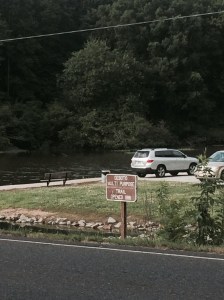
Instead, my impulsive, adventuresome nature ignored the signpost, describing this four-mile loop through the challenging hills and valleys in Central Arkansas.

I knew the path would eventually lead me back to the trailhead. So, when I noticed the third mile marker, I decided to press on. I assumed that going forward would be faster than turning around and returning to where I started. Plus, after investing so much energy, I wanted to finish the course.

Confusion and distractions. I tried to determine my location on my cell phone’s GPS. But I couldn’t locate the trail on my screen, and the diverging paths confused me. So, I just kept walking.

I stopped from time to time to shoot a few pictures. These gave me some short breaks  from the summertime heat and rest for my throbbing feet, as I avoided the pesky bugs, spider webs, and poison ivy sprigs at the edge of the forest.

Photo/KarenJordanElation. By the end of the trail, my worries had  abandoned me, and the strain of the long walk through the woods subsided. Refreshed, I paused by the lake and enjoyed a bottle of cold water.

I also experienced a surge of self-confidence when I reached my destination. I knew that I wouldn’t have attempted such a feat in the summer heat if I’d known the length and difficulty of the trail.

Looking back on the experience, I realize that I’ve learned this lesson in other areas of my life—marriage, parenting, academics, and writing for publication.

I’m not saying that I have this all together, that I have it made … By no means do I count myself an expert in all of this, but I’ve got my eye on the goal, where God is beckoning us onward—to Jesus. I’m off and running, and I’m not turning back … So let’s keep focused on that goal, those of us who want everything God has for us. (Phil. 3:12-15 MSG)

Are you tempted to quit right now!? I challenge you to focus on God and allow Him to guide you with His promises.

Let the peace of Christ rule in your hearts … And be thankful. Let the message of Christ dwell among you richly … And whatever you do, whether in word or deed, do it all in the name of the Lord Jesus, giving thanks to God the Father through him. (Col. 3:15-17 MSG).

What helps you stay on track when you’re tempted to get off course?

YouTube/YamahaBill (Disney’s Hercules – “Go the Distance”)
Photos/KarenJordan

Is Multi-Genre Writing Right For You?

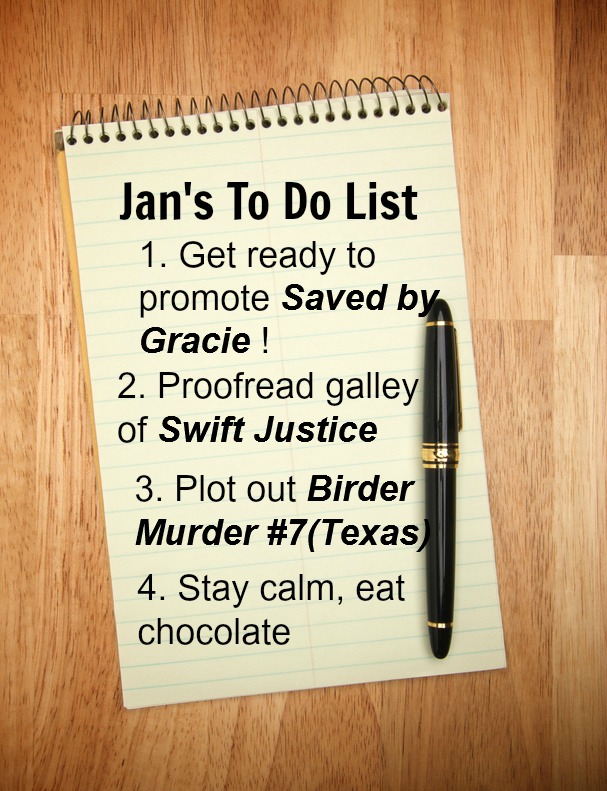
to do list (2)One of the ongoing debates in the writing world is about the wisdom of writing in more than one genre. The reality, I think, is that most writers want to write in several genres and, in fact, may be quite good at it. My first projects were poetry, and then I moved on to magazine articles. Think pieces followed, as did newspaper humor columns. My first published book was a small volume about practical Christian spirituality, but then I found my stride in humorous murder mysteries (#6 is out in September, with #7 currently taking shape on my laptop).

Last but not least, a few months ago, my first memoir was published.

So, for me, the big debate about writing in multiple genres is a no-brainer, because I already do.

My experience of doing so, however, has made me recast the debate from a writing perspective to a publishing perspective, and, as a writer who wants to build a career as a published author, I offer my own pluses and minuses of working in a multi-genre career.

  1. Minus: If you think it’s demanding to build one platform, try building several at once. I’m not saying it can’t be done, but in my experience, it can’t happen simultaneously (unless you have clones of yourself ready to go – and in that case, please drop me a note at my website, because I could use a couple of clones these days). To launch a book, you have to be single-minded to make the best of marketing opportunities: appearances, talks, media, book clubs, etc. Your new book/baby needs attention 24/7, and if you leave it for a day or two to nurse along another genre, you find yourself playing catch-up when you get back to the newborn. I’m guessing it’s like having twins-one person can’t really hold two babies equally well, so there’s always some juggling going on. Same thing with two genres: you end up feeling like you haven’t been as successful as you could have been with just one book. At the very least, you don’t sleep much, because you’re trying to do the work of two marketing departments in one body.
  2. Plus: Working in two genres is exhilarating! You get to double the people you meet and the interests you cultivate. Your horizons expand and life is so rich with new experiences, it takes your breath away. It’s wonderful to be a writer!
  3. Minus: Publishers are very hesitant to take a chance on you in a new genre. The more you’ve established yourself in one genre, the less a publisher wants to take the risk of launching you in a different direction. Publishing is a business, and publishers have to respect the bottom line.
  4. Plus: If your genres share something in common (mine share humor and a love of nature), your fans of one genre are more likely to follow you into new territory, giving you a base readership on which to build and a headstart on creating a new platform.

Have you had any experience in multi-genre writing? Any insights to share?

WordServe News: July 2014

Exciting things have been happening at WordServe Literary!

On the final post of each month you’ll find a list of Water Cooler contributors’ books releasing in the upcoming month along with a recap of WordServe client news from the current month.

New Releases

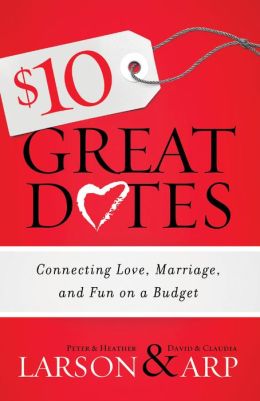
David & Claudia Arp with Peter & Heather Larson released $10 Great Dates with 9780764211355_p0_v2_s260x420Bethany House.

**************************************************************************************

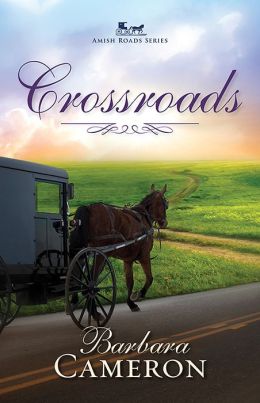
Barbara Cameron released her latest Amish Roads novel Crossroads with Abingdon.9781426740602_p0_v5_s260x420 (1)

**************************************************************************************

Jack Corrigan released his novel Night of Destiny with FaithHappenings Publishing.large

**************************************************************************************

Jan Drexler released A Mother for His Children with Love Inspired Historical.9780373282777_p0_v1_s260x420


**************************************************************************************

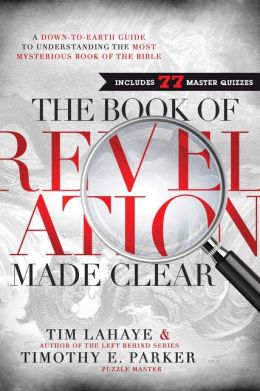
Tim Lahaye with Timothy Parker released The Book of Revelation Made Clear with 9781400206186_p0_v3_s260x420Thomas Nelson Publishers.

**************************************************************************************

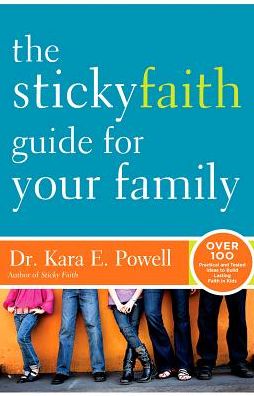
Dr. Kara E. Powell released The Sticky Faith Guide for Your Family with Zondervan 9780310338970_p0_v1_s260x420publishers.

**************************************************************************************

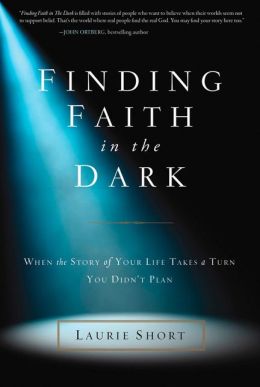
Laurie Short released her debut book with Zondervan publishers, Finding Faith in the 9780310337119_p0_v3_s260x420Dark.

**************************************************************************************

Angela Strong released The Water Fight Professional with Ashberry Lane publishers.Water Fight Professional High Res

**************************************************************************************

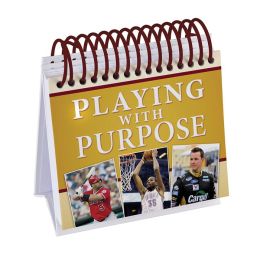
Barbour Publishers released “Playing with Purpose” calender based off the book series 9781630581794_p0_v3_s260x420by Mike Yorkey. 

**************************************************************************************

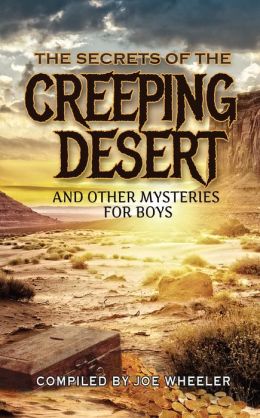
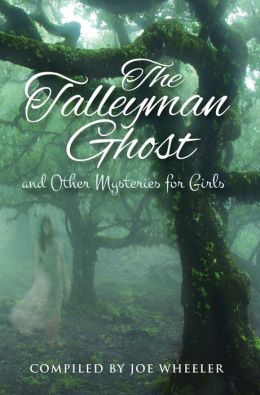
Joe Wheeler released The Secrets of the Creeping Desert, a mys9781618433633_p0_v2_s260x420tery collection for boys, and The Talleyman Ghost, a mystery collection 9781618433589_p0_v2_s260x420for girls, with Mission Books publishers.


New WordServe Clients

Krista Phillips, author of Sandwich with a Side of Romance, signed with agent Sarah Freese.

New Contracts

Dianne Christner signed a contract with Barbour for an Amish novel tentatively titled Covered Bridge Charm. Greg Johnson agent of record.

Amanda Jenkins and Tara McClary Reeves received a contract for the translation of The Knight and the Firefly into Afrikaans. Alice Crider agent of record.

Dave and Tina Samples signed a contract with Kregel for their new title: Messed-Up Men of the Bible: And Women Who Love Men Just Like Them. Alice Crider agent of record.

What We’re Celebrating!!

Marcus Brotherton’s forthcoming novel, Feast for Thieves was reviewed in Publishers Weekly!

Dianne Christner has been on the ECPA fiction bestseller list, holding strong for three months running now! See the June fiction list here.

Dena Dyer and Tina Samples received The Golden Scroll Award for best nonfiction for their book Wounded Women of the Bible.

Marketing—It’s Not Rocket Science

Business slogans on a road and street signsWriting isn’t rocket science, except for when it comes to my stymied brain.

Yes, I program software systems that run multi-million businesses and some consider me a computer geek. But creating an online presence using Facebook or Twitter, or starting my own blog for marketing purposes, scared me to death! What if I did it wrong? What if I put all this work into it, and no one made a comment? Plus, how does having a blog on gardening bring in possible sales for an inspirational romance novel that had little or nothing to do with gardening? Except, perhaps, for the garden scenes I built into my story world.

I read books on marketing. I looked online and even talked to others who explained it in very simple terms, but I still didn’t get it. Or maybe I didn’t want to. I’ve seen the bad side of marketing where authors inundated Facebook and Twitter with post after post, vying for a reader’s attention. Although having an online presence is the way marketing works, and yes, you must be visible, I knew that type of strategy wasn’t for me.

I wanted a marketing plan that was as subtle as the Energizer bunny. Do you remember those ads? A commercial starts, there is a woman turning on the water preparing to take a bath, bubbles rise from the water’s surface. Then out of nowhere comes the Energizer bunny, marching across the screen, beating his drum. From that point on, every commercial aired made the viewer wonder (unconsciously at least) . . . was this going to be a legitimate commercial or an Energizer bunny moment? The marketing scheme was perfect. Other than their original series of commercials, not one dollar was paid to other companies, yet because of the subtle intrusion into the normal commercial venue, you were thinking about their batteries every time a new commercial aired! Even if the company sold soap, tires, or lawn furniture.

So, in my effort to understand the process, I pulled out the big guns…my son, who had to market himself to raise funds for his trip to Portugal when he represented the US in the International Six Days Enduro off-road motorcycle event.

I showed him my blog and my FB page. We talked about me joining gardening groups, letting people see my name and my posts. (I’ll interject here, my knowledge of FB was v-e-r-y limited.) He showed me how getting my name out there as a reliable source of gardening information would make my name “recognizable.”

Another concern I had was I didn’t want to be the “dumb” commercial. I refuse to insult the intelligence of my tribe—or would-be tribe in this case. Just doing a blog on miscellaneous information (how I started), or on useless information, may get you some readers, but the key is to pull them in. Give them a reason for wanting to come back. People don’t have time to read something that will be of no help to them. Especially when there is a plethora of more useful blogs out there to read.

So what is marketing? It’s that sweet spot of taking something you are interested in and sharing it with others. As more people find that you are a valuable resource, your name becomes commonplace to them. Then when you have a product to sell—voila! You make a sale on your name alone. Because of your diligence, you will start with a small group willing to take a chance on you because they’ve learned to depend on the information you provide. As your name earns recognition, your influence broadens.

For any of you who were baffled by the need for expanding into the world of marketing, as I was, I hope this helped!

A Broken Heart— Repaired

Hi, readers of WordServe Water Cooler! Thank you for having me! I’m Martha Ramirez and though I write for young adults, I have a few children’s stories that have tugged at my heartstrings.

BrokenHeartBroken Heart, my new picture book, was inspired by my own heart journey and having to stay strong and pray for the best.

In 2014, I underwent open-heart surgery to correct a congenital heart defect we never knew I had. Broken Heart is about a brave girl who learns doctors have to mend her broken heart. Seven-year-old Julia goes on an unforgettable heart journey and takes her twin sister along for the ride. Like Julia, my heart defect was not discovered at birth. Unlike Julia, it was discovered many, many years later.

I knew the moment I lay in my hospital bed that I had to write a book about a girl with a broken heart. I also kept a journal, planning to rewrite the memoir I recently finished (super-excited!).

Photo by L.I.L.A. Images

With Broken Heart, inspiration came at me with full force. I couldn’t stop writing until I got to the end. I was so content with the way the story unfolded, it was as if an angel whispered the words to me. When my good friend Mary Jo Prado offered to illustrate the story, I was ecstatic! She’s a talented illustrator and super creative. Without a doubt, I knew she could bring the story to life. I was even more thrilled when she added small but significant touches, such as the actual double doors from the hospital I stayed in.

One of the things I felt strongly about when writing this story was to write from the heart and not to worry so much about how it would turn out. I’m a plotter. An organizer. I always set up my stories beforehand and I always know my GMCs (goals, motivations, and conflict), but not this time. This time it was okay to write like the wind and not worry about the details. Of course, I took the time to go back and make certain all my writing goals were accounted for. But I learned there really isn’t a wrong way to write as long as you follow your heart.

Sean Connery in Finding Forrester says it the best, “You must write your first draft with your heart. You rewrite with your head. The first key to writing is . . .  to write, not to think!”

I sincerely hope Broken Heart touches others as it touched me. It’s truly an honor to be here.

What children’s book has touched your heart?

******************************************************************************************
In addition to writing, Martha Ramirez is a 2012 Genesis Semi-Finalist, a member of ACFW (American Christian Fiction Writers), YALITCHAT.ORG, the Muse Conference Board, CataNetwork Writers, and American Author’s Association. Her articles have appeared in various places including the Hot Moms Club and For Her Information (FHI) magazine. In 2012, her blog was nominated website of the week by Writer’s Digest. She looks forward to expanding her career and is hard at work on her next young adult novel. She currently resides in Northern California where she enjoys gardening and kickboxing (not simultaneously). Visit her blog at: Martzbookz.blogspot.com

The Power of Story

It was pitch black as my car slowly followed Micah’s along the winding mountain roads, our tires kicking up dust in our wake. My adrenaline sizzled, preparing both my mind and body for the next hours of our night hike up Pike’s Peak in Colorado Springs.

My friend Brad sat next to me in the passenger seat, keeping my mind occupied on our conversation. I shared with him about my last year – graduation, what the Lord had been teaching me at Focus on the Family that summer. As he thanked me for sharing, a response spilled from my mouth without my permission.

“It’s not my story to withhold. God’s writing it. I’m just living it.”

My mind froze as I replayed that comment over and over in my head, realizing both the truth and the responsibility that came with it. Have you ever had one of those thoughts? You know it didn’t come from you because there is no way that you are that brilliant. And it both hits you and spills out of your mouth in the same breath with the unmistakable ring of truth to it. I knew it was a Holy Spirit inspired response. Divinely inspired light bulbs are great, aren’t they?

Kariss mountains

In the few years since that night hike that changed so many things for me, I have come to understand and value the power of story. The more I read and watch, I realize that there are only two stories that matter in life and everything else is a cheap imitation.

1) The story of Jesus Christ

2) Your story

That’s right! Your story is the second most important story in history. Why?

There was a man in the Bible named Nicodemus. For those of you reading this who do not claim to be Christians, you are in good company. Nicodemus wasn’t either, at least he wasn’t at the time he talked with Jesus. He was curious and confused. He came to talk with Jesus in the middle of the night. In John 3:11, Jesus tells him, “I tell you the truth, we speak of what we know, and we testify to what we have seen…”

Never mistake that Jesus has the most powerful and influential story in history. But because He made you and gave you life, your story is the second most influential to people in your sphere of influence. Most people do not appreciate a know-it-all. However, your story automatically has credibility because you are standing before them and telling it, physically present and accessible to them. You lived it and they can relate to it, or at least ask questions.

Story is a powerful thing. We live in a culture where we want to hear what the next Hollywood star is up to or which politician created a national scandal. People want to know stories. No matter how nondescript you feel yours may be, you have the ability to influence people mightily for Jesus through a willingness to share what God has brought you through.

My mom has always told me, “Never forget from whence you came.” You don’t have to have a successful career or a story worthy of Lifetime. You simply have to be willing and open to share.

Let your writing imitate life in the best ways. In fiction, no one has to know where some of the intimate details come from, but I have learned that what some of my readers love the most came from experiences I had or watched.

What the Lord laid on my heart to share with Brad is very true. My story isn’t mine to withhold. Listen for His gentle whispers. He will give you the words to say when the time comes, and He will use your story, in writing and in life. The pressure is off of you! So share. You have a powerful story because it was and is being written by a mighty God!

How have you seen God use your story to impact others?

Reading as a Writer

Dickens_Great_Expectations_in_Half_Leather_Binding I just returned from a trip to England during which I read, for probably the fourth or fifth time since my childhood, a book I have always loved: Dickens’ Great Expectations.

Part of my goal for this read was to physically experience the book’s setting. To trace Pip’s steps through the dirty London streets and walk along the Thames where he rows his boat to check on Magwitch. To shop in Covent Garden where Herbert Pocket goes to get the best fruit to welcome his new roommate. To visit the Temple courts where Jagger lives and works. To see with my own eyes Newgate prison—which doesn’t exist anymore, I’m sorry to say, although there is a sign marking where it once stood.

My bigger goal, though, was to read a book I had long loved in a completely new way: as a writer reads. Reading as a writer is a kind of dissection, really—not just of the work, to figure out how it works, but of my own psyche as a reader. What is it that has always enthralled me about this book? I ask myself. Why have I returned to it again and again in the course of a lifetime? I examine the story, the details, the transitions, the very sentences of Dickens’ masterpiece, looking for applicable clues about how to make my own writing successful.

There’s no better writing teacher to be found, no better course of instruction or writing program, than a book you loved as a child and continue to love in adulthood. For me, that’s Great Expectations and Robinson Crusoe, The Good Earth, Laura Ingalls Wilder’s Little House books, and the dark fairytales of Helena Nyblom. And works of nonfiction like Helen Keller’s autobiography and Jade Snow Wong’s account of growing up the fifth daughter of Chinese immigrants in San Francisco, and a hagiography I wore out as a child called Little Pictorial Lives of Saints. There are more, each one a teacher with the rare pedagogical skill of educating not by presenting something new but by confirming and demonstrating old truths.

Reading as a writer, I learned from Dickens that even the most honorable characters are most engaging and memorable in their failures and absurdity. I knew this. We all know this. It’s why Peter and Thomas are my favorites of Jesus’ followers. And it’s why Esau is so impossible to hate. (I don’t know how God manages it!) Through their faults, they become more believable, more real. Jesus himself, though without fault, becomes 100% human in moments when he seems least likeable, such as when he balks at healing the demon-possessed daughter of a Canaanite woman who argues that “even the dogs eat the crumbs that fall from their master’s table” (Matthew 15.27 NRSV).

Great_Expectations_(1917)_1Each character in Great Expectations is a surprise. Miss Havisham experiences remorse. Estella confesses genuine emotions to Pip. Jaggers ends up being as much a father to fatherless Pip as he is a heartless professional. Pip moves from fear and repulsion toward Magwitch to concern and compassion. Through such surprises, Dickens helps me find the life-giving contradictions and winsome growth opportunities in my own characters.

Dickens also taught me how to keep my reader focused through blunt meta references to “the last chapter” that I would never have recommended to my own students. He was writing serially, after all, so his readers would have needed more help remembering what had gone on in the previous issue than the contemporary reader of the assembled chapters would need. Still, it’s a helpful technique. And referencing one’s previous remarks and chapters is certainly freeing.

Students in my writing courses often complain about my “reading as a writer” assignments. I’m always wanting them to apply what they learn from their favorite writers—or from one of my favorites—to their own writing, and I’m never pleased with their flowery, laudatory assessments of their favorite books’ writerly techniques.

“You’re reading like a literary critic!” I rant. “You’re reading like a teenager in love. I want you to read like a writer!”

It is the hardest way to read, I think, but surely, once you’ve read a book the first time through, the most useful. Once my students get how to do it, they thank me.

“Don’t thank me,” I tell them. “Thank the author!”

In case you’re wondering, reading as a writer won’t wreck the book for you. To the contrary: Discovering what made you love a book gives you a new appreciation for it—so much so that, if you’re anything like me, you’re eager to read the book again soon.

Sing it, Lamb Chop!

projects.latimes.com

This is the song that doesn’t end. Yes, it goes on and on, my friend.”

If you never watched the fabulous Shari Lewis perform with her puppet Lamb Chop, you might not know this delightful ditty from her Emmy-winning show that ran on PBS from 1992-1997. My youngest daughter enjoyed watching it as a toddler, and since I got to join her in front of the television, this song found its way into my permanent recall bank.

For better or worse, the tune takes over my head every time I have a task that seems never-ending.

Which is my way of introducing my topic today: platform building.

You see, platform building for a writer doesn’t end when your book is published. Instead of thinking of platform building as the first step toward publication, I now see it as the task that underlies the entire creative, marketing, and career development process. As long as you write, it doesn’t end.

But instead of looking at that task as an overwhelming, time-consuming responsibility, I’ve chosen to see it as the lifeblood of what I do.

My platform is my path to accomplishing the work that gives my life meaning. In my case, I want to bring people into closer communion with God’s creation, and I do that through the written word, telling entertaining stories about nature, and in particular, about birding and dogs.

Using this perspective motivates me to continue, and expand, my platform-building. Here’s a quick snapshot of what that looks like for me.

My first book – a small treatise about finding meaning in life – led me to discover my own passion: writing about engagement with nature. To market that first book, I gave retreats and workshops about identifying what you love and what God calls you to; as a result, I added speaking opportunities to my platform. Then I began writing my Birder Murder Mysteries, a light-hearted series about a birder who finds bodies (incorporating my own passion for birding and mystery). To sell books, I began reaching out to birders around the country (and the world!), connecting with them online, attending birding events, sharing information and becoming interested in conservation issues. That influenced additional books in the series, and led to more interaction with like-minded nature-lovers, which has both enriched my writing and my life with speaking/marketing opportunities and new friends. Six years after my first Birder Murder was published, I now have plenty of ideas for future books and venues to market them, as well as a list of birding hotspots to add to my bucket list of personal adventure.

My memoir about my dog is building a new addition to my original platform, giving me more places to talk about nature and to sell all of my books. I’ve begun volunteering with my local Humane Society because of it, and I now see all my writing as advocacy work for improving the human-nature connection. Yes, I know that my platform building doesn’t end, but neither do the rewards I’m finding when it comes to new experiences, learning interesting things, and contributing to my world.

What joys are you finding in the never-ending task of platform building?