My Indie Story (And Why I still *Heart* My Agent)

myindiestoryThere are a gazillion reasons why authors choose to go the “indie” route. (Wanting to use the word gazillion to the chagrin of every publisher out there might be one of them…. :-))

They want more control over covers and editing, more share of the profit, quicker publication. They may be tired of waiting and/or writing in a niche market that isn’t served by traditional publishers… the reasons are as wide and varied as the genres they write in.

I thought I’d share my story and my motivations, and why I still want, value, and love my agent.

IMG_5199My story is a complicated one. When I signed with my first agent and got that coveted first publishing contract, I was in the throes of a personal trial that was, to say the very least, difficult. My fourth daughter was born in 2010 with half of a heart and spent her first 308 days in the hospital.

About three weeks after she came home from the hospital, on oxygen and twenty different medications, and after four open heart surgeries including a heart transplant, an editor offered me a contract. I was also offered representation by an agent, all in the same week.

On one hand, I was ecstatic. This was my dream come true. And considering I’d given up my pay-the-bills day job to take care of my daughter, it felt like amazing timing.

What I didn’t factor in was a fun case of stress induced depression, ongoing medical issues with my daughter (including one very scary helicopter ride which included CPR… Boo!) and the immense stress of editing on a deadline and trying to market a book–all the while dealing with those deeply difficult, personal trials.
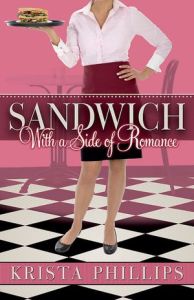
SandwichOnce my book came out, I kinda collapsed. I was exhausted and needed a timeout. I took the next year to recharge and focus on my family. Writing was almost laughable during that time.

When I finally emerged during the fall of 2013 and felt God nudging me to write again, I was met with a few stark and depressing realities regarding my writing career.

1.) Releasing a novel without a follow-up anytime soon does not make for grand sales history.

2.) Trying to market a book well during such a difficult time also doesn’t breed super quality sales either. While my book didn’t totally bomb, it fell much below my expectations, which probably didn’t help my depression either!

3.) Even if I polished up my finished manuscript and had my agent immediately submit it, due to publishing schedules, it’d probably be at least two years or more before it would actually be published, thus making a span of close to three years between book releases. The business side of me knows that isn’t ideal for marketing purposes.

So what to do?Pageflex Persona [document: PRS0000026_00095]

I needed a book release sooner than later, and a way to build back up the platform I lost during my mental-health break. I looked at all those indie authors and wrinkled my nose. No. I’m a writer, not a publisher. That is not what I want at all.

But the more I rejected the idea, the more God pushed me toward it. Then ideas started flowing… what if I did some followups to the first book? Maybe some novellas, then finish out the series with a full-length?

The thought blossomed over a few months. God gave me some fun ideas for books and titles and put some amazing indie-authors in my path to teach me the ropes. I am forever thankful to them!

And you know what?

I don’t regret it for a moment. My sales haven’t been astronomical. My “grand plan” is to release three novellas then a final “full length” to wrap up the series, while my fabulous agent works her magic with a new series.

I’m using the three novellas as trial books, trying different marketing strategies on each to see what works, what doesn’t, and what I can do better. The first book, A Side of Faith, came out in August, 2014, and the second, A Side of Hope, came out March of this year.

Pageflex Persona [document: PRS0000026_00095]A Side of Love will release later this year, and the full length, The Greatest is Love, will release in 2016.

It’s been a lot more fun than I thought it would be. I’d originally dreaded every single step in the process, but the idea of being a hybrid author is intriguing.

At this point, I don’t see myself going “full” indie. I LOVE my agent (waving to Sarah) and LOVE working on a team with a publisher. I know this idea isn’t embraced by all indies, and that’s super okay. What is good for one is not for another.

But this is my Indie story, and I’m very thankful I followed God’s leading and stepped out of my comfort zone. In the end, my hope and prayer is that my indie books and my traditional books can work hand-in-hand to help each other.

What about you? Have you ever thought of indie publishing? Why or why not? While I don’t claim to be an expert, I’m happy to answer what questions I can!

Honesty is the Best Policy

SavedbyGracieReaders often thank me for sharing my personal story of battling an anxiety disorder in my memoir Saved by Gracie: How a rough-and-tumble rescue dog dragged me back to health, happiness, and God.

“You’re so brave to have written this,” they say. “I’d be embarrassed to share something so personal.”

Honestly, it never occurred to me that I was being brave in recounting my experience with anxiety. I lost all my privacy boundaries when I gave birth to my third child in a room crowded with medical personnel. Once you’ve had an audience of strangers watch you push a child down the birth canal, there’s not much left that can embarrass you.

Another reason it surprises me to be described as “brave” is that all I’ve done is tell a true story about the ways my head, body, and spirit responded to taking a shelter dog into our home. It’s also true that I didn’t want the dog, but when I realized how the dog was helping me change my life for the better, I immediately wanted to tell that good news to other women who might be suffering with anxiety as I had.

First and foremost, I wanted to share my story to help others. I’d learned something new and valuable, and even though the therapeutic value of animals has been a popular research topic in recent years, I wanted to frame that information in a fresh way that would encourage readers to make that information work for them, too. Basically, I used myself as the proof in the research pudding.

And here’s where a true story encounters craft: it is the writer’s challenge to make the story simultaneously personal AND universal .

We all have experiences that are common to the human condition, yet people relate most deeply to the universal when it becomes intensely personal. Over the years of my writing career, I’ve learned that it’s the writer’s intimate voice and transparency (I’m talking about total honesty here!) that are key to combining the universal and personal. For example, if you tell me you’ve had a traumatic experience, I can nod and say “so have I,” but unless you give me the details of how it personally impacted you, I won’t be looking for similarities in our stories. That means you, as a writer, have to seek out and name the personal aspects of the universal that will engage your readers. You have to dig up the reality – expose the heart and soul – of the experience you want to share.

Make no mistake – digging in your life can be painful for you and those around you. With luck, though, it will be ultimately illuminating and healing, too.

And when you do that with your own story, you give your readers the permission, and hopefully, the courage, they might need to be honest with themselves in their lives. Honesty really is the best policy for a writer, because it’s the key to connecting compellingly with your audience as you make the universal very personal.

How do you approach the universal in your writing?

Firmly Established

When I mention the book of Ecclesiastes, what goes through your mind?

 The folk-pop song hit from The Byrds in 1965?

 “Vanity of vanities! All is vanity!”?

 Hopeless despair of anything one does “under the sun”?

100_1867

 Look closer…there’s more to this book than the Preacher’s laments.

 At the very end of Ecclesiastes, the writer switches his voice from the Preacher to the narrator, and writes these words:

“The words of the wise are like goads, and like nails firmly fixed are the collected sayings; they are given by one Shepherd.” Ecclesastes 12:11 ESV

 The goads mentioned in this verse are sticks used for poking and prodding sheep. Sheep are notorious for being slow-witted and stubborn. Even faced with danger, they will not obey the shepherd or sheep dogs if they think doing so would be more dangerous. At these times, the shepherd can resort to using his staff as a goad, poking the sheep to the point of pain, if necessary, to get it going to a safe place.

100_1793

 I don’t know about you, but I’m often like the slow-witted sheep, going blindly down the path toward danger. My Shepherd knows there are times when I would fall off a cliff rather than listen to His word, so He will resort to the goad. I know some of the most painful episodes in my life were used by my Shepherd to move me back to the center of His will.

 The other term used in this verse is “nails.” This same word is also used in Ezra 9:8 and Isaiah 22:23. It gives the picture of a peg or nail fixed firmly and securely into place, as in Ezra, when the Lord established the remnant of the nation of Israel in Jerusalem after the Babylonian captivity. “But now for a brief moment favor has been shown by the LORD our God, to leave us a remnant and to give us a secure hold within his holy place, that our God may brighten our eyes and grant us a little reviving in our slavery.” Ezra 9:8 ESV

 What does this mean for us as writers?

 God’s Word is the goad that keeps us in line with His direction and will. He is the Shepherd who establishes us firmly in our place.

100_1773

 The next verse, Ecclesiastes 12:12, is also appropriate for us: “My son, beware of anything beyond these. Of making many books there is no end, and much study is a weariness of the flesh.”

 Did you see the instruction? “…beware of anything beyond these…” Beyond what? The “words of the wise,” given by “one Shepherd.”

 As Christian writers, our place is putting words on paper – words that point our readers to the One Good Shepherd who seeks the lost and redeems sinners.

Seven Key Members of a Writer’s Team

Coxed four from aboveIt’s not any one person. It’s not any one coach. It’s the team. Brian McBride

What is true in sports is also true in writing. Becoming a published writer involves assembling a team of talented individuals who will help you write the best book possible for your readers. Here are seven key members of a writer’s team and the roles they play to help a book succeed:

1. Beta Readers – A beta reader is someone who will read and critique the three chapters of your book that you will include in your book proposal if you are writing nonfiction or the entire manuscript if you are writing fiction. You will use this feedback to improve your manuscript before sending it to an literary agent. Choose a person who loves books, belongs to your target audience, and understands how to give feedback on the big picture of your writing instead of bogging down circling typos.

Give your beta readers a time frame for completing their critique and clarify that your manuscript is confidential and should not be shared with others. A beta reader who is also a writer or who understands the publishing industry is ideal. Send your manuscript to multiple beta readers and pay close attention to feedback that is echoed by more than one beta reader.

2. Agent – Your literary agent presents your book to publishers and negotiates the sale. However, your literary agent often provides guidance and editorial suggestions before your book proposal is submitted. He or she knows the industry, so take the advice. After your book is published, your literary agent can provide marketing advice and help you develop your writing career.

3. Editor – Your editor helps you polish your manuscript to its final form, while also guiding you through the entire publication process – title selection, cover art, book design, copy editing, and choice of reviewers.

4. Reviewers – You will encounter three types of reviewers in the traditional book publishing process. The first set of reviewers, selected by your editor, provide feedback on your manuscript. You can take or disregard their suggestions when writing your final draft. However, their insights help you see your book with fresh eyes and learn how your readers might respond to certain passages. The second set of reviewers read the final manuscript and write short reviews for inclusion on the back cover of your book. You select these reviewers with input from your editor. The last set of reviewers are the readers who bought your book and decided to review it on Goodreads, Amazon, a bookstore website, or their blog. All reviewers are essential for the success of the book and the development of your writing career.

5. Marketing Director – Your marketing director will help your book find its way to readers. He or she will coordinate ad placement, mailing copies of your book to key influencers, and the work of a team of publicists. Touch base with your marketing director if you see a valuable opportunity for getting the word out about your book. Coordinate your author efforts with the marketing plan your publisher develops for your book.

6. Publicists – Publicists may specialize in broadcast, publications or online publicity. If you are fortunate to have a publisher that has a team of publicists working to promote your book, they will arrange radio and podcast interviews and connect you with print and online opportunities to introduce readers to your book.

7. Key Influencers – Key influencers are the individuals who will receive an early copy of your book from your publisher. These individuals should connect with segments of your target audience and be able to create positive buzz about your book. Choose influencers across a wide geographical area and with characteristics that represent the breadth of your likely readers.

Other individuals may join the team to help you create a valuable book for your readers, but these seven key team members make up the core of your team as a writer. Appreciate the expertise that each team member brings, and build a good working relationship with all of them.

How has working with a team enhanced your writing career?

WordServe News: April 2015

Exciting things have been happening at WordServe Literary!

On the final post of each month, you’ll find a list of Water Cooler contributors’ books releasing in the upcoming month along with a recap of WordServe client news from the current month.

New Releases

Betsy Duffey and Laurie Myers (The Writing Sisters) released their novel Shepherd’s 9781501108037_p0_v2_s260x420Song with Howard Publishers, in paperback.

*************************************************************************************************

Cheri Fuller released her nonfiction book, What a Girl Needs from Her Mom with Bethany9780764212246_p0_v2_s260x420 House Publishers.


************************************************************************************************

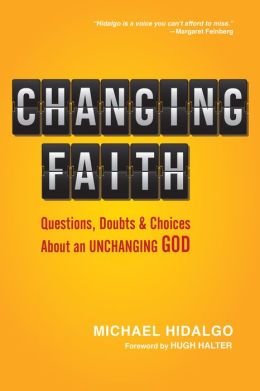
Michael Hidalgo released Changing Faith with Intervarsity Press.9780830836956_p0_v3_s260x420

*************************************************************************************************

Angela Ruth Strong released her third book with Ashberry Lane, The Food Fight 9781941720158_p0_v1_s260x420Professional.

************************************************************************************************

Tricia Williford released her second book with Waterbrook/Multnomah publishers, Let’s9780307732002_p0_v1_s260x420 Pretend We’re Normal 


New Contracts

Barry Corey, President of Biola University signed a contract with Tyndale Publishers for The Receivable Life. Due out Spring 2016. Greg Johnson, agent of record.

Denise George has partnered with Robert Child and Berkley Publishers to write The Wereth Eleven Massacre, due out in Spring 2017. Greg Johnson, agent of record

Rick Johnson signed another contract with Revell publishers for Overcoming Less than Perfect Parenting. Due out Fall 2016. Greg Johnson, agent of record.

What We’re Celebrating!!

Marcus Brotherton’s debut novel, Feast of Theives is a finalist for the 2015 Christy Awards!

Doug Fields’ book, 7 Ways to Be Her Hero is a finalist in the Men’s Nonfiction category of the 2015 Christian Retailing’s Best Awards!

Amanda Jenkins and Tara Reeves’  children’s book, The Knight and the Butterfly is a finalist in the 2015 Christian Retailing’s Best Awards! Also, celebrating the release in paperback and translated into South African!

Adam Makos’ book A Higher Call was released in Polish in hardback!

20 Reasons Books Don’t Sell (Part 2)

stock-624712_640You can catch part one from Monday here on the Watercooler. Feeling discouraged yet? You’re not the only one trying to make a go of it in publishing and it’s a tough business, but my post isn’t over yet, and I hope you’ll find some room to breathe by the end of this post. Let’s jump right in, shall we?

10:The book is poorly written. You didn’t get a good edit. This is more common with independently-published authors who don’t pay for developmental or copy edits, but not unheard of in traditional publishing.

11: All we hear is crickets. The book never got word of mouth or enough great reviews (50+). There is no tangible buzz about you as an author or the book. Like a movie that no one talks about will sink after week two, the same is nearly true with books. Most books can sell 3,000 to 5,000 copies with little buzz. But if a book has sold more than 10,000 copies, it’s because people are talking.

12: Publisher oversight. The ebook didn’t release simultaneously—and in effect the marketing and PR upon the book’s initial release went to naught – without the e-product available “on the shelves” during the launch. Years ago, one marketing director I was dealing with didn’t know Facebook could be used to promote a book (luckily his PR person did). While gross incompetence is rare, mistakes happen out of the control of the author or agent.

13: A book was written and it should have been an article. We’ve all read books that were all but over after chapter 4. The story was predictable or the points over-used. Yes, there is nothing new under the sun, but try to make sure you’re conveying content that you can’t get in a few blogs.

14: One careless word. The book had a swear word in it so Lifeway wouldn’t carry it. This happens a fair amount of times because authors insist that profanity makes it more “real” (which it might) and they’d rather sacrifice sales than not be real. As Dr. Phil would say, “How’s that working out for you?” If you want to play in certain sandboxes, you have to play by the sandbox’s rules. Sorry.

15: Setting and storyline. If it’s fiction, having a setting outside of America, England or Ireland. “Because I love Russia (or Africa or Thailand)” just plain rarely sells well in America. Or having a storyline that is not entertaining—and very hard—to read (i.e. child abuse, sexual abuse, deaths of key characters).

16: Changing reading habits. People don’t read as much as they used to. Or if they do, it’s blogs and articles that are free on the web. More true with nonfiction readers. The attention span of today’s internet-soaked reader has shortened radically.

17: Cheap buyers. People are waiting around for the free or cheap ebook that comes out a year later instead of spending $10 to $20 on a new book they know they will get eventually and pay less (or nothing) for. Also, the proliferation of self-pub’d books that have a lower price tag has put a dent in a traditional author’s sales.

18: Life happened. Something happened in the author’s life so that all of their well-laid plans to launch and promote their book flew out the window. Or it happened to the in-house PR person’s life. Or the outside PR person’s life. Or the agent’s life. Or their famous author friends’ lives. “Life happens” all the time, and I’ve seen more than a few books sink because cancer or a death occurred in the family of some key person trying to make the book a success.

19: Book retail has gone bye-bye. If you’re a Christian writer, the lack of stores to sell into can certainly be one place to put the blame. When I first started as an agent 21 years ago, there were 6,500 Christian bookstores. Now there are about 1,000. So . . . “no one walks into Christian bookstores anymore” is fairly true.

20: The industry. Frankly, publishing is hard. Every publishing house is working harder for less money. Every editor, marketing and PR person, sales person . . . is overloaded with work because margins are thin. If there is a “new normal” that will get us back to center in publishing, it hasn’t happened yet.

These 20 reasons, and likely a few others, would all not count a twit if people could just find out about the new books they want to read. Agents and editors are still finding great stories, fabulous writers and motivated publishers. The problem? Creating awareness for these great books! Retail continues to shrink, magazines are all but gone, and with over 100,000 new bloggers (on WordPress alone) starting blogs every day, it’s only a matter of time before most of us are tuning out all of the content coming into our inbox (if we haven’t already). How will people start finding out about all of these good books?

The newest and biggest elephant in the publishing room is this:  How, with the demise of print media and bookstores, do we find and target regular book-buying readers who are interested in a particular genre and book topic?

Faithhappenings.com was created to help answer this question. FaithHappenings offers the following unique benefits to authors, publishers and reader-consumers:

  • When a member checks specific boxes on their preferences, it will send readers an email when a new book comes out in any genre they enjoy and buy.
  • FaithHappenings also lists music and videos, independently published books and music, local events of every type, scripture, blogs, devotionals and much more… and all a member has to do is check a box to find out about them. It only takes three minutes to fill out a profile, and it is free to do so.

Check out www.faithhappenings.com. There are 454 local websites that carry local and national info, with a big emphasis on books!

20 Reasons Books Don’t Sell (Part 1)

books-21849_640When your book doesn’t move off the shelves or Amazon warehouses in vast quantities, our first tendency is to point fingers. There is something deep in the human psyche that needs to blame someone when hopes, dreams and plans don’t work out. Publishers blame authors, authors blame publishers (or oddly enough, their agents), retail might blame marketing.

The truth is, there will never be one reason why a particular book doesn’t sell. All any of us—author, publisher, agent, retail partner—can do is look in the mirror and ask, “Did I personally do all I could to help the process?” The other truth is, everyone who invests time in writing, agenting, editing, packaging, marketing, publishing, and selling a book wants the book to turn a profit.  We all want books to sell . . . every single book! Otherwise, none of us could stay in business.  So let’s disabuse ourselves of mistrusting motives of the key people trying to help our book—everyone wants to stay in business!

So why don’t books sell? It’s usually not because of a lack of desire, or effort, or skill, or hope, or prayer… it’s a myriad of tangible and intangible factors. Some an author can control, some a publisher can, and many are outside the control of anyone.

Welcome to the world of publishing in the 2010s. Times… they have changed. So what are the reasons a good book may not have great sales?

  1. Hundreds of books have been scuttled because a war or national tragedy took center stage right when a book releases. Suddenly, all of the great PR efforts and TV interviews set up get pre-empted, never to be rescheduled because everyone has moved onto the newest front list of books to promote.
  2. A bad package. It doesn’t happen too often these days; publishers like to make authors/agents happy. But cover designs do sell—or not sell—books. A great title that screams “must read,” a subtitle that grabs, back cover copy that says, “keep looking,” engaging table of contents, endorsements or a foreword by someone of note, a compelling first few pages… these are a few factors that can turn a book browser into a buyer.
  3. Champions leave. With uncertainty in the industry and publisher entrenchment these last five years, editors have been leaving or moving to different jobs at an enormous clip. Without an in-house champion to keep the book on track, details often fall through the cracks no matter who is following up. New editors must inherit projects, but if they didn’t acquire them, sometimes those books get treated like the red-headed step-child.
  4. Marketing/PR failures. A publisher had no effective marketing plan, or didn’t work their marketing plan no matter the agent effort or follow up. The truth is, the 80/20 principle is truer in publishing than likely anywhere else. Eighty percent of their marketing money goes to 20% of their books, because 80% of their income comes from 20% of their books. A huge fact of life in a very tough publishing environment. Sadly, these days, it may even be 90/10.
  5. Author ambivalence. An author decided they’d let others do the heavy lifting in creating awareness about the book. The writer took the attitude that “Everyone, other than me, should tell the world about my book—because I don’t want to be seen as commercializing anything; I’m above that.” Or, “God has called me to write, not to market my writing.” Or, “I’m busy writing my next book. I don’t have time.” Or, “I’m just not good at pushing my own stuff.” Spiritualizing or tossing out excuses about your inactivity likely means one thing in today’s book culture: a short writing career. God will more often “bless” hard and smart work. If you don’t believe in your work enough to champion it, rethink book publishing. Or, perhaps become a collaborator, you can write and not have to worry about promotion.
  6. Author platform. Ah yes, the scourge of authors everywhere. If you haven’t built enough potential readers into your sphere of influence through blogging, speaking, radio or social networking, publishers will just often say, “We can’t help you.” Why? See reason 20.
  7. Friendship failure. An author’s famous friends (the ones your proposal said were on board) who promised to blog, tweet and Facebook about it forgot, or got too busy, or finally read your book and didn’t like it, or have been doing too much of it for every other author friend they have and are just tired of filling their social networking space crowing about someone else’s product (when they have their own to PR).
  8. Small target audience. The book doesn’t meet a broad enough felt need. Niche books used to have a chance. These days they often do not.
  9. Topic overpopulated. The book has been done a million ways from Sunday and there is just too much competition on the subject.

Not all is as discouraging as this post might have started out—and how you might be thinking. I’ll continue my post on Wednesday with further analysis, but also a bit of hope that I hope will help shift the publishing paradigm and eventually change how we as authors, publishers and agents approach the industry.

Facing Our Fears as Writers

Photo/TaraRoss

We’re going to have to let truth scream louder to our souls than the lies that have infected us. (Beth Moore)

I’m forced to face my fears and weaknesses in many areas of my life, particularly my writing life.

Resistance. What fears haunt you as a writer? I have a long list of my own. Writing for publication demands strength and stamina! We should expect to face resistance, right? Each new project, goal, or idea, may trigger memories of intimidation, shame, rejection, failure, regret, or setback. Or we may even fear the price of our success.

Intimidation. Fearful to let anyone see your first (second or third) drafts? Even the best writers produce shoddy first drafts. Anne Lamott offers an entire chapter on this topic in her outstanding instructional book on writing and life, Bird by Bird.

That’s why we RE-write. And that’s why I recommend finding a critique group or someone who can (and will) edit your work. I’m grateful for my writing friends who are honest enough to wield their red pens and hack on my stuff.

My husband Dan serves as my Editor-in-chief, although most of writers do not advise asking a spouse to edit. But I’ll reserve that debate for another post. Although, I welcome your opinion on that subject in the comments space below.

Shame? Perfectionism and the fear of judgment and criticism can stifle our writing life. Our inner critic may be harder on our work than any reader or editor. “Shame is the most powerful, master emotion. It’s the fear that we’re not good enough” (Dr. Brené Brown).

Rejection? Wow! This can be a monumental hurdle for writers! But many famous authors were rejected before succeeding, like C.S. Lewis and F. Scott Fitzgerald.

If you’re a Christian writer, here are a few encouraging words from Beth Moore, “The next time you feel rejection’s sting, remember God’s words to Samuel: ‘It is not you they have rejected, but they have rejected me’” (1 Sam. 8:7).

Failure? Many writers never pursue writing for publication for fear of failure. But I agree successful author and blogger Jeff Goins: “The cost of not pursuing a dream is greater than the cost of failure.”

Regret? Our mistakes can yield valuable lessons. But we don’t want to focus so much on our missed opportunities or disappointments that we lose sight of hope and dreams for our future.

… I do not consider myself yet to have taken hold of it. But one thing I do: Forgetting what is behind and straining toward what is ahead …  (Phil. 3:13 NIV).

Success? Do you fear having high hopes? Afraid of taking risks? Or maybe you’re counting the cost of success, and you don’t think you have what it takes. Could your fear be the stumbling block that’s keeping your from moving forward?

Setbacks? How do you endure setbacks in your writing life? I’ve learned a few survival tips on the walking trail and on my writing journey. But as I face my fears and take one step at a time by faith, I’m able to go the distance.

And now, … one final thing. Fix your thoughts on what is true, and honorable, and right, and pure, and lovely, and admirable. Think about things that are excellent and worthy of praise. Keep putting into practice all you learned and received … Then the God of peace will be with you. (Phil. 4:8-9 NLT)

What challenges have you faced and what fears have you overcome as a writer?

Following the Story to a Different Market

All readers of this blog may not be writing for the CBA market and others may be contemplating writing for the general market when they’ve been in the CBA market for a while.

booksI thought it would be interesting to get the opinion of an author who changed from the Christian market to the general market and what her reasons were for doing so. She brought along two other friends to share their insight as well.

Welcome back, Charise!

Last year, I began to write my first non-Christian marketplace fiction project. It was a kind of one-off idea that I just wanted to try. It was a serial. It was historical fiction; I normally write contemporary. And it was for the general market. It started as a sort of experiment while I plotted my next contemporary novel for the CBA market (as were my first two).

But then something happened. I loved the freedom. The internal editor that kept me from writing what my characters really felt, thought, did and said was silent. And it all felt better. It read better. Frankly, it was better. And I decided I would no longer write with a CBA editor— or CBA reader— in mind.

Instead of being a Christian writer of fiction primarily for Christian readers, I am a writer who is a Christian. It now feels as I am writing with more truth than less; and the struggle with being “Christian enough” is over.

I know two other writers who have made this same switch: Katherine Bolger Hyde and Wendy Paine Miller.

Charise: What made you decide to move toward the general market from the Christian reader market?

Katherine: Even with an agent who believed in my work, I was not able to sell a novel to a CBA publisher. I had the choice of adapting my writing to that market or moving to a different market. Because I felt the adaptations being asked of me would have compromised the artistic integrity of my work, I chose to move.

Wendy: I’ve been honored to be invited to dozens of book clubs, and as I joined in the discussions, it became abundantly clear to me that Christians weren’t the only ones reading and enjoying my books. That was the strongest reason for me. But there’s more. My stories touch upon emotions and depth that reach beyond the Christian market—that are not exclusive to the CBA. When I write I don’t set out to work the gospel into my story arc or I don’t purposefully include a hopeful message. I just follow the story. I trust my faith enough to let it lead where it will.

Charise: I love that, Wendy, “I just follow the story. I trust my faith enough to lead where it will.” I felt the general market would let me be as dark as I needed to be in order to then show how much more blinding the light was when it broke through. And like Katherine, I was not selling in CBA nor entirely comfortable with the editorial limits.

What was the response from your writing network to that decision?

Katherine: My network was mostly supportive—probably because it was pretty obvious to anyone who read my work that it didn’t belong in CBA!

Wendy: So far, so good. As with any change, some have embraced it…

Charise: I think some were surprised and probably a few were relieved. Though I have had longer conversations than I expected about the new content and my choices.

What have been the greatest challenges?

Katherine: Honestly? Almost the minute I made the move, most of my challenges disappeared! The first novel I wrote deliberately for the general market sold to the first agent and the first editor who looked at it. I also got a better advance than I could have hoped for in CBA.

Wendy: Sometimes I feel like I’m straddling an invisible fence. Or quite frankly, I feel too Christian for the ABA market and not Christian enough for the CBA. It’s a strange place to be but more and more I’m feeling I’m on this exact road for a reason.

Charise: Katherine, that is a powerful affirmation! For me, the challenge has been to “sit out” on certain events and conversations because my stories will not fit in with CBA-oriented material. I’m still friends, of course, but there have been challenges.

What have been the rewards?

Katherine: I feel much more free to write what and how I am naturally inclined to do. I found CBA limiting not only in its evangelical worldview (which does not match my Orthodox Christian worldview) but also in its mission-driven approach to fiction. I see fiction as an art form; CBA seems to view it as a tool for evangelism, which can be crippling artistically. As a bonus, I’ve been fortunate enough to land with a publisher who doesn’t object to a little subtle spiritual content in their books.

Wendy: Understanding who I am as an author and establishing a grounded sense of what I want to write. Also, a wider reach. I’m a huge fan of engaging in enriching conversations and this happens at book clubs. When the topic of faith comes up doors open. It’s natural. There’s no budging involved. I learned to trust my voice, to filter through all the ideas of where I thought I’d be and who I thought I was becoming. I took risks. I paid attention, then did things that didn’t feel as safe but ultimately helped me to become a more authentic author.

Charise: I really just want to say “ditto” to Katherine and Wendy’s comments. Having readers who never would have found me in CBA contact me to say “that’s just how I felt!”  The rewards have been to be able tell the story the way I believed it was meant to be told.

Anything else to add on the subject?

Katherine: I have to thank all the people I met in the Christian fiction world for their kindness, generosity, and support. I made many friends there who still put up with me now that I’ve left. I’m not sure I would have had the courage to leap out into the general market if I hadn’t built up my confidence through several years in CBA.

Wendy: I’ll always come alongside other authors no matter who their audience is. This is a crazy calling. And we’d all benefit from doling out more support.

Charise: It can be a hard change, but if it’s the right change for your story and your career and your readers— then it’s the right change to make.

How did you choose your reading market?

Have you changed markets? How did it go?

Have you considered doing so? What’s holding you back?

***********************************************************************************************

Katherine Hyde is an editor by day and a mystery writer by  night. Arsenic with Austen, the first in her mystery series, Crime With the Classics, will launch in 2016. Find out more about Katherine at http://kbhyde.com

Wendy Paine Miller writes women’s fiction and suspense. Her latest release is The Delicate Nature of Love. Meet Wendy and her books at http://thoughtsthatmove.blogspot.com

Charise Olson writes historical fiction under the pen name Leo Colson. The first episode in her serial The Roaring Redwoods is free! For more details and her blog visithttp://chariseolson.com

Crafting a Business Plan

Only a couple weeks ago, I closed the chapter on a significant season in my life – the completion of my first three-book series. I feel as if the last three years of my life have passed in a blur of deadlines, beautiful character adventures, and growing pains. As I celebrate the ending of this season and the potential of the next, I also need to reevaluate what I want this writing gig to look like going forward.

But that’s the thing. It’s more than a writing gig. It’s a business, a ministry. As with all businesses, it requires strategy, planning, and much prayer. When I first began this adventure, I wish someone had told me to look ahead, to dream but to do so in detail. As I reflect on all God has done, I am hitting “pause”–as I pray about contracts and direction and stories–to craft a business plan, one that gives me direction for the years (I hope) that loom with possibility before me.

Kariss Lynch Shakespeare quote

Creating Your Own Business Plan:

1) Craft a mission statement.

What is the purpose of your writing ministry? We all want to reach and impact readers. Be more specific. What unique calling/gifting/direction do you bring to the table?

2) Identify your audience.

If you have worked with publishers or are working to break into the field, you are aware that you must define your audience for your proposals. Be more specific than the age range. Do you write for those who have lost hope? Are your stories for the courageous at heart who want to change the world?

3) Set long-term and short-term goals.

This is where I am crafting financial, spiritual, physical, intellectual, family, social, and career goals. If every area of my life feeds my writing, and I believe it does, then it is important I take all of this into account. I’ve noticed I write better in deadline season when I am taking time to eat healthy and exercise. On the nights I don’t sleep much in favor of finishing a project, my health routine gives me energy to keep pushing. When I don’t set time aside to invest in family and friends or have fun, I write from a drained tank. If I don’t attend at least one conference a year, I miss out on building relationships and gaining valuable training. Goals help me account for these moments, and tackle them with more gusto.

4) Formulate a guideline for the unknown.

I have lingering questions that I want to answer that will help me as this career hopefully grows. Do I want to limit myself to my current genre or do I have other story styles burning on my heart? If so, what do I need to do to incorporate those stories? How do I respond to speaking opportunities? How am I going to interact with readers? How do I answer those who ask my advice on writing? How will I handle endorsements and judging writing competitions? I am working on answers to all these questions. I believe having an idea in place will help me to respond well when these situations arise.

5) Share your vision.

I have a small group of people in my life who will gather to give me feedback on my business plan. They will respond as readers, but they will also respond from a place of knowing my heart. They will be my encouragers in the months and years ahead, my accountability if I get off track, and the ones with wisdom to help me reevaluate this business plan when the need arises. They are the ones who challenged me to identify my direction in the first place.

I am still working to finalize this business plan and would love to hear from you! What goals have you set for your writing career? Do you have a business plan that helps keep you on track, or do you use another method?