How to Create an Enticing Book Trailer — Secrets from a Professional

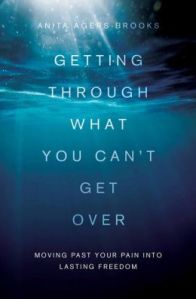
Getting ThroughBecause of my passion for the message, and the drama of the subject, I really wanted a book trailer for my latest release, Getting Through What You Can’t Get OverSo I went on a quest, hunting for the most enticing book trailers, hoping to glean insights and ideas.

When I searched on YouTube, high-profile author websites, and via Google searches, I was surprised. There wasn’t much out there, and what was, frankly,  with few exceptions, didn’t entice me to read the books they represented. Especially those filmed for my genre of creative non-fiction.

For transparency sake, I’ll confess. I turned most off before I finished watching.

But quality wasn’t the only issue I had while doing my homework. When I looked at pricing models by those who offered the service, I was appalled at what some of them wanted to charge. (No wonder there are so many self-made book trailers.)

But I knew I wasn’t gifted in the creative realm of film-making. I needed the help of a professional. So what to do???

It was around this time my niece got married. A couple of weeks after the ceremony, she invited an intimate group of close family and friends for a wedding video party. The videographer was there, and he unveiled his masterpiece. I was VERY impressed. His creativity in weaving the footage into a story, really captured my attention, and held it.

When the party was over, I waited until everyone else had left, and asked my niece how much he charged. The price was right. This young creative was building his portfolio, and although he was smart enough not to give his services away, he didn’t price himself out either.

Daniel Thompson Videographer
Daniel Thompson Film & Photography

I asked the videographer, Daniel Thompson Film and Photography, if I could speak with him.

“Have you ever filmed a book trailer?”

“I’m not sure what that is.”

I explained. Then asked if he would consider working with me to create a trailer for Getting Through What You Can’t Get Over. I outlined what I wanted.

“I’ll provide you with plenty of information, much more than you’ll ever use, and I’d love for you to take it from there, use what you need and discard the rest. Don’t be afraid to get creative. You’re the expert, the professional in this field, not me. I don’t want to tell you how to do your job.”

So I emailed him a document, full of information. (If you want a copy as a sample, just email a request to anita@anitabrooks.com).

We did a couple of filming sessions, one at a book signing I had at Barnes & Noble, per his suggestion. And though I don’t like to see or hear myself, I think he did a great job of making the trailer feel warm, inviting, and allowing the flaws of imperfect hair, makeup, etc., add to the real-ness of the message.
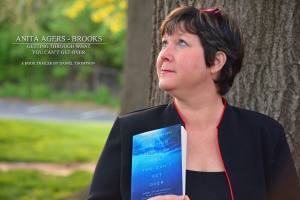
Getting Through What You Can't Get Over Book TrailerHe also included things I wouldn’t have thought of. A few touches of dramatic flair. Flipping through the pages of my book. Looking up toward Heaven. A closeup of me autographing. Little things people respond to. You can watch it here and tell me what you think.

Getting Through What You Can’t Get Over book trailer

If you’d like to create a great book trailer, and this area of creativity is not your forte, plus like me, you need to squeeze dollars, I have some suggestions:

  • Hire Daniel, he’s amazing!
  • If you live too far from Daniel, (I’m sorry!), find your own local creative, who’s building a photo/video portfolio, and willing to experiment.
  • Check with local colleges, or even high schools, asking the administration for referrals to a young, talented person who might do a great job.

Through the process, I learned secrets from a professional about how to create an enticing book trailer.  Slapping something together isn’t enough. Make sure it draws people in, and makes them want to read your book, not turn you off. I can’t take credit for mine, but I am happy with the outcome. It isn’t perfect, but in my opinion, it is enticing.

Have you used a book trailer? If so, what was your experience?

13 “Tells” of a Novice Writer

In the poker-playing world, professional card sharks have a term for a novice player who inadvertently gives away the cards he’s holding through some sort of gesture or tick of which he is unaware. The pros call it a “tell.”

pokerIn the publishing world, professional editors and agents look for the “tells” of a novice writer whenever they scan a manuscript. With practice, we can almost always pick out the amateur from the pro from reading just a page or two. Here’s a list of 13 Common “Tells” of an Amateur Writer that may give you an inside advantage at the publishing table.

  1. Too many clichés. If you find yourself using a common cliché–try changing it up for humor or effect. Instead of saying, “He marches to a different drum,” you might say, “She rhumbas to a different drum-ba.” You want to avoid cliches but they can also be springboards to creative alternatives.
  1. Too much telling, not enough showing. Use scene-setting, dialogue, metaphors and gestures to show your reader an emotion. Instead of, “She felt deep sorrow,” try instead, “She sat down, sighed heavily, staring out the window at nothing at all.  A slow trickle of tears turned to a river as her dam of resolve gave way to reality.”
  1. Too much preaching/didactic tone. Go through any non-fiction manuscript and take out words like “must” and “should” and any other words that feel like a finger-wagging nursery teacher who is scolding the reader.
  1. Sentences don’t vary in length and style.
  1. Manuscript is is too text dense.  Just looking at the page exhausts the eye because there are too many sentences crammed into one long paragraph, followed by another just as long.
  1. Page looks boring. There are not enough “reader treats” to keep today’s reader alert.   Especially in our current hyper-speed world, you want to make liberal use of shorter paragraphs and anything that breaks up and adds interest to the page.  Pull quotes, dialogue, lists, bullet points and stand-alone sentences here and there are some ways to keep the reader engaged.
  1. Dialogue is stiff and unnatural. The writer has not learned the art of professionally written dialogue. One sign of a pro is that they know to use a gesture to indicate the next speaker rather than over-using “he said” or “she said.” For example, rather than writing, “Joy said, ‘I love that crazy squirrel,’” a pro might write, “Joy laughed as she leaned toward the screen door. ‘I love that crazy squirrel.’”
  1. Main character is too unlikable or too perfect. Readers want to root for the protagonist so be careful not to make him appear either beyond redemption or too saintly. Make them flawed, human, and lovable.
  1. Too “Christianeze.” Christians are often blind to the phrases they’ve grown up using in church. Try sharing old religious phrases in fresh ways.  Instead of, “I’ve been redeemed,”  you might say, “I knew that God had taken the mess of my life and given me, in exchange, His love.”
  1. No transitions or weak transitions. This may be the #1 “tell” of a novice. You know what you are saying and where you are going, but your reader needs a very clear bridge from your former thought to the next or they will be confused and frustrated.
  1. Old-fashioned style. We see this in some classically trained, older writers who have not stayed current on how to grab the attention of today’s internet-savvy, fast-paced reader. Read popular blogs and note the style of writing that is reaching today’s generation of readers.
  1. Doesn’t use the art of “hooking the reader.” You don’t have long to grab the reader’s attention, so you want your first two sentences to be irresistibly compelling.
  1. Doesn’t end well. Pay attention to writers who end chapters or articles especially well. There is an art to tying up a chapter or a book. In fiction and non-fiction books alike, write a sentence at the end of the chapter that propels the reader forward, making it hard for them to put your book down. I often refer to the first paragraph when summarizing an article. (See example below where I will refer back to the “poker analogy” that started this post.)

By avoiding these common novice “tells” you will soon come across as a seasoned pro, and your chances in the game of publishing will improve considerably.

What other “tells” have you noticed that indicate an inexperienced writer?

24 Ways to Develop Your Muse

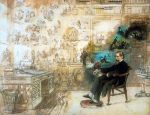
Dickens_dream
Charles Dickens’ Dream

The muse that lives deep in your subconscious is something of a sprite. You can write without her of course, if you don’t mind being methodical. But when the muse shows up, she takes your writing to a whole new level, offering plot surprises, adding in soulful wisdom you didn’t know you possessed, and giving your story a dreamlike quality.

The problem is that your muse is not easily tamed. She comes and goes at her own will. She is notoriously right-brained and knows nothing of schedules and deadlines. And yet, like the stray cat in your neighborhood, she can be lured in.

Over the years, I’ve learned a few things that work with my muse. Your muse, I’m sure, has his own personality, so your mileage may vary.

  • Let your mind drift. When your guard is down, as you take a shower, walk the dog or do dishes, great ideas will surface.
  • Ask yourself tough plot questions before you go to sleep. Your mind will get to work on it without your conscious self even being aware.
  • Flirt with writing challenges that are too difficult for you. Your muse will take the dare, if you give her time.
  • Explore scene kernels. Take a snatch of dialogue or a small piece of action and set your mind to simmer for a few days before trying to expand it into a full-fledged scene.
  • Fire your internal editor. You can invite him back later once your muse has completed her work.
  • Release guilt, self-doubt and worries. The muse likes to play, so be a child at play.
  • Read poetry. It will enrich the word creator within you.
  • Write lists of random evocative words. (See above).
  • Take entire writing days. Send the kids to Grandma’s. Take a vacation from your day job. The longer you immerse yourself in the writing, the more your muse will surface.
  • Take breaks from the writing. Muses need their rest too.
  • Write dangerously. Forget the market. Forget your audience. Break a few conventions. You can always scale back later, but a few writing leaps will give your muse room to expand your story.
  • Do your research. Whether you’re writing about a Viking ship or a modern day heart surgeon, your muse can be more creative if she’s well-informed.
  • Say no. No to committee meetings. No to the internet and solitaire. Writing time is golden, and it has to be protected.
  • Follow rabbit trails. Leave the outline, and see where the what-if leads. Sometimes the muse just knows.
  • Sleep well. A rested muse is more creative.
  • Conversely, stay up late. If you’re on a roll, don’t let the muse leave.
  • Do something you haven’t done before. If you’re not a singer, sing out loud. Cook exotic meals. Dance. Hike. Learn origami. Trying something new, especially something physical, releases another part of you.
  • Let your muse free while you immerse yourself in a new book or movie. She’ll extract ideas that become totally original when they mix in with your story.
  • Put it in writing. Notes have a way of kick-starting your subconscious into action.
  • Twist the story without a clue of how it will resolve itself.
  • Go outside. Sunlight and wind and grass invigorate us, and thus our stories.
  • Live mindfully. Taste what you eat. Turn off the TV and listen to the sounds in your home. Feel the words on your tongue as you talk. Bring your senses alive and it will build new grooves into your story.
  • Be patient. If your story is in knots, work on some other aspect. Meanwhile, your muse will be untangling the story threads under the surface.
  • Most of all, don’t try too hard to design the first draft. Ride the story’s waves. Control has its place, but the stories with the biggest hearts come from a place of freedom.

There is more to the mind than we know. It has multiple levels and works in ways we don’t always understand. Give those deeper levels permission, and your muse will work hard for you.

How a Non-Writer Like Me Got Published (Part III)

(Continued from Part I and Part II)

What made me think I could write a book? I mean, really. Book writing is for experts… for people who know things. Important things. My friend’s critical feedback on the early chapters of my manuscript only served to confirm what I already believed to be true: Who would care what I had to say, or if I even had the right to say it?

The wind had been knocked from my sails and I saw no point in continuing my brief writing career.

Yet in the midst of the doldrums, I couldn’t shake the memory of that moment with God many months before. “Write a book about the gifts you were given,” I heard him say in my office. If that was really God, maybe He knew something about me that I didn’t. Maybe He had a reason… a plan.

It was just about this same time another friend of mine traveled to Israel on vacation. She invited me to write a prayer on a slip of paper for her to place between the ancient stones in the Wailing Wall in Jerusalem. I’ve always wanted to do this myself, but sending my prayer with her… a praise, really… was the next best thing to being there. In my note, I thanked God for the time he met me in my garage, and ultimately delivered my daughter, Annie, from the bondage of meth addiction. He had restored our family, and I still could scarcely wrap my mind around it.

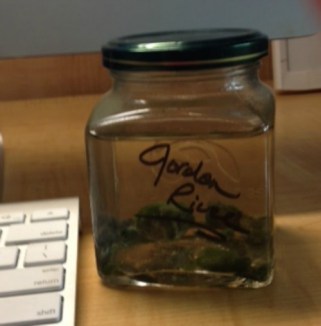
Image, Jordan RiverMy friend also asked if there was a souvenir I might like from the Holy Land.

“So, um… yeah,” I replied. “Could you please bring me some of the Jordan River? Just a cup or so will do.”

Within a month, precious holy water and a few tiny river rocks had a new home on my
desk, right next to the computer screen. I transferred the water into a small Manzanita olive jar and labeled it “Jordan River” in black felt tip marker.

It was as if God’s presence had returned to my office, and I again found myself back in the business of writing. I needed feedback though. Professional feedback this time. I knew no writing professionals per se, and no one in publishing, yet my new neighbor, John Vawter, had self-published a book… about addiction no less. His book, Hit By a Ton of Bricks, had been in my reading arsenal when Annie was on the streets! John had a friend-of-a-friend with an editing business here in Bend, a fellow by the name of James Lund. He’d once worked for Multnomah Publishing in Sisters, Oregon, and became a freelancer when Random House acquired the company and moved it to New York City.

“Am I delusional to think I can do this?” I asked James Lund when we first spoke early that March. “I mean, is what I’ve written any good, or am I completely wasting my time?”

Jim was working on a project with a tight deadline but said he could give me a couple of hours in about two months.

Two hours in two months? He already sounded too important for a novice like me.

But I did hear from Jim two months later, at which time I sent him my story’s table of contents, two chapters, and a check for his time. A week later, his feedback stunned me. “You’re not wasting your time… keep writing. And I don’t think you’re going to need much help from me.”

Initially, my inner Woody Allen lamented that this James Lund person must not be very good at what he does. However, I secretly delighted in the apparent vindication from my friend’s critical review. I confess to skipping through the house chanting, “neener, neener, neener.”

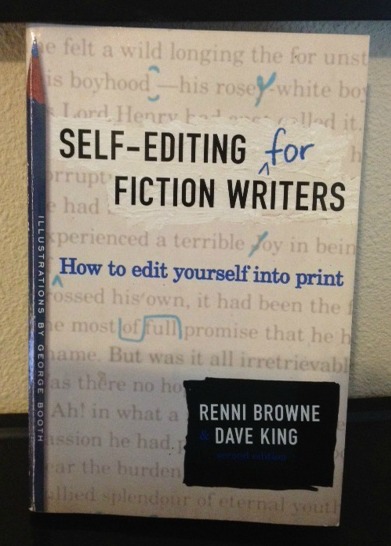
Jim and I agreed to reconnect in five months, at which time I was to have an entire first Image, self editing bookdraft ready for his review. Jim also had a few tips for me. He suggested I read Self Editing for Fiction Writers by Renni Browne and Dave King.

It will help equip you with some fundamentals that will improve your writing,” he said. “Try inserting ‘beats’ in your dialogue to make it more interesting. You also want break up some of the narrative by creating ‘scenes.’ Have you ever heard the term ‘show don’t tell’?”

“Jim… what’s a ‘scene’?”

(Please stay tuned for the conclusion in Part IV, when I go from clueless to published.)

Sharing Insights Through Stories

I first learned the value of stories in sharing insights through public speaking. A fascinating story can captivate an audience, build rapport, illustrate an important point, and make the speaker’s message memorable. In writing, an appropriate story can keep a nonfiction book from becoming dull, and teach truths about life in a work of fiction. So, what makes a good story?

Opened magic book with magic light

1. Vivid and Sufficient Details

In reading along with my daughters several children’s books awarded the Newbery Medal, I found myself transported to a different time and place by the skillful writing of the authors. In these books, the authors provided enough details to help the reader enter into the world described in the book. In describing a food foreign to most American readers, one author provided such vivid descriptions of the taste and smell that I felt as though I, too, was sitting down for dinner next to the characters in the story. In any story, too many extraneous details can cause the impatient reader to start skimming the page to the next section. These award-winning books had the proper balance of information and brevity.

2. Relevance

For a nonfiction writer seeking to illustrate a certain point with a story, relevance is vital. To illustrate the author’s message, the characters and plot must be relevant to the theme of the book, the intended audience, and the point to be made. In writing my nonfiction book, Questioning Your Doubts: A Harvard PhD Explores Challenges to Faith, I learned to edit out parts of a story that slowed down the reading of a passage without further elucidating the concept I was illustrating. In fiction, story lines that do not further the plot may be interesting, but they may also confuse the reader and become a distraction that takes away from the flow of the book.

3. A Story Arc

All stories, even short illustrations contained within one paragraph, need to have a story arc. We need to meet the character or characters in their everyday setting. Next, we learn of an event that brings a challenge to these characters and starts off the story. Then we must see the character(s) grow, learn something new, overcome a hardship, resolve a conflict, or make a difficult decision. Finally, we need a sense of closure as the changed character(s) resume everyday life in a new set of circumstances, perhaps a bit wiser for the experience.

Knowing what elements to include within each section of the story arc is an art. Timing makes the difference between a forgettable story and one that drives home the author’s message. Sometimes I find that reading a passage aloud can help me identify which words can be deleted and what sentences should be smoothed. Feedback from beta readers also can be useful for determining if a story succeeds in illustrating your point.

As a reader, I remember the insights I glean from stories more than those presented through statistics, lists of information, and persuasive language. When writing, I include stories for my readers to make it easier for them to process the insights I hope to share with them.

What do you think makes a good story?

Don’t Take My Advice

IMG_2494

It’s awkward offering advice in a blog post when your advice is to ignore the advice in blog posts.

But that’s exactly what I’m proposing for fellow writers — at least sometimes.

The problem isn’t that there’s a lack of good advice in such posts. I love nothing better than reading some “Ten-Ways-to-blah-blah” post and finding the suggestions so helpful that I immediately implement half of them.

The problem is that, in this age of easy information, we don’t think enough for ourselves. That we see ourselves as consumers of others’ creativity and not inventors of our own. That we leave too much of the imagination to someone else.

Long ago, I had the privilege of writing a piece for Sports Illustrated on Dick Fosbury, the 1968 Olympic high-jump gold medalist. “Foz,” as we Oregonians dubbed him, was a gangly, uncoordinated high school kid and self-admitted high-jumping failure.

Then he got the audacious idea to scrap the traditional “Western Roll” style of jumping. Instead, he did something nobody had done before: he soared over the bar backward, face to the sky, legs bent as if dangling over an exam table.

The short-term results? Laughter from his teammates. The long-term results? He became the greatest high-jumper in the world.

By literally turning his back on the establishment, Fosbury revolutionized high-jumping; since 1968, virtually all jumpers have adopted his style.

That never would have happened had Fosbury not dared to be audacious and think for himself instead of simply settling for “the way everybody else does it.”

But isn’t that how most of us write, edit, and market — based on others’ advice?

It is for me. Then, every now and then, desperation—the same thing that fueled Fosbury’s “about face”—triggers my own creativity.

The rough draft of my nonfiction book about the first World War II nurse to die after the landings at Normandy had become so unwieldy I couldn’t see the forest for the trees.

I’d written the 70,000-word book on an 11-inch laptop and I realized I had little idea of what it was long on and short on.

Conventional wisdom whispered: Let a handful of perceptive editors weigh in—and, ultimately, I would do that, of course. But I wasn’t ready for that step just yet. I needed some way to see into my story. To be in my story. And then the idea struck.

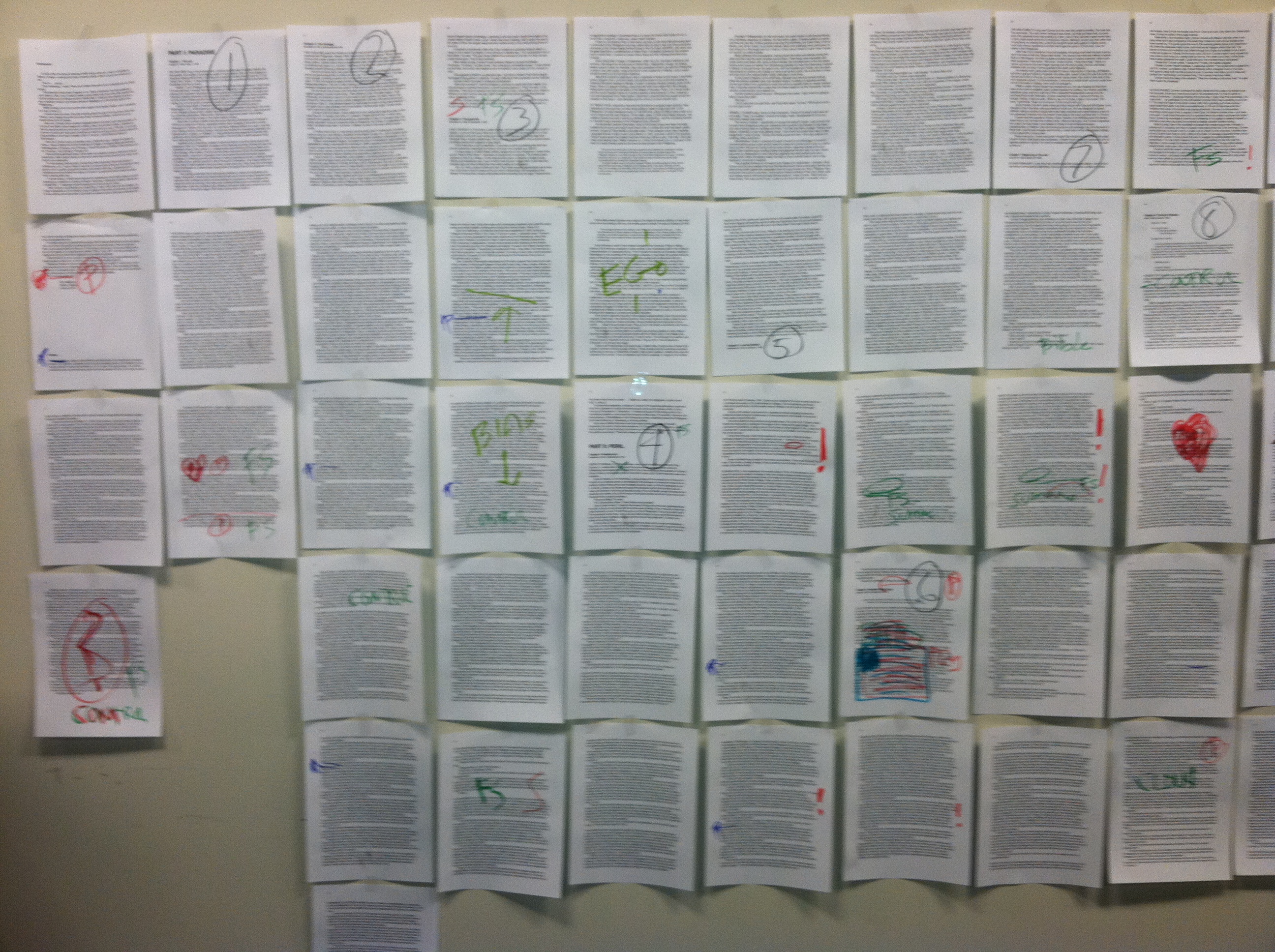
I printed out the book, double-spaced. I used colored felt pens to mark nuances I wanted to make sure were spread consistently throughout the book: dialogue, foreshadowing, action, what war smelled like and sounded like, in addition to the standard “what it looked like” perspective. And more.

A newspaper columnist at the time, I then slapped all 250 pages on three walls of our office’s photo studio—picture a dark-walled racquetball court—and, bingo, I was, indeed, inside my story. Literally.

With this perspective, I could see I had Mojave Deserts of dialogue dearth. I went chapters without letting readers hear the sounds of war. I had some chapters far too long, some far too short. I found all sorts of adjustments that needed to be made.

Never mind that nobody else but me could decipher my felt-penned hieroglyphics. In half a day—and despite a few smirks from newspaper colleagues—my mind’s focus went from fuzzy to sharp on what my book needed.

The experience opened me to other self-invented ideas to help my writing, from walking around the block while doing long edits (exercise, baby!) to discovering the gold mine of information that used bookstores offer and the Internet never will.

Among the best lessons I learned while doing the 452-mile Oregon portion of the Pacific Crest Trail (Cascade Summer) was this: hike your own hike.

And so it should be with writing. Seek wisdom from others, sure. But don’t be afraid to seek it from yourself. Like Fosbury, don’t be afraid to be a tad audacious and turn your back on the establishment.

There. Now, feel free to ignore all the aforementioned advice and come up with something better yourself.

WordServe News: May 2015

Exciting things have been happening at WordServe Literary!

On the final post of each month you’ll find a list of Water Cooler contributors’ books releasing in the upcoming month along with a recap of WordServe client news from the current month.

New Releases

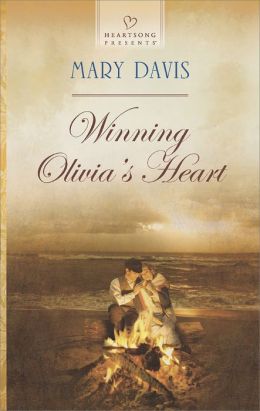
Mary Davis released Winning Olivia’s Heart with Heartsong Presents, the third book in9780373487837_p0_v2_s260x420 her series with Heartsong.

*************************************************************************************************
Robert Morris, with agency client Marcus Brotherton released Truly Free with Thomas 9780718011109_p0_v3_s260x420Nelson publishers.


************************************************************************************************

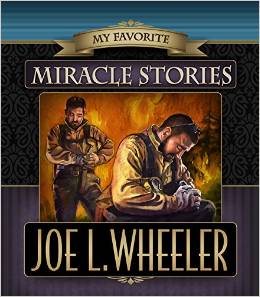
Joe L. Wheeler released My Favorite Miracle Stories with Pacific Press.download


New WordServe Clients

Jared Boyd and Karon Phillips signed with Wordserve Literary!

What We’re Celebrating!!

Cheri Fuller was interviewed on the Focus on the Family Radio Broadcast. Listen here. 

Lauren Scruggs and Lisa Velthouse’s book Your Beautiful Heart came in at #1 on the NYT Bestseller list for Fashion, Manners, Customs. See the full list here!

Betsy Duffey and Laurie Myers (The Writing Sisters) are a finalist in the 2015 Selah Awards for The Shepherd’s Song in Women’s Contemporary Fiction.

Margot Starbuck is a finalist in the 2015 Selah Awards for Not Who I Imagined in Nonfiction Christian Living.

Shellie Tomlinson is a finalist in the 2015 Selah Awards for Heart Wide Open in general nonfiction!

The Anatomy of a Scene

Learning to craft good scenes for your novel is a foundational tool in your writing tool kit. Think of the scenes as the building blocks you use to construct your masterpiece. If they’re faulty or incomplete, what will the building look like?

SceneBut there are as many blog posts about writing a scene for your novel as there are varieties of ice cream sundaes at your favorite summer hang out.

So why am I writing one more?

Because when it comes right down to it, writing a scene isn’t as hard as it seems. You only need to break it down into four major parts:

Beginning: When the scene begins, does the reader know when and where this is taking place, and whose point of view it’s in? If not, you’re in danger of leaving your reader stranded in the land of floating heads. YOU may know exactly what your characters are seeing, feeling, etc., but does your reader?

Middle: The midsection of the scene should take up the most time. A sentence or two into the scene, after you’ve given your reader the information they need, start increasing the tension and continue to the turning point.

The turning point is the main purpose for the scene. It’s where the reader learns something new about the character, or the character learns something new about himself or someone else, or a decision is made.

There are a lot of different ways this can be played out, but the main thing is to make sure the scene contributes to the flow of the story and moves things forward.

End: Does the scene resolve itself? The character(s) involved should make a decision or take an action as a result of the turning point.

And finally: Is there a hook at the end of the scene that will make the reader continue on to the next scene? Without a hook leading your reader further into the story, there is no reason for them to turn the page.

And here’s a homework assignment: Look at a scene in your favorite book. Does it have all four of these elements in it? What exceptions did the author make, if any? Now do the same with one of your own scenes.

What did you learn?


I am a Writer! (Aren’t I?)

One of the things I hear aspiring (and, remarkably often, seasoned) writers assert over and over is how difficult it is to say the words, “I am a writer.” I know from personal experience this is true. I have one book published and a contract for three more. I have an agent and contribute regularly to three different blogs. I’ve been a finalist for three national writing awards and have written a monthly column in a newspaper. And, while I do occasionally allow myself to say those words out loud, they still fit me like a pair of shoes that is a size or two off.

woman-41201_640
So how do you know if you are a writer? Two camps have formed in response to this question. On the one side are those who, upon hearing the lament from someone that they aren’t sure if they’re a writer or not, sling an arm around the person’s shoulders and say, “Do you write anything? A blog, a diary, grocery lists? Then yes, you are a writer.”
In the other camp, and way over at the opposite end of the spectrum, are those who maintain that one cannot possibly be considered a writer unless they have at least a couple (and preferably more) royalty published books and have sold a certain number of copies – in the thousands at least, if not the millions.

In my opinion, the answer to the question lies somewhere in the middle. As popular as it is to say, I can’t buy into the argument that scribbling thoughts or ideas down on paper automatically makes you a writer any more than whipping off a hand-drawn map to your house for a friend makes you a cartographer.

But neither can I wholeheartedly subscribe to the view that you must have written a few books before you earn the right to describe yourself that way. There are countless other valid, viable writing platforms that should not be dismissed with such a cavalier attitude.
I think the problem with defining the term either of those ways is that being a writer is less about what you write and far more about why you write.

If you only write to remember a story someone told you, or a dream you had, or because your agent insisted that since you are a speaker or a guru of some kind you should have a book to push at every appearance, I would venture to suggest that you are not a writer. Everyone is called to perform various tasks on a daily basis that, on a larger scale, could become a career. Take a mother who has just cleaned out her child’s scraped knee, or a man who parked the barbeque too close to the wooden deck and had to toss water onto a small flame, or the brother who helps his younger sibling with his math homework. These people are not now automatically a doctor, a fireman and a teacher. More is obviously required.

The simplest answer is that a writer is someone who can’t not write. (And who, while he may agree wholeheartedly with that statement, will still wince at the double negative.)
As Jeremiah, the weeping prophet, once contended, “But if I say, ‘I will not mention his word or speak anymore in his name,’ his word is in my heart like a fire, a fire shut up in my bones. I am weary of holding it in; indeed, I cannot.” (Jeremiah 20:9)

That, right there, is the definition of a writer. One who knows what it will cost to pursue that calling—heartache, loneliness, rejection, guilt over the lack of attention given to family and friends, and the thrill of being patted on the head while people say things like, “Yes, yes, but what’s your real job?”—and who doggedly, often desperately, pursues it anyway. Not despising any of these things, but embracing them, knowing they are all part of the incredible journey. And knowing too that the sheer misery you may feel at times is more than compensated for by the intense, indescribable joy of releasing the words God has given you—the fire shut up in your bones, if you will—onto paper for others to read and be impacted by.

If that description resonates deep inside you so strongly it brings tears to your eyes, then I sling a virtual arm across your shoulder and affirm that yes, heaven help you, you are a writer.

WHY are you Writing?

Today, the WordServe Water Cooler is pleased to host guest blogger Kim Zweygardt. Kim recently attended the Re:Write Conference and is here to give us some insight into what she found so valuable about this conference.

Welcome, Kim!

Writing2“I know I can write.”

“I am a writer.”

Writing is more than something I enjoy or can do well. (All those “A’s” in English Comp surely count for something.)

Writing is my calling.

Even so, after a blistering critique in 2014, I spent more time not writing than writing. Doubt crept in, undermining my call.

“I think I can write.”

“At least I think I’m a writer.”

I floundered, not sure how to regain the confidence to write. What would it take to jump start the flow of words onto the page?

In February, I found my answer in Austin, Texas when I attended a different kind of writer’s conference. Re:Write—The Ragged Edge “aims to tackle issues that writers face every day, offering guidance, insight, and a hefty dose of hope along the way.”

The Ragged Edge conference was filled with power hitters. Some I knew and had heard before: Ted Dekker, George Barna, Jim Rubart, Susan May Warren, Mary Demuth, Sandi Krakowski, Mark Batterson.

Others were new to me: Rusty Shelton, Claire Diaz-Ortiz, Chad Allen, the delightful “tour guide” to the weekend–Julie Carr, Rachelle Dekker, Kevin Kaiser, Ruth Soukup, Derek Webb and the lovely Esther Fedorkevich who founded The Fedd Agency and hosted the conference along with author Ted Dekker.

As I listened, I had my mind bent over and over again.

You see, it wasn’t so much about the how of writing but much more about the why. It wasn’t so much about rules for success but in how we see success. It wasn’t so much about the bad news of the economy and publishing and more e-books and less “real” books and Author Chicken Little crying that the sky is falling and much more about the Good News of Who we write for in the first place!

It made such a difference to me that if I hit the lottery or better yet, had a wildly successful book that made me a bazzilionaire, I would call all my writer friends who are struggling and feel alone with their dream or feel they have been put on the shelf by the times or the particular, maybe-not-mainstream story they have been given to tell, the one that burns in their heart to get out onto the page and reserve their place for the 2016 Re:Write Conference.

Registration? On me! Travel expenses? On me! Need a little cash for BBQ at the airport? On me!

Oh, to dream!

But, just in case I don’t hit the lottery or the NY Times bestseller list, you could start saving now and I’ll see you there.

To whet your appetite, here’s a mash-up of what the speakers said in all their different ways.

Don’t be afraid!

Step out of the shadows and take the plunge!

You are not alone!

You are the Light of the World and no one can tell your story but you!

Don’t listen to the nay-sayers!

Write well! Write compellingly! Go deep! Lean on Jesus!

Write as an act of worship and as a spiritual discipline because He has called you to it. And if you are called and you don’t write, you are disobeying the One who has called you.

So now I write. Because I am a writer.

***********************************************************************************************

KimZweygardtKim Zweygardt always knew she wanted to be someone special.  Her heart’s desire when she was 7 was to be a famous ballerina but when she read their toes bled from dancing on them, it became a less desirable career choice. Then Kim decided to be a famous lawyer solving mysteries and capturing the bad guys just like Perry Mason, but as she got older she discovered sometimes it was hard to tell just who the bad guys were.

Instead Kim chose a career in medicine practicing the art and science of anesthesia as a Certified Registered Nurse Anesthetist in rural Kansas, Colorado and Nebraska.

Kim is married to Kary, the man of her dreams, who has done a fabulous job of making all her dreams come true. They have three children but an empty nest and enjoy conversation with friends over good coffee and great food. They enjoy travel, the arts and taking a nap.

Member American Christian Fiction Writers, International Speakers Network, www.bookaspeaker.netwww.womenspeakers.net