7 Tips about the Basic Needs and Stressors of Introverts

Image/karenjordan.netThank you, Jesus—I’m home again!

A few weeks ago, I found myself surrounded by extroverts, enjoying their confidence as they absorbed energy from all who surrounded them at a publishing event for Christian writers.

And all the activity almost sucked the life out of this introvert! I’m still exhausted.

Thankfully, my extrovert travel companion understood the strengths and weaknesses of an introvert, even though I’m sure she tired from dragging me out of my comfort zone.

Ever wondered what makes an introvert tick? I don’t have to look beyond my own mirror to answer that question. So, I hope the following tips help you understand some of the basic needs and stressors of introverts.

1. Personal space energizes introverts. And when we get stressed out, we need to be left alone. Being in crowds drains us, so we often need to find some alone time to recharge our batteries.

2. Extroverts often misunderstand the need for personal space, and introverts tend to be more withdrawn at times. So, they might need to come out of their caves and share their perspective with those who might misinterpret their need for solitude. And sometimes, they might need a little motivation to abandon their comfort zone.

3. Social situations routinely cause grief for introverts, as they struggle with small talk with strangers. They appreciate friends who understand and encourage them in stressful social settings.

4. Networking can frustrate introverts who aren’t prepared for that kind of interaction. Pitching new projects to a publisher at large events can be an overwhelming task for introvert writers. So, practicing their pitches with other writers can boost their confidence.

5. Focus can also challenge introverts since they tend to be distracted in intense environments. They may need to consider taking a few tips about planning schedules and sticking to deadlines from their more organized friends.

6. REST is a basic need for everyone. Facing my own weaknesses proved to be another opportunity to utilize my prayer strategy of REST: Remember, Exalt, Surrender, and Trust, based on Philippians 4:5-7.

. . . The Lord is near. Do not be anxious about anything, but in every situation, by prayer and petition, with thanksgiving, present your requests to God. And the peace of God, which transcends all understanding, will guard your hearts and your minds in Christ Jesus (NIV). (Phil. 4:5-7 NIV)

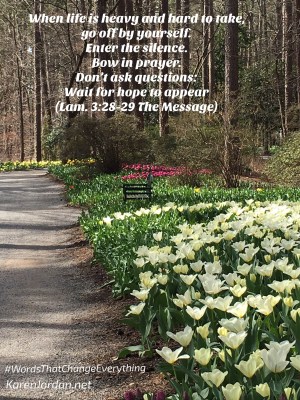
7. Prayer. During my worst moments under the stress of over-stimulating social situations and networking challenges, I searched for some personal space, and put this prayer strategy from Lamentations 3:28-29 into practice: “When life is heavy and hard to take, go off by yourself. Enter the silence. Bow in prayer. Don’t ask questions: Wait for hope to appear” (The Message).

Remembering and focusing on the presence of God enables me to exalt his Word over my circumstances, surrender my weaknesses and burdens to him, and trust him to guard my heart and my mind with his peace.

Are you an introvert, living in an extrovert’s world? What strategies help you when the energy of others is zapping the strength out of you?

And the Tweet goes on…

Red HotA few months ago, I enthused in this space about a book I’d read at my agent’s suggestion. Now I’m going to give you a follow-up, because reading Red Hot Internet Publicity has truly changed my marketing game; unlike a lot of books that sound great and helpful while I’m reading them, RHIP is proving itself to be one of those books that truly make a difference in my career. In other words, its tips WORK and you can actually DO them.

(Or am I the only person on earth who finds it difficult to implement ‘great ideas’ that use apps I can’t understand, or require more financial investment when my writing income is already in the red, or simply involve too many steps to even remember?)

This is what I’ve accomplished since my post “Learning New Marketing Tricks” appeared here two months ago: I’ve more than doubled my Twitter followers from 217 to 500+ by discovering new audiences on this one social network, and my exposure (impressions) has increased tenfold!

twitter-bird-light-bgs.pngThe route I’ve taken involves the RHIP suggestion to engage in group chats, which has introduced me to new contacts with similar interests. Even just a few Tweets back and forth produce new followers, and sometimes that generates ideas for writing posts on other networks. Perhaps even more significant is my new habit of scrolling every day through the topics that are currently trending on Twitter. I find a few to which I can contribute original Tweets, and then comment on others in that stream. Again, it only takes a few minutes, but it always generates new followers.


Finally, I’m insistent on using hashtags with every Tweet I make, and the more hashtags, the more likely it is that I’ll reach into new markets. Before I started focusing on Twitter, my tweeting impact was dismal – maybe making only a couple hundred impressions (read that as ‘your name showing up in the Twitter universe’) a week. These days, I’m getting a thousand impressions a day – that’s a lot of times my name is showing up in the Twitter stream, and that connects me to large groups of people I might otherwise not have encountered. Some of those people have now subscribed to my newsletter and bought my books; by following them back, I’ve found more threads of conversation and topics in which I can engage. Throughout it all, I constantly remind myself of my brand – of my unique voice – and make sure my Tweets reflect that. So far, I’m delighted with the results.

Hourglass --- Image by © Royalty-Free/Corbis
Hourglass — Image by © Royalty-Free/Corbis

So delighted, in fact, that I’m thinking I should double my time on Twitter…from 30 minutes a day to 60 minutes.

That’s right – 30 minutes a day have yielded me a breakthrough in exposure, and since getting my name and brand ‘out there’ is so important for making sales, those 30 minutes pack more of a marketing wallop than any other 30-minute marketing I can do.

Isn’t it great when something you try really works?

Excelling at the Craft of Writing… A New Book!

Here at the Water Cooler, writers are dedicated to helping each other grow in their craft. The community that has grown over the past five-plus years is both practical and essential: it enables writers to make connections with others on similar writing journeys; it encourages creativity, collaboration, and growth; and, perhaps most significantly, it pushes each of you to become better writers.

Who couldn’t do with a little more of that?

Excelling-at-the-Craft-of-Writing-Cover

In order to bring the ideas and content of the Water Cooler to the widest audience, we’ve embarked upon an exciting project: a three-part series of published books, The Best of the WordServe Water Cooler. We’re thrilled to announce that the first book, Excelling at the Craft of Writing: 101 Ways to Move Your Prose to the Next Level, is now available in print and ebook! This collection of 101 easy-to-read, engaging essays covers a range of topics that include organizing and outlining your work; creating vivid characters and dialogue; and fine-tuning your language, style, and voice. With proven advice from more than thirty WordServe authors, Excelling at the Craft of Writing moves from the first seeds of starting your writing project up to the last steps of creating a proposal and pitching your work to agents. It’s going to be a must-have resource for writers at every stage!

Many of you are already familiar with this book, having generously allowed us to include one or more of your posts in the manuscript; many more of you will be contacted for inclusion in the upcoming two books, on marketing and the writer’s life respectively. We hope that you’ll all want to participate in helping to promote the books, which should bring the work of the Water Cooler—and all of you—to a wider audience.

That’s why we’re offering a special promotion for Water Cooler readers. If you’re willing to promote Excelling at the Craft of Writing by advertising it on your site with a widget or dedicated post; tweeting it out to your followers; or posting on Facebook, we’ll send you a FREE digital version of the book to read on your e-reader device.

If you’re willing to help promote, please contact keely@wordserveliterary.com to tell us how and to receive your free book.

We’d also like to take this opportunity to thank all of the writers who allowed us to include their work in Excelling at the Craft of Writing, as well as all of you who have written and continue to write for the Water Cooler each month. We couldn’t do it without the dedicated involvement of so many great writers, and the blog’s success is a testament to your thoughtful, incisive, and intelligent posts each week. Thank you for being a part of this community!

–The WordServe Team

Enjoying Variety in Writing

Mixed fruits and vegetables at organic fair

Just as a wide selection of fruits and vegetables makes for a nutritionally balanced diet that promotes good health, variety in writing can improve the quality of prose a person produces. While specializing in one type of writing allows a person to focus, I believe a writer can benefit from tackling different lengths and styles of writing assignments. Here are three ways that writing articles helps an author of a book:

  1. Article writing teaches clarity. The limited word count of an article trains an author to think clearly and write concisely. While an author of a book can define and develop his or her message across many chapters, a writer preparing an article must get the job done in less than a few pages. I found that article writing for journals and magazines helped me winnow my words and learn to support my key ideas with only the strongest illustrations from the most reliable sources. Article writing also honed my ability to write an outline – a skill useful for writing book proposals.
  2. Article writing permits creativity. If you want to test an idea or a style, find a suitable publication and write a query to the editor. If you succeed, you will probably have between 1000 and 2500 words to try out your concept. If you discover a great new topic that deserves further exploration, you can follow up by writing a book proposal. If you find that you can express all your thoughts on the topic within an article or two, you have broadened your horizons without the long commitment that book writing entails. Move on and try another topic until you find your niche. Working with a variety of editors will improve your writing career. You will gain insights and learn new techniques from each editor.
  3. Article writing expands an author’s audience. To be granted the privilege of publishing a book, you need a platform. To maintain book sales, you need to connect with readers. Article writing creates the platform a novice writer needs in order to obtain that first book contract. Article writing also helps a seasoned author keep in touch with readers. Choose publications most likely to interest your potential readers, but, remember, if you write for new publications, you will expand your audience. Online publications or print publications with an online presence create opportunities to share your work across social media, a bonus for an author trying to reach more people.

I have learned to enjoy variety in writing, appreciating the different approaches to communicating to the specific audience for a given publication. Article writing gives me the opportunity to address a wider variety of issues than I could cover through book writing alone. What types of writing have shaped your writing career? What have you learned from writing beyond the pages of a book?

WordServe News: July 2016

Exciting things have been happening at WordServe Literary this month!

On the final post of each month you’ll find a list of Water Cooler contributors’ recently released books along with a recap of WordServe client news.

New Releases

51CZjAw6uPL._SX326_BO1,204,203,200_Julie Cantrell re-released Into the Free and When Mountains Move with Thomas Nelson. Into the Free, now a New York Times Bestseller, follows the story of Millie Reynolds in Depression-era Mississippi as she tries to break her family’s longstanding cycle of madness and abuse. When Mountains Move takes up the story as Millie prepares to get married and move to the wilds of Colorado–only to find she can’t truly leave her old past behind.

demarino


Rebecca DeMarino 
published To Follow Her Heart, the concluding volume of her Southold Chronicles Series, which plunges readers into a 17th-century world of tall ships, daring journeys, and yearning hearts.


097740Cheri Fuller released Mothering by Heart with Barbour. Through engaging short stories, inspirational reflections, Scripture, creative ideas, and thought-provoking questions, this short book encourages mothers to relax, embrace their children’s individuality, and rely on God for the wisdom they need.

Excelling-at-the-Craft-of-Writing-CoverGreg Johnson, along with many Water Cooler contributors, released Excelling at the Craft of Writing: 101 Ideas to Move Your Prose to the Next Level with FaithHappenings Publishers. The easy-to-read, engaging essays cover a range of topics, from organizing and outlining your work to creating powerful characters and dialogue to fine-tuning your language, style, and voice. The perfect place to start for any writer hoping to reinvigorate their writing!

51PHIOI-G4L._SX322_BO1,204,203,200_Sarah Parshall Perry released Mommy Needs a Raise with Revell. Women know that raising children will be different from climbing the corporate ladder. But nothing can truly prepare them for the mind-muddling world of motherhood. With her signature wit, lawyer-turned-full-time-mommy Sarah Parshall Perry invites mothers to join her as she gives up one thing to get something better–and ends up finding out what she’s worth along the way.

memoryJordyn Redwood released Fractured Memory with Love Inspired Suspense. United States marshal Eli Cayne saved Julia Galloway’s life once…and he’s prepared to do it again. But his task would be easier if she could remember him—or the murderer who almost put her in an early grave and seems to be hunting her once more. Fractured Memory keeps readers on the edge of their seats as the two work together to confront Julia’s past—and the feelings growing between them.

518qxTPFZ-L._SX355_BO1,204,203,200_Mike Yorkey released Playing with Purpose: Tackling the Truth with Barbour Books. Filled with inspirational readings that draw spiritual points from players and coaches, important games throughout football history, and teams spanning the NFL, college, and high school, this book will challenge and inspire you to draw wisdom from both the game and God’s Word.

New Contracts 

Carole Avriett signed with Regnery Publishing for her new book, The Boys from Coffin Corner. Releasing in early 2018, it will tell the true story of a WWII B-17 crew shot down over German-occupied France and the unlikely survival of all ten men against incredible odds.

Jan Drexler signed a 3-book deal with Love Inspired for a series of Amish novels, The Prodigal’s Brother, His Chosen Family, and His True Path, for publication in 2017 and 2018.

Marjorie Jackson signed with Barbour for her novella Devoted, for publication in 2017.

Jordyn Redwood signed a two-book deal with Love Inspired Suspense for The Doctor’s Redemption and The Doctor’s Spy, due to be released in 2017 and 2018 respectively.

Christopher and Michael Ross signed with Harvest House for Finding Faith in a Minecrafty World, a devotional that guides young readers through the fantastic landscapes of Minecraft, revealing clues for a stronger faith and much more fun in the real world.

New Clients

Carey Lewis signed with WordServe this month. Welcome!

balloons-25737_640

What We’re Celebrating

Cristóbal Krusen’s film, Sabina K., received a Special Jury Mention at the Minneapolis St. Paul International Film Festival!

Seven Reasons to Build a Launch Team

Image/WordsthatChangeEverything_quote09When I first considered building a Facebook Launch Team for my Words That Change Everything book launch, I had hoped to enlist a few other writers or bloggers. And after participating in several other launch teams, I had many great ideas from thos experiences.

Although several seasoned writer and blogger friends volunteered to help, some non-writer friends and relatives asked to joined my book launch team.

I received them with open arms. And they have been a tremendous blessing during the book launch process.

You may ask, “Can people with little or no clout online be an asset to my launch team?”BookCover/WordsThatChangeEverything

Yes! You bet! Below I’ve listed seven reasons why I believe my Words That Change Everything Launch Team worked.

  1. Everyone has a tribe. Even my youngest grandson Ben has his tribe of young friends. And although Ben isn’t online yet, when Ben talks, people listen!
  2. Friends and Family. Your friends and family care about your success. And if they volunteer, they will be passionate about supporting your project.
  3. BookCover/RESTNotesGiveaways. Freebies go a long way! For my book launch, I offered RESTNotes: 15-Day Devotional Guide to Words That Change Everything. My tribe embraced this eBook with excitement and gratitude.
  4. Shareable images also proved to be a hit. The marketing team at Leafwood publishing provided awesome shareable images with quotes from my book. And I also made a few images to share with readers, using some of my own photos.
  5. Free books! I also expressed my appreciation to my launch team by sending them a gift of my book, Words That Change Everything.
  6. Facebook posts. My team was thrilled with their signed copy of my book. And many of them posted pictures of my book cover on their social networks, stirring some interest with their online friends.
  7. Prayers. Some of the most valuable resources of my launch team proved to be their prayer support, encouraging words, and honest feedback.

Do you have a book launch coming up? I hope you’ll consider building a launch team on Facebook. It worked for me!

What strategies have worked for you in your book launches?

What Are You Afraid to Write?

Fear-Woman

I stumbled into the creative writing class fresh out of cancer treatment, a 48-year-old woman uncertain of her future. I had vague ideas about writing, but I was not even sure who I was anymore.

Cancer had taken all my sentences and scrambled my story.

I didn’t introduce myself as a pastor’s wife. I was Lynne (with an e) on a level playing field with the other college students.

I soon discovered that wearing jeans and a t-shirt like everyone else in the room couldn’t quite cover my wounds. The students wrote of true love and vampires and distant galaxies far, far away and I stared at blank pages. They were 18 and 19. All passion and future.

I was scars. Battle-fatigued. Dried up. Old.

The college professor—a reader of dark stories—disliked pat phrases, cliches, and the status quo. As he stood in front of the class one day, he said:

“The purpose of writing is to put on paper what people cannot say… or are afraid to say.”

Suddenly I discovered I had words. There were lots of things I was afraid to say.

Would the cancer come back? Would I live to see my children grow up? What is the purpose of it all anyway? Where is God?

Maybe that is why I didn’t introduce myself as the pastor’s wife, a careful woman, who would never admit the tumult of doubt, pain, and questions.

So many questions.

I soon realized other students were busy writing too. Apparently I wasn’t the only one with things she was afraid to say.

After writing for ten minutes, we were invited to share what was on our pages.

A heavy-set young man offered to go first and shared about his heroin addiction. A young woman shared about a sexual assault. Another shared about a miscarriage. Another the death of her brother. Another his parents’ divorce.

The readers stepped cautiously into the full noonday sun, all squinty-eyed, with scrunched up faces, unsure, after living in silence for so long, of the reception in the light of day.

As we each emerged, we discovered something unexpected: we were no longer alone. 

Writing is not about life in the suburbs and two perfect children and happily ever after. Ho hum. Pass the butter.

Writing—even from a Christian perspective—is about scars. Questions. Pain. Fear. Redemption is there, but not without struggle.

What are you afraid to write?

Lynne Hartke has a memoir coming out with Revell in 2017. She writes about courage, beauty and belonging at http://www.lynnehartke.com.

7 Ways Writers Can Find an Exclusive Voice

It’s one of the best compliments I receive from readers. “I loved your book. I could hear you encouraging me as I read. It felt like we were talking over lunch.”

Unique. Transparent. Courageous. Authentic. Fresh. Today’s most popular writing voices are often identified by these descriptors. But how do you tap into the exclusive inflections that showcase your authentic self on the page?Grandpa and Granddaughter

Recently, while watching my nine-month-old granddaughter amuse herself by practicing her newly discovered babble, I thought about a writer’s struggle to speak on paper. In the infancy of our career, we could learn a lot from babies about speaking in an identifiable way. And if we relax and learn to amuse ourselves in the process, we’ll likely find our voice faster.

Most of us need help understanding our voice. But if you follow the seven steps listed below, I can assure you, very soon, you’ll relax into the thrill of conversational-style writing.

  1. Karen Jordan author of Words That Change EverythingWrite to your best friend, parent, sibling, spouse, or child. Someone you wouldn’t hold back with. Last month, I rode to and from the Advanced Writers and Speakers Association Conference, (AWSA), and Christian Booksellers Association, (CBA/ICRS), expo with my author friend, Karen Jordan. One of the things I love about her new book, Words That Change Everything, is her transparent way of writing. Like me, she often envisions a specific person when writing her words.
  2. Imagine your ideal reader. Then, write to them, and only them. Writing expert Jeff Goins says, “My ideal reader is smart. He has a sense of humor, a short attention span, and is pretty savvy when it comes to technology and pop culture. He’s sarcastic and fun, but doesn’t like to waste time. And he loves pizza.”
  3. Ask yourself, What do I like to read? Spend some time looking closely at the books, articles, and blogs you are drawn to. What are their similarities and differences? What is the personality of the writer?
  4. Review your recent writing, and ask yourself, Is this how I talk?
  5. Interview some of your readers. Ask them, “What does my writing voice sound like to you?” List the answers you receive, and ask yourself, Are they hearing the real me through my words?
  6. Don’t start your project/page/chapter by thinking about writing for publication; at first, simply write it for yourself. Free-write without pressure or hindrance — you can always trash it later. But for now, allow your mind to run unfettered and your fingers to type unbound. The gems that shine through your free expression may surprise you, and will lend to freshness in your voice.
  7. Ask yourself, If I knew I had thirty days to live, is the message I’m sharing coming through in its purest state? Is this what I would want to say to the world through my last breaths, and how I would want to express it?

Getting Through What You Can't Get Over Book CoverRemoving our writing masks takes intentional effort. When I wrote Getting Through What You Can’t Get Over, I left puddles of emotional blood on many pages. However, I knew readers needed me to do it — our creative endeavors depend on reaching into our souls to thrust our true selves onto the page. When we do, readers feel like they know us personally, and want to draw nearer. Loyal fans are engaged when they can recognize our projects, without seeing our names.

Can you hear my writing voice in this article? How have you learned to write from your authentic writing voice?

10 Tips For Writing an Effective Query Letter…

10 query tips again

Whether you’re pitching an article or submitting a book proposal, your query letter—or your cover letter—needs to convince a publisher to keep reading. As you’re writing, remember that the reader will be tempted to check out and check Facebook. It’s your job to grab and keep a reader’s attention!

1. An effective query letter is concise.

Demonstrate you’re an effective communicator with the efficient use of words. (1 page!)

2. An effective query letter states your intention.

Be clear, up front, whether you’re pitching an article or looking for a publisher.

3. An effective query letter is personal.

Address your letter to a particular person. Has he or she represented or published something similar to your project? Make a meaningful connection with the recipient.

4. An effective query letter clearly identifies your premise.

What is the one thing this book or article aims to do? Clearly identify the singular unifying thesis.

5. An effective query letter identifies a reader’s felt need.

Why should this be published? What need does it meet? Who has this need? How will reader be helped?

6. An effective query letter captures and holds a reader’s attention.

Hook reader’s attention with colorful anecdote. Then, work to keep it.

7. An effective query letter communicates your competence.

Highlight the elements of your bio or resume most relevant to this project.

8. An effective query letter pulses with your passion.

Demonstrate your enthusiasm for this project.

9. An effective query letter balances confidence with humility.

Thank the reader for her/his time and offer your availability to discuss project further. Demonstrate humility and teachability.

10. An effective query letter is error-free.

It’s one page. Be fastidious.

Cheering you on,
Margot

Surviving the Valley

You hear a lot on the writing journey that it’s filled with highs and lows—probably more so in publishing because it’s rapidly changing and I personally wouldn’t consider any part of the industry stable or predictable.

valley-of-fire-1390258_1920The problem is the valley is hard. What exactly do you do? Do you give up writing? How do you readjust to keep your writing career moving forward when seemingly no one wants the words you’re putting on the page?

My writing valley (really—the deep dark hole of despair) started after my first trilogy was published. I worked really hard marketing those books, had great reviews, and two out of three of the books were each nominated for multiple awards. I was even told by my publisher that I was (at one point) their second-bestselling fiction author.

I thought there was no way my next proposal wouldn’t be picked up—by somebody. Well, it wasn’t and to be honest it put me in a psychological funk. I was pretty convinced that my envisioned bestselling author status dreams were rapidly crumbling in front of my eyes.

I’ve come through my first major valley (I’m sure one of many to come) and I thought I’d share what I did to survive it without throwing my writing career in the trash and lighting it on fire.

  1. Grieve. It’s okay to be sad about it. The writing life is unpredictable—even that’s a pretty generous understatement. Your writing life didn’t go as planned and it’s hard to readjust dreams sometime—but do readjust.
  2. Help other authors. Help them promote their books. Read books for endorsement. Review novels. Keep your name in the reader’s mind by having your name on their books.
  3. Stay active on social media. Even if you’re not publishing, keep engaging with your readers and other authors.
  4. Keep writing and learning the writing craft. Above all else—don’t stop writing. Journal. Blog. Write a new book proposal. Use this time to brush up on the areas of your writing that aren’t strong. Read those numerous writing craft books that have been piling up beside your bed (come on, I know you have them!) Learn those pesky computer things you’ve been putting off. Scrivner. Newsletter distribution sites. Take an on-line writing course. Even James Patterson has one now that’s very reasonably priced.
  5. Write outside your genre. During my valley, an editor from Guideposts reached out to me and asked me to audition for a cozy mystery series they were putting together. Hmm. Cozy mystery? I write thrillers. Straight up thrillers. I honestly didn’t think I could write gentle enough for a cozy mystery, but what else was I really doing? So I tried it. My first submission, well, you could probably predict the feedback I received. Too dark. The heroine’s not cheery enough. By the way, this surprised no one that knew me. But I resubmitted—and they loved it! And then the series didn’t move forward. I auditioned for a different Guideposts series and washed out again. Maybe cozy mystery wasn’t for me, but it did prove I could write something other than thrillers and I built bridges to editors at Guideposts even if they didn’t take me on for those projects.
  6. Fractured MemoryListen to God’s nudgings. Looking back with perfect vision, I felt that God used the Guideposts experience to get me to write outside my comfort zone. During this process, I started thinking about a contest called Blurb to Book that Love Inspired was hosting. Never did I imagine I would write for them. I didn’t think I was a good fit, but I found myself obsessing about this contest to the point where I couldn’t sleep. So I entered, and I ended up winning a contract for Fractured Memory, my novel releasing this month from Love Inspired Suspense. Suddenly, I was clawing my way out of that dark writing well.
  7. Go indie. In this writing age, there is literally no reason to not have content out for readers. Don’t quit your day job and scrap and save every penny you can to hire a good editor, proofreader, and book cover designer. I do say this with some caution—be sure you put out a good book! Don’t sabotage yourself into another pit.

Overall, take the valley as a place that can provide rest, rejuvenation, and growth. Perhaps you will need to go back to a paying job or postpone the plans that you had of quitting or reducing your hours. Just know that the valley is survivable and it doesn’t have to mean the demise of your writing career.

Tell me, how have you survived low points in your writing career?